paul wilson organic
 Call Kai
 Learn
Learn Practice Test
 Spaced Repetition
 Match
Match Flashcards
 Knowt Play
1/68

There's no tags or description
Looks like no tags are added yet.
Name | Mastery | Learn | Test | Matching | Spaced | Call with Kai | Chat |
|---|
No analytics yet
Send a link to your students to track their progress
69 Terms
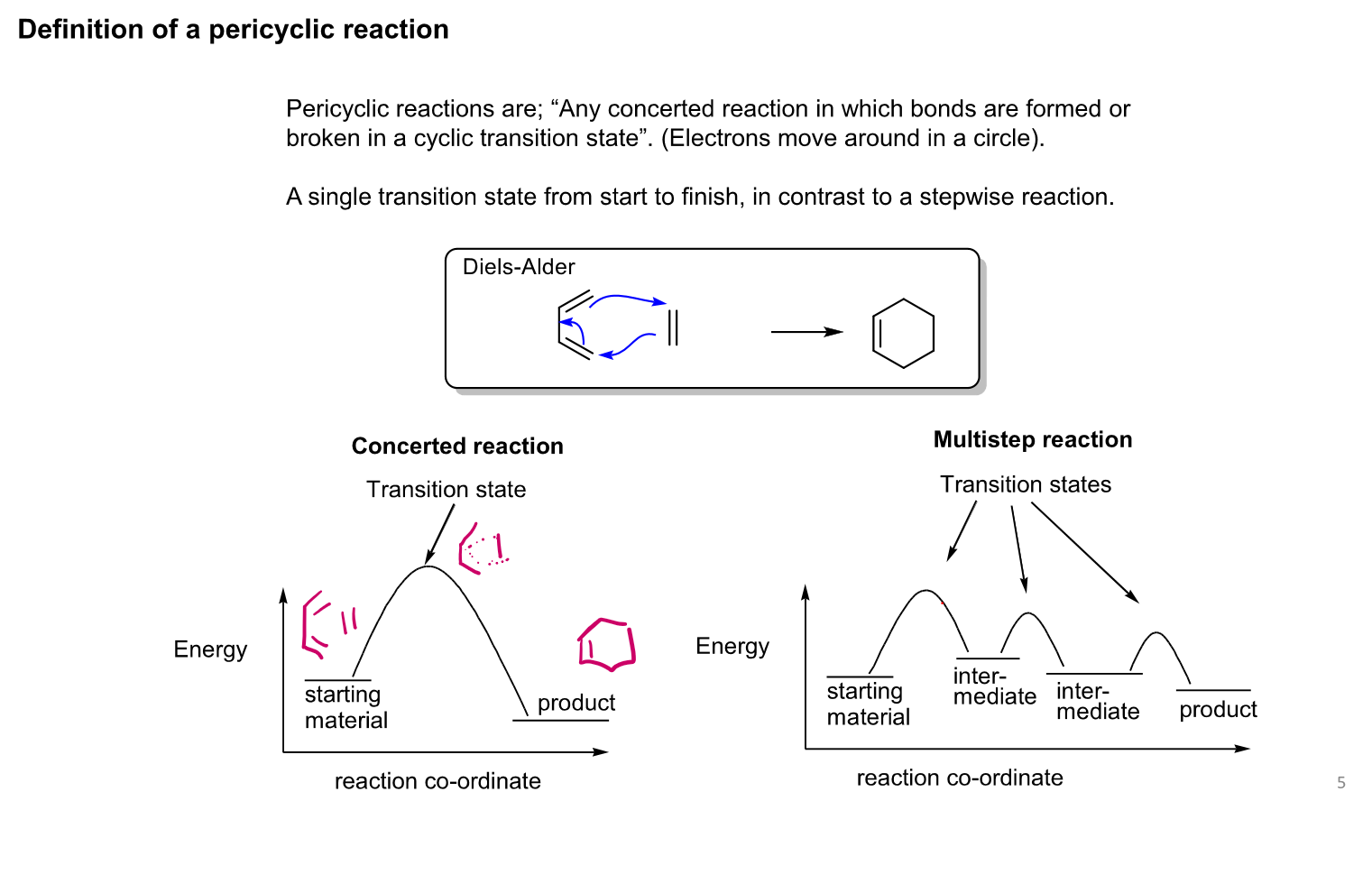
what is a pericyclic reaction
electrons moving around in a cyclic transition state
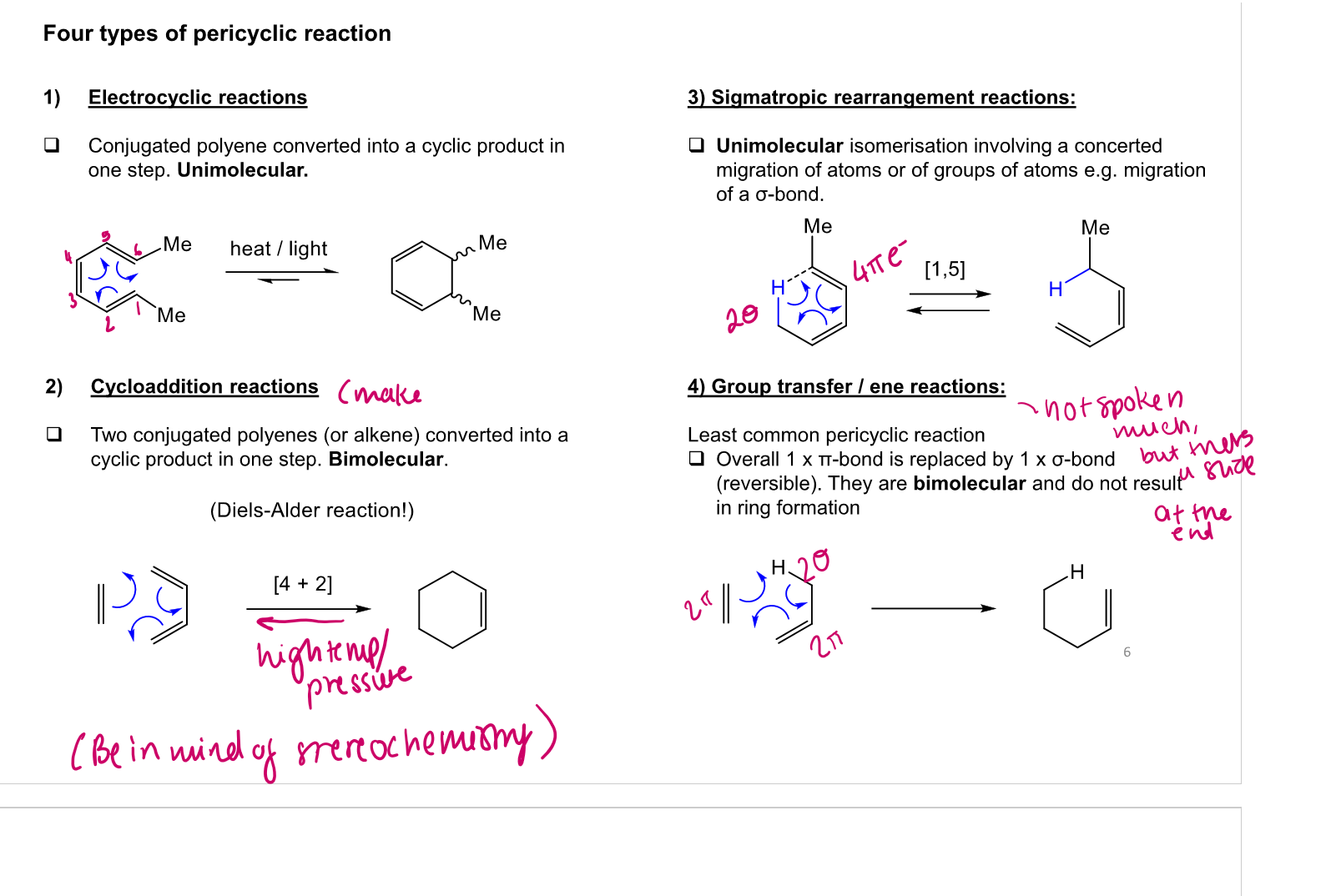
theres 4 types of pericyclic reactions, what are they
electrocyclic- conjugated polyene converted in cyclic product, one step
cycloaddition - 2 conjugated polyene into cyclic
sigmatropic- concerted migration of atoms or groups
group transfere /ene reactions: 1 pi bond replaced by 1 sigma bond
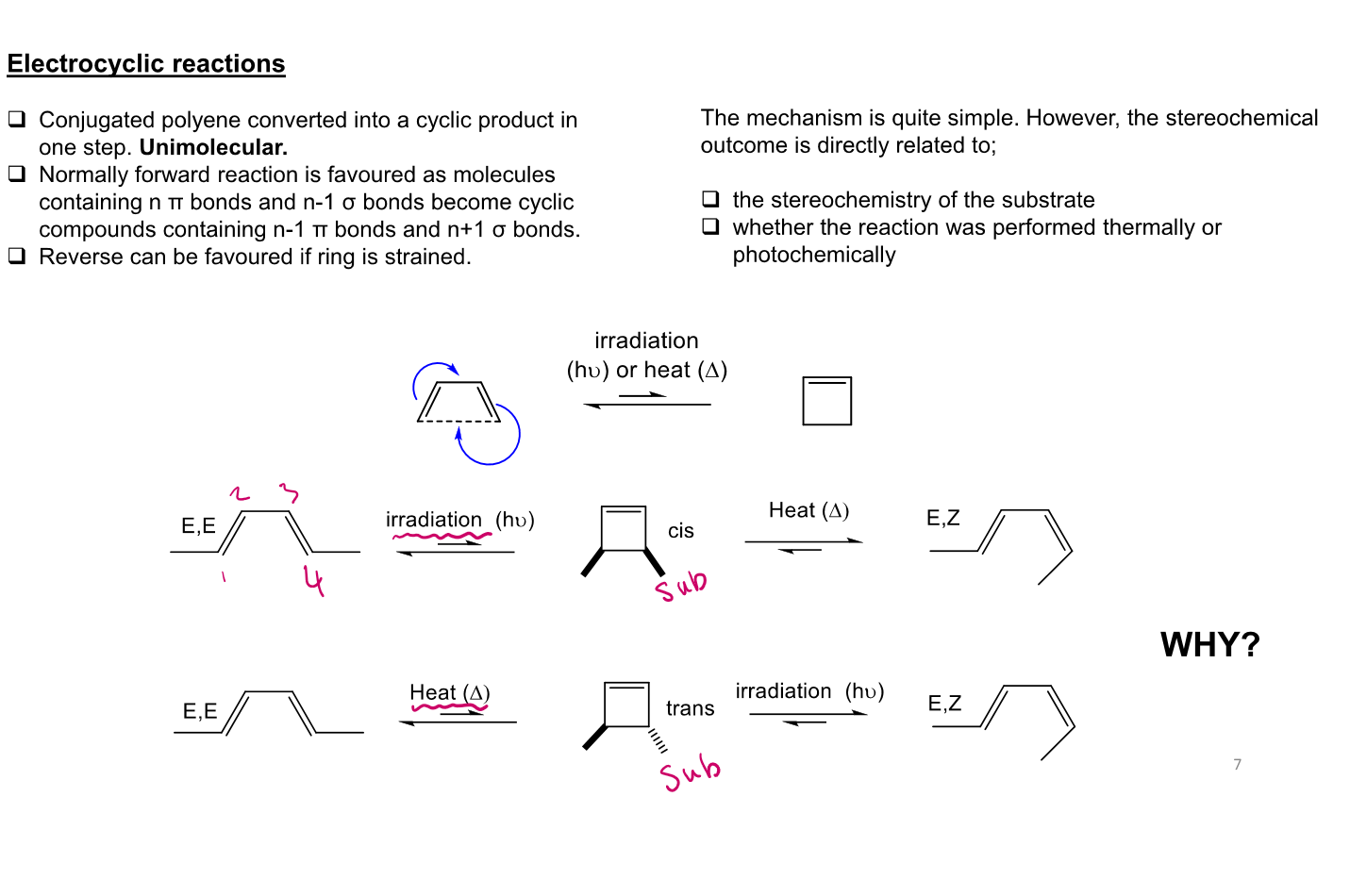
electrocyclic key concept
photochemical and heat can change if its trans or cis
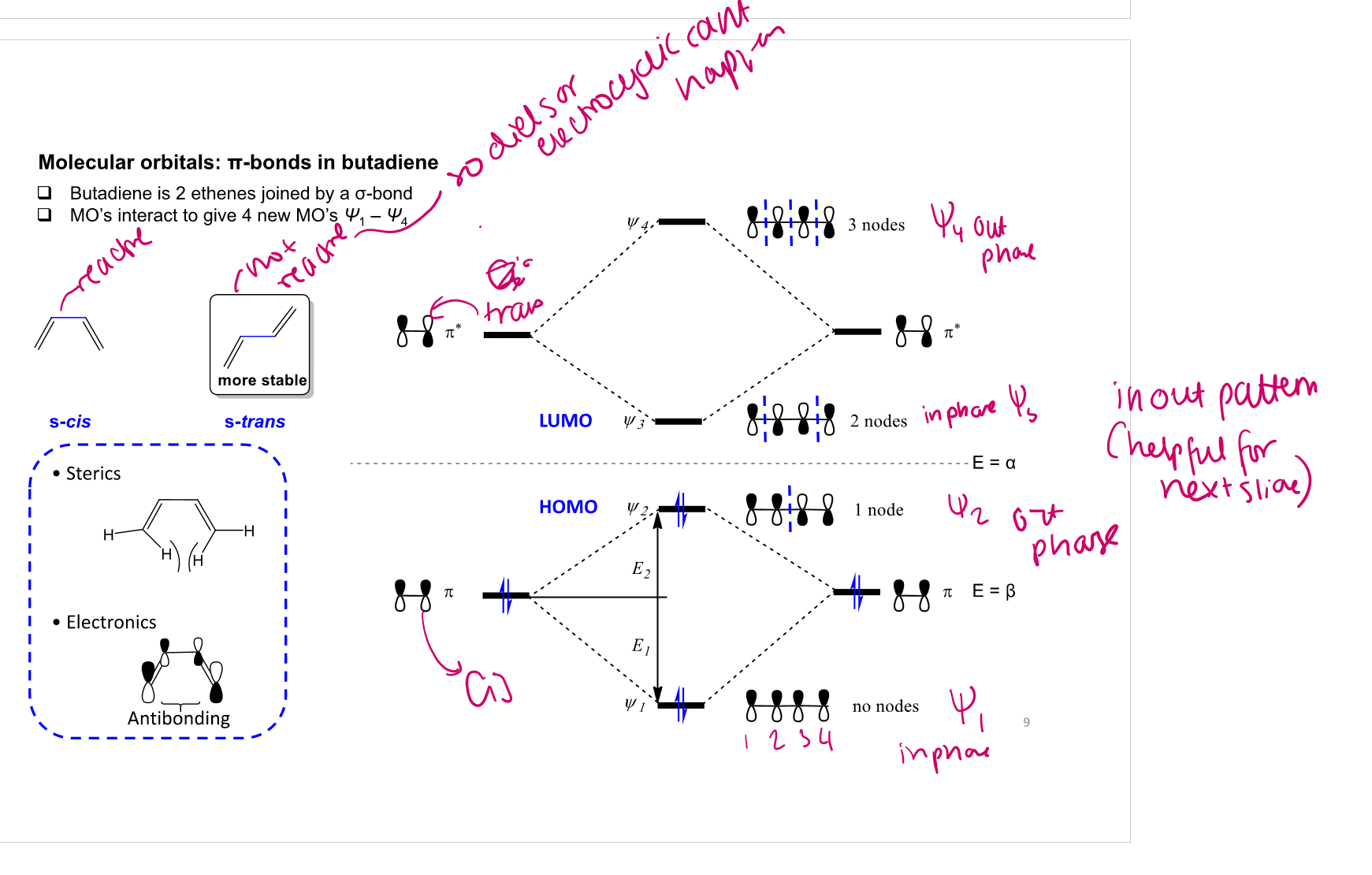
for butadiene, explain why only cis can undergo diels or electrocyclic, but not trans
butadiene has 2 c=c bonds, each contribute to 2 p orbitals. so 4 in total. Understand trans is more stable than cis, but is preferred in diels or electrocyclic, because the c=c bonds are closer in cis when a dienophile comes in. its in correct orbital gemotry to overlap
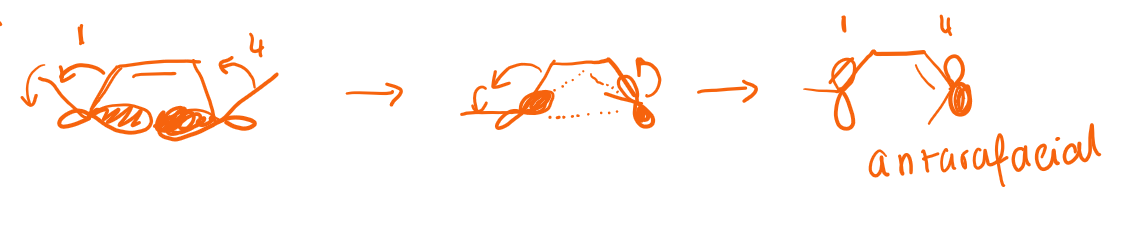
why does butadiene with heat make trans product, talk about antarafacial and p orbitals
only 1, 4 carbon affevted, antarafacial are always contrary process (opposite)

whats different with homo and lumo states between thermal and photochemical of butadiene
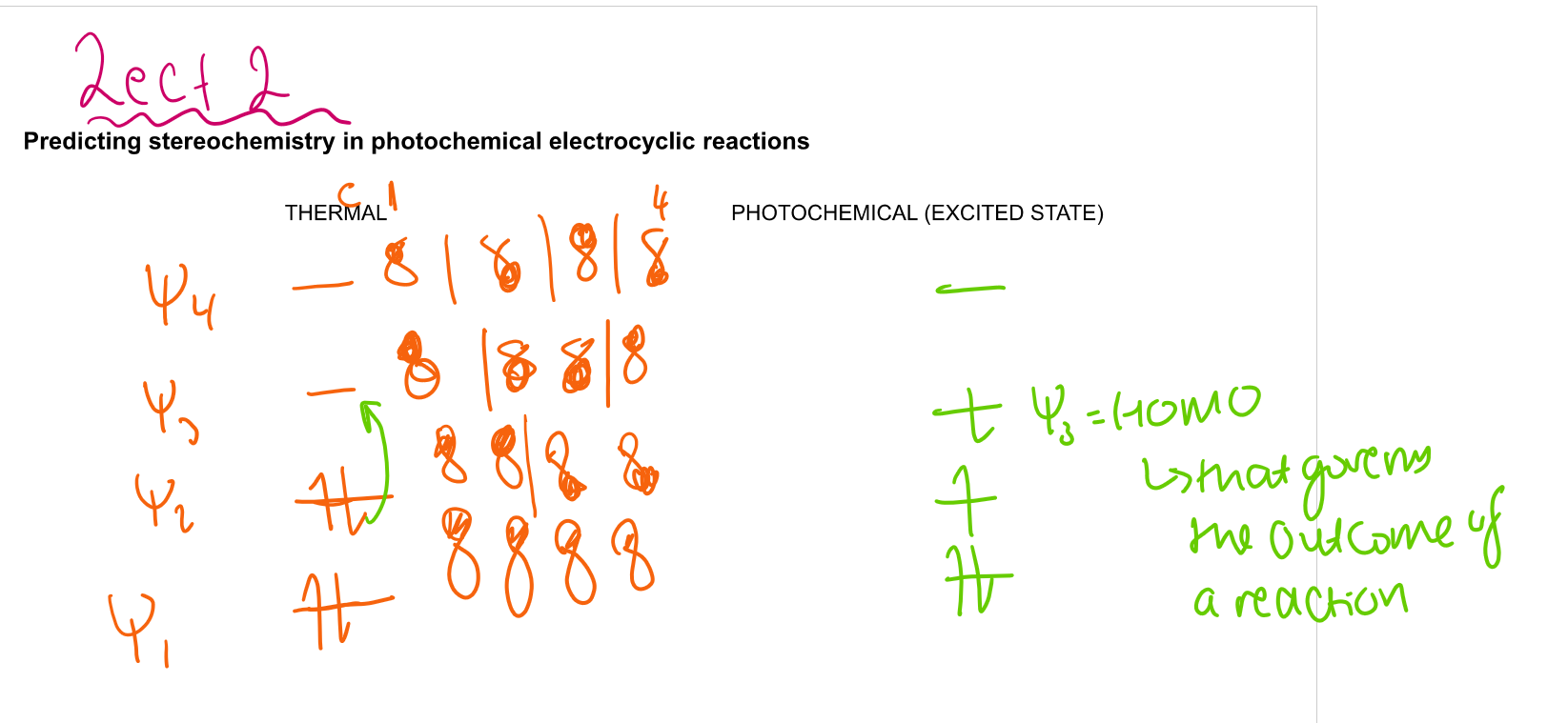
p orbitals in photoreactive butadiene
they are disrotated to eachother, one other way of each other
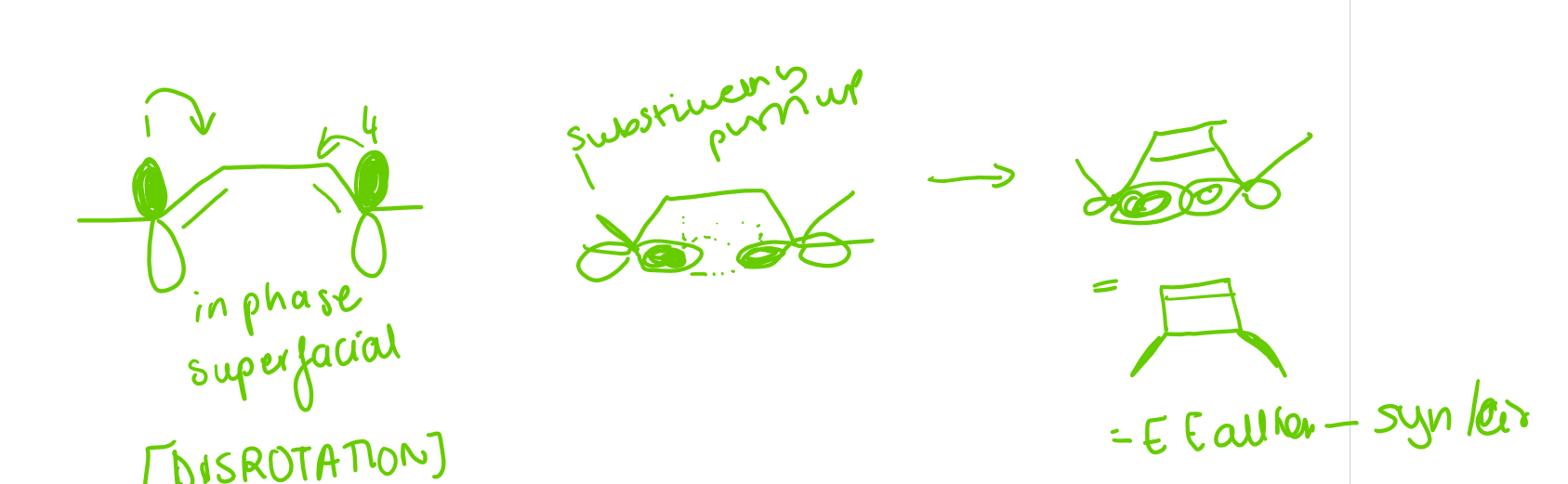
what about substituted butadiene with photoradiation
pushed the other way down

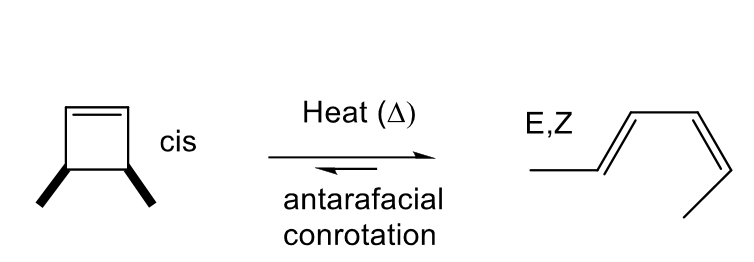
how does cis make that
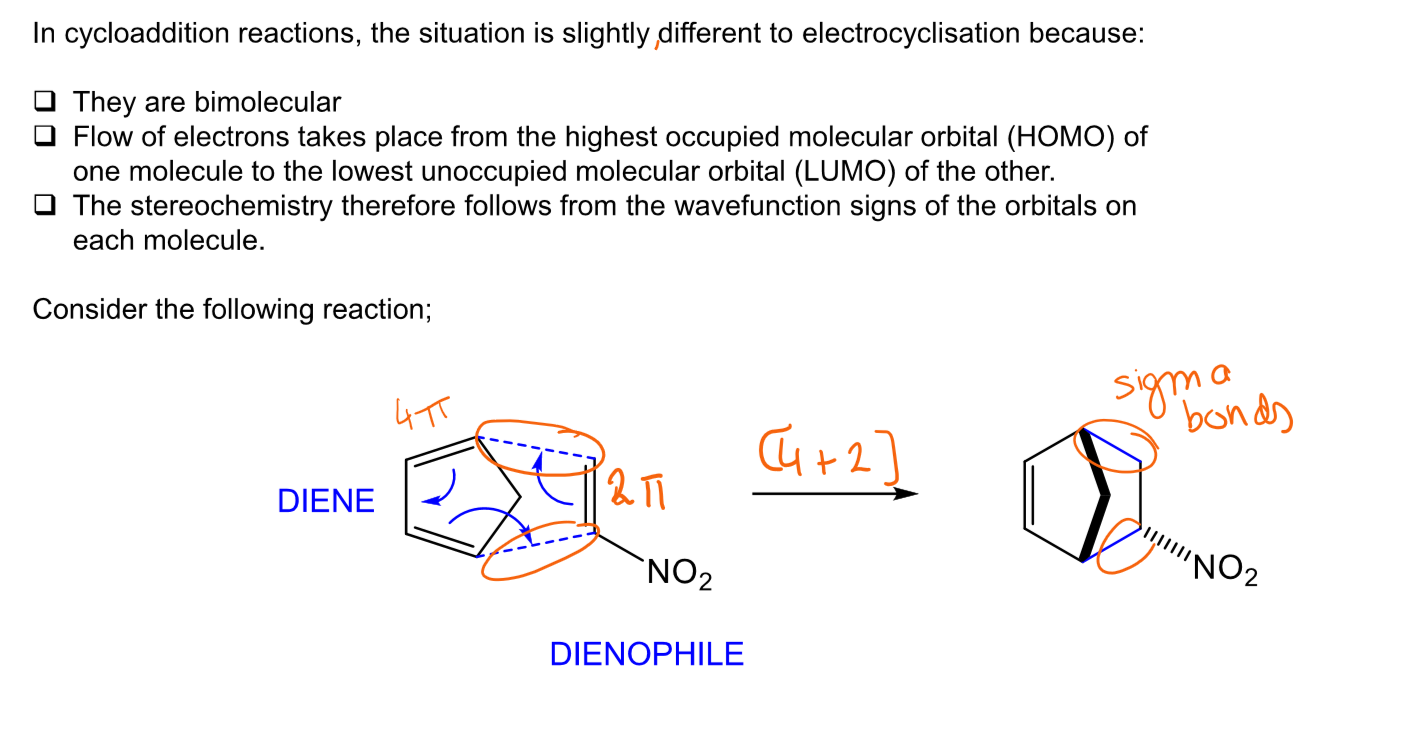
what happens in cyclocadditions
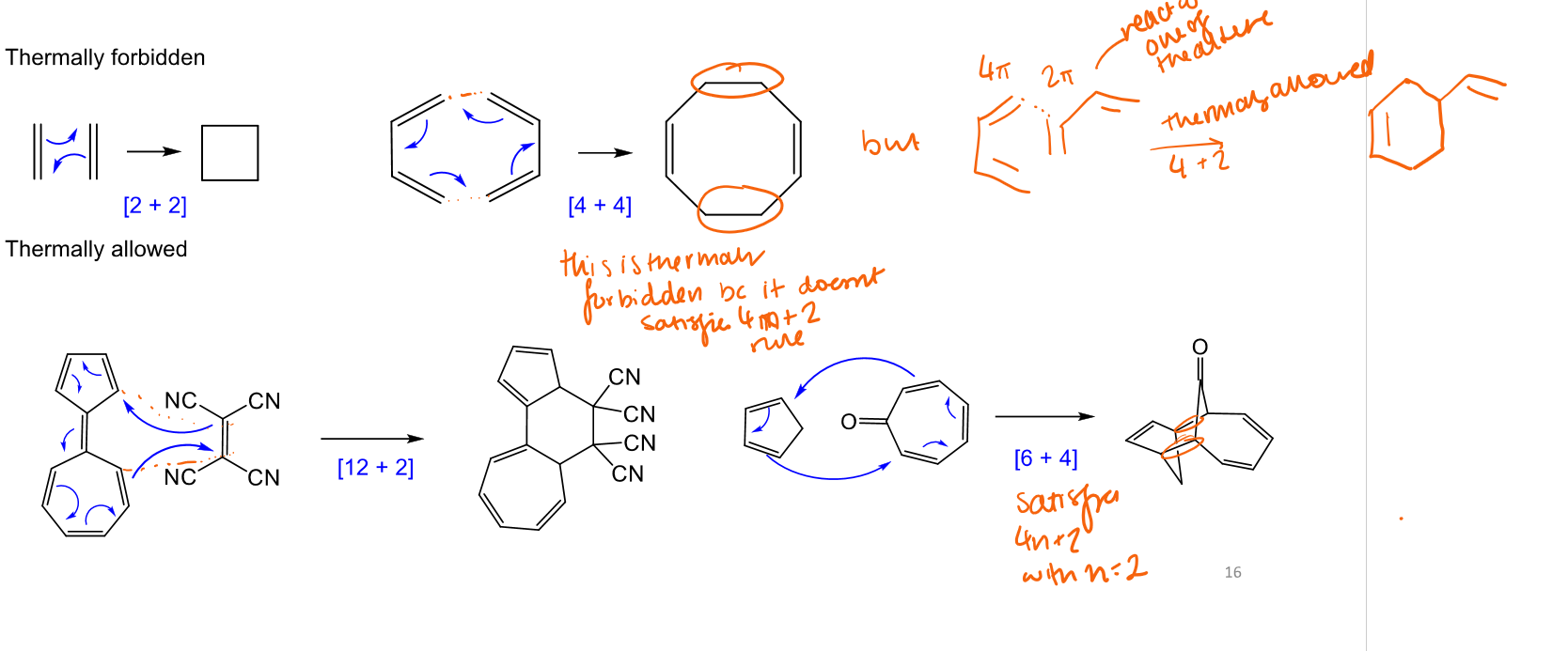
whats woodward-hoffman rules in cycloaddtions
4n+2 molecules are allowed to be thermally made.
not 4n
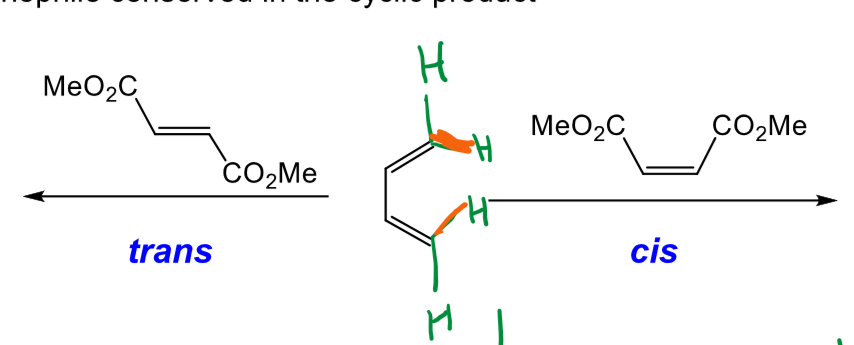
what would the products look like and which is allowed
both products allowed, the reacting just has to be a cis diene.
dienophile likely to be alkene because its electron poor and will be the LUMO of reacting pair substituents
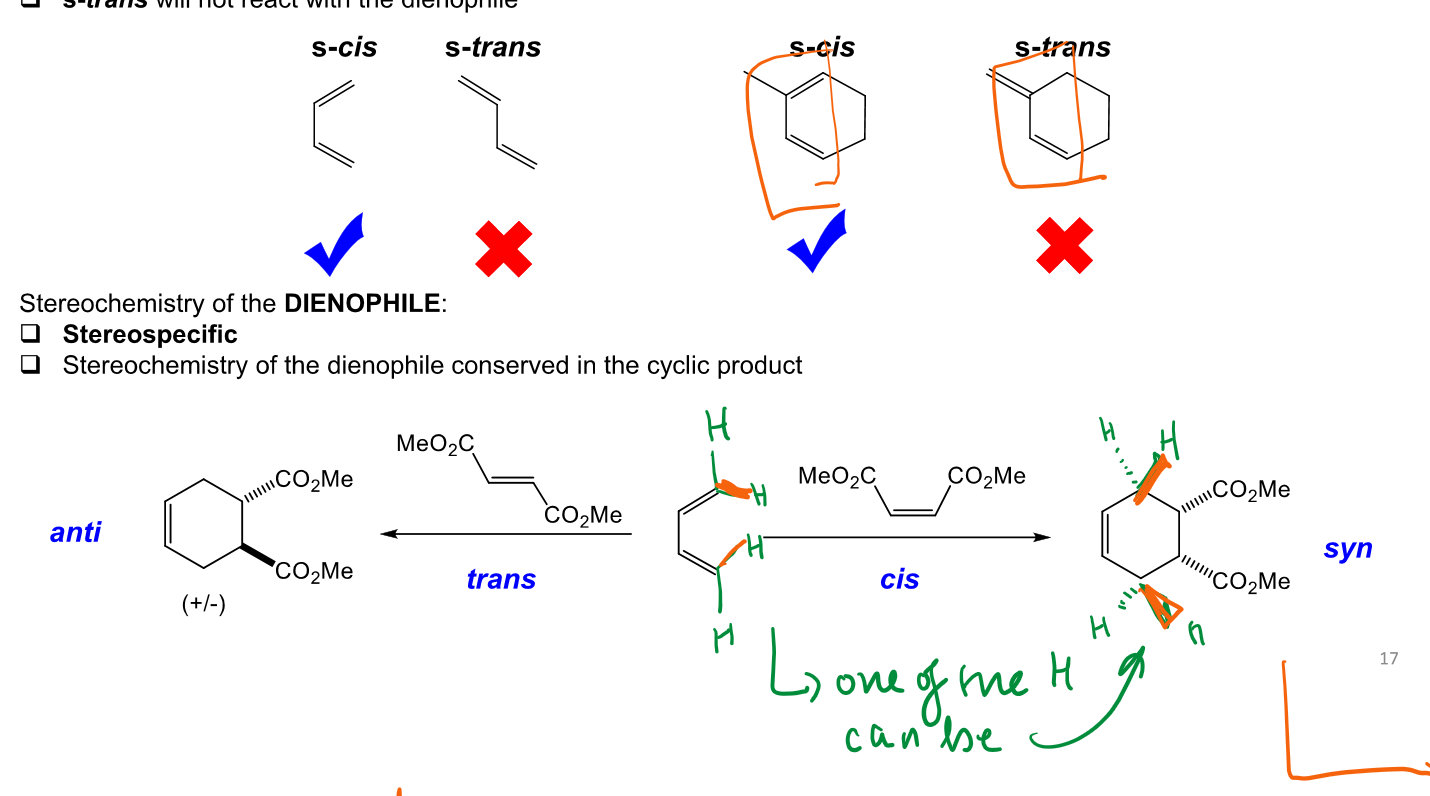
cyclopentadiene confromation with substituents
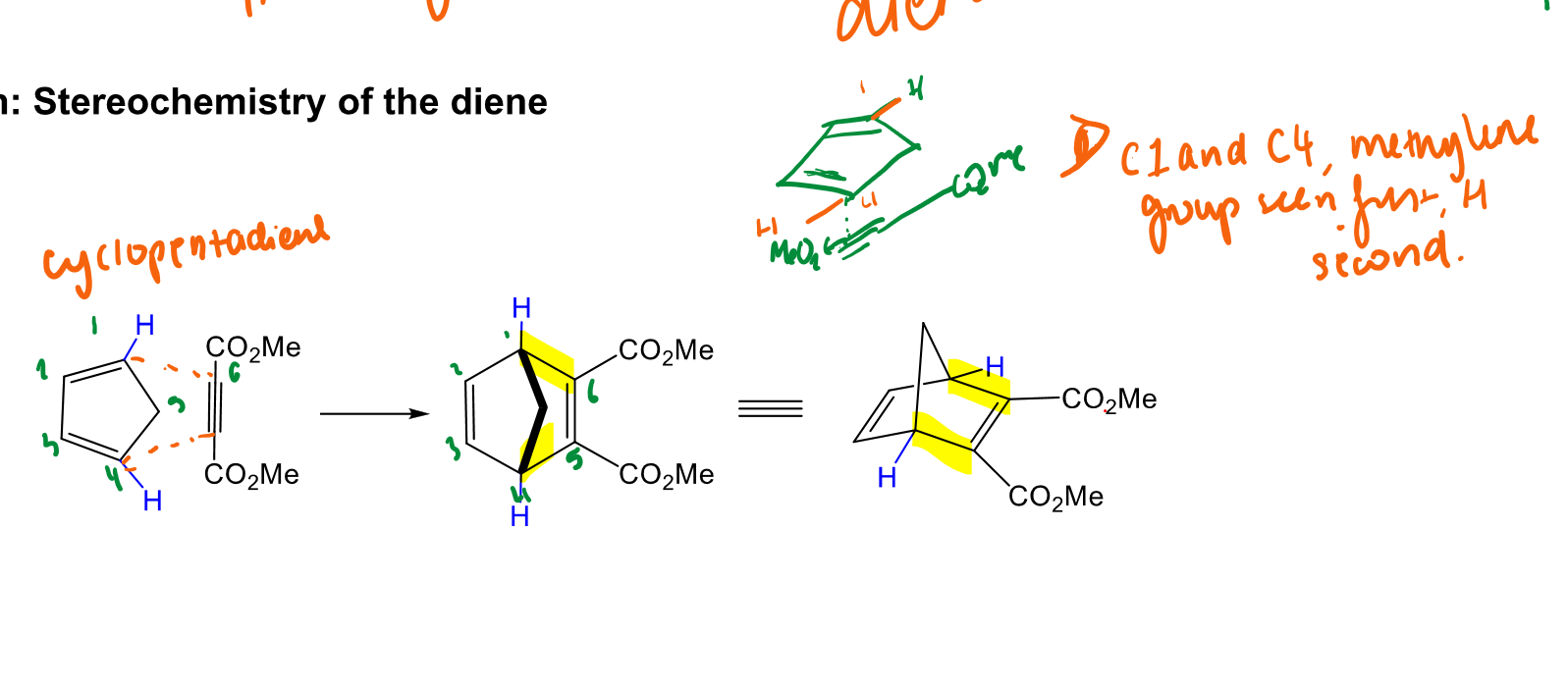
gives us
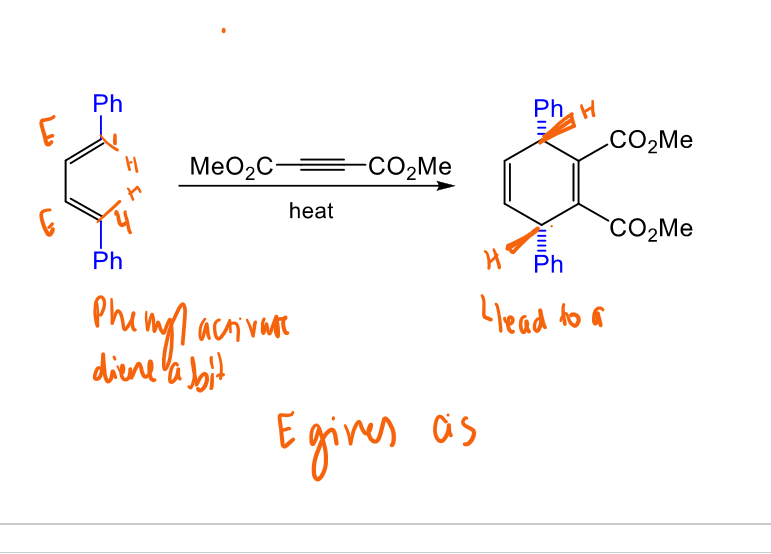
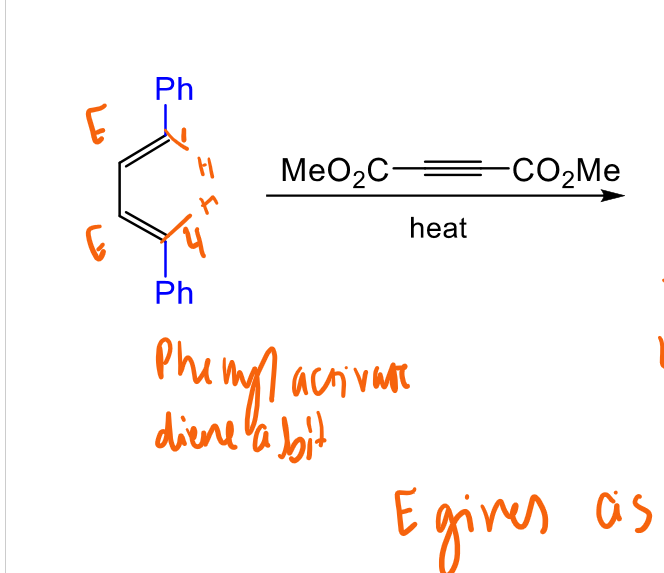
E/Z gives
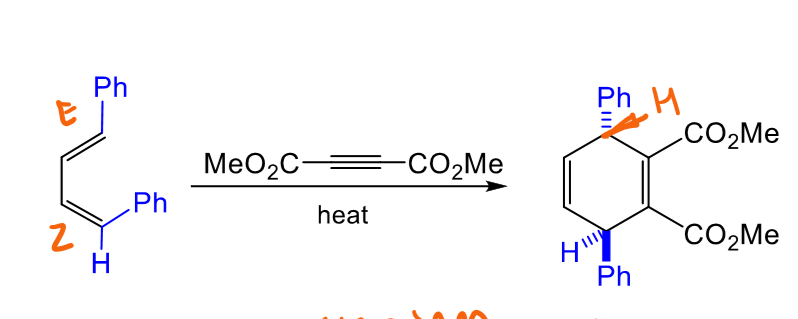
drawing out chair conformation why does e/e and e/z differ
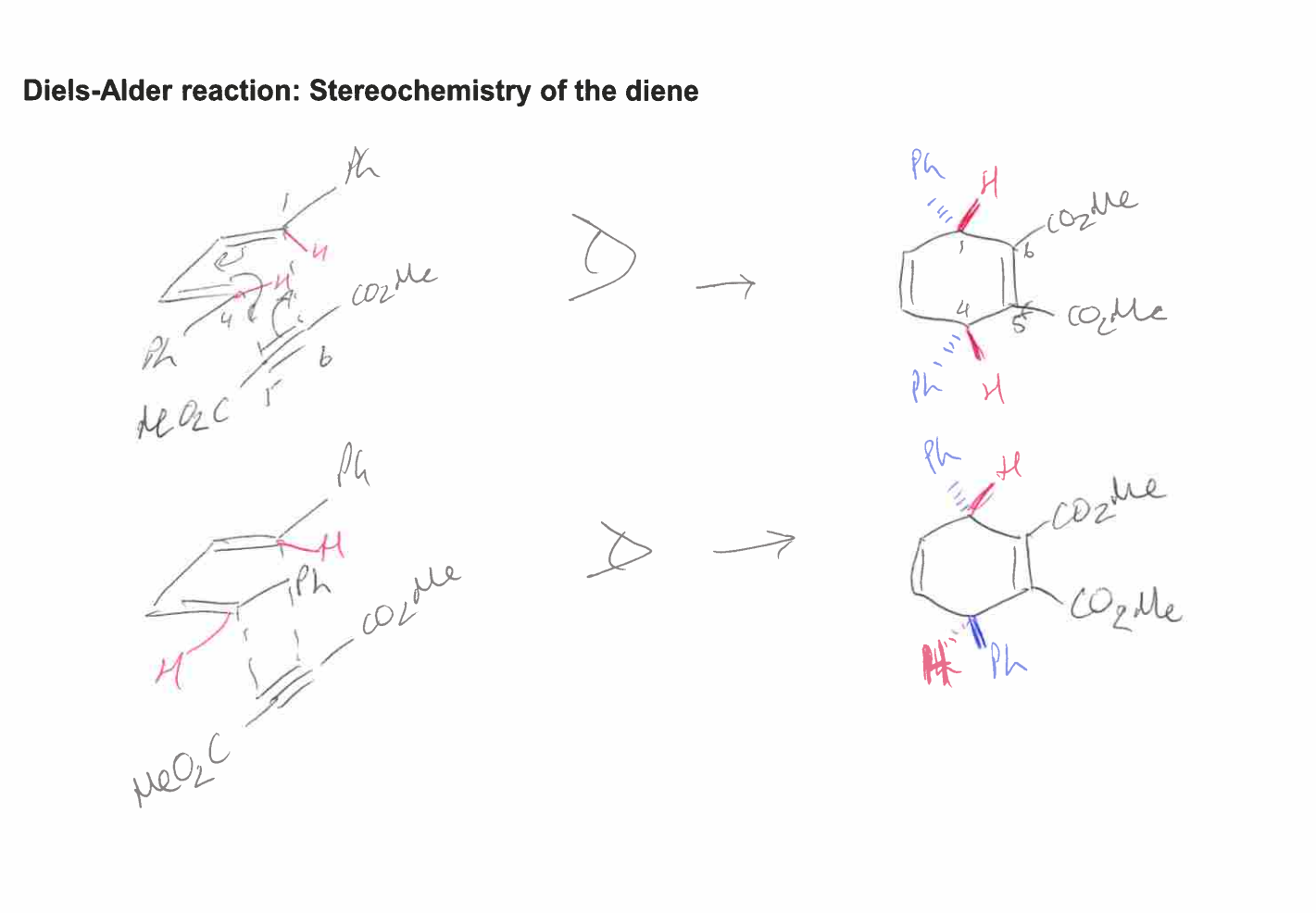
when dienophile is alkene, two types of products are made , exo and endo, whats the difference between them
exo is thermodynamically product
endo is kinetic product
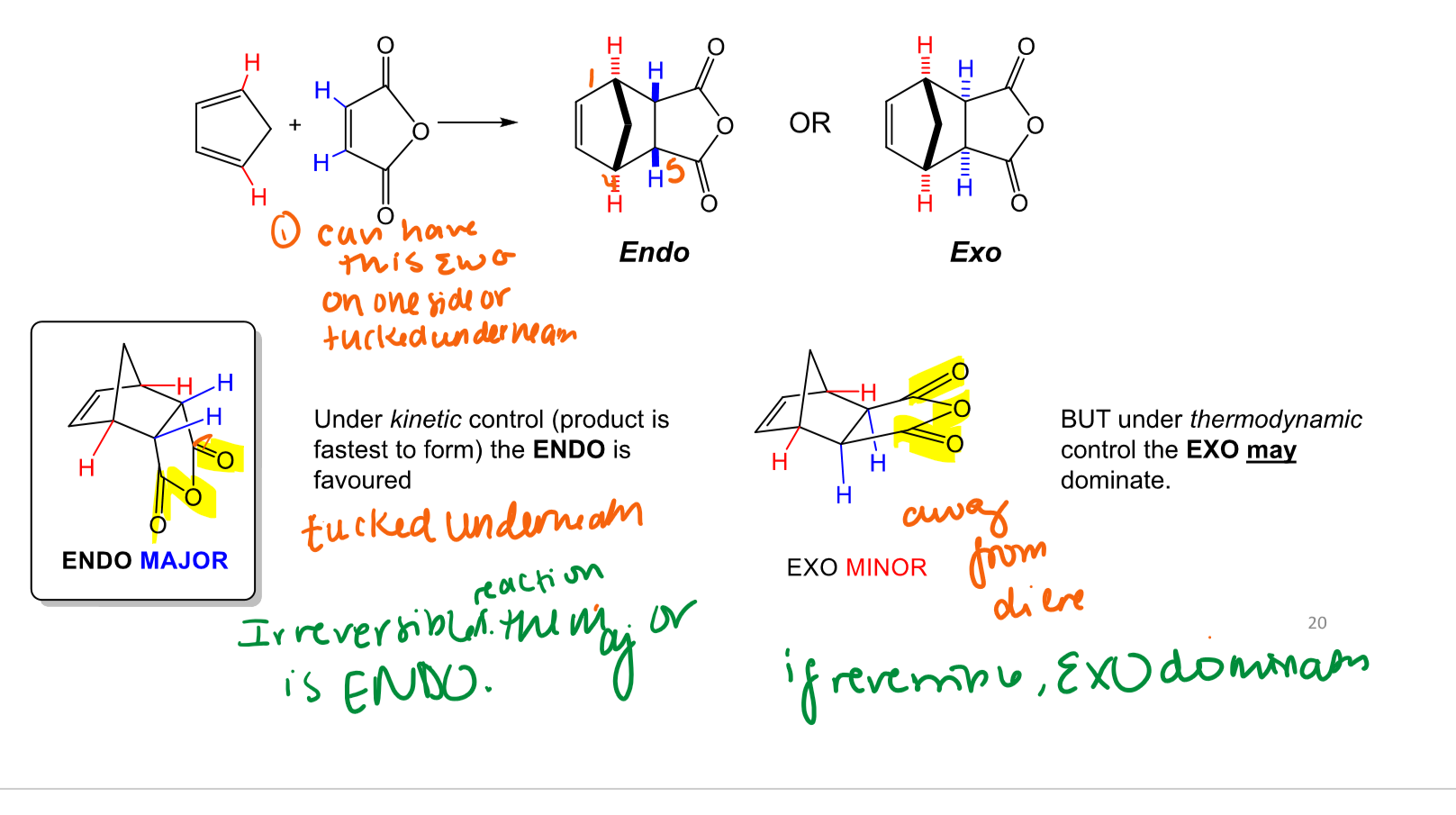
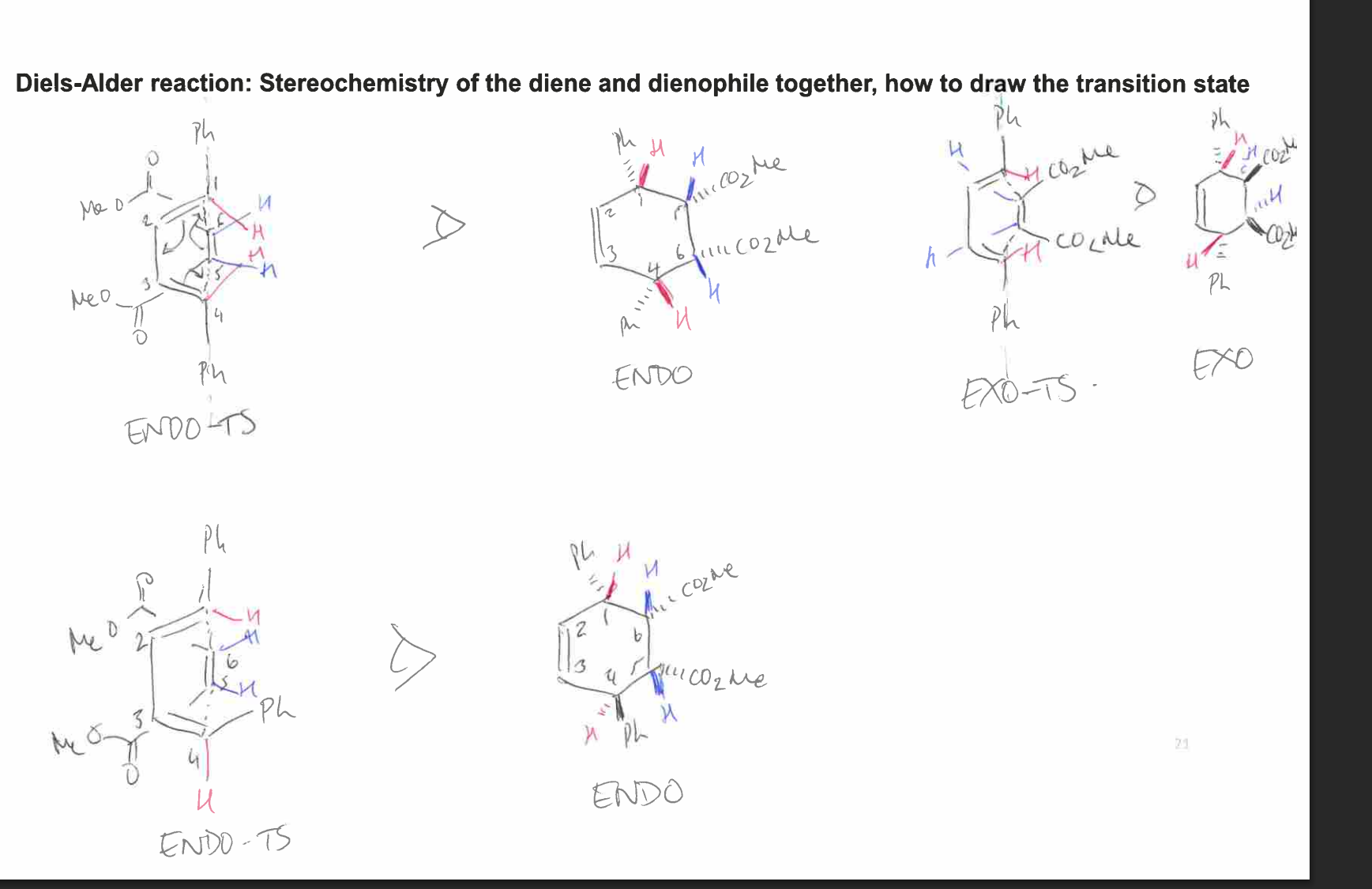
endo and exo transition state
dienophile with EWG react faster why?
the ewg takes the e away from c=c bond making it easy to react
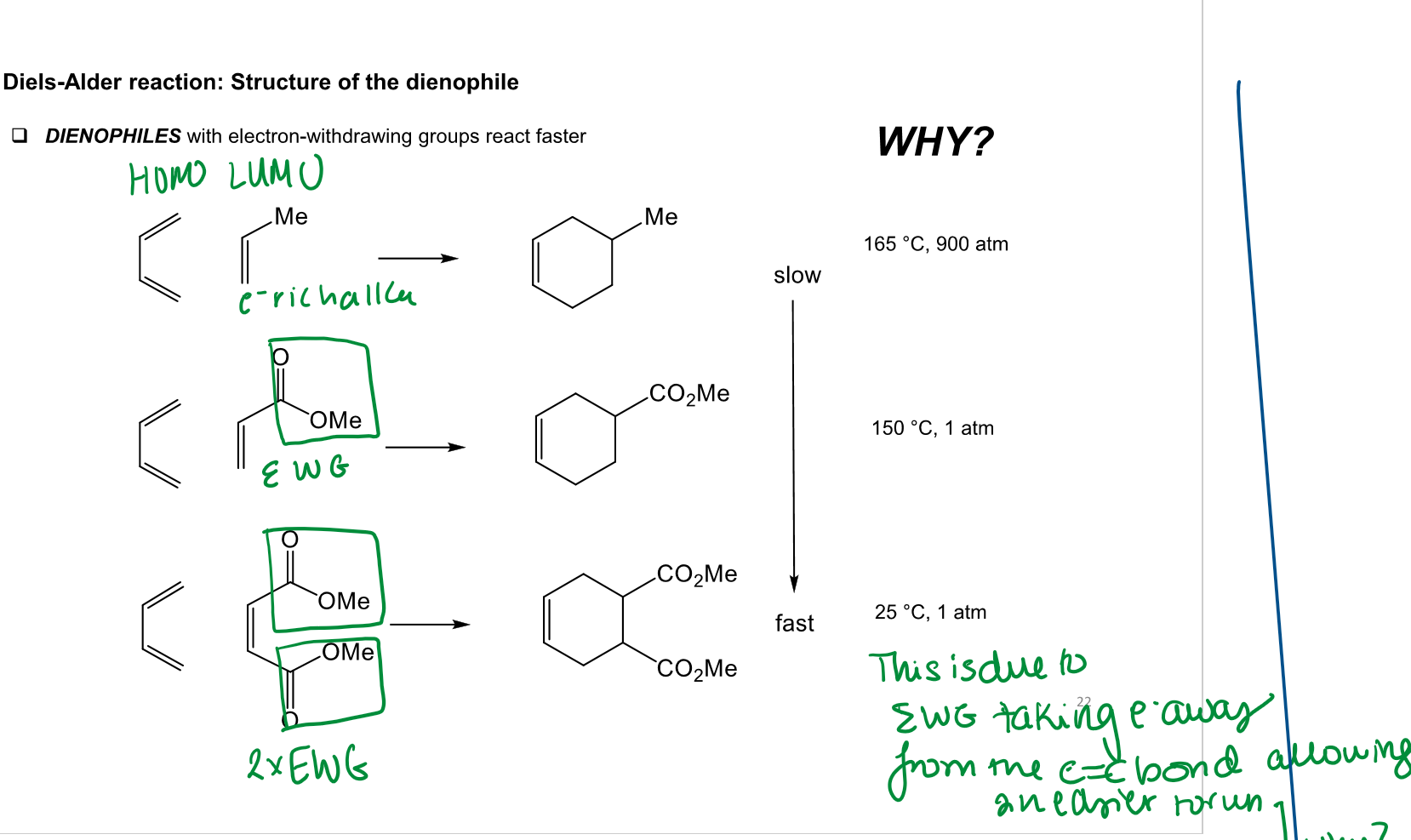
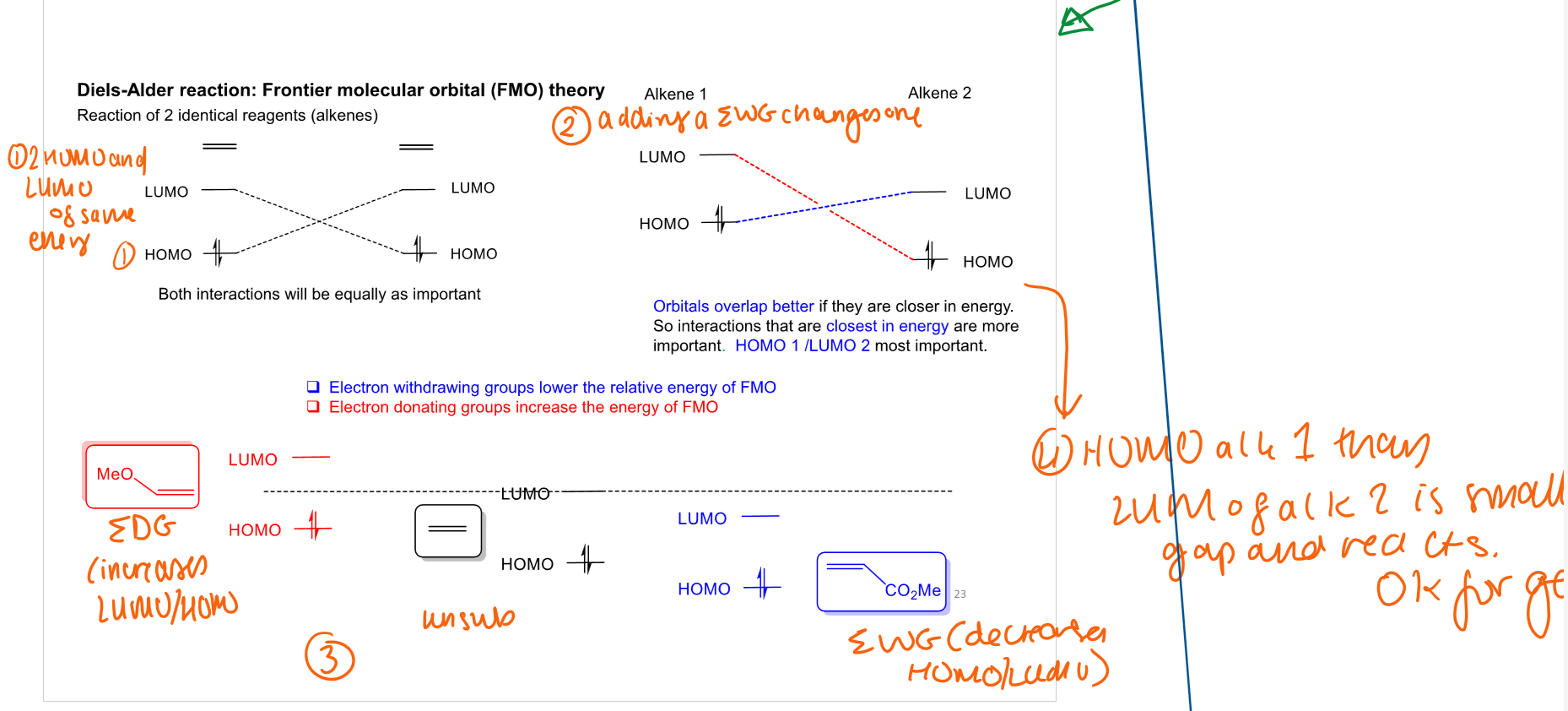
using FMO explain why EWG are better for reactions than EDG
the homo lumo gap decreases with EWG
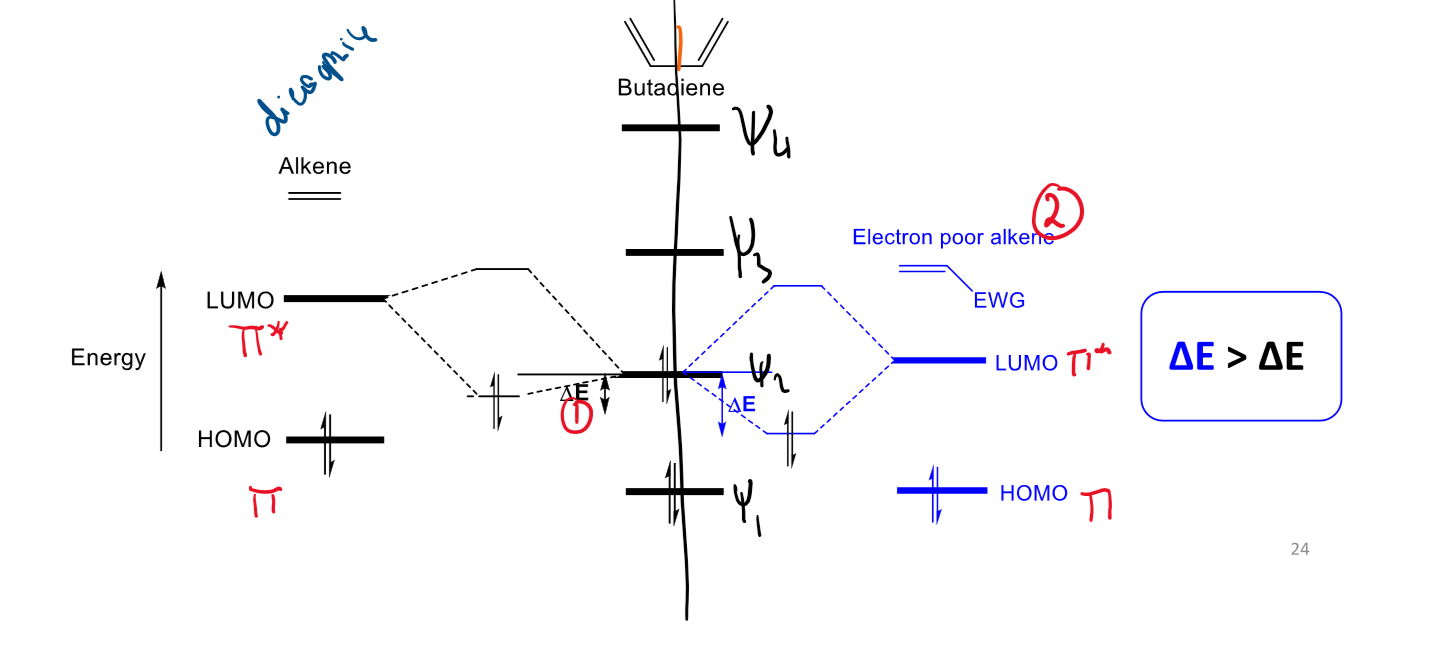
whats happening here
showing ewg reacts better because the change in energy is bigger than the alkenes, thats good because it means its more stable,
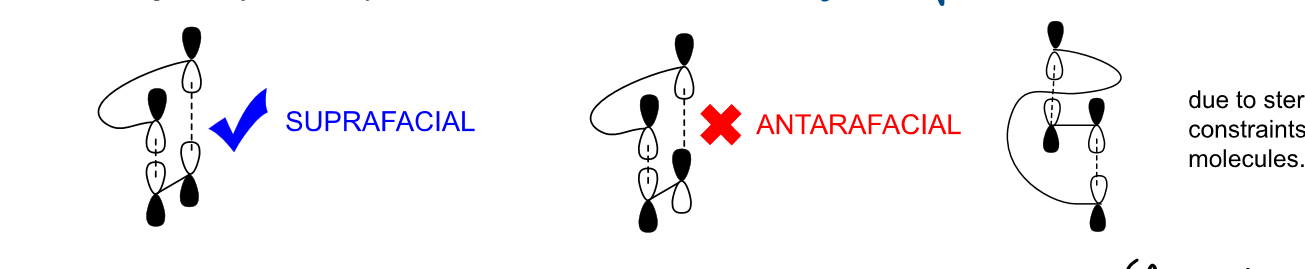
whats occuring here
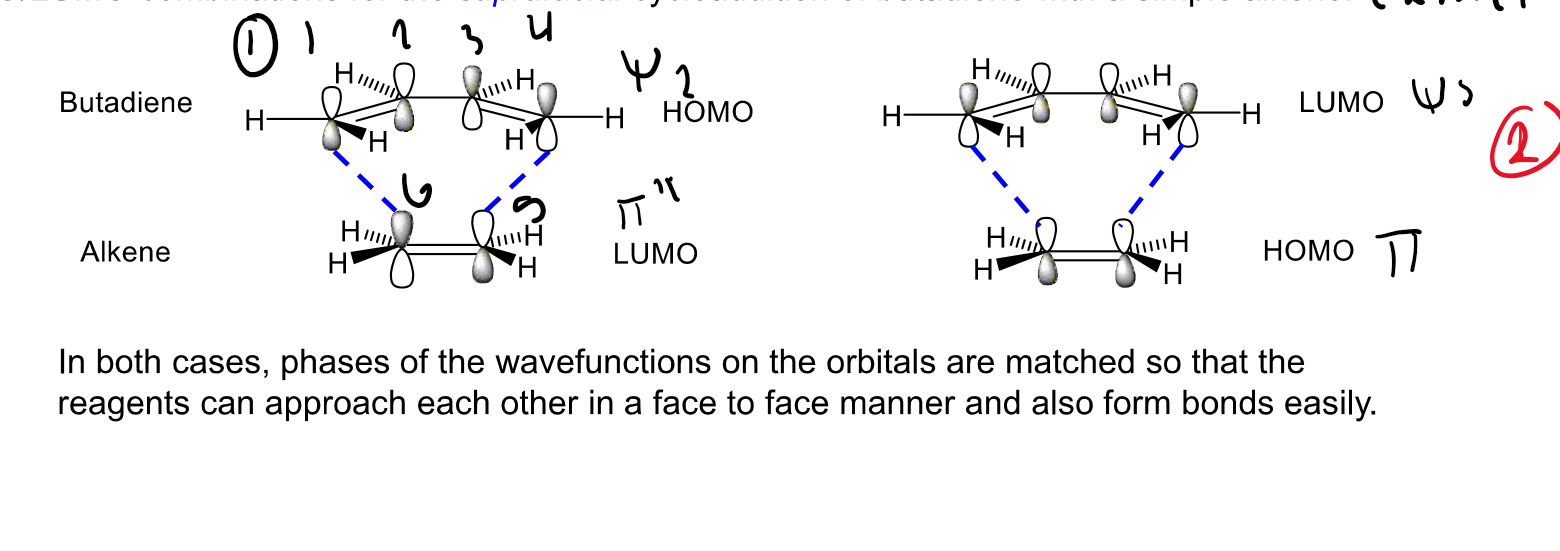
showing that suprfacial alkenes and dienes react. thermally superfacial is prefferred, the top is the diene approaching the dienophile, the homo of diene C1-6 and C4-5 empty lobes interact
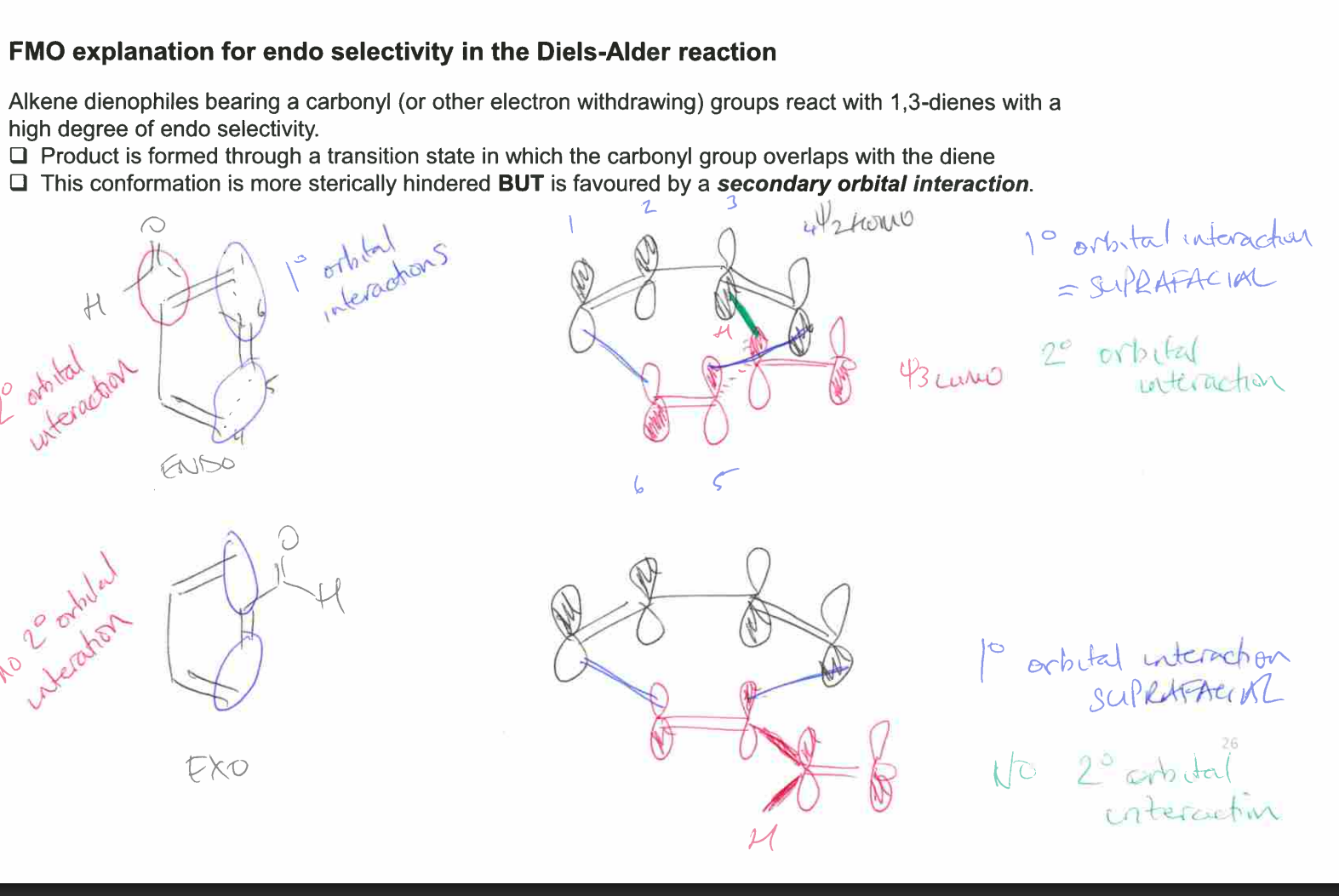
if a dienophile with carnobnly group (ewg) comes in, what dienes does it react with and what type of product is made.
usually 1,3 dienes and endo is usually prefrred, if asked why endo> exo, draw this transition states showing birtal, drawing lhs shown this is called 2nd orbital interaction when something is more hindered but preferred
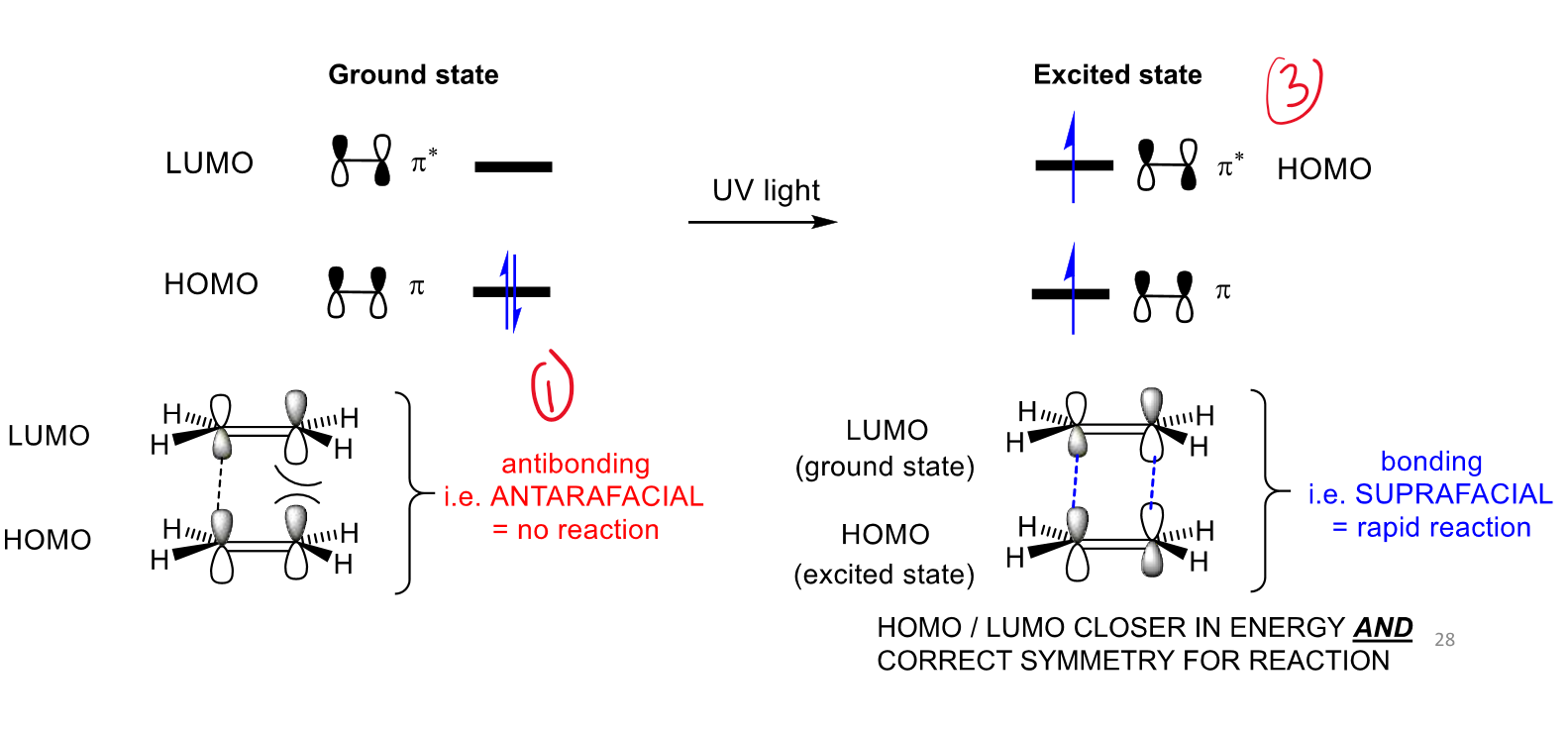
how can thermally forbidden reactions occur in cycloadditions
photochemically.
It is showing:
one alkene that remained in the ground state (providing the LUMO), and
a second alkene that absorbed UV light (providing the excited HOMO).
So the LUMO hasn't disappeared—it belongs to the other reactant that never got excited.
allene and ketene structure

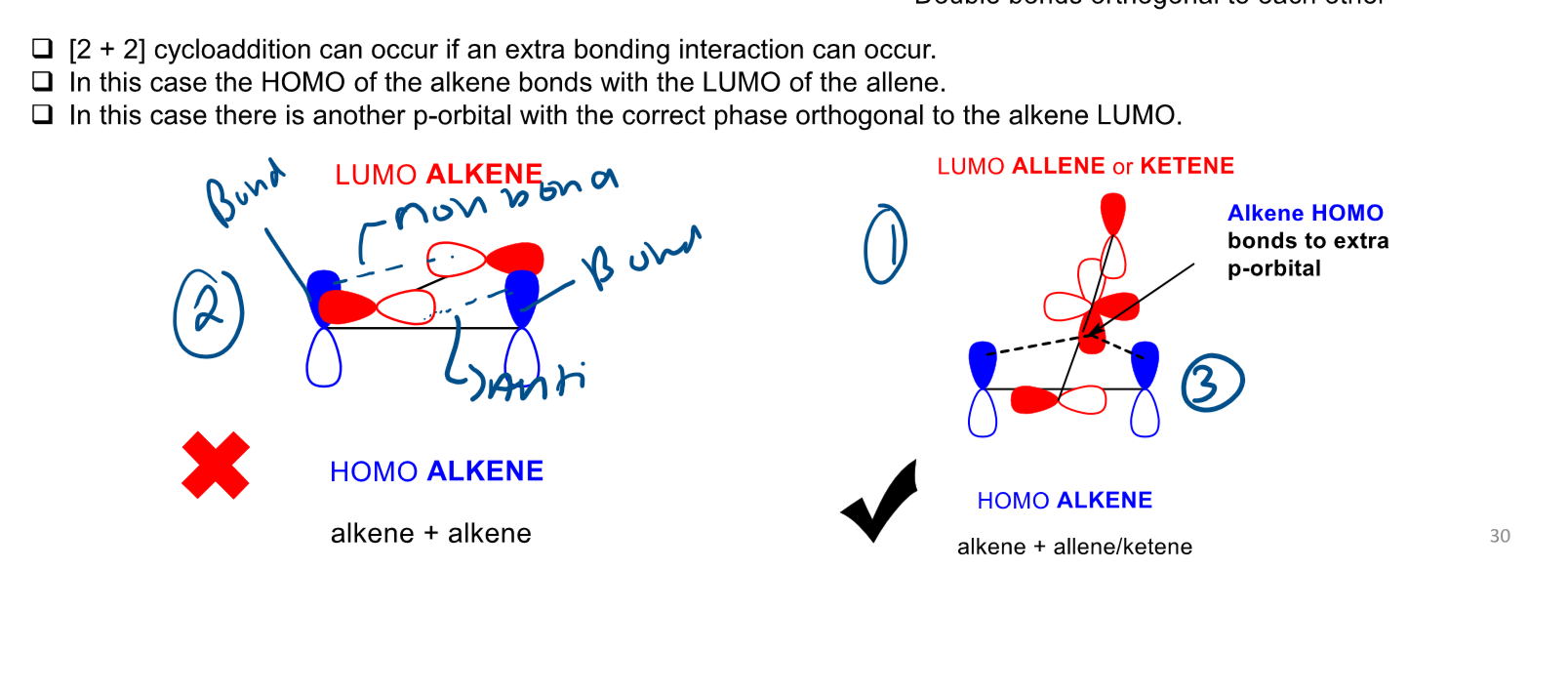
whats 2+2 rule
2 pi orbitals (alkene) + alkene. its usually thermally forbidden but photochemically allowed
why are alkene + alkene not allowed but alkene and allene are
allene the double bond is orthogoonal to each other, so middle carbon is sp hybridised, there becomes two independant pi systems. but theres also another p orbital in allenes
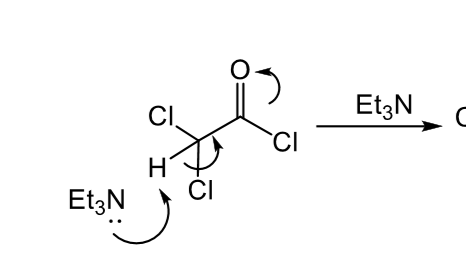
what would this make
dichloroketne
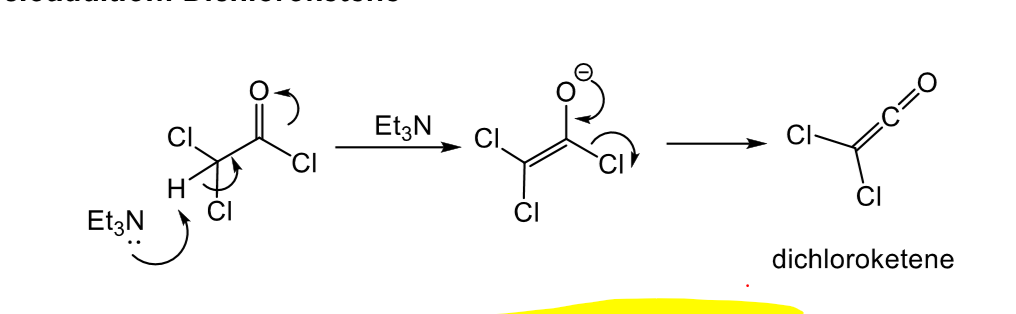
why are dichloroketene a good [2+2] partner
the chloro part lowers the lumo of the alkene component of the molecule to react rapidly with homo of alkenes (ketenophiles)
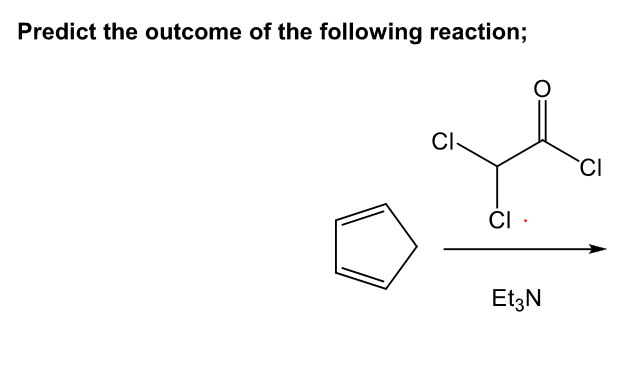
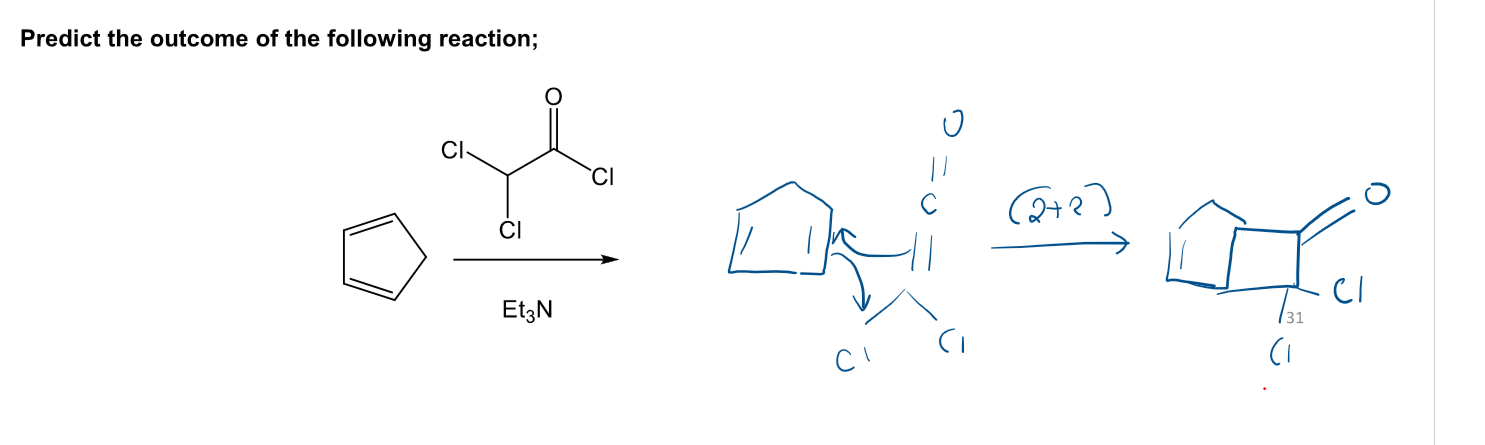

why is meta not favoured here
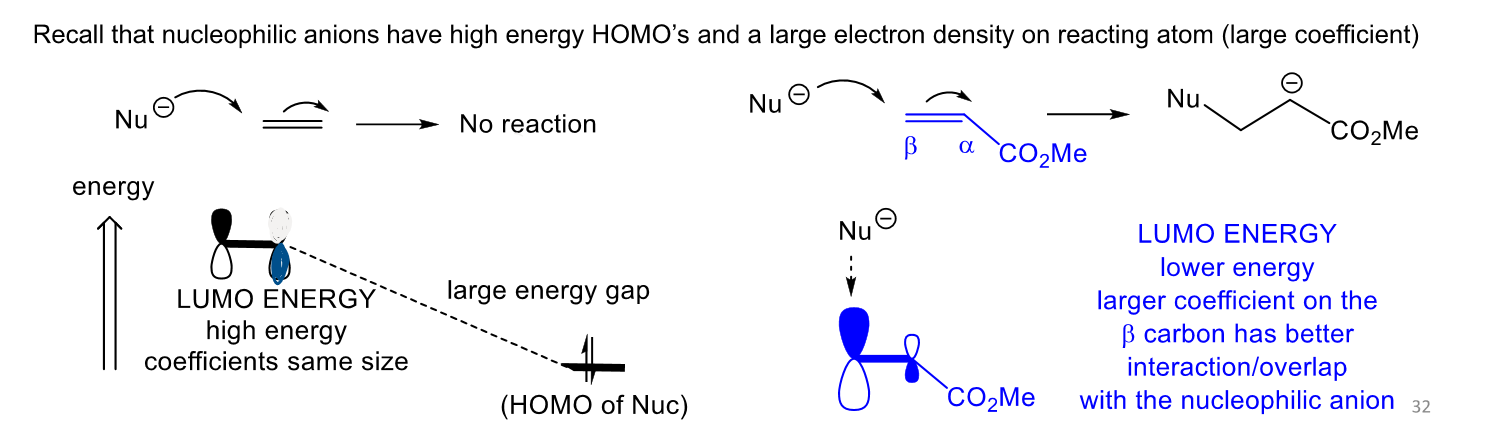
firstly recall that ewg lower the homo lumo allowing interactions to take place
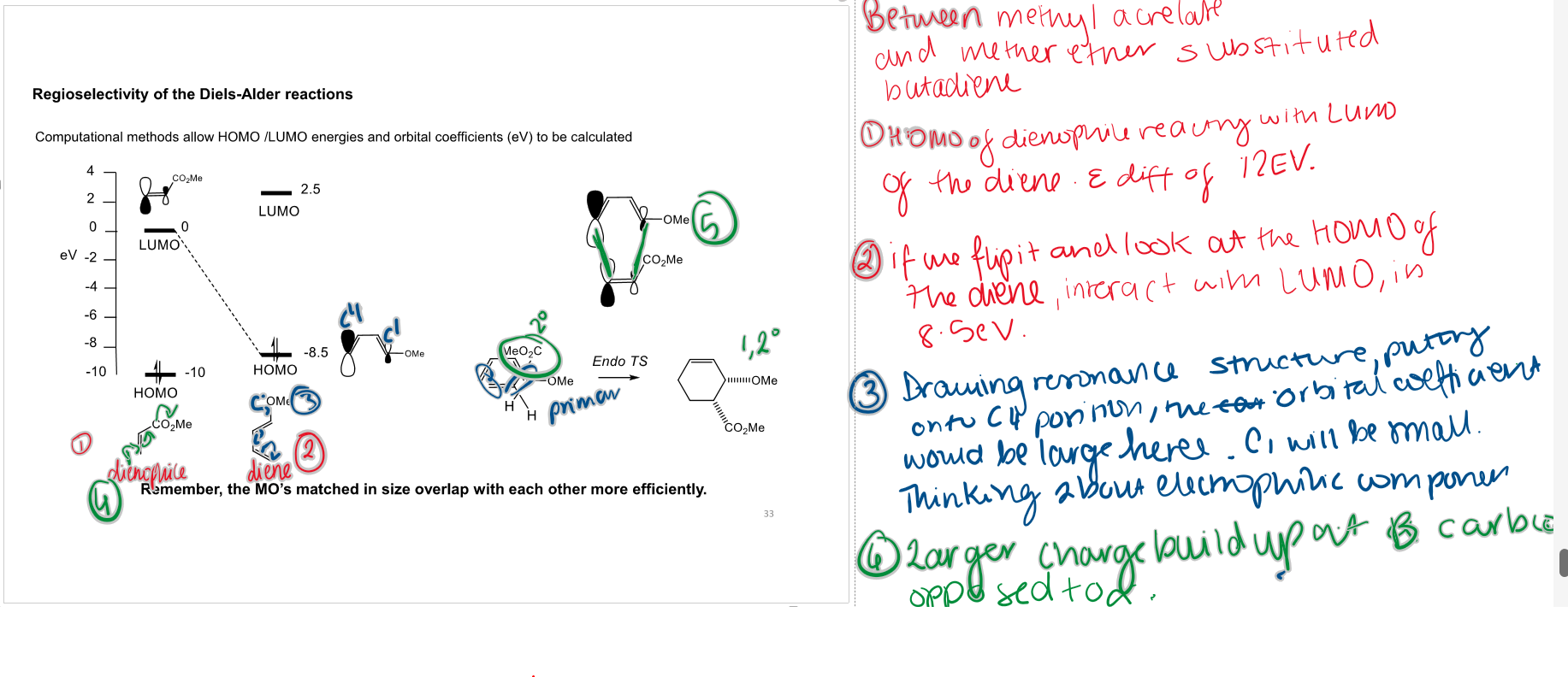
How do you predict the major regioisomer in a Diels–Alder reaction?
Identify the reacting orbitals (usually HOMO of the diene and LUMO of the dienophile).
Determine which ends have the largest orbital coefficients (often using resonance effects of EDGs and EWGs).
Orient the reactants so the largest HOMO lobe overlaps with the largest LUMO lobe, giving the most favourable overlap and the major regioisomer.
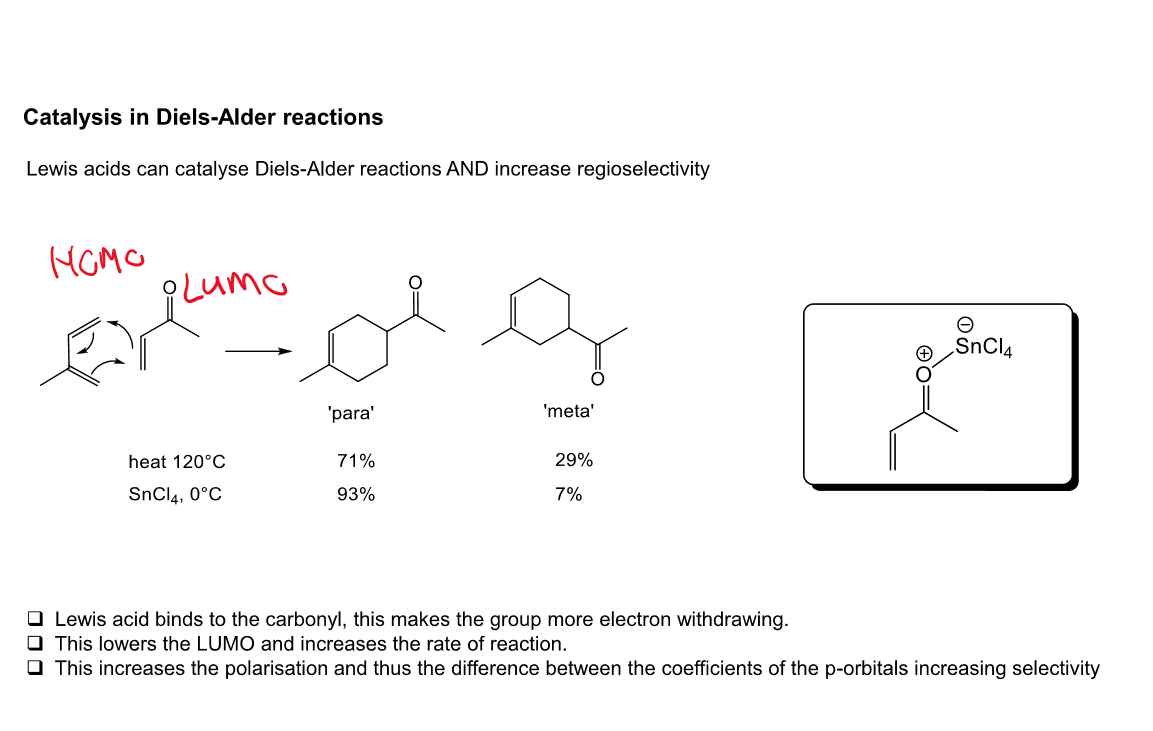
how can we ensure that something is substituted only at para position in diels alder
add lewis based catalyst
What is a 1,3-dipolar cycloaddition?
A concerted pericyclic reaction between a 4π 1,3-dipole and a 2π alkene/alkyne (dipolarophile) that forms a 5-membered heterocycle.
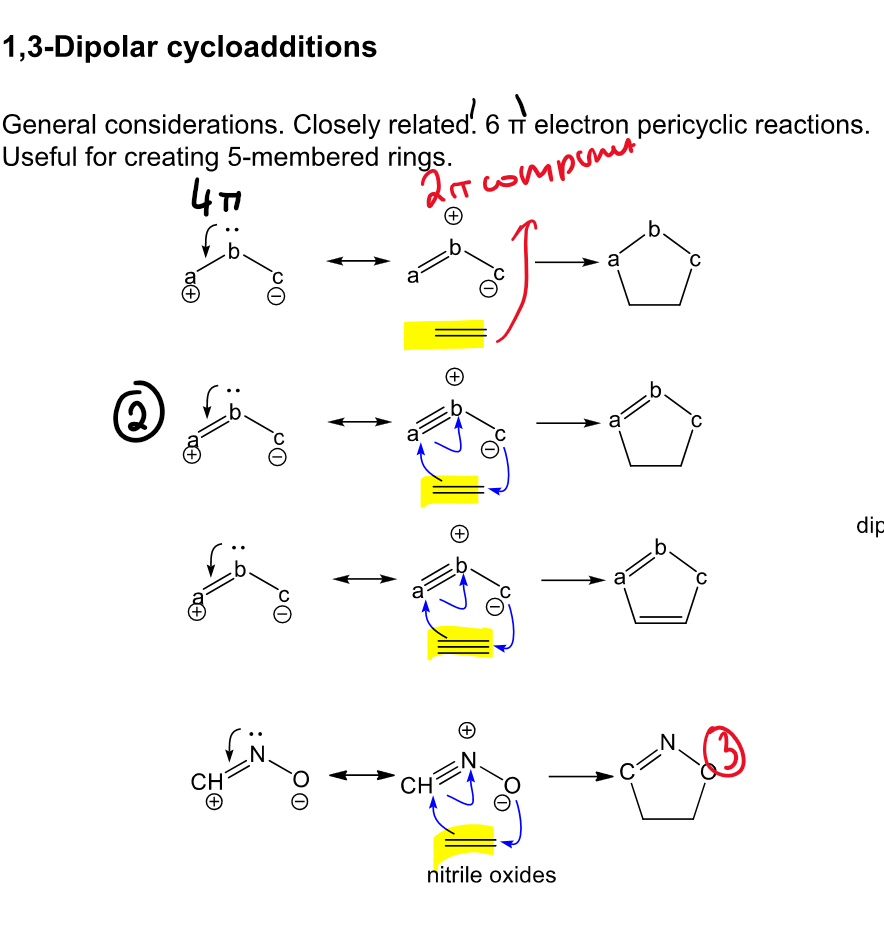
Why is it related to the Diels–Alder reaction
Both are 6π electron pericyclic reactions and proceed through a concerted cyclic transition state. The difference is that Diels–Alder forms a 6-membered ring, whereas a 1,3-dipolar cycloaddition forms a 5-membered ring.
Which frontier orbitals interact in a 1,3-dipolar cycloadditio
It depends on the reactants. Either HOMO(dipole)–LUMO(alkene) or HOMO(alkene)–LUMO(dipole) dominates, depending on which pair is closest in energy.
for example An electron-poor alkene has a lower-energy LUMO, making HOMO(dipole) → LUMO(alkene) interactions more favourable.
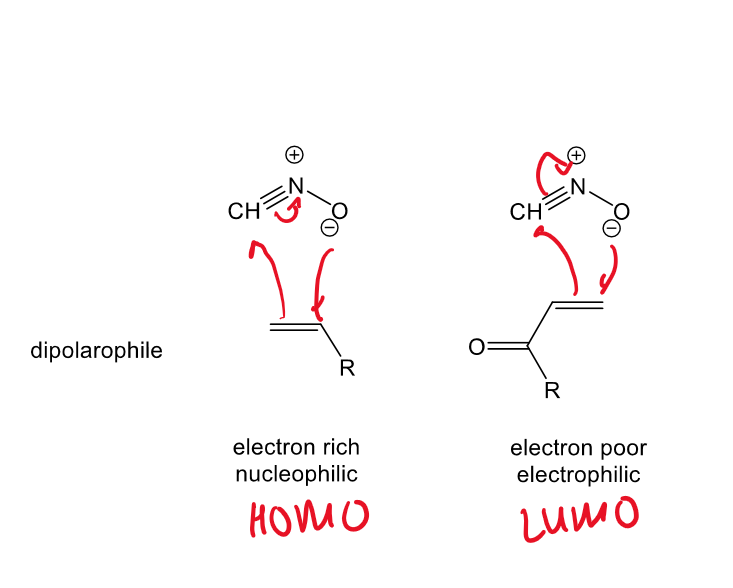
What product forms when a nitrile oxide reacts with an alkene?
An isoxazoline, a five-membered ring containing both N and O.
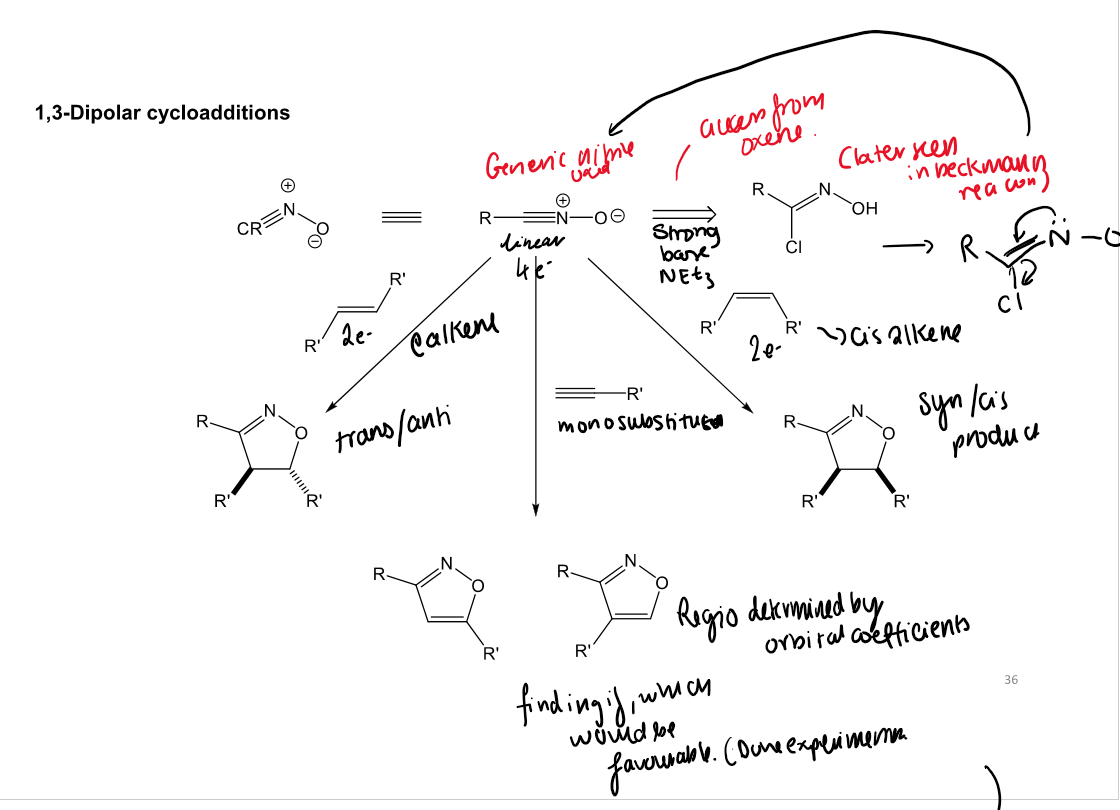
What happens to the stereochemistry of the alkene in a 1,3-dipolar cycloaddition?
It is retained because the reaction is concerted:
cis alkene → cis product
trans alkene → trans product.
Why do reactions with alkynes give products containing a C=C bond?
Only one of the alkyne's two π bonds is consumed during cycloaddition, leaving the other as a double bond in the five-membered ring.
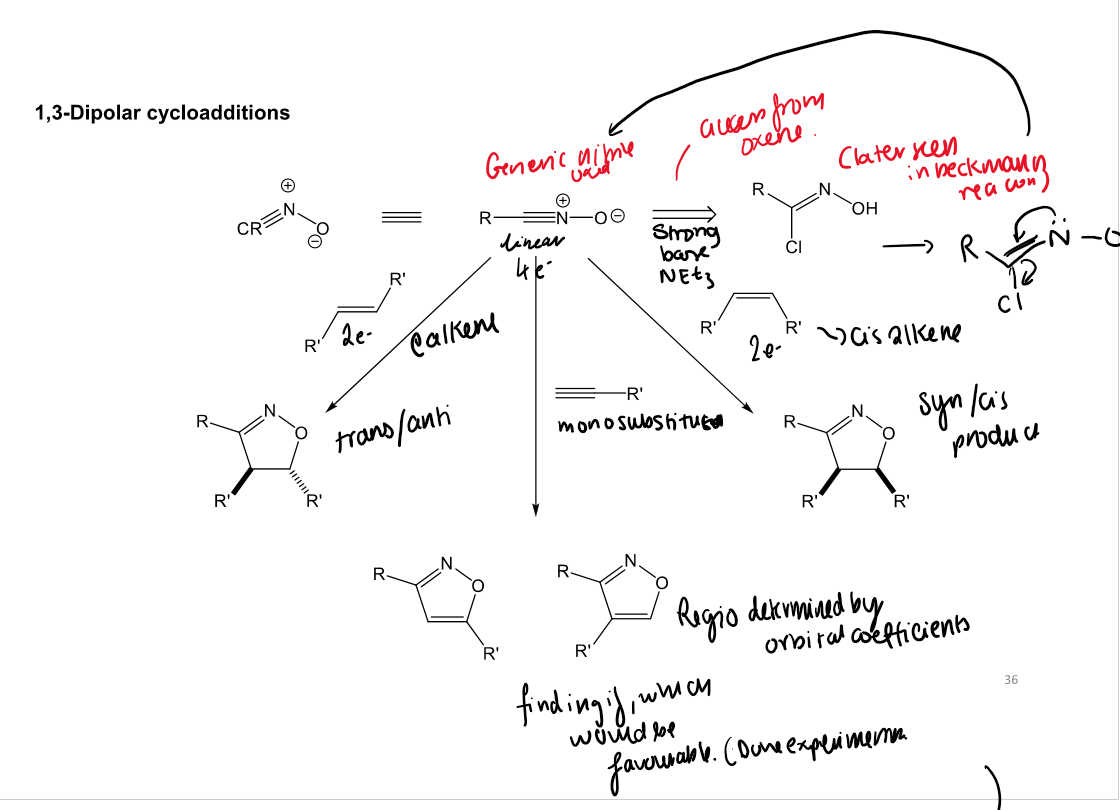
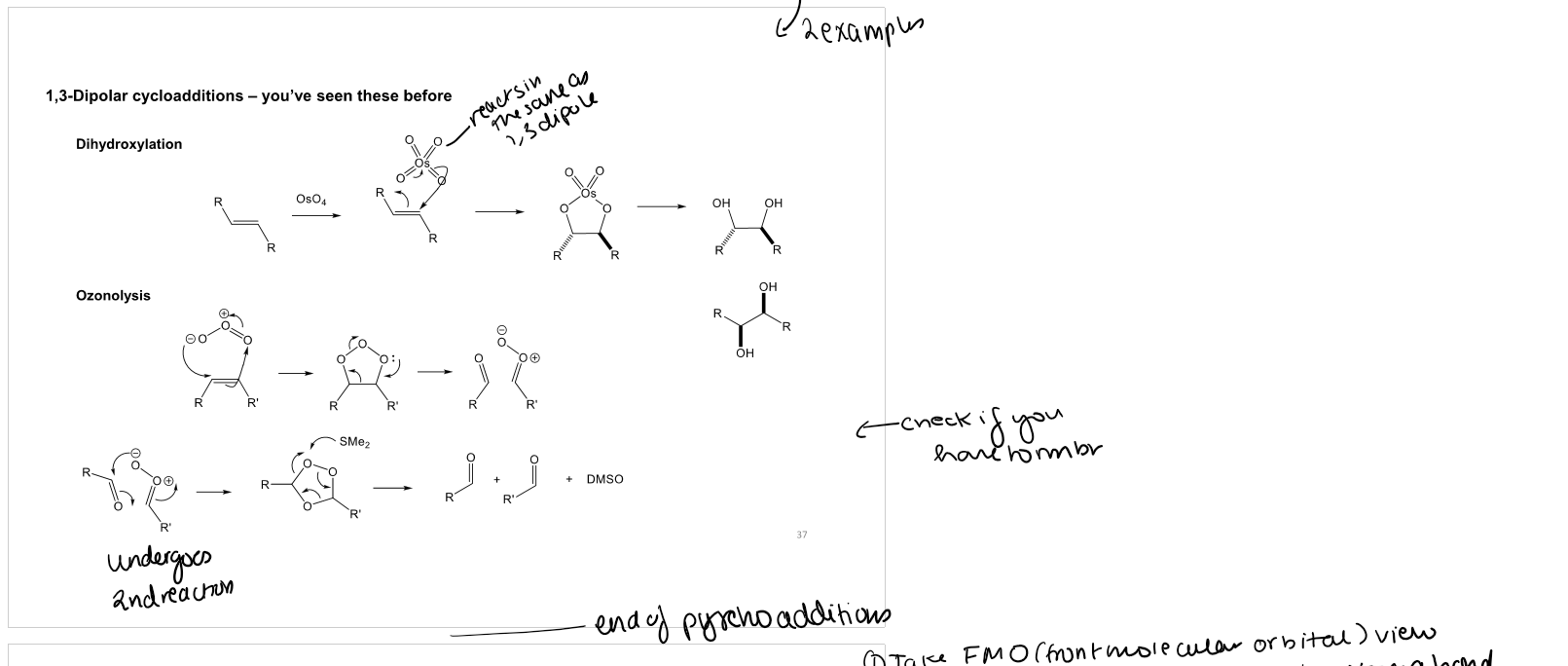
what two methods of 1,3 dipolar cycoladditions can occur
dihydroxylation
ozonolysis
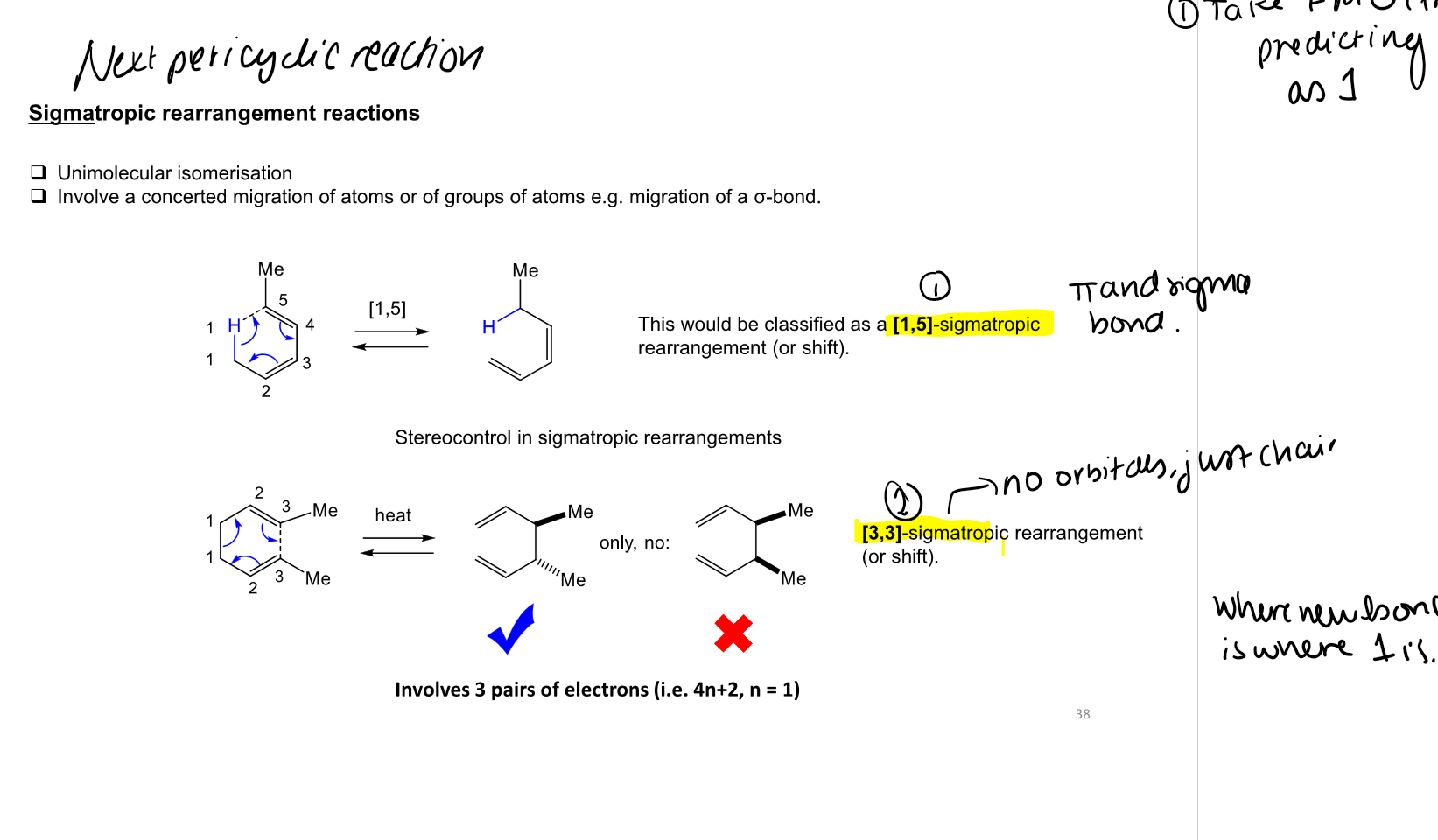
What is a sigmatropic rearrangement?
A concerted pericyclic reaction in which a σ bond migrates across a conjugated π system, producing an isomer.
What do the numbers in a [1,5]-sigmatropic shift represent?
They indicate the positions between which the σ bond migrates. In a [1,5] shift, the σ bond moves from atom 1 to atom 5.
![<p>They indicate the positions between which the <strong>σ bond migrates</strong>. In a [1,5] shift, the σ bond moves from atom 1 to atom 5.</p>](https://assets.knowt.com/user-attachments/9fbc3050-9ada-41c6-9632-e6445e7924e7.png)
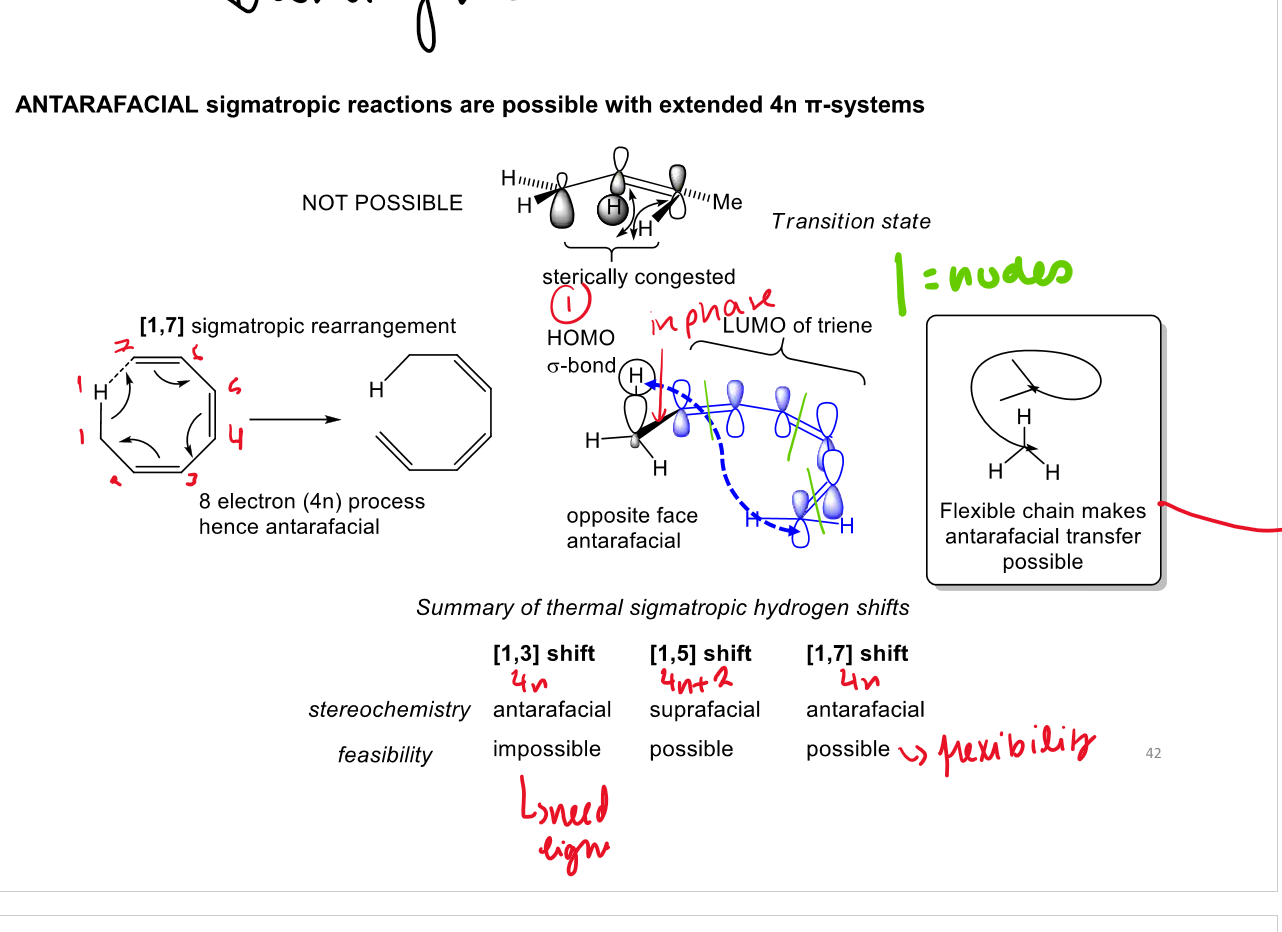
Why is a thermal [3,3]-sigmatropic rearrangement stereospecific?
this means started on 3 finished on 3 btw
t proceeds through a concerted 6-electron (4n+2) cyclic transition state, so all bonds reorganise simultaneously, preserving the required stereochemistry.
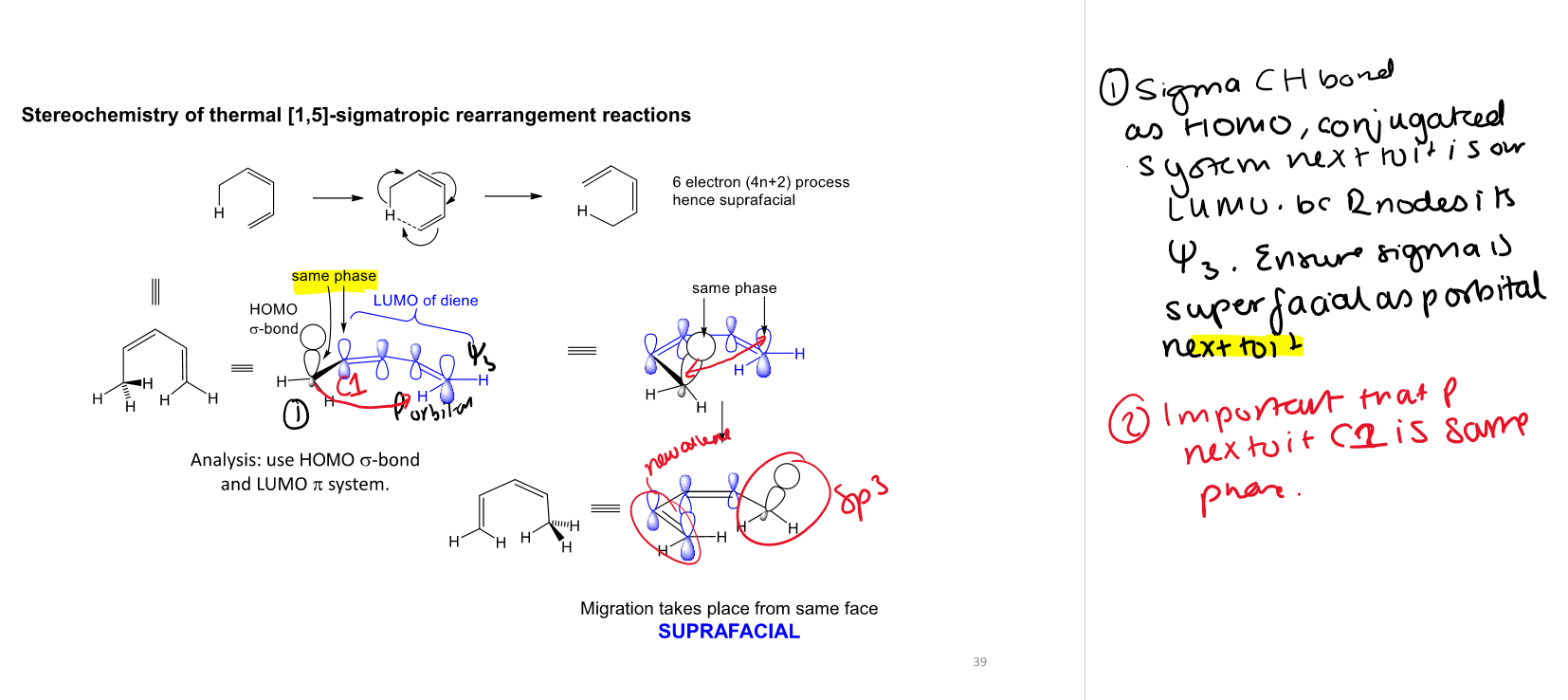
Why is a thermal [1,5]-hydrogen sigmatropic shift suprafacial?
The reaction proceeds through a concerted 6-electron (4n+2) transition state. The σ(C–H) HOMO overlaps constructively with the same-phase terminal lobes of the π-system LUMO, allowing the hydrogen to migrate on the same face (suprafacial) of the conjugated system.
drawing P orbitals how do you get these
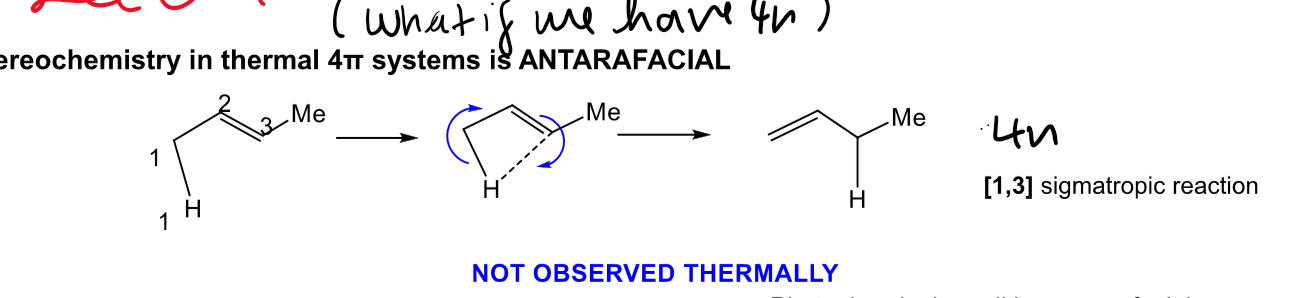
why is this photochemically favoured but not thermally
at thermal the lumo is π* the pi orbital next to sp3 must be in phase with sp3 orbitals.
at the thermal, we have antarafacial,
but photochemical promotes electron to π*, hence why its in phase and can join
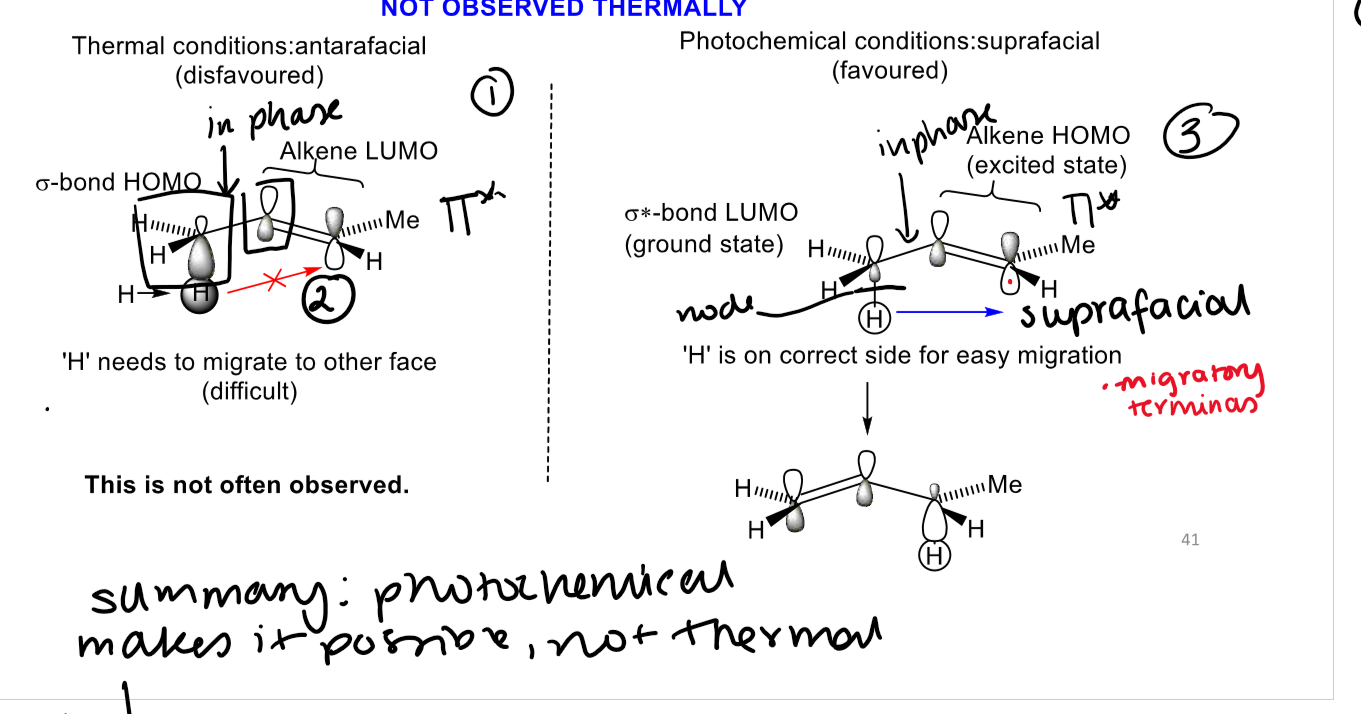
you can sometimes have antarafacial thermally, but with what requirements
usually works for 1,7 sigmatropic
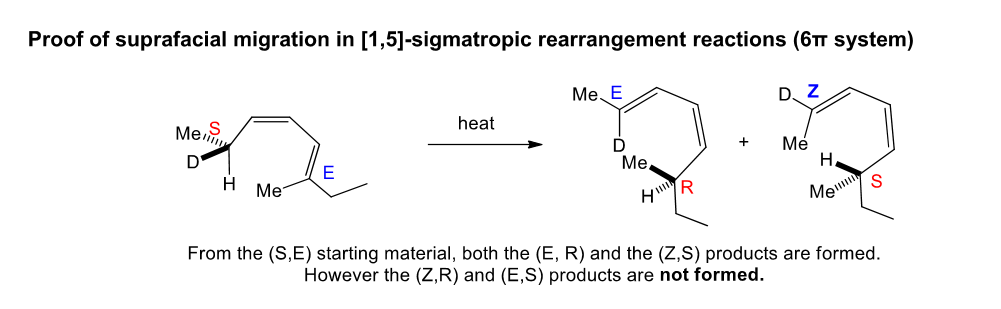
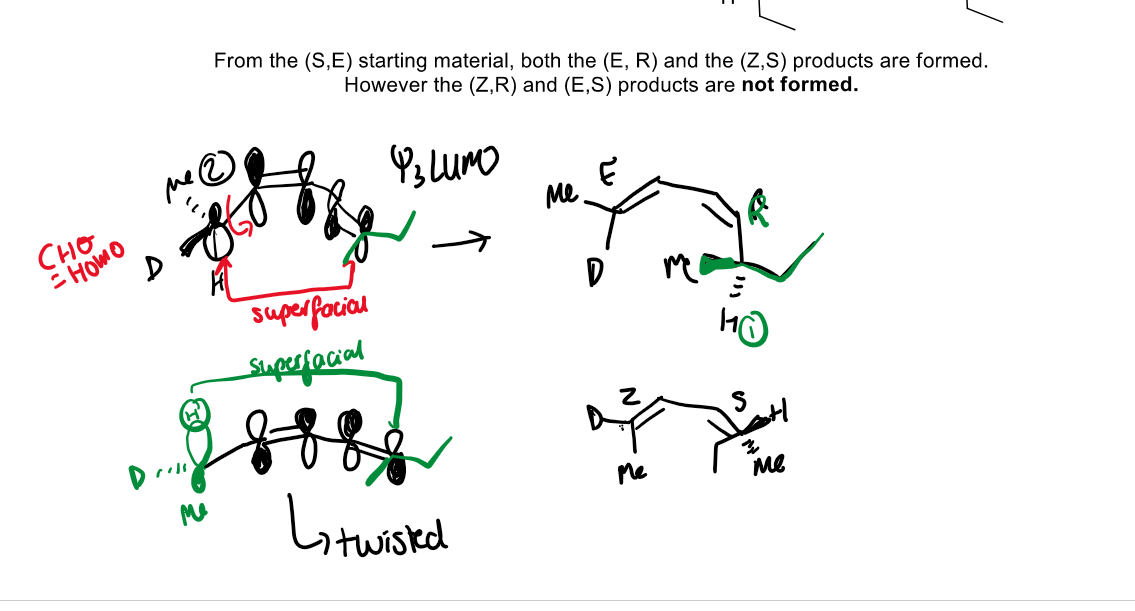
How was the mechanism of the thermal [1,5]-sigmatropic hydrogen shift confirmed experimentally?
Chemists replaced H with deuterium (D) and tracked its position. The deuterium migrated by a suprafacial [1,5]-shift, confirming the concerted sigmatropic mechanism rather than a direct 1,2-methyl migration.
What is a Cope rearrangement?
A thermal [3,3]-sigmatropic rearrangement of a 1,5-diene, in which a C–C σ bond migrates through a concerted six-electron transition state. It is typically reversible.
![<p>A <strong>thermal [3,3]-sigmatropic rearrangement</strong> of a <strong>1,5-diene</strong>, in which a C–C σ bond migrates through a concerted six-electron transition state. It is typically <strong>reversible</strong>.</p>](https://assets.knowt.com/user-attachments/2b0f4c85-ba42-43cf-97d4-965aa0ef73d7.png)
Why is the Cope rearrangement reversible?
The product is another 1,5-diene with similar stability to the reactant, so the reaction can proceed in both directions.
What is the key difference between a Cope and a Claisen rearrangement?
A Claisen rearrangement contains an oxygen atom (allyl vinyl ether) and forms a carbonyl compound, making it usually irreversible, whereas a Cope rearrangement involves only carbon atoms and is generally reversible.
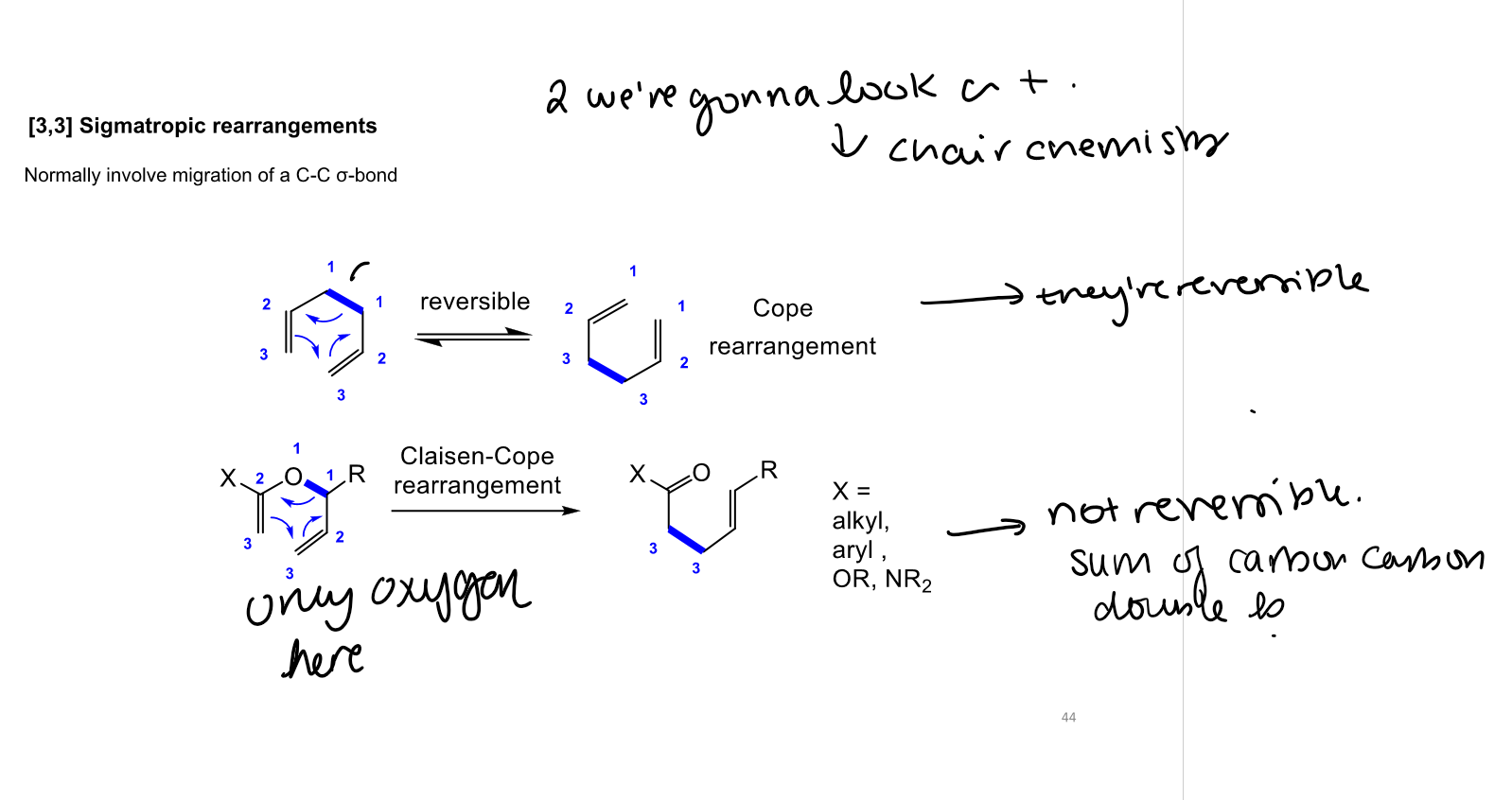
Why does the Claisen rearrangement usually give only the E alkene?
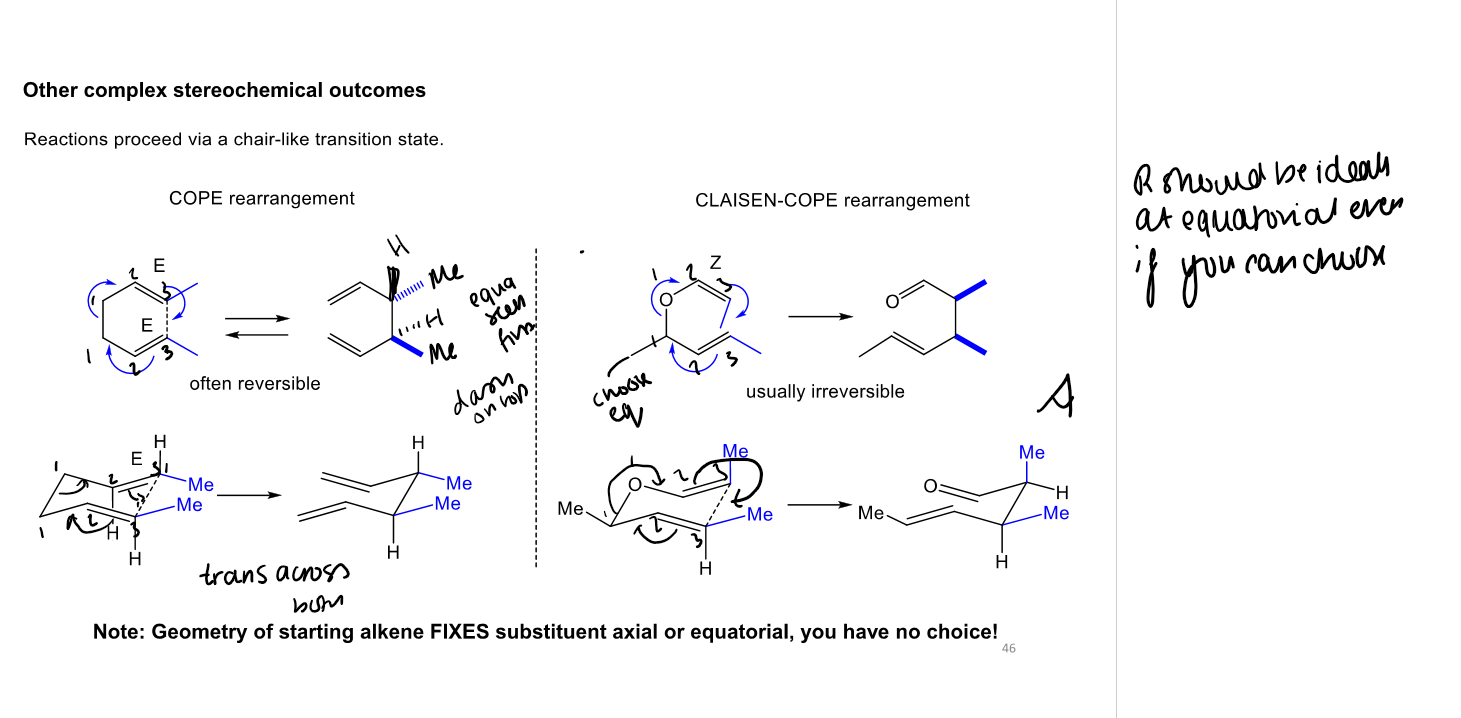
The [3,3]-sigmatropic rearrangement proceeds through a chair-like transition state. The lowest-energy chair places the substituent R in the equatorial position, which fixes the geometry so that R and the carbon chain end up on opposite sides of the newly formed double bond, giving the E (trans) alkene.
![<p>The <strong>[3,3]-sigmatropic rearrangement proceeds through a chair-like transition state</strong>. The lowest-energy chair places the substituent <strong>R in the equatorial position</strong>, which fixes the geometry so that <strong>R and the carbon chain end up on opposite sides of the newly formed double bond</strong>, giving the <strong>E (trans) alkene</strong>.</p>](https://assets.knowt.com/user-attachments/d9e2ff0f-9c26-4919-ab04-70782596581b.png)
How is stereochemistry determined in Cope and Claisen rearrangements?
Both proceed through a chair-like transition state. If multiple chair conformations are possible, the lowest-energy chair is favoured (placing bulky substituents equatorial). However, if the E/Z geometry of the starting alkene fixes the chair conformation, the substituent orientation (axial or equatorial) is predetermined, and the product stereochemistry is fixed.
What is an Alder–ene (ene) reaction?/ group transfer
A concerted pericyclic reaction in which an allylic hydrogen is transferred, a new C–C σ bond forms, and the double bond shifts simultaneously.
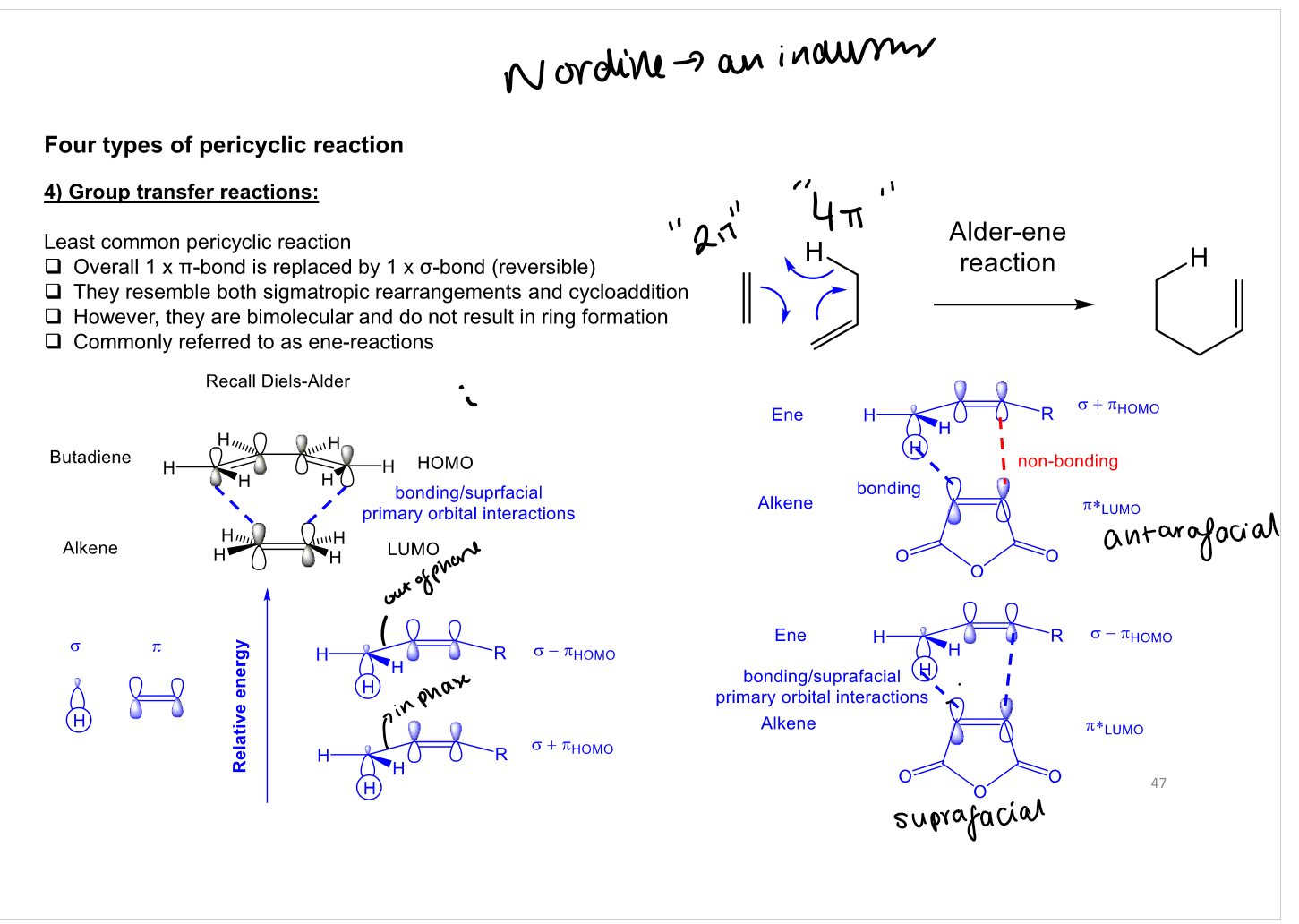
How does an ene reaction differ from a Diels–Alder reaction?
Both are concerted pericyclic reactions using HOMO/LUMO interactions, but Diels–Alder forms a new ring, whereas an ene reaction transfers an allylic hydrogen and shifts a double bond, usually without ring formation.
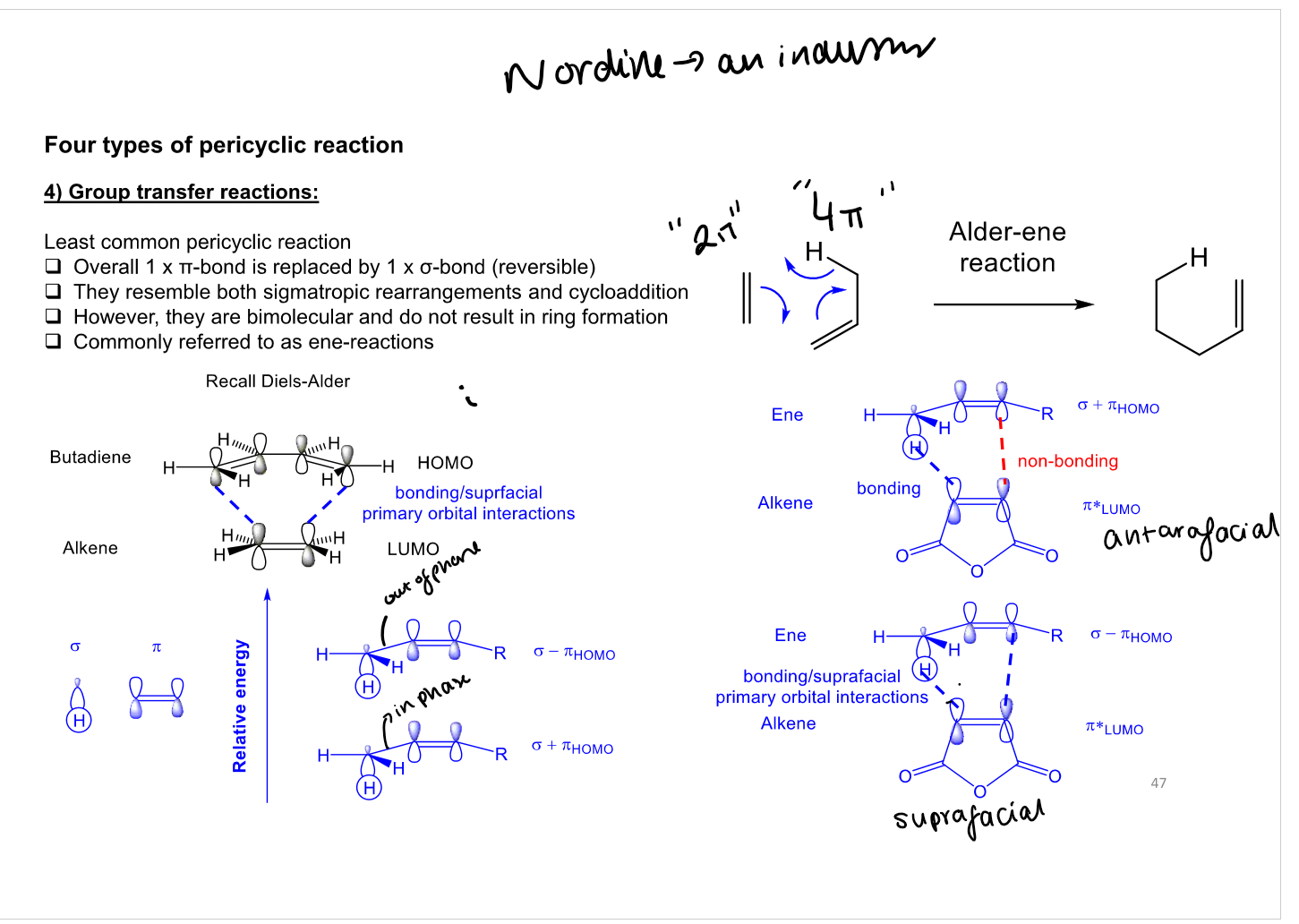
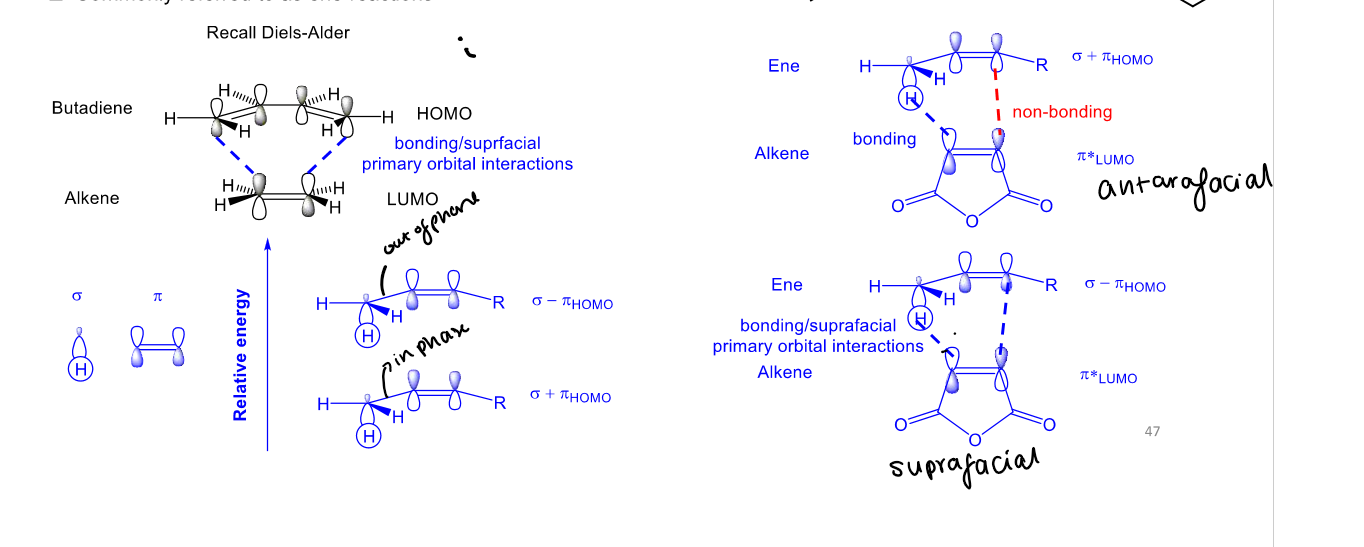
Why is the Alder–ene reaction suprafacial?
The allylic hydrogen transfer and bond formation occur on the same face of the π system, giving constructive orbital overlap throughout the concerted transition state.
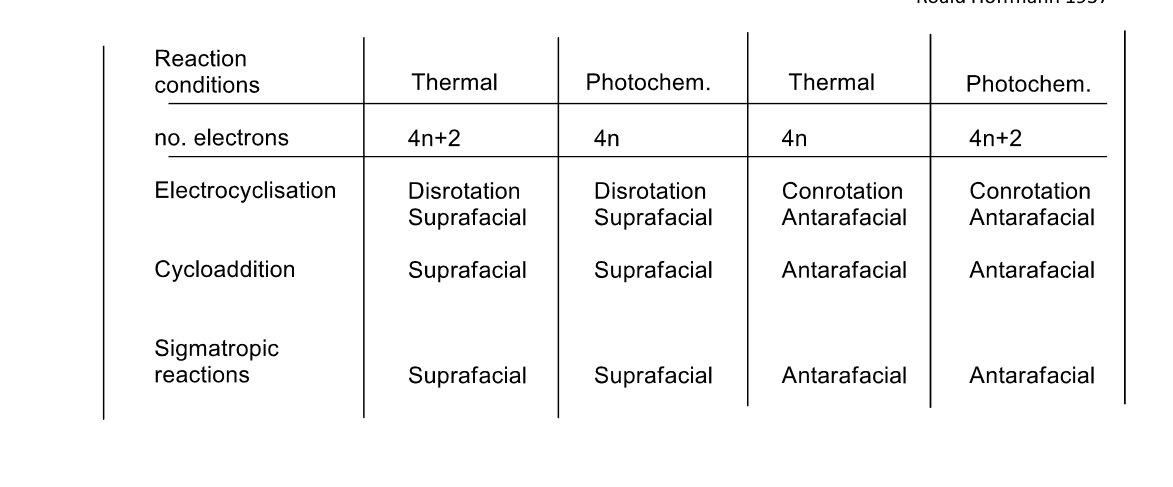
tablefy a general rule of figuring out what reacting to use and the outcome
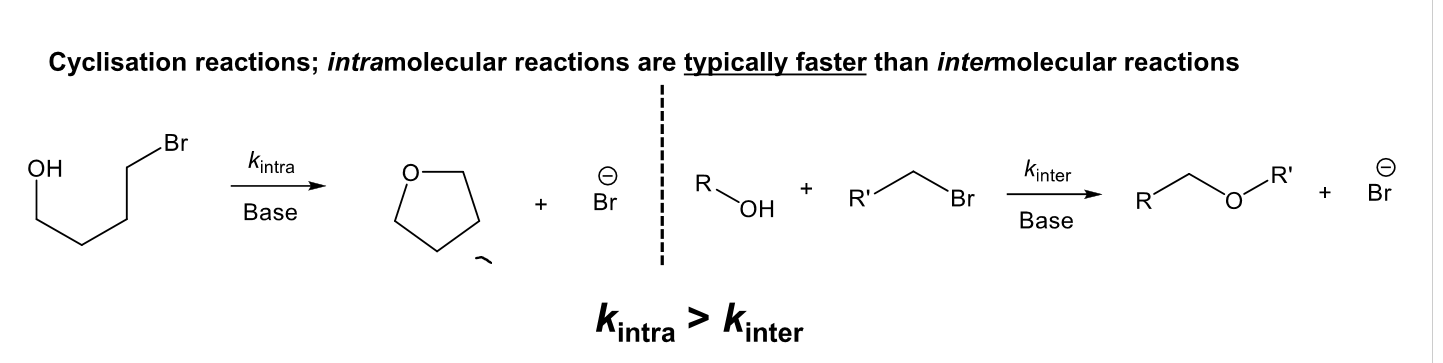
why are intramolecular reactions typically faster than intermolecular
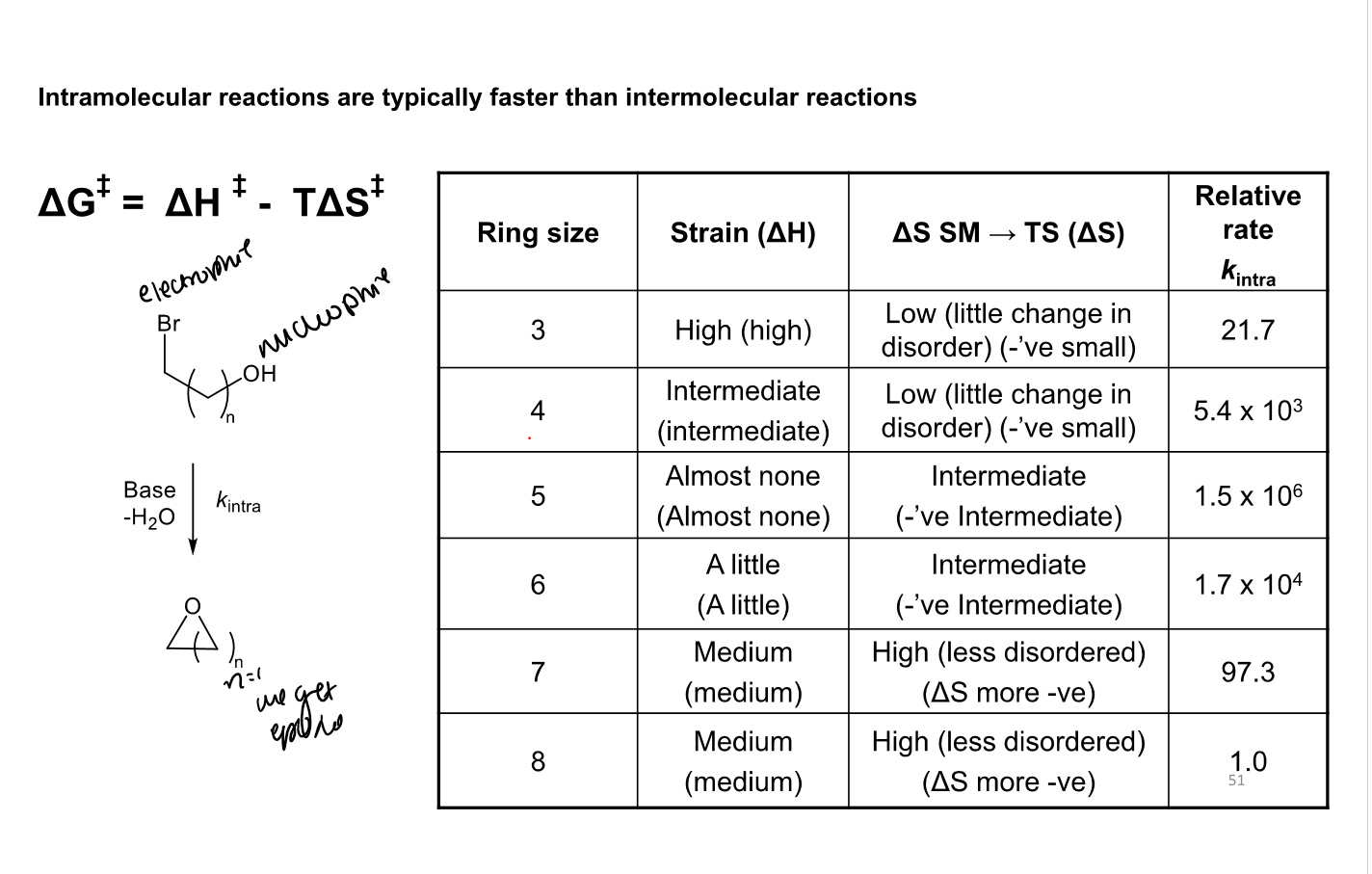
Intramolecular reactions are faster because the reacting groups are already attached to the same molecule, so they don't have to find each other. ntramolecular reactions require much less ordering to reach the transition state because the reacting groups are already connected within the same molecule. This makes ΔS‡ less negative, reducing ΔG‡ = ΔH‡ − TΔS‡, lowering the activation barrier and increasing the reaction rate. Because the transition state requires a much smaller loss of entropy (ΔS‡ is less negative), which lowers ΔG‡ and makes the reaction faster.
If intramolecular reactions are always faster... why don't all ring sizes form equally fast?
There is a balance between enthalpy (ring strain) and entropy (ease of bringing the ends together).Five-membered rings represent the best balance between enthalpy and entropy. They have very little ring strain (low ΔH‡) while the reacting ends are still close enough to meet easily (moderate ΔS‡), giving the lowest activation free energy (ΔG‡) and the fastest cyclisation rate. Because they minimise the activation free energy by balancing low ring strain (low ΔH‡) with a relatively small entropy penalty (ΔS‡), making ΔG‡ the smallest.
What does 5-exo-trig mean?
Formation of a 5-membered ring by attack on a trigonal (sp²) centre from outside the forming ring. It is generally favoured.
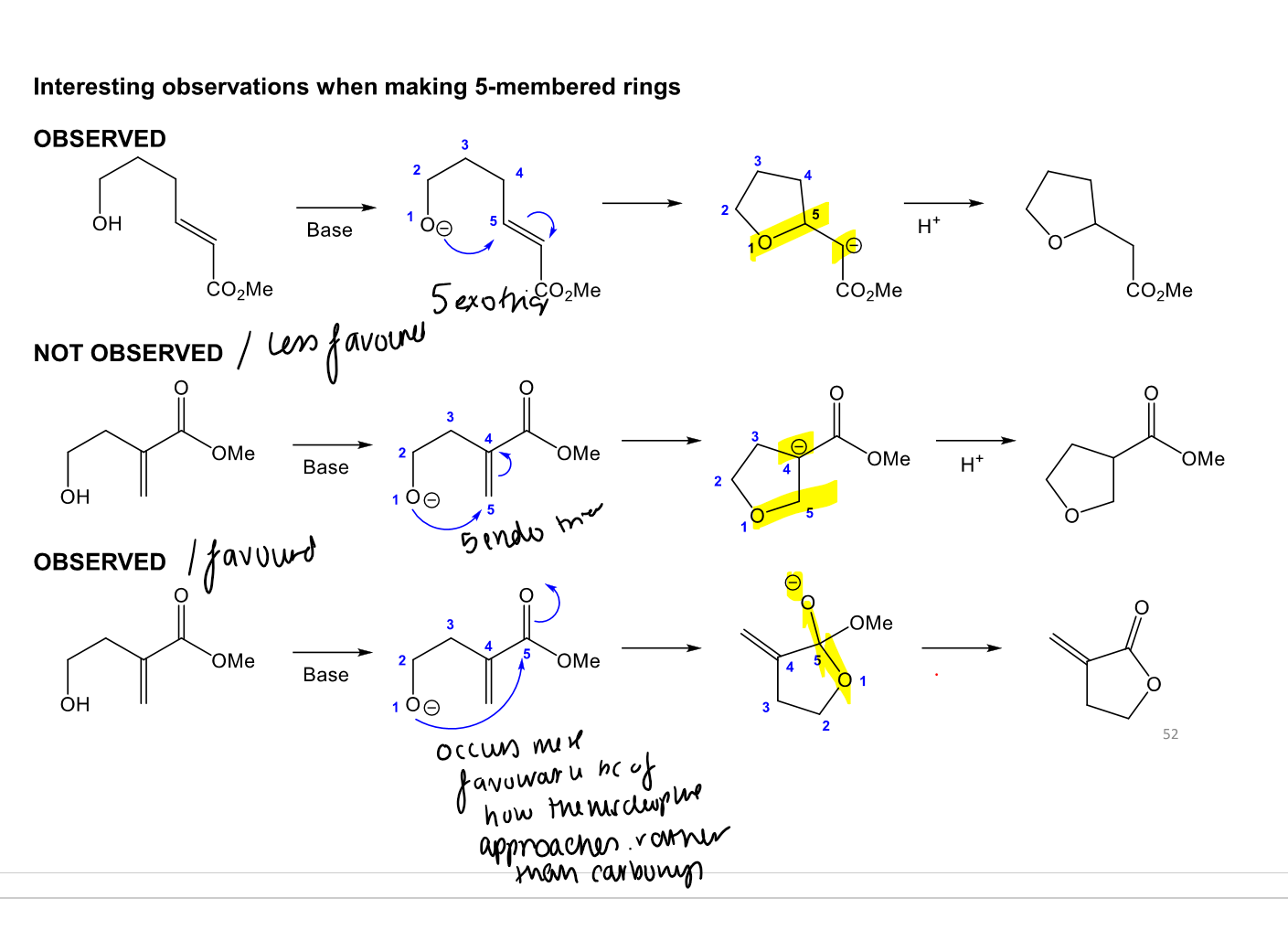
Why is 5-endo-trig cyclisation generally unfavoured?
The nucleophile cannot approach the sp² carbon with the correct orbital geometry, giving poor overlap and making cyclisation difficult.
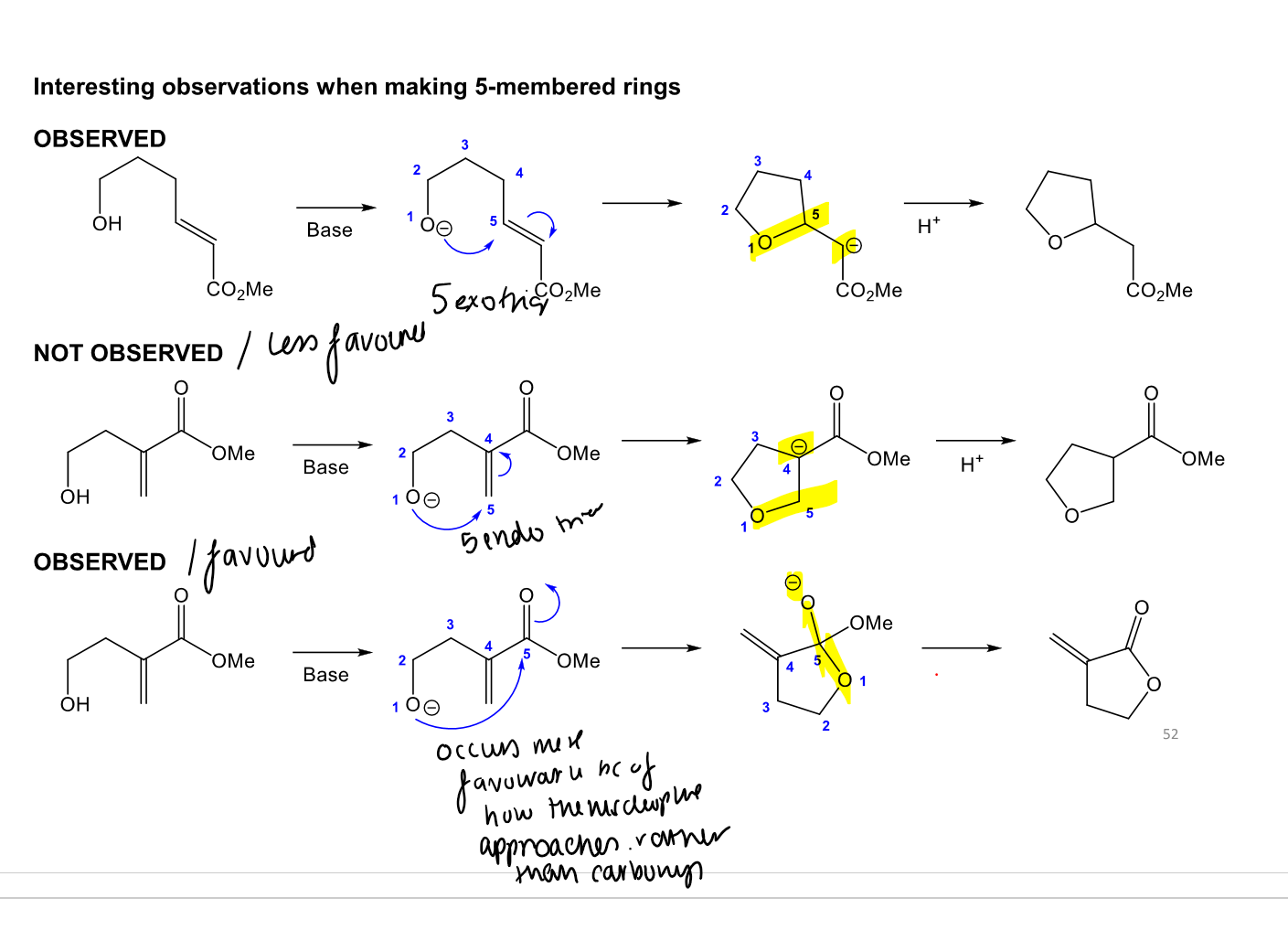
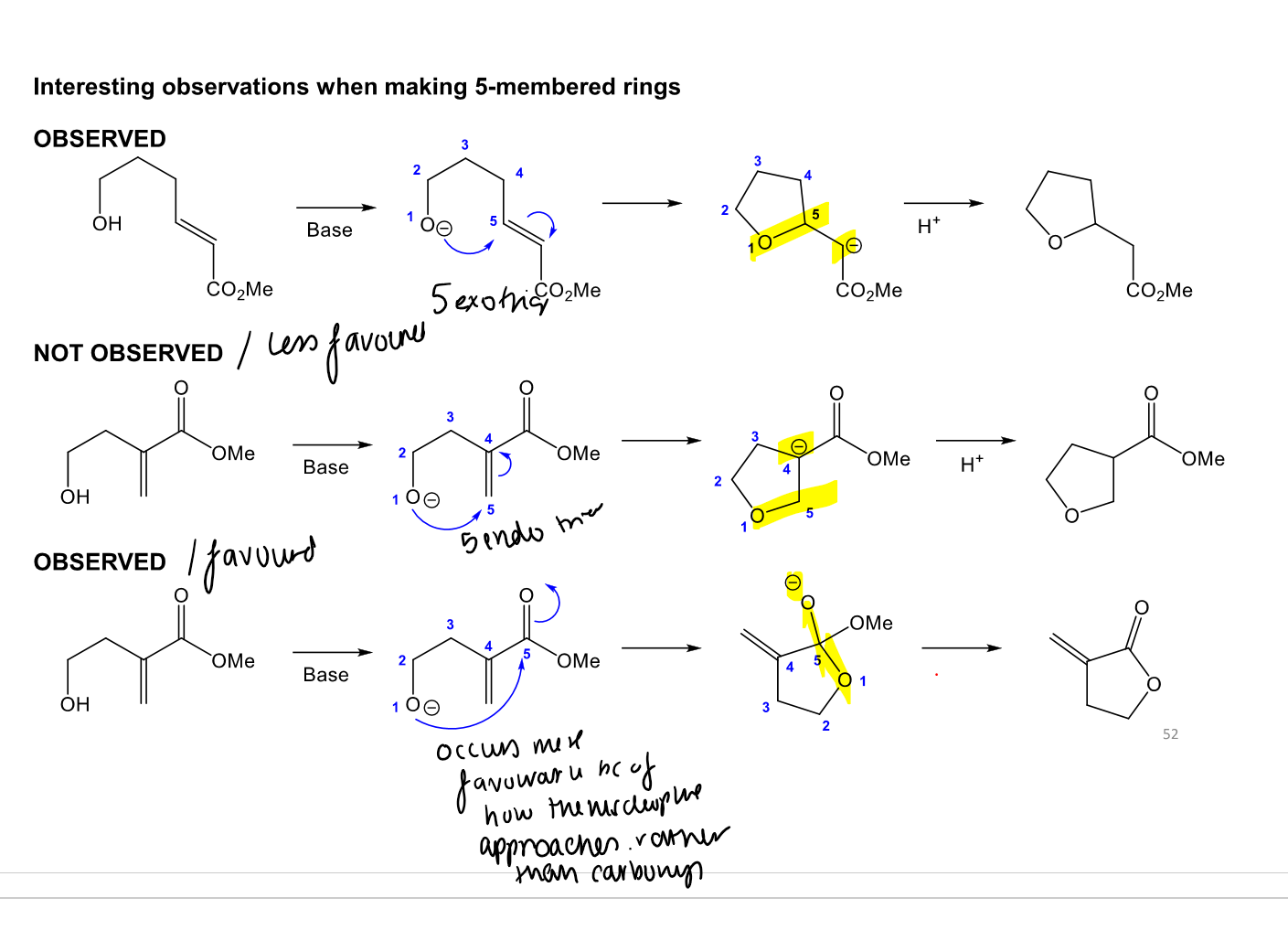
Why is intramolecular attack on a carbonyl often favoured?
The nucleophile can approach the carbonyl π* orbital at a favourable angle (Bürgi–Dunitz trajectory), giving good orbital overlap and efficient ring closure.
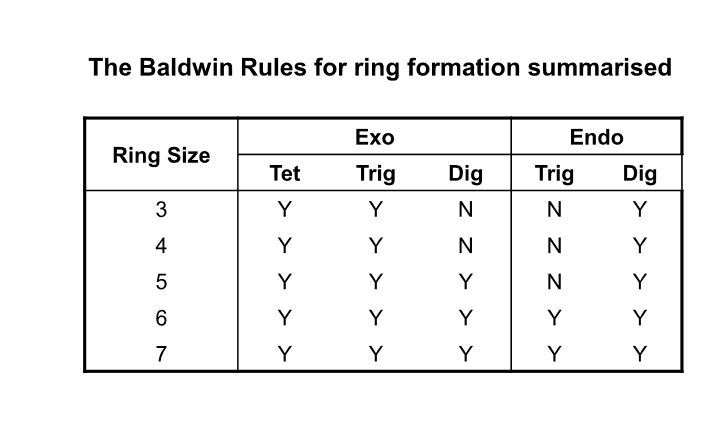
What three pieces of information make up a Baldwin cyclisation name?
Ring size – exo/endo – tet/trig/dig.
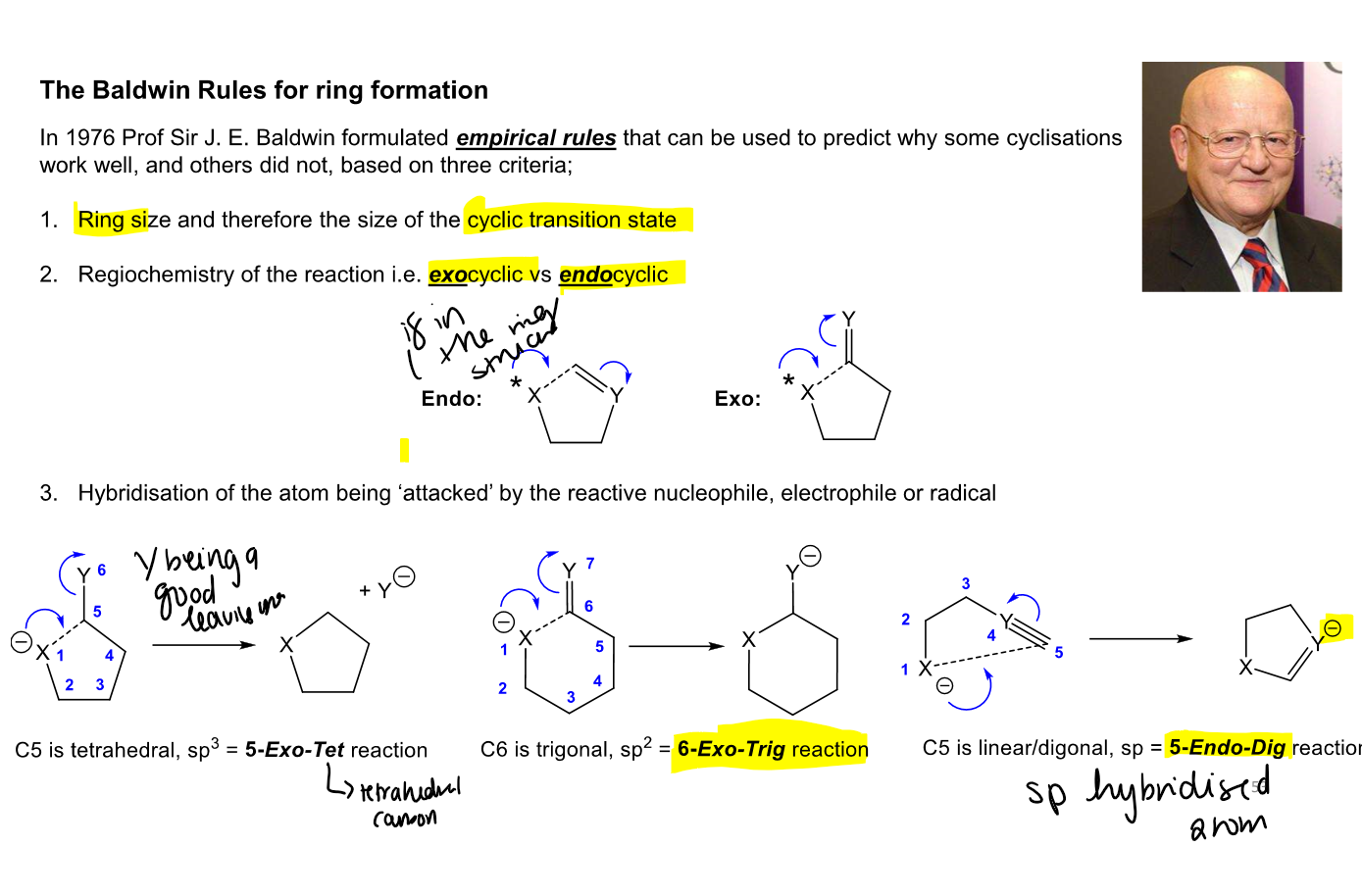
What do tet, trig, and dig describe?
They describe the hybridisation of the attacked atom:
Tet = sp³ (tetrahedral)
Trig = sp² (trigonal)
Dig = sp (linear/digonal)
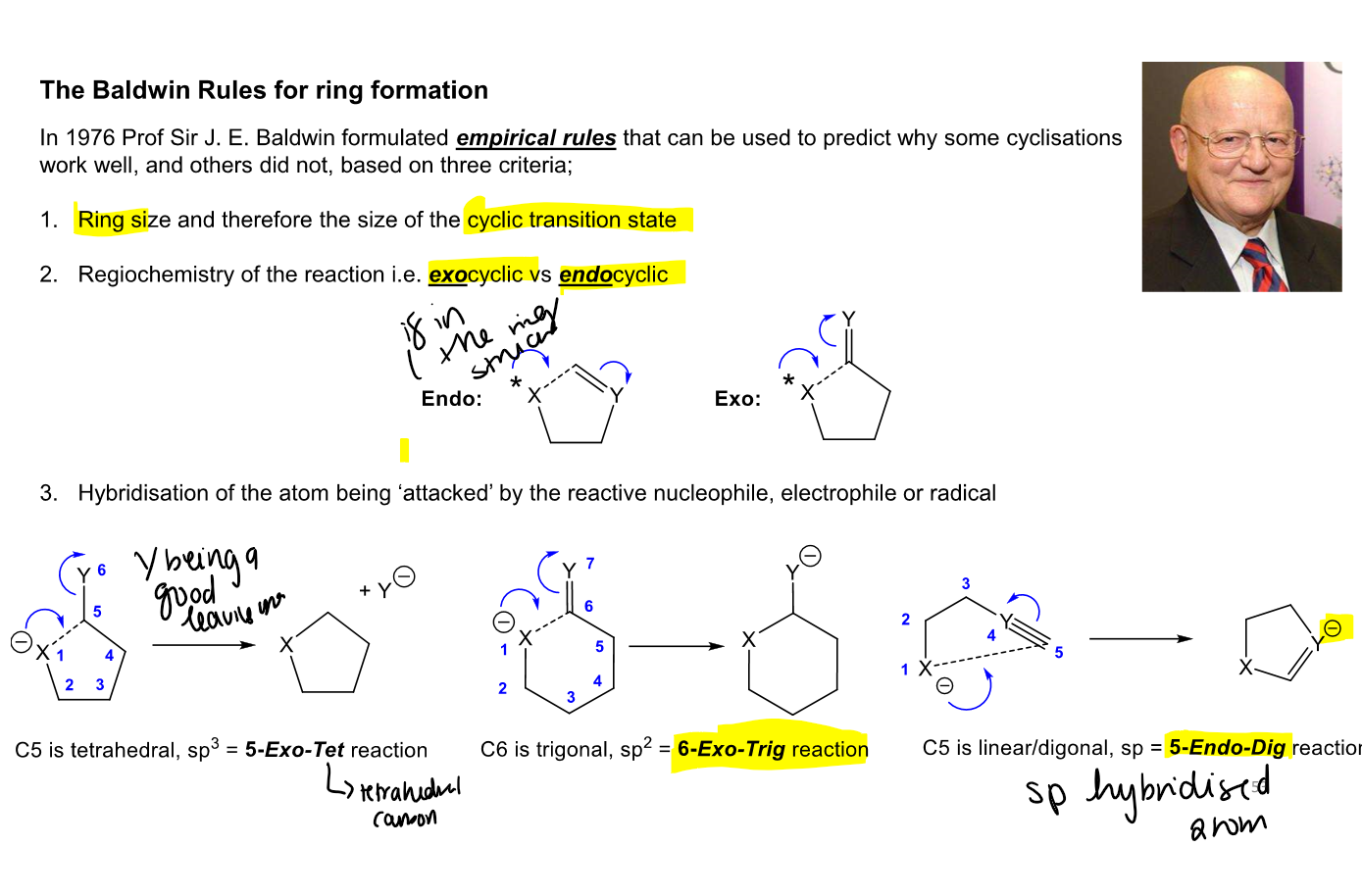
What is the difference between exo and endo cyclisation?
Exo means the multiple bond lies outside the newly formed ring, whereas endo means the multiple bond is incorporated into the ring.
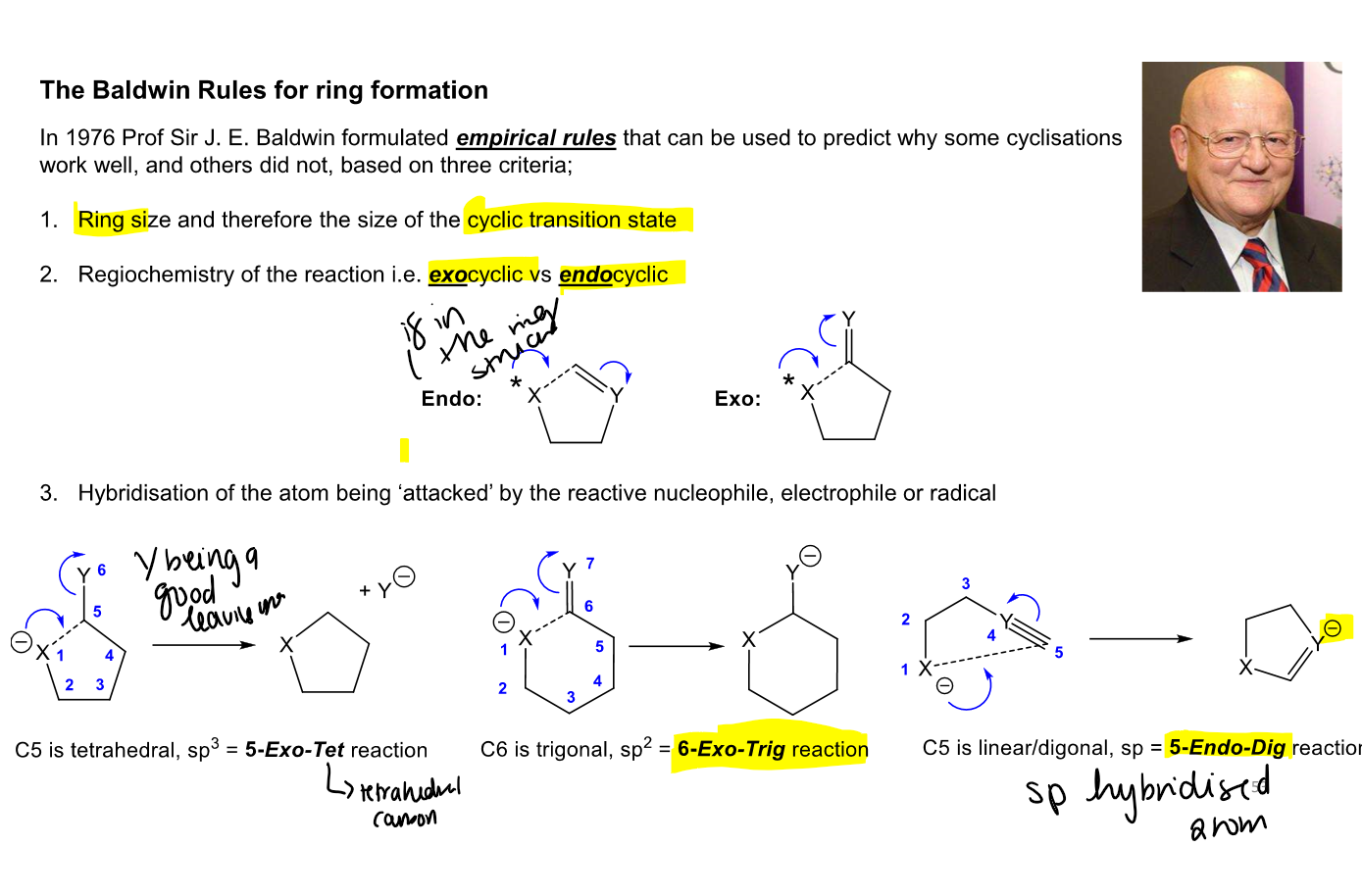
Why do Baldwin's Rules favour some cyclisations over others?
Because successful cyclisation requires the nucleophile to approach the electrophile at the correct angle to maximise HOMO–LUMO overlap with the antibonding orbital.
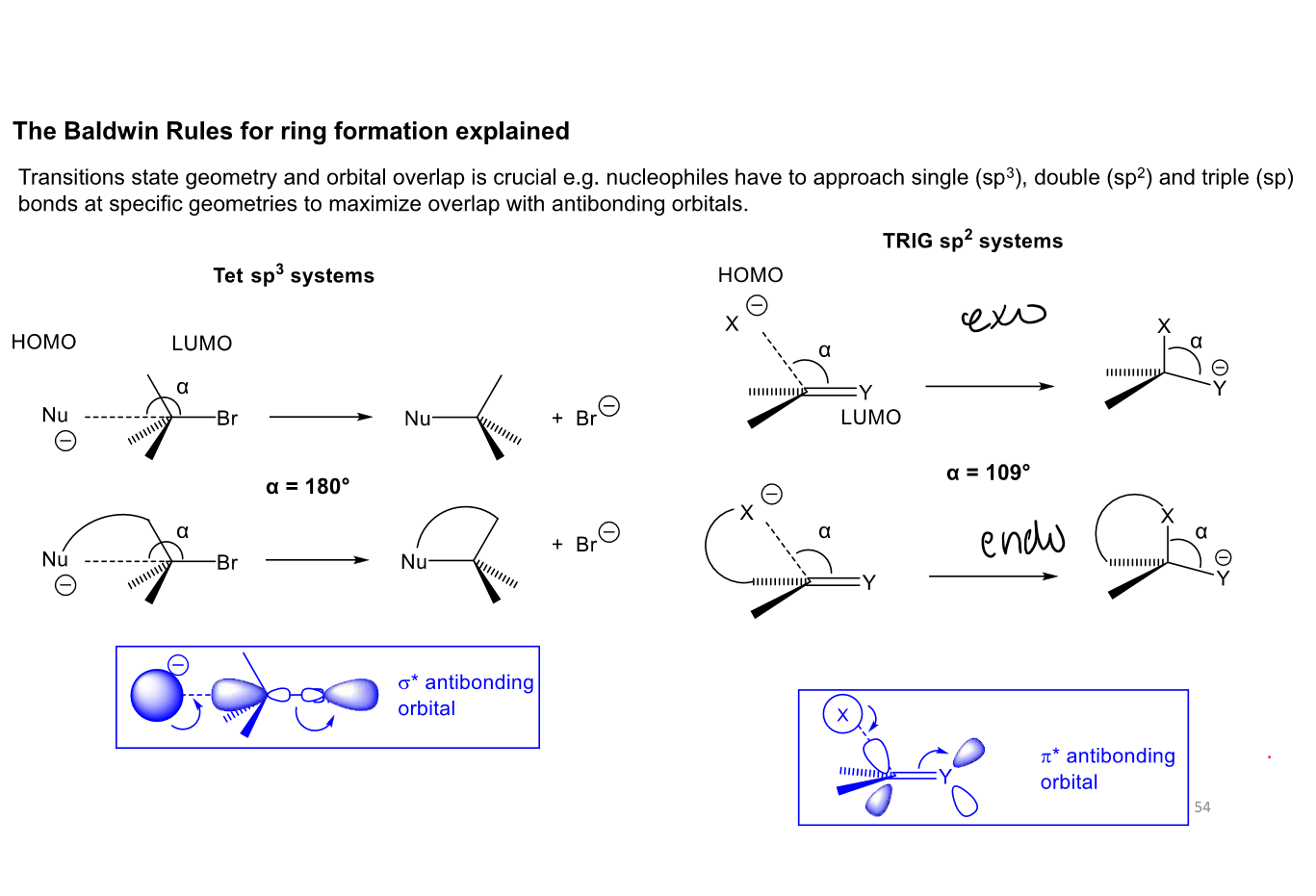
Why must nucleophiles attack an sp³ carbon from 180°?
The LUMO is the σ* antibonding orbital, which lies opposite the leaving group. Backside attack at 180° gives maximum orbital overlap (SN2 mechanism).
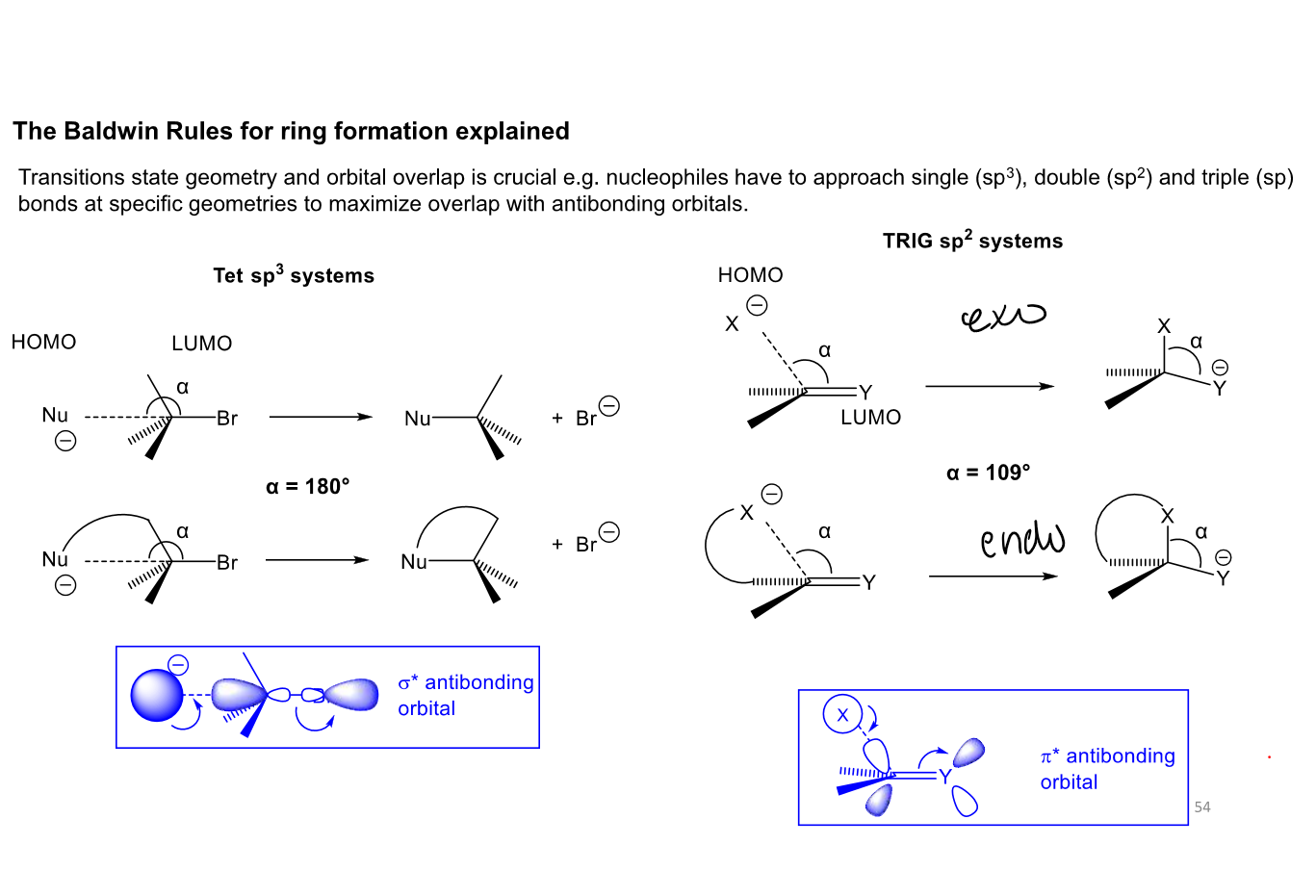
Why are many exo-trig cyclisations favoured over endo-trig cyclisations?
Exo-trig cyclisations allow the nucleophile to approach the π* orbital of an sp² centre at the correct angle, whereas endo-trig cyclisations often force a poor approach geometry, reducing orbital overlap and making the reaction unfavourable.
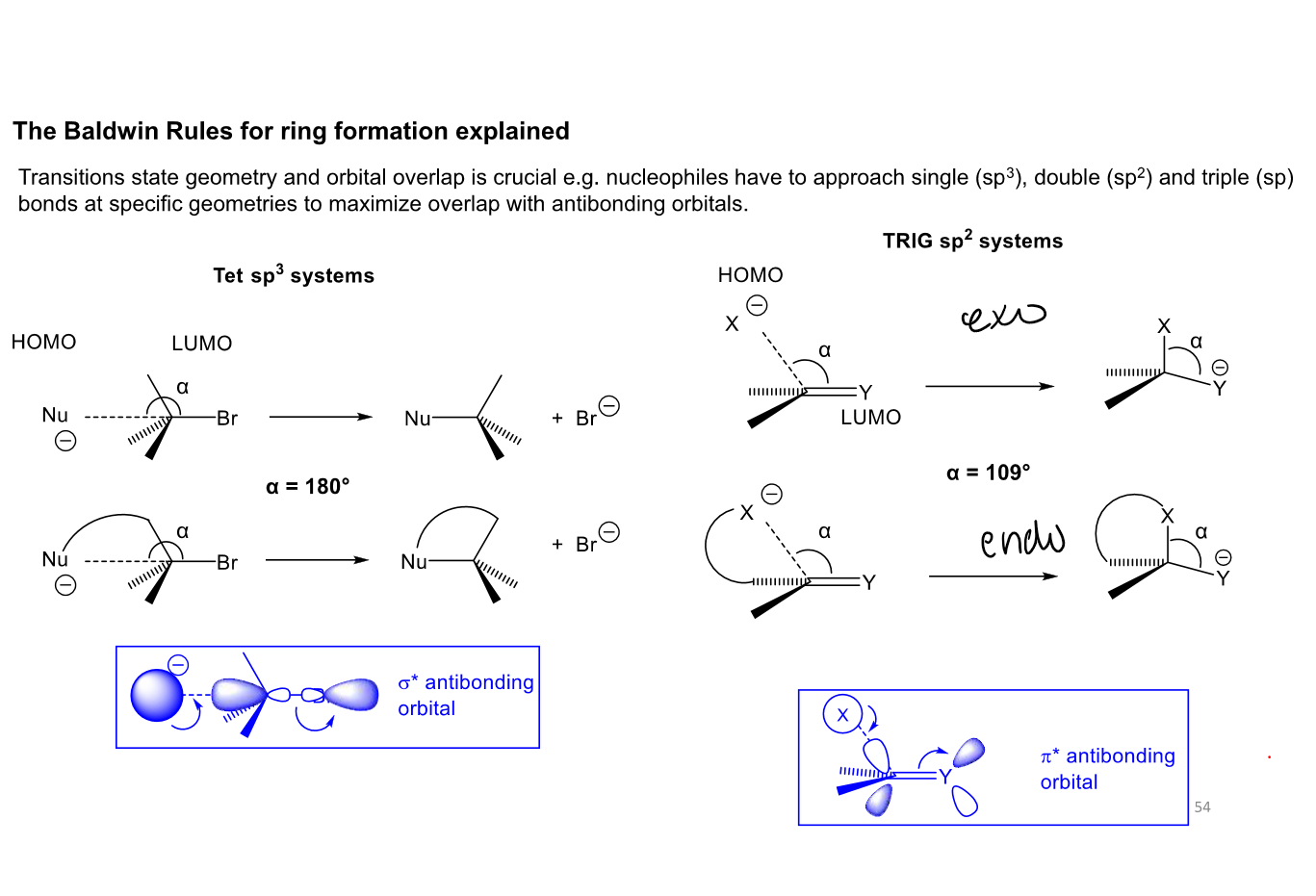
baldwin rules for ring formation