ALL General Chemistry Flashcards (DAT)
 Call Kai
 Learn
Learn Practice Test
 Spaced Repetition
 Match
Match Flashcards
 Knowt Play
1/136

There's no tags or description
Looks like no tags are added yet.
Name | Mastery | Learn | Test | Matching | Spaced | Call with Kai | Chat |
|---|
No analytics yet
Send a link to your students to track their progress
137 Terms
Elements with unpaired electrons
paramagnetic
Elements with paired electrons
diamagnetic
Elements that are attracted to magnets
paramagnetic
Elements that are not attracted to magnets
diamagnetic
Percent composition formula
component molar mass / compound molecular mass
Formula that shows the most reduced ratio of atoms in a compound
empirical
Formula that shows the exact number of atoms of each element in a compound
molecular
Percent error formula
| experimental - actual | / actual
Percent yield
actual / theoretical
Atomic theory states that all matter is made up of indivisible ___
atoms
Atomic theory states that atoms of a specific element are identical in ___ and ___
mass and properties
Atomic theory states that compounds are formed by whole number ratios of ___ or more different atoms
two
Atomic theory states that a chemical reaction is a ___ of atoms
rearrangement
The sum of the number of protons and neutrons
mass number
The electron configuration rule which states that each orbital within a subshell must receive an electron before pairing
Hund’s rule
The electron configuration rule which states that all electrons within a singly occupied orbital must have the same spin, whether that’s all up or all down
Hund’s rule
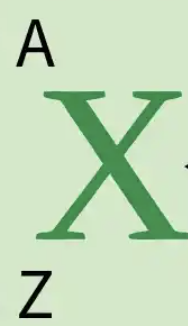
The electron configuration rule which states that subshells get filled from lower to higher energy levels
Aufbau principle
In atomic notation, the upper left number represents the
mass number, protons + neutrons
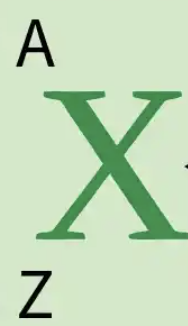
In atomic notation, the bottom right number represents the
atomic number, protons
The common example of a physical change
phase change
Formula for the maximum number of electrons in each energy level
2n²
Molecular geometry of CO2
linear
Bond angles of linear
180
Molecular geometry of BF3
trigonal planar
Bond angles of trigonal planar
120
Molecular geometry of SO2
bent
Bond angles of bent
<120
Molecular geometry of CH4
tetrahedral
Bond angles of tetrahedral
109.5
Molecular geometry of NH3
trigonal pyramidal
Bond angles of trigonal pyramidal
107.5
Molecular geometry of H2O
bent
Molecular geometry of PCl5
trigonal bipyramidal
Bond angles of trigonal bipyramidal
90, 120
Molecular geometry of SF4
seesaw
Bond angles of seesaw
<90, <120
Molecular geometry of ClF3
T-shaped
Bond angles of T-shaped
<90
Molecular geometry of XeF2
linear
Molecular geometry of SF6
octahedral
Bond angles of octahedral
90
Molecular geometry of ClF5
square pyramidal
Bond angles of square pyramidal
<90
Molecular geometry of XeF4
square planar
Bond angles of square planar
90
What elements are included in the half-filled electron configuration exceptions?
Cr, Mo
What elements are included in the filled electron configuration exceptions?
Cu, Ag, Au
In “2p6” the 2 stands for the
principal energy level, period the element is in
In “2p6” the p stands for the
subshell
In “2p6” the 6 stands for the
number of electrons
n stands for the ___ quantum number
principal
l stands for the ___ quantum number
angular momentum
ml stands for the ___ quantum number
magnetic
ms stands for the ___ quantum number
spin
Allowed values of n
positive integers (1, 2, 3)
Allowed values of l
0 to n-1
Allowed values of ml
-l to +l
Allowed values of ms
+1/2 or -1/2
Which quantum value conveys the orbital size and energy level
n
Which quantum value conveys the orbital shape
l
Which quantum value conveys the orbital orientation
ml
Which quantum value conveys the spin orientation
ms
Compounds made from a metal + non-metal
ionic
Ionic compounds ___ (share/transfer) electrons
transfer
Compounds made from a non-metal + non-metal
covalent
Covalent compounds ___ (share/transfer) electrons
share
Ionic compounds have ___ (high/low) melting/boiling points
high
Covalent compounds have ___ (high/low) melting/boiling points
low
___ compounds are soluble in water and conduct electricity
ionice
___ compounds are insoluble in water and do not conduct electricity
covalent
Ionic compounds have a ___ (big/small) electronegativity difference
big
Covalent compounds have a ___ (big/small) electronegativity difference
small
Increase in bond order = ___ in bond length
decrease
Dipole-dipole IMF are found in all ___ molecules
polar
Ion-dipole IMF are found in all ___ molecules
ionic and polar
Increasing IMF = ___ melting/boiling points
increasing
Increasing IMF = ___ viscosity
increasing
Increasing IMF = ___ surface tension
increasing
Increasing IMF = ___ vapor pressure
decreasing
List the strength of IMF from strongest to weakest
ion dipole, Hydrogen bonding, dipole dipole, london dispersion forces
Formal charge formula =
valence electrons - lone pairs - bonds
Metals are generally solid at room temperature except for ___, which is a ___
Hg, liquid
Non-metals are generally gas or solid at room temperature except for ___, which is a ___
Br, liquid
Metals have ___ (high/low) melting/boiling points
high
Non-metals have ___ (high/low) melting/boiling points
low
Metals are ___ (good/poor) heat conductors
good
Non-metals are ___ (good/poor) heat conductors
bad
Energy needed to remove an electron from an atom
ioniziation energy
Ionization energy increases
up and right
For ionization energy, group 2 is ___ (greater than/less than/equal to) group 13
greater than
For ionization energy, group 15 is ___ (greater than/less than/equal to) group 116
greater than
The second ionization energy is generally ___ (higher/lower) than the first ionization energy
higher
Amount of positive charge experienced by an electron
effective nuclear charge
Zeff increases
up and down
Zeff =
Z-S
The ability to attract an electron
electronegativity
Electronegativity increases
up and right
Atomic radius increases
down and left
Amount of energy released when an electron is added to an atom
electron affinity
Electron affinity increases
up and right