China 1950-1981: the People and the State
 Studied by 0 people
 Call Kai
 Learn
Learn Practice Test
 Spaced Repetition
 Match
Match Flashcards
 Knowt Play
1/65

There's no tags or description
Looks like no tags are added yet.
Name | Mastery | Learn | Test | Matching | Spaced | Call with Kai |
|---|
No analytics yet
Send a link to your students to track their progress
66 Terms
Chinese Civil War (1945-1949)
1945: End of WWII - Civil War resumes between GMD and CCP
1946-1948: CCP progresses by rural support and military successes
1949: GMD retreats to Taiwan, Mao proclaims the People's Republic of China
Why did China become communist in 1949?
Weakness of GMD: Corruption, poor leadership under Chiang Kai-shek, loss of public support
Strength of CCP: Strong leadership under Mao Zedong, effective guerrilla tactics, support from peasants
Impact of WWII: GMD exhausted fighting Japan whilst CCP grew stronger in rural areas
Soviet Support: USSR backed the CCP after Japan's defeat
Early aims of the CCP - totalitarianism
People were required to participate in organisations set up by the CCP, such as trade unions
The All-China Federation of Democratic Youth and the All-China Federation of Women were used to involve the masses in transforming society
Each year 800,000 new recruits joined the PLA and left indoctrinated after 3 years
Labour camps were set up and filled with 1.5 million prisoners. Around 27 million died in these during Mao's reign
Early aims of the CCP - suppression of counter-revolutionaries
The Suppression of Counter-Revolutionaries Campaign was launched in October 1950 to stamp out non-political offenses (murder, robbery, gambling, drug-use, prostitution)
In the Guangdong, 53,000 bandits and 90,000 other criminals were caught
28,000 suspected counter-revolutionaries were executed - executions were often carried out in public for maximum impact
Early aims of the CCP - reform the CCP
The Three Antis Campaign was launched in 1951, targeting party members and state officials
It focused on combatting corruption, waste, and inefficiency in the CCP
Early aims of the CCP - stamp out bribery and corruption
The Five Antis Campaign was launched in 1952, to eliminate bribery, tax evasion, theft of state property, cheating, and economic espionage
Used mass meetings were people were forced to confess or denounce others
Created fear and pressure leading to mass suicides (200,000-300,000)
Early aims of the CCP - reunited China under CCP control, Tibet
In October 1950, the PLA were sent into Tibet to assert the Chinese claim to the land
Tibetans regarded themselves as separate people, and there was great resistance to Chinese control
60,000 Tibetans fought to defend their land, but failed
Within 6 months, resistance was repressed and a regime of terror aimed at eradicating the Tibetan identity was enforced
Early aims of the CCP - reunite China under CCP control, Xinjiang
Xinjiang had a large Muslim population
CCP was worried that the region was either declare independence or be annexed by the USSR
By 1951, the CCP had authority over the area
Strict controls on religious worship were introduced to try to reduce their sense of local identity
Hundred Flowers Campaign (1956-1957)
'let a hundred flowers bloom, let a hundred schools of thought contend'
A period of debate and reflection on how China was being run
Mao suggested open debate would lead to better ways of running government, and show the superiority of communism over capitalism
At first, non-CCP members were encouraged to offer criticism, then intellectuals
It was stopped within a year
Why was the Hundred Flowers Campaign stopped?
People were reluctant to speak their mind, but when intellectuals were able to join, there was a lot of criticism about human rights, corruption, living standards, and even Mao himself
This was unexpected so Mao stopped the campaign
The Anti-Rightist Movement (1957-1959)
Everyone involved in the Hundred Flowers campaign was forced to withdraw their views
CCP was purged of members who had been too vocal
300,000-750,000 people were persecuted and sent to labour camps
Communist social policies - public health
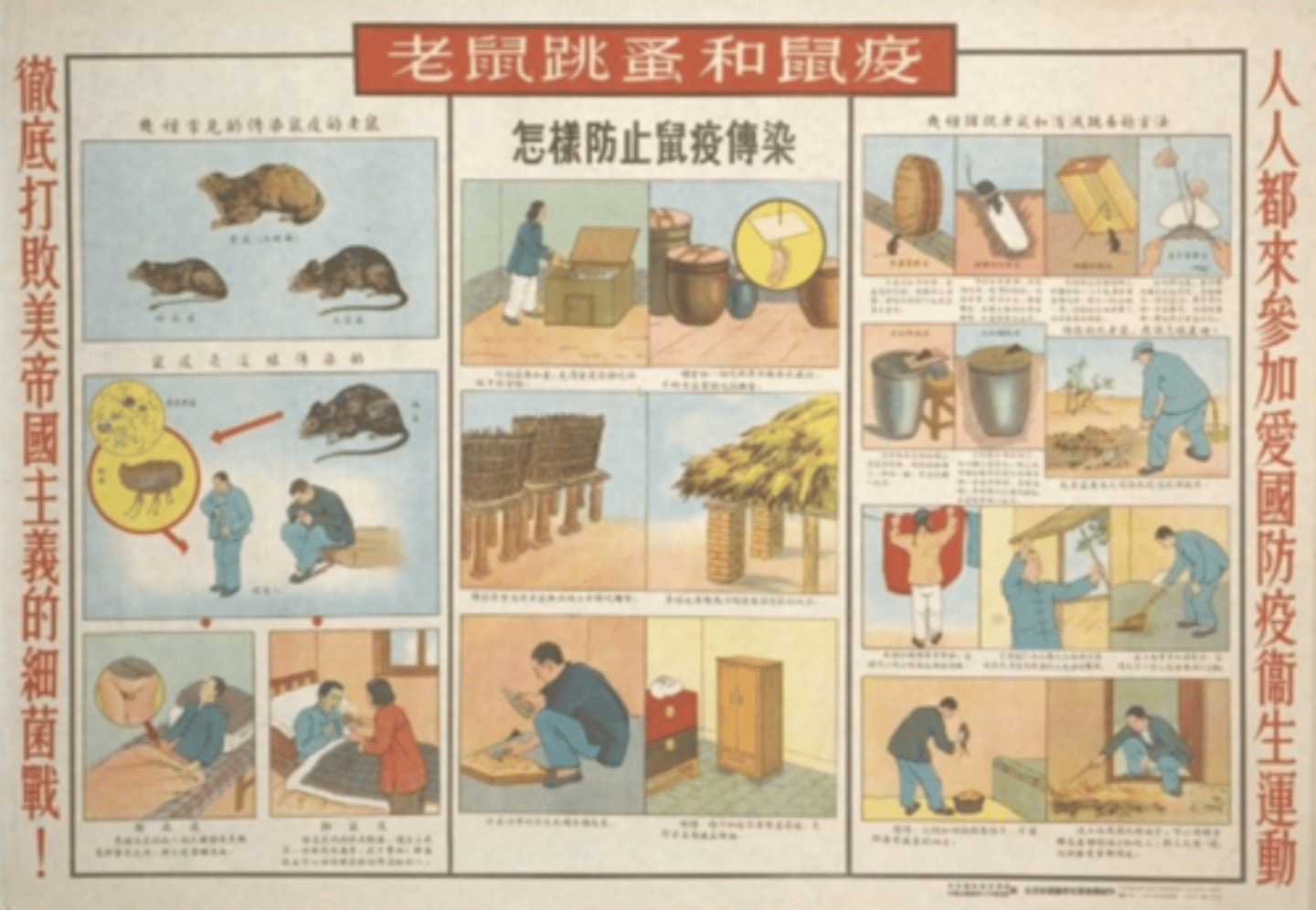
Cities were cleaned up
Residents formed committees to tidy up the streets.
In Shanghai, each family had to produce one rat's tail a week as evidence
Healthcare became free
Emphasis was on prevention
Poppy fields were destroys and drug-dealers were shot to reduce opium addiction
Herbal remedies were discouraged
Communist social policies - religious practice
Religion was regarded as superstitious
Both Christians and Buddhists were attacked
Churches, temples, and shrines were destroyed
Ancestor worship was forbidden
Communist social policies - custom and tradition
Songs and dances at weddings/festivals were banned
They were replaced by political meetings and discussions organised by the CCP
Communist social policies - state control of business
Many businesses and banks came under state control
Companies got loans from the state bank, they were unable to if the government disapproved of what they were selling
Communist social policies - women
Women were encouraged to work
Foot-binding was banned
Marriage Reform Law - banned forced marriage, divorce was made easier, women had rights and custody of children was allowed
Communist social policies - young people and education
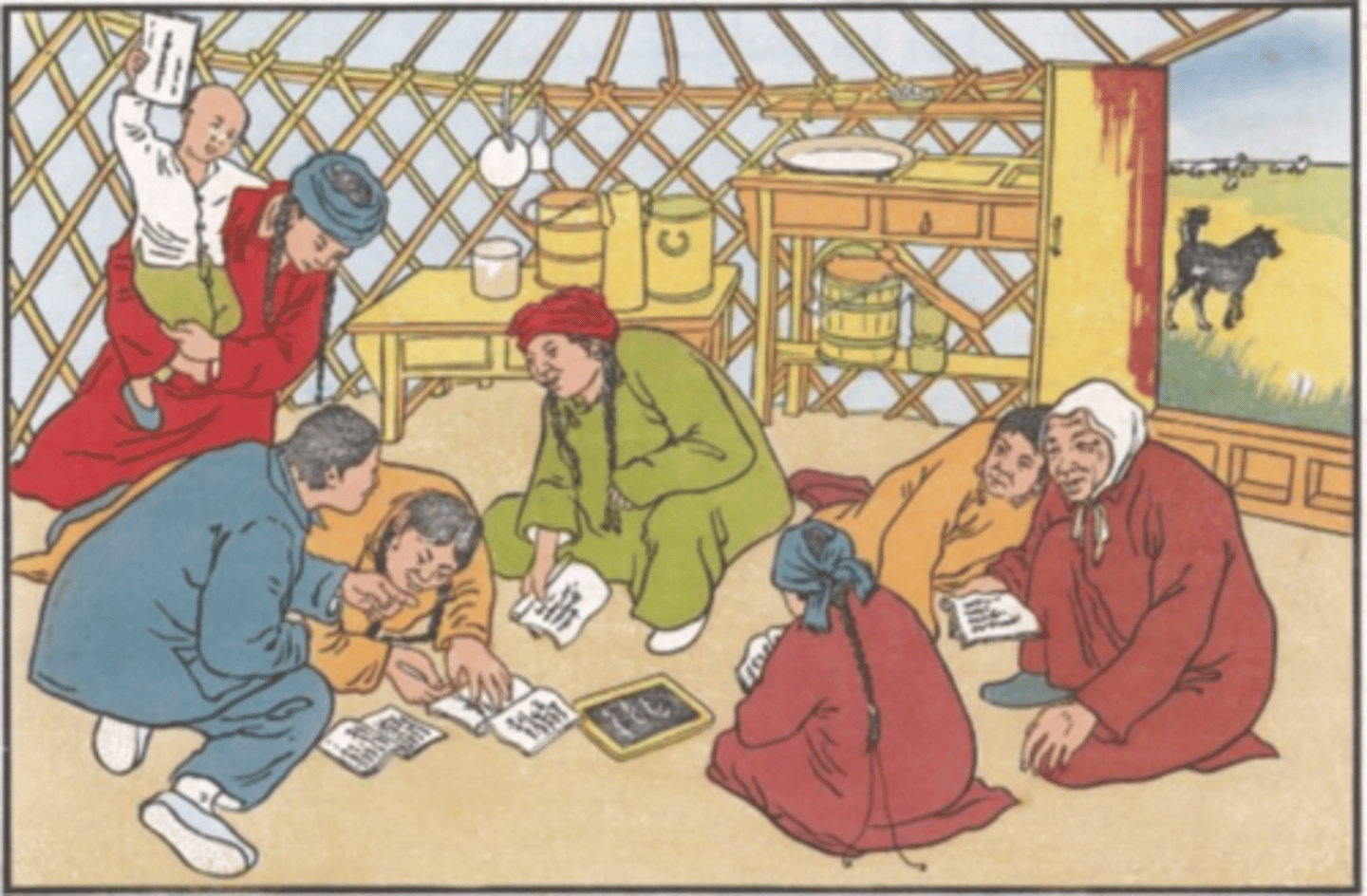
Party workers taught peasants to read and write whilst teaching them Maoist Communism
When going to the market, the had to pass 'literacy checkpoints'
Pinyin was introduced
Students were sent to the USSR to learn skills
Poorer students had access to higher education
1949: 200 higher education institutions --> 1961: 1,289
Agricultural policies - Agrarian Reform Law (1950)
What happened?:
Communist Party workers enforced land redistribution in the countryside
Land was taken from landlords with excess and given to landless peasants
'People’s Courts' tried landlords, often leading to executions. Set up by the CCP, run by the peasants
Impact:
By 1952, 60% of the population benefitted
750,000–1 million deaths
1 in 6 landlords had a family member killed
Won peasant support for the Communists, but food shortages remained
Agricultural policies - mutual aid teams (1951)
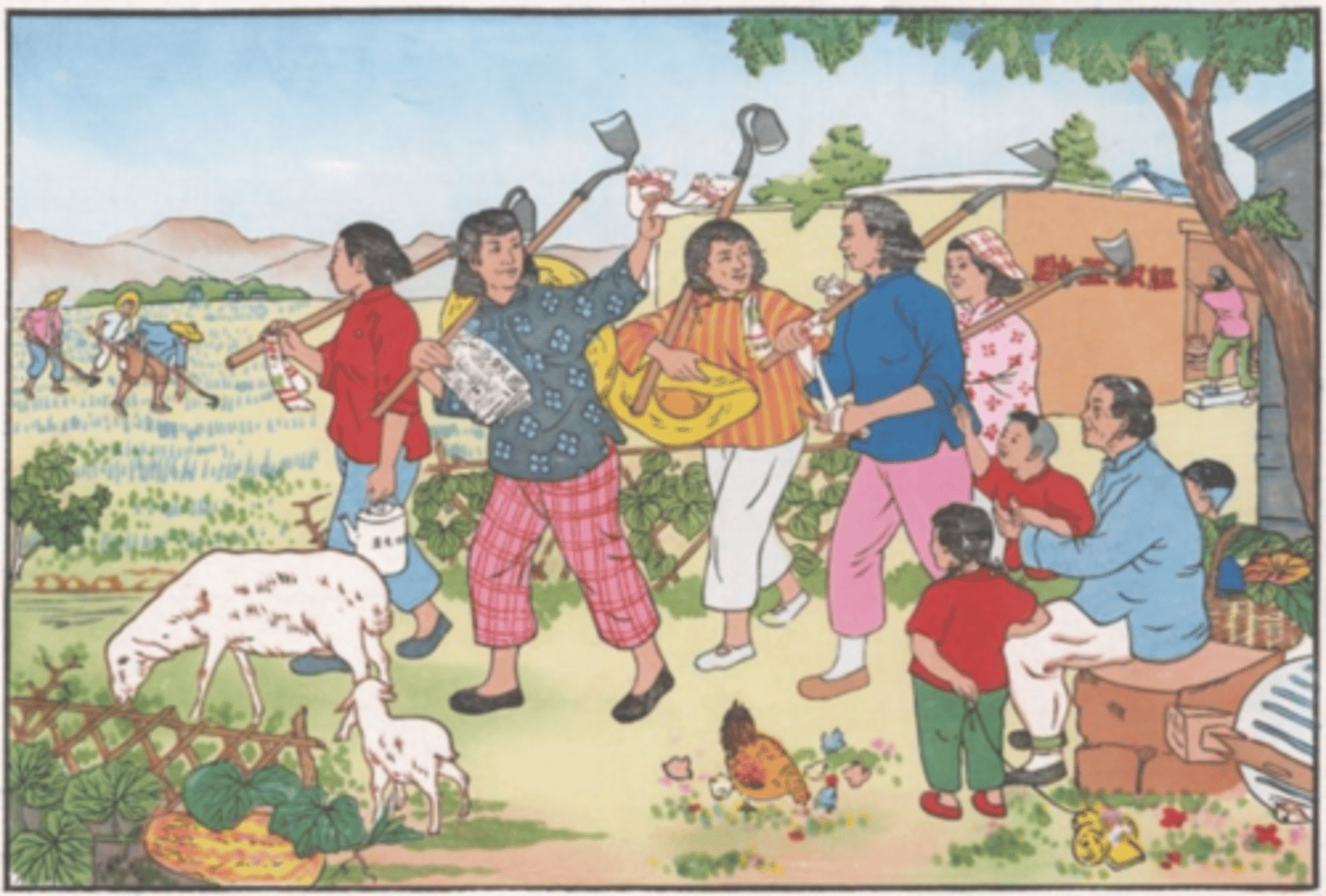
Peasants worked on each other's land, so each family's plot would become more effective
Lots of arguments about who's land should be worked on first
Agricultural policies - cooperatives (1953)
Land was jointly owned so one large crop could be grown efficiently
Resources could be pooled to buy equipment, fertilisers, and seeds
30-50 families on each farm
Many peasants did not want to give up private land they had fought for
By 1957, over 90.5% of China's peasants were in cooperatives
Industrial policies - problems before
Chinese currency unstable - Mao took over banks and stabilised the currency
Inflation - Mao ordered prices and wages to be fixed at a low rate. Within a year, inflation had ended
Many goods traded on the black market - Black marketers were punished severely
Railways destroyed during the war - Mao prioritised rebuilding railways so coal could be brought to Chinese industries. Within months, railway links to Shanghai were restored
Chiang Kai-Shek took most of China's financial reserves when he escaped to Taiwan - Mao increased taxes paid by businesses
Industrial policies - First Five Year Plan (1953)
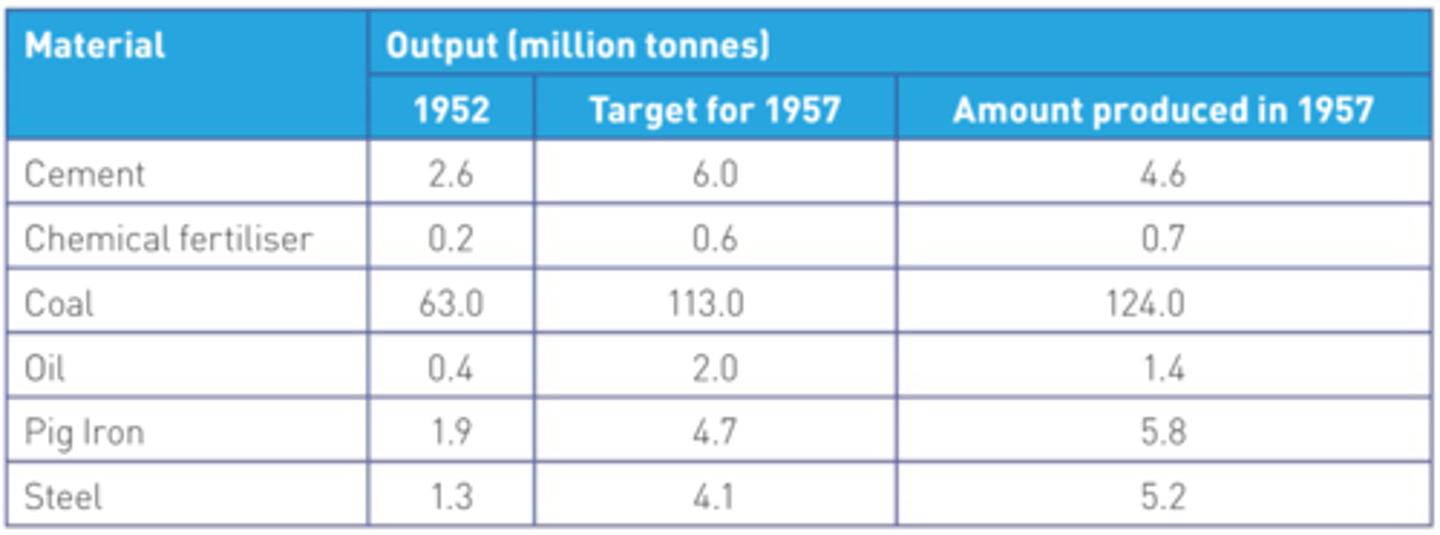
Russian scientists and engineers supervised millions of Chinese workers on ~700 major projects. Thousands of Chinese students were sent for training in Soviet universities/colleges
Focus on heavy industries: coal, steel, chemicals. These raw materials would be used to build planes, trains, and engines to improve transport infrastructure
New factories were put in small towns to be near raw materials, but also so new industries could start from scratch without 'old ways' interfering with Mao's new ideas
Industrial policies - negatives of the First Five Year Plan
State control meant that workers could not move from one job to another
Living standards in the countryside remained poor
State planning was disorganised, led to delays in production, and quantity > quality
Most workers were illiterate, so modern machinery was ruined as they could not read instructions
Industrialisation was paid for by the USSR on loans, which had high interest rates
Industrial policies - Great Leap Forward (1958-1963)
Created communes, which abolished private land and property, all aspects of life were cared for
Built backyard furnaces to produce steel, they was an estimated 600,000 furnaces producing 11 million tonnes of steel
Propaganda was everywhere, speakers were put up in fields and broadcasted political speeches
New farming techniques were introduced, planting crops closer together and ploughing the soil deeper
The 'Four Noes', aiming to eradicate flies, mosquitoes, rats, and sparrows
Industrial policies - negatives of the Great Leap Forward
Communes meant there was a lack of incentive for working, so many did less work
Most steel produced in backyard furnaces was unusable
Targets of production were unrealistic
Farming techniques were unsuited to land apart from where it was tested, disastrous results
Droughts in the Three Years of Disaster (1958-1961) set back farming in communes
Eradication of sparrows meant the birds weren't alive to eat pests that ate the grain, so entire stocks were destroyed
The Great Leap Forward caused a famine, ~30 million people died of starvation
Dazhai commune - history of Dazhai before 1949
Before WW2, they suffered many droughts
People were so poor they had to sell their children
During WW2, it was occupied by Japan
The CCP had increased influence over this area, and took control after liberation to begin land reform. It had 200 people and 188 hectares of agricultural land, 60% of which was owned by the 4 richest families
Dazhai commune - experience of mutual aid teams
First mutual aid team was set up in 1946, 15 families joined
They worked in their own fields but helped each other in daily shifts in busy times
Dazhai commune - problems Dazhai faced
Agricultural land was spread across several slopes, difficult to protect against floods and irrigate
Chen Yonggui's (the leader) Ten-Year Reclamation Plan (1953-1962) built dams to enable land to be reclaimed and then terraced. Between 1953-1958 the people of Dazhai built 180 dams, 2 canals around the mountains, and 2 reservoirs
Dazhai commune - how work at Dazhai relates to Mao's communism
Work points were awarded on political attitudes as well as contribution
After floods in 1963, Chen's slogan was: "Ask for no shelter. Ask for no grain. Ask for no money", showing how Dazhai could be rebuilt by the people alone
"In agriculture, learn from Dazhai"
Why did Mao launch the Cultural Revolution?
To rid China of anti-Communist elements, he believed that 'representatives of the bourgeoisie' had snuck into the party, government, army, and other spheres of culture
China was 'taking the Capitalist road'
To attack the Four Olds (culture, ideas, habits, customs)
The USA had begun to interfere in Vietnam by 1966, he needed to reinspire the people so he could call upon them if necessary
The role of the Red Guard
Children denounced their own parents and teachers for being anti-Communist
Schools and colleges closed down
Jiang Qing organised Red Guard demonstrations in 1967-1968
They broke into homes, factories, offices, and local CCP offices
Anything anti-revolutionary, like books and art, were burnt or smashed
Why did Mao focus on the young in the Cultural Revolution?
To consolidate his support amongst them
They were too young to have trauma/memories of Mao's previous policies, like the Great Leap Forward, so they were easily indoctrinated
To gain long-term support
He gave them the freedom that they wanted
Impact of the Cultural Revolution on people - education
>1% of the working population had a uni degree
11% had received schooling after the age of 6
26% had received schooling between 12-16
35% had received schooling up to 12
125 million people under the age of 45 were illiterate
Impact of the Cultural Revolution on people - family
Children were told to regard Mao and the CCP as their true parents
They were taught to inform on their parents, destroying normal family life
Impact of the Cultural Revolution on people - economy
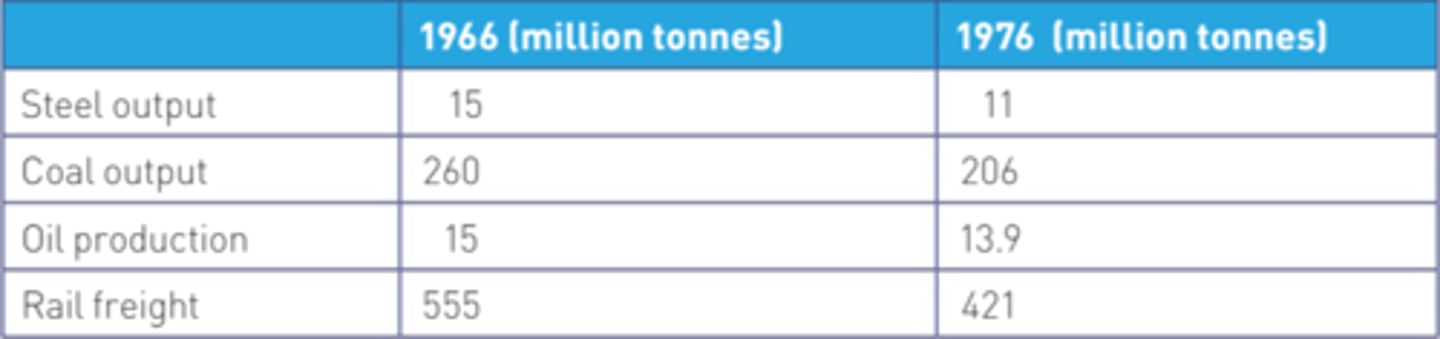
Industrial output was severely reduced, negatively impacting the economy
Cities were often in such chaos with violence and strikes that life came to a complete standstill
Impact of the Cultural Revolution on people - healthcare
After the closure of universities, there was a shortage of doctors
Barefoot doctors provided free treatment throughout the countryside, but they didn't fulfil the need for well-trained health professionals in a modern state
Impact of the Cultural Revolution on people - arts and intellectualism
China became a 'cultural desert'
Writers, intellectuals, and teachers were imprisoned and executed
Libraries and museums closed, and collections were destroyed
Jiang Qing commissioned opera-ballets that would be watched throughout China
Only culture that supported the cult of Mao was allowed
Impact of the Cultural Revolution on Tibet - religion
The Jokhang Temple in Lhasa was ransacked and turned into a pigsty
Monasteries were plundered and destroyed
By 1979, 600,000 monks were either dead or imprisoned
7 out of 6000 monasteries remained
Mani prayer stones were removed and became floors of public toilets and slaughterhouses
Monks and lamas were persecuted
Impact of the Cultural Revolution on Tibet - education
Almost all schools and universities were shut down
Impact of the Cultural Revolution on Tibet - Red Guards
Red Guard groups were formed through Tibet
They went to houses and demanded that religious artefacts be destroyed
Impact of the Cultural Revolution on Tibet - language
Grammatical 'reforms' were introduced to make the Tibetan language more similar to spoken Chinese, making it incomprehensible written down
The Tibetan term for China was banned as it implied that China was separate to Tibet
Impact of the Cultural Revolution on Tibet - freedom of expression
By the 1970s, any religious practice was banned
Hairstyles, clothing, and architecture that showed any culture were prohibited
What is propaganda?
Media with a political purpose
What is a cult of personality?
Propaganda focussing on the creation of a profile around a certain individual
Loyalty to an individual
Mao's Cult of Personality
Started as the Cultural Revolution took hold
Students became personally loyal to him and not the party
Lots of Mao's propaganda centred on the idea that the Chinese believed his word above everything else
What does Dazhai reveal about Communist policies? - agriculture
Farming policies suited the terrain
They survived the famine
Farmers were expected to work day and night all year round
What does Dazhai reveal about Communist policies? - Cultural Revolution
Dazhai became a pilgrimage-like destination. Between 1964-1971, around 4.5 million people visited
The Red Guards killed 141 people in Dazhai
People in Dazhai were forced to barter to exchange goods
What does Dazhai reveal about Communist policies? - community
They built a kindergarten, primary school, library, bookstore, post office, basketball court, and an auditorium
It was close to Mao's utopian idea of a model village
What does Dazhai reveal about Communist policies? - women
The Iron Girls Brigade - 23 women aged 13-16 who worked alongside men
They carried water, fertilisers, and deep ploughed
It was led by Guo Fenglian, who became the leader of Dazhai in 1973
What does Dazhai reveal about Communist policies? - propaganda
Loud speakers were installed to broadcast music and songs
Films were shown at night while farmers took a break
Peasants were re-educated in the fields
Many read the Little Red Book during meals
Who competed for power after Mao's death?
Hua Guofeng
Nominated by Mao as his successor
Premier until 1978
The Gang of Four
Led by Jiang Qing
Overestimated their support in the army
Unpopular in Beijing
Deng Xiaoping
Linked to the PLA
Reinstated to the Politburo
Became CCP General Secretary in April 1977
Why did Deng succeed Mao?
1976 - Hua succeeded Mao, taking all his positions
1976 - Hua arrested the Gang of Four, who were accused of planning a coup
Deng used his contacts in the CCP and the PLA to be reinstated into the Politburo
Deng increasingly isolated Hua
The Politburo dropped accusations that Deng had criticised the CCP
April 1977 - Deng became General Secretary of the CCP again
1978 - Hua was ousted from his position as Premier
The CCP confirmed Deng as the leader of China, and accepted his Four Modernisations
1980 - The Gang of Four were put on trial. They were ridiculed in the media and all found guilty.
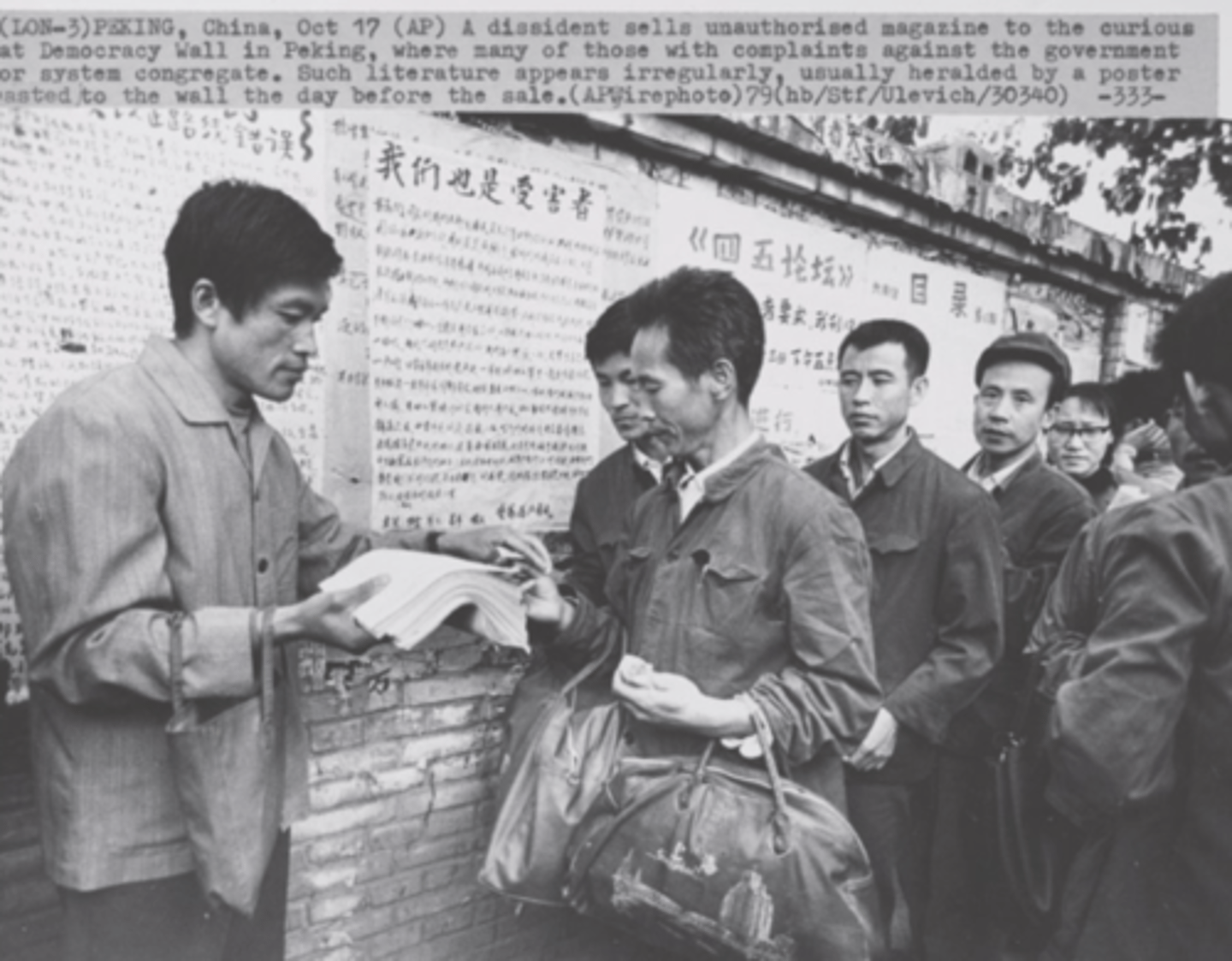
The Democracy Wall
A way to voice opposition and protests
Students posted letters, posters, poems, and cartoons
They called for democracy, the rehabilitation of CR victims, attacked the government, and even Mao
Deng's reaction to the Democracy Wall
Supported it at first
Arrested the authors of the most critical posters as it got more critical
In 1978, Deng removed Mao's 'four great freedoms': to speak out freely, to air views fully, to hold great debates, and to write wall posters
In 1979, democratic journals shut down and over 50 editors imprisoned
Deng's Four Cardinal Principles
We must keep to the socialist road
We must uphold the dictatorship of the proletariat
We must uphold the leadership of the Communist Party
We must uphold Marxism-Leninism-Mao Zedong thought
Political improvements under Deng
In 1979, the Ministry of Justice was re-established
State courts were reopened
Law schools were promoted
Elections were allowed in counter-level congresses
Deng's economic reforms (1976-1981)
To move away from a centrally planned economy to one that allowed for the re-introduction of market forces and for the opening up of China for foreign trade
'Let some people get rich first'
Economic progress would improve the lives of people as wealth trickled down
Deng's Four Modernisations (1978)
To reform agriculture, industry, science and technology, and defence
Agricultural policies under Deng
Communes were abandoned
In 1981, the 'household responsibility system' was introduced
The 'household responsibility system'
Land was owned collectively
If peasants paid their taxes and contributed to local targets, they could sell the excess for profit
Peasants farmed the same land for generations
Farm output under Deng
Rose by 8-10% a year
Grain yields went from 2.5 tonnes/hectare in 1978 -> 3.5 tonnes/hectare in the mid-1980s
Industrial policies under Deng
SOEs remained with greater freedom
The 'Open Door Policy' built economic relations with the West
SEZs were set up near Hong Kong and Taiwan
State control was ended
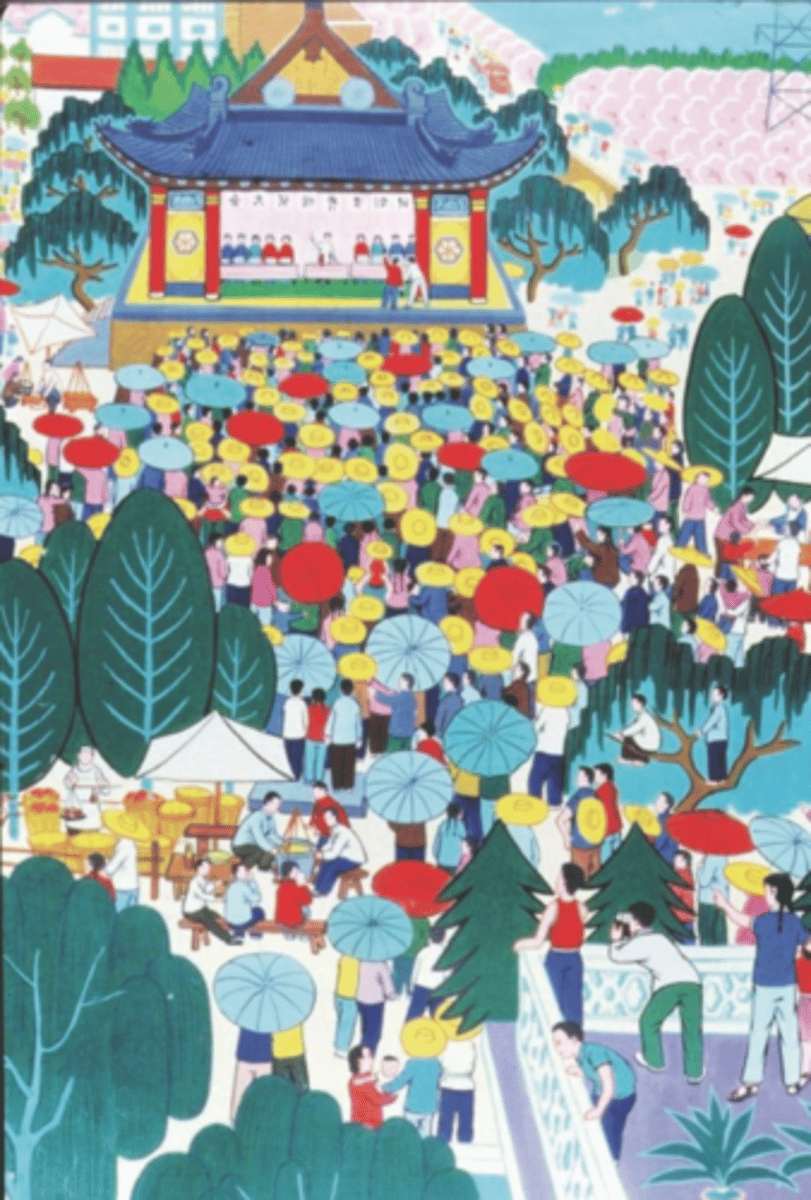
Communist propaganda (1976-1981)
Discredited Deng's opponents
Reflected the Four Cardinal Principles
Promoted official Chinese policy
Censorship
Became increasingly tight from 1979
In 1980, the constitutional right to free speech was deleted
Social changes under Deng - education
In 1977, the NCEE was re-established
Thousands of students were sent to study abroad to learn Western methods to bring back to the SEZs
Social changes under Deng - women
The 'One-Child Policy'
Benefits were given to families with one child
Families with multiple children were fined
Female infanticide increased
Women with one child were fitted with IUDs
Women with two children were sterilised
Between Sep 1981-Dec 1982, 16.4 million women were sterilised
The marriage law (1980)
Minimum legal age for marriage was 22 for men, and 20 for women
 Note
Note  Flashcards (142)