SOS Mechanic Certification- Suspension & steering
 Call Kai
 Learn
Learn Practice Test
 Spaced Repetition
 Match
Match Flashcards
 Knowt Play
1/81

There's no tags or description
Looks like no tags are added yet.
Name | Mastery | Learn | Test | Matching | Spaced | Call with Kai |
|---|
No analytics yet
Send a link to your students to track their progress
82 Terms
Bleeding a power steering unit is generally done by
turning the steering wheel left and right repeatedly
After rounding a turn, the front wheels do not return to the straight ahead position in a normal way. What adjustment is most likely to be out of specifications?
Caster
"Toe" adjustment on front wheel drive vehicles is made by:
changing he length of the steering linkage
When performing a front-end alignment what should you do before you adjust the toe setting?
adjust the caster & camber
Front-wheel toe-in adjustment on rear-wheel drive vehicles is made by:
changing the length of the steering linkage
A mechanic is going to adjust the curb height on a car with torsion bars. To do this the car should be checked:
on a level surface with the car at curb weight
A proper way to check ball joints for wear is by:
visual observation of the wear indicator & unloading the ball joint and using a pry bar and a dial indicator
which of the following adjustments can be made on all vehicles with MacPherson strut suspensions?
Toe settings
You are checking the war on ball joints with a dial indicator at the wheel rim. What must you do to get accurate readings?
check the wheel bearing adjustment and correct if needed
A mechanic jacks up a car, stands facing it, places a hand on the front of each tire. The mechanic pushes out and then pulls in on both tires. Too much movement would most likely mean that:
the tie rod ends are worn
Which of the following should be checked first thing when doing a front-end alignment?
Curb height
To counteract road crown, most manufacturers recommend that the left front wheel be adjusted to have:
Less positive (+) caster than the right
If the toe-in is too great, the tread will most likely show:
feathered edges on both front tires
When a wheel alignment is done on a car with front torsion bars, what should be checked and adjusted first?
Curb height
Which of the following would be a typical automobile front end camber setting?
-3 degrees +/- 2 1/4 degrees
A mechanic finds that a front tire is worn on the inside of the tread only. The mechanic checks the air pressure and finds it correct. What is causing this problem?
The camber is set too negative
A car will pull to:
the side with the most positive (+) camber
One front tires shows spotty or isolated cupping and worn spots. What is the most likely cause of this problem?
An out-of-balance tire.
Before you remove a brake rotor from a hub, you should:
mark the position of the rotor
The front wheels shimmy or bounce above 40mpg, even on a smooth, straight road. The likely cause of this problem is:
Tires out of balance
While replacing a ball joint, you notice that the tapered hole in the steering knuckle is oval shaped. What should you do about this?
Inform the customer that the knuckle should be replaced.
If the upper ball joints are positioned ahead of the lower ball joints, the condition is:
Negative caster
What is true of most MacPherson type suspensions?
There is no upper control arm.
A mechanic has set caster, camber, and toe-in to specifications. On the road test afterwards, the mechanic notices that the steering wheel spokes are off center to the left. What should be done to fix this?
Adjust both tie rod sleeves equally to move the front wheels in the direction of the steering wheel error
Ball joints with wear indicators should be checked:
when loaded and by visual observation
There is a looseness in the steering column, which of these could cause this problem?
Loose steering column universal joints
Which of these could cause dangerous handling, uncomfortable ride, and noise due to excessive sideways body movement?
Broken rear track bar
A vehicle has unusual noises when it is jounced up and down, all of these could cause this problem except:
worn tie rod ends
If the upper ball joint is positioned behind the lower ball joint, which of these describes the alignment condition?
Positive caster.
Which of these correctly states when a power steering system should be bled?
When the fluid becomes aerated
While diagnosing a vehicle that has a tendency to bump steer, which of these should be checked first?
Wheel setback
Which of these is NOT part of the normal procedure for replacing a front stabilizer bar?
Disconnect the tie-rod ends
Which of these does NOT need to be checked prior to a wheel alignment?
Tire balance
Which of these can cause front wheel shimmy?
Loos steering linkage
Which of these would cause the tires to wear in the center of a tire tread?
over inflated tires
Which of the following is correct statements about the effects of the imbalance?
Static imbalance will cause wheel tramp
Which of these is not a possible cause for an increase in steering effort?
Worn ball joints
Which of these correctly states the purpose of the pop rivet found in some strut top plates?
The rivet secures the plate I position to maintain camber
A car pulls to the left, which of these could cause the problem?
Left front wheel has too much negative caster
A tire wobbles from side to side, which of these could cause this problem?
Lateral runout
Which of these is NOT a correct method for adjusting tapered roller-type front wheel bearings on a RWD vehicle:
Tighten the adjusting nut until the wheel cannot be turned, then loosen it until the wheel can rotate
Which of these is a common way to adjust camber on a vehicle equipped with a strut suspension system?
Turn an eccentric cam bolt at the base of the strut
Which of the following is an effective way to check for a bent strut?
Compare the loaded and unloaded camber readings of the two front wheels
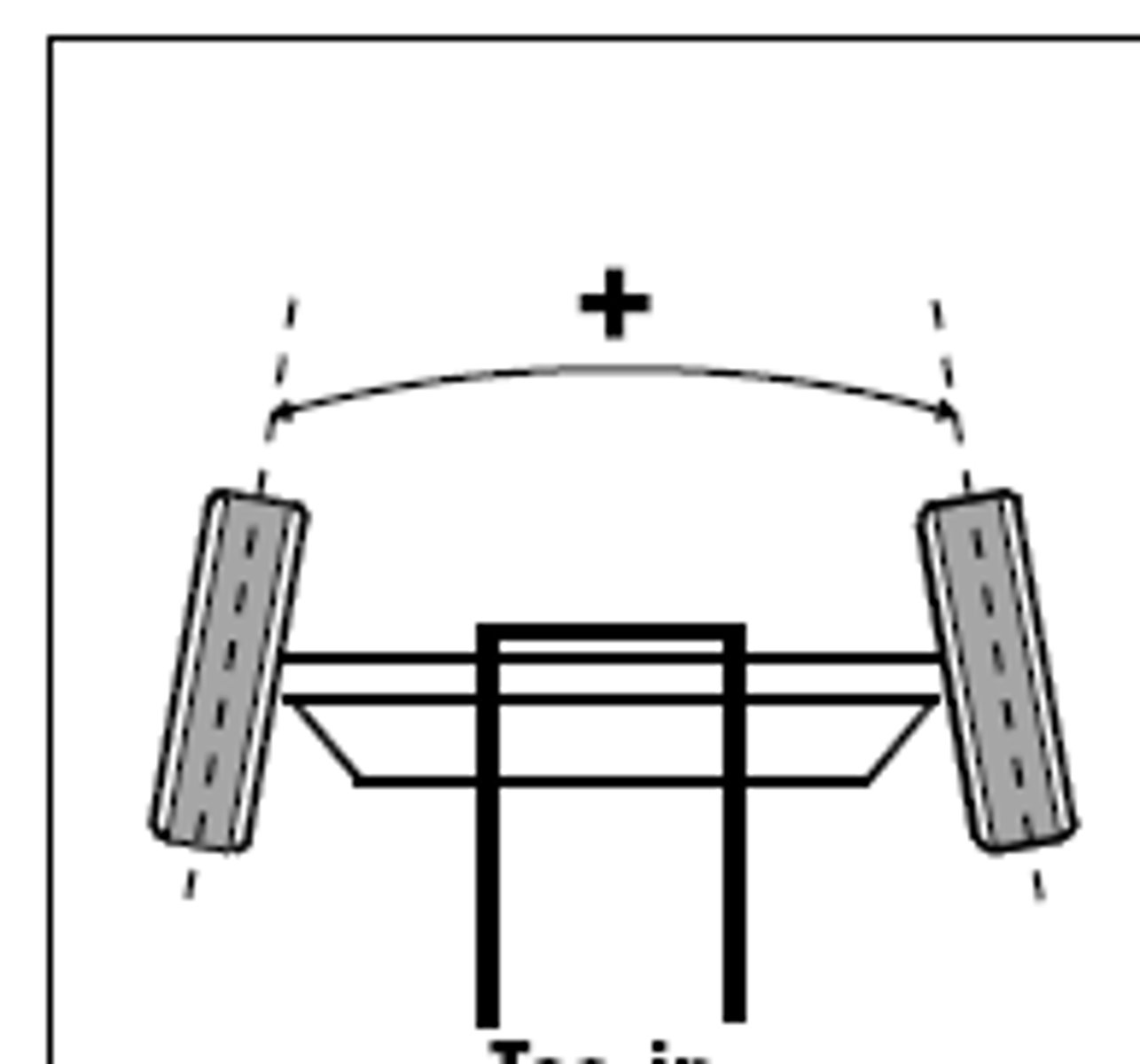
Toe-In
Define
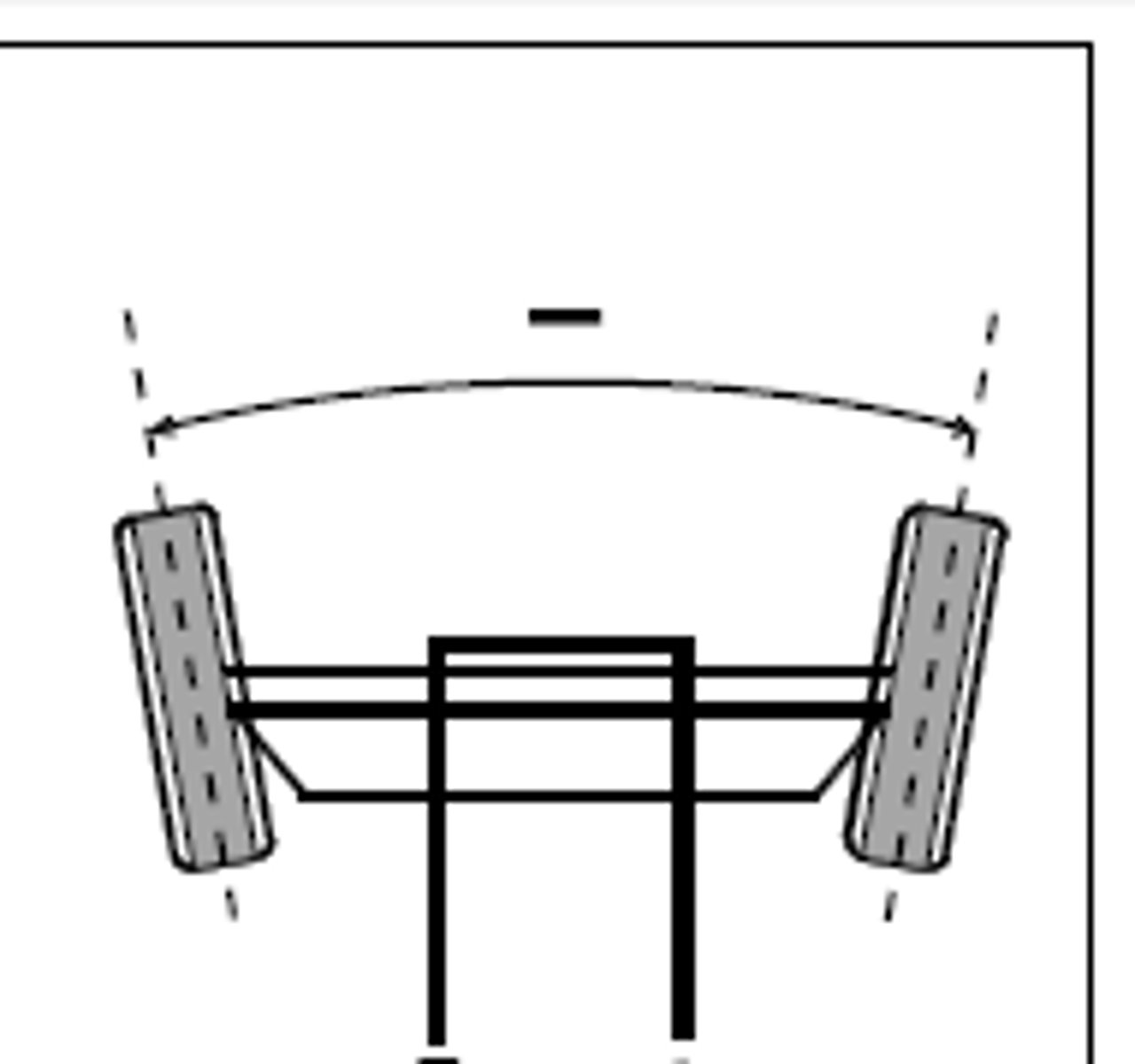
Toe-Out
Define
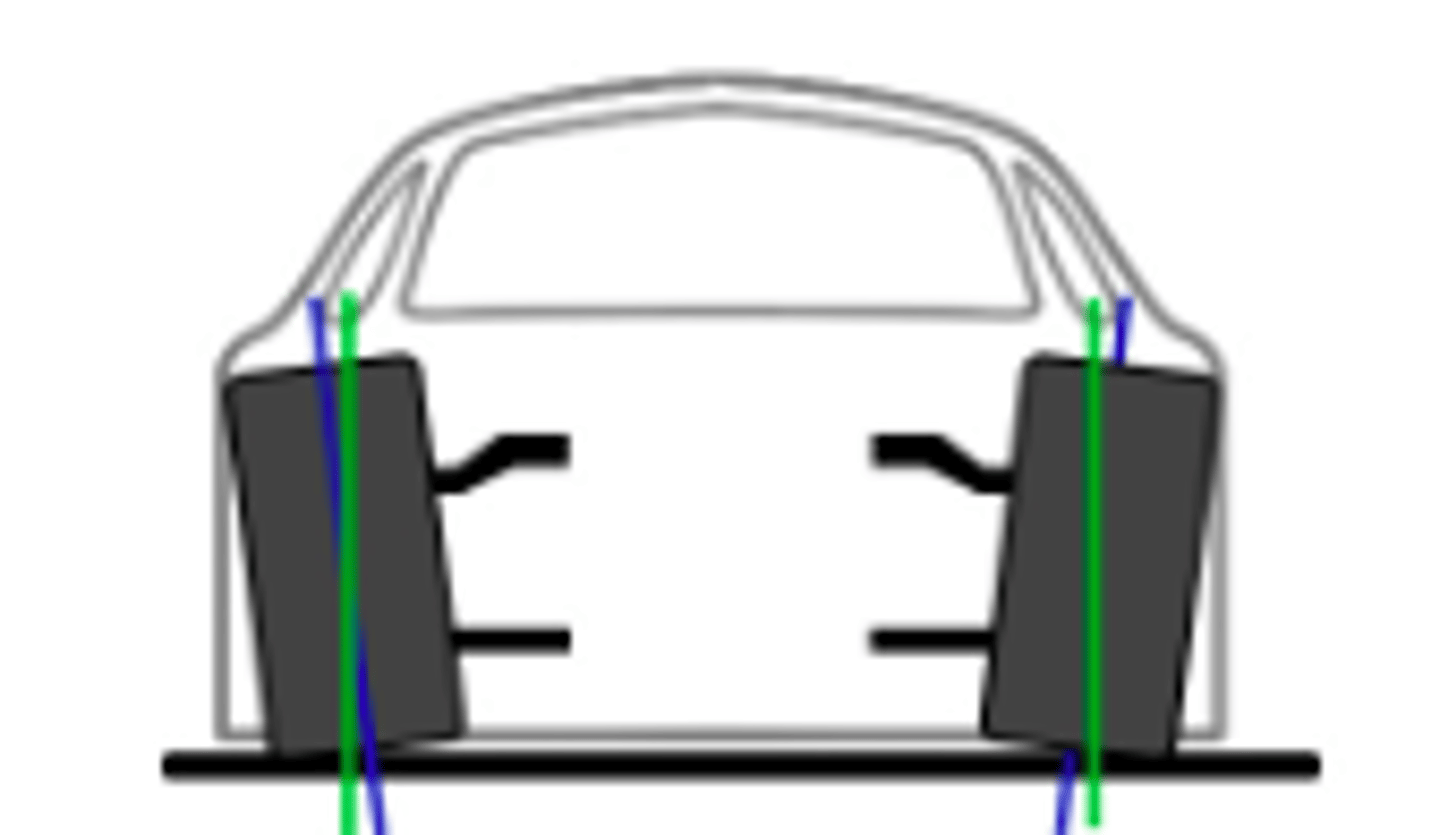
Positive Camber
Define
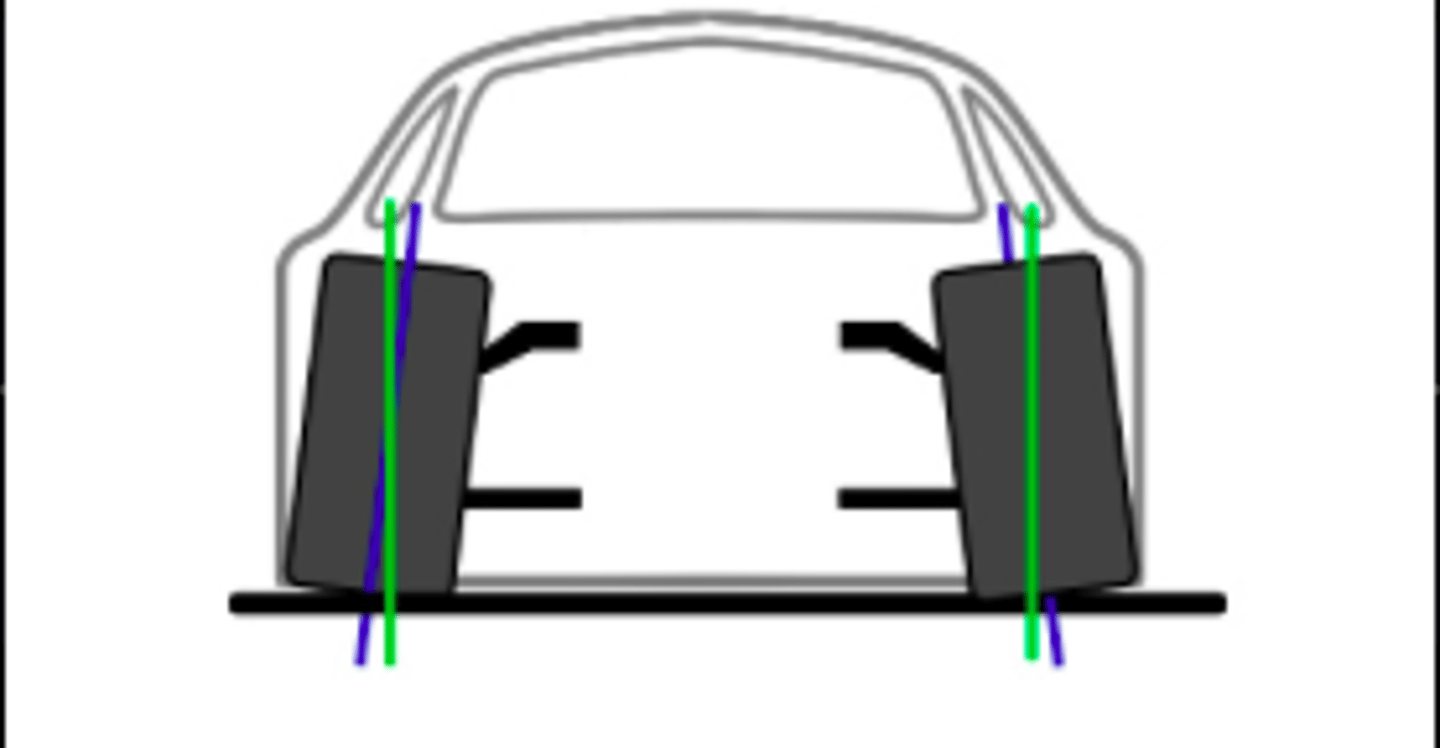
Negative Camber
Define
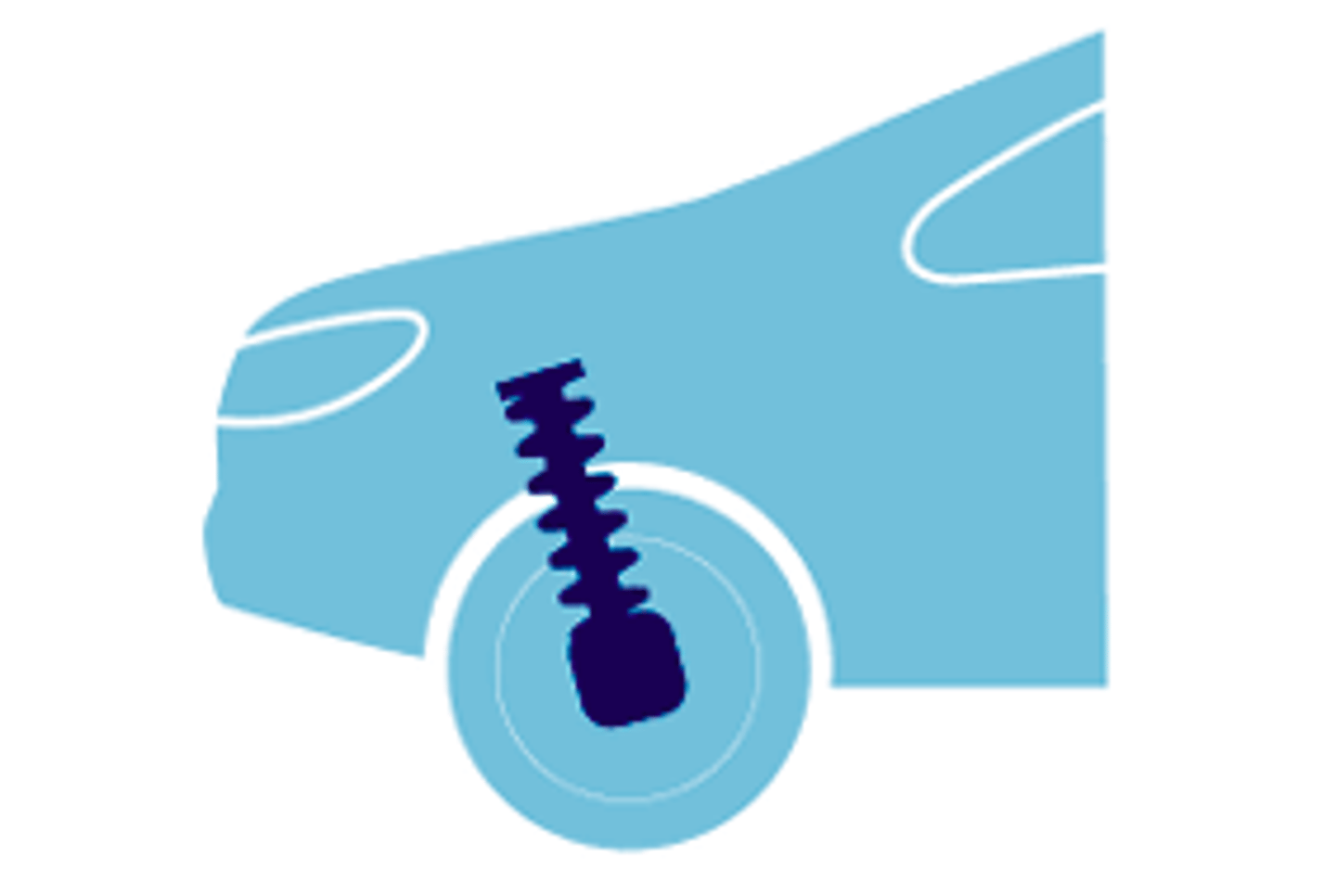
Positive Caster
Define
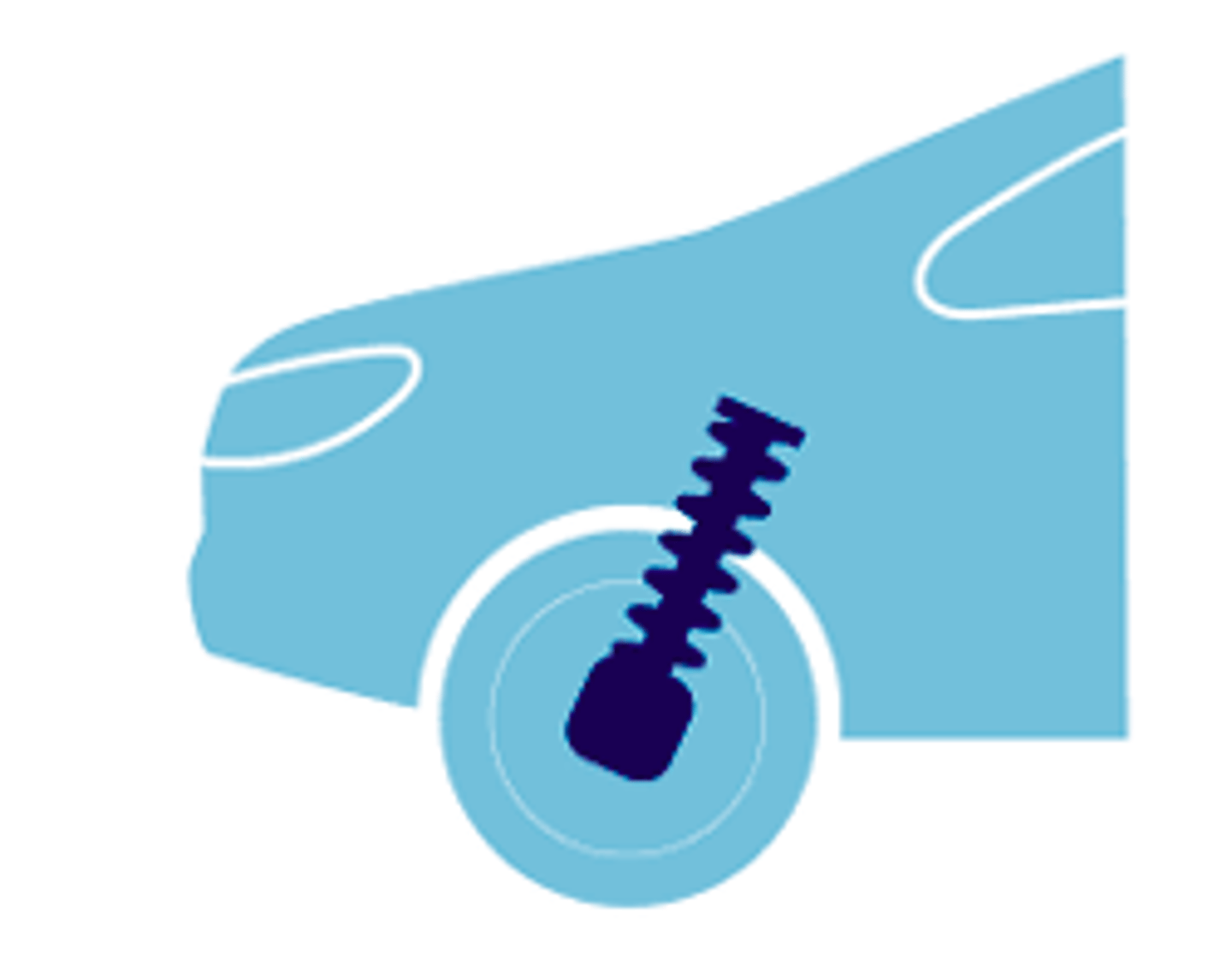
Negative Caster
Define
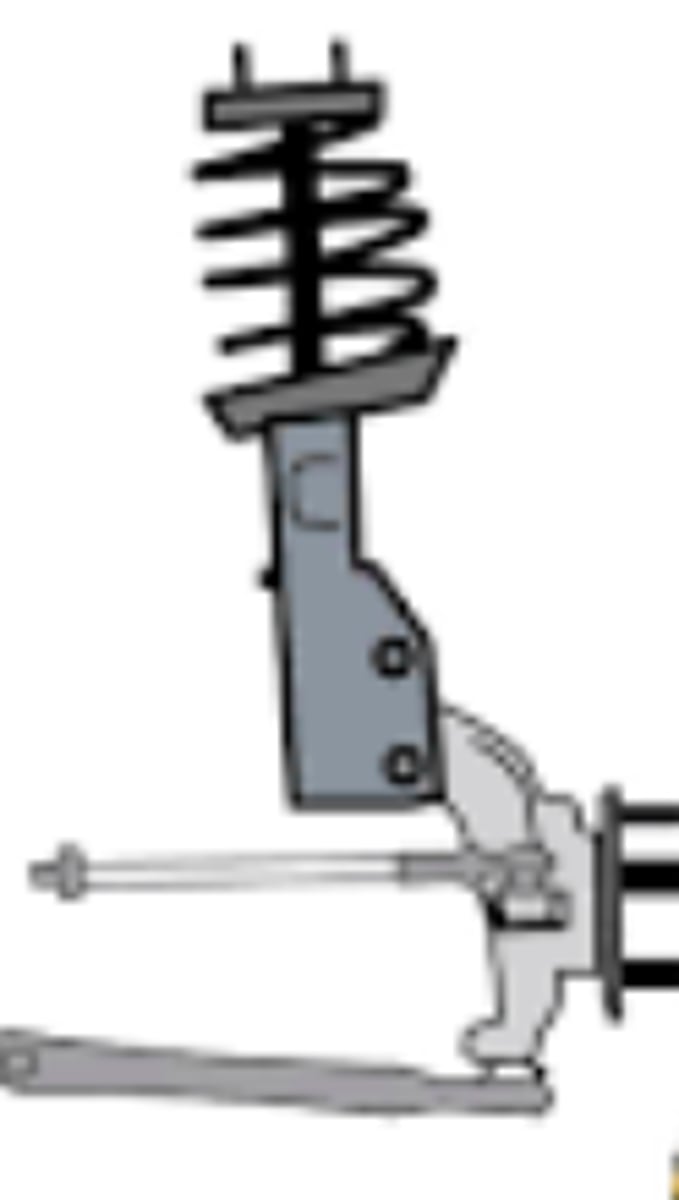
A MacPherson suspension system
has no upper control arm
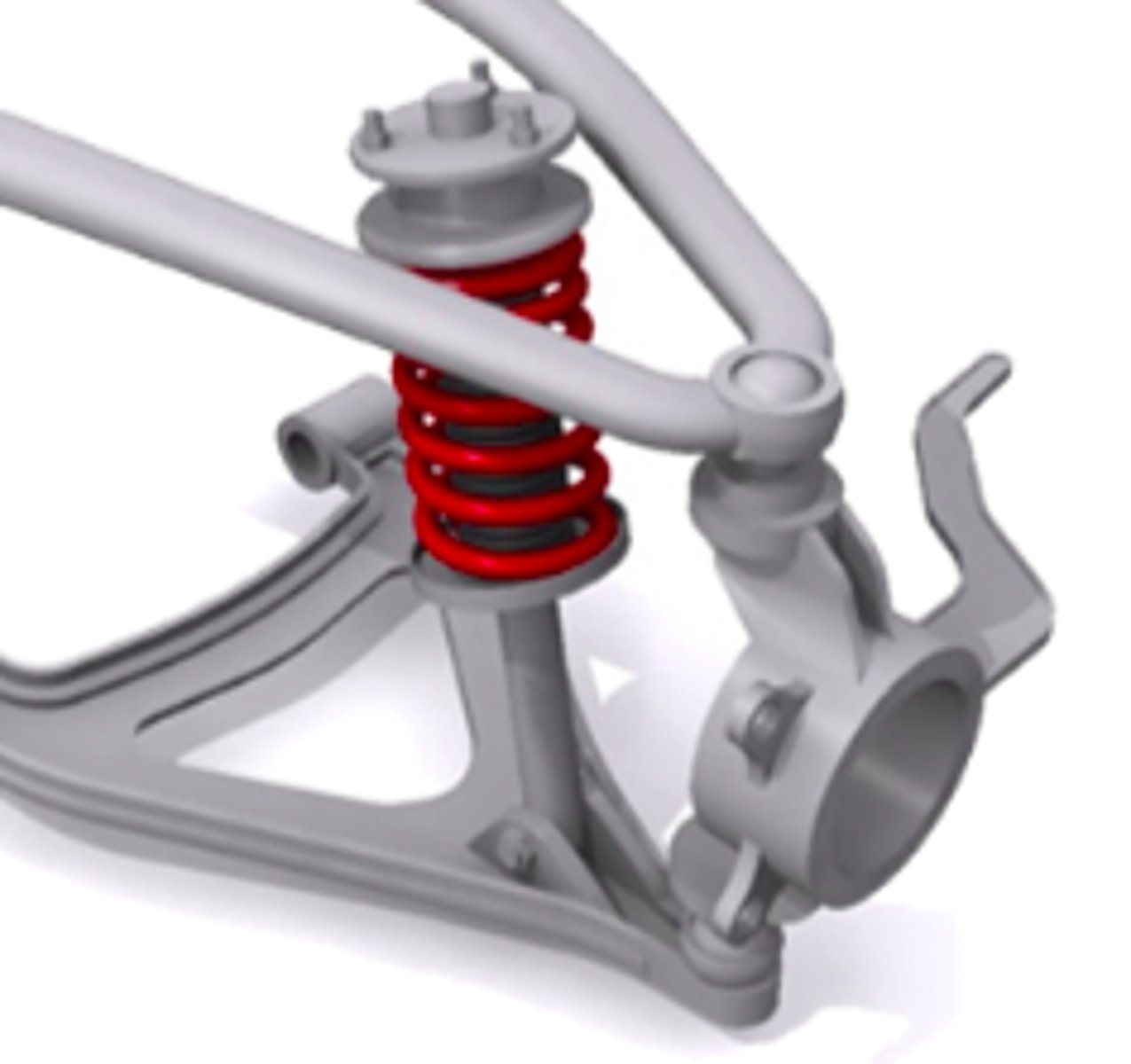
A Double Wishbone suspension system
has upper and lower control arms
Name the Tread Wear and how it is caused
Feathered Edges: Caused by improper toe and results in outer tread wear on ONE SIDE of the tire
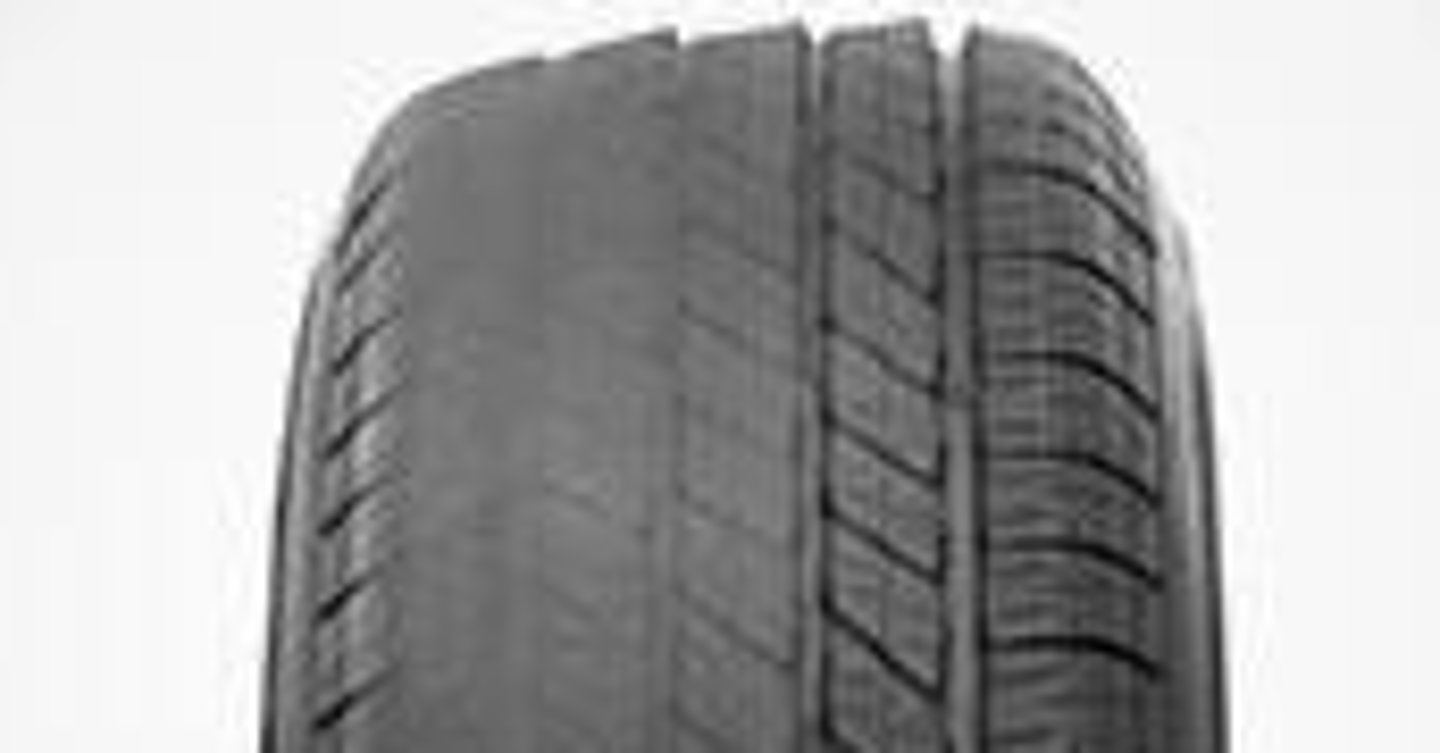
Name the Tread Wear and how it is caused
Underinflation: Caused by driving on underinflated tires for long periods of time and results in outside tread wear on both sides of the tire
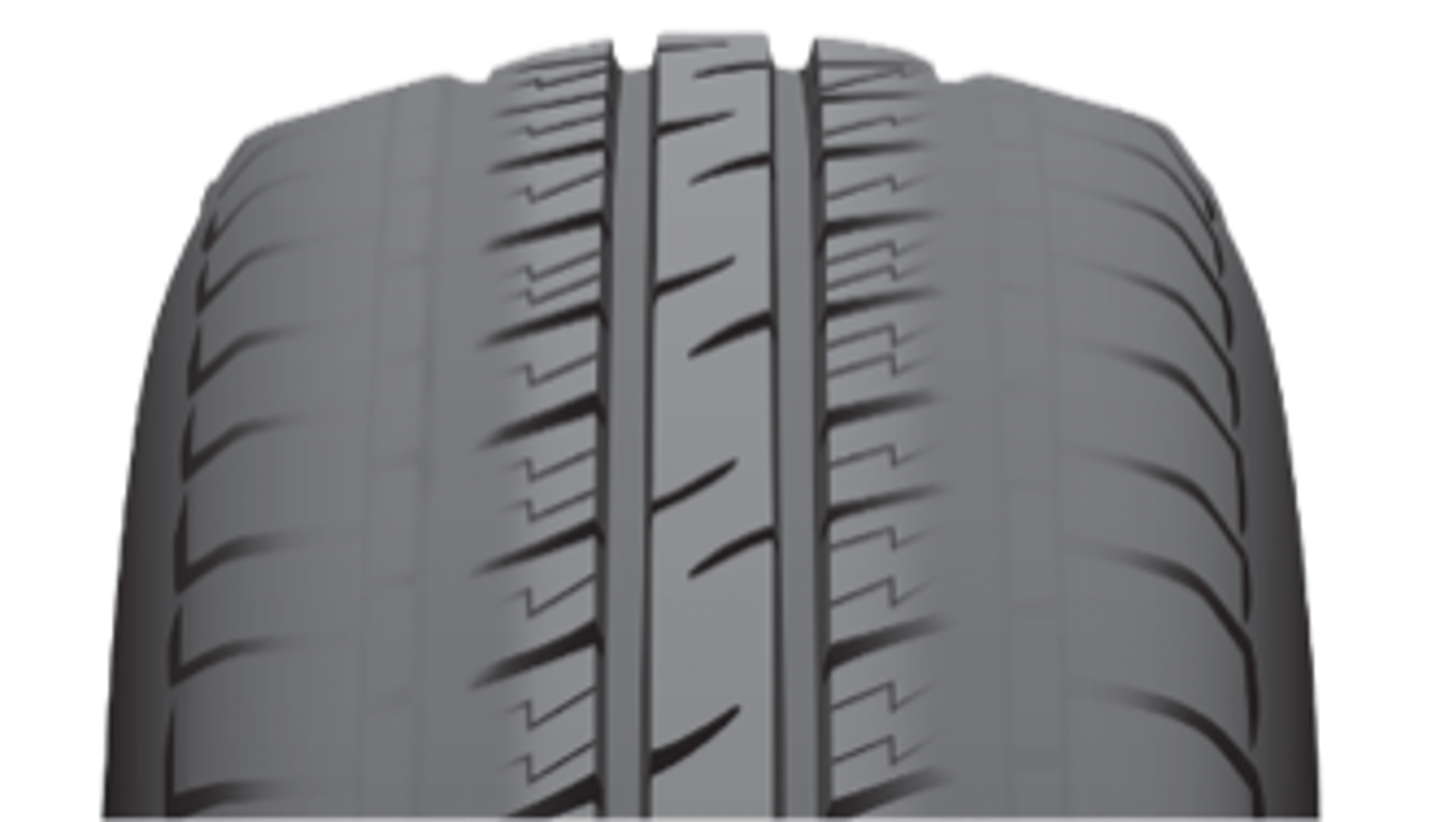
Name the Tread Wear and how it is caused
Overinflation: Caused by driving on overinflated tires for long periods of tire and results in center tread wear
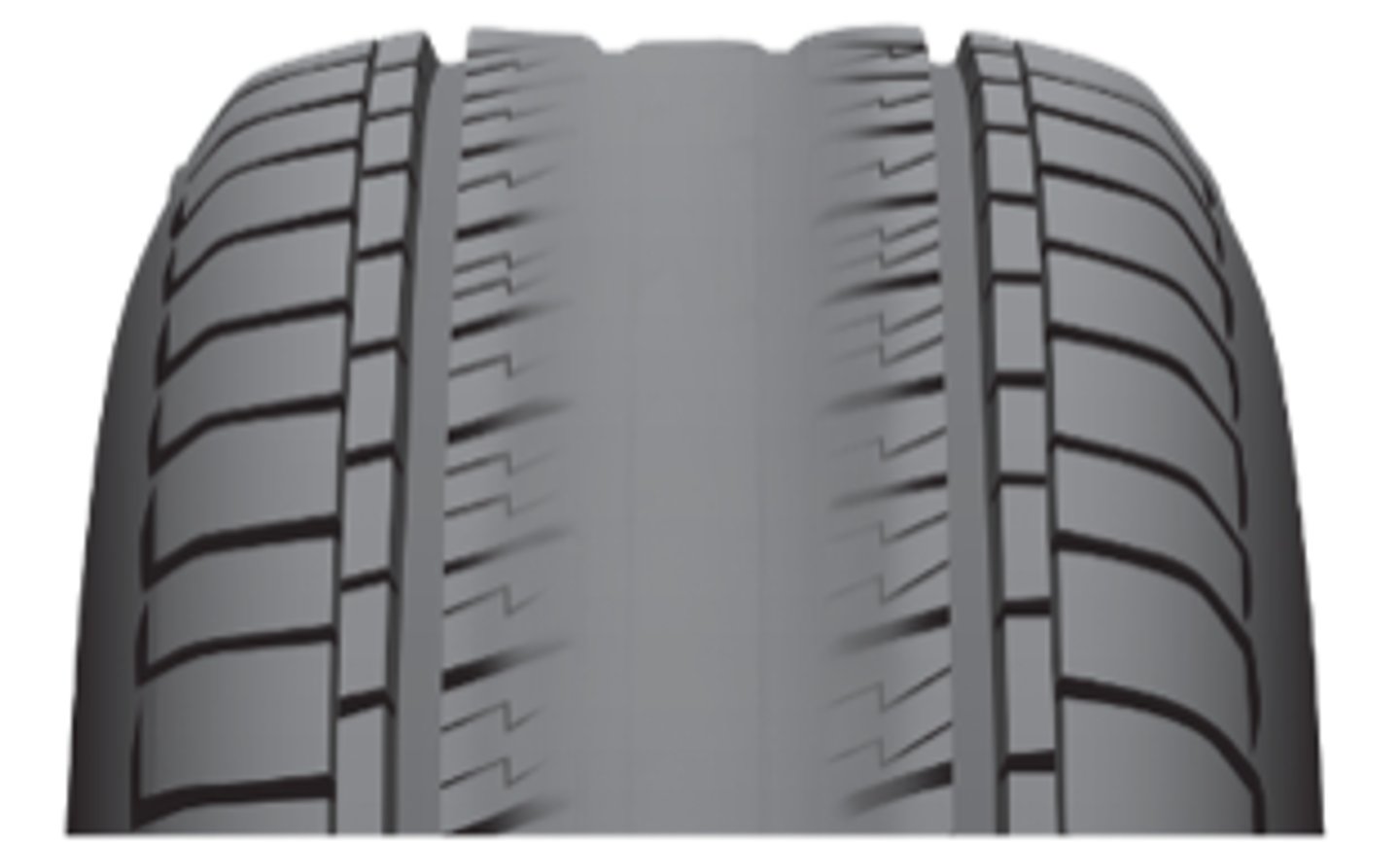
Name the Tread Wear and how it is caused
Camber Wear: Caused by improper camber and wears the tread on half of the tire
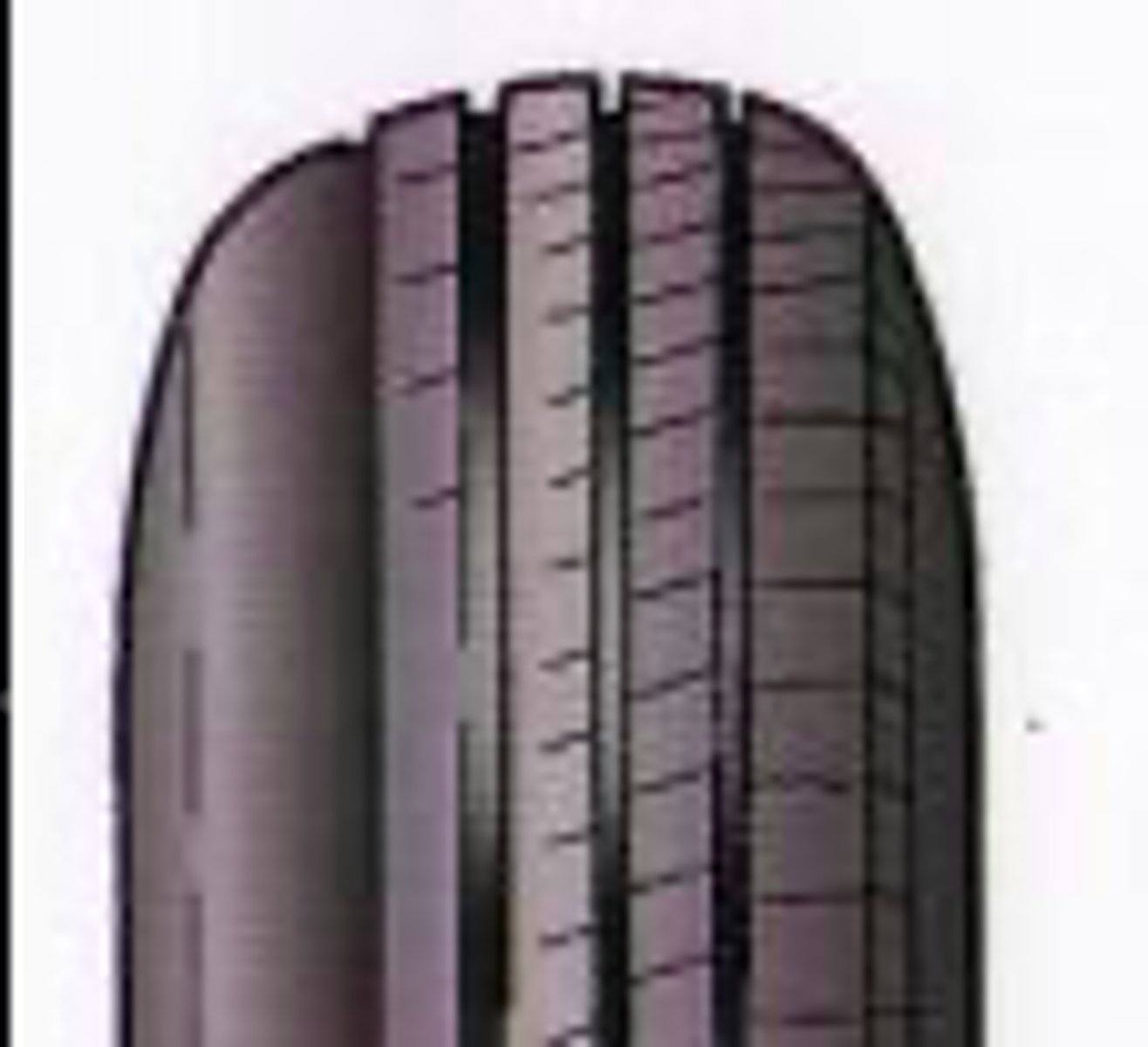
Name the Tread Wear and how it is caused
Chopped Wear: Caused by lack of rotation or unbalanced tires and wears tread in various spots creating a chopped tread
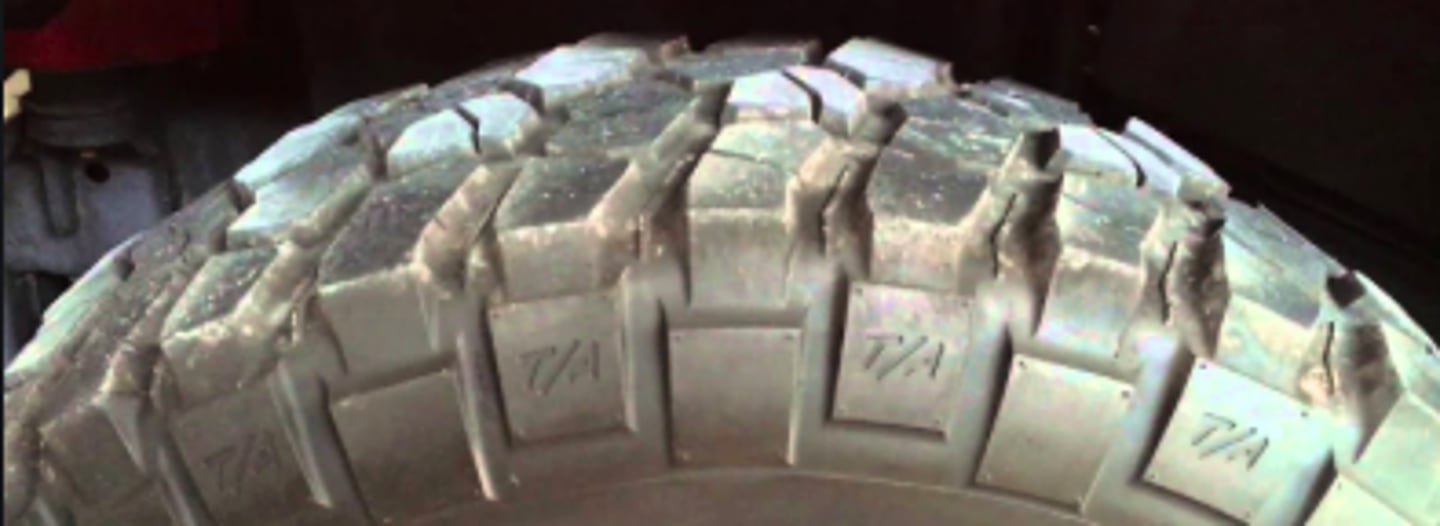
Name the Tread Wear and how it is caused
Cupped Wear: Caused by excessive wheel jounce from worn suspension and creates bald spots on the tread
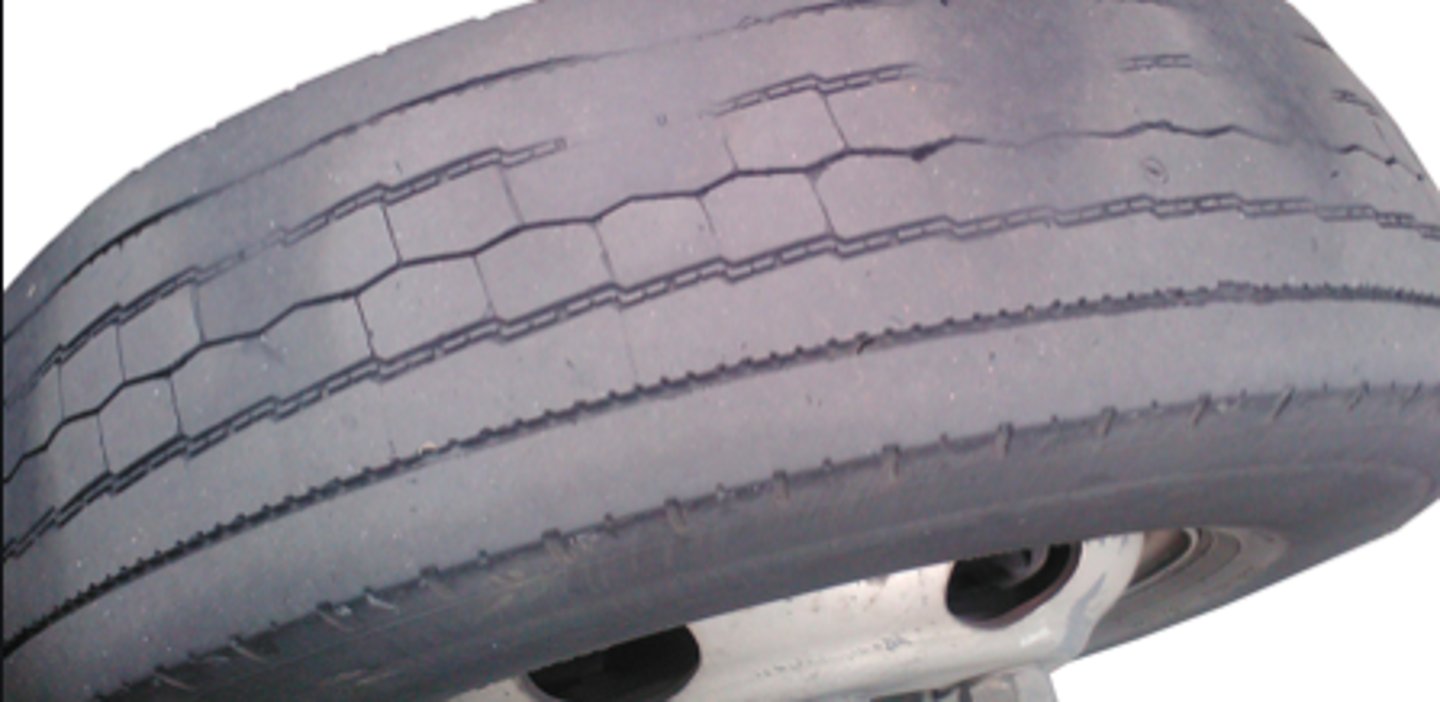
This would Increase Caster
How would adding/subtracting shims as performed in the picture effect the alignment (Note the location of the front of the vehicle)
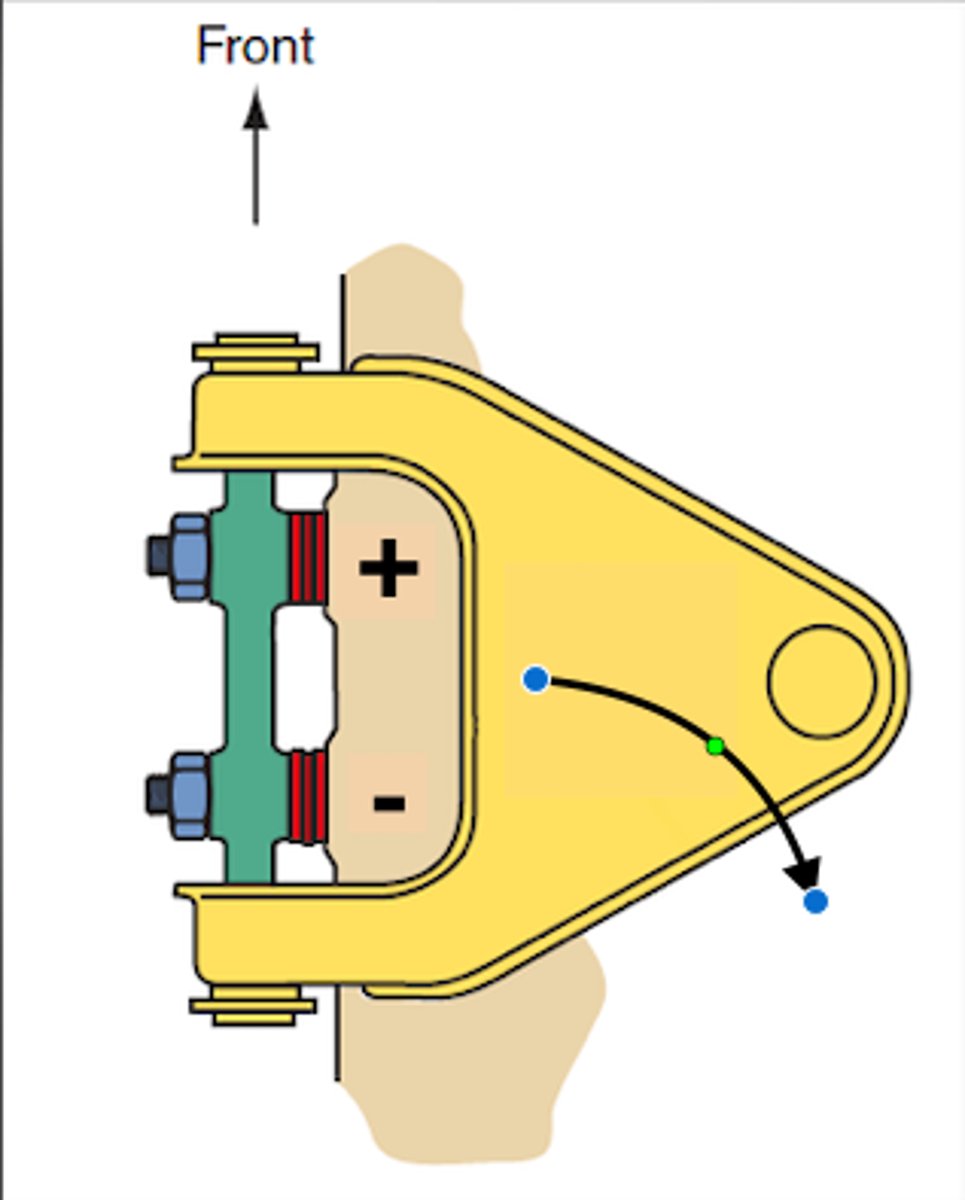
This would Decrease Caster
How would adding/subtracting shims as performed in the picture effect the alignment (Note the location of the front of the vehicle)
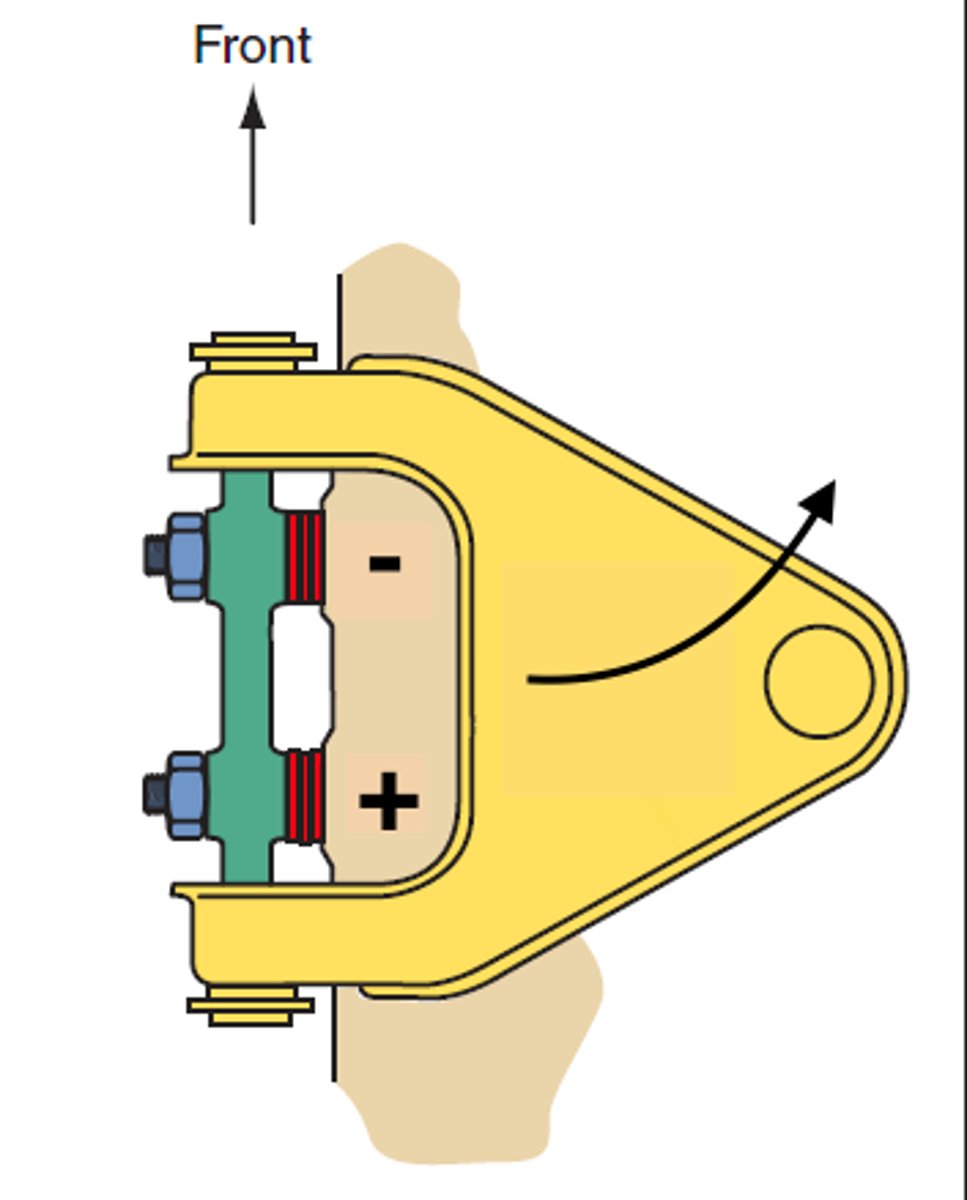
This would Increase Camber
How would adding/subtracting shims as performed in the picture effect the alignment (Note the location of the front of the vehicle)
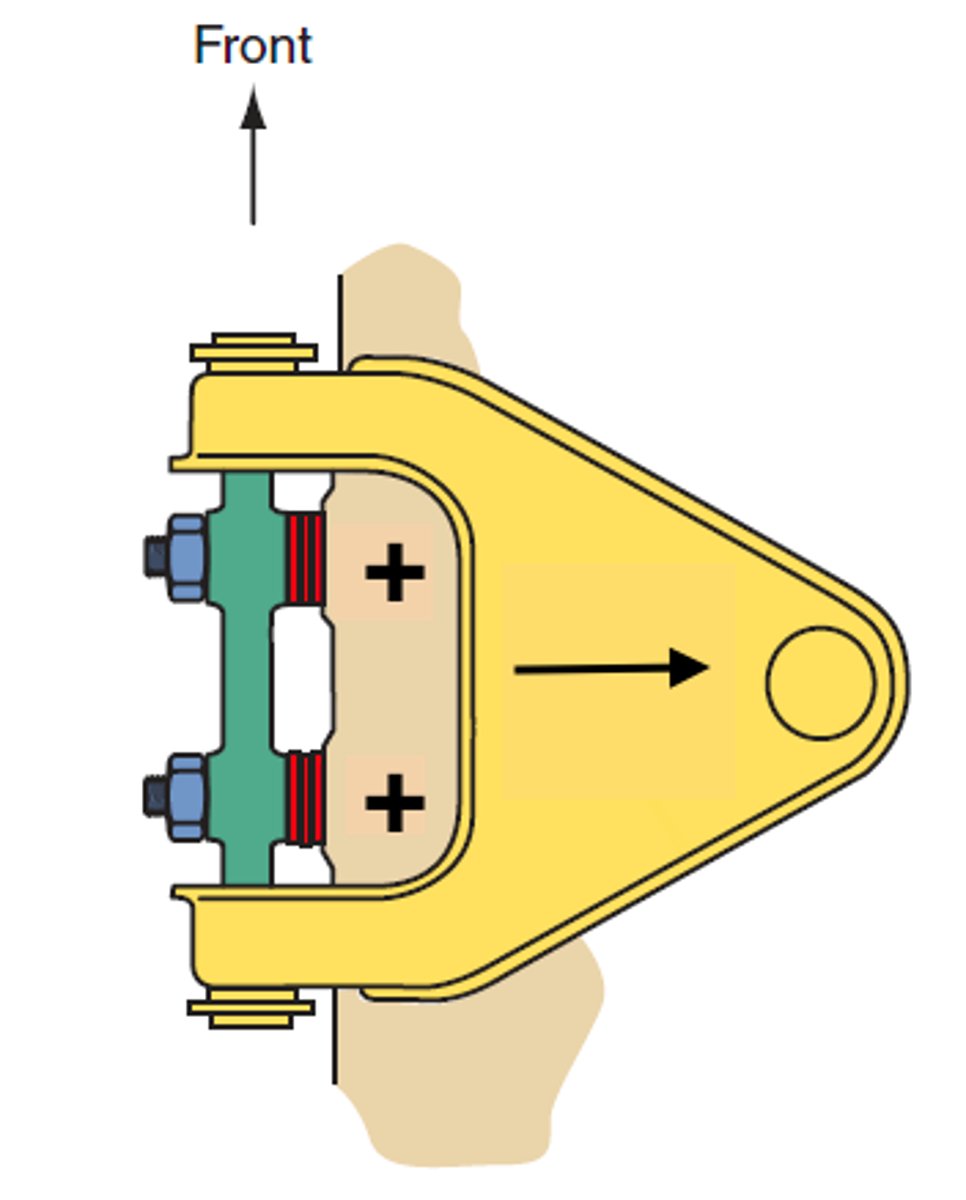
This would Decrease Camber
How would adding/subtracting shims as performed in the picture effect the alignment (Note the location of the front of the vehicle)
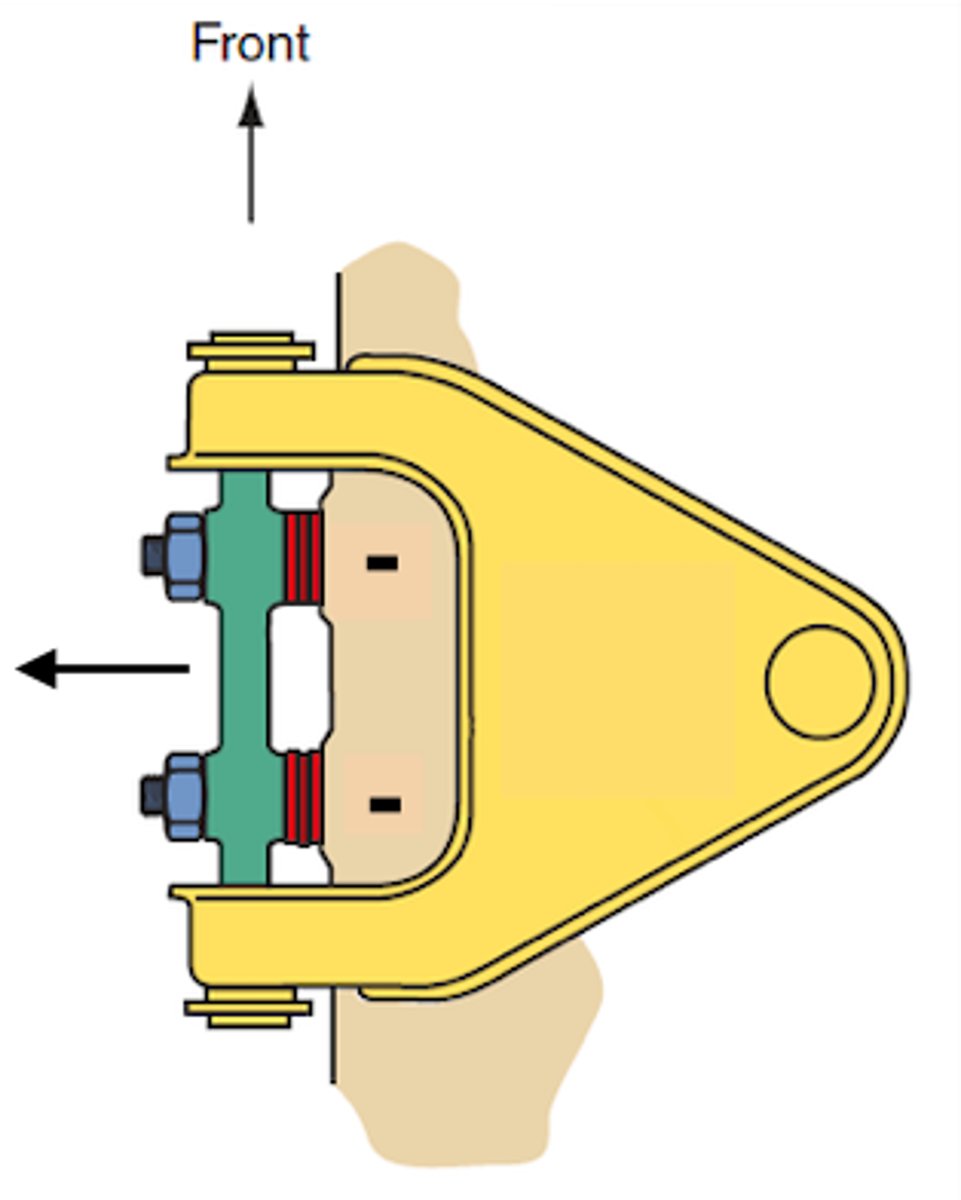
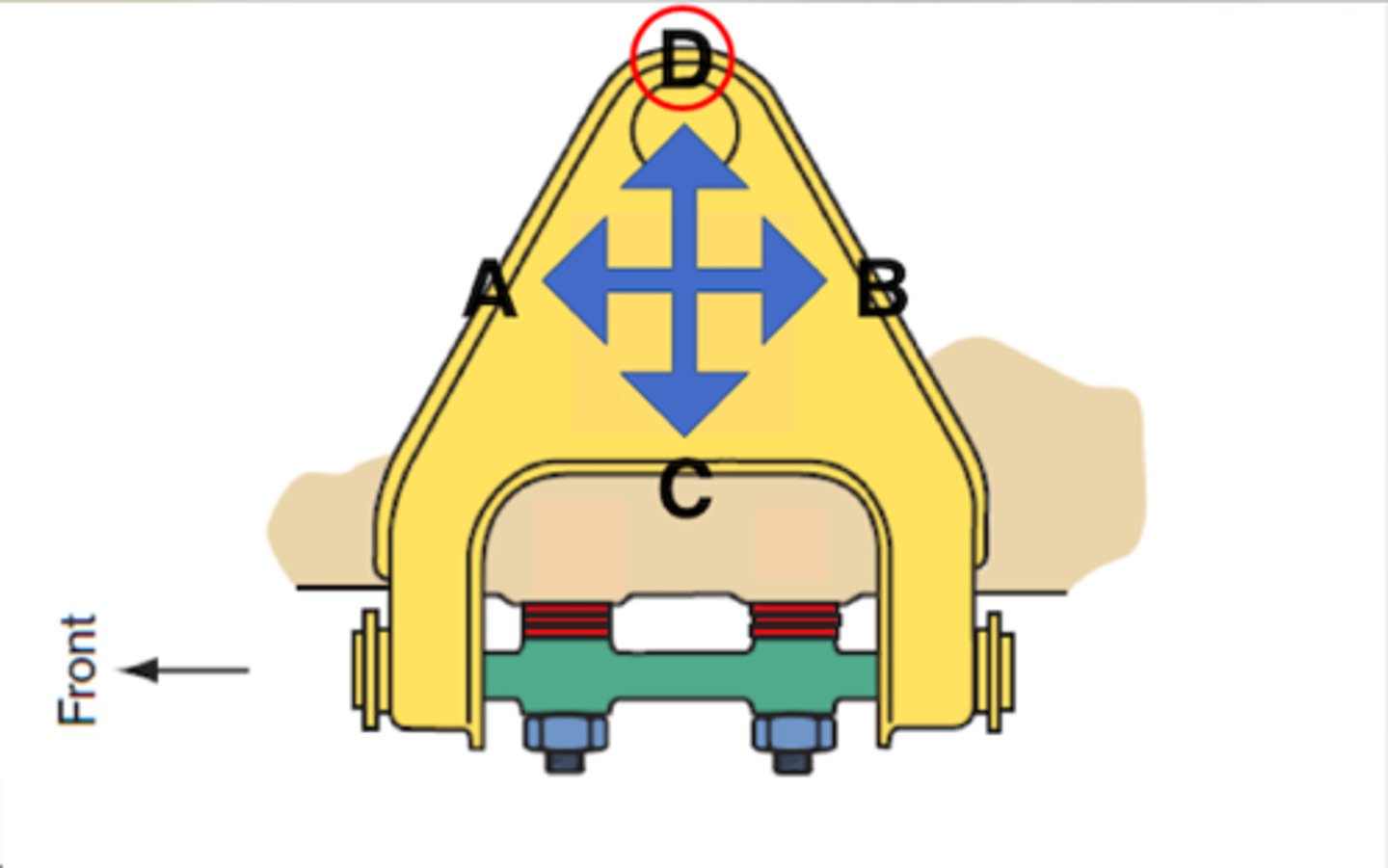
This movement would Increase Caster
How would moving toward B effect the alignment?
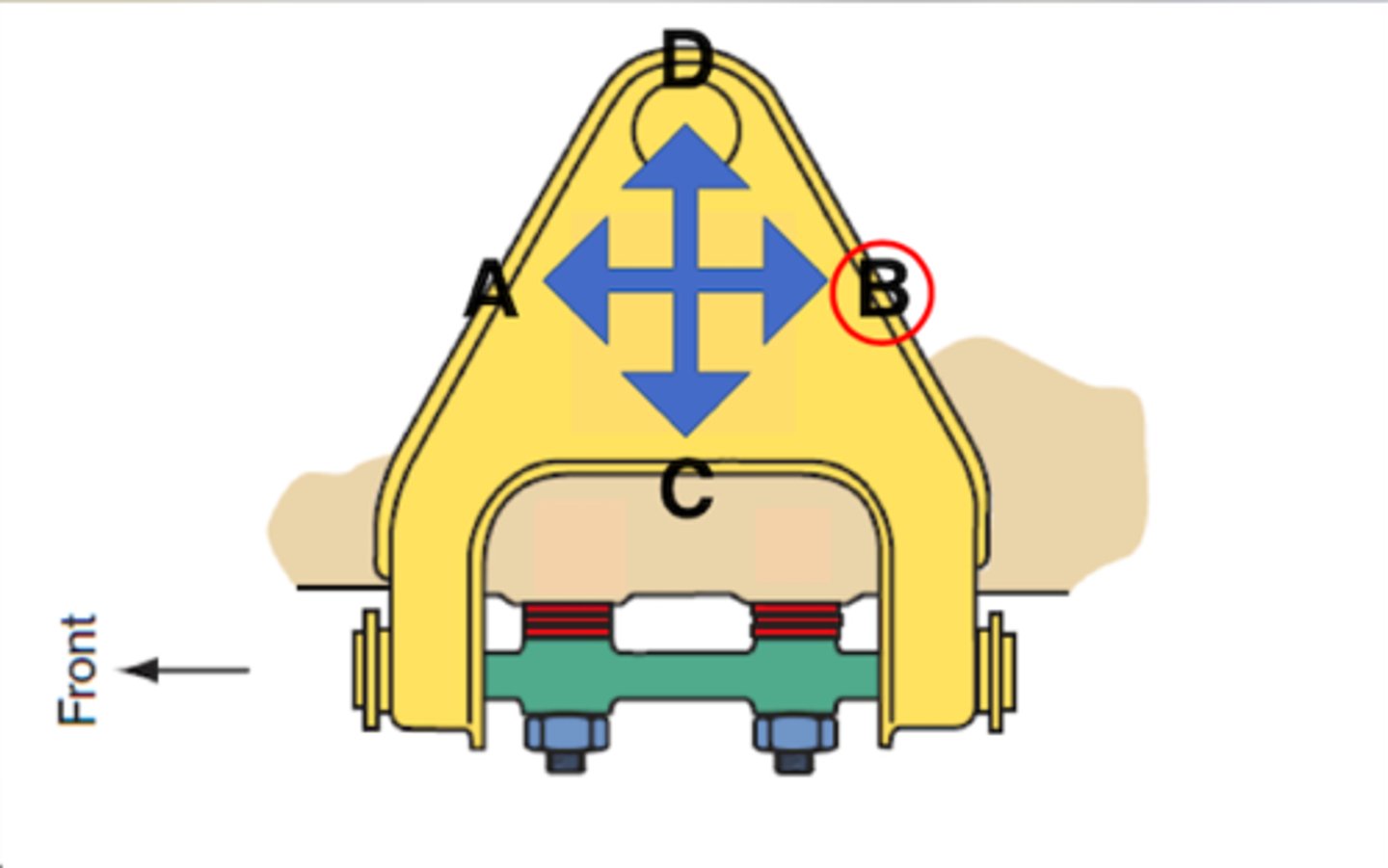
This movement would Decrease Camber
How would moving toward C effect the alignment?
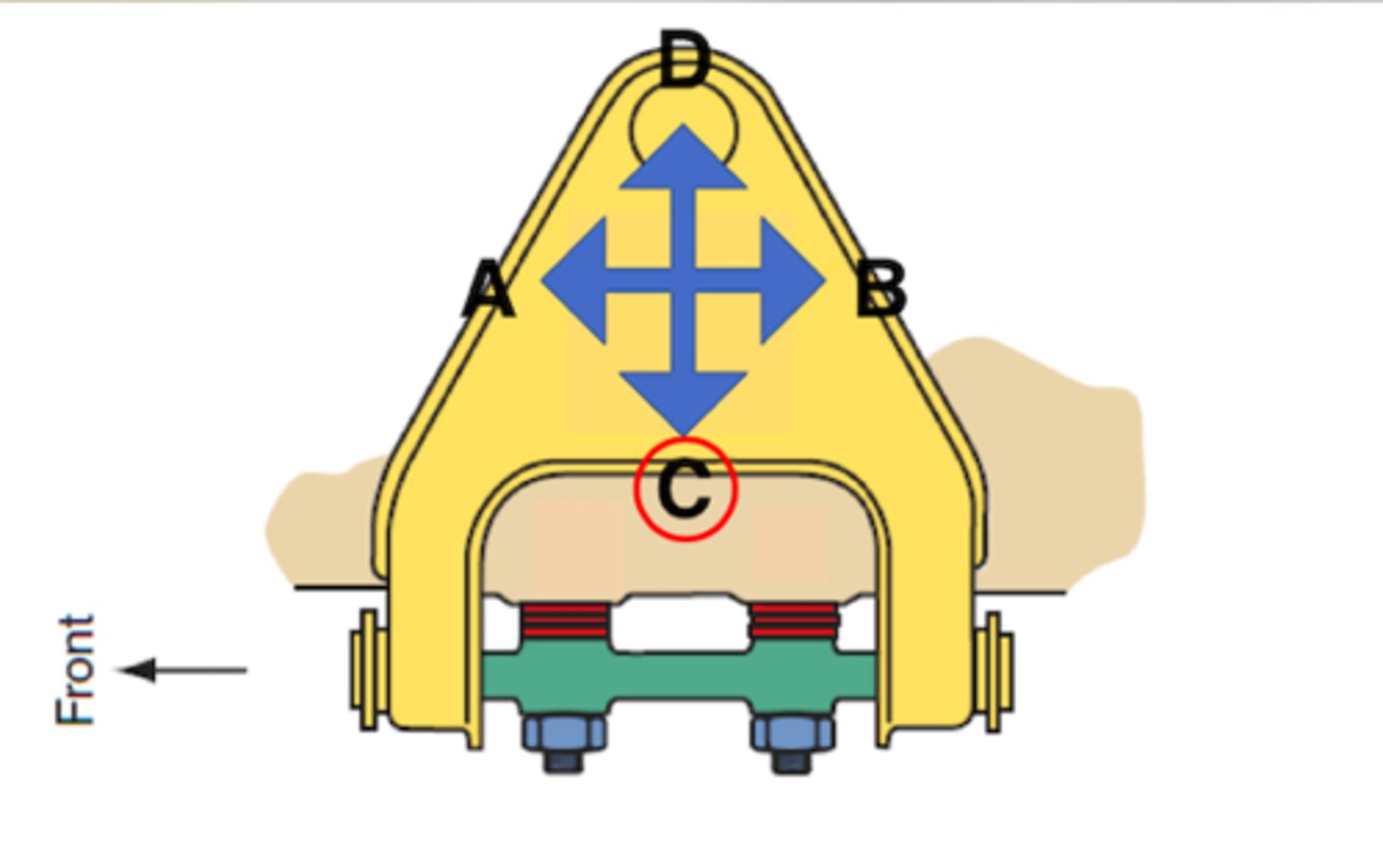
This movement would Decrease Caster
How would moving toward A effect the alignment?
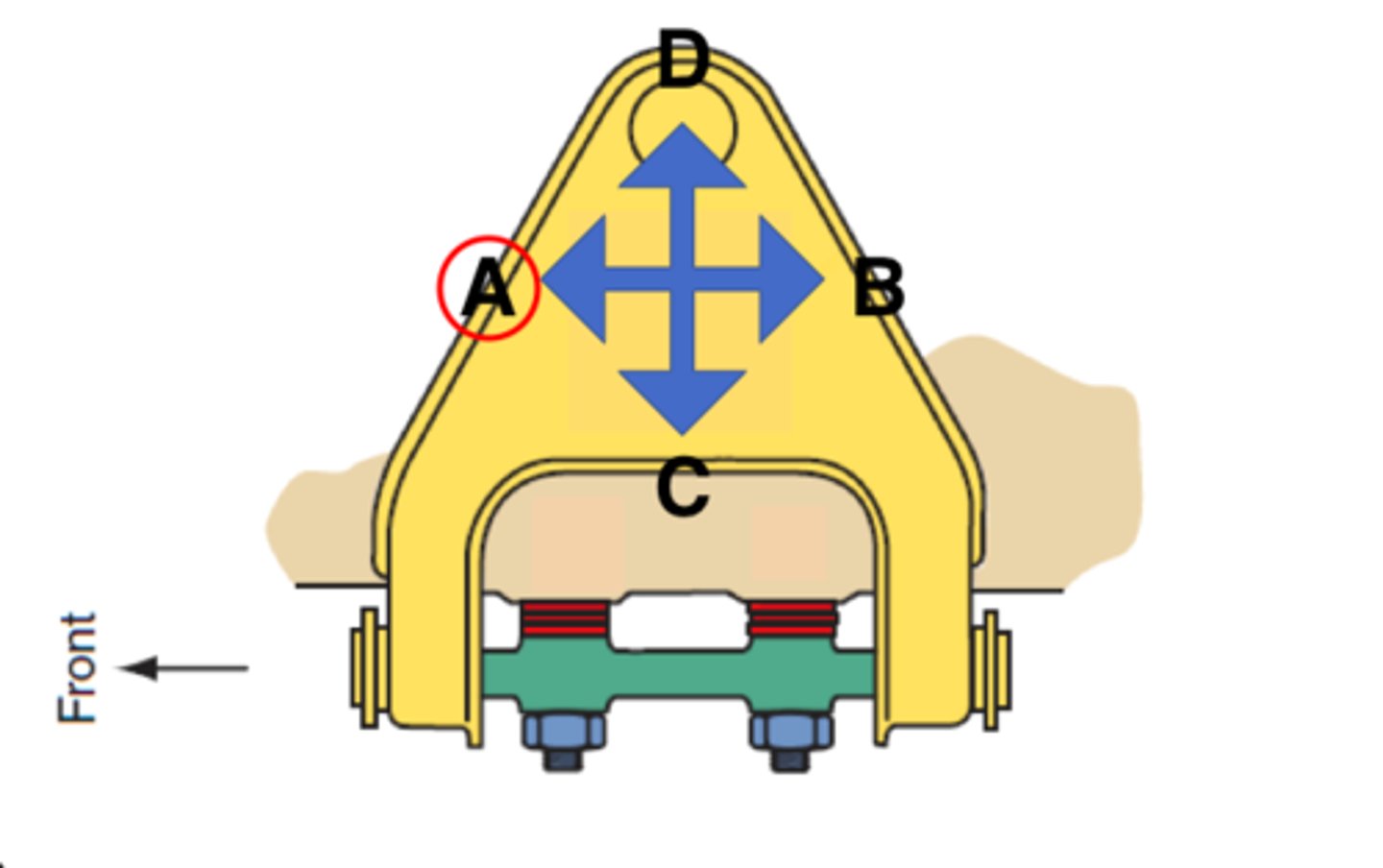
This movement would Increase Camber
How would moving toward D effect the alignment?
Tighten the castle nut slightly in order to line the slot on the castle nut up with the hole in order to install the castle nut. Never loosen it below torque specification
After tightening a castle nut on a ball joint to the torque specification you find the hole for the cotter pin in the stud does not line up with a slot on the castle nut and you are unable to install the cotter pin.... Should you tighten the nut slightly to line up the slot with the hole or loosen it slightly to line up the slot with the hole?
"you will see 2 similar answers clue is a number 45 just pick the longer answer"
How to adjust toe on rack and pinion suspension, thus changing the length of the steering linkage
Loosen the lock nut and turn the inner tierod
Loosen the locking sleeve nuts and rotate the adjusting sleeve, thus changing the length of the steering linkage
How to adjust toe on a parallelogram system
An imaginary line that is drawn perpendicular from the centerline of the rear axle, down the centerline of the vehicle
What is the thrust angle?
An out-of-position axle or incorrect toe setting
What is the cause of an off-set thrust angle?
Diagonal tire wear, pulling or drifting while driving and an off-set steering wheel
What is the effect of an off-set thrust angle?
During low speed operation
When does variable assist power steering provide maximum pressure?
During high speed operations
When does variable assist power steering provide minimum pressure?
Is Caster adjustable on all vehicles?
Caster is NOT adjustable on some vehicle
What are shim adjusted control arms used on?
Typically used on older RWD vehicles that contain front SLA suspension
In what sequence should an alignment be performed?
Caster, camber, toe (in that order)
What is not a tire wearing angle?
Caster
What causes a steering wheel to return to center?
A normal positive caster angle
How does Caster effect which way a vehicle pulls
Vehicles will pull to the side with more negative caster
How does Camber effect which way a vehicle pulls
A vehicle will pull to the side with more positive camber
What is a typical camber angle
Close to zero to provide maximum tire contact with the road
How would you compensate toe for road crown?
Left side tire with slight toe out and right side tire with toe in