AP Bio Unit 1 Terms
 Call Kai
 Learn
Learn Practice Test
 Spaced Repetition
 Match
Match Flashcards
 Knowt Play
1/122

There's no tags or description
Looks like no tags are added yet.
Name | Mastery | Learn | Test | Matching | Spaced | Call with Kai | Chat |
|---|
No analytics yet
Send a link to your students to track their progress
123 Terms
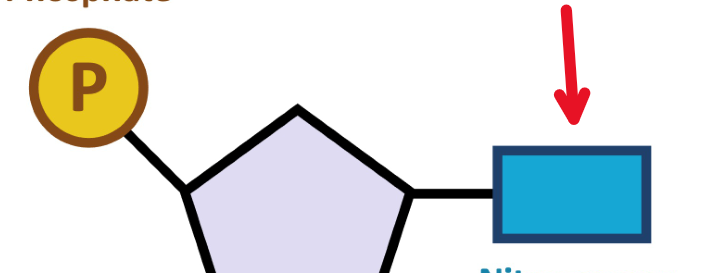
Nitrogenous base
A component of a nucleotide which is a cyclic molecule and there are four types
Purine
Double ring structures found in nucleotides
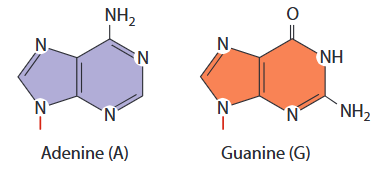
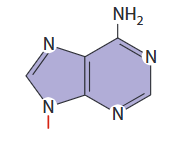
Adenine (A)
A nitrogenous base that is a purine and bonds with thymine or uracil
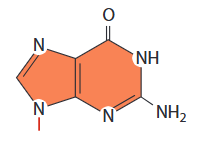
Guanine (G)
A nitrogenous base that is a purine and bonds with cytosine
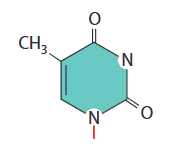
Thymine (T)
A nitrogenous base that is a pyrimidine and bonds with adenine
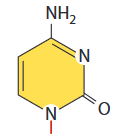
Cytosine (C)
A nitrogenous base that is a pyrimidine and bonds with guanine
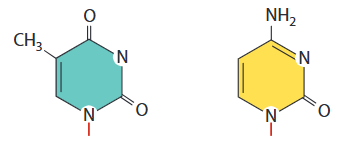
Pyrimidine
Single ring structures found in nucleotides
Directionality/Polarity
Helps to distinguish the orientation of a DNA strand
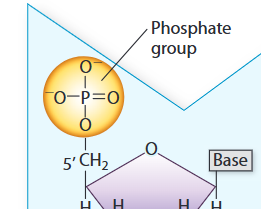
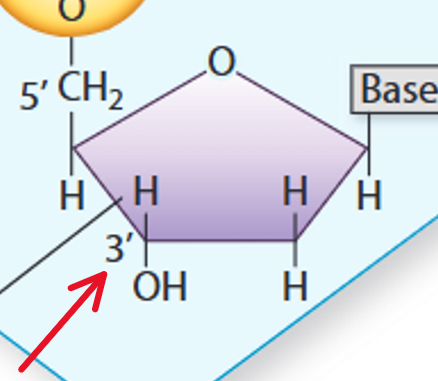
5’ end
A nucleotide at the top with 5’ phosphate free
3’ end
A nucleotide at the bottom with a 3’ hydroxyl group free
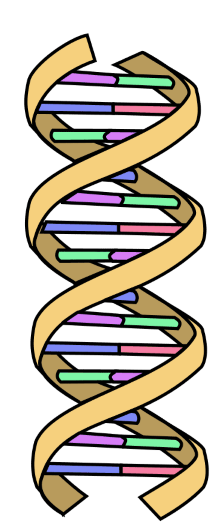
Double helix
The structure of DNA, two strands wrapped around eachother
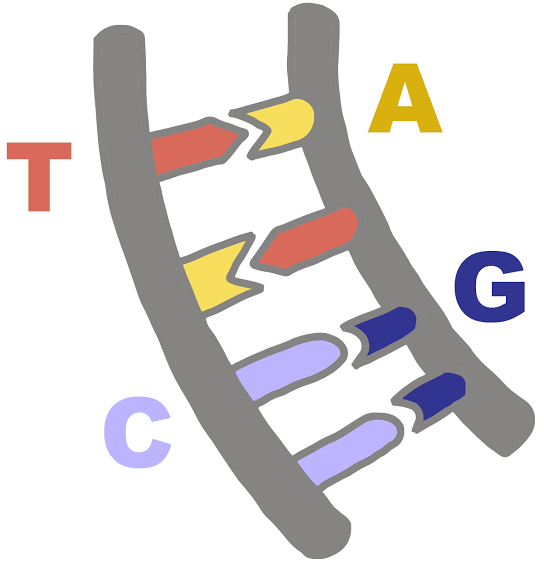
Antiparallel
Strands within DNA that run in opposite directions (5’-3’ and 3’-5’)
Complementary
Base pairs (A-T and G-C)
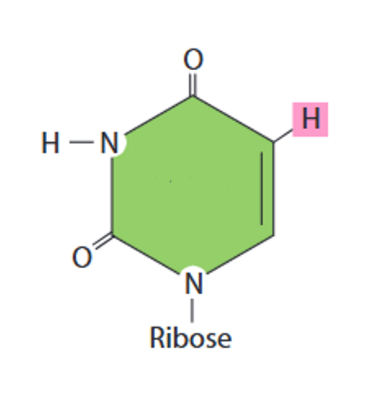
Uracil (U)
A nitrogenous base in RNA
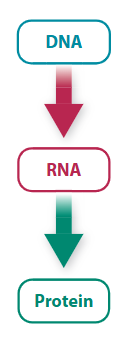
Central dogma
The flow of information in all organisms
Nucleotides
The monomers of nucleic acids with three parts
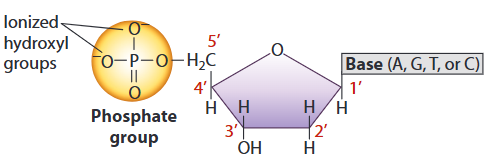
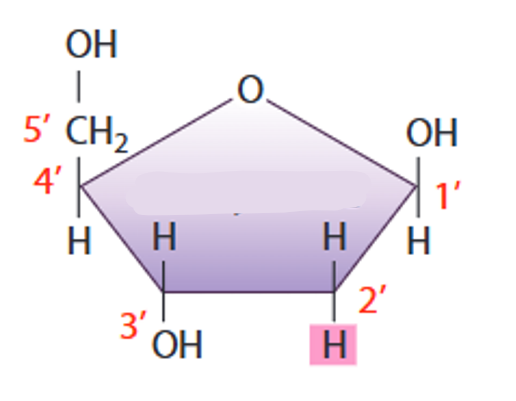
Deoxyribose sugar
A five carbon sugar that is located in DNA and is apart of a nucleotide
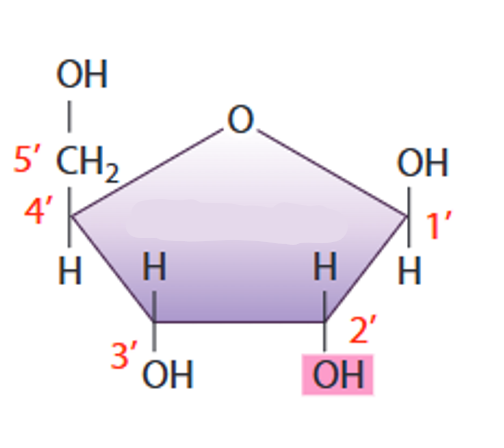
Ribose sugar
A five carbon sugar that is located in RNA and is apart of a nucleotide
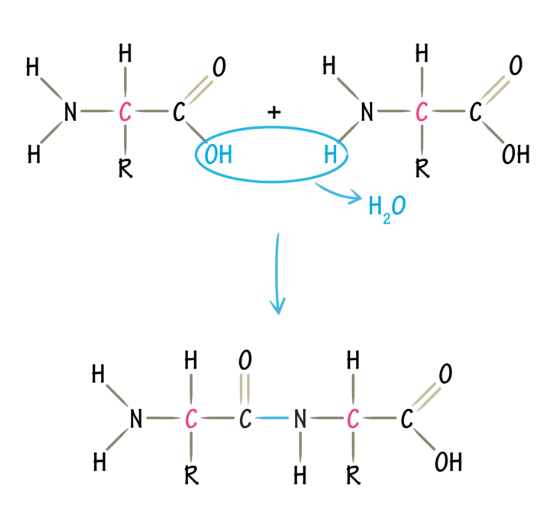
Peptide bond
The covalent linking of amino acids, formed in a dehydration synthesis reaction
Peptide
A short polymer of amino acids

Polypeptide
A long polymer of amino acids
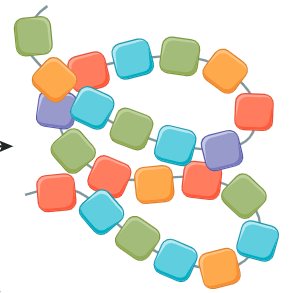
Primary structure
Linear sequence of amino acids in a protein
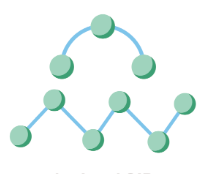
Secondary structure
Structural proteins held together by hydrogen bonds
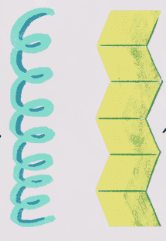
Alpha helix
The coil formation of a secondary structure

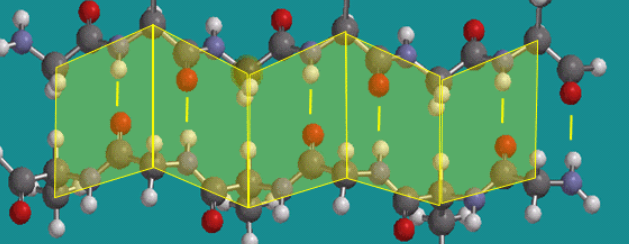
Beta sheet
The zig-zag formation of a secondary structure formed by extended polypeptide strands
Tertiary structure
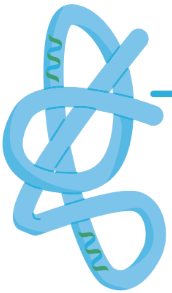
The three-dimensional shape for a single polypeptide chain, its structure can be determined through hydrogen and ionic bonds, distribution of R groups
Quaternary structure
Two or more 3-D polypeptide chains

Polar
A molecule with positive and negative regions
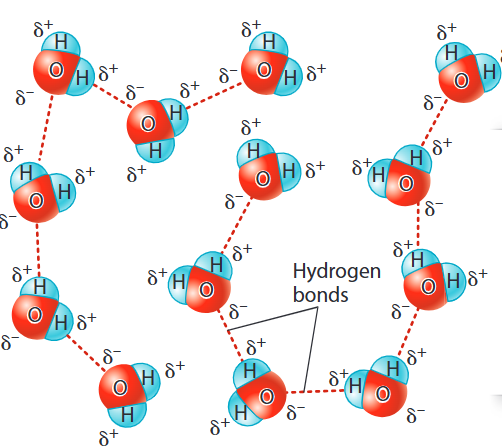
Hydrogen bond
The weak attraction of a hydrogen atom with another atom through polar charges
Cohesion
Water's attraction to water molecule
Adhesion
Water's attraction to other materials
Surface tension
How difficult it is to break the surface of a liquid (high for water)
Specific heat
The amount of energy required to change a substance's temperature
Solvent
A liquid capable of dissolving substances
Acid
Molecules that donate H+, <7 on pH scale
Base
Molecules that receive a H+, >7 on pH scale
pH scale
A way to describe how acidic or basic a solution is, ranges from 0-14
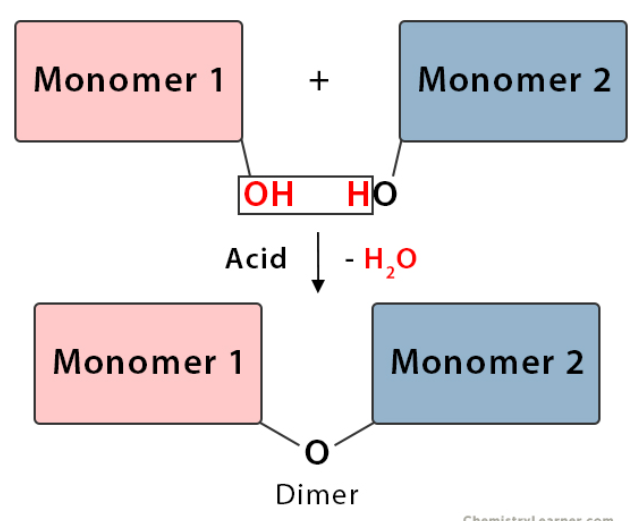
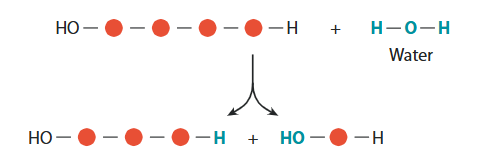
Dehydration synthesis reaction
Chemical reaction where water is removed while forming two monomers into a polymer
Hydrolysis reaction
Chemical reaction where covalent bonds are broken by adding water
Matter
Anything that has mass and takes up space
Atoms
Basic units of matter
Molecule
Chemical structure made up of two or more atoms
Organic molecule
Biological molecules that contain carbon
Nucleus
Control center of the cell
Protons
Positively charged particles within the nucleus
Neutrons
Neutral charged particles within the nucleus
Electrons
Negatively charged particles which surround the nucleus
Atomic number
The amount of protons in an atom
Element
A pure substance that consists of one sole atom
Atomic mass
Composed of protons and neutrons, each having a mass of 1 atomic unit
Isotope
Atoms of the same element which have different numbers of neutrons
Ion
A charged atom (cation and anion)
Energy level
Where electrons are located outside of the nucleus, a specific, fixed location
Electron shell
Represents an energy level
Valence electron
Electron in the outermost energy level
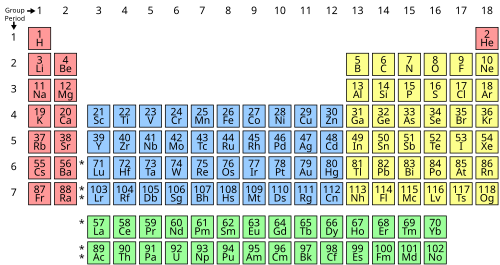
Periodic table of the elements
Arrangement of elements which describes valence electrons and other properties of elements
Chemical bond
The forming of individual molecules
Covalent bond
Pair of electrons shared between two atoms
Single bond
1 pair of electrons shared among two atoms
Double bond
2 pairs of electrons shared among two atoms
Electronegativity
An atoms strength and ability to attract electrons
Polar covalent bond
When electrons are unevenly shared (partial positive and negative)
Nonpolar covalent bond
When electrons are shared equally
Ionic bond
A bond with oppositely charged ions, one donates an electron
Chemical reaction
A process where atoms or molecules transform into different molecules (product and reactant)
Reactant
The atoms or molecules that are changed in a chemical reaction
Product
The molecules formed by a chemical reaction
Polymer
Long chain (compound) of repeating monomers
Monomer
Small molecular building blocks
Protein
An organic molecule that provides function and structure to a cell
Amino acid
The monomer (sub unit) of protein
Nucleic acid
An organic molecule that contains genetic information in a cell, DNA or RNA
Ribonucleic acid (RNA)
A type of nucleic acid
Nucleotide
The monomer of nucleic acid
Carbohydrate
An organic molecule used as quick energy composed of sugar(s)
Lipid
An organic molecule that is hydrophobic and used for long term energy
Hydrophobic
Nonpolar molecules that do not dissolve in water
Hydrophilic
Polar molecules that dissolve in water
Biology
The scientific study of life
Biologist
Person who studies biology
Organism
A living creature that displays all properties of life
Gene
Unit of heredity (instruction manual made of DNA)
Genome
The genetic information contained in a cell
Cell
The most basic structure of life that makes up an organism
Species
A group of interbreeding organisms which produce offspring (are distinguishable)
Evolution
Change over time (adaptation)
Natural Selection
A mechanism where some creatures survive and reproduce more than others as a result of variation in a specific environment
Energy
The ability to do work, and is essential for life
Energetics
The study that explores properties of energy and its distribution in biological, chemical, and physical processes
DNA (deoxyribonuleic acid)
The carrier of genetic information for all organisms
Biological System
A complex network made up of biotic and abiotic entities
Biotic
living, or once living organisms in a system
Abiotic
non living chemical and physical factors in a system
System
A complex group of organized, interacting components
Scientific Inquiry
The process scientists use to question the natural world in an ordered and deliberate way
Observation
Act of viewing the world around us (focused question)
Hypothesis
A tentative explanation for one or more observations where evidence can help support or reject it
Controlled experiment
An experiment with at least two groups of identical and one singular change is introduced
Test/Experimental group
Experiences the variable in an experiment
Control group
The group not exposed to the variable in an experiment