Anthropology Physical
 Call Kai
 Learn
Learn Practice Test
 Spaced Repetition
 Match
Match Flashcards
 Knowt Play
1/8

There's no tags or description
Looks like no tags are added yet.
Name | Mastery | Learn | Test | Matching | Spaced | Call with Kai | Chat |
|---|
No analytics yet
Send a link to your students to track their progress
9 Terms
Olfactory Bulb
The olfactory bulb is a small structure at the front of the brain. It receives smell signals from the nose. It acts as a processing center. It sends smell information to other parts of the brain for memory and emotion.
Law of equivalence
According to Mendel, irrespective of the source of the allele, the alleles behave equally while transmitting from one generation to another. However, genome imprinting is an exception to this law.
Trekked
The word trekked is the past-tense form of the verb trek, which means to walk a long distance slowly, carefully, or with great effort, usually across difficult land like hills, mountains, or forests
Optically stimulated luminescence
It is a scientific method used to measure doses of ionising radiation or determine how long mineral grains like quartz and feldspar have been buried

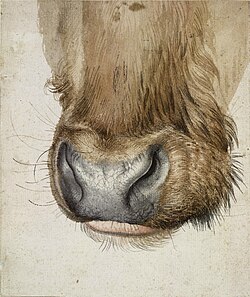
Muzzle
The word muzzle primarily refers to the snout of an animal, a protective guard worn over that snout, or the open end of a firearm barrel. It originates from the Latin word morsus, which means "to bite".
Nuchal Crest
The nuchal crest is a ridge of bone at the back of the skull. It is located on the occipital bone. This ridge serves as the main anchor point for neck muscles that hold up and move the head.
Saggital Crest
A sagittal crest is a ridge of bone that runs along the middle of the top of the skull. It provides extra space for the temporalis muscle, which is the main muscle used for chewing.
Tuberosities of forehead
The tuberosities of the forehead, or frontal eminences, are two rounded bumps on the skull's frontal bone located above the eyes. They mark the areas where the forehead curves the most. Their size varies by person. Sometimes, they are larger due to frontal bossing.
Metric Features
Metric features in anthropology are precise, measurable traits of the human body and skeleton. Anthropologists use these numerical values to study human growth, track evolutionary changes, compare populations, and build biological profiles for forensic identification.