Surgical Needles Part I
 Call Kai
 Learn
Learn Practice Test
 Spaced Repetition
 Match
Match Flashcards
 Knowt Play
1/29

There's no tags or description
Looks like no tags are added yet.
Name | Mastery | Learn | Test | Matching | Spaced | Call with Kai | Chat |
|---|
No analytics yet
Send a link to your students to track their progress
30 Terms
Types of needle points
1. blunt needles
2. tapered needles
3. tapercut needles
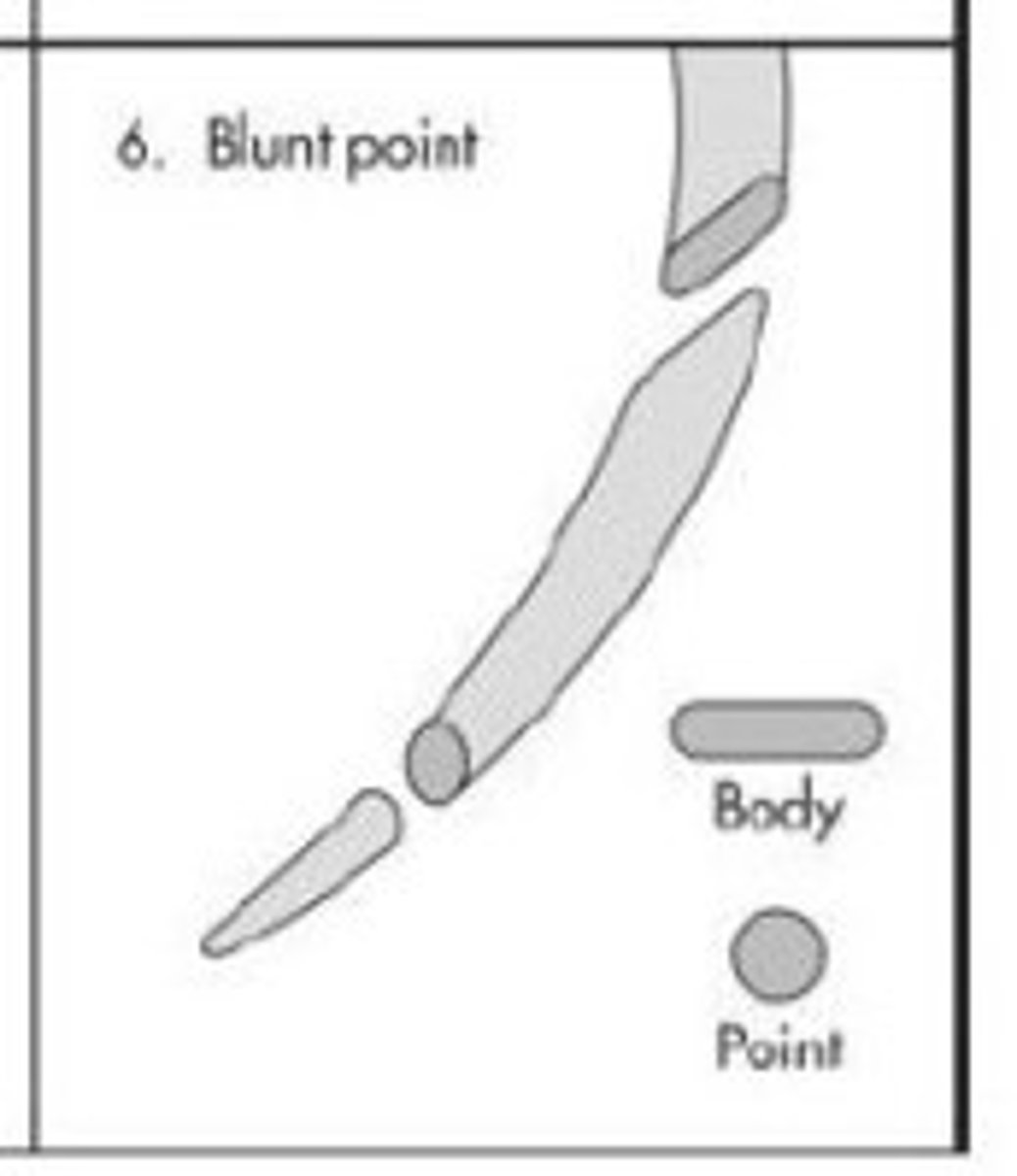
Blunt Needles
-round shaft with a blunt tip
-doesn't puncture tissue, but slides b/w tissue fibers
-LEAST TRAUMATIC & SAFEST
-used on friable tissues & organs (liver, kidney, spleen)
-also used in OB cases
Tapered Needles
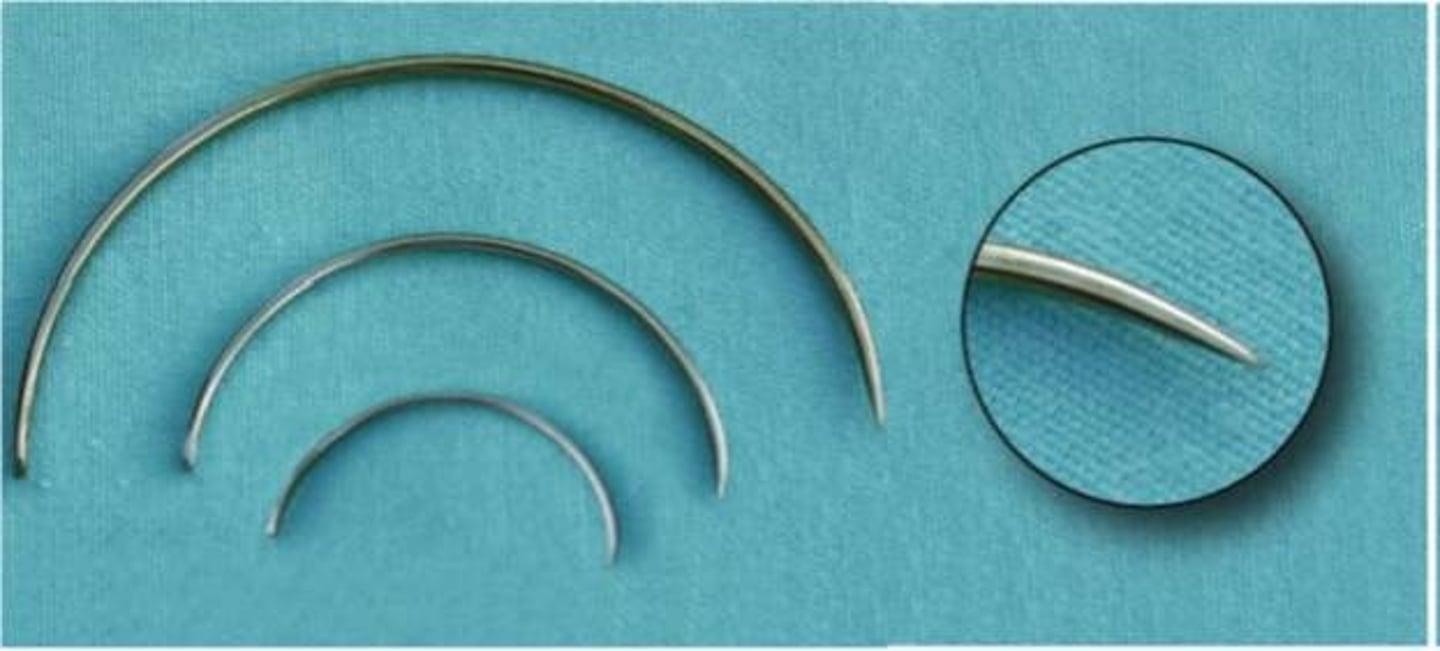
-round body that tapers into a sharp point
-penetrate & spread tissue without cutting it
-primarily used for suturing soft tissue (muscle, sub-q, peritoneum, dura, gastrointestinal, genitourinary, biliary and vascular tissue
Tapercut Needles
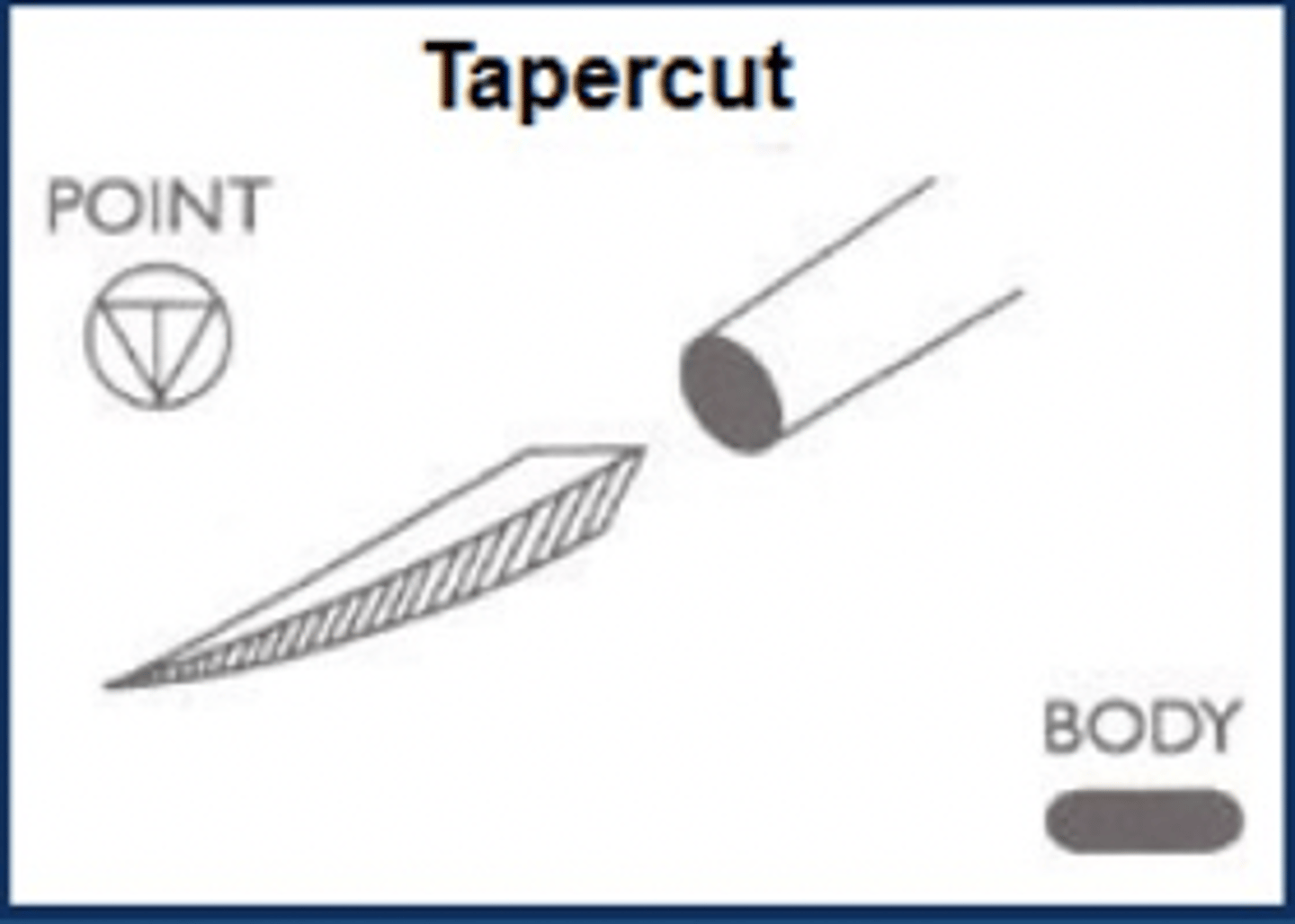
-also known as troclar point
- all 3 edges are sharpened to provide uniform cutting action
-objective: point itself not to exceed the diameter of the suture material
-used in CV surgery on sclerotic or calcified tissue
-used on dense and fibrous connective tissue
Cutting Needles
1. cutting needles
2. conventional cutting needles
3. reverse cutting needles
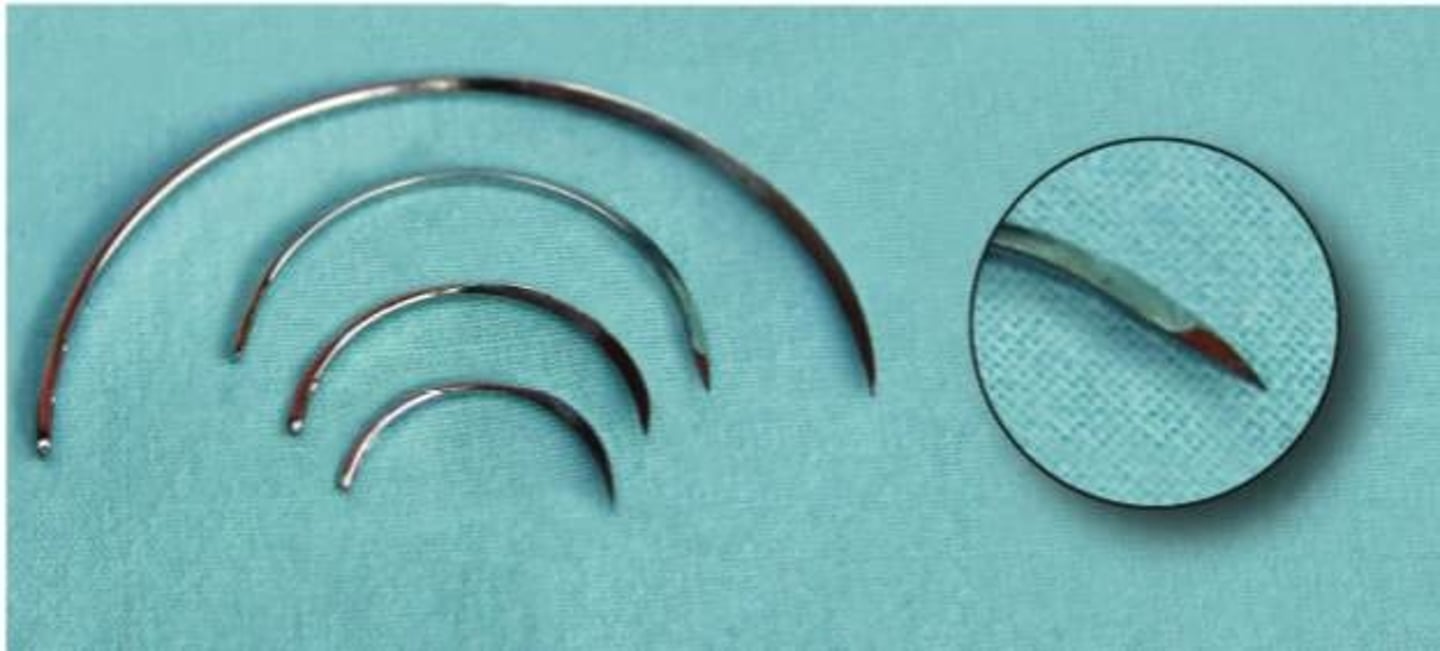
Cutting Needles
-form a cutting edge on 3 sides
-triangular body w a sharp edge on each side & a third cutting edge on the inside or outside
-ideal for skin, sclera, & tendons
-must pass through dense, irregular, and thick dermal tissue
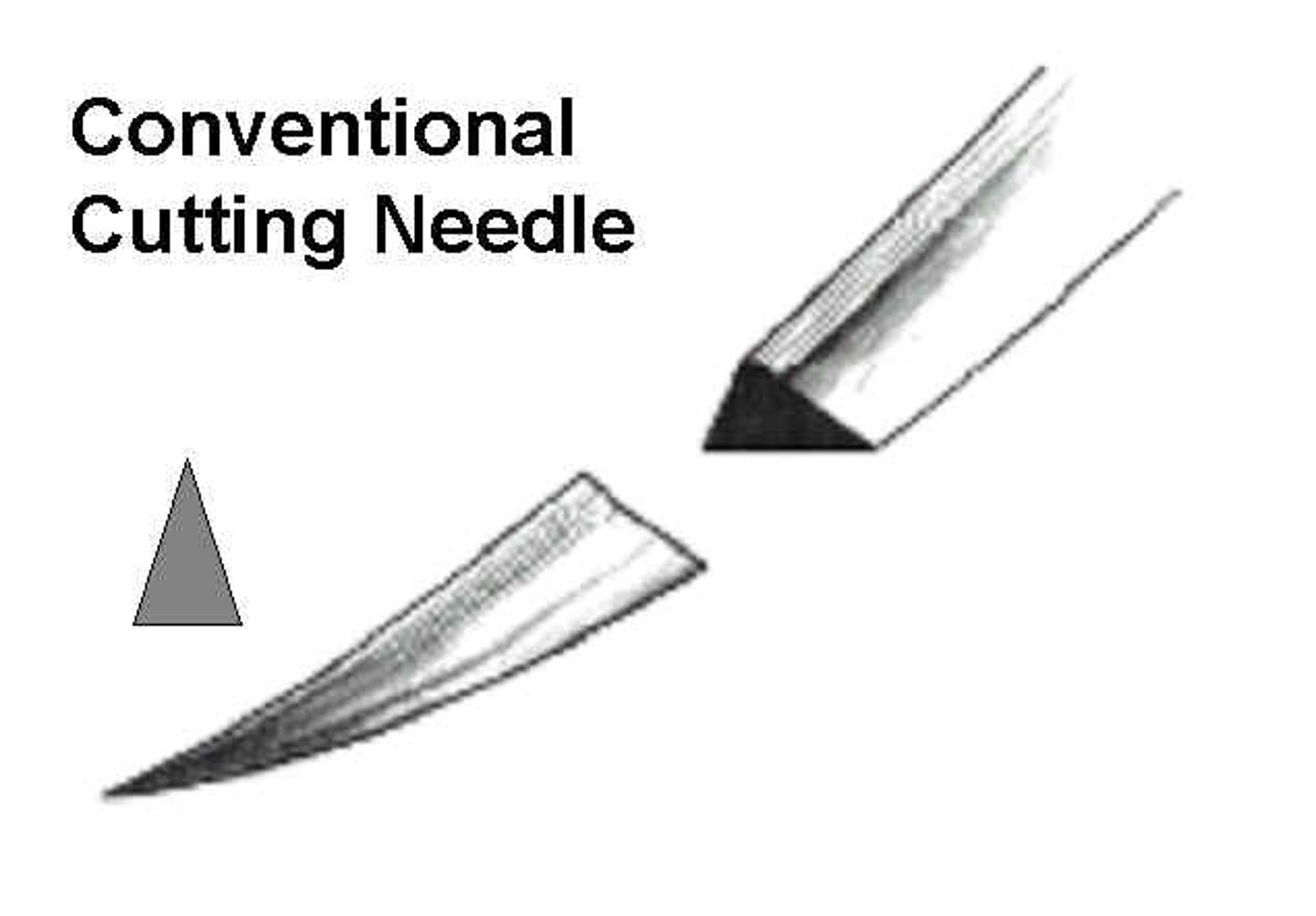
Conventional Cutting Needles
-third cutting edge is on the inside of the curve of the needle
-slices tissue in an upward direction as the needle is drawn through the tissue (skin & sternum)
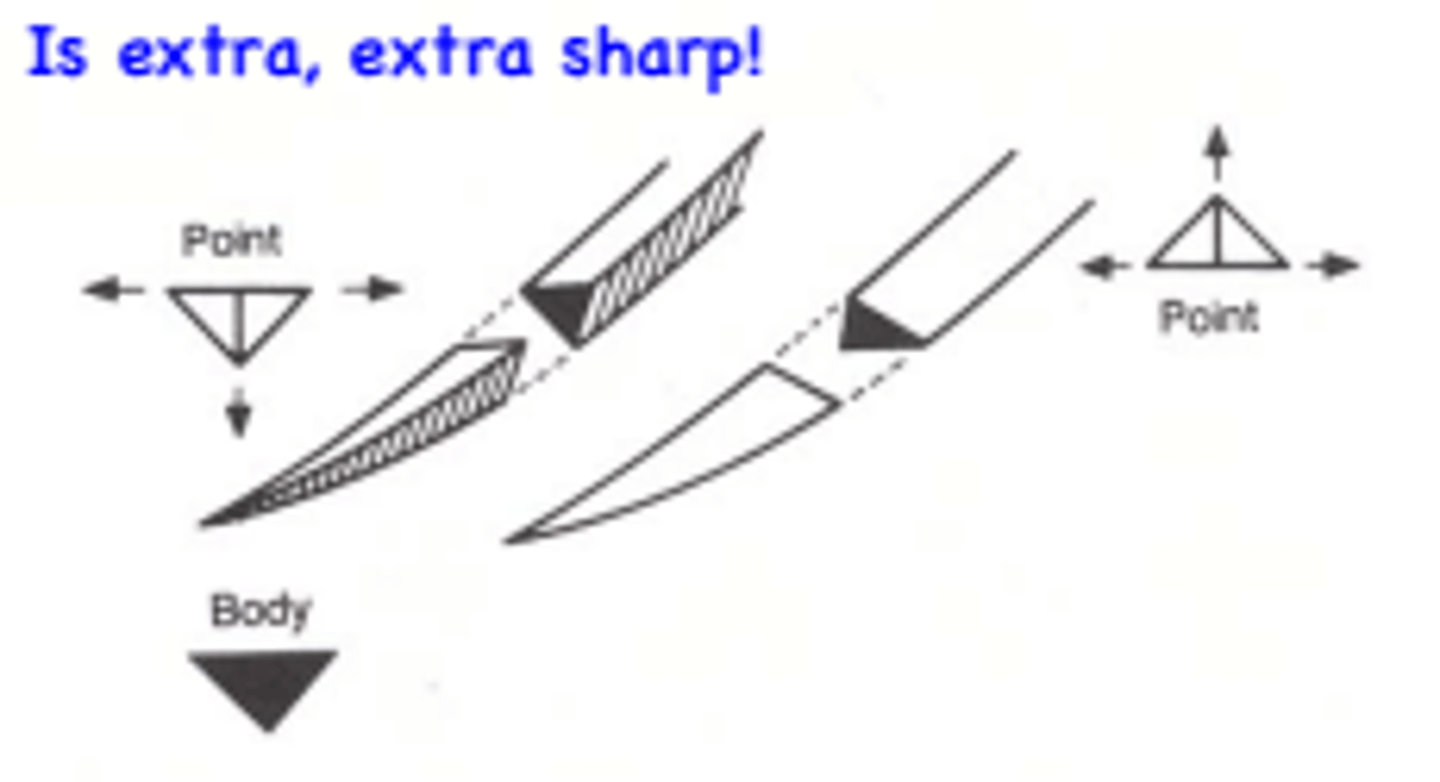
Reverse Cutting Needles
-cutting edge on the outside or lower edge of the curve
-stronger than most cutting needles
-minimal scarring
-fascia, ligament, skin, tendon sheath
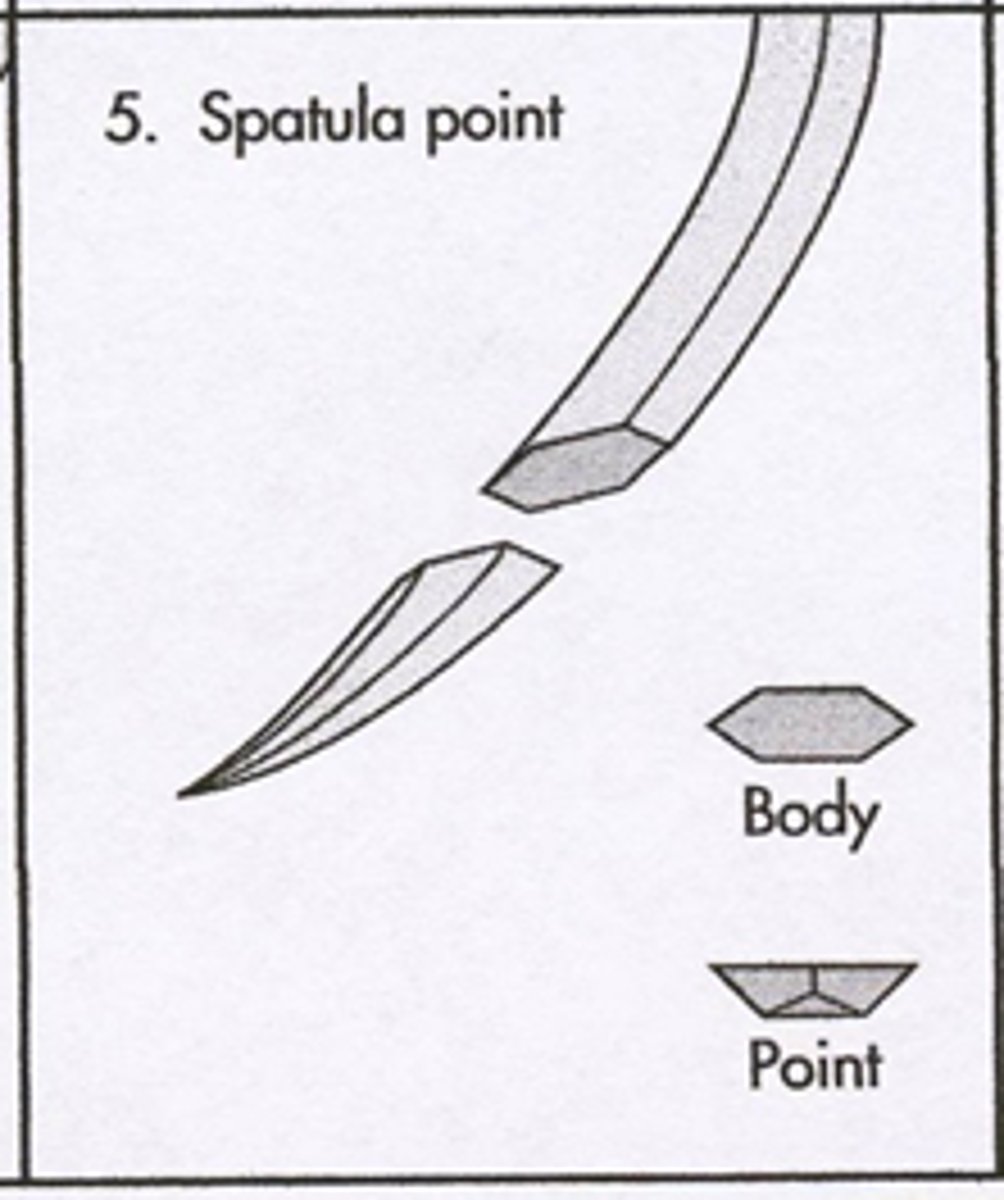
Side Cutting Needles
-spatula needles
-flat on top & bottom with side cutting edges
-eliminates unnecessary cutting of tissue
-used for EYE SURGERY to separate the corneal and scleral tissue
Needle Shapes or Curvature
-curvature relates to the body and radius of needle
-curvature is measured as the needles fraction of the circumference of a complete circle
(1/4, 3/8, 1/2, 5/8)
-the deeper the tissue is in the surgical wound, the more acute the circle or curve should be
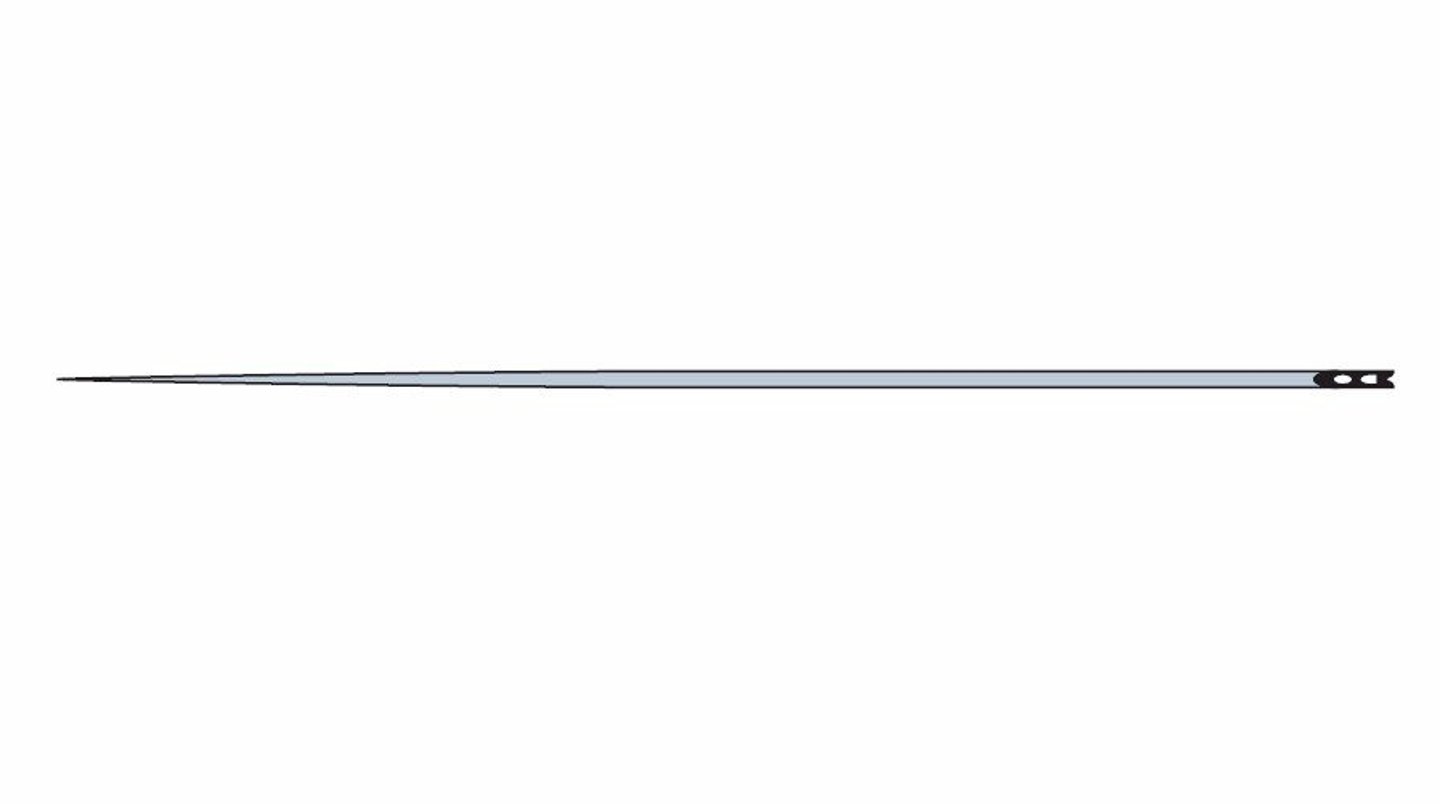
Keith Needles
-skin closure
-straight needle is grasped b/w the fingers just like a regular sewing needle
Needle Eyes
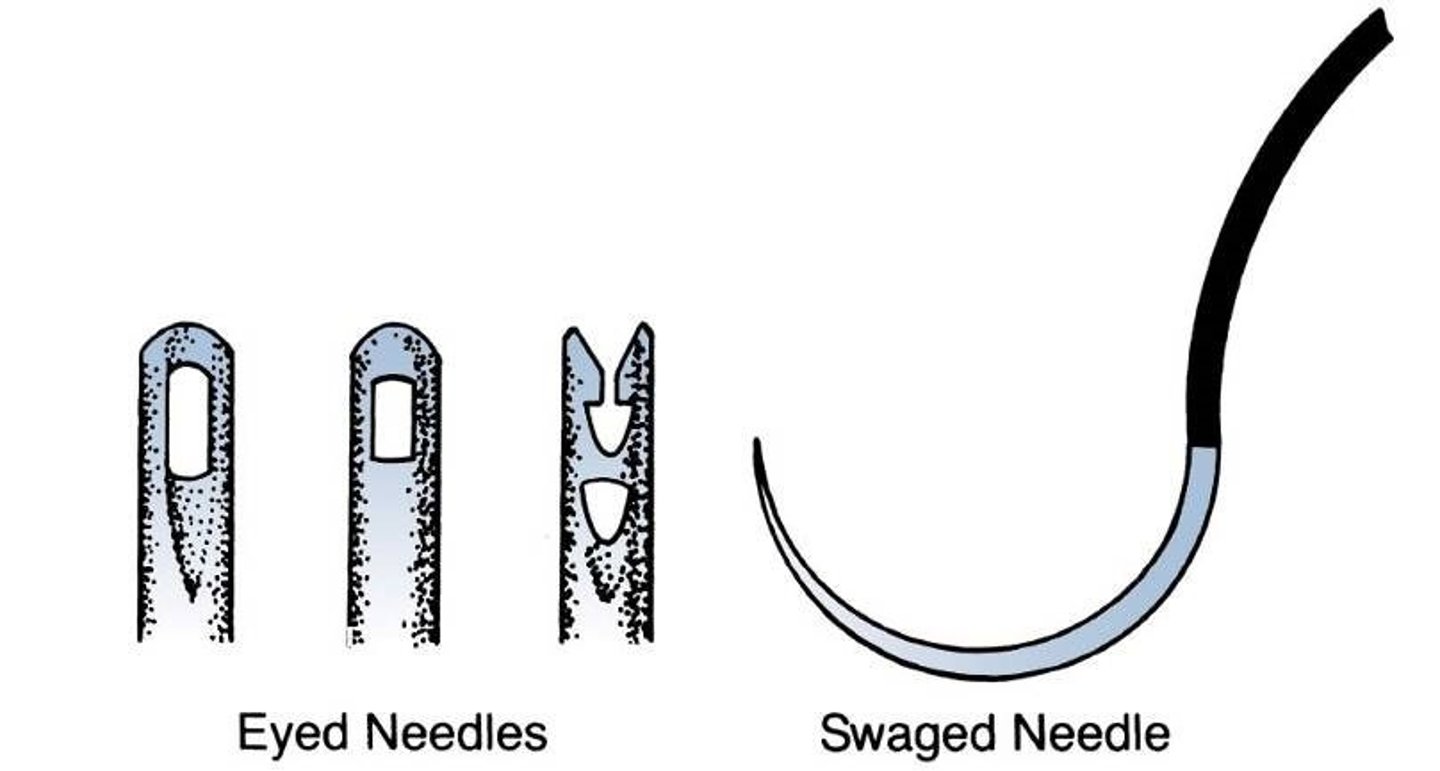
the eye is the portion of he needle where the suture strand is attached. closed eye needles may have round or square holes and are loaded by inserting the end of the suture material through the hole. loading the eyed needle with the suture strand can be cumbersome process when wearing gloves or if the needle is small. the eyed needle causes more tissue damage than the eyeless needle because the suture strand is not continuous with the needle.
Eye Needles or Free Needles
identified by shape and type of eye
French Eye Needle
-curved taper (fine); used on intestine
- also referred to as a spring or split eye
-the suture strand is pulled through the slit to secure.
-This needle must be used with pliable, braided material such as silk, or with cotton suture in a medium to fine size.
-French eye needles are not practical to be used with surgical gut, because they may fray the suture.
Swaged Needles
1. "Eyeless"/Swaged needles
2. single armed attachment
3. double armed attachment
4. permanently swaged needle attachment
5. control/release or pop off
"Eyeless"/Swaged Needles
-provides an already manufactured with suture strands providing less tissue damage as the suture follows the needle through the same hole causing less traumatic entrance and exit
-sometimes called pop off or control release when requiring lower uniform forces to detach its sutures
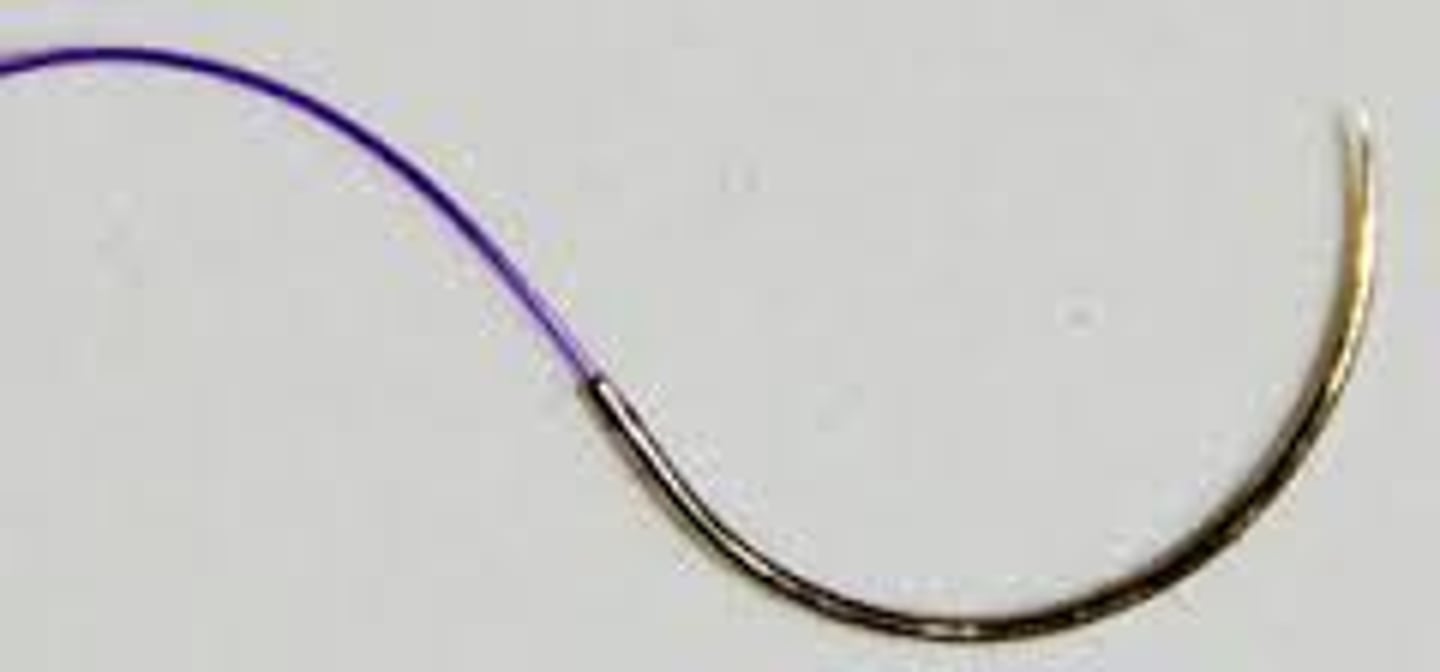
Single Armed Attachment
-used for interrupted or continuous suturing
-suture with a single needle
Double Armed Attachment
-used for anastomosis of vessels
-suture with a needle on both ends
-approx. blood vessels
-only 1 needle is mounted on the needle holder
-careful when passing to the surgeon (strike though could happen)
Permanently Swaged Needle Attachment
-can not be easily removed
-when the surgeon has finished placing the suture line in the patients tissue, suture MUST BE CUT
Control Release Needles or Pop-Off's
-no need to cut suture from the needle
-allows placement of many sutures rapidly
-reduces operating time and length of time the patient is anesthetized
How to Load a Needle
-grasp the needle approx 1/3 of the distance from the swaged end to the point
-have the tip of the needle angles slightly upward
How to Pass a Needle to the Surgeon
-pointing needle towards surgeons heart and the eye is towards his right shoulder
-when passing suture always have pickups available for the surgeon's other hand
How to Keep up with Needles
-needles should only be in the surgeon's hand, your needle box, or in the suture package
Commonly used Needles
1. SH-small half
2. BP-blunt point
3. BV-blood vessels (vessels)
4. CT-circle taper
5. CTX-circle taper extra large (muscle)
6. FS-for skin
7. FSLX-for skin extra large (drains)
8. PC-precision cosmetic
9. PS-plastic surgery
Specialty Needles
1. hypodermic needles
2. arterial or venous cannula needle
3. irrigation needles
4. biopsy needle
5. spinal needles
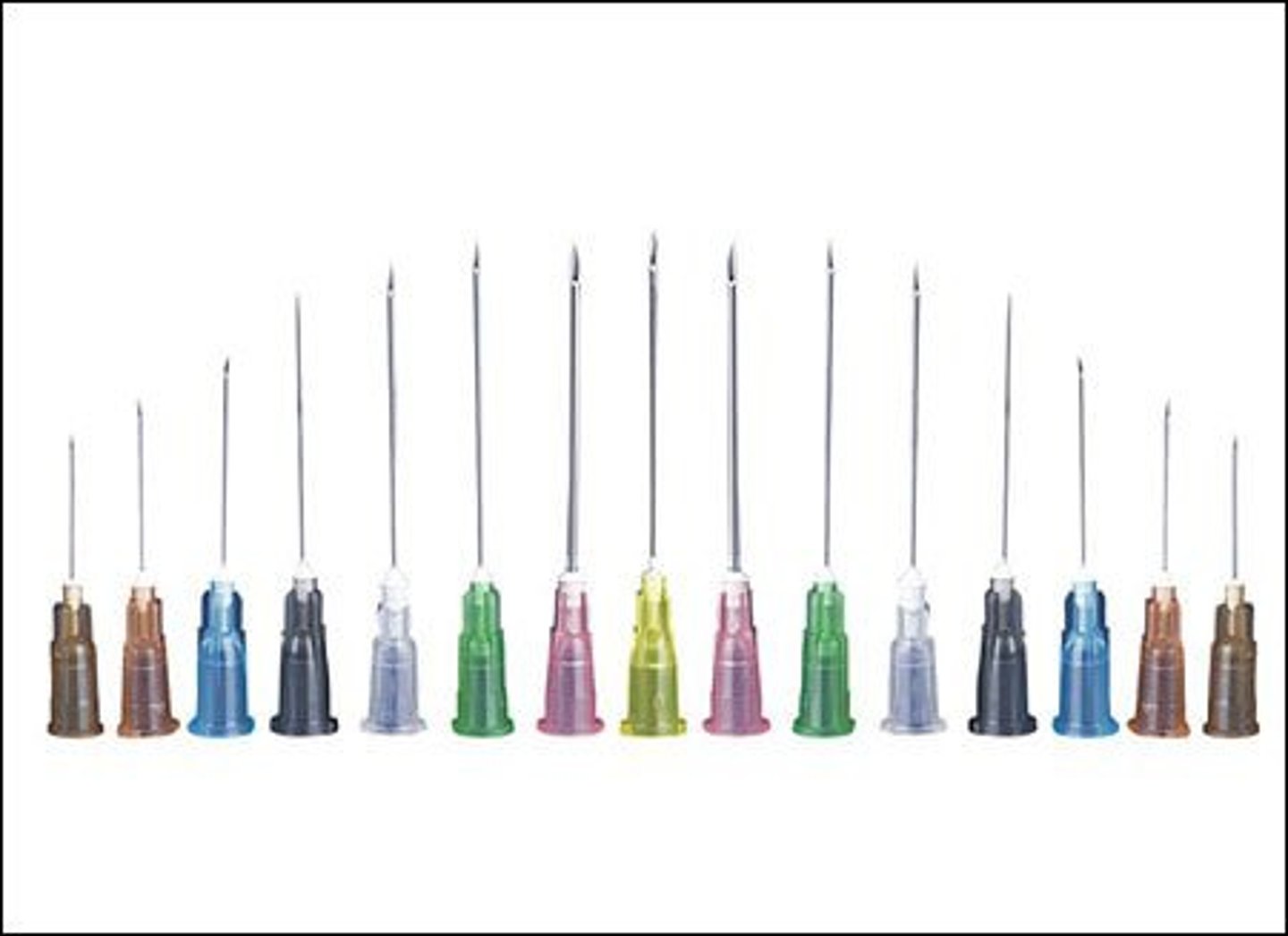
Hypodermic Needles
-used to inject medications into tissue or intravenous tubing
-draw fluid out of tissue
- 1/ 2 to 4in and 12 to 30ga
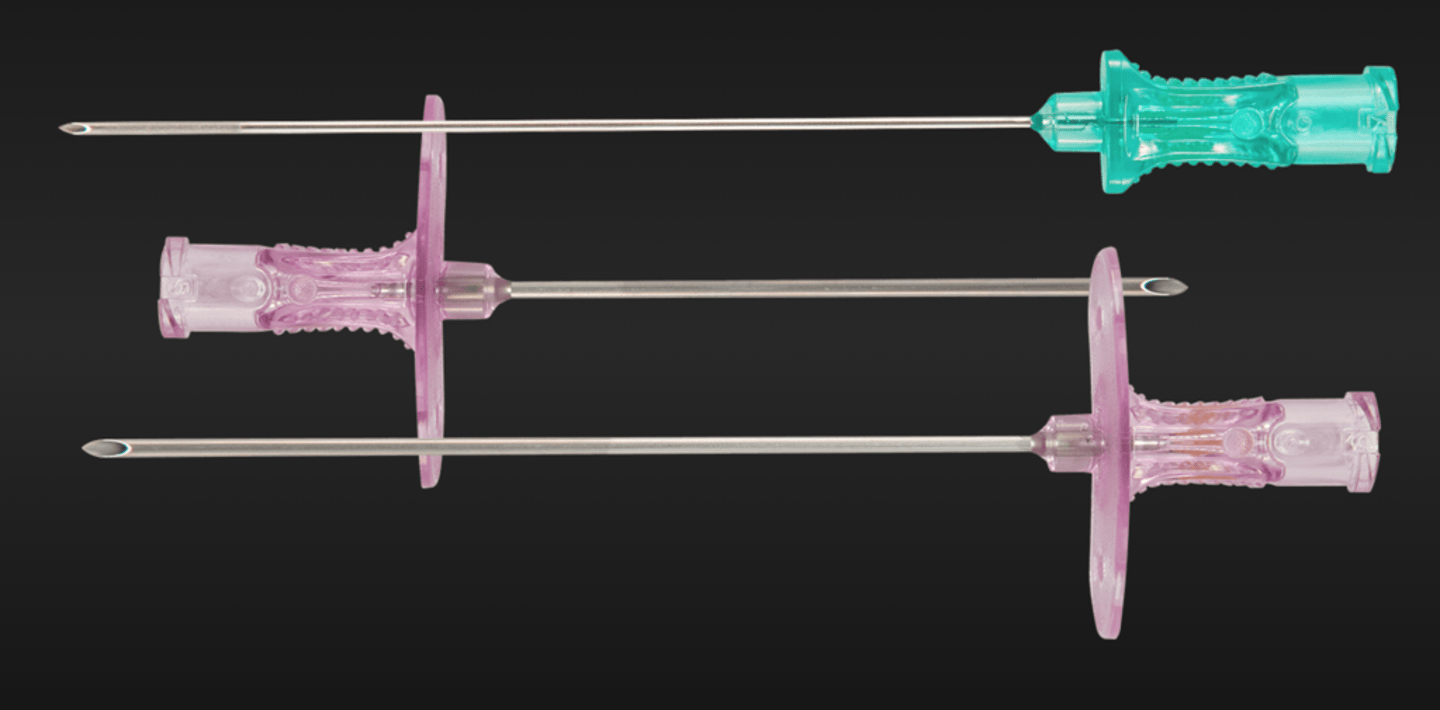
Arterial or Venous/Cannula Needle
-used to introduce a plastic indwelling catheter into vessel
-angio-cath: iv fluids
-arterial/cannula- used to obtain arterial blood gases or are attached to a line leading to a transducer to directly monitor arterial BP.
-potts and cournant: types of arterial needles
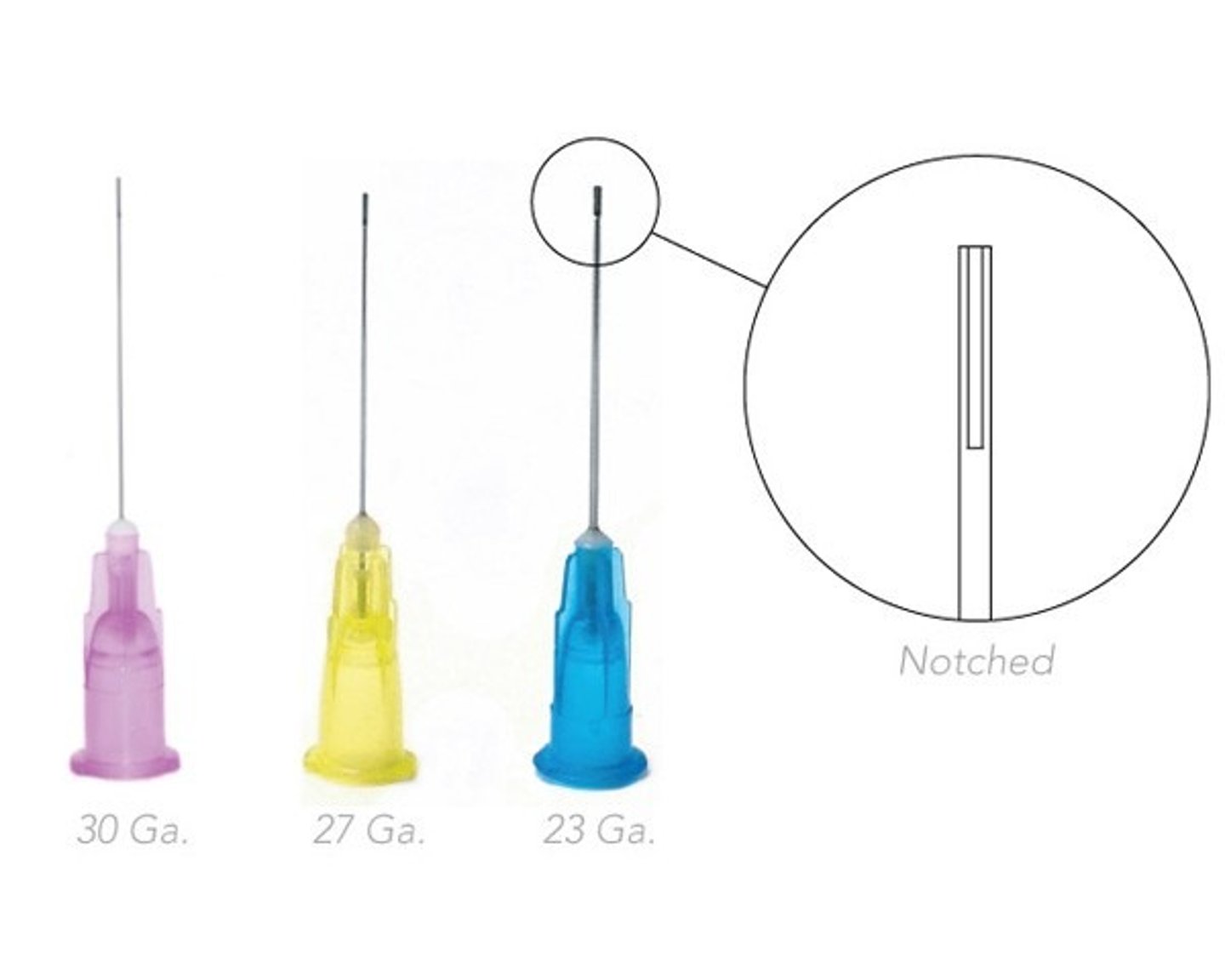
Irrigation Needles
-not really needles
-tube attached to a plastic needle hub for placement of a syringe
-eye, microscopic and vascular procedures to irrigate and wet surgeons hands when tying suture
Biopsy Needles
-dorsey cannulated needle used to obtain brain tissue
-pereyra: stress incontinence
-trucut: liver bx
-chiba: bx of lung tissue
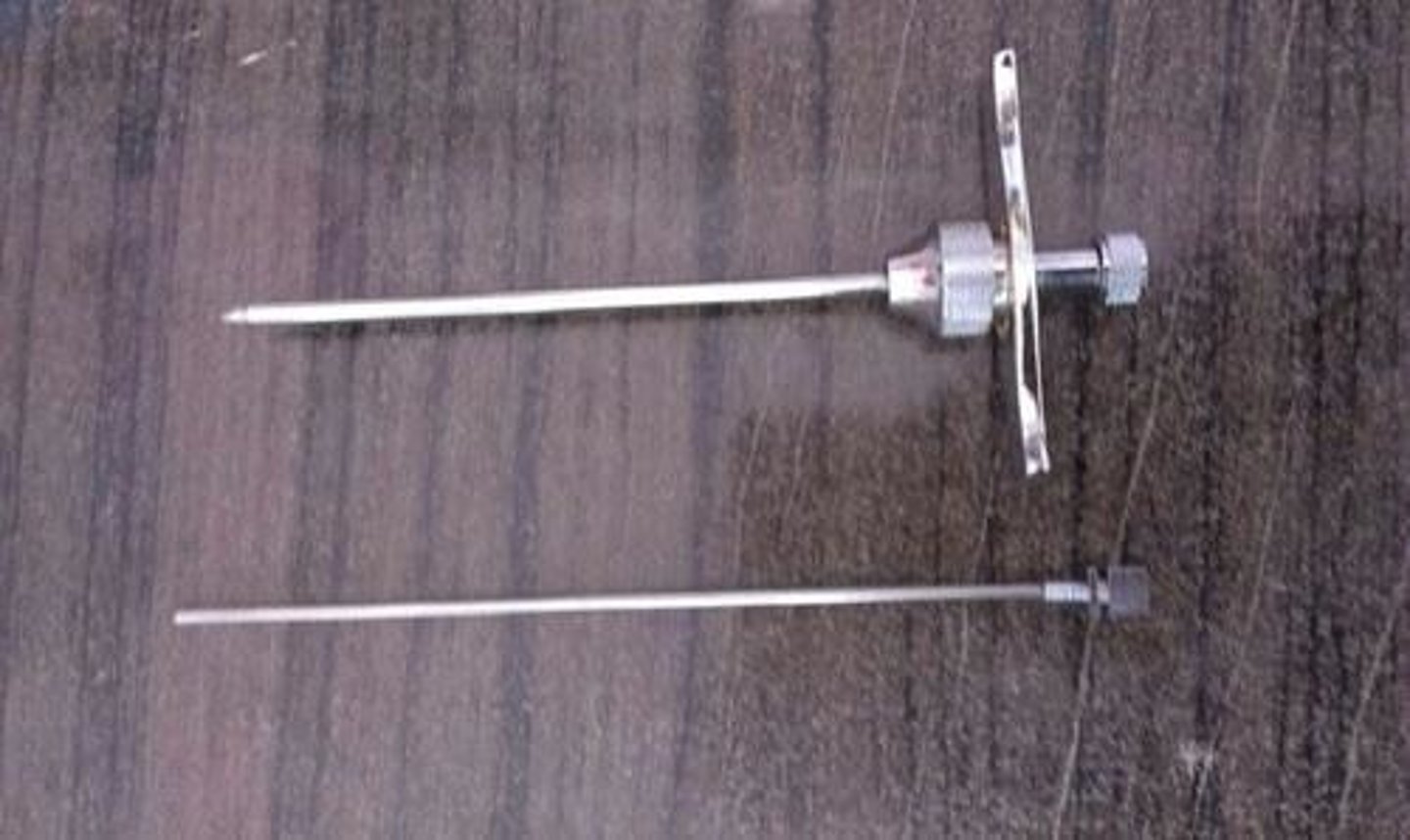
Spinal Needles
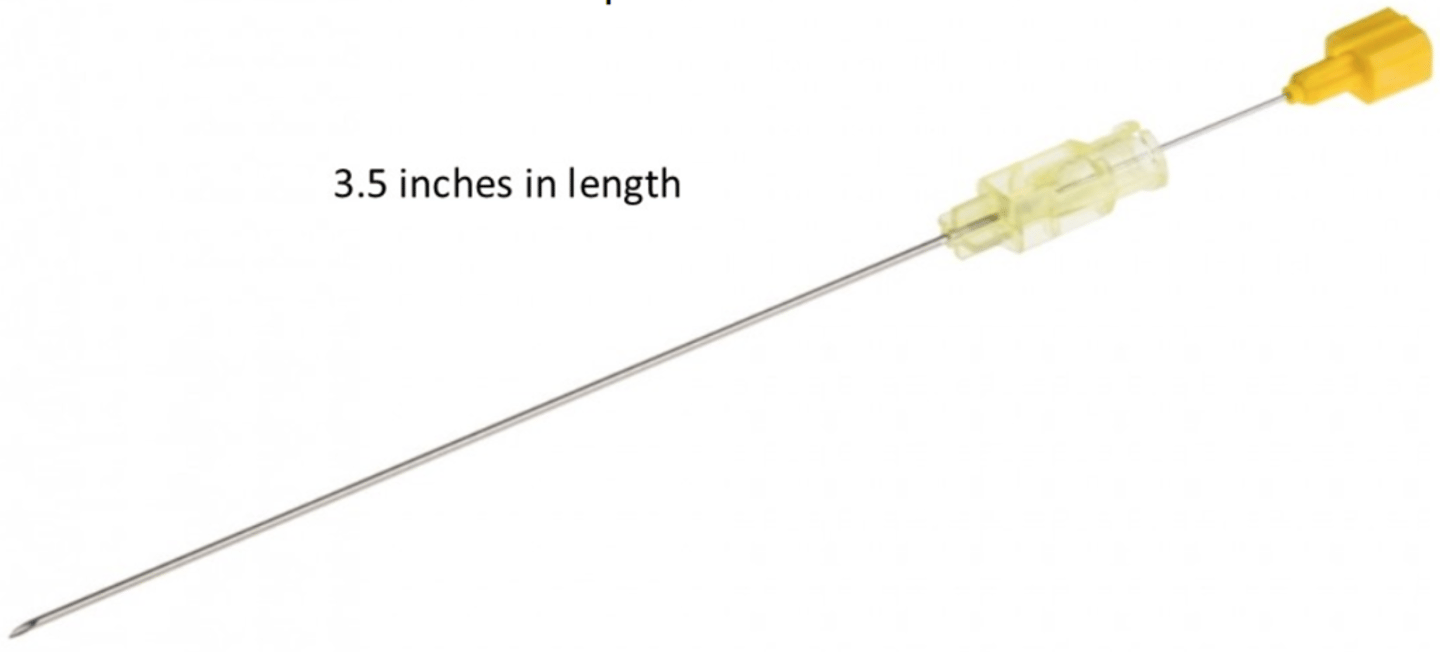
-need to be exceptionally long, sharp and thin, if too dull can cause tearing in these areas and can be devastating to the patient
- 3 to 4in long
-anesthetic agents
-marker during spinal surgery to identify disc level