psych paper 2 - biopsych + biopsych keywords
 Call Kai
 Learn
Learn Practice Test
 Spaced Repetition
 Match
Match Flashcards
 Knowt Play
1/50

There's no tags or description
Looks like no tags are added yet.
Name | Mastery | Learn | Test | Matching | Spaced | Call with Kai | Chat |
|---|
No analytics yet
Send a link to your students to track their progress
51 Terms
how is the nervous system split
consists of CNS + PNS
main functions of nervous system
collect, process + respons to info in the environment
co-ordinate the working of diff organs + cells in body
how is the peripheral nervous system divided
autonomic nervous system (ANS)
somatic nervous system (SNS)
how is autonomic nervous system divided
sympathetic nervous system
parasympathetic nervous system
what is purpose of autonomic nervous system
governs vital bodily functions e.g. breathing, HR, digestion
transmits info to and from internal bodily organs
operates involuntarily
how do the sympathetic and parasympathetic nervous systems work
antagonistically
para reduces bodily activities that sympathetic increased (can b refferred to as rest and digest response)
which takes longer to kick in and why - para or sympathetic
para incase the threat returns
general role of para
maintain + conserve body energy and functions
general role of sympathetic
general prepares body to expend energy for flight or sight
general role of somatic nervous system
recieves + transmits info from CNS to sensory organs
and vice versa
+governs muscle movement
what does the CNS consist of
brain
spinal chord
describe the brain
divided into 2 hemispheres
highly developed in humans (so we have higher mental functions that othera animals)
functions of brain
centre of consciousness
where all desicions are made
describe spinal cord
extension of the brain
functions of spinal cord
passes messages to and from the brain
connects nerves to PNS
responsible for reflex actions
endocrine v nervous system - speed
Endocrine is slower (2 or 3 sec)
Nervous is faster (0.25 sec)
endocrine v nervous system - effects
endocrine:
widespread + powerful - most hormones affect cells in more than 1 body organ
slower - hormones have to trave thru blood stream
nervous:
faster
endocrine v nervous system - communicates via
endocrine communicates with chemicals
nervous with electrical + chemical signals
what does endocrine system consist of
endocrine glands
endocrine v nervous system - how do they work
endocrine
glands secrete hormones into bloodstream
this affects any cell in body with a receptor for that particular hormone
nervous system
mainly thru synaptic transmission
endocrine v nervous system - function
endocrine
in charge of slower body processes like cell growth
nervous
in charge of faster processes like breathing + body movement
thyroid gland
located in neck
produces hormone thyrpxine
this affects cells in the heart (inc HR,) affects cells throughout body inc metabollic rates (chemical reactions taking place in cells,) affecting growth rates
pituitary gland
located in brain
controls release of hormones from most other endocrine glands in body
testes
located in scrotum
produces testosterone
helps penis and testes develop, deepening of voice during puberty + inc muscle size
what are biological changes in flight or fight caused by
interaction between nervous and endocrine systems
basic fight or flight outline
threat perceived
hypothalamus activates sympathetic NS
(release of adrenaline)
these inc physiological arousal (inc HR, reathing rate, dilates pupils redirects blood flow to muscles)
this enables rapid physical response (confront/run away) + prepares body for action
This produces fight or flight response
evaluate fight or flight
all of OG research based on men
women respond differently to men - more likely to go into tend and befriend rather than fight or flight
there are more responses than fight or flight - freeze and faun (be friendly to aggressor so less likely to hurt you)
motor - dendrites, axon, location
short dendrites
long axon
cell bodies are in CNS and axons form part of PNS
relay
short dendrites
short axon
most found within spinal cord, brain and visual system
sensory
long dendrites
short axon
found in PNS, found in clusters called ganglia
axons extend from PNS into spinal cord and create synapses with relay neurones
cell body (or soma)
- contains nucleus (contains genetic material of cell)
dendrites
branch-like structures at beginning of a neuron.
receiveschemical messages from neighbouring neurons
+ carry signal toward cellbody (may turn into electrical signals in cell body)
axon
carries electrical signal away from cell body down the neuron
myelin sheath
fatty later (manufactured by Schwann cells) thatsurrounds + protects axon + speeds up transmission of signal
nodes of ranvier
gaps between myelin sheath that speed uptransmission of impulse by forcing it to 'jump' across gaps along axon
axon terminal/ terminal boutons
communicate with dendrites ofother neurons, across the synapse. Is where signal has to cross asynapse to the next neuron
neuron diagrams
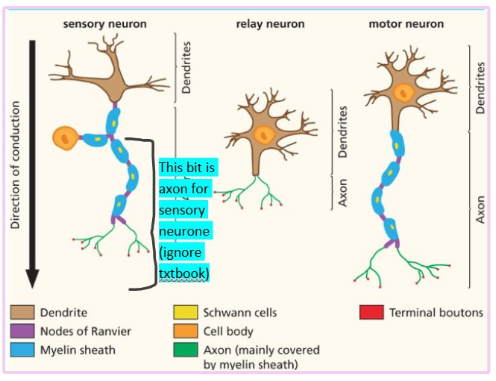
3 types neurons
M otor
R elay
S ensory
transmission of signals within neurons v between neurons
WITHIN - transmitted electrically
BETWEEN - transmitted chemically
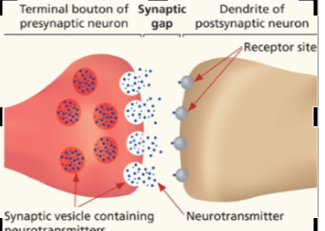
pathway of synaptic transmission
Electrical impulse (action potential) travels to end of the pre-synaptic neurone's terminal bouton
Vesicles move to end of pre-synaptic neurone
Action potential causes release of neurotransmitters from synaptic vesicles (tiny sacs)
Neurotransmitter crosses synapse
It binds to receptor site on dendrite of postsynaptic neuron
Chemical message converted back into an electrical impulse (if there are more excitatory than inhibitory signals)
Process of electrical transmission begins again
what is the direction of travel in synaptic transmission usually like
one-way (neurotransmitters relased from PREsynaptic terminal bouton and receivedby POSTsynaptic neuron)
what does each neurotransmitter have
each neurotransmitter has its own specific molecular structure that fits into a postsynaptic receptor site
they also have specialist functions e.g. acetylcholine (ACh) isfound at each point where a motor neuron meets a muscle + itwill cause muscles to contract (upon it's release
neurotransmitters can have a … effect on postsynaptic neuron
inhibitory e.g. GABA
excitatory e.g. glumate
describe inhibitory effect
neuron becomes more negatively charged
less likely to ‘fire’ (transmit an electrical signal)
describe excitatory effect
increases positive charge
more likely to ‘fire’
what can have an excitatory or inhibitory effect
dopamine
what is summation
the process that determines whther a postsynaptic neuron fires
describe summation
different neurotransmitters released together at a synpase
excitatory and inhibitory signals are summed across all the dendrites of the postsynaptic neurone
what happens if more excitatory
more likely to create an action potential
what happens if more inhibitory
less likely to create an action potential
synaptic transmission diagram