The Brain: Your Crowning Glory
 Call Kai
 Learn
Learn Practice Test
 Spaced Repetition
 Match
Match Flashcards
 Knowt Play
1/18

Earn XP
Description and Tags
Lesson 2.1
Name | Mastery | Learn | Test | Matching | Spaced | Call with Kai | Chat |
|---|
No analytics yet
Send a link to your students to track their progress
19 Terms
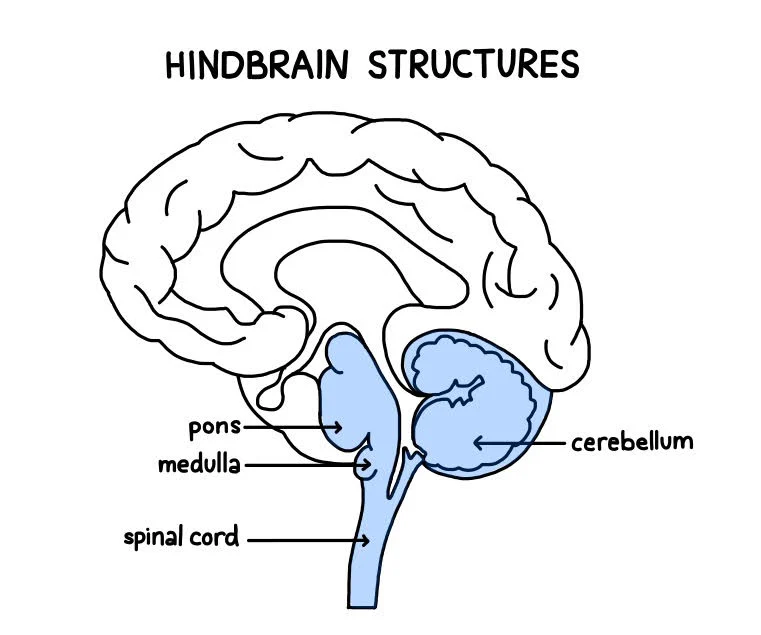
The Hindbrain
the lowest and oldest part of the brain; includes the medulla, pons, and cerebellum; regulates the basic functions taht keep us alive

Medulla
conveys sensory information from the spinal cord to the forebrain; control of basic bodily processes including heart rate, breathing, and certain reflexes

Pons
conveys sensory information from the spinal cord to the forebrain; regulation of states of wakefulness and sleep
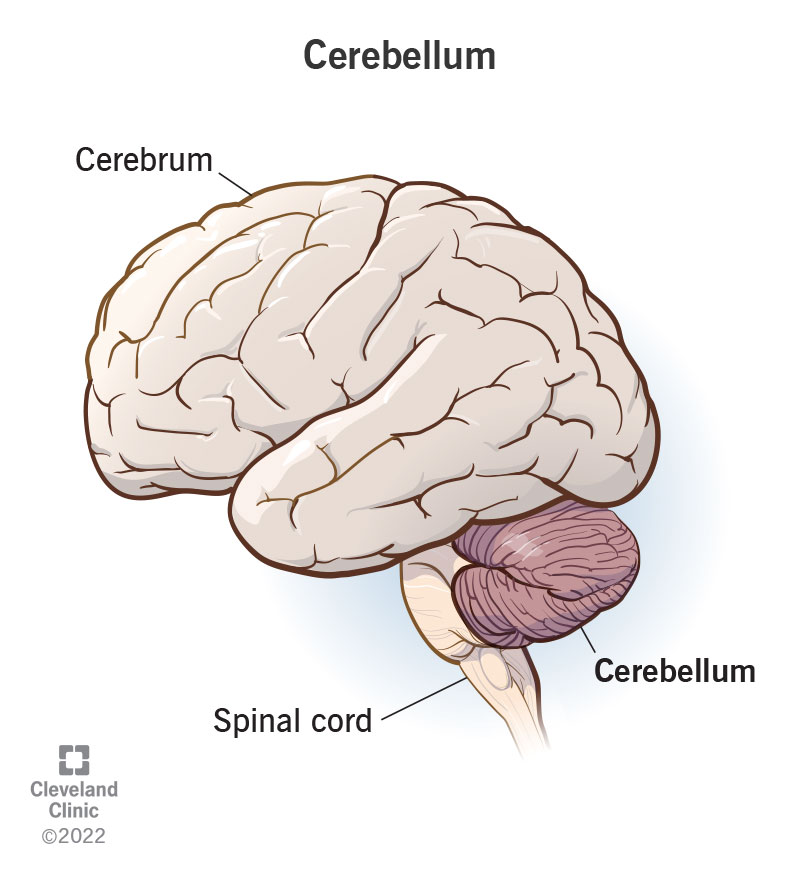
Cerebellum
responsible for regulation of balance and coordination
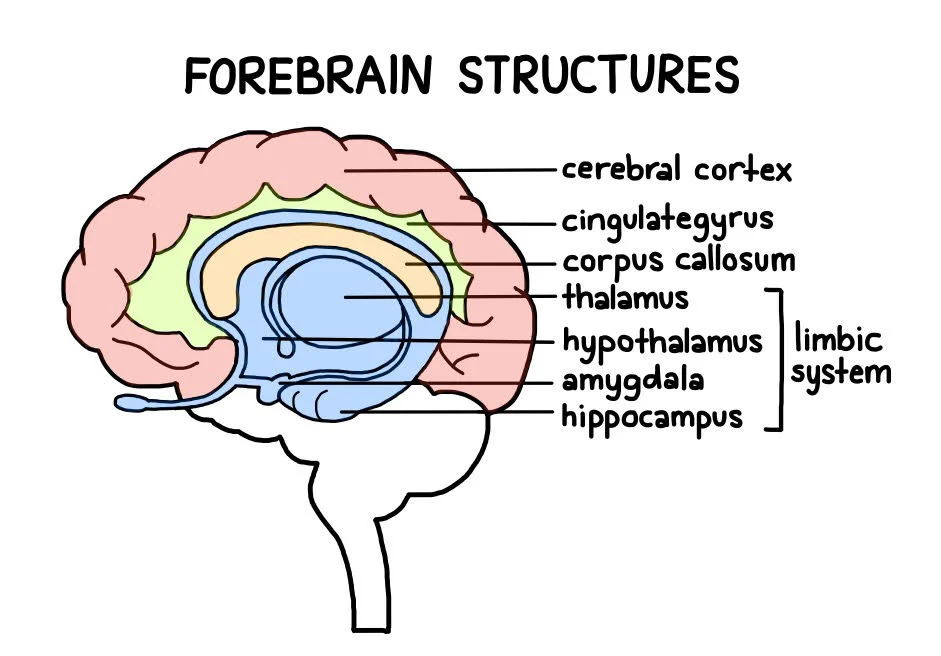
Forebrain
the largest and most advanced part of the brain, located at the top and front; includes the thalamus/hypothalamus, limbic system, basal ganglia, and cerebral cortex
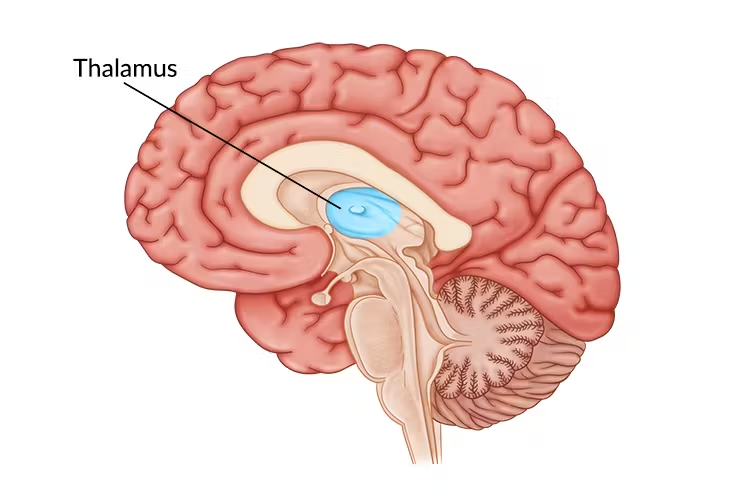
Thalamus
relay station for sorting and integrating sensory input (except smell) via the cerebral cortex; regulation of sleep-wake cycles and voluntary movement via basal ganglia

Hypothalamus
sits below the thalamus; helps control homeostasis and regulate body temperature, hunger/thirst, sleep cycles, and emotions, as well as connects the nervous system to the endocrine (hormone) system

Limbic System
responsible for emotional processing, motivated behavior, and learning/memory functioning
consists of amygdala, hippocampus, parts of the hypo/thalamus, and other nearby structures
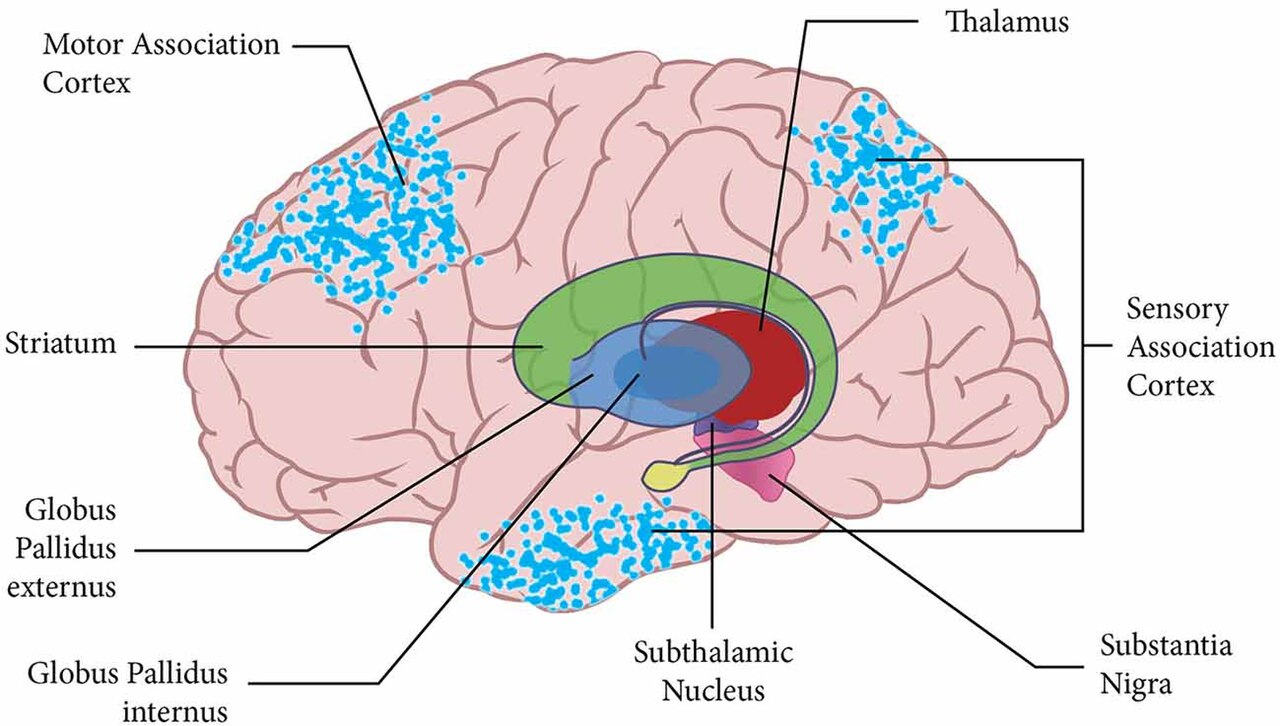
Basal Ganglia
responsible for regulation of movement and coordination
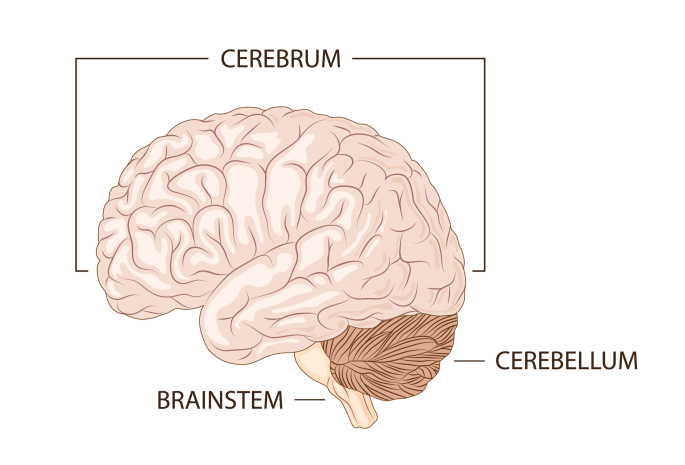
Cerebrum
the largest part of the forebrain; consists of the left and right hemispheres, each with four types of lobes
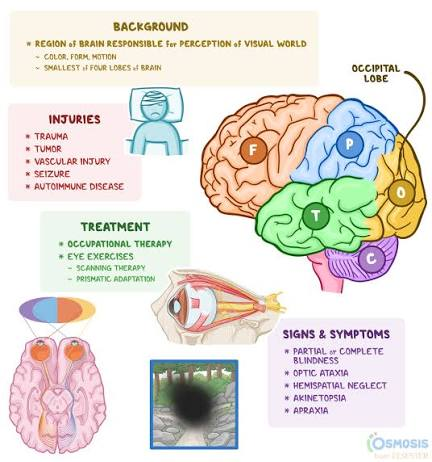
Occipital Lobes
located in the back of the head, responsible for processing visual information
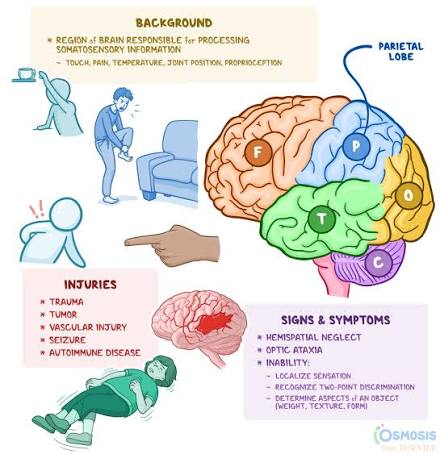
Parietal Lobes
located on the sides of the brain and include the:
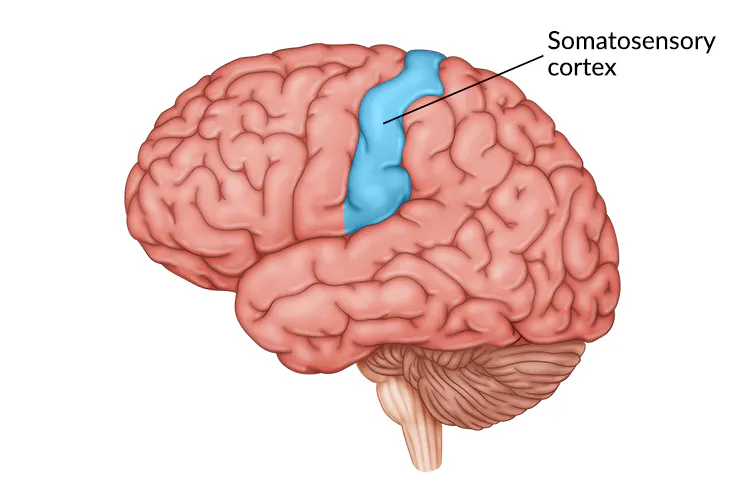
Somatosensory Cortex
processes sensory information received from receptors in the skin (touch, pressure, temperature, pain, movement)
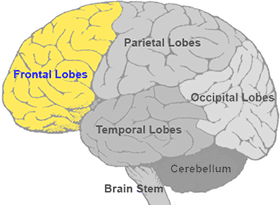
Frontal Lobes
located in the front part of the brain; correspond to the “executive center” of the brain; involved in higher mental functioning including planning/decision making and processing emotions
also contains the motor cortex, which controls voluntary movements
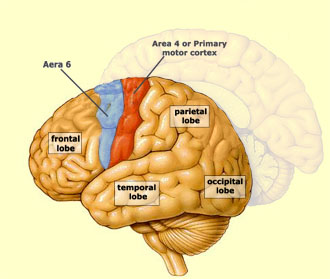
Temporal Lobes
receive and process sensory information from the ears


Corpus Callosum
allows communication between the hemispheres
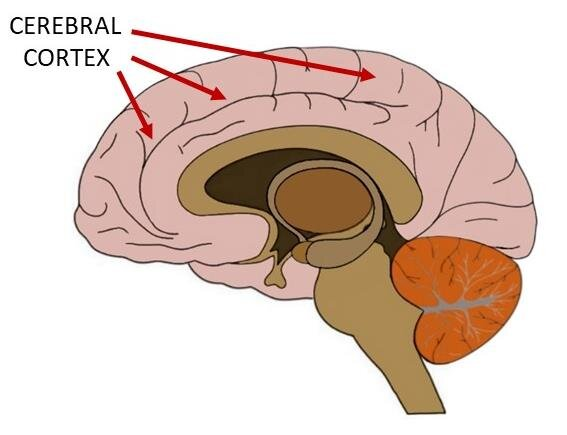
Cerebral Cortex
The thin, wrinkled outer layer covering the cerebrum
responsible for higher mental functions (most of the cortex consists of association areas that are involved in this) including thinking, language, learning, memory, and control of voluntary movement
makes up over 80% of the brain’s mass due to its convoluted (folded/twister) surface
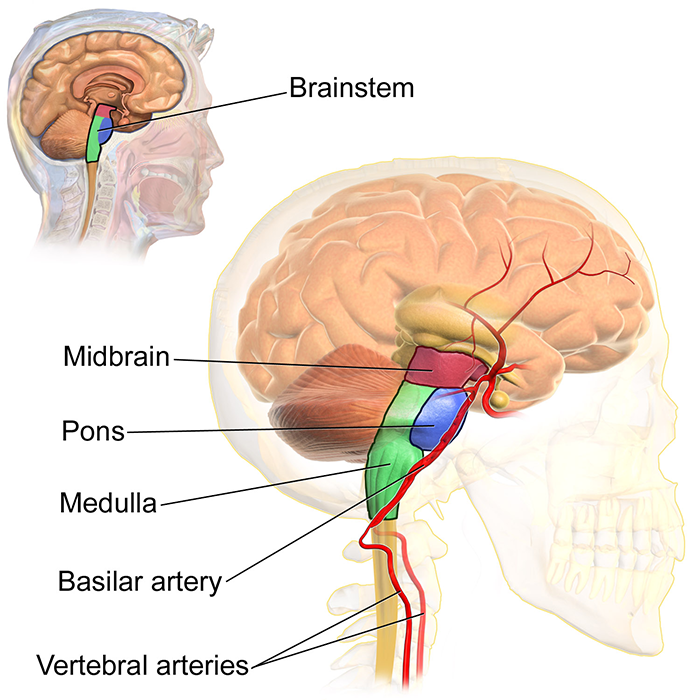
The Midbrain
located between the hindbrain and forebrain; contains pathways that link these regions and help control automatic eye movements (allowing focus on objects even as the head shifts)
also forms part of the brainstem (specifically the reticular formation)

Reticular Formation
a network of neurons that regulates attention, alertness, and arousal
this system acts as a filter, screening sensory input and ensuring important information reaches higher brain centers, even during sleep