Topic 2: Organisation and Digestion
 Call Kai
 Learn
Learn Practice Test
 Spaced Repetition
 Match
Match Flashcards
 Knowt Play
1/75

There's no tags or description
Looks like no tags are added yet.
Name | Mastery | Learn | Test | Matching | Spaced | Call with Kai | Chat |
|---|
No analytics yet
Send a link to your students to track their progress
76 Terms
How are cells organised
Cells are the basic building blocks that make up all living organisms. Specialised cells are organised to form tissues, which form organs, which form organ systems
Tissues
Definition = A tissue is a group of similar cells that work together to carry out a particular function
A tissue can include more than one type of cell. Mammals (like humans), have several different types of tissue
Organs
Definition = An organ is a group of different tissues that work together to perform a certain function
Mammals have many different organs, which are made up of different tissues
Organ Systems
Definition: An organ system is a group of organs working together to perform a particular function
Rearrange from smallest to largest:
whole body, cell, tissue, organ system, organ
Cell, tissue, organ, organ system, whole body
Different tissues
Muscular tissue - contracts (shortens) to move whatever it’s attached to
Glandular tissue - makes and secretes substances like enzymes
Epithelial tissue - covers some parts of the body eg the inside of the gut
Connective tissue - binds, supports, and protects other tissues and organs eg bone, fat, blood, cartilage
Nervous tissue - generates and transmits electrical signals, allowing for communication between body parts eg brain, spinal cord
Tissues that make up organs
Stomach:
muscular tissue, which moves the stomach wall to churn up the food
Glandular tissue, which makes digestive juices to digest food
Epithelial tissue, which covers the outside and inside of the stomach
Heart:
nervous tissue, which regulates heart rate
connective tissue, which is for structure and valves
Skin:
epithelial tissue (epidermis)
connective tissue (dermis)
Different organ systems
Excretory system - liver, bladder, kidney (removes waste products from the blood)
Circulatory system - arteries, veins, heart (pumps blood to transport oxygen and nutrients)
Respiratory system - trachea, bronchi, lungs (oxygen and carbon dioxide)
Nervous system - brain, spinal cord (controls body actions and detects sensations)
reproductive system - testes/ovaries, uterus (produces offspring)
Circulatory System Function
Is to transport substances throughout the body, including oxygen, nutrients and hormones while also removing waste products like carbon dioxide
Respiratory System Function
Is to take in oxygen from the air we breathe and remove carbon dioxide from the body
Excretory System Function
Is to remove toxic waste from the body through processes like urination and sweating, while also regulating water balance
All the organs in the digestive system
Mouth
Oesophagus
Stomach
Pancreas
Small intestine
Large intestine
Rectum
Mouth Function
Releases amylase made by salivary glands which breaks down starch (teeth increase surface area)
Oesophagus Function
Transports food from the throat to the stomach through a process called peristalsis
Stomach Function
Mixes food with enzymes and acids
What does the stomach make
makes protease, breaks down proteins into amino acids
Pancreas Function
Produces insulin used to control blood sugar levels
What does the pancreas contain
contains the enzymes:
protease
amylase
lipase
and puts them into the small intestine
Small intestine Function
uses all enzymes to break down remaining protein/carbohydrate (contains villi)
Large intestine Function
absorbs water from undigested food, and to absorb vitamins
Rectum Function
Acts as a storage area for feces before they are eliminated from the body
Kidneys Function
Involved in excretion and the production of urine
Gall bladder Function
Stores bile
Liver Function
Produces bile
Bile duct Function
Transports bile
Testes Function
Produce sperm and testosterone
Anus Function
Releases waste
Why is the heart defined as an organ
Because the muscle, blood and elastic tissue work together
Processes of the digestive system
Assimilation
Peristalsis
Egestion
Digestion
Ingestion
Assimilation
The process of moving digested food molecules from the bloodstream into cells where they are used for energy growth + repair
Peristalsis
The process of squeezing food to stomach
Egestion
The process of expelling undigested food and other waste materials from the body
Digestion
The process of breaking down food
Ingestion
The process of taking food or drink into the body
Starch Food Test
Iodine solution - —
Starch present - —
Starch not present - —
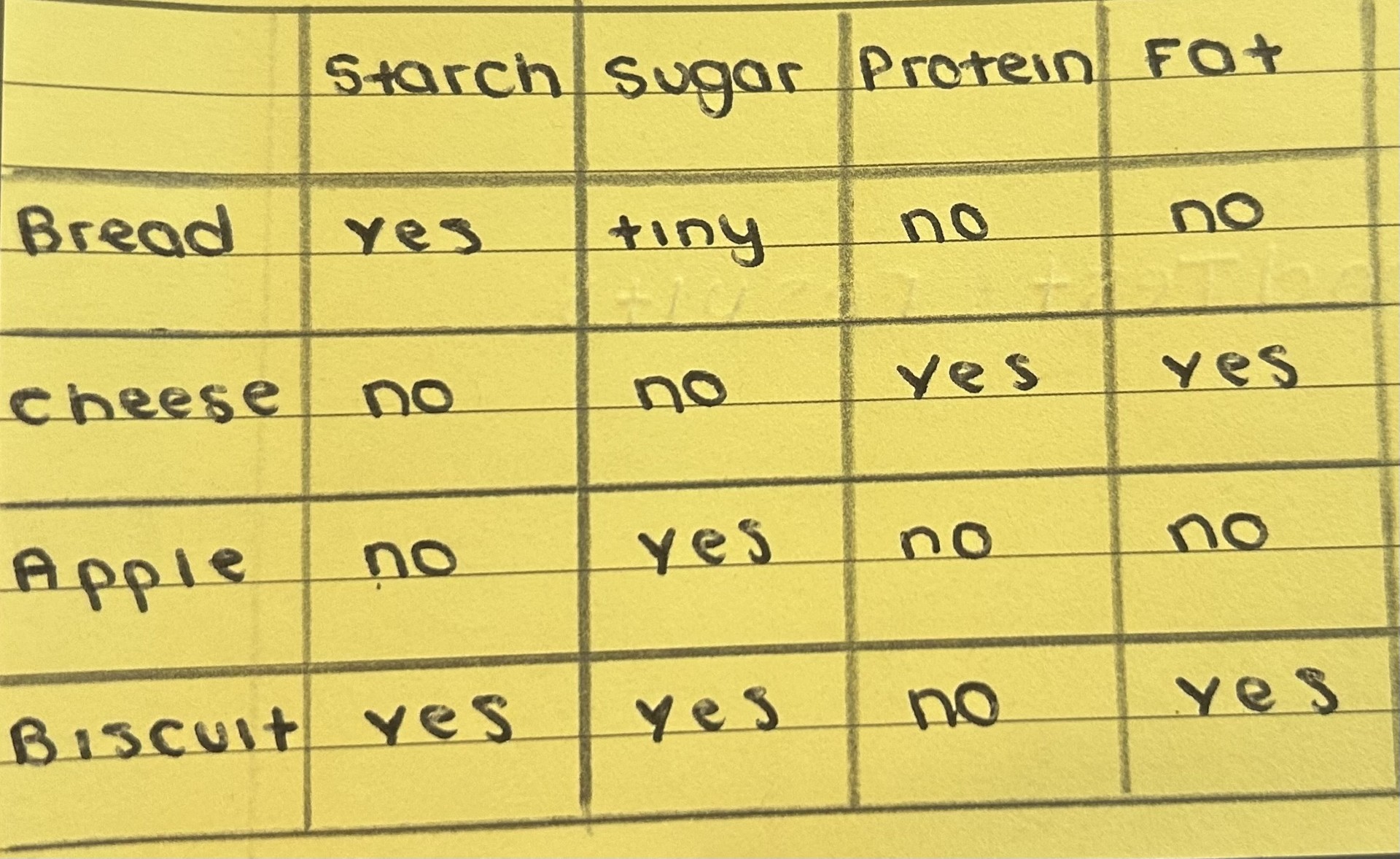
Starch is found in:
bread, biscuit, cake
Starch is needed for:
slow releasing energy
Sugar (glucose) Food Test
Benedict’s solution - —
A little glucose present - —
Lots of glucose present - —
Glucose not present - —
Glucose is found in:
apples
Glucose is needed for:
quick release energy
Fat Food Test
Ethanol - — (clear)
Fat present - —(cloudy layer)
Fat not present - — (clear)
Fat is found in:
cheese, fat
Fat is needed for:
warmth, protection, emergency energy
Protein Food Test
Biuret Solution - —
Protein present - —
Protein not present - —
Protein is found in:
chicken, cheese
Protein is needed for:
growth + repair
Food Test Results
What are minerals, vitamins and fibre needed for
Minerals - Bodily Function
Vitamins - Maintain boy function
Fibre - Keep regular
Enzymes
Living things produce enzymes which are proteins which act as Biological Catalysts
This means that they speed up a reaction in living things, but are not used up themselves
They are also affected and damaged in certain conditions
What are proteins made up of
Chains of amino acids. These chains are folded into unique shapes, which enzymes need to do their jobs
What are enzymes made from and what do they break down
made from: amino acids
Break down: carbs, proteins and lipids
Why enzymes are needed for digestion
They are proteins that speed up the breakdown of large food molecules into smaller, simpler, and more absorbable ones that the body can use
Without enzymes, the reactions that break down food would be too slow for the body to absorb the nutrients needed for energy, growth + repair
Enzyme Structure
The enzyme has a specific-shaped active site
Which is a complementary shape compared to the substrate
Substrate fits into it like a lock + key
Active Sites
Every enzyme has an active site with a unique 3D shape that fits onto the substance involved in a reaction
Enzymes only catalyse one specific reaction. This is because, for the enzyme to work, the substrate has to fit into its active site. If the substrate doesn’t match the enzyme’s active site, then the reaction won’t be catalysed

Denatured definition
Active site changes shape so no longer complimentry
Why might enzymes need a unique 3D structure
So it is complimentry to the substrate
Why the shape of the enzyme is vital for it to function
The active site has a unique 3D shape that is complementary to the shape of a specific substrate; only the correct substrate can fit into the active site
If the enzyme’s shape changes due to the temperature or PH the active site will no longer match the substrate, and the enzyme will lose its function
Lock and Key theory explanation
The substrate binds the active site of the enzyme to form the enzyme-substrate complex
The enzyme breaks down the substrate into products
The substrate and the enzyme’s active site are specific to one another

Two key things that can affect the activity of enzymes
Temperature - Changing the temperature changes the rate of an enzyme-catalysed reaction. A higher temperature increases the rate, but if it gets too hot, some of the bonds holding the enzyme together break, which changes the shape of the enzyme’s active site, so the substrate won’t fit anymore, so the enzyme is denatured.
PH - If it’s too high or too low, the PH interferes with the bonds holding the enzyme together. This changes the shape of the active site, so the enzyme is denatured
What temperature and PH do enzymes work best
Temperature - 37 degrees
PH - 1-2
What are carbohydrates, lipids and proteins used for
Carbohydrates - used for energy
Lipids - used for energy storage, insulation and protection
Proteins - used for growth and repair
Why do we need to break down carbohydrates, proteins and lipids
They are big molecules, so they are way to big for us to absorb into our bloodstream across the villi of our small intestine
What are carbohydrates
Carbohydrates are a group of biological molecules that are used for energy in the body
The individual molecules are glucose, but together they make starch
How the breaking down of carbohydrates works
To break starch down, we use the enzyme Amylase, which breaks it into maltose molecules, and then the enzyme of maltase breaks the maltose down into glucose, which is now small enough for us to absorb
Carbohydrates Structure

Carbohydrase (Lock + Key theory)

Carbohydrates
Enzyme that acts on it
Which products are formed
Where it is produced
Amylase
Maltose
Salivary glands
Pancreas
Small intestine
What are proteins
Proteins are a group of biological molecules that are used for growth and repair
How the breaking down of proteins works
They are broken down by protease enzymes into amino acids (there are lots of different amino acids)
Protease = A group of enzymes: trypsin, pepsin
Proteins Structure

Protease (Lock + Key theory)
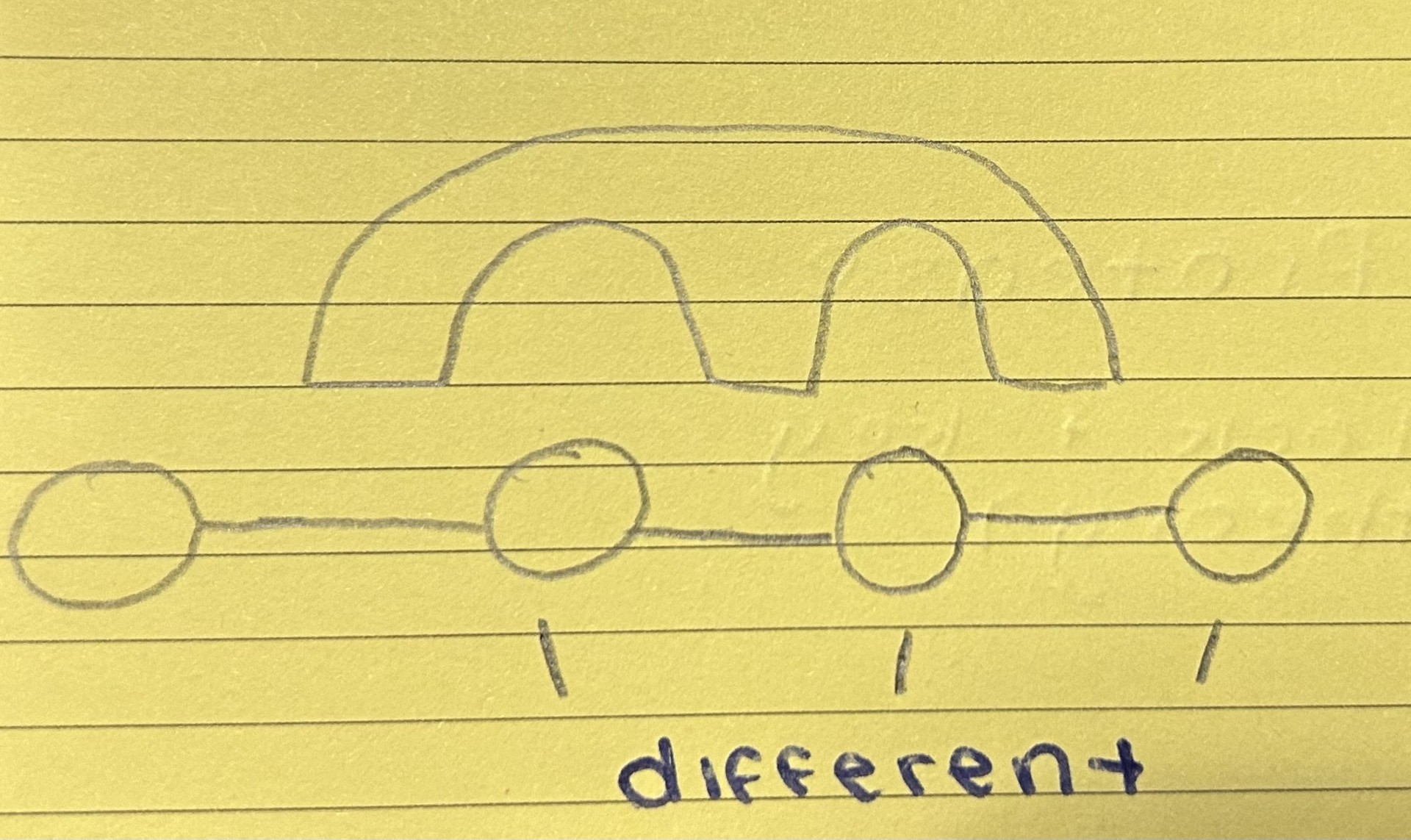
Proteins
Enzyme that acts on it
Which products are formed
Where it is produced
Protease (pepsin + Trypsin)
Amino Acids
Pancreas
Small intestine
Stomach
What are lipids
Lipids are a group of biological molecules that are used for energy storage, insulation and protection
How the breaking down of lipids works
They are broken down by Lipase enzymes into smaller molecules called glyceral and fatty acids
Bile also helps in the breakdown of lipids, it can take big droplets of lipid and break them up into lots of little droplets which increases the surface area
Lipids Structure

Lipase (Lock + Key theory)

Lipids
Enzyme that acts on it
Which products are formed
Where it is produced
Lipase
Fatty acuds
Gylcerol
Pancreas
Small intestine
Functions of Bile
Emulsifies fat to form small droplets, which increases the surface area. The alkaline conditions and large surface area increase the rate of fat breakdown by lipase.
Neutralise the acid from the stomach (the other enzymes in the intestine would denature)
calculate the mean rate of an enzyme-catalysed reaction
1000/Time
Monemer + Polymer
Monemer (glucose) = 1
Polymer (starch) = lots
The difference between a qualitative and a quantitative test
Qualitative = yes or no?
Quantitative = how much?
What is the amylase in the mouth called
Salivary amylase
Pancreatic Amylase
From
Where in the body does it work
Pancreas
Intestine
Pepsin
Where in the body is it found
What would happen if it was placed in alkaline conditions
Stomach
Denature