6 - Money, Banking & the Macroeconomy
 Studied by 0 people
 Call Kai
 Learn
Learn Practice Test
 Spaced Repetition
 Match
Match Flashcards
 Knowt Play
1/65

There's no tags or description
Looks like no tags are added yet.
Name | Mastery | Learn | Test | Matching | Spaced | Call with Kai |
|---|
No study sessions yet.
66 Terms
primary function of banking system
intermediate between borrowers and lenders
adding to model
distinction between interest rates
money market - interbank market, market for gov bonds
balance sheet of banks - solvency & liquidity problems, role of equity
inflation-targeting CB - scarce reserves regime and ample reserves regime
3 interest rates considered
lending rate
desired lending rate
money market rate
policy rate
lending rate
actual rate charged to borrowers by commercial banks
determines current output by the IS curve, set by market conditions
treated as the real interest rate
denoted r
markup over rp
desired lending rate
the rate commercial banks want to lend at, based on risk, funding costs & strategy
denoted rs
money market rate
the short-term rate at which banks lend to each other
i.e. LIBOR
determines the cost of borrowing of the banks, set by market conditions
policy rate
the CB’s benchmark rate
treated as the nominal interest rate
due to arbitrage, money market rate and policy rate are assumed to be the same
only consider policy & lending rates in model
banking markup
difference between desired lending interest rate (rs) and policy rate (rp)
rs - rp
3-equation model - policy & lending interest rates
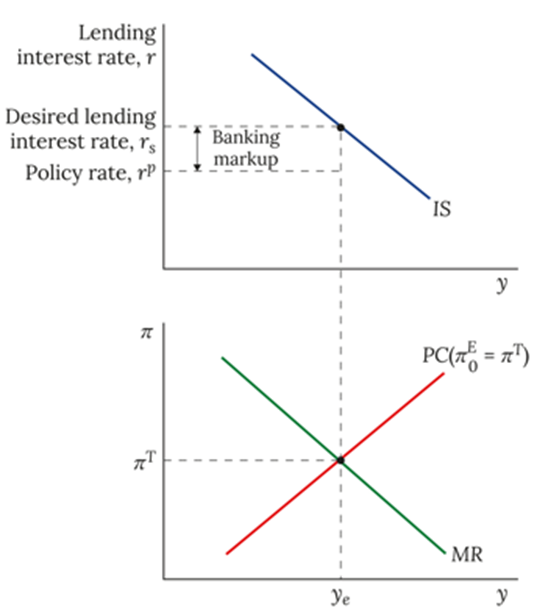
after CB chooses optimal output gap, it finds the desired lending interest rate rs from IS
given its knowledge of the banking system (banking markup) it then sets rp to achieve this
shock to 3-equation model
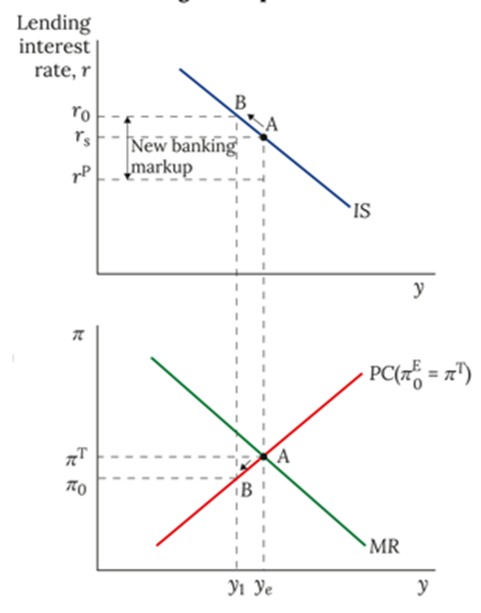
banks view loans as being riskier → increase markup
unanticipated by CB so rp stays fixed → AD falls
output falls to y1 and inflation falls to pie0 (B)
same process under inflation targeting CB
adjustment process as before
CB finds desired output gap using the intersection of PC and MR
CB finds lending rate on IS to generate this output
CB lowers rp to achieve this lending rate
Fischer equation
with constant inflation expectations, changing i is the same as changing r
hence can use a real rate rp to represent policy rate
relax this assumption when dealing with ZLB

financial system - key players & markets
non-financial private sector
commercial banks
central bank
money market
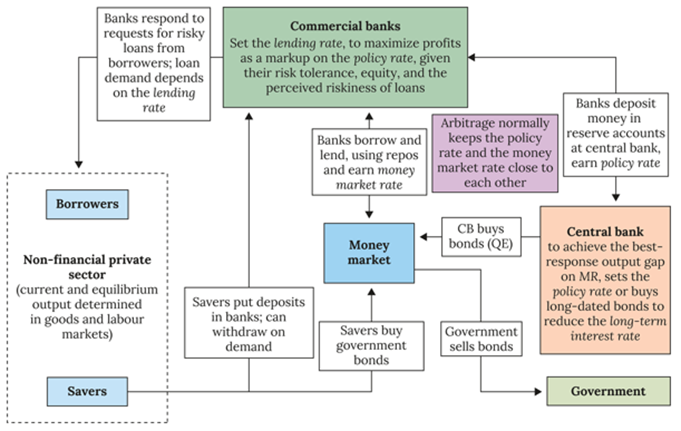
non-financial private sector
comprises of households & firms
set current and equilibrium output → determines stabilising interest rate rs
commercial banks
profit-maximising - lend to private sector
create deposits, hold borrow and lend reserves
central bank
keeps commercial banks’ reserves
set policy rate to achieve desired lending rate to minimise their loss function
money market
where interbank transaction activities occur
any gap between the money market rate (LIBOR) and the policy rate creates arbitrage opportunities
definitions - collateral
an asset that the lender will receive should the borrower default
secured borrowing - borrowing with collateral (housing market)
bonds
a financial instrument sold by an institution wishing to borrow to an investor wishing to lend
initial buyer can sell bond to another investor in the market
repos
repurchase agreement - banks borrow by selling a bond in the repo and promising to buy it back the next day (or 14 days later) at a slightly higher price
main way banks borrow and lend to each other in money market
yield curve
yield (interest rate of a bond) changes inversely with its price
yet yield increases with time to maturity, creating an upward sloping yield curve
investors demand a higher return to hold long-term bonds
more uncertainty in the long-term due to interest rate fluctuations, recessions…
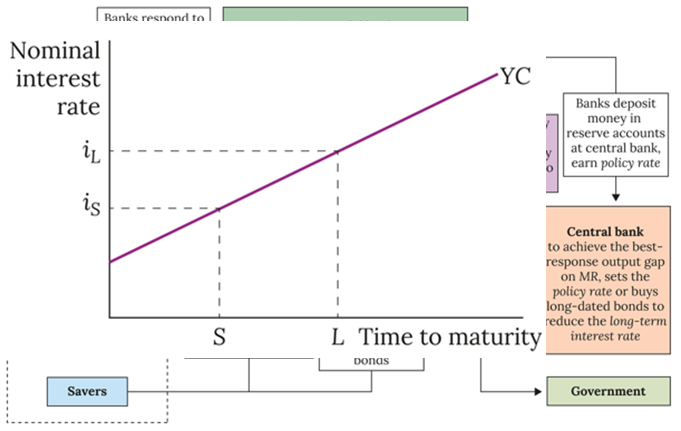

conventional monetary policy - negative demand shock
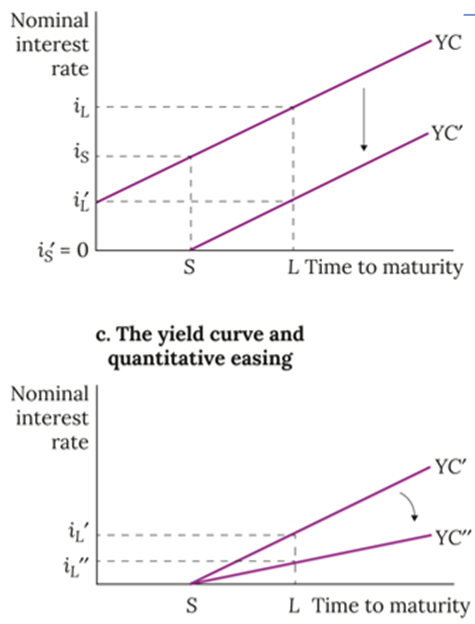
fall in policy rate by CB → fall in money market rate due to arbitrage → fall in lending rate by commercial banks
as CB lowers policy rate to 0, yield curve shifts down
as the short-term nominal rate cannot fall below 0, the long-term rate cannot fall below iL’
given a large negative demand shock, this may be insufficient
CB applies QE (purchases large quantities of long-term gov bonds)
increase in price of gov bonds causes yield to fall
pivots, lowering long term nominal rates
yield curve inversion
in reality, the yield curve may not have a monotonic relationship with time to maturity
short-term rates are high but investors could expect a recession in the near future → suggests interest rates will be cut soon to stimulate growth
investors may then be happy to lock in a lower yield on long-term debt than short-term debt as they know that the relatively high short-term yields will not last long
extended 3-equation model - permanent investment boom
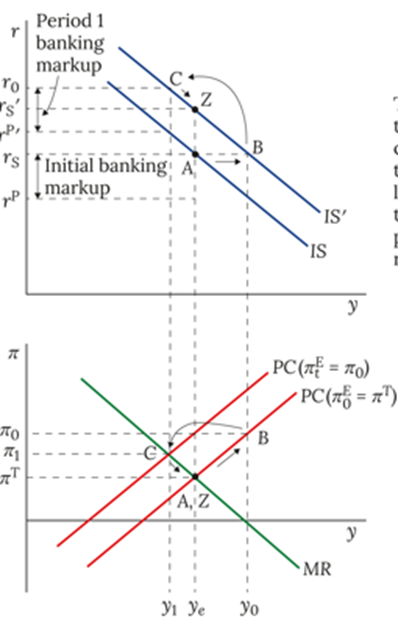
economy moves to B with rightward shift of IS
increase in investment causes an increase in output and inflation
CB chooses point C and targets r0
given that CB cannot set lending rate directly the CB uses its knowledge about markup and sets the policy rate as rp’
increase in policy rate by CB causes increase in money market due to arbitrage → increases lending rate by commercial banks
increases cost of borrowing for firms & households → fall in investment → fall in output & inflation
economy reaches C
in subsequent periods, CB then gradually reduces the policy rate until the lending rate reaches its new stabilising rate at rs’ and inflation has returned to target
money supply
doesnt include money held by banks
difference between narrow & broad money
narrow money
banknotes of the non-bank public + demand deposits
indicator of spending in the economy
broad money
also includes term deposits
indicator of future spending and of the transmission mechanism of MP
money creation - base vs bank money
base money - created by CB
banknotes + commercial banks’ reserves
used by commercial banks to cover withdrawals from customers and transactions with other banks
bank money - created by commercial banks when they make loans
money demand
increases with output - income increases → transactions increase → hold more money
decreases with interest rate: increase in interest rate → bonds more attractive → increased opportunity cost of holding money → hold less money
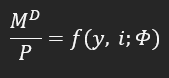
factors that shift money demand
unanticipated inflation changes
structural changes in financial sector (phi) - confidence, innovations in payment technology
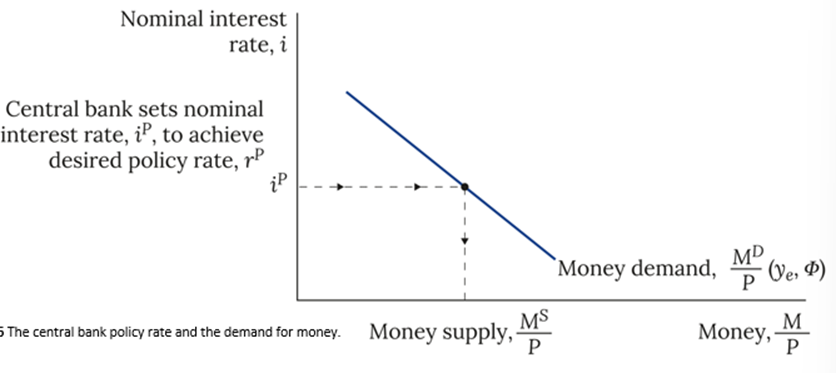
money market equilibrium
changes in the money supply are the outcome of changes in money demand
changes in MS are entirely reactive and dont lead to further impacts on the wider economy
demand & supply of reserves has consequences instead
markup - factors that affect the lending rate
banks choose the markup and set the lending rate based on:
riskiness of loans - higher credit risk increases markup
risk tolerance - lower risk tolerance increases markup
bank equity - lower equity means lower ability to bear credit risk which increases markup
uncompetitive banking sector - higher market power means higher markup
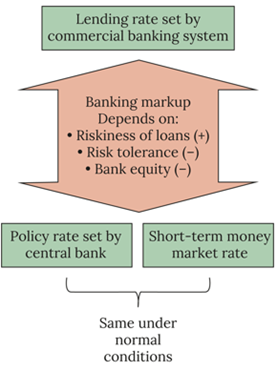
lending rate
markup (u^B) increases with risk and decreases with risk tolerance and bank equity
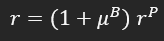
r and rp shown on graph
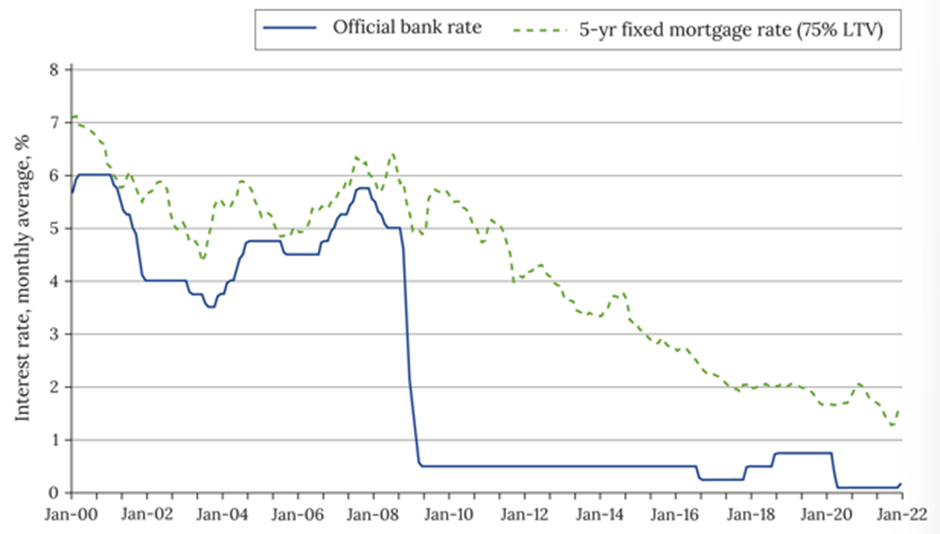
UK official bank rates (rp) and 5-year fixed mortgage rates r
75% loan to value mortgage - borrower has borrowed up to 75% of the value of the house, with the remainder coming from a deposit
stable relationship between rp and r that was disrupted by the financial crisis
key transmission mechanism of MP broke down in post-crisis world
credit rationing
banks adjust markups in response to credit risk, and impose credit rationing
affects households credit constraints → increases multiplier and decreases slope of IS curve
information asymmetries contribute to credit rationing:
moral hazard
adverse selection
moral hazard
efforts exerted by borrowers in their projects are unobserved by the bank
adverse selection
individuals with stronger prospects will self-select away from higher interest loan agreements → only weaker applicants remain → banks ration credit
i.e. banks charge a higher interest rate as households’ expected future earnings are unknown to them → households cannot borrow when needed
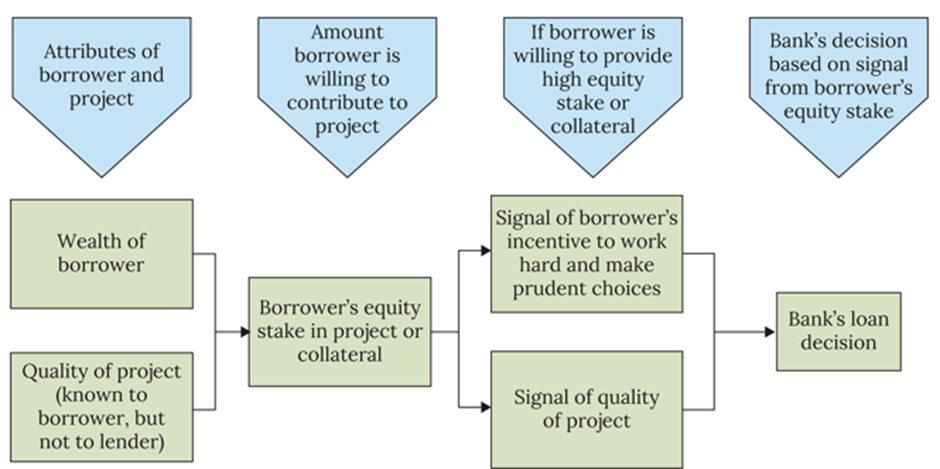
role of borrower wealth
given information problems, borrower’s wealth in terms of equity stakes or collateral, is important for signalling credibility to lenders and aligning incentives
a borrower with a good project but no wealth will be denied credit
inefficient and unfair outcome
fractional reserve banking system
banks only hold a fraction of deposits in liquid form in their reserve accounts at the CB
role of banks
maturity transformation - transforming liquid savings into long-term borrowing, but a maturity mismatch poses liquidity risk
aggregation - aggregating small savings to make large loans
risk pooling - banks can better withstand defaults so offer limited risk to savers
dangers that banks face
liquidity risk
solvency risk
liquidity risk
inadequate reserves to meet depositor’s demand to withdraw money from their accounts
i.e. banking panic - incentive to be the first to withdraw as if everyone withdraws there is a run on the bank
CB acts as LOLR to provide emergency liquidity while the gov insures deposits to reduce the likelihood of a bank run
solvency risk
the value of assets is less than that of debts or liabilities
lead to bankruptcy if not bailed out by the government
insolvency is another danger
interconnectedness in banking sector
fire sale - an illiquid bank sells assets at discounted prices → asset prices drop → other banks face reductions in their assets’ values (housing) → forced to sell their assets
it is a solvency problem for a small number of banks → banks unsure about safety in lending to one another can cause widespread liquidity problems (credit crunch)
shows how insolvency has direct negative effects on bank depositors, creditors, shareholders & bondholders
balance sheet identity
Net worth (equity) = Asset - liabilities
balance sheet
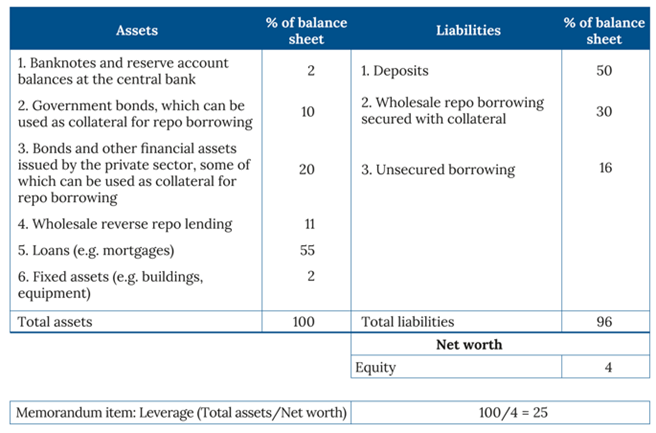
shows balance sheet of a typical commercial bank before the financial crisis
all items expressed as a % of total assets
useful to evaluate liquidity and solvency
if a bank has negative equity, it is insolvent
example - making loans
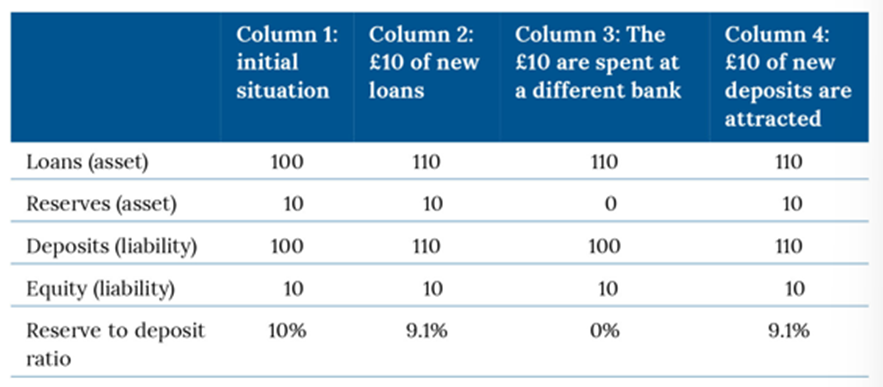
Banks seek to attract new deposits when making loans:
Column 1: initially bank A has reserves that can cover 10% of its deposits.
Column 2: Bank A makes a £10 loan. Loan on the asset side and deposit on the liability side each increase by 10.
Column 3: the borrower spends the money at a business that uses Bank B.
Bank A transfers £10 of deposits and reserves to Bank B.
Now Bank A has no reserves and cannot meet liquidity requirements.
2 options
borrow reserves at money market rate - expensive
attract new deposits from customers
when new deposits come in, bank gains corresponding reserves as shown in column 4
therefore can make loans without impacting its reserves even if its borrower spends the money elsewhere
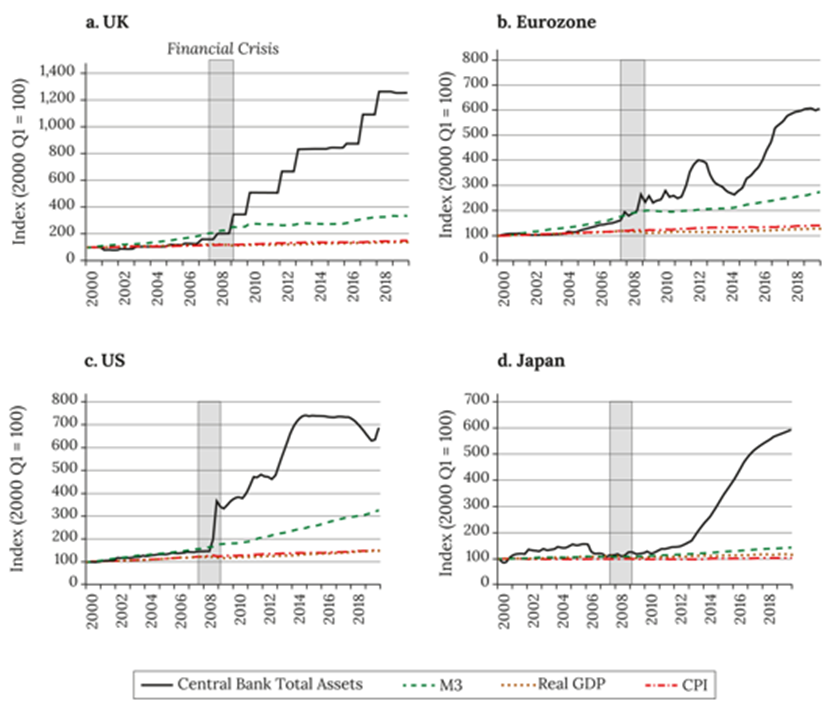
central bank balance sheet
come to public attention under QE because the purchase of assets has grown rapidly
growth in CB assets has significantly outstripped growth in either eal GDP, CPI or money supply
suggests it has not been driven purely by economic fundamentals
example CB balance sheet
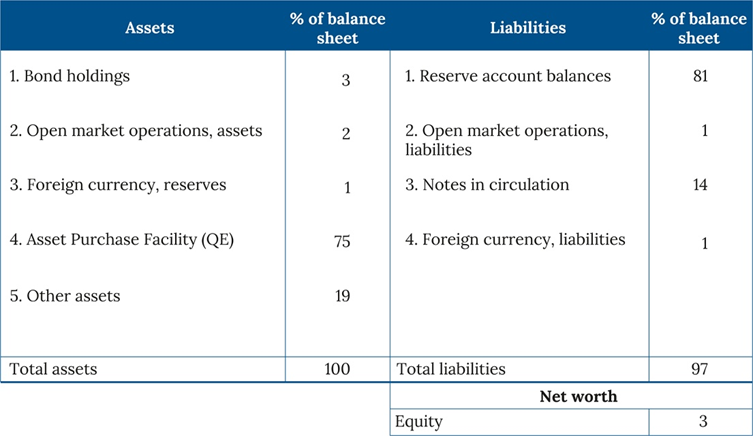
liability - reserve account balances
demand deposits of commercial banks at CB which help settle transactions
total quantity of reserves remain fixed by CB
asset - asset purchase facility (APF)
assets acquired through QE
difference between open market operations (OMO) and QE
OMO - used to adjust quantity of reserves to target an ideal policy rate
QE - used to try to influence long-term interest rate by purchasing assets
BoE weekly report

Note: APF is included under other assets.
Pre-crisis: stable balance sheet, reflecting the success of inflation targeting through the setting of the policy rate (scarce reserves framework).
Post-crisis: huge growth in “other assets” driven by QE (ample reserves framework).
Excess reserves – money in reserve accounts that are over and above any reserves held for prudential reasons.
MP operations - scarce reserves regime
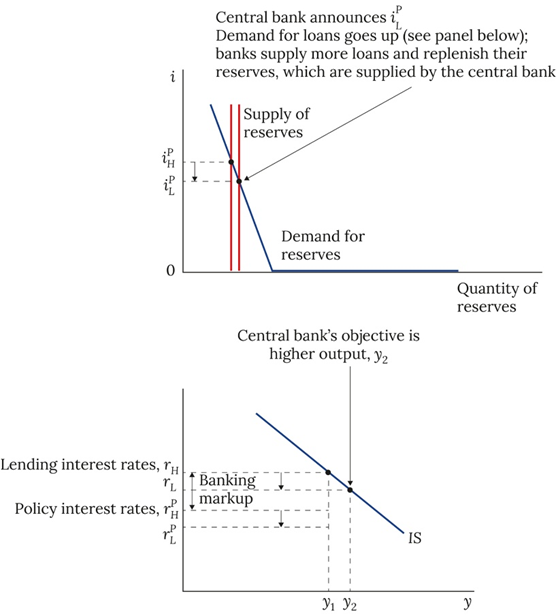
CB implements a cut in the policy rate (i.e. raising output target from y1 to y2)
IS - CB targets rL by announcing policy rate rPL
fall in lending rate after announcement → increase in demand for loans → increase in deposits → increase in commercial banks’ demand for reserves (liquidity purposes)
increase in CB supplied reserves by combination of OMO & repos (performing repo lending on a larger scale)
hence a fall of policy rate is associated with an increase in reserves supply
features of market for reserves
demand for reserves - very inelastic, hence fluctuations in the supply of reserves will be modest
flat when we hit ZLB - no opportunity cost of holding reserves
MP operations - ample reserves regime
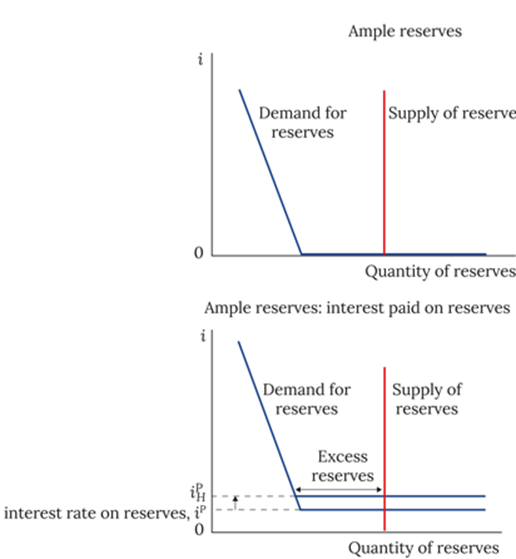
under ample reserves regime & zero interest → CB can only tighten MP by unwinding QE policy
as on a large scale → disruption in financial market expected
CB chooses to pay interest on reserves under ample reserves:
interest provides a floor to the willingness to accept price → demand curve is horizontal at this rate (no opportunity cost)
how does CB tighten MP in ample reserves regime?
raising interest rate of reserves
QT
raising interest rate on reserves
increased interest rate on reserves → increase in money market rate
→ increases lending rate → lowering demand for loans from private sector
QT
CB sells some of the bonds purchased during QE to primary dealers
dealers’ banks settle transactions by decreasing dealers’ deposits and transferring reserves to CB of the same amount
→ supply of reserves to shrink
raising interest rate on reserves doesnt causes supply of reserves to change, yet under QT it must fall
US interest rates sept & oct 2019
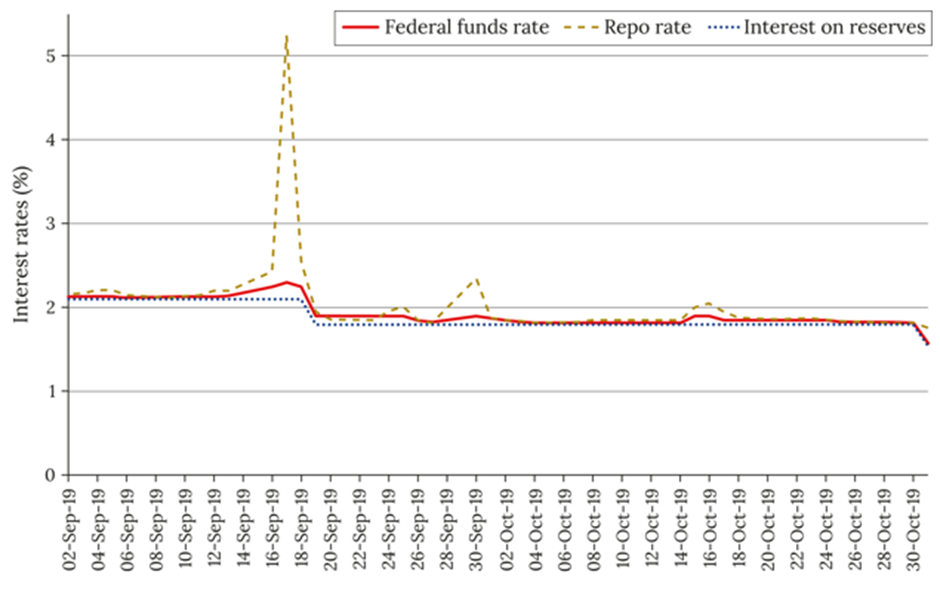
due to uncertainty over the shape of the demand curve for reserves, QT should be applied gradually
→ avoid moving too rapidly into scarce reserves territory and losing control of the interest rate
summary - functions of financial system
facilitates economic transactions
allows maturity transformation
enables inflation-targeting MP
summary - importance of BS
provide information on liabilities & assets of banks
reflect liquidity and solvency of banks
help illuminate the relationship between CB & commercial banks
summary - 3-equation model with banking system
lending rate - markup over the policy rate, chosen by profit-maximising banks
banking markup (r over r^P) if influenced by loan riskiness, risk tolerance, bank’s capital cushion
summary - response of CB
CB reacts to economic shocks in a similar way as before
now sets the policy rate to target the lending rate that achieves the ideal output gap
application of QE changes MP framework from a scarce to an ample reserves regime
interest rate on reserves - now the policy rate