PreClinical Review Quiz(Chemistry Rotation)
 Call Kai
 Learn
Learn Practice Test
 Spaced Repetition
 Match
Match Flashcards
 Knowt Play
1/26

There's no tags or description
Looks like no tags are added yet.
Name | Mastery | Learn | Test | Matching | Spaced | Call with Kai | Chat |
|---|
No analytics yet
Send a link to your students to track their progress
27 Terms
You ran a ½ (=1:1) dilution on your glucose sample for Mr. Smith but the results are still out of range. You have no more undiluted sample. You must use your diluted sample. You have a little over 100 uL left in the sample cup. You decide to run a ¼ (=1:3) dilution. You pipette out 100 uL and add it to a new sample cup.
How much diluent do you add to the new sample cup?
100 uL
You ran a ½ (=1:1) dilution on your glucose sample for Mr. Smith but the results are still out of range. You have no more undiluted sample. You must use your diluted sample. You have a little over 100 uL left in the sample cup. You decide to run a ¼ (=1:3) dilution. You pipette out 100 uL and add it to a new sample cup.
By what dilution factor will you multiply the glucose reading you obtain from running this sample?
1/3
You ran QC this morning and both levels of the AST controls are out. What steps do you take to resolve this? List all possible steps in the order of what you would try
Repeat both QC levels.
Check the controls expiration dates.
Check to see if controls were properly stored.If refrigerated,allow them to reach room temperature.
Check if the controls were prepared correctly.
Prepare fresh controls and rerun QC.
Perform any required instrument maintenance and rerun QC.
Recalibrate the analyzer if needed.
Replace the reagent and/or QC material with a new lot if QC is still out of range.
Notify the supervisor or contact technical support if the problem continues.
Document all troubleshooting steps and corrective actions.
You have to use an adjustable micropipette with disposable tips to measure and deliver 300 uL of plasma in a sample cup. This pipette has 2 stops when you depress the top button. List all the steps you would take to get 300 uL into the sample cup.
Set the micropipette to 300 uL.
Attach a new clean tip.
Press the plunger down to the first stop.
Place the tip into the plasma and slowly release the plunger to draw 300 uL.
Move the tip to the sample cup.
Press the plunger to the first stop to release the liquid.
Press to the second stop to release out any remaining liquid.
Release the plunger and discard the tip in the appropriate waste container.
What is the most accurate test to assess long term blood glucose control in a patient with diabetes?
Hgb A1C
Select the electrolytes from the BMP
Calcium
Chloride
Potassium
Sodium
Total CO₂ (bicarbonate)
Match these conditions with the electrolyte profiles
Addison's disease → Hyponatremia, hyperkalemia
SIADH → Hyponatremia (+ potential hypokalemia and hypocalcemia)
Vomiting and/or Diarrhea → Hyponatremia, hypokalemia
Hyperaldosteronism → Hypernatremia, hypokalemia
List the blood tests that make up the lipid profile, and indicate the test in which an elevated level is a good thing.
Total cholesterol
HDL cholesterol
LDL cholesterol
Triglycerides
If the HDL cholesterol is elevated this is a good thing.
Which enzymes would you expect to be elevated in a significant muscle injury?
AST
CK
What tests are most commonly included in the liver profile (=liver function test, or LFT, or hepatic function test)?
ALB (Albumin)
ALP (Alkaline phosphatase)
ALT
AST
TP (Total protein)
Total Bilirubin
Which of these enzymes would you expect to be very high (10x normal) in hepatitis (such as acute Hepatitis B)?
ALP
ALT
AST
Which of these enzymes will see the greatest elevation in a bile duct obstruction?
ALP
Which tests can be run to check if the patient has had a heart attack?
CK-MB
Myoglobin
Troponin
Which test is used to screen for congestive heart failure?
BNP/Pro-BNP
What chemistry serum tests would you run to assess anemia?
Serum iron
Ferritin
Total Iron-Binding Capacity (TIBC)
Transferrin saturation
Vitamin B12
Folate
Which serum tests measure waste products to assess renal function?
BUN (Blood Urea Nitrogen)
Creatinine
In TDM, what is the difference between a peak and a trough serum drug level?
Peak- The highest drug level in the blood, measured right after a dose is given.
Trough- The lowest drug level in the blood, measured just before the next dose is given.
Match the condition that is expected if these tests are elevated.
Amylase and Lipase → Pancreatitis
Ammonia → Liver Failure
Lactic Acid → Metabolic Acidosis or Sepsis
TSH → Hypothyroidism
List the acid base status for these results:
Low pH, normal to low pCO2, normal pO2 and low bicarb:
metabolic acidosis
List the acid base status for these results:
Low pH, high pCO2, low pO2, normal to high bicarb
respiratory acidosis
List the acid base status for these results:
High pH, low pCO2, normal pO2, normal bicarb
respiratory alkalosis
List the acid base status for these results:
Normal to slightly high pH, normal pCO2, normal pO2 and high bicarb:
metabolic alkalosis
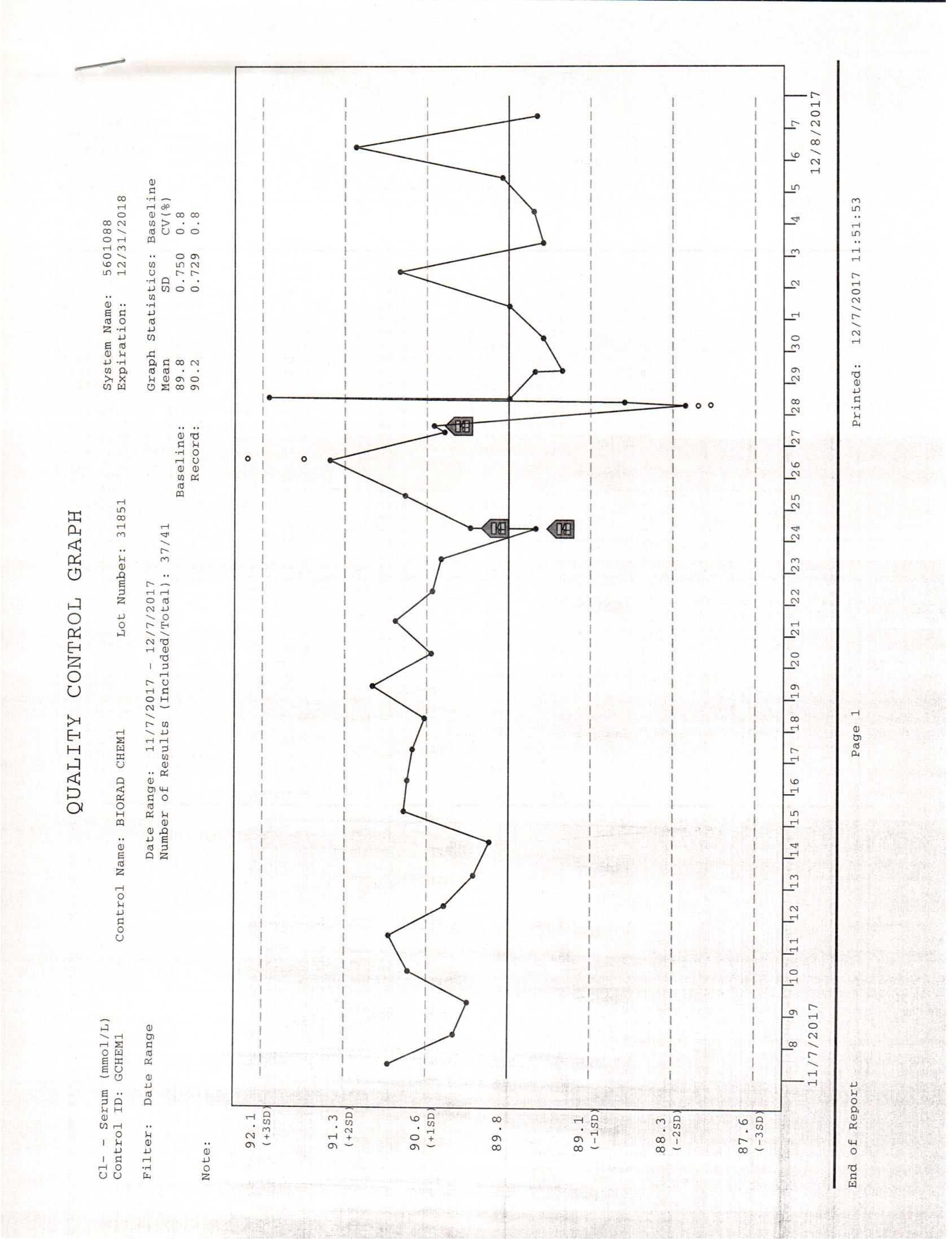
Which Westgard rule violations do you see in this graph?
1 2s
R4s
4 1s
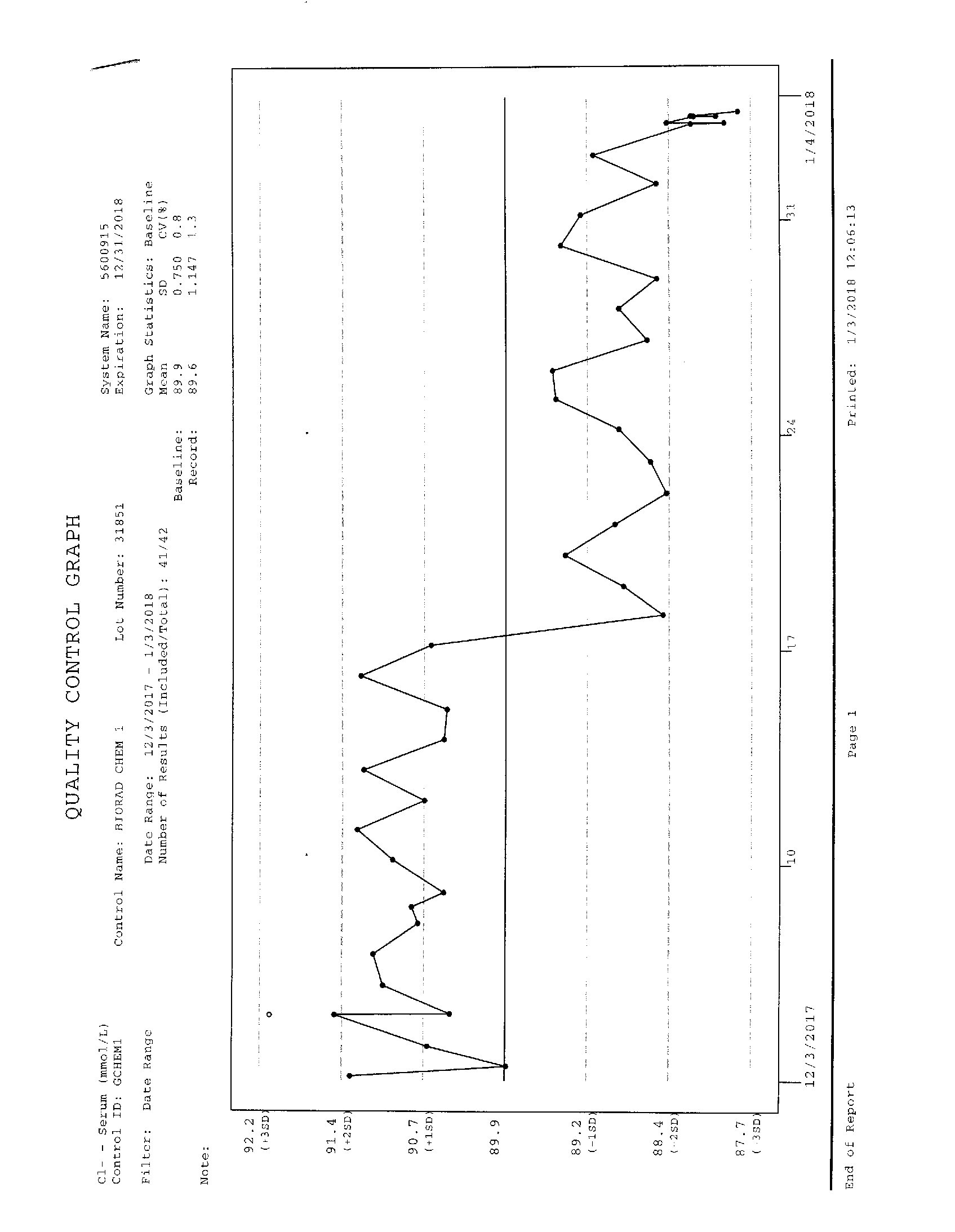
Which Westgard rule violations do you see in this graph?
2 2s
4 1s
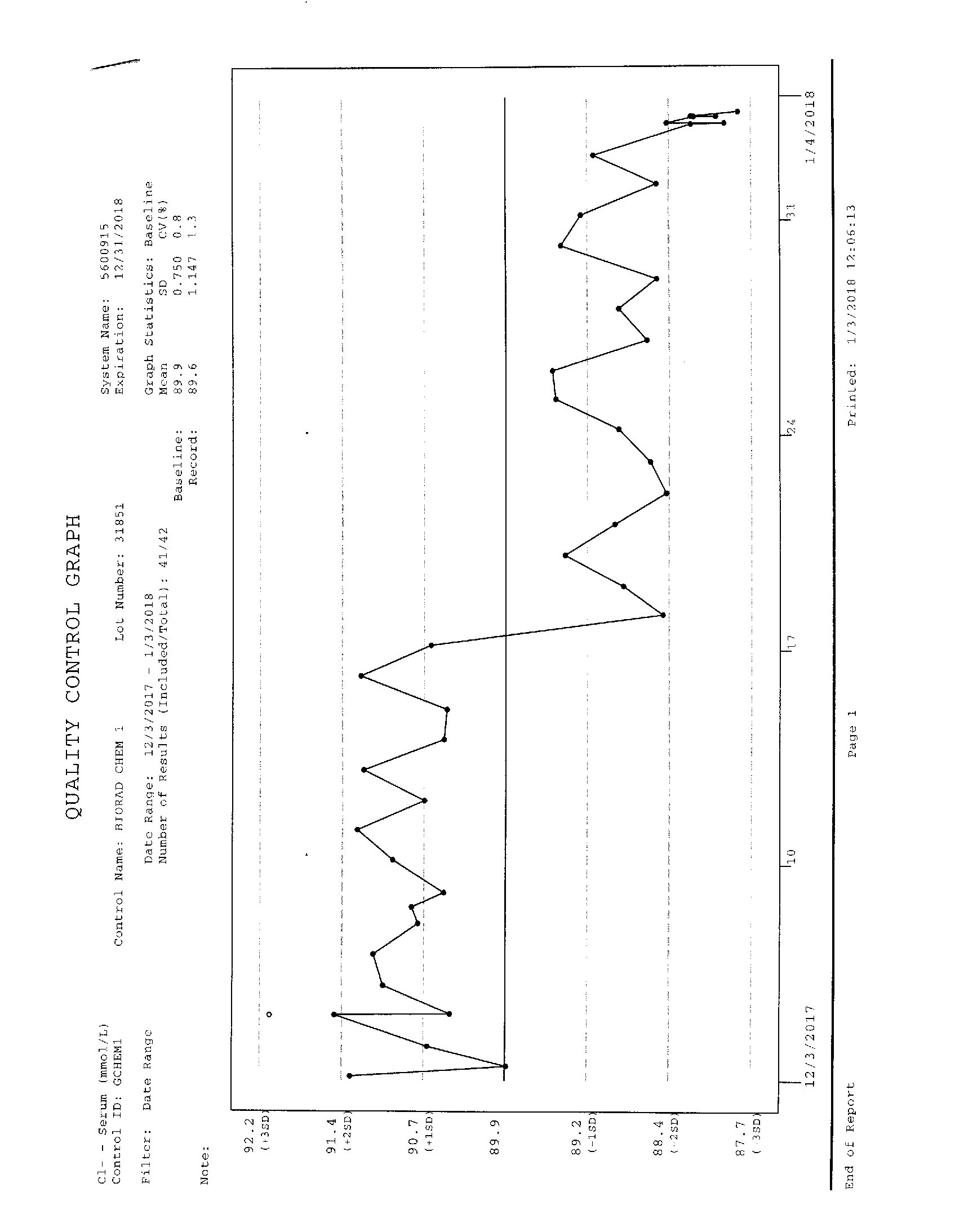
The graph is an example of a
systematic shift
A high CV% (>5 %) means the test is
precise
A record mean that is 1SD lower that the target mean indicates that the test is
inaccurate