PHAR 555 Thyroid iRAT/tRAT (Review)
 Call Kai
 Learn
Learn Practice Test
 Spaced Repetition
 Match
Match Flashcards
 Knowt Play
1/86

There's no tags or description
Looks like no tags are added yet.
Name | Mastery | Learn | Test | Matching | Spaced | Call with Kai | Chat |
|---|
No analytics yet
Send a link to your students to track their progress
87 Terms
What gland secretes thyroid hormones?
thyroid gland (butterfly shaped)
Thyroid hormones influence functions of virtually all organ systems. What are their major clinical effects in…
Children
Adults
Children: Normal growth and development
Adults: Maintain metabolic stability and homeostasis
Cardiovascular effects
Thermogenic effects
Metabolic effects
What element on the periodic table do thyroid hormones contain?
Source?
iodine
Source: Nutritional intake
What are the two different thyroid hormones?
Triiodothyronine (T3)
Tetraiodothyronine, commonly known as thyroxine (T4)
triiodothyronine (T3)
Structure
Production
Receptor affinity
Biological potency to T4
Has 3 iodides attached
Majority from T4 breakdown in the peripheral tissue (< 20% in the thyroid)
Has 10-15x affinity than T4
4:1
tetraiodothyronine/thyroxine (T4)
Structure
Production
Receptor affinity
Biological potency to T3
Has four iodides attached
Majority in thyroid
Less than T3
1:4
Describe the steps of the hypothalamic-pituitary-thyroid (HPT) axis.
When more thyroid hormones need to be made to achieve “normal”, the hypothalamus releases thyrotropin-releasing hormone (TRH)
TRH stimulates pituitary gland (which lies underneath the brain in your skull) to release thyrotropin, more commonly referred to as thyroid-stimulating hormone (TSH)
TSH stimulates thyroid to release thyroid hormones T4 and T3 into circulation, where they interact with their target organs and the periphery
While < 20% of T3 is produced by the thyroid, a majority of T3 is produced by the breakdown of T4 in the peripheral tissues, which occurs in the muscles and liver
As T4 and T3 concentrations increase, the hypothalamus and pituitary gland recognize this and stop producing TRH and TSH, respectively
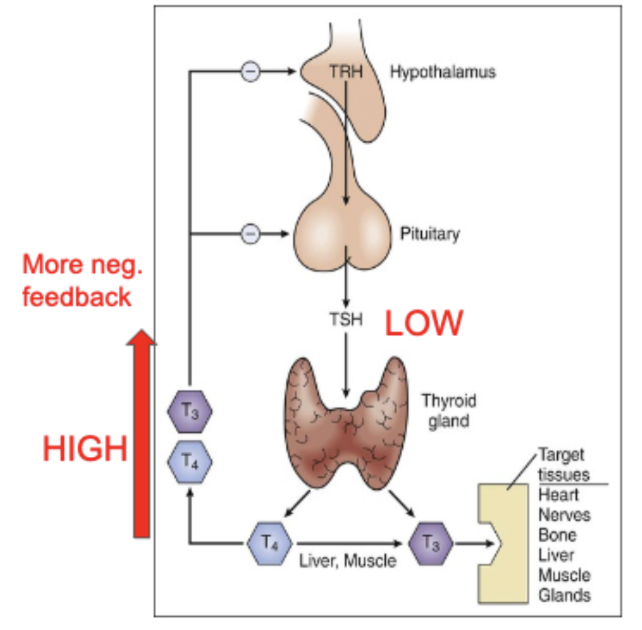
problem with hyperthyroidism
Bodily reaction
The thyroid gland produces excessive amounts of T3 and T4
Bodily reaction (more negative feedback loop): The hypothalamus and pituitary gland recognize there’s an excess of thyroid hormones, and respond by reducing the amount of TRH and TSH produced. However, there is something inherently wrong with the thyroid, which continues to produce thyroid hormones
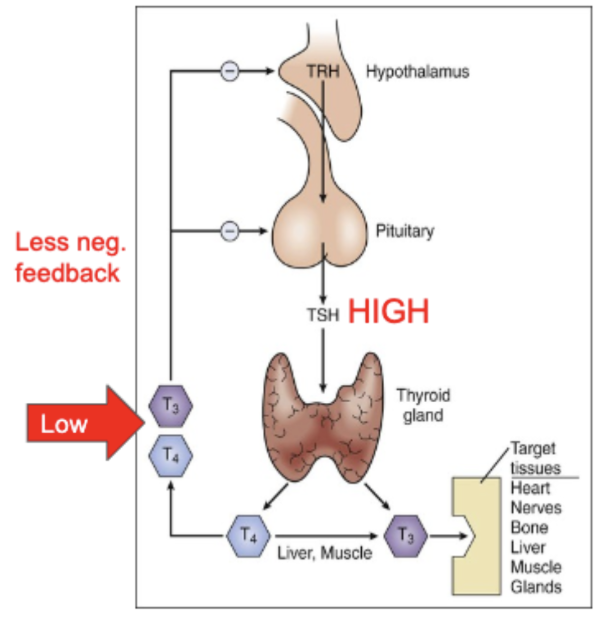
problem with hypothyroidism
Bodily reaction
The thyroid gland produces too little of T3 and T4
Bodily reaction (less negative feedback loop): The hypothalamus and pituitary gland respond by increasing the levels of TRH and TSH, but something is inherently wrong with the thyroid, which continues to not produce enough T3 and T4
thyrotoxicosis
excessive level of thyroid hormone by any cause (e.g., hyperthyroidism)
hyperthyroidism
overproduction of thyroid hormone by the thyroid gland
thyroid storm
sudden release of thyroid hormone by thyroid gland; considered a life-threatening emergency
causes of hyperthyroidism
Graves’ disease: autoimmune disease in which the body produces thyroid-stimulating antibodies that bind to the thyroid and stimulate production of thyroid hormones
Most common cause of hyperthyroidism
Thyroid adenoma: growth in the thyroid that functions autonomously and produces thyroid hormone
Excess TSH production by the pituitary gland
Drug-induced
Amiodarone (biggest culprit)
Iodinated contrast
Lithium
Interacting drugs with lab assays
Biotin (vitamin B7) can result in falsely high levels of T4 and T3 + falsely low levels of TSH, leading to a false diagnosis of hyperthyroidism (Recommendation: STOP biotin for 2 days and then and do/repeat the measurement)
clinical presentation of hyperthyroidism
Helpful hint: Processes speed up
Heat intolerance
↑ Heart rate (HR); palpitations (rapid HR)
↑ Blood pressure (BP)
Bulging eyes (exophthalmos)
Seen in Graves’ disease
Goiter
Unintentional weight loss
Increased appetite
Amenorrhea (scant or no menstrual cycle)
Anxiety/nervousness
Diarrhea (frequent stools)
Fatigue
Fine hair
Lid lag
Clubbed fingers
Onycholysis (separation of the end of the fingernails from the beds)
Moist skin
Pretibial myxedema
Seen in Graves’ disease
Infiltrative dermopathy
Incidence rate: 1-5%
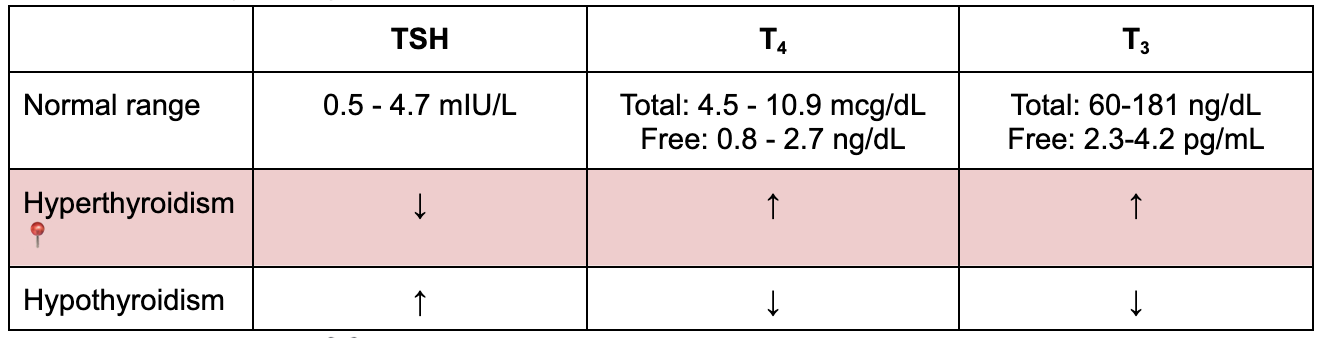
laboratory findings for hyperthyroidism
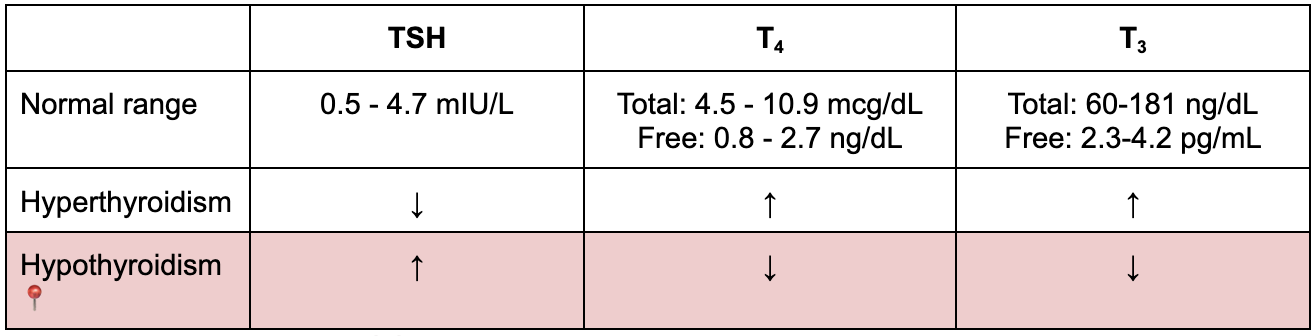
TSH levels go down
T4 and T3 go up
goals of therapy for hyperthyroidism
Desired outcomes
Provide symptomatic relief
Eliminate excess thyroid hormone
Minimize long-term consequences of hyperthyroidism
Treatment approach
Individualize therapy based on:
Disease severity
Patient gender
Patient age
Response to previous therapy
treatment options for hyperthyroidism
Antithyroid drugs (ATD): Thionamides
Radioactive iodine
Surgery
thionamides
MOA
Role in therapy
Goal
Drugs
MOA: Prevents synthesis (inhibiting peripheral conversion of T4 → T3)
Role in therapy: First-line option for hyperthyroidism
Goal: Achieve normal thyroid hormone levels (euthyroid)
Drugs:
Methimazole (MMI)
Propylthiouracil (PTU)
methimazole (MMI)
DOC?
Initial dosing
Maintenance dose
DOC due to less hepatic toxicity and other side effects
Initial dose is based on free T4 levels (generally 10-30 mg/day)
1-1.5x ULN → 5-10 mg QD
> 1.5-2x ULN: 10-20 mg QD
> 2x ULN: 20-40 mg/day
Maintenance dose: 5-10 mg QD
propylthiouracil (PTU)
DOC?
Initial dosing
Maintenance dose
NOT DOC
Initial dose: 300-600 mg/day in 3-4 divided doses
Maintenance dose: 100-150 mg/day in 3 divided doses
expected symptomatic relief for thionamides
Expected symptomatic relief in 4-8 weeks
Titrate doses every 4 weeks
Maximum response in 4-6 months
Long-term remission in about 12-24 months
monitoring frequency for thionamides
TSH, free T4, and T3 every 4-8 weeks until euthyroid
Monitor every 2-3 months once euthyroid
If euthryoid for 1 year after discontinuation = remission
Follow-up after remission about every 6-12 months (due to treatment failures and recurrences)
mild adverse effects of thionamides
Leukopenia ( < 4,000/mm3)
GI discomfort and nausea
Pruritic maculopapular rash
Fever
Arthralgias
Lupus-like syndrome (flu-like symptoms, muscle and joint pain)
severe adverse effects of thionamides
Monitoring?
Hepatotoxicity
Higher risk with PTU
Monitoring: LFTs
Agranulocytosis (severe decrease in granulocytes)
Leads to severe flu-like symptoms (sore throat, fever, fatigue)
Rare but life-threatening due to body’s low neutrophil counts = inability to fight infections
May occur in MMI doses > 40 mg/day (or PTU-equivalent dose)
Treatment: Discontinue therapy
Monitoring: CBC (specifically WBC)
counseling points for thionamides
If mild adverse effects occur, contact PCP and consider discontinuation of therapy
Flu-like symptoms (fever/chills, fatigue, sore throat)
Contact your doctor if you are or become pregnant due to potential teratogenicity
Symptoms should improve in weeks to months
radioactive iodine (131I)
Role in therapy
MOA/Goal
Role in therapy: Graves’ disease, toxic autonomous nodules, toxic multinodular goiter
Goal: Destroy (ablate) overactive thyroid cells with emitting beta particles
dosing for and result of radioactive iodine
Dose: One-time dose of 5-15 mCi
Colorless, tasteless liquid
Requires adjunctive therapy in the form of iodides to minimize the effect of stored thyroid hormones leaking into circulation from the destroyed thyroid vesicle
Result: Euthyroid should occur in 6 months to 1 year
Can give a second dose after 6 months if euthyroid not achieved
adverse effects of radioactive iodine
Acute
Long-term
Acute:
Thyroid tenderness
Dysphagia
Long-term:
↑ risk of small bowel and thyroid cancer
↑ risk of all cause mortality
Radiation exposure to family members
Who is contraindicated for radioactive iodine?
Pregnancy (must defer 6-12 months)
Lactation
Inability to adhere to radiation safety guidelines
special radioactive iodine for cardiac disease or elderly
Give thionamides before and after RAI
Stop 4-6 days before RAI
Restart 4 days after RAI
Consider beta blockers
counseling points for radioactive iodine
For at least 7 days… 📍
Sleep in separate bed from another adult
Delay return to work
Maximize distance from children and women
Do not travel by airplane or public transportation
Limit time in public spaces
Do not prepare food for others
Do not share utensils
Sit to urinate and flush toilet 2-3 times after use
Maintain 6-foot distance from others
types of thyroidectomy
Subtotal (leaves a little bit of thyroid intact)
Near-total (takes almost all of the thyroid out)
Consider a thyroidectomy in patients with…
Enlarged thyroid gland (> 80 g)
Multinodular goiter (MNG) with cosmetic issues or pressure symptoms
Severe ophthalmopathy
Failed therapy with antithyroid drugs
risks for thyroidectomy
Hyperthyroidism recurrence (subtotal)
Hypoparathyroidism
Laryngeal nerve damage
perioperative management for thyroidectomy
Before surgery: Thionamide + potassium iodide + beta blocker
Thionamide (MMI preferred) until patient is euthryoid (~6-8 weeks)
Potassium iodide 500 mg/day for 10-14 days before surgery
Beta blocker (propranolol preferred) several weeks before surgery, maintaining an HR < 90 BPM
After surgery: Beta blocker + thyroid replacement therapy
Beta blocker (propranolol preferred) 7-10 days after surgery, maintaining an HR < 90 BPM
Weight-based dosing of lifelong levothyroxine now that the patient is permanently hypothyroid
adjunctive therapy
Antiadrenergic therapy
Iodides
role in therapy for antiadrenergic therapy
Symptomatic management, to minimize risk of further cardiac issues due to severe tachycardia
Adjunct to antithyroid drugs, radioactive iodine (RAI), or iodides (Graves’ and toxic nodules)
Preparation for surgery
Thyroid storm
Primary management: Thyroiditis
DOC for antiadrenergic therapy
Propranolol (preferred because it helps with both palpitations, as well as anxiety and tremors)
Initial dose: 10-40 mg 3-4 times daily
Target: HR < 90 beats/min
contraindications and adverse effects for antiadrenergic therapy
Contraindications
Decompensated heart failure
Sinus bradycardia
Spontaneous hypoglycemia
Concomitant MAOI/TCAs
Adverse effects:
Nausea/vomiting
Anxiety
Insomnia
Lightheadedness
iodides
Role of therapy
Result
Symptom improvement
Acutely inhibit thyroid hormone release, to help severely thyrotoxic patients with cardiac decompensation and in thyroid storm
Prior to surgery in Graves’ disease (7-10 days pre-op)
Following radioactive iodine (RAI) to inhibit thyroid hormone release (3-7 days post-op)
Result: Decreased T4 and T3 in several weeks (However, iodides are only good for acute management and not for long-term because, after about 2-4 weeks, the body adapts and thyroid hormone production increases after the initial inhibition)
Symptom improvement: 2-7 days
iodide options
SSKI (saturated solution potassium iodide) - Concentrated at 38 mg iodide/drop
Lugol’s solution - Concentrated at 6.3 mg iodide/drop
contraindications and adverse effects of iodides
Contraindicated in: Toxic multi-nodular goiter (MNG)
Adverse effects:
Exacerbation of hyperthyroidism (large doses)
Hypersensitivity
Salivary gland swelling
“Iodism” (burning or watery feeling in the mouth; can manifest as a metallic taste, sore teeth and gums, and symptoms of a head cold)
Gynecomastia (overdevelopment/enlargement of breast tissue) in men
When are thionamides the preferred treatment option?
Age > 40 y.o.
Low T4:T3 ratio
Small goiter
Disease duration < 6 months
No history of relapse with antithyroid medications
Expected therapy duration > 1 year
Low TSAb titers at baseline or reduced with treatment
When is radioactive iodine the preferred treatment option?
Graves’ disease
Toxic nodules
Toxic multi-nodular goiter
Female > male
Low free T4 levels at diagnosis
When is surgery the preferred treatment option?
Large goiters
Patients who refuse RAI
Failed medication therapy
Severe ophthalmopathy
What is the preferred treatment option for gestational hyperthyroidism?
Thionamides are preferred
Specifically PTU because MMI has shown to have higher rates of birth defects when used in the first trimester
For a patient with gestational hyperthyroidism, which thionamide should you give in…
1st trimester (+ monitoring?)
2nd or 3rd trimester
1st trimester:
PTU
(Monitor T4 and TSH every 4 weeks. Adjust dose to maintain T4 at ULN or moderately above)
2nd or 3rd trimester:
PTU
MMI
What is the preferred option(s) for treating hyperthyroidism in neonates?
Hyperthyroidism typically presents 7-10 days after birth
Treat with ATD for 8-12 weeks
May use iodide as supplementation in the first few days to assist in the transient reduction of thyroid hormones while ATDs take effect
What is the preferred option(s) for treating hyperthyroidism in pediatrics?
For age < 5 y.o.: Thyroidectomy preferred; avoid RAI
For age > 5 y.o.: DOC is MMI
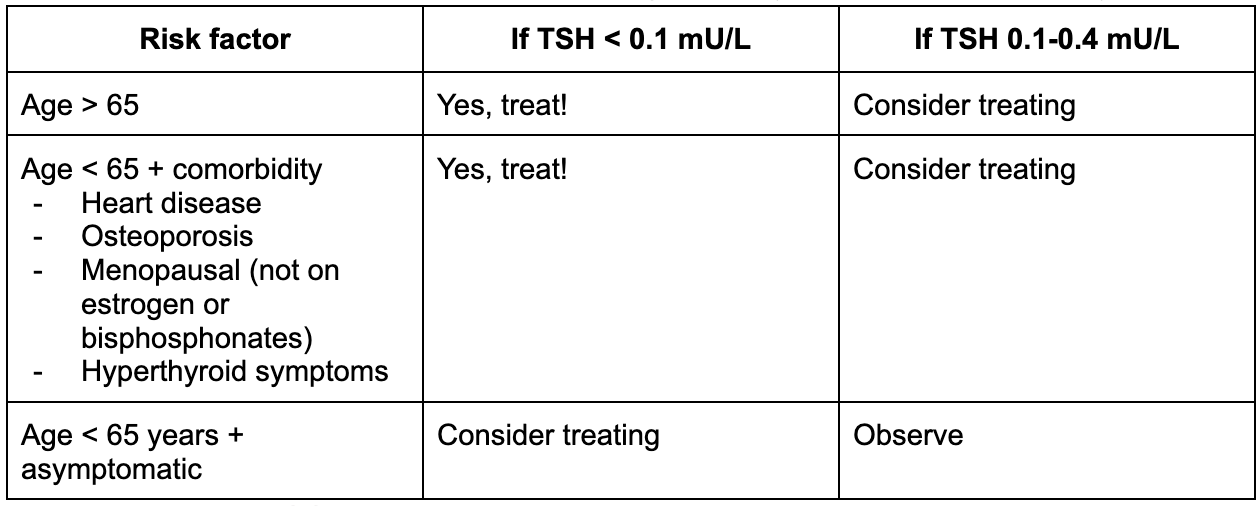
subclinical hyperthyroidism
defined as low TSH but normal T4 and T3 levels
Causes are similar to hyperthyroidism, including thyroiditis (from a viral infection, mechanical manipulation, or seen in the postpartum state in women with underlying autoimmune diseases)
treatment approach for subclinical hyperthyroidism (based on patient parameters)
thyroid storm
defined as a sudden, sharp increase in thyroid hormones
Rare but life-threatening medical emergency
Precipitating factors:
Trauma
Infection
Withdrawal from ATDs
RAI
Surgery
clinical features of subclinical hyperthyroidism
Fever (usually > 103 °F, 29.4 °C)
Dehydration
NVD
Sweating
Restlessness
Tachycardia (increased HR)
Tachypnea (rapid, shallow breathing)
Heart failure, shock, arrhythmias
Tremor
Anxiety
Hyperreflexia
Delirium
management for thyroid storm
Thionamides
Suppresses thyroid hormone synthesis
Inhibits peripheral conversion of T4 to T3 (PTU)
DOC: PTU
Beta blockers
Symptomatic management
DOC: Propranolol
Iodides
Blocks release of preformed thyroid hormone
Administer after thionamides
Corticosteroids
May prevent peripheral conversion of T4 to T3
Prophylaxis against relative adrenal insufficiency
primary (overt) hypothyroidism
elevation in thyroid-secreting hormone (TSH) AND deficiency in T4/T3
How can TSH be elevated in a disease of deficiency?
Normally: In response to a deficiency in thyroid hormones, thyrotropin-releasing hormone (TRH) leaves the hypothalamus and stimulates the anterior pituitary gland to release TSH, the hormone that stimulates the thyroid gland to secrete more T4. T4 (think of as the inactive form) is then converted into triiodothyronine (T3, active form). Once T3 and T4 are corrected, this signals the process to stop/shut off (negative feedback loop)
In hypothyroidism: The thyroid is damaged/dysfunctional, so it can’t adequately respond to TSH and produce more T4—and these low levels of T4 will keep repeating the process to fruitless results
Result: High TSH + low T4/T3
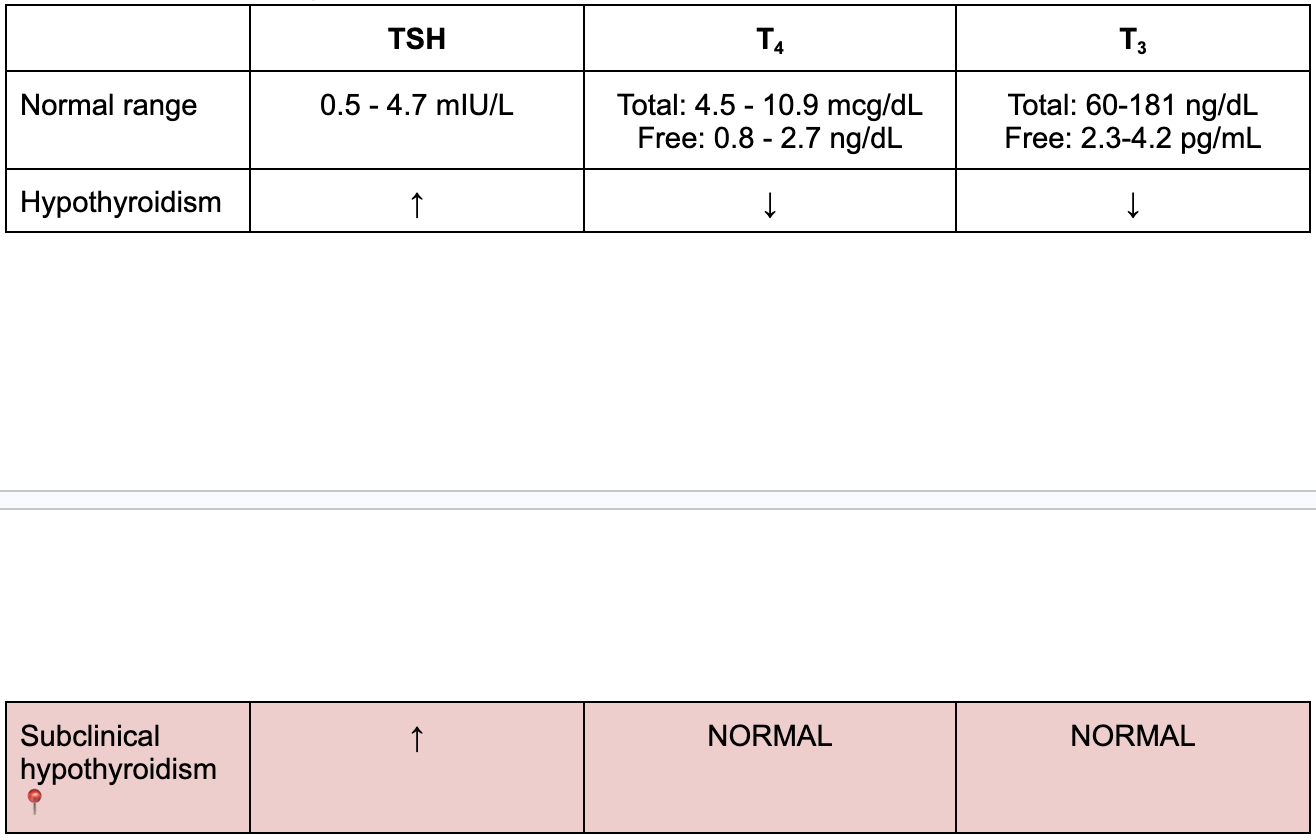
subclinial hypothyroidism
ONLY an elevation in TSH
More common
primary hypothyroidism
Causes
Primary causes (thyroid gland failure due to chronic autoimmune thyroiditis):
Iodine deficiency
Iatrogenic hypothyroidism (can be caused either by exposure to a destructive amount of radiation or surgery, or excessive thionamides in hyperthyroidism treatment)
Hashimoto’s disease
secondary hypothyroidism
Causes
Secondary causes (thyroid gland failure due to pituitary failing to stimulate the thyroid):
Disorder of the pituitary gland
Hypothalamic hypothyroidism
What medications can cause hypothyroidism?
Tyrosine kinase inhibitors (TKIs)
Amiodarone
Interferon-alpha
Lithium
Hashimoto’s disease
An autoimmune-induced hypothyroidism
Commonly seen in adults without a history of hypothyroidism
Signs and symptoms:
Goiter and mild hypothyroid disorder symptoms (e.g., constipation, excessive/prolonged period, pale and dry skin)
Thyroid gland atrophy with more notable alterations to hormones
clinical presentation of hypothyroidism
Helpful hint: Processes slow down
Symptoms:
Cold intolerance
Weight gain
Constipation
Weakness
Muscle cramps, myalgias, stiffness
Menorrhagia (heavy menses) and infertility
Galactosemia (abnormal milk discharged from the breast that is unrelated to normal milk production and breastfeeding)
Complaints of:
Lethargy
Depression
Fatigue/weakness
Signs:
Coarse hair and skin
Cold or dry skin
Slow heart rate (bradycardia)
Slow speech and hoarse voice
Reversible neurologic syndromes
Galactorrhea (in women)
Slow relaxation of deep tendon reflexes
laboratory findings for hypothyroidism
goals for treating hypothyroidism
Resolution of signs/symptoms
Returning TSH to normal range
Preventing overtreatment that could lead to hyperthyroidism
treatment options for hypothyroidism
Levothyroxine (Synthroid)
Desiccated thyroid (Armour Thyroid)
Liothyronine (Cytomel)
Liotrix (Thyrolar)
levothyroxine (Synthroid)
Content
Relative dose
Comments/equivalency
Synthetic T4
100 mcg
Comments/equivalency:
Stable, predictable potency
Generics may be bioequivalent
Variable absorption between products
Half-life = 7 days (allows for QD)
DOC (1st-line agent)
dessicated thyroid (Armour Thyroid)
Content
Relative dose
Comments/equivalency
Dessicated pork thyroid gland
1 grain (equivalent to 74 mcg of T4)
Comments/equivalency:
High T3/T4 ratio
Inexpensive
liothyronine (Cytomel)
Content
Relative dose
Comments/equivalency
Synthetic T3
33 mcg (~100 mcg of T4)
Comments/equivalency:
Uniform absorption
Rapid onset
Half-life = 1.5 days
Rapid peaks and troughs
liotrix (Thyrolar)
Content
Relative dose
Comments/equivalency
Synthetic T4:T3 ratio
Thyrolar 1 = 50 mcg of T4 + 12.5 mcg T3
Comments/equivalency:
Stable, predictable
Expensive
Risk of T3 thyrotoxicosis
levothyroxine (Synthroid)
MOA
Clinical advantages
Clinical disadvantages
MOA: Replaces T4 to augment available T3 → Reestablishes homeostasis
Clinical advantages:
Relatively inexpensive
Active with oral administration
Once daily dosing
Long half-life, thus making a stable pool of hormone available
Clinical disadvantages:
Avoid therapeutic interchange due to potential effect on thyroid hormone and efficacy of product to stay in therapeutic window
Relationship between T4 and TSH concentrations is not linear (e.g., very small changes in T4 can lead to substantial changes in TSH)
Absorption concerns when taken with food (must remain consistent)
How to initally dose levothyroxine…
Typically?
For CV disease?
For adults > 50 y.o.?
For pregnancy?
Typically: Weight-based (1.6 mcg/kg/day), then adjusted by 12.5-25 mcg/day every 4-6 weeks based on TSH levels
For CV disease: 12.5-25 mcg/day
Need lower starting dose because we don’t want to overcorrect TSH too quickly and risk hypothyroidism, which can have cardiac side effects
For adults > 50 y.o.: 25-50 mcg/day
Need lower starting dose
For pregnancy: Increase dose by 20-30%
Need higher starting dose
Which weight do we use to calculate a levothyroxine dose?
ideal body weight (IBW)
For males: IBW = 50 kg + 2.3 kg for every inch > 5 ft
For females: IBW = 45.5 kg + 2.3 kg for every inch > 5 ft
Multiply by 1.6 mcg/kg/day, and then round to nearest available commercial strength!
Note: Higher doses than what is recommended from the ideal body weight calculation are required when patients are larger. All-in-all, if you are in the dead center between two commercial levothyroxine strengths, round down for normal-weight people and round up for overweight/obese patients
monitoring parameters for levothyroxine
Monitor TSH 4-6 weeks until euthryoid (following initiation, dosage adjustments, or change in preparation)
Timeframe needed to achieve steady state
May also monitor T4
Increment changes of 12.5-25 mcg/day
Once an adequate replacement dose has been established, measure TSH at 6 months → then at 12-month intervals or more frequently as clinically indicated (e.g., patient has new symptoms, changes in their health status, new concomitant medications)
drug and food interactions with levothyroxine
All of the folllowing result in LOWER levothyroxine levels → Lower T4 → Untreated hypothyroid condition:
Decrease absorption
Antacids (e.g., calcium salts)*
Bile acid sequestrants (e.g., cholestyramine, colestipol, colesevelam)
Ciprofloxacin
Ferrous sulfate*
Oral bisphosphonates
PPI/H2RA (e.g., omeprazole, pantoprazole, famotidine)
Phosphate binders (e.g., sevelamer, aluminum hydroxide)
Sucralfate
Increase clearance
Carbamazepine
Phenobarbital
Phenytoin
Rifampin
What is a counseling point for levothyroxine with antacids?
* Space levothyroxine out from antacids (calcium- and iron-containing products) by 4 hours
effects of hypothyroidism ON other medications
Decreased Vd and plasma clearance of digoxin
Clinical solution: Lower dose may be required to prevent toxicity
Delayed degradation of insulin
Clinical solution: Lower dose may be required
Altered clotting factor catabolism (i.e., clotting factor depletes slower) of warfarin
Problem: Increased risk of clotting, may unintentionally cause hypoglycemia
Solution: Treatment may require increased dose and monitoring to prevent clotting
Increased O2 retention and precipitation of myxedema with respiratory depressants
Avoid use if possible
adverse effects and precautions for levothyroxine
Excessive doses of thyroid hormone →
Heart failure
Angina pectoris
Myocardial infarction
Atrial fibrillation
Osteoporosis
Insufficient doses of thyroid hormone →
Signs/symptoms of hypothyroidism
Myxedema coma
Precautions:
Do NOT use as a weight-loss product
Use with caution and reduce dose in patients with CV disease
patient counseling tips on levothyroxine
“Take on an empty stomach” (Eating can slow absorption down)
Option 1: Administer 30-60 minutes before breakfast and other medications (Note: Separate from antacids by 4 hours)
Option 2: Administer 3+ hours after evening meal (no snacking)
“Consistency is key”
Same manufacturer (not bioequivalent)
Take at same time each day
“The process takes time”
May take several weeks to see full effects
Food decreases levothyroxine absorption → administer on an empty stomach. Then recheck TSH and adjust the levothyroxine dose every 4-6 weeks because TSH takes ~4-6 weeks to reach a new steady state
“For storage and administration…
Store at room temperature away from light and moisture
Can be crushed and suspended in water for tube feeds”
dessicated thyroid (Armour Thyroid)
Origin
Role in therapy
In what unit is it dosed?
Origin: Porcine (pigs)
May be problematic in patients who have pork allergies, are vegan, or practice various religions that prohibit consumption of pork
Role in therapy: Not preferred
Primary concern is that the T3 component may be excessive. It has a T4:T3 ratio of 4:1—whereas a normal physiologic T4:T3 ratio is 13:1 or 16:1
Dosed in “grains”
liothyronine (Cytomel)
Origin
Role in therapy
Origin: Synthetic T3
Role in therapy: Not preferred
Higher incidence of cardiac events
Expensive
TID dosing
Difficult to monitor (has rapid peaks/troughs, the rationale for the frequent dosing → higher potential for missed doses and interruptions in thyroid homeostasis)
liotrix (Thyrolar)
Origin
Role in therapy
Origin: Combination of synthetic T4 and T3
Role in therapy: Not preferred
Expensive
Ratio of T4:T3 is greater than that naturally produced by human thyroid gland → can result in thyrotoxicosis if using too much
Lack of therapeutic rationale with this agent since most T3 is peripherally converted to T4, so there is no benefit in dosing T3:T4 rather than T4 alone, as you see with levothyroxine
What is the preferred treatment option for pregnant patients with hypothyroidism?
Monitoring?
DOC = levothyroxine
20-30% dose increase at start of pregnancy
Revert dose back to pre-pregnancy dose 6-8 weeks after delivery
Target TSH levels:
1st trimester (12 weeks): < 2.5 mIU/L
Due to maternal contribution of thyroid hormone in first two months of pregnancy
Individuals with preexisting thyroid disorders should be in close contact with their care provider when trying to become pregnant to ensure doses can be adjusted appropriately and in time
2nd and 3rd trimesters: < 3 mIU/L
subclinical hypothyroidism
Prevalence increases with age and is more common in women; has no or few signs/symptoms
Risks:
Cardiovascular disease
Reproductive abnormalities
Non-fatty liver disease, a complication seen in patients with concomitant obesity and diabetes
treatment for subclinical hypothyroidism
Levothyroxine is most often initiated when TSH > 10 mIU/L
Initial dosing is 25-75 mcg/day (not weight-based), and titrated according to response
For hypothyroidism, what is the preferred treatment option(s) for older adults with or without cardiovascular conditions?
Consider age and cardiovascular disease BEFORE selecting dose
Older adults should be started at a lower dose and gradually increased. For example:
Older adult WITHOUT CV disease: Levothyroxine 25-50 mcg daily, then increase after 4-6 weeks
Older adult WITH CV disease: Levothyroxine 12.5-25 mcg daily, then increase by ~25 mcg after 4 - 6 weeks, as necessary
Cardiovascular abnormalities are common with higher doses of levothyroxine
Angina
Worsening heart failure
Myocardial infarction
myxedema coma
Life-threatening complication due to inadequate treatment of hypothyroidism
60-70% fatality rate
Signs/symptoms: Hypothermia, decreased mental status, hypotension, bradycardia, hyponatremia, hypoglycemia, hypoventilation
treatment for myxedema coma
Correction of this condition requires parenteral (IV) levothyroxine administration due to diminished GI absorption
Use lower doses for older adults, smaller patients, and patients with a history of cardiovascular disease/arrhythmias
Change patient back to oral therapy after patient has stabilized
Need to ensure patient has adequate ventilation/stable blood sugar/blood pressure and temperature to prevent complications