Circulation and Gas Exchange
 Call Kai
 Learn
Learn Practice Test
 Spaced Repetition
 Match
Match Flashcards
 Knowt Play
1/35

There's no tags or description
Looks like no tags are added yet.
Name | Mastery | Learn | Test | Matching | Spaced | Call with Kai | Chat |
|---|
No analytics yet
Send a link to your students to track their progress
36 Terms
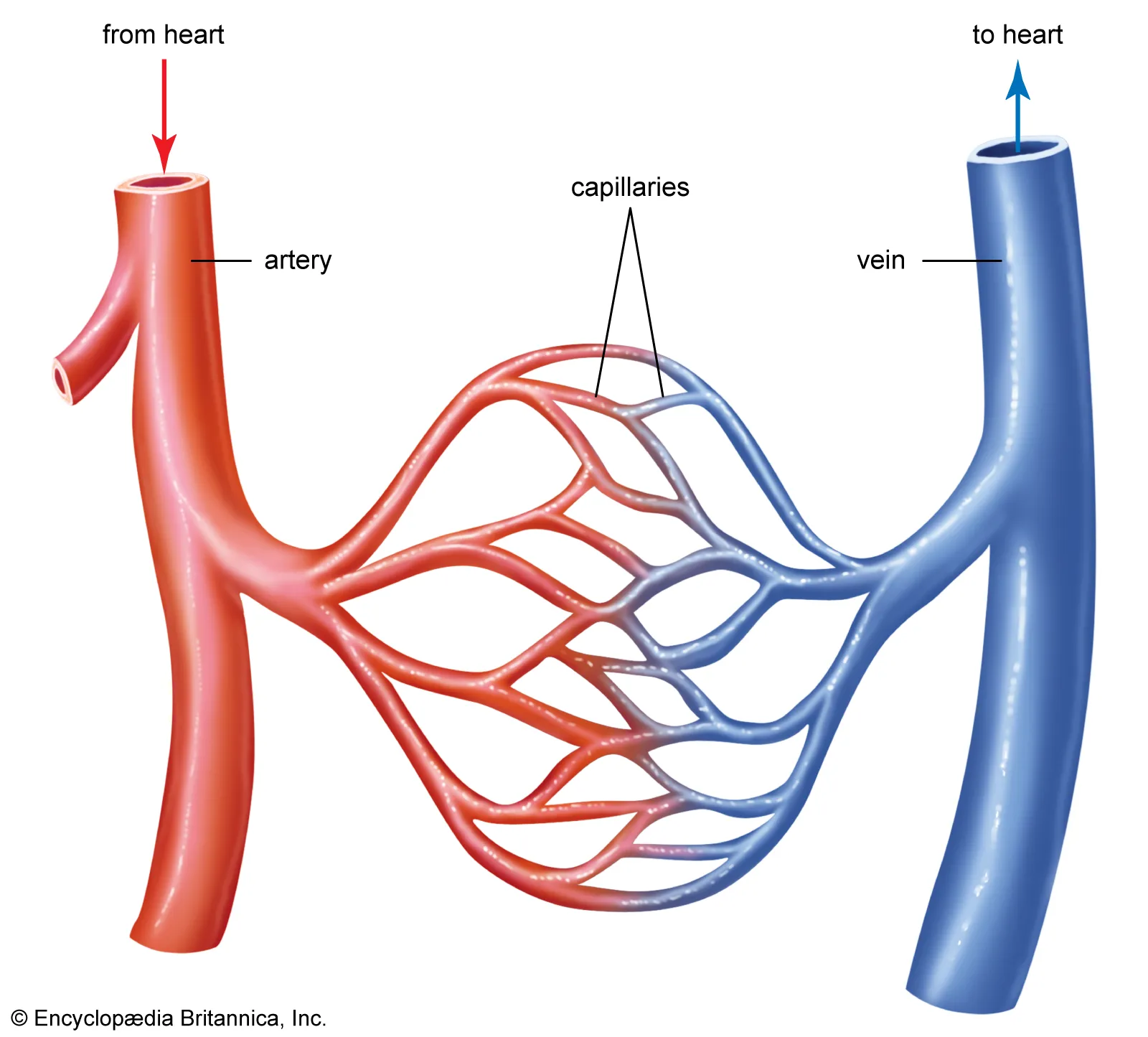
Describe the three main types of blood vessels and their functions.
Arteries:
carry oxygenated blood away from the heart at high pressure
thick, elastic wall
Veins:
return deoxygenated blood to the heart at low pressure
thin wall
Capillaries:
tiny vessels that connect arteries and veins to facilitate the exchange of water, oxygen, nutrients, and waste with tissues
Why does O2 move into the tissues at the arteriole end of a capillary bed, what forces are at work? Describe how gas exchange is regulated in a respiratory system in terms of the partial pressures of oxygen and carbon dioxide.
Oxygen moves into the tissues at the arteriole end primarily through simple diffusion driven by a steep partial pressure gradient
Forces at the arteriole end:
Capillary Hydrostatic Pressure (CHP): This is the blood pressure within the capillary, which pushes fluid and nutrients out of the vessel into the surrounding tissue.
Blood Colloid Osmotic Pressure (BCOP): This is the pressure exerted by plasma proteins (like albumin) that attempts to pull fluid back into the blood
At the arteriole end, the hydrostatic pressure (~35 mmHg) is higher than the osmotic pressure (~25 mmHg), resulting in a net filtration pressure that drives oxygen-rich fluid into the interstitial space.
Regulation of gas exchange
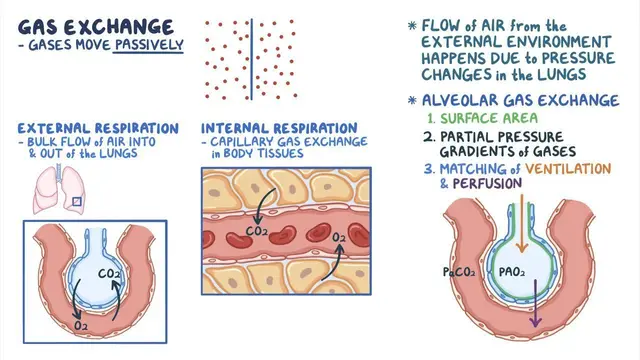
differences in partial pressures (P) of oxygen and carbon dioxide across membranes
Internal respiration in the tissues
Oxygen: the pressure of oxygen in the blood is high, while the pressure of oxygen in the tissues is low because cells constantly use oxygen for respiration
This gradient causes oxygen to dissociate from hemoglobin and diffuse into the tissues
Carbon Dioxide: as a byproduct of metabolism, the pressure of carbon dioxide in tissues is higher than in the entering blood, driving carbon dioxide into the capillaries
External respiration in the alveoli
Oxygen: alveolar pressure of oxygen is high, while deoxygenated blood in the pulmonary capillaries is low. This steep gradient ensures rapid oxygen movement into the blood
Carbon Dioxide: pressure of carbon dioxide in the blood is slightly higher than in the alveoli. Although this gradient is smaller, carbon dioxide is more soluble than oxygen, allowing it to diffuse out efficiently
Which two structural features favor diffusion?
Diffusion is increased by the availability of a large surface area for exchange and a short diffusion distance
Individuals who experience an asthma attack have difficulty breathing. From the discussion of bulk flow, what do you think happens to these individuals’ airways that makes it difficult for them to breathe?
In individuals with asthma, resistance to airflow increases, thereby decreasing the flow of air.
Resistance increases because the diameter of the airway decreases as a result of smooth muscle contraction in the airway walls.
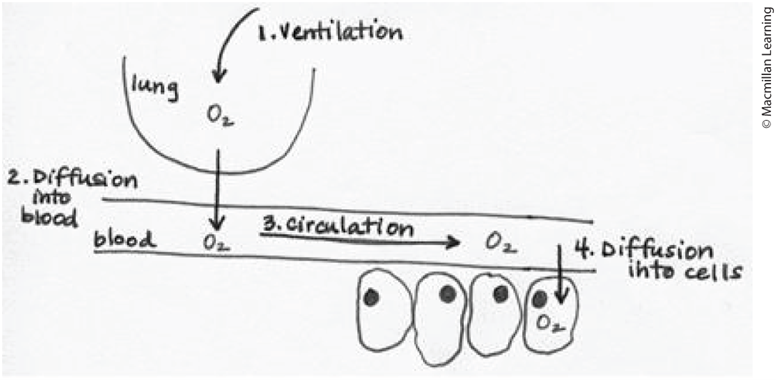
Diagram the four basic steps of O2 transport from an animal’s respiratory medium (air or water) to its cells.
Ventilation
Diffusion into blood
Circulation
Diffusion into cells
How does diffusion govern gas exchange over short distances?
diffusion: net movement of molecules from high to low concentrations (concentration gradient), random movement
used by single-celled organisms, simple animals/plants
effective gas exchange with a high surface area
Because of this distance limitation, some of the earliest and simplest invertebrate animals were composed of thin sheets of cells with a large surface area
What is partial pressure and how does it relate to the atmosphere and gas exchange?
partial pressure (p): The fractional concentration of a gas relative to other gases present multiplied by the total pressure of the gas mixture
The sum of the partial pressures of a mixture of gases equals the total atmospheric pressure
It drives respiratory gas exchange by determining the direction and rate of diffusion (from high to low pressure) between the atmosphere, lungs, and blood.
What is bulk flow, where does it occur, and what are the steps?
The physical movement of fluids, either liquid or gas, as a result of pressure differences
Surfaces in the body where diffusion occurs have a high SA to volume ratio (i.e. lungs, intestines)
crucial for maintaining homeostasis
Steps of bulk flow:
Ventilation (breathing): air is moved into the lungs (inhalation) and out (exhalation) due to pressure changes, bringing air into the alveoli
Pulmonary Bulk Flow (Perfusion): blood containing CO2 is pumped by the heart into the pulmonary capillaries surrounding the alveoli
Circulation: oxygenated blood is transported by the heart and blood vessels from the lungs to the tissues throughout the body
Capillary Exchange (Filtration/Reabsorption): in tissues, highly hydrostatic pressure pushes blood plasma (carrying oxygen) out of the capillaries, while lower pressure helps return waste-filled blood to the vessels, a process facilitated by bulk flow
What circulatory fluid do vertebrates have?
blood
What is tidal ventilation and tidal volume in mammals?
Tidal ventilation: breathing technique is most land vertebrates in which air is drawn into the lungs during inhalation and moved out during exhailation
Tidal volume: the amount of air inhailed and exhaled in a cycle
What generates the pressure changes needed to draw air into the lungs and to expel air out of the lungs of vertebrate animals?
Driven by muscle-generated volume changes in the thoracic cavity, which alter the intrapulmonary pressure relative to atmospheric pressure.
The diaphragm contracts to expand the cavity for inhalation and relaxes to compress it for exhalation.
Describe the path of gas exchange in mammals (from inhalation to lung stuff)
Air is taken in through the mouth/nasal cavity, passes through the larynx, and enters the trachea
Air in the trachea divides into two bronchi, each going into a lung
Bronchi divide into bronchioles in the lungs
Bronchioles end in clusters of alveoli, where gas exchange by diffusion takes place
Pulmonary capillaries supply the alveolar wall
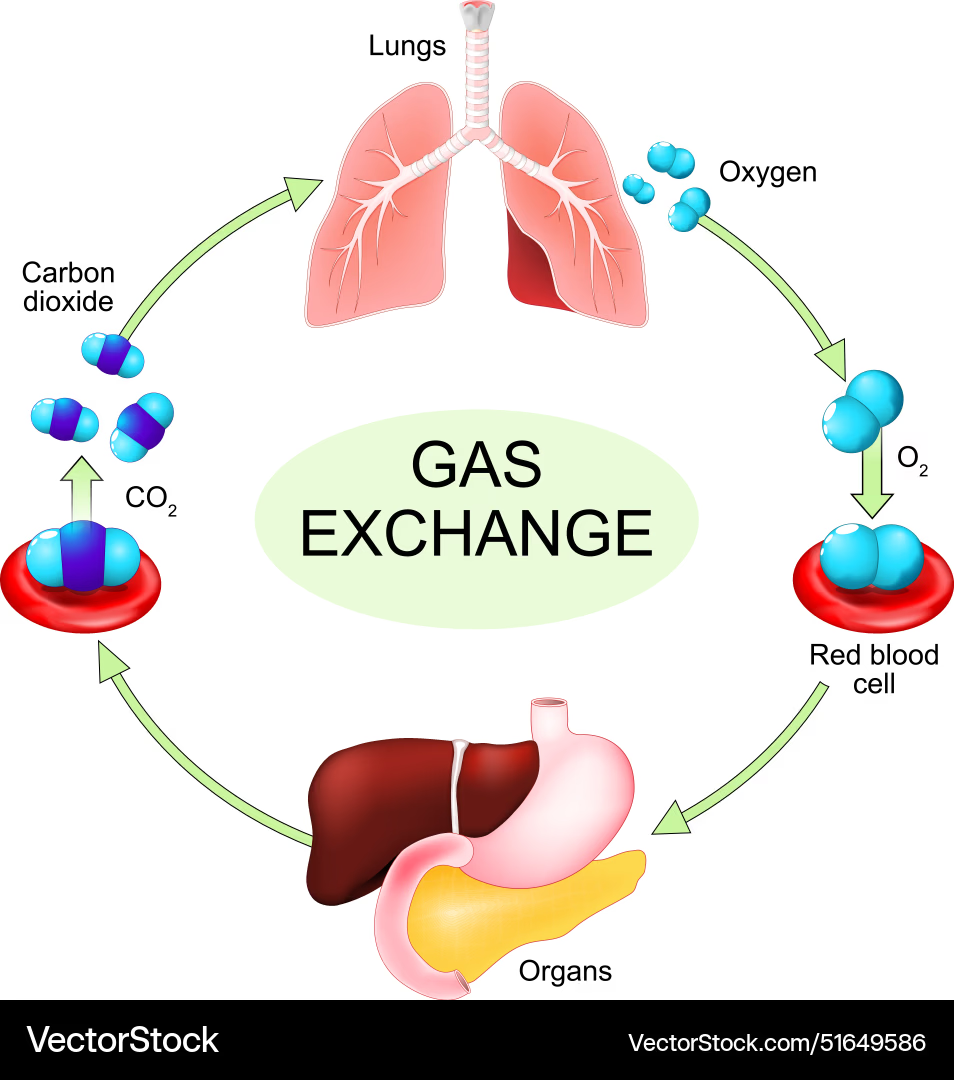
Explain how O2 and CO2 are transported in the blood.
Transport of Oxygen:
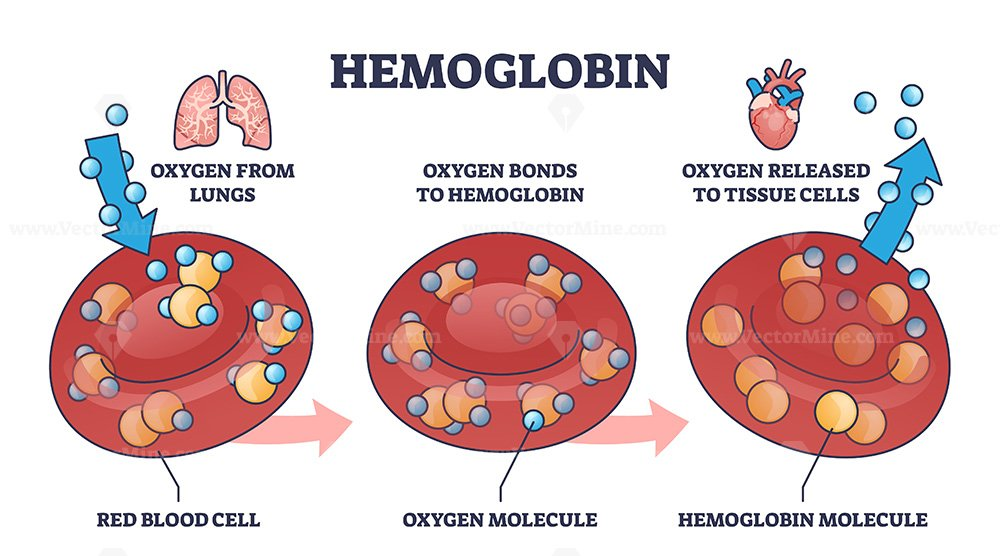
binds to hemoglobin within red blood cells, forming oxyhemoglobin
each hemoglobin molecule can carry four oxygen molecules
about 1.5% of O2 is dissolved in plasma
Process:
due to high O2 partial pressure, O2 diffuses from the alveoli into the pulmonary capillaries and enters red blood cells
due to low O2 pressure in metabolizing tissues, oxygen dissociates from the hemoglobin, diffuses into tissues, and is used for cellular respiration
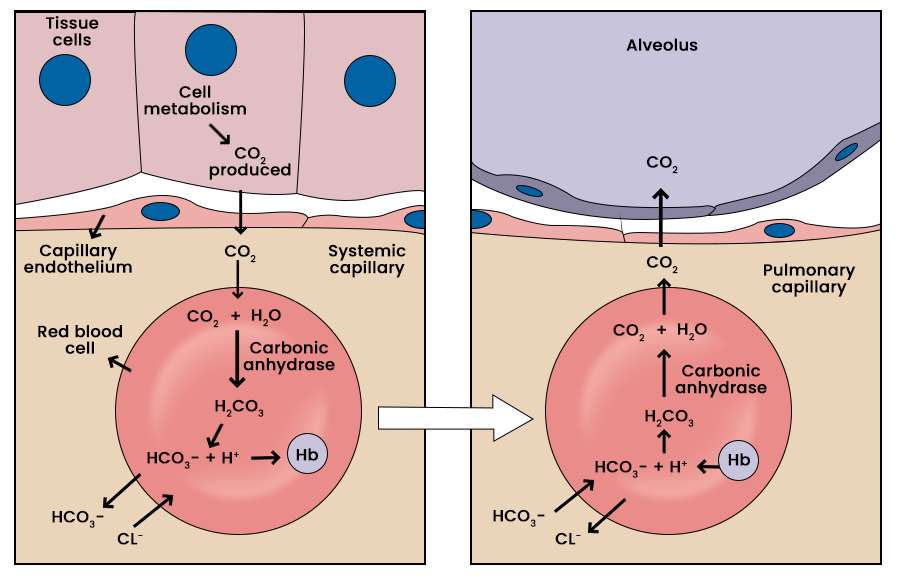
Transport of Carbon Dioxide:
The majority of carbon dioxide is converted into bicarbonate ions
CO2 enters the red blood cell and reacts with water, catalyzed by the enzyme carbonic anhydrase
The bicarbonate then diffuses into the plasma
Process:
CO2 diffuses from metabolizing cells into the blood, increasing local partical pressure
The process reverses; bicarbonate re-enters red blood cells, turns back into CO2, and is released into the alveoli to be exhaled
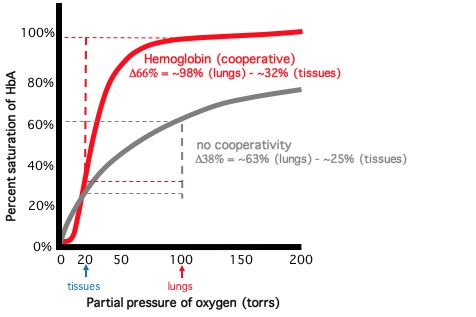
How does cooperative binding by hemoglobin increase O2 uptake into blood and its release to metabolizing cells?
When hemoglobin binds one molecule of O2, its affinity for binding additional O2 molecules dramatically increases.
This cooperative binding maximizes uptake of O2 in areas of high oxygen content; it allows for rapid saturation of O2 binding sites in hemoglobin before the blood leaves the capillaries surrounding the alveoli of the lungs and facilitates O2 release from hemoglobin at the tissues to supply the cells with O2
What is the function of blood? What is it composed of?
Functions:
Heat transport (temp regulation)
Waste transport to excretory organs
Transport of immune cells
Composition:
Plasma (55%): carries dissolved proteins (like albumin and fibrinogen), glucose, electrolytes, and hormones
Red blood cells (45%): contain hemoglobin, an iron-containing molecule specialized for oxygen transport, and hemocrit, the fraction of blood cells within the blood of vertebrates
White blood cells (~1%): defend body against pathogens
Platelets (~1%): respond to damaged blood vessels by helping to form a clot to prevent blood loss
What is hemoglobin and its importance in oxygen transport?
an iron-rich protein in red blood cells that functions as the primary vehicle for transporting oxygen from the lungs to body tissues and returning carbon dioxide to the lungs
as blood O2 pressure increases, hemoglobin saturation rises slowly at first, then more steeply, and then more slowly again until it levels out
oxygen dissociation has a sigmoidal shape
Structure:
globular protein that consists of four polypeptide subunits
each contains an iron-containing heme group that binds to oxygen
Oxygen binding and release:
hemoglobin binds toxygen in the lungs (high oxygen pressure) and releases it in tissues (low oxygen pressure)
Cooperative binding:
as one oxygen molecule binds, the hemoglobin structure changes to make it easier for the remaining three sports to bind oxygen
Significance:
it ensures efficient delivery of oxygen for ATP production throughout the body
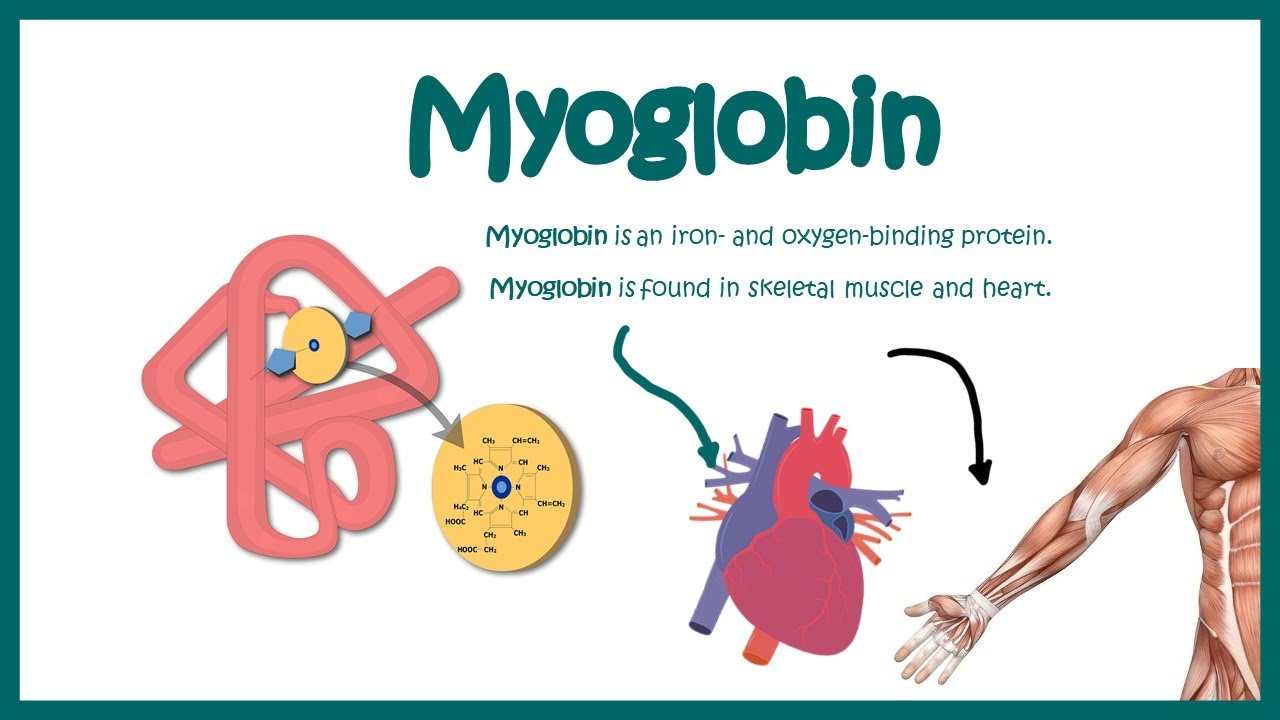
What is myoglobin and its importance in oxygen transport?
a small, iron-containing heme protein found in heart and skeletal muscles that stores and facilitates the transport of oxygen within muscle cells
acts as an oxygen reservoir, rapidly releasing O2 t mitochondria during high metabolic demand or low-oxygen conditions
has a greater affinity for O2 than hemoglobin, allowing it to efficiently pick up O2 from hemoglobin in the blood
Structure:
a single polypeptide chain with one oxygen-binding heme site
Function:
its primary role is oxygen storage, releasing O2 during muscle contraction or when cellular oxygen levels drop
Oxygen transport faciliation:
increases the oxygen diffusion rate from capillaries into the cytoplasm,
Cooperative binding:
as one oxygen molecule binds, the hemoglobin structure changes to make it easier for the remaining three sports to bind oxygen
Significance:
it ensures efficient delivery of oxygen for ATP production throughout the body
Which change in vessel shape most affects resistance to blood flow?
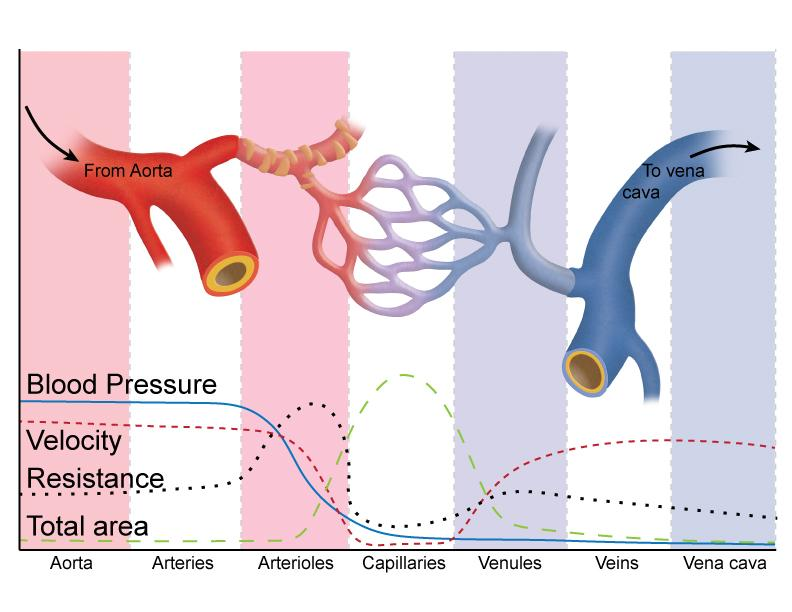
A change in a vessel’s radius most affects resistance to blood flow
ex: a twofold reduction in radius increases resistance to flow 16 times
How does the branching of larger arteries into many smaller vessels affect the rate of and resistance to blood flow in the smaller vessels?
Because resistance to blood flow is proportional to 1/r4 (r is the radius of the blood vessel), as arteries branch into smaller vessels, the resistance to blood flow increases
The large increase in the number of smaller vessels causes a proportional decrease in the rate of blood flow
Which have thicker walls, arteries or veins? Why?
Arteries have thicker walls to accomodate the high pressure of blood pumped from the heart
Where does the exchange of substances between blood and interstitial fluid take place?
Across the thin endothelium walls of capillaries
What is interstitial fluid?
tissue fluid; a water-based substance that fills the spaces between cells and tissues
How do compounds and fluids move across capillary walls?
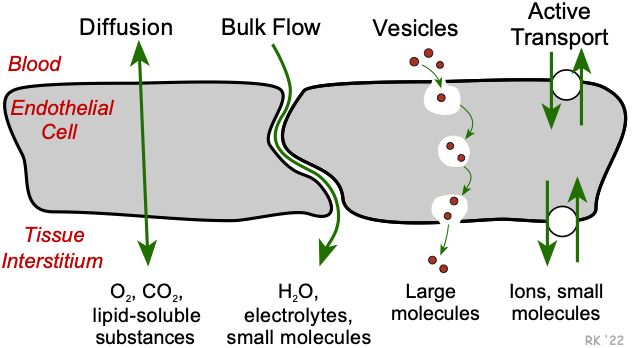
Diffusion (most common):
O2 and CO2 move between capillaries and tissues
Small, lipid-soluble molecules (e.g., O2, CO2)diffuse directly through endothelial plasma membranes.
Water-soluble substances (e.g., glucose, ions) pass through gaps, pores (fenestrations), or intercellular clefts.
Filtration:
High blood pressure at the arterial end of the capillary forces water and solutes out into tissues
Lower pressure at the venous end allows blood to draw fluid back in
protein and blood cells remain in the capillaries
plasma passes through capillary wall
Osmosis:
the movement of plasma and ions through the capillary wall due to blood pressure is balanced by the movement of fluid back into the capillary due to osmotic pressure
this osmotic pressure results from an increase in the concentration of the blood as it passes through the capillary
How is blood pressure maintained?
low blood pressure = blood vessels constrict (vasoconstriction)
high blood pressure = blood vessels relax (vasodialation)
How does a flight-or-fight response effect the circulatory system?
heart rate increases, and arteries dilate, providing more blood flow to the muscles
respiration incerases, providing more O2 to the muscles
arteries supply the digestive system and constrict
Explain the process when a red blood cell is placed into a hypertonic solution. Does the water move in or out? Osmosis or diffusion? Why?
Water moves out of the cell via osmosis
due to the higher solute concentration outside, water follows its concentration gradient (high to low), causing the cell to lose volume, shrink, and shrivel
this is called crenation
Explain the process of heart circulation.
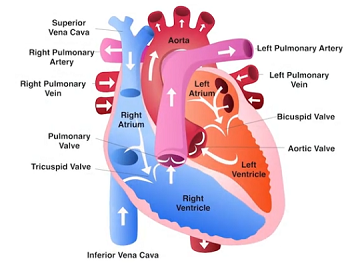
Deoxygenated blood enters the right atrium from the inferior and superior venae cavae
Deoxygenated blood passes through the right atrioventricular valve and enters the right ventricle
Deoxygenated blood is pumped into the pulmonary arteries through the pulmonary valve
Oxygenated blood returns from the lungs through the pulmonary veins to the left atrium
Oxygenated blood enters the left ventricle through the left atrioventricular valve
Oxygenated blood is pumped by the left ventricle through the aortic valve into the systemic circulation
Is the pressure in the atrium or ventricle higher when the atrioventricular valve closes?
The atrioventricular valve closes when pressure in the ventricle exceeds the pressure in the atrium
What are the ways that organisms obtain energy and carbon from the environment? What are the names used to describe these organisms?
Organisms obtain energy in two ways:
phototrophs (from sunlight)
chemotrophs (from chemical compounds)
Further distinguished by how they obtain carbon:
autotrophs (from inorganic sources and convert it into an organic source of carbon; carbondioxide → glucose)
heterotrophs (from organic compounds made by other organisms)
What is the difference between catabolism and anabolism?
Catabolism: the building of molecules from smaller units
require input on energy (ATP)
Anabolism: the breakdown of molecules into smaller units
produces energy (ATP)
What is energy?
The capacity to do work and cause change
can be transferred from one object to another, cannot be created or destroyed
What are the two basic forms of energy? Provide an example of each.
Kinetic energy: energy of motion
performs work by transferring motion to another matter
ex: light (movement of photons), electricity (movement of electrons), thermal energy (movement of molecules)
Potential energy: stored energy
depends on the structure of the object or its position relative to a field (gravitational, electrical, magnetic)
stored energy that is available to do work
ex: water behind a dam (can produce hydroelectricity)
Chemical energy: a form of potential energy held in the chemical bonds between pairs of atoms in a molecule
store energy in chemical bonds
if the cell cannot capture the energy as it is released, it will be lost as heat
What is the relationship between the strength of a covalent bond and the amount of chemical energy it contains?
Chemical energy is a form of potential energy held in the chemical bonds (such as covalent bonds) between atoms in a molecule.
The stronger the covalent bond, the less chemical energy it contains.
The weaker the covalent bond, the more chemical energy it contains.
Carbohydrates, lipids, and proteins have many carbon-carbon and carbon-hydrogen bonds
These bonds are relatively weak and are therefore rich sources of chemical energy
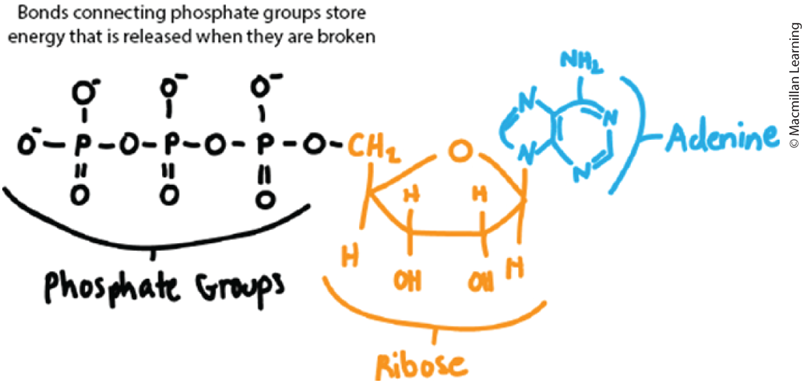
Draw the structure of ATP, indicating the bonds that are broken to power the cell.