DOUG BIO1203 - Fluids & Electrolytes: Body Composition, pH Regulation, and Buffer Systems
 Call Kai
 Learn
Learn Practice Test
 Spaced Repetition
 Match
Match Flashcards
 Knowt Play
1/50

There's no tags or description
Looks like no tags are added yet.
Name | Mastery | Learn | Test | Matching | Spaced | Call with Kai | Chat |
|---|
No analytics yet
Send a link to your students to track their progress
51 Terms
What is the difference between electrolytes and non-electrolytes?
Electrolytes dissociate in water to form ions, while non-electrolytes do not.
What are the four general functions of ions in the body?
1. Control water movement via osmosis. 2. Maintain acid-base balance. 3. Carry electrical currents for nerve impulses and muscle contraction. 4. Aid in hormone secretion.
What are the three major fluid compartments in the body?
Intracellular fluid (ICF), extracellular fluid (ECF), and interstitial fluid.
Define electrolyte.
A compound that dissociates in water to form ions.
Define acid.
A substance that dissociates in water and releases hydrogen ions (H+).
Define base.
A substance that releases hydroxyl ions (OH-) in solution or accepts hydrogen ions.
Define buffer.
A solution that resists changes in pH, containing a weak acid and a weak base in equilibrium.
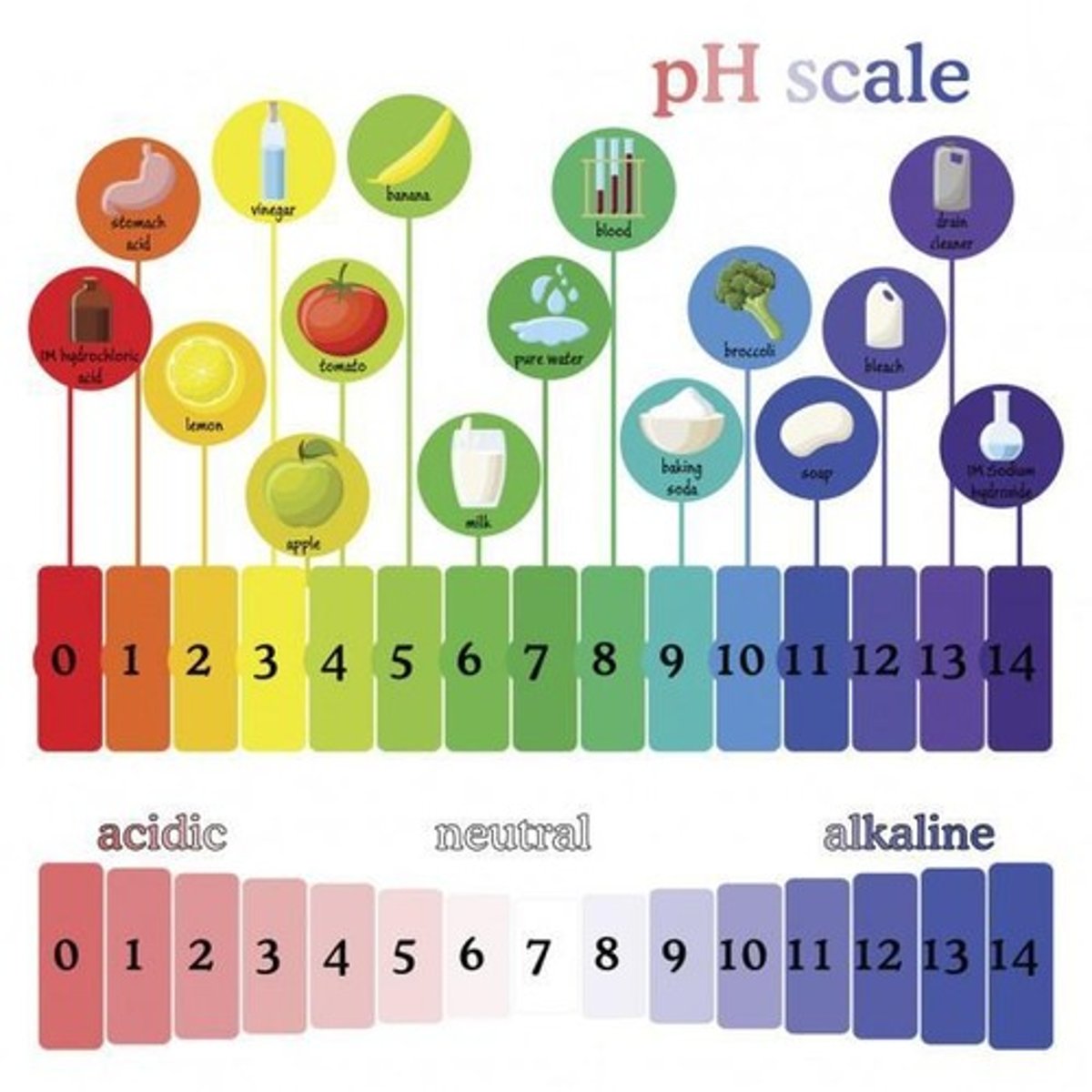
What does pH measure?
The concentration of hydrogen ions (H+) per liter of solution.
What is the pH scale range?
The pH scale ranges from 0 to 14.
What is acidosis?
A condition characterized by an excess of hydrogen ions, leading to a decrease in pH.
What are two general causes of acidosis?
1. Increased production of acids. 2. Decreased elimination of acids.
What is alkalosis?
A condition characterized by a deficiency of hydrogen ions, leading to an increase in pH.
What are two general causes of alkalosis?
1. Decreased production of acids. 2. Increased elimination of acids.
What are the six important electrolytes in the body?
Sodium, potassium, chloride, bicarbonate, calcium, and phosphate.
What is the primary electrolyte in intracellular fluid?
Potassium (K+).
What is the primary electrolyte in extracellular fluid?
Sodium (Na+).
What is a strong acid?
An acid that completely dissociates in water, releasing large amounts of H+.
What is a weak acid?
An acid that only partially dissociates in water, releasing small amounts of H+.
Give an example of a strong acid.
Hydrochloric acid (HCl).
Give an example of a weak acid.
Carbonic acid (H2CO3).
What is a strong base?
A base that completely dissociates in solution, releasing OH-.
What is a weak base?
A base that only partially dissociates in solution.
Give an example of a strong base.
Sodium hydroxide (NaOH).
Give an example of a weak base.
Bicarbonate ion (HCO3-).
What is the role of buffers in the body?
Buffers help maintain pH homeostasis by neutralizing excess acids or bases.
What is the carbonic acid-bicarbonate buffer system?
A buffer system that involves carbonic acid (H2CO3) and bicarbonate (HCO3-) to regulate pH.
What is the definition of salts in the context of electrolytes?
Salts are compounds that dissociate in water but do not release or accept hydrogen ions.
What is the role of buffers in pH regulation?
Buffers resist changes in pH when an acid or base is added.
What happens when an acid is added to a buffer?
The acid dissociates, forming H+ ions, which react with the buffer's basic component, reducing the change in pH.
What is an example of an acid added to a buffer?
HCl added to the carbonic acid-bicarbonate buffer.
What happens when a base is added to a buffer?
The base dissociates, forming OH- ions, which react with the buffer's acidic component, reducing the change in pH.
What is an example of a base added to a buffer?
NaOH added to the carbonic acid-bicarbonate buffer.
What is the normal blood pH range?
Between 7.35 and 7.45.
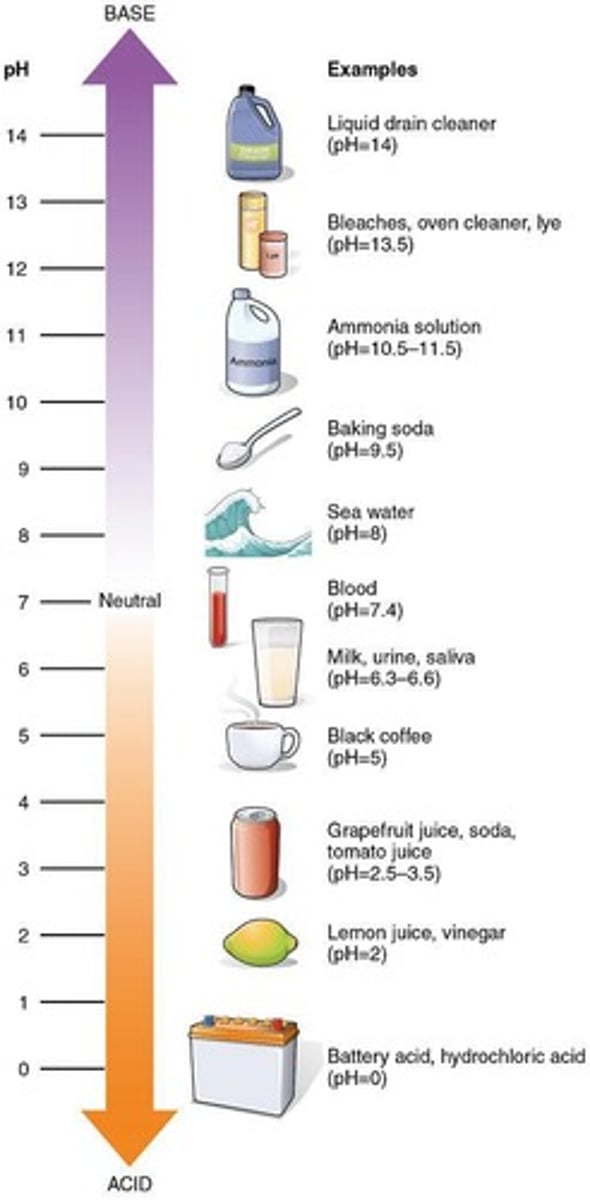
Why is pH homeostasis important?
Excessive pH changes interfere with protein shape and function.
What are metabolic sources of acids?
Carbon dioxide, pyruvic acid, amino acids, fatty acids, nitrogenous wastes, gastric juice.
What are metabolic sources of bases?
Dietary intake (raw vegetables), antacids, bile salts, pancreatic juice.
How do buffers maintain pH?
They consist of a weak acid and its conjugate base.
What is the main buffer system in the body?
The carbonic acid-bicarbonate buffer system.
What is the bicarbonate buffer system's reaction?
H2CO3 ⇌ H+ + HCO3-.
What is the phosphate buffer system effective in?
Urine and intracellular fluid.
What is the protein buffer system's role?
It acts as a buffer in blood plasma and intracellular fluid.
How does the respiratory system help regulate pH?
By controlling the amount of carbon dioxide exhaled.
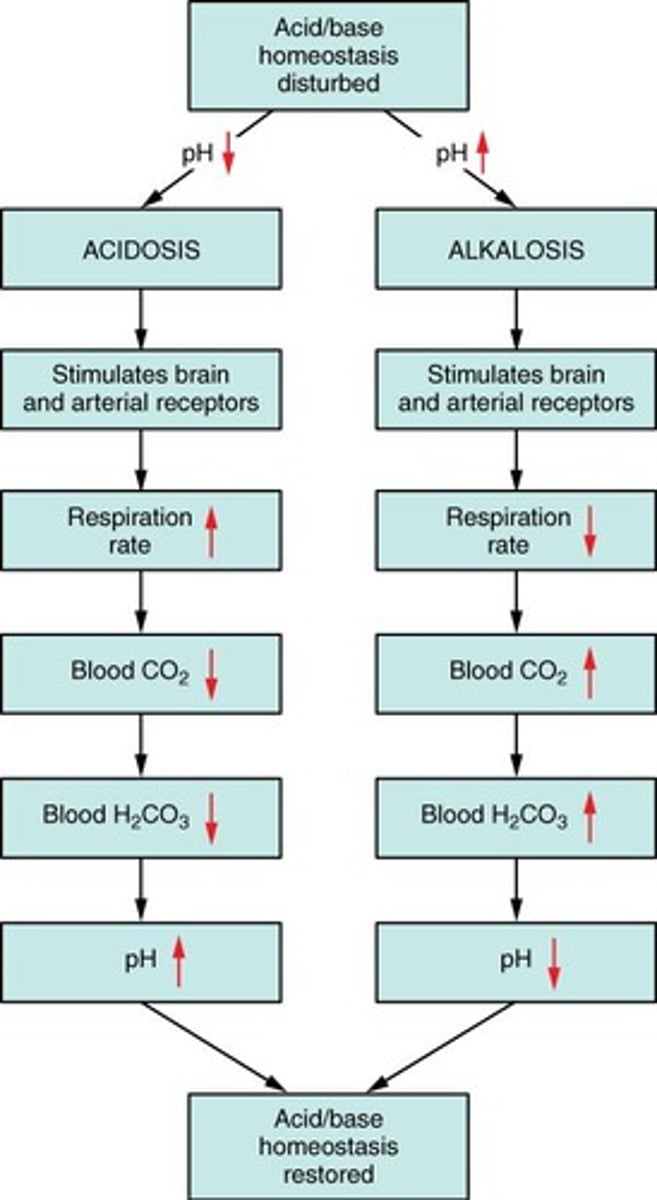
What happens when blood acidity increases?
Hydrogen ions combine with bicarbonate to form carbonic acid, which can then produce CO2 and H2O.
What occurs when blood acidity decreases?
Carbonic acid breaks down to release more hydrogen ions and bicarbonate.
What is respiratory acidosis?
A condition caused by interference with CO2 leaving the blood.
What is metabolic acidosis?
Caused by the buildup of acid metabolic products or loss of bicarbonate.
What causes respiratory alkalosis?
Hyperventilation leading to significant loss of CO2.
What is metabolic alkalosis?
Indicated by rising blood pH and bicarbonate levels, often due to excessive loss of acids.
What happens if the body's pH regulation mechanisms are overwhelmed?
It can lead to acidosis or alkalosis due to sudden intake/loss of acids/bases.
What is the consequence of a blood pH below 6.8?
Depressed nervous system leading to coma and death.
What is the role of kidneys in acid-base balance?
They generate bicarbonate ions in response to acidosis and can secrete bicarbonate in response to alkalosis.