Bio mechanics content
 Call Kai
 Learn
Learn Practice Test
 Spaced Repetition
 Match
Match Flashcards
 Knowt Play
1/76

There's no tags or description
Looks like no tags are added yet.
Name | Mastery | Learn | Test | Matching | Spaced | Call with Kai | Chat |
|---|
No analytics yet
Send a link to your students to track their progress
77 Terms
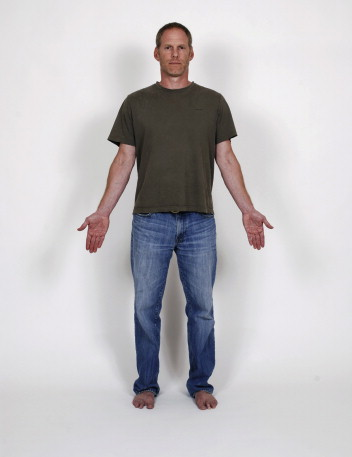
what position is this
anatomical reference point:
erect standing position with all body parts facing forwards
body segment movement starting point
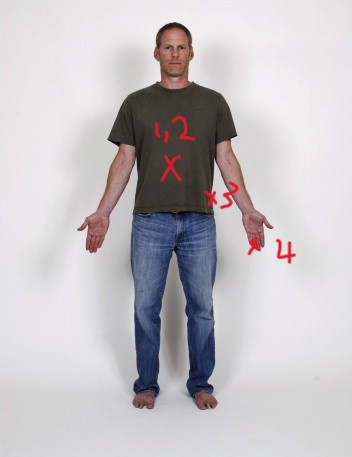
fill in the blanks
medial
deep
superficial
lateral
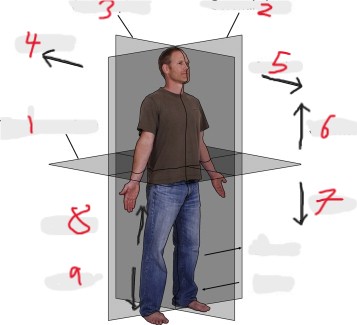
fill in the blanks
transverse plane
frontal plane
sagittal plane
posterior (dorsal)
anterior (ventral)
superior
inferior
proximal
distal
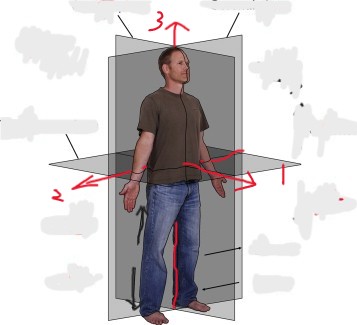
fill in the blanks
sagittal axis
frontal axis
longitudinal axis
movements in frontal plane
abduction, adduction
lateral flexion
radial deviation, ulnar deviation
eversion, inversion
elevation, depression
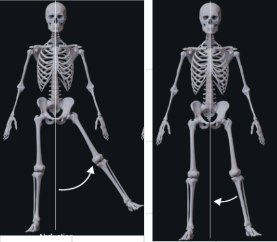
fill in the blanks
abduction, adduction
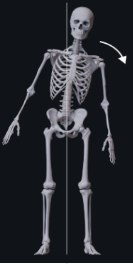
fill in the blanks
lateral flexion
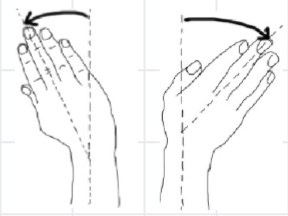
fill in the blanks
radial deviation, ulnar deviation
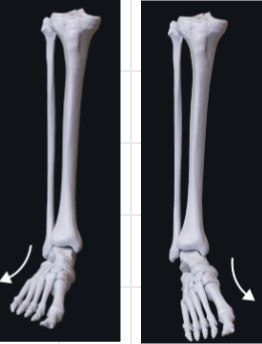
fill in the blanks
eversion, inversion
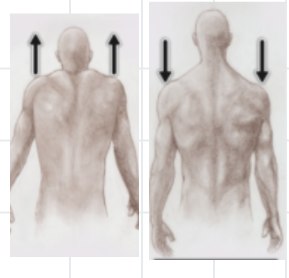
fill in the blanks
elevation, depression
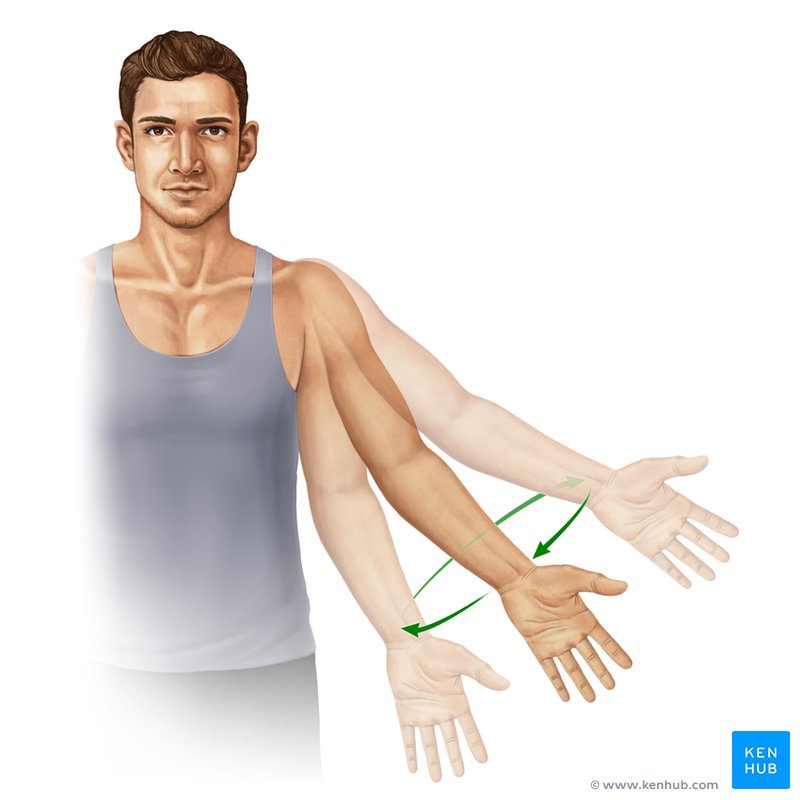
movements in transverse plane
medial rotation, lateral rotation
pronation, supination
horizontal abduction, horizontal adduction
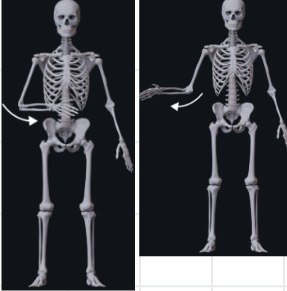
fill in the blanks
medial rotation, lateral rotation
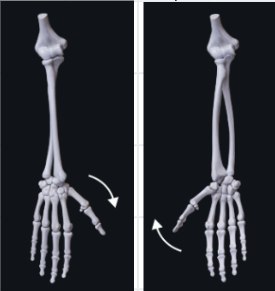
fill in the blanks
pronation, supination
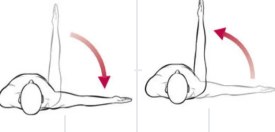
fill in the blanks
horizontal abduction, horizontal adduction
movements in sagittal plane
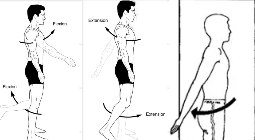
flexion, extension, hyperextension
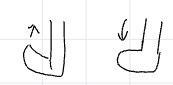
dorsiflexion, plantarflexion
fill in the blanks
flexion, extension, hyperextension
fill in the blanks
dorsiflexion, plantarflexion
fill in the blanks
circumduction:
a conical body movement that combines four basic motions: flexion, extension, abduction, and adduction
Specific weight
Force due to weight per meter cube
N/m³
fill in the blanks
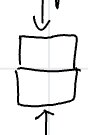
compression
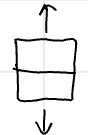
fill in the blanks
tension
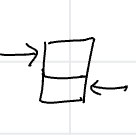
fill in the blanks
shear
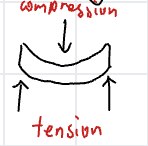
fill in the blanks
bending
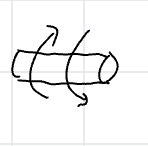
fill in the blanks
torsion
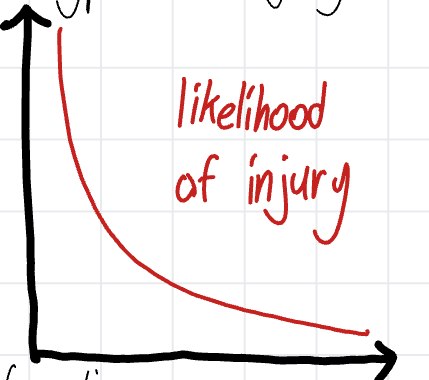
what is the axis
x: load frequency
y: load magnitude
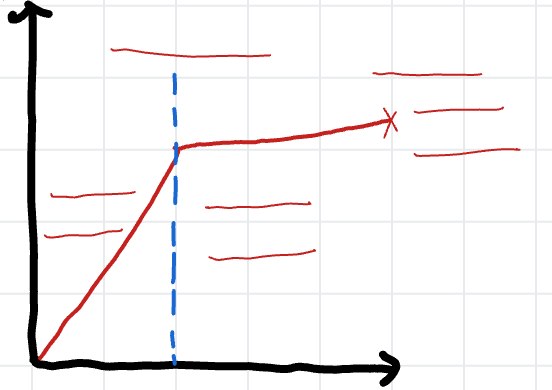
fill in the blanks
x: deformation
y: load
elastic region, yield point, plastic region, ultimate failure point
what happens when deformation reaches past ultimate failure point
tissue tear / breaks
acute loading
application of a single force of sufficient magnitude to cause injury to biological tissue
repetitive loading
repeated application of a subacute load that is usually of relatively low magnitude
what is human gait
translatory progression of the human body as a whole produced by coordinated, rotatory movements of the body segments
major tasks of gait
maintenance of support of head, arms and trunk
maintenance of posture and balance of the body
control of foot trajectory to achieve safe ground clearance and gentle heel/toe landing
generation of mechanical energy to maintain/increase forward velocity
absorption of mechanical energy for shock absorption and stability or to decrease forward velocity
modern gait laboratories consist of
motion analysis system
force platform
EMG system
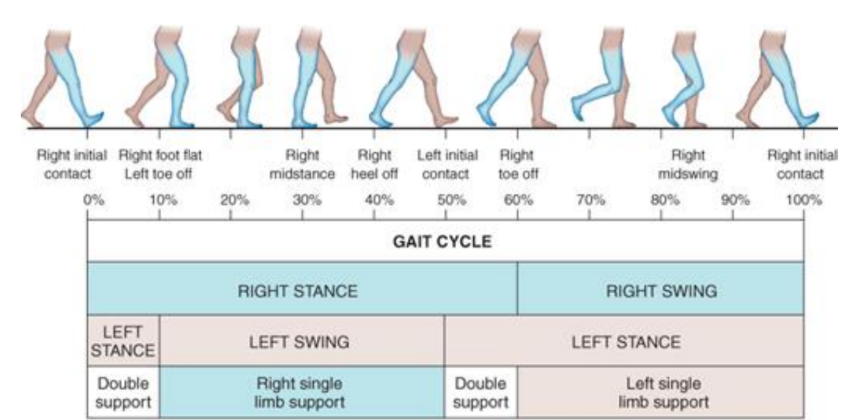
Gait cycle of normal walking
Phases
60% stance phase
40% swing phase
Support
20% double limb support
80% single limb support
GRF: 1.25BW
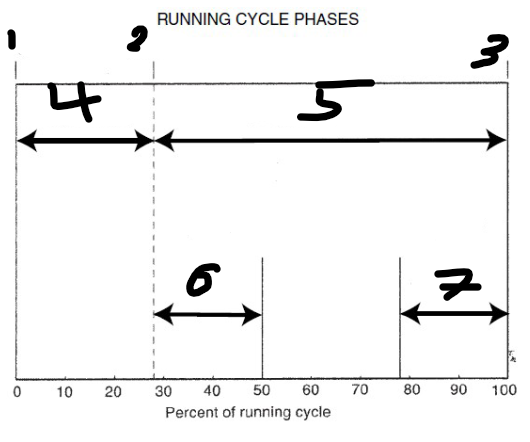
Running gait (fill in the blanks)
heel strike
toe off
heel strike
stance phase
swing phase
float phase
float phase
Running gait characteristics
requires more muscle strength, balance and range of motion
reduced base support and stance phase
absence of double limb support period and presence of float periods
GRF: 2.5BW
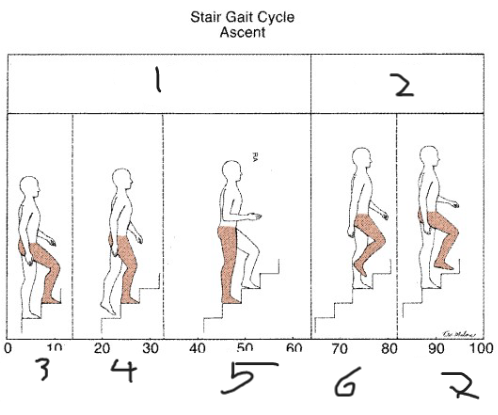
Stair gait (fill in the blanks)
64% stance phase
36% swing phase
weight acceptance
pull up
forward continuance
foot clearance
foot placement
Stair gait characteristics
weight acceptance: initial point of contact is anterior and travels posteriorly to midfoot
pull up: single limb support with knee extensors producing majority of energy
greater range of motion of hips & knee joints required
Treadmill gait advantages
small footprint
available weight support
metabolic analysis
embedded force platform
Treadmill gait characteristics
higher cadence
shorter stance time
shorter stance time
joint range of motion and moments similar
push off forces and GRF lower
higher metabolic costs
What is orthosis
externally applied device used to influence structural and functional characteristics of the neuromuscular and skeletal system
functions of orthoses
support normal alignment
prevent unwanted motion
prevent deformity
reduce unwanted forces or moments
augments joint power
indications of orthoses
assists motion
correct flexible deformity
prevents progression of fixed deformity
stabilizes gait
decreases pain
decreases energy expenditure
transfer weight
causes of lower limb abnormalities
congenital
diseases
trauma
congenital conditions which cause lower limb abnormalities
cerebral palsy
long bone malformations
osteogenesis imperfecta
club foot
disease conditions which cause lower limb abnormalities
arthritis/osteoarthritis
muscular dystrophy
scoliosis
trauma conditions which cause lower limb abnormalities
fractures
head injuries
muscle/cartilage/tendon ruptures
spinal cord injuries
ideal orthosis is graded by
function
comfort
cosmesis
fabrication
cost
function of ideal orthoses
meets individual’s mobility need and goals
maximizes stance phase stability
minimizes abnormal alignment
minimally compromises swing clearance
effectively prepositions the limb for initial contact
energy efficient
comfort of ideal orthoses
can be worn for long periods without damaging skin or causing pain
easy to put on and off
cosmesis of ideal orthoses
meets individual’s need to fit in with peers
fabrication of ideal orthoses
made in shortest time possible
use minimally complex designs
has some degree of adjustability
children: responds to growth
durable
cost of ideal orthoses
minimal initial and maintenance cost
types of orthoses
foot orthoses (FO)
ankle-foot orthoses (AFO)
knee-ankle-foot orthoses (KAFO)
hip-knee-ankle-foot orthoses (HKAFO)
reciprocating gait orthoses (RGO)
foot orthoses (FO)
shoe brace which corrects abnormal foot and lower extremity function
corrects flat foot and plantar fasciitis
ankle-foot orthoses (AFO)
surrounds ankle and at least part of foot
L shaped and applied externally to ankle and foot
stabilizes ankle and subtalar joint caused by adult acquired flat foot
types: static and dynamic
knee-ankle-foot orthoses (KAFO)
prescribed when there is a need for knee control and foot orthosis
hip-knee-ankle-foot orthoses (HKAFO)
prescribed for paraplegia
gross trunk movements are employed to initiate flexion of hips and thereby achieve a very laborious form of bipedal gait
reciprocating gait orthoses (RGO)
a HKAFO that allows for one leg to be placed in front of another
achieved by linking 2 KAFOs together with a band, two cables or push pull rod
if one flexes the other extends
allows for smoother gait with lesser effort
what is a prothesis
artificial device that replaces a missing body part, restoring normal function of said body part
types of amputees/orthoses
transtibial
transfemoral
hemipelvectomy
transtibial orthoses consist of
socket
shank
foot
transtibial orthoses socket
patellar bar is built at center of patellar ligament
socket is aligned at ~5ᵒ of knee flexion for patellar bar to act as weight bearing surface and 5ᵒ adduction
other major weight bearer is medial tibial flare
transtibial orthoses shank
tube of aluminum alloy/titanium
for aesthetic purpose, foam is shaped and skin colored polyester covering is chosen to match amputee’s sound leg
transtibial orthoses foot
usually use solid ankle cushion heel (SACH) foot
advantages of SACH foot
no moving parts
requires little maintenance
good appearance
quiet in operation
manufacturability for different shoe heel height
disadvantage
limited range of plantar and dorsiflexion
ideal prosthoses
compromises weight vs function
what is a biomaterial
substance that is engineered to interact with biological systems for medical purpose
what is biocompatibility
ability of a material to perform with an appropriate host response in a specific application
adsorption vs absorption
adsorption: particles stick to the surface of another phase
absorption: particles soak into the bulk of another phase
cell attachment on material’s surface
cell adhesion ligaments on cell adhesion substrate attaches to cell’s adhesion receptors
natural silk as a biomaterial
advantages
biocompatible, biodegradable, mechanically strong and versatile in its form
can support tissue growth, drug delivery and regenerative medicine without causing toxicity
optical transparency and low autofluorescence
piezoelectric and dielectric
thermal stability
risk and limitations
processing sensitivity
batch variability
slower degradation
what is tissue engineering
develops biological substitutes that restore, maintain or improve tissue function
tissue engineering scaffold
provides structural support and shape of construct
provides place for cell attachment and growth
usually biodegradable and biocompatible, not intended for permanent stay
scaffold design criteria
appropriate mechanical and physical properties
promotes cell adhesion
proper degradation rate
no production of toxic degradation products
integration into surrounding native tissue
minimal inflammatory/immune response
scaffold materials
polymeric: foams, hydrogels and thin films
chitosan, alginate
natural: hydrogels
collagen, elastin, fibrin
ceramic: porous structures
calcium phosphate
artificial tissue interface
material response: material responding to living system
host response: other than intended effects of living systems
local (site of implant)
protein adhesion
coagulation of blood
platelets adhesion
hemolysis
inflammation
infection
systemic (throughout whole body)
thrombus formation
embolization
hypersensitivity
elevation of implant elements in blood that could cause cancer
lymphatic particles transport to other tissues/organs
system toxicity
artificial skin
tissue engineering products have been applied to chronic skin wounds
current technology is partially effective in their ability to restore other skin structures
future trend is to regenerate skin appendages
bioreactors
mimics in-vivo conditions to what actually happens in the body
various forces acting on cells of our body that helps them grow and proliferate