Biology Chapter 3 Review
 Call Kai
 Learn
Learn Practice Test
 Spaced Repetition
 Match
Match Flashcards
 Knowt Play
1/101

Earn XP
Description and Tags
The Chemical Building Blocks of Life
Name | Mastery | Learn | Test | Matching | Spaced | Call with Kai | Chat |
|---|
No analytics yet
Send a link to your students to track their progress
102 Terms
Four major classes of biomolecules (macromolecules)
Carboydrates
Proteins
Nuleic Acids
Lipids
Organic molecules
Carbon-based compounds that usually contain carbon-hydrogen bonds and form the structural and functional foundation of all living organisms
Can also have nitrogen or oxygen
What are macromolecules made of?
Macromolecules are made of polymers
Macromolecules
A large, organic, carbon-based molecule built from smaller repeating subunits called monomers
Four primary classes of biological macromolecules are carbohydrates, lipids, proteins, and nucleic acids
Polymers
A large macromolecule formed by linking many smaller, repeating single subunits called monomers together via strong covalent bonds
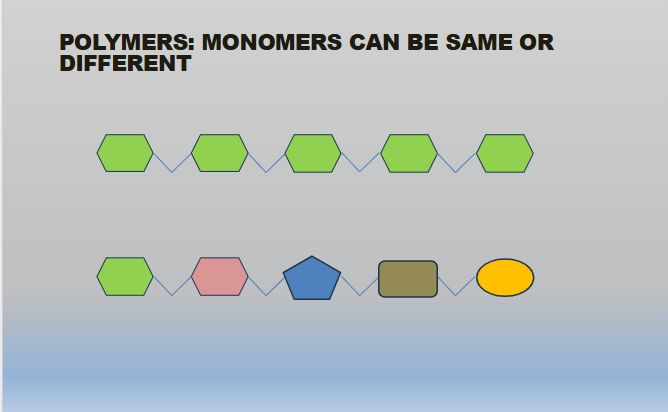
Monomers can be the same or different
Linear polymers
Branched polymers

How are polymers formed?
Monomers are linked together by covalent bonds to form polymers
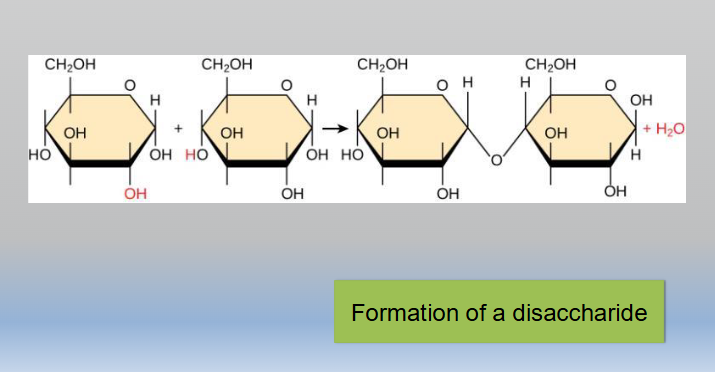
Dehydration synthesis: two monomers are linked to form a dimer
A water molecule is formed as the two monomers are linked by a covalent bond

Dehydration synthesis
A chemical reaction that joins smaller sub-units called monomers together to build larger polymers by removing a molecule of water
Ex; two molecules of glucose are linked to form the disaccharide maltose and a water molecule is released in the process
Hydrolysis
A chemical reaction that uses water to break the covalent bonds holding polymers together, splitting them into smaller monomers
Breaking polymers into monomers
Water is needed; one monomer recieves an H and the other recieves OH
Reverse of dehydration synthesis

Dimer
A macromolecule formed when two identical or similar subunits (monomers) bind together through chemical bonds.

Enzymes
Protein molecules that catalyze or “speed up” chemical reactions in living cells by lowering the required activation energy
Speed up hydrolysis and dehydration reactions
Dehydration reactions form new bonds/require energy
Hydrolysis reactions break bonds/release energy

Macromolecule enzymes
Specific enzymes exist for each type of macromolecule
Carbohydrates: broken down by amylase, sucrase, lactase, maltase
Lipids: lipases
Proteins: pepsin and peptidase
Carbohydrates
Organic macromolecules made of carbon, hydrogen, and oxygen that function in short-term energy storage, cellular fuel, and structural support
Macromolecule (biomolecule) found in grains, fruits, and vegetables
Provide quick energy
Have the general formula (CH2O)n
Ratio of Carbon: Hydrogen: Oxygen is 1:2:1
Types of carbohydrates
Monosaccharides
Disaccharides
Polysaccharides
Monosaccharides
The simplest, single-unit carbohydrate monomers that act as the building blocks for larger, more complex sugars
Have 3-7 carbons
End with -ose (indicates sugar)
Contain a carbonyl group (C=O)
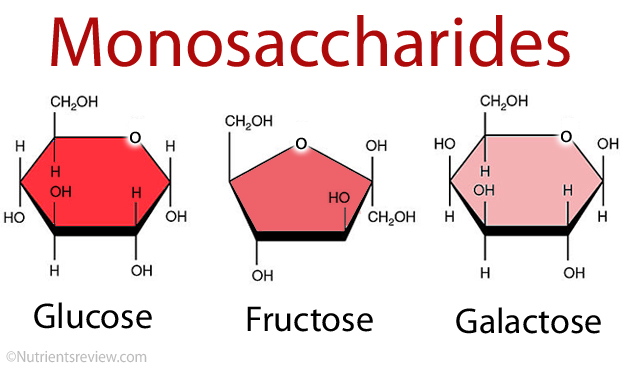
Ex; glucose, galactose, fructose
Aldoses
A type of monosaccharide (simple sugar) that contains a carbonyl group (C=O) located at the end of its carbon chain
Glucose: an aldose

Ketoses
A monosaccharide (simple sugar) that contains exactly one carbonyl group (C=O) located in the middle of the carbon chain
Its carbonyl group (C=O) is located on an internal carbon atom, typically the second carbon in the chain
Fructose: a ketose

Types of monosaccharides
Monosaccharides are simple sugars classified by their number of carbon atoms and their functional group (type of carbonyl group- aldose or ketose?)
Trioses: three carbons
Pentoses: five carbons
Hexoses: six carbons

Monosaccharide isomers
formula (C6 H12 O6)
Glucose - important source of energy
Galactose - part of lactose/milk sugar
Fructose - part of sucrose/fruit
Molecules that share the exact same molecular formula but have different structural arrangements of atoms
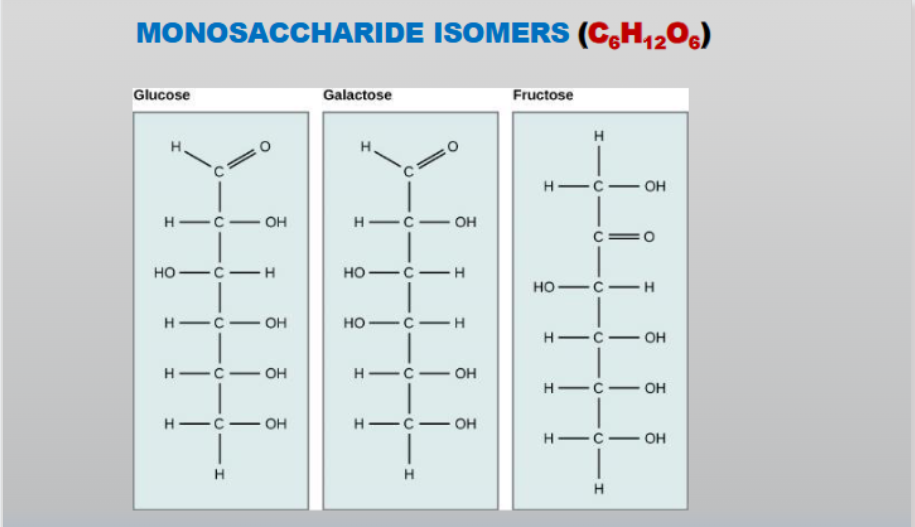
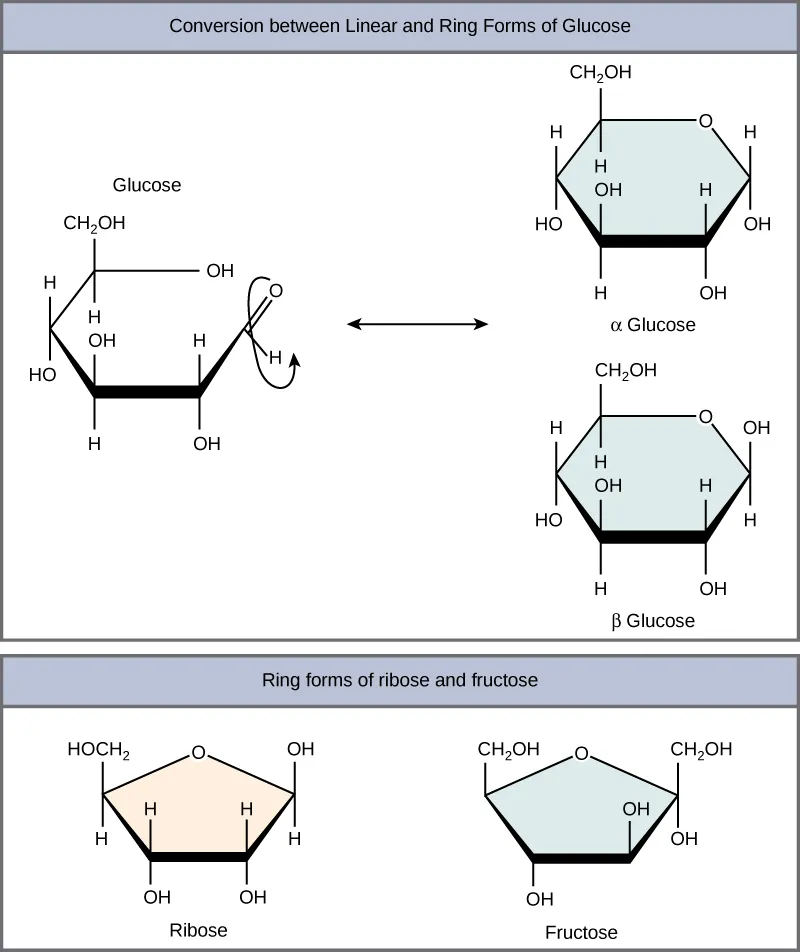
Monosaccharides can be linear or ring-shaped molecules
Monosaccharides exist in equilibrium between linear and ring forms
In ring form OH can be in α or β position
In aqueous solutions mostly in ring form
Fructose and ribose also form rings
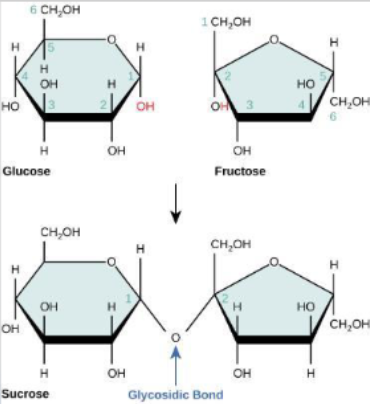
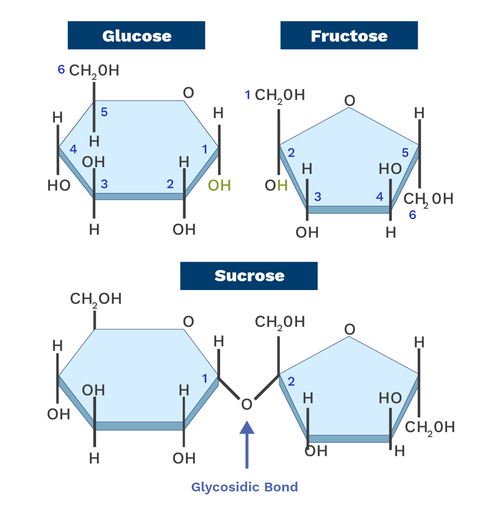
Disaccharide formation
Form when two monosaccharides are linked in a dehydration reaction
Ex; Glucose + Fructose = Sucrose (disaccharide)
Two monomers are joined by glycosidic bond
Water is released
Glycosidic linkage is formed between carbon 1 in glucose and carbon 2 in fructose
Results in 1,2 glycosidic linkage
Glycosidic bond/linkage
A covalent chemical bond that joins a carbohydrate (sugar) molecule to another group or sugar molecule, formed by a dehydration reaction
Other common disaccharides
Maltose (grain sugar)
Lactose (milk sugar)
Sucrose (table sugar)
All created by covalent glycosidic linkages

Polysaccharides
Long chain of monosaccharides joined together by covalent glycosidic linkages via dehydration synthesis
Can be branched or unbranched
May consist of single or multiple types of monosaccharides
Very large molecule: molecular weight > 10,000 daltons

Plant monomers/polymers
Monomers: glucose
Polymers: starch, cellulose
Animal monomers/polymers
Monomer: glucose
Polymer: glycogen
Starch
A complex carbohydrate (polysaccharide) made of alpha (α) glucose monomers linked by covalent glycosidic bonds, which serves as the primary energy storage molecule in plants
Is composed of amylose and amylopectin
The monomers are joined in two linkage types
1. α 1-4 glycosidic bonds
2. α 1-6 glycosidic bonds

Cellulose
A structural polysaccharide (a complex carbohydrate) that makes up the tough cell walls of plants, providing structural support and rigidity
Glucose monomer in unbranched chains by β 1-4 glycosidic linkages
Every glucose monomer is flipped relative to the next one resulting in a linear, fibrous structure

Chitin
A structural polysaccharide made up of modified glucose monomers containing nitrogen
It serves as a durable, rigid macromolecule used by specific organisms for protection and support

Lipids
A diverse group of organic macromolecules composed primarily of carbon, hydrogen, and oxygen that are grouped together because they are nonpolar and hydrophobic ("water-fearing")
Non-polar hydrocarbons are hydrophobic
Function of lipids
Long term energy stores
Provide insulation for plants and animals
Building blocks for some hormones
Component of cellular membranes
Types of lipids
Fats
Oils
Waxes
Phospholipids
Steroids
Triglyceride
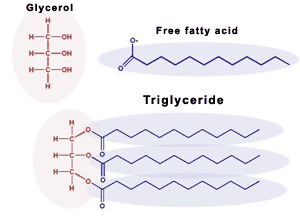
A fat molecule (or triglyceride) is a type of lipid molecule made of one glycerol molecule joined to three fatty acid tails
Fats - contain two main components
Glycerol
Fatty acids
Triacylglycerol – formed by joining three fatty acids to a
glycerol backboneThe glycerol molecules are attached to the fatty acids

Saturated fatty acids
Long hydrocarbon chains with no carbon-carbon double bonds, meaning every carbon atom is fully "saturated" with hydrogen atoms
Solids at room temperature (butter, meat fat)
Packed tightly
Linked to cardiovascular disease
High melting point

Unsaturated fatty acids
Have at least one carbon-carbon double bond
Monounsaturated fat = one double bond
Polyunsaturated fat = more than one double bond
Liquid lipids at room temperature are classified as oils
Not as packed: liquid
Low melting point

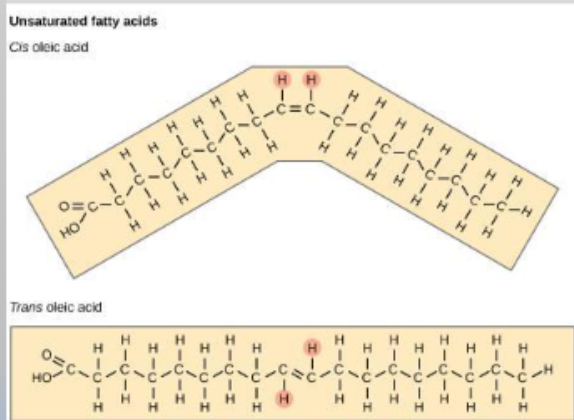
Unsaturated fatty acid configurations
Each double bond of an unsaturated fat may be in one of two positions
Cis configuration: H on same side
Trans configuration: H on opposite side
Cis fatty acids
An unsaturated fatty acid where the adjacent hydrogen atoms are on the same side of the carbon-carbon double bond
They cannot be packed tightly
Liquid at room temp
Are bent

Trans fatty acids
Unsaturated fats that contain a carbon-carbon double bond with hydrogen atoms on opposite sides of the chain
Artificially made; pack tight
Foods with trans fat increase LDL cholesterol in humans (bad for heart)
Not bent

Essential fatty acids
Essential fatty acids – required but not synthesized by our body
– must be part of diet
There fats are heart healthy
Omega-3 fatty acid (found in salmon, trout, tuna)

Waxes
Long fatty acid chains into long chain alcohols
a type of lipid made of long-chain fatty acids linked to long-chain alcohols by an ester bond
Hydrophobic and prevent water from sticking to surface
Ex; found on the feathers of some birds and on the surface of leaves from some plants
Phospholipids
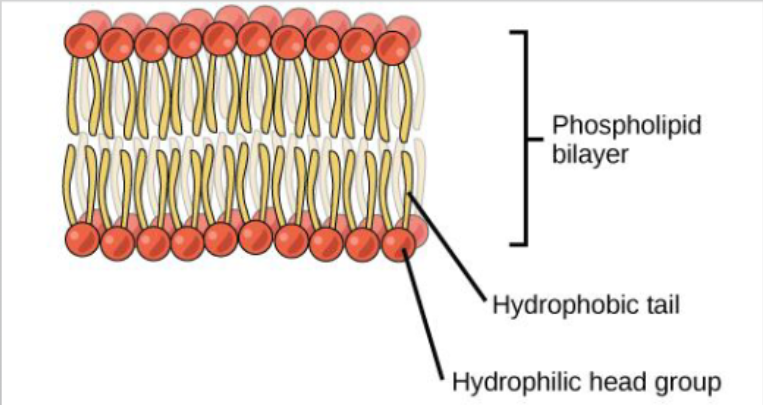
An amphipathic lipid molecule made of a glycerol backbone, a polar phosphate head group, and two nonpolar fatty acid tails

Phospholipids are major parts of the cell membrane
The hydrophillic head face the aqueous solution
The hydrophobic tails are in the middle of the bilayer
Phospholipids contribute to dynamic nature of plasma membrane
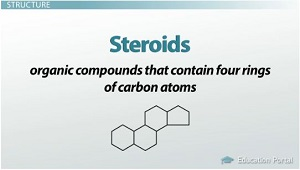
Steroids
Have a closed ring structure
Four linked carbon rings
Many have a short tail
Structure is different from that of other lipids

Steroid key details
They are hydrophobic
They are insoluble in water
Cholesterol is the most common steroid
Synthesized in liver
Precursor to other hormones such as testosterone and estradiol
Precursor to vitamin D
Proteins
Peptide bonds link amino acids together to form chains called peptides, polypeptides, and proteins
Most abundant organic molecules
Very diverse range of functions
Regulatory functions
Structural functions
Protective functions
Transport
Enzymes
Toxins
Enzymes
Biological catalysts, typically proteins, that speed up chemical reactions in living cells by lowering the activation energy required for the reaction to proceed
Specific enzyme for specific substrate
Catabolic enzyme
A biological catalyst that speeds up the breakdown of large, complex molecules into smaller, simpler ones while releasing energy
Breakdown substrates
Exergonic reaction
Anabolic enzyme
A biological catalyst that speeds up reactions which build larger, complex molecules from smaller building blocks
Build more complex molecules
Endergonic: require an input of energy
Catalytic enzyme
Affect the rate of reaction
a biological molecule—usually a protein—that speeds up chemical reactions in living things without being used up or changed
Digestive enzymes
Help in digestion of food by catabolizing nutrients into monomeric units
Ex; amylase, lipase, pepsin, trypsin
Transport proteins
Carry substances in the blood or lymph throughout the body
Ex: hemoglobin, albumin
Structural proteins
Construct different structures, like the cytoskeleton
Ex: Actin, tubulin, keratin
Hormones
Coordinate the activity of different body systems
Ex: Insulin, thyroxine
Defense proteins
Protect the body from foreign pathogens
Ex: Immunoglobulins
Contractile proteins
Effect muscle contraction
Ex: actin, myosin
Storage proteins
Provide nourishment in early development of the embryo and the seedling
Ex: Egg white (albumin)
Amino acids
The monomers that make up proteins
Structure
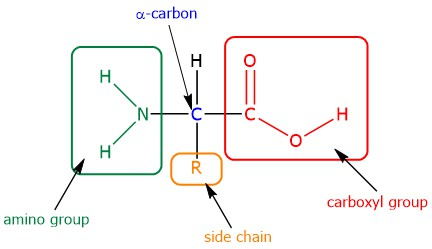
Central carbon atom (α-carbon)
Amino group (-NH2)
Carboxyl group (-COOH)
Hydrogen
Side chain (R-group)

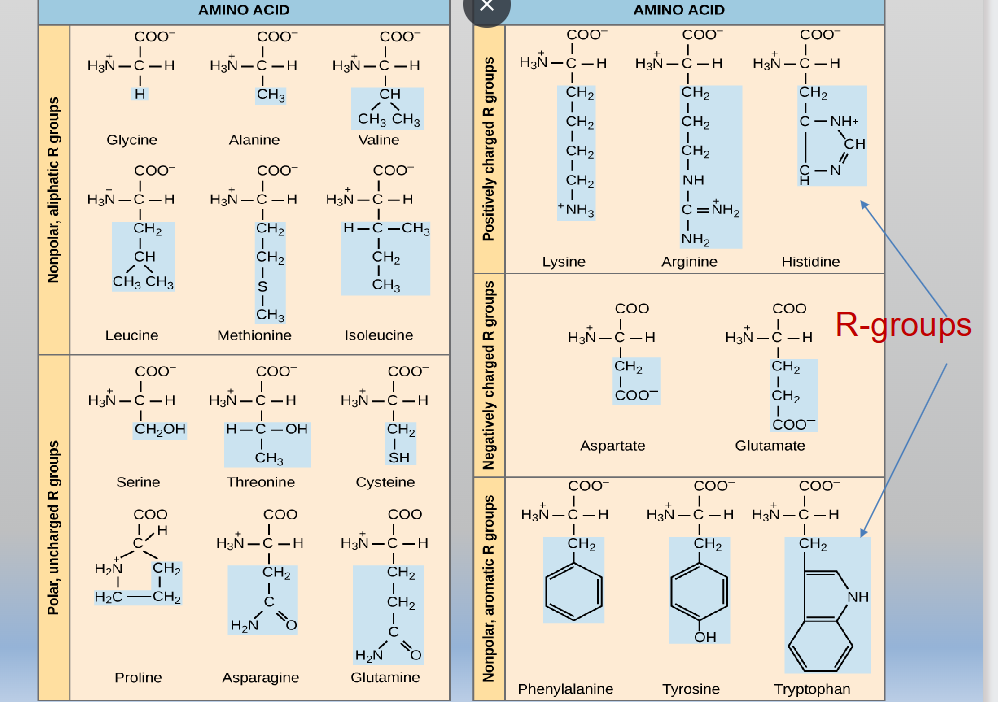
Amino acids have diverse chemical properties
20 common amino acids found in proteins
Each amino acid has a different R group-
R-groups determine the chemical nature of each amino
acid
Nonpolar aliphatic-
Polar
Positively charged
Negatively charged
Nonpolar aromatic
More on amino acids
Amino acids are represented by a single upper-case letter or three letters
Valine = V or Val
Aspartic Acid = D or Asp
Essential amino acids
Must be supplied in diet for humans
Isoleucine
leucine
cysteine
Peptide bond formation
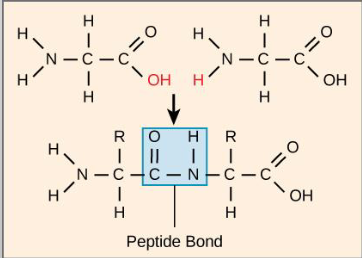
Amino acid monomers are linked by peptide bonds (formed through dehydration reaction)
The carboxyl group (–COOH) of one amino acid reacts with the amino group (–NH₂) of another amino acid
A water molecule is released
Peptide bond
A covalent chemical bond that links two amino acids together to form the primary backbone of a protein
Formed through dehydration synthesis

Polypeptide
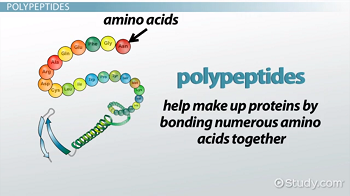
A linear polymer chain of amino acids linked together by covalent peptide bonds
a linear polymer chain of amino acids linked together by covalent peptide bonds. It serves as the primary structural building block that folds into a functional protein
Protein
Large, complex biological macromolecules made of one or more linear chains of amino acids called polypeptides that fold into specific three-dimensional shapes
Has a unique structure and function
Protein shape is crucial to its function
The sequence and number of amino acids determine protein shape, size and function
Four levels of protein structure
Primary structure
Secondary structure
Tertiary structure
Quarternary structure
Primary protein structure
The specific, linear sequence of amino acids in a polypeptide chain held together by covalent peptide bonds
Protein function can be affected if the order of amino acids changes
The amino acid sequence is completely specific to a given protein and defines its unique identity

Primary structure
Amino acid sequence is encoded by genes
A change in the nucleotide seuqence of DNA could lead to a change in amino acid
This could lead to a change in protein structure and function
Ex; a single amino acid change causes sickle cell disease

Secondary protein structure
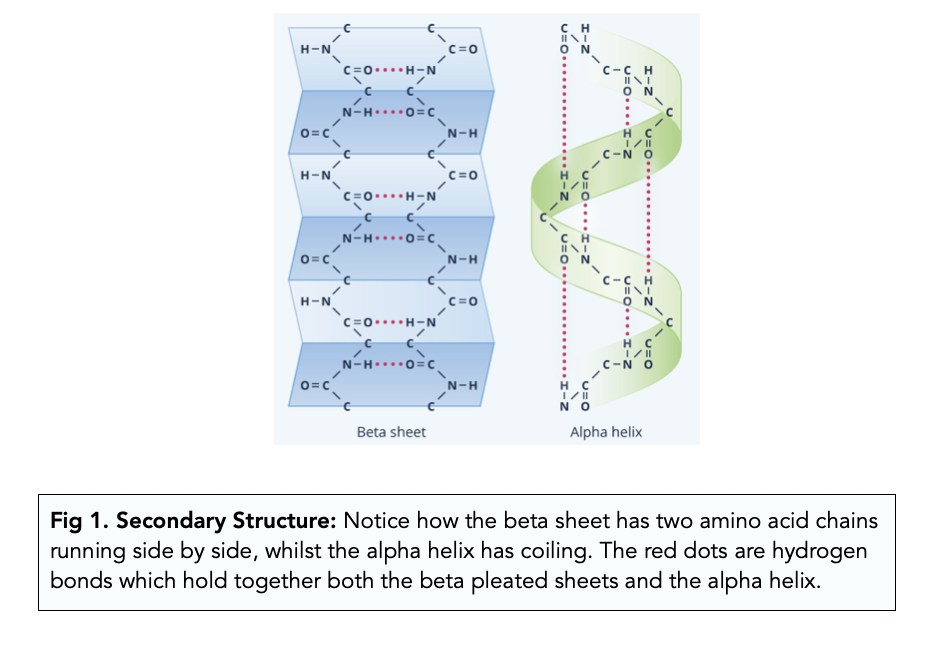
The local folding of a polypeptide backbone into repeating 3D shapes, stabilized by hydrogen bonds between the backbone atoms
α-helix: formed by hydrogen bond between oxygen in
carbonyl group and an amino acid 4 positions down the chainβ-pleated sheet: hydrogen bonding between atoms on the backbone of the polypeptide chain: a type of protein secondary structure where parts of a polypeptide chain lie side by side and connect through hydrogen bonds, creating a folded, sheet-like shape

Graphic representation of secondary protein structure
α-helix and β-pleated sheet are secondary structures of proteins
form because of hydrogen bonding between carbonyl and amino groups in the peptide backbone
Certain amino acids tend to form an α-helix
Others amino acid favor formation of β-pleated sheet
What determines the tertiary structure of a protein?
The overall three-dimensional shape of a single polypeptide chain, created when secondary structures fold further due to interactions between amino acid R-groups (side chains)
Tertiary structure of proteins is determined by a variety of
chemical interactions
hydrophobic interactions
ionic bonding
hydrogen bonding
disulfide linkages


Tertiary protein structure
The overall three-dimensional shape of a single polypeptide chain, created when secondary structures fold further due to interactions between amino acid R-groups (side chains)
R-groups with like charges are repelled from one another
R-groups that are hydrophobic will cluster in interior of protein
Cysteine side chains form disulfide bridges: a strong covalent bond that forms between the sulfur atoms of two cysteine amino acid side chains
What is the tertiary structure?
The overall three-dimensional shape of a single polypeptide chain, created when secondary structures fold further due to interactions between amino acid R-groups (side chains)
The unique three-dimensional structure of a protein
Due to chemical interactions between R-groups on amino acids
Quarternary protein structure
The final, highest level of protein organization formed when two or more separate folded polypeptide chains (called subunits) join together to create a single, fully functional protein complex
Interactions between several polypeptides that make up a protein
Weak interactions between subunits help stabilize the structure
The assembly of multiple polypeptide chains (subunits) into a single functional complex

Denaturation
When a protein loses its normal three-dimensional shape because changes in temperature, pH, or chemicals break the weak bonds holding it together
Changes in protein structure that leads to changes in function
Denaturation / protein folding
Protein structure and shape can be changed if chemical interactions are broken
Protein structure/shape can change with altering primary structure due to:
Changes in pH
Changes in temperature
Ex; Heating an egg to extreme temperatures can lead to irreversible denaturation of egg protein (albumin in egg goes from liquid to solid)

Nucleic acids
A biological macromolecule made of repeating monomer units called nucleotides that stores, transmits, and expresses genetic information in living systems
Two types
Deoxyribonucleic acid (DNA)
Ribonucleic acid (RNA)
Where are nucleic acids located?
Nucleus of eukaryotic cells
Mitochondria
Chloroplasts
Prokaryotic cells (bacteria)
Roles of DNA in the cell
DNA codes for the entire genetic content (genome)
Chromatin
Chromosomes
DNA codes for thousands of genes
Genes contain instructions for producing proteins or
various forms of RNADNA controls all cellular activities by turning genes on or
off
Chromatin
A complex mass of DNA and histone proteins located in the nucleus of a eukaryotic cell that packs genetic material into a compact, organized form
Chromosomes
A thread-like structure made of a single long DNA molecule tightly coiled around proteins called histones, which carries genetic information (genes)
Roles of RNA in the cell
RNA is primarily involved in protein synthesis
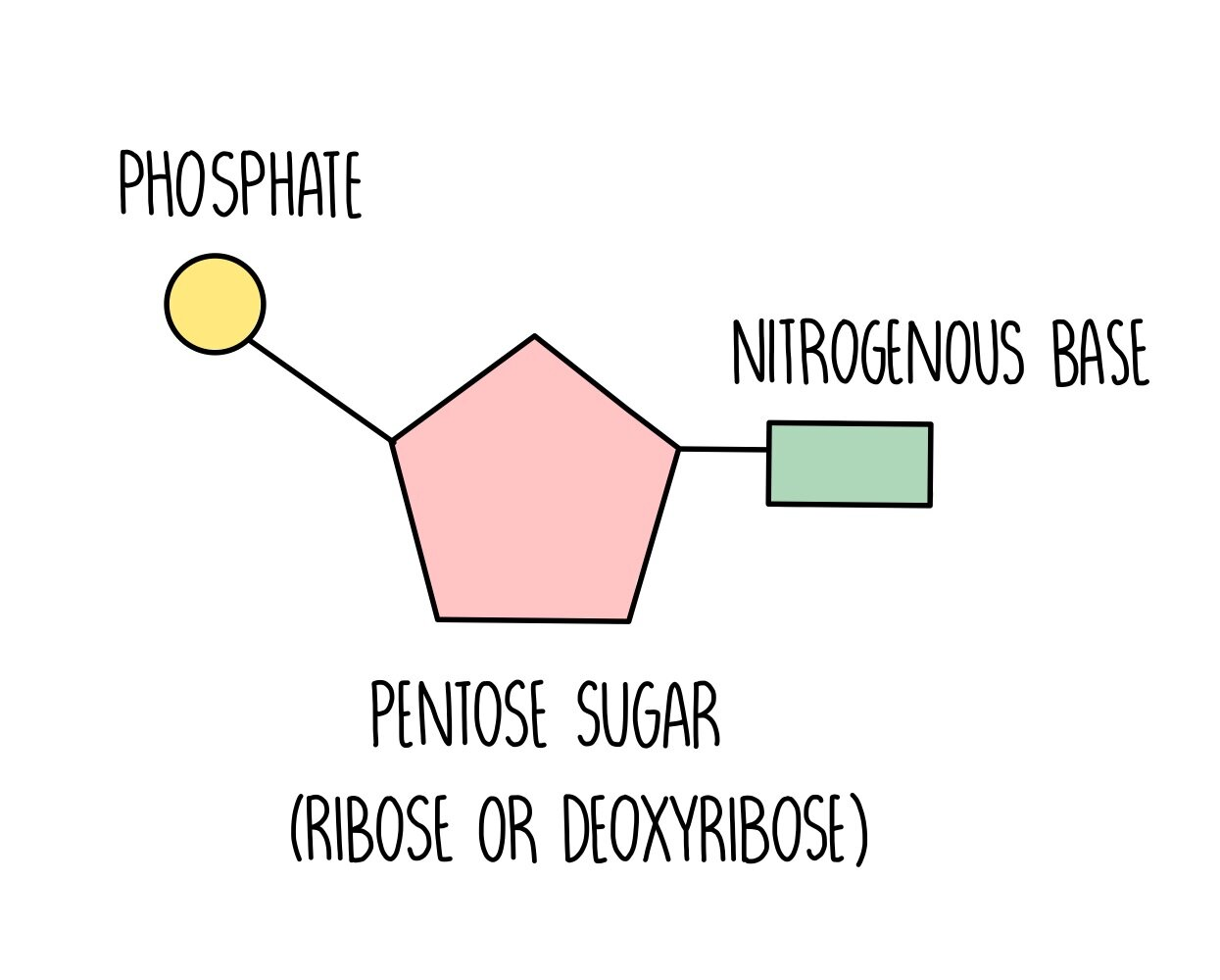
Nucleotides
Are the monomers of DNA and RNA
Consist of three parts
Nitrogenous base
Pentose sugar
Phosphate groups
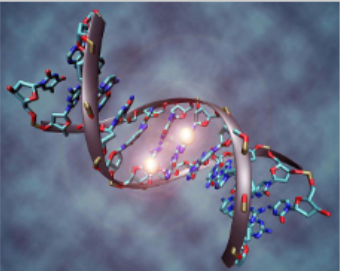
DNA exhibits a double helix structure
The sugar and phosphate lie on outside of helix
Nitrogenous bases are stacked in the interior
The strands of the helix run in opposite directions (anti-paralel orientation)
Each base from one strand interacts by hydrogen bonding with a base from the opposing strand
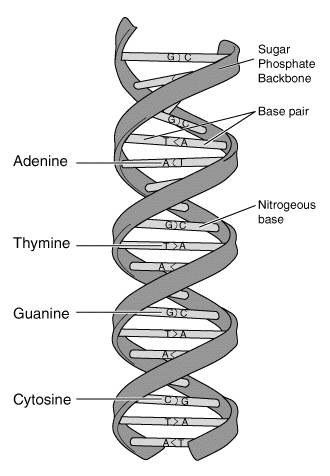
Base-pairing in DNA
DNA - the two strands run antiparallel to one another
Adenine forms hydrogen bonds with thymine: A-T
guanine base pairs with cytosine: G-C

Are all polymers made of the same monomer?
No, not all polymers are made of the same monomer
What do dehydration reactions need/release?
Dehydration reactions need:
-H molecule
-OH molecule
Dehydration reactions release: a water molecule (H2O)

What are three characteristics of monosaccharides?
Have 3-7 carbons
End with -ose
Contain a carbonyl group (C=O)
What are disaccharides joined by?
All disaccharides are joined by covalent glycosidic bonds

What are the monomers of carbohydrates?
Monosaccharides
Ex: glucose, fructose, galactose
What is the link between two sugar (monosaccharide) molecules called?
A glycosidic bond
Covalent bond that joins a carbohydrate (sugar) molecule to another group or molecule, such as another monosaccharide
Formed through dehydration synthesis
Common disaccharides
Sucrose
Lactose
Maltose

Starch
A storage polysaccharide made of glucose monomers linked by α-1,4 and α-1,6 glycosidic bonds, serving as the primary energy storage molecule in plants
Ex: potatoes, wheat, rice
Cellulose
A structural polysaccharide that makes up the tough cell walls surrounding plant cells, providing them with shape and rigidity
Most abundant carbohydrate; insoluble
Cows & sheep can digest it: cellulose- digesting bacteria
beta monomers
Glycogen
A highly branched polysaccharide polymer made of glucose monomers that animals use to store extra energy
energy source in animal tissue
Stored in liver & muscle cells
Two components of fat and which one is hydrophobic:
A fat (triglyceride) molecule is made of glycerol and fatty acids, and the fatty acid tails are the hydrophobic components
An isolated glycerol molecule is hydrophilic (water-loving), but when it is bound inside a fat molecule like a triglyceride, it behaves as part of a hydrophobic structure
What is the difference between saturated and unsaturated fatty acids?
Saturated fatty acids have only single carbon-carbon bonds and are full of hydrogen atoms, while unsaturated fatty acids have at least one double carbon-carbon bond which creates a bend

What are steroids and their function?
A type of lipid molecule characterized by a core chemical structure of four fused carbon rings
Membrane Fluidity (Cholesterol): Cholesterol embeds itself in animal cell plasma membranes. It acts as a fluidity buffer
Cholesterol serves as the vital starting material or precursor used to synthesize important steroid hormones, including testosterone, estrogen, progesterone, and cortisol
Cell Signaling and Gene Expression
The three main functional groups of amino acids:
Amino group (-NH2)
Carboxyl group (-COOH)
R-group (Side chain): a unique chemical group that gives each specific amino acid its distinct size, charge, and function
R-group
The variable chemical group attached to the central carbon of an amino acid that determines its unique identity, chemical properties, and behavior
R-groups can be:
• Nonpolar (hydrophobic)
• Polar
• Positive charged
• Negative charged
• Nonpolar aromatic (rings)
Differences between DNA and RNA: (bases, sugars, number of strands)
Sugars:
DNA uses deoxyribose, which lacks one oxygen atom on the second carbon (2'-H)
RNA uses ribose, which has a full hydroxyl group (-OH) on the second carbon
Nitrogenous Bases:
DNA contains Adenine (A), Cytosine (C), Guanine (G), and Thymine (T)
RNA contains uracil (U) instead of thymine
Number of Strands:
DNA is typically double-stranded, forming an antiparallel double helix that protects genetic information
RNA is typically single-stranded, allowing it to fold into various shapes for protein synthesis (such as mRNA, tRNA, and rRNA)