IMSE 311: Pattern Recognition Receptors & Phagocytosis
 Studied by 0 people
 Call Kai
 Learn
Learn Practice Test
 Spaced Repetition
 Match
Match Flashcards
 Knowt Play
1/15

There's no tags or description
Looks like no tags are added yet.
Name | Mastery | Learn | Test | Matching | Spaced |
|---|
No study sessions yet.
16 Terms
Pattern Recognition Receptors (PRRs)
Encoded by host’s genomic DNA and act as sensors for extracellular infection
Distinguish self from nonself by recognizing PAMPs
Found in cellular immunity
Activates phagocytes > triggers cytokine secretion > adaptive immune response
Pathogen-associated Molecular Patterns (PAMPs)
Only found in microorganisms
Peptidoglycan: gram-positive bacteria
Lipoproteins: gram-negative bacteria
Zymosan: yeast
Flagellin: flagellated bacteria
Toll-like Receptor (TLR)
Membrane-spanning glycoproteins that share a common structural element called leuchine-rich repeats (LRRs)
TLR1
Recognizes:
Lipopeptides
Targets:
Mycobacteria
TLR2
Recognizes:
Peptidoglycan
Lipoproteins
Zymosan
Targets:
Gram-positive bacteria
Mycobacteria
Yeasts
TLR3
Recognizes:
Double-stranded RNA
Targets:
RNA viruses
TLR4
Recognizes:
Lipopolysaccharide
Fusion proteins
Mannan
Targets:
Gram-negative bacteria
Respiratory syncytial virus (RSV)
Fungi
TLR5
Recognizes:
Flagellin
Targets:
Flagellated bacteria
TLR6
Recognizes:
Lipopeptides
Lipoteichoic acid
Zymosan
Targets:
Mycobacteria
Gram-positive bacteria
Yeast
TLR7 & TLR8
Recognizes:
Single-stranded RNA
Targets:
RNA viruses
TLR9
Recognizes:
Double-stranded DNA
Targets:
DNA viruses
Bacterial DNA
TLR10
TLR that is thought to be anti-inflammatory
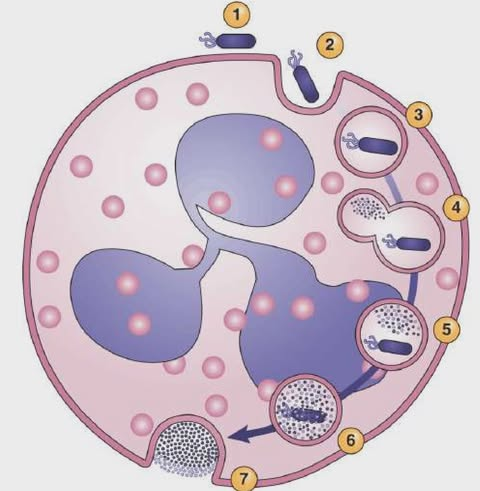
Phagocytosis Process
Adherence: physical contact b/n WBC and Ag, aided by opsonins
Engulfment: outflowing of cytoplasm to surround microorganism
Formation of phagosome
Granule Contact: fusion of lysosomal granules w/ phagosome
Formation of phagolysosome w/ release of lysosomal contents
Digestion of microorganisms by hydrolytic enzymes
Excretion: release of debris to outside of cell by exocytosis
Selectins
Adhesion molecule on endothelial cells lining the blood vessels for rolling of phagocytes
Recruitment of phagocytes to infection site
Integrins
Adhesion molecule on endothelial cell wall for stable attachment and migration into tissues
Diapedesis
Opsonins
Serum proteins that attach to a foreign cell or pathogen and help prepare it for phagocytosis