Ecology Ch.22
 Call Kai
 Learn
Learn Practice Test
 Spaced Repetition
 Match
Match Flashcards
 Knowt Play
1/13

There's no tags or description
Looks like no tags are added yet.
Name | Mastery | Learn | Test | Matching | Spaced | Call with Kai |
|---|
No analytics yet
Send a link to your students to track their progress
14 Terms
What is decomposition?
Breakdown of dead organic matter
fragmentation> mineralization —> soluble nutrients
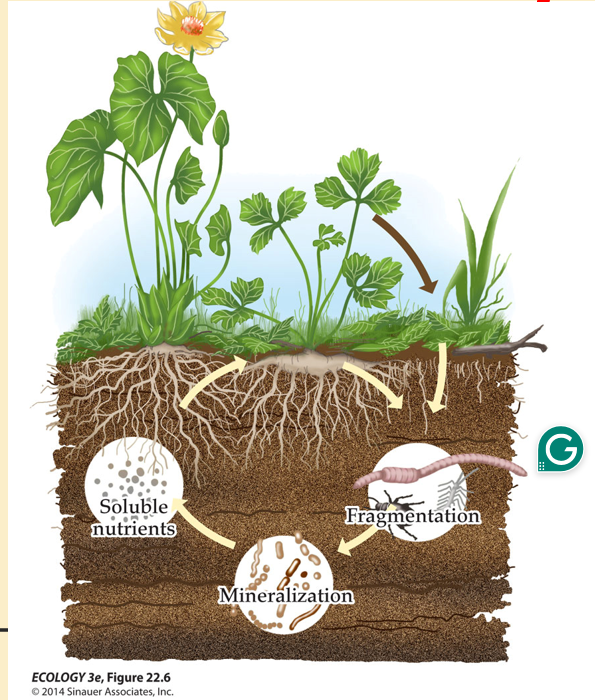
What is the rate of decomposition?
The rate at which nutrients become available to primary producers —> determined by mineralization
influenced by temperature, moisture, pH, and chemical composition, and soil type
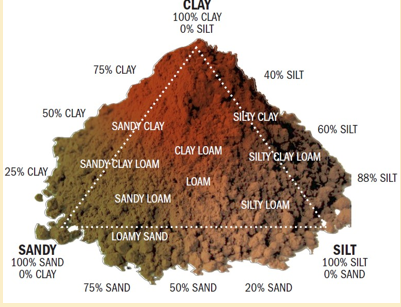
soil types - classified by size of particles
sand = largest particles - does not hold water for a long time —> air can get in
silt= medium sized
clay = very small/fine particles- retain water for a long time—> air cannot get in
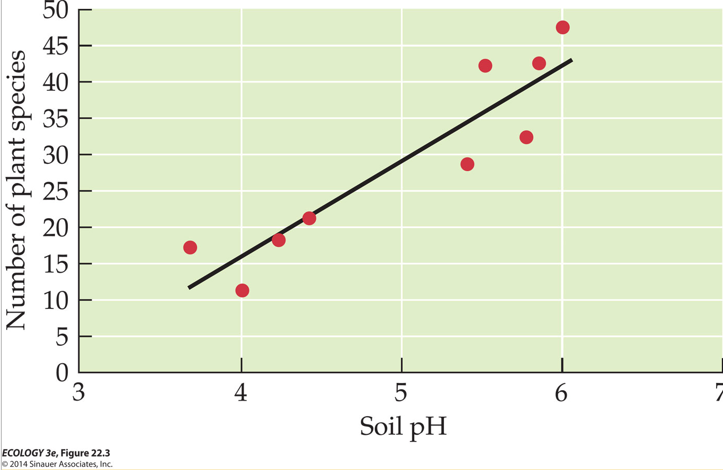
How does pH affect plant species richness?
more acidic = less species richness
Acidic soil has poorer nutrient levels and cycling
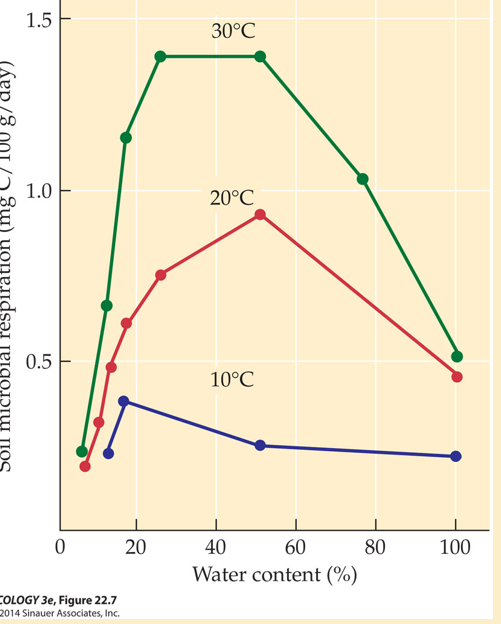
How does climate/ water affect the activity of decomposers?
Increases with water and temperature to a certain point
How does type of detritious
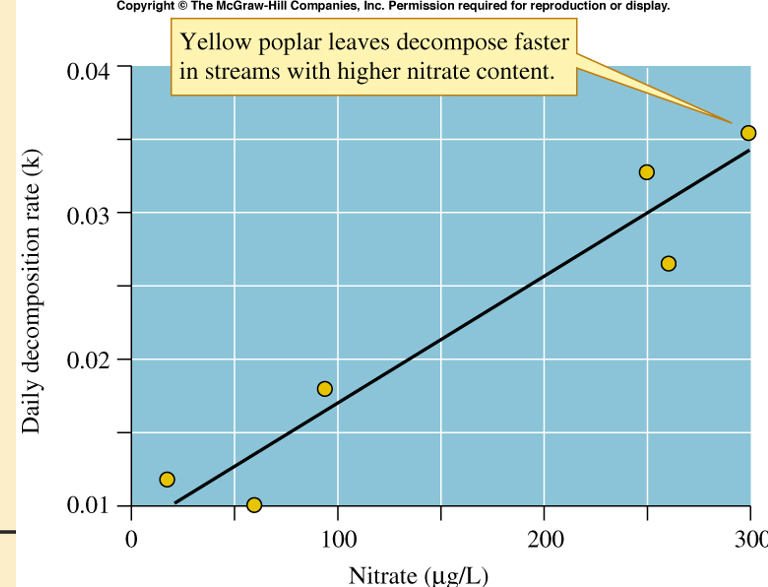
How does nitrogen affect decomposers?
Adding more nitrogen allows decomposers to decompose things they normally don’t have the energy to do
How do you measure decomposition?
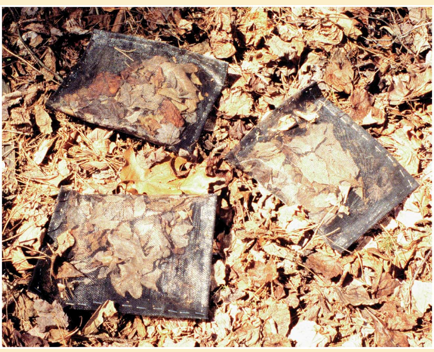
litter bags
How are litter bags used to measure decomposition?
Put things in a bag and after a time, measure to see which one weighs less. Less weight = more decomposition.
Leaves with a higher carbon: nitrogen ratio lose less mass
Increased N availability increases decomposition rates
Higher temperature may also play a role
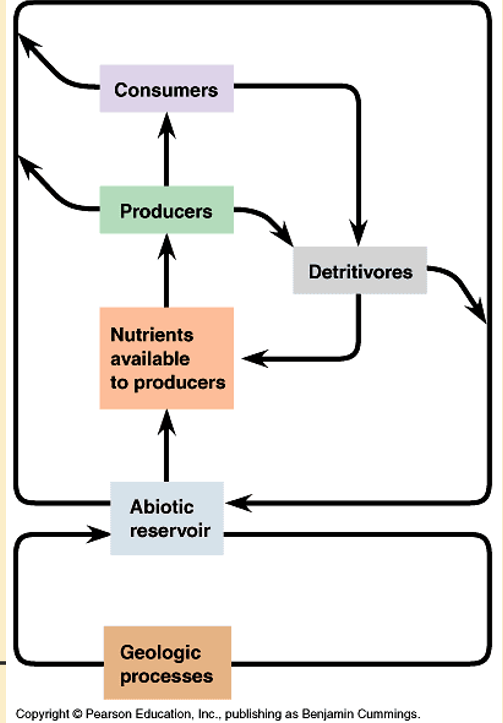
Describe a generalized biogeochemical cycle
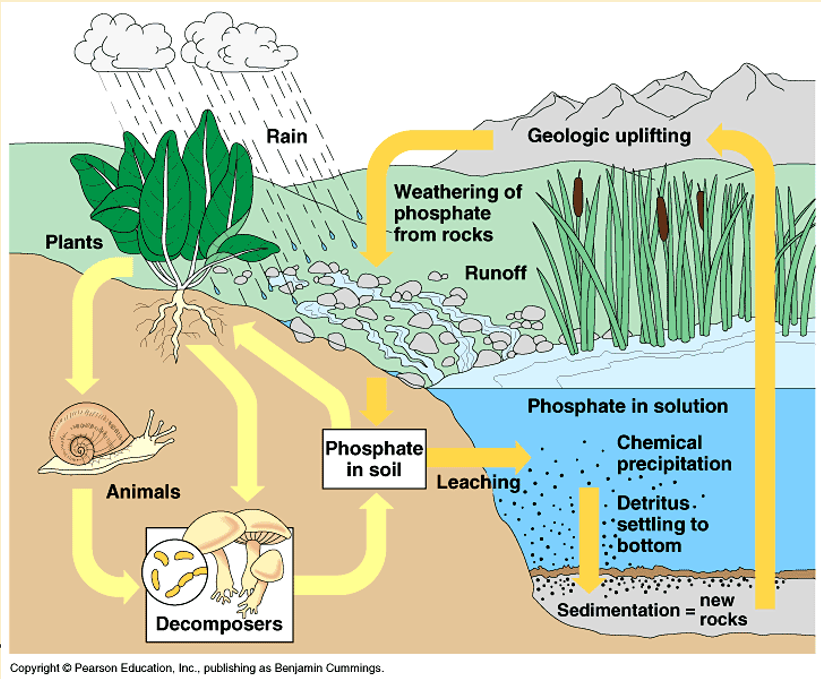
What is the phosphorous cycle?
Sink: marine sediements(lost into rivers/ocean) —> unavailable to terrestrial producers
Pool: sedimentary rock—> breakdown of rock makes phosphorus available to soil
Can cause algae blooms
Geological uplifting that makes rocks available on surface
rocks is weather by rain and gets in soil
Some is lost to the sink and go to the ocean. This forms sediment and eventually leads to new rocks
Some is released to the soil —> helps plants grow —> animals eat plants —> animals and organic matter eventually decomposed by decomposers to recycle phosphate
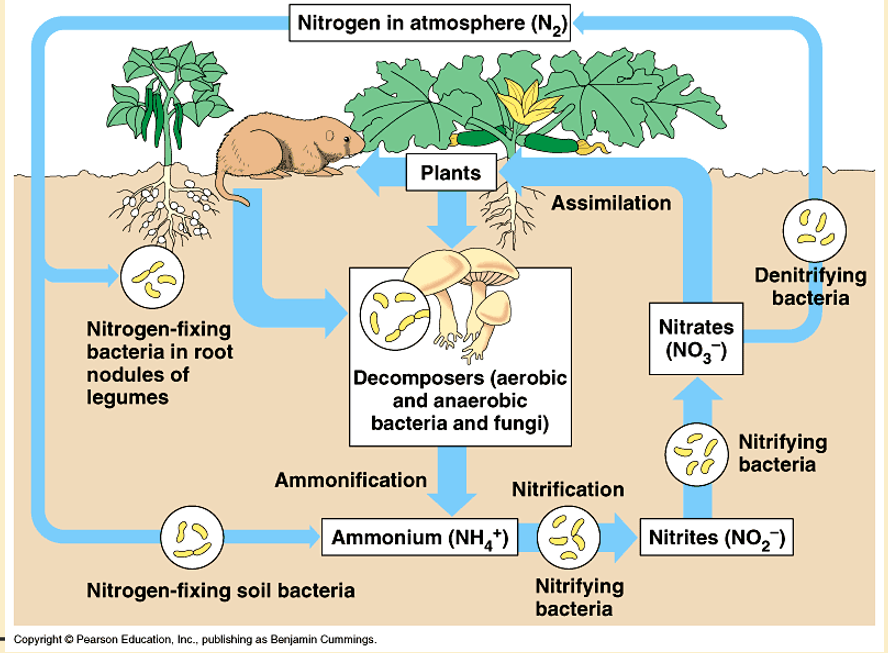
Describe the Nitrogen Cycle
Sink AND Pool: the atmosphere
Prokaryotes important: N2 fixing bacteria convert N2 to NH3 —> not all organisms can use NH3
Nitrifying bacteria convert NH3 to NO2(nitrate) or NO3(nitrite) —> NO3 (nitrite) is the form that is usable by most species
Three fates of NO3
1.NO3 is assimilated into plants and passed to animals when animals eat them
2. NO3 is denitrified and passed back to the atmosphere.
3. Denitrifying fungi and bacteria convert NO3 back to NH3 and it is recycled in the food web
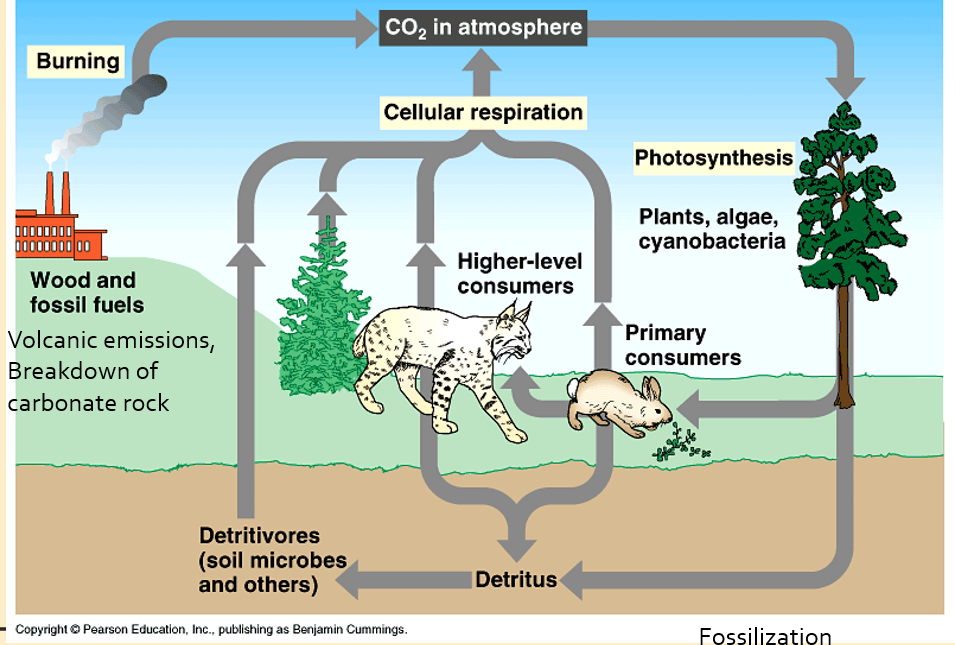
Describe the Carbon Cycle
When is retention of nutrients highest?
At intermediate stages of forest succession
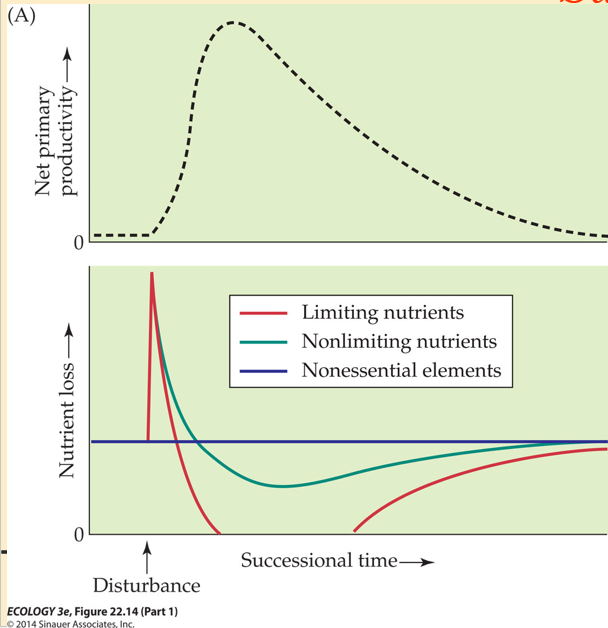
How does disturbance effect nutrient availability?
It can cause nutrient loss
For example, deforestation,