PHYSIOLOGY UNIT 4
 Call Kai
 Learn
Learn Practice Test
 Spaced Repetition
 Match
Match Flashcards
 Knowt Play
1/32

There's no tags or description
Looks like no tags are added yet.
Name | Mastery | Learn | Test | Matching | Spaced | Call with Kai | Chat |
|---|
No analytics yet
Send a link to your students to track their progress
33 Terms
what is a hormone? 1 pt
a chemical messenger secreted by specialized cells into the bloodstream that can act at greater or lesser distances (often slowly on specific organs and tissues) and allow cells in different body parts to coordinate their functionioning
what regulates homeostasis in the body? 3 pts
neuroendocrine system through regulatory mechanisms:
nervous system- release of transmitters
endocrine system- relase of hormones into the bloodstream from specialized tissues and glands
distribution of the endocrine system? 9 pts
hypothalamus
pineal gland
thyroid/parathyroid
thymus
pancreas
testicles
ovaries
adrenal glands
pituitary glan
action mechanisms of hormones? 2 pts
they bind to specific receptors on the target cells and modify it and can be:
hydrophobic/apolar- activate/repress genes and are slower than hydrophillic hormones (thyroid and steroid hormones) and receptors are found in the cytoplasm or nucleus though some hormones bind to membrane receptors through the use of second messenger systems to create rapid cellular response
hydrophilic/polar (peptides and amino acids)- G-protein couples receptors/receptors with enzygmatic activity (tyrosine kinase) and receptors are always found on the surface of the plasma membrane that initiate the signal trasduction processes
hormone interactions? 2 pts
synergism- combo of several hormones has a greater effect than the simple sum of the individual effect e.g. glucose and epinephrine have a stronger effect when combined than separately
antagonism- a hormone that has the opposite effect from another so their effects cancel each other out
examples of hypothalamuc dysfunction? 3 pts
eating and metabolic disorders
narcolepsy
mood changes and depression
what hormones are stored in the posterior pituitary/neurophypophysis? 2 pts
oxytocin and vasopressin/antidiuretic hormone (ADH)
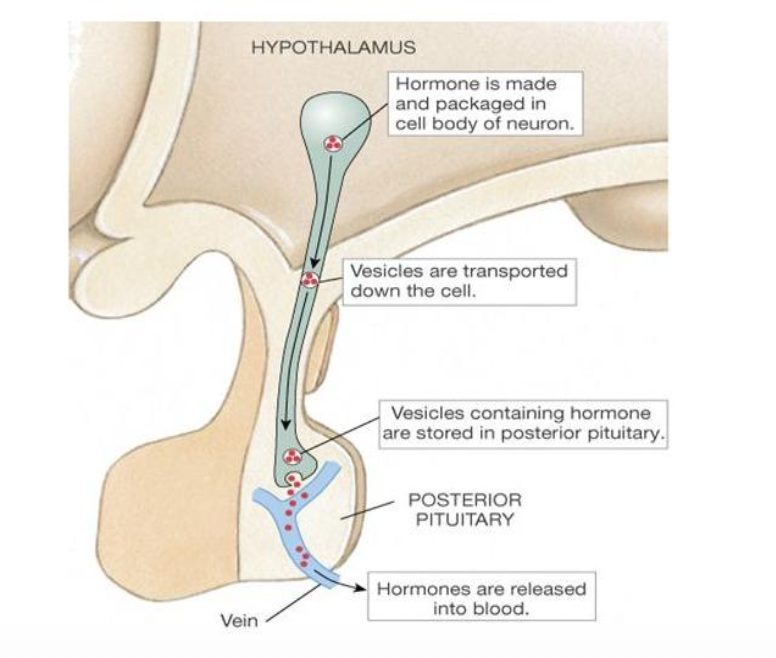
neurohypophysis: vasopressin/ADH? 2 pts
involved in the regulation of blood volume
increases reabsorption of water at the renal level
participates in the regulation of blood pressure and is secreted in response to increased blood osmolarity or low blood pressure
neurohypophysis: oxytocin? 8 pts
responsible for contraction during birth and lactation
involved in behavior and social relationships as it promotes intimacy and emotional bonding
involved in attachment bonds as it is released in response to physical touch, seual activity, comforting experiences, and positive social stimuli
studied for possible anti-depressant anxiolytic role as it helps reduce stress and anxiety
released during arousal and orgasm
supports ejaculation through rhythmic contractions
ehnaces pleasure and reward via interaction with dopamine and endorphins
promotes empathy, cooperation, and altruistic behavior
hypothalamuc and pituitary (adenohypophysis) ? 3 pts
the adenohypophysis is an endocrine gland that secretes 4 classic hormones and its activity is regulated by the trophic neurohormones released from the hypothalamic neurons
the hypothalamic hormones reach the adenohypophysis thorihugh a specialized region of circulation called a portal system
endocrine cells in the adenohypophysis release hormones into the blood which affect specific target organs
what are trophic hormomones? 1 pt
hormones that control the secretion of other hormones
what is the negative feedback loop? 1 pt
hormones released inhibit their source glands decreasing their own production
anterior pituitary hormones? 5 pts
growth hormone (GH)- growth of bones and muscles
corticotropin (ACTH)- act on adrenal gland to release glucocorticoids and adrenal androgens
thyrotropin (TSH)- act on thyroid gland to secrete the hormones T3 and T4
prolactin (PRL)- promotes the growth of mammary glands and breast milk production
gonadotropins (LH/FSH)- act on reproductive organs and regulates hte reproductive cycles
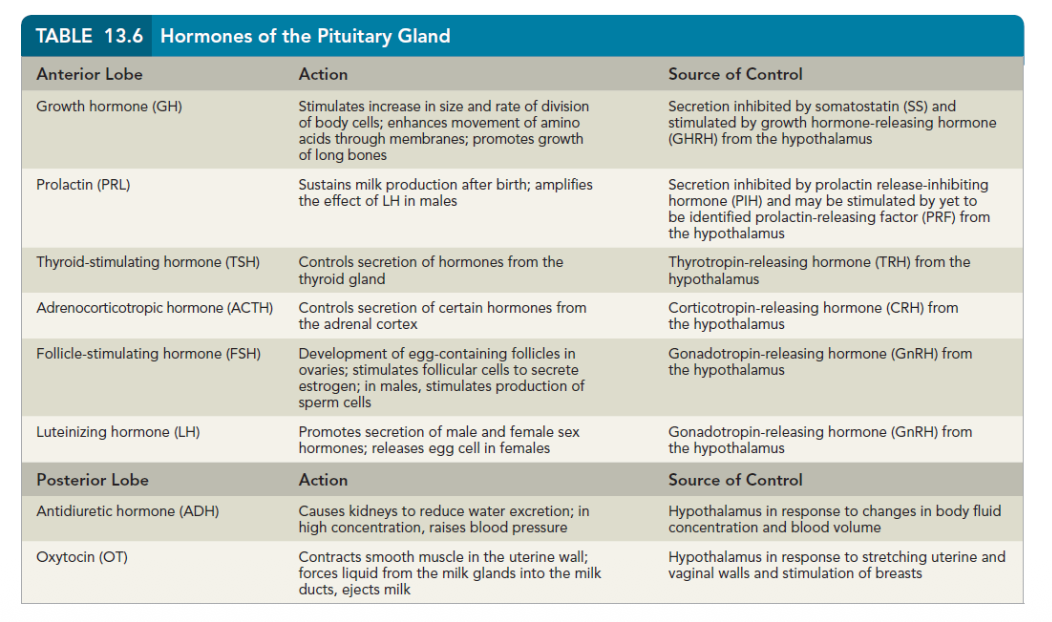
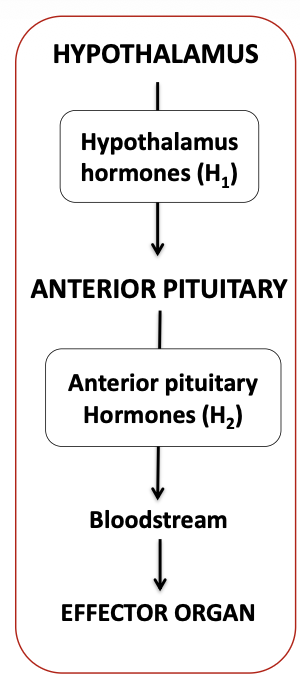
hypothalamic-anterior pituitary axis?
hypothalamic hormones control the secretion of anterior pituitary hormones that control the secretion of hormones from the peripheral endocrine organs
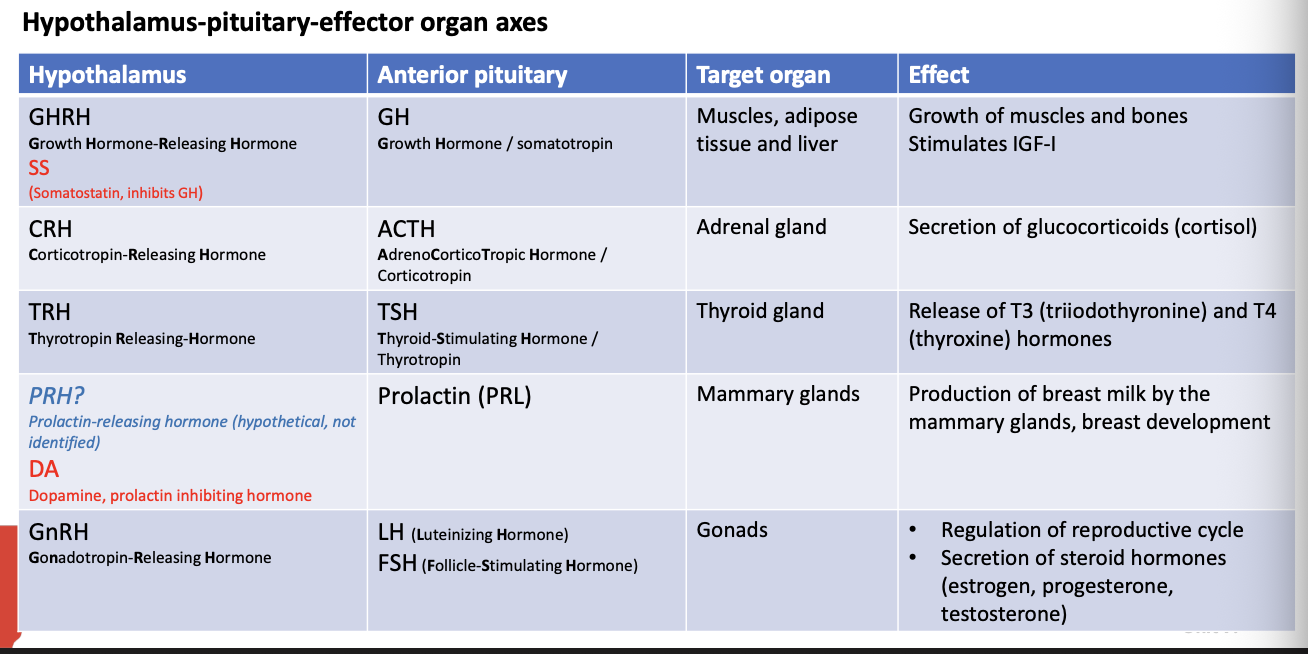
hypothalamic-anterior pituitary: thyroid axis? 9 pts
thyroid gland synthesizes and stores its hormones
produces calcitonin and thyroid hormone sT£ and T4
thyroid hormones are essential in deevelopment and metabolism regulation
thyroid hormones contain iodine and are hydrophic
thyroid hormones present in plasma as triiodothyronine (T3) and tretraidotironin/thyroxine (T4)
T4 is more abundant than T3 but T3 is more active
majority of T4 hormones are transformed to T3 inside the taget cells
most cells have receptors for thyroid hormones so T3 and T4 have effects throughout the body
T3 and T4 create a negative feedback loop with the hypothalamus and pituitary
hypothalamic-anterior pituitary: action of thyroid hormones? 3 pts
regulate basal metabolic rate and thermogenesis- increase the amount of energy consumed in a resting state as well as the amount of heat produced by cells
stimulates protein turnover, heart rate and ventilation rate, activity of the Na+/K+ pump, heat production, catabolism of carbs and lipids, hepatic glucose synthesis, O2 consumption in the mitochondria
regulate the process of growth and development- reduced T3.T4 levels during pregnancy result in reduced cortical and cerebellar formation and impaired concentration of the two can also cause deficits in attention, mem and learning capacitty, hunger sensations and sleep/arousal cycles
hypothalamic-anterior pituitary: hypothyroidism? 3 pts
reduced T3 and T4 secretions result in a reduced negative feedback loop commonly accompanied by increased TRH and TSH levels
caused by an autoimmune attack (Hashimoto), deficiency of iodine, and injury to the thyroid
symptoms include fatigue, reduced appetite, bradycardia, heavy periods, cold sensitivity, excessive thyroid growth etc
hypothalamic-anterior pituitary: hyperthyroidism? 3 pts
excessive T3 and T4 production increases the negative feedback to TRH and TSH
caused by graves disease, thyroiditis, excessive iodine consumption, tumor in the pituitary causing an increase in TSH
symptoms include increased heart rate, mood swings, increased appetitie and weightloss, excessive sweating, weightloss
hypothalamic-pituitary-liver (GH) axis? 4 pts
growth hormone levels are controled by GHRH that stimulate production and SS that inhibits it (every 3 hours but higher at night)
helps maintain muscle mass, bones, and tissue repair in adults and stimulates the growth of bones, cartilage, and soft tissue elongation
increases protein synthesis rate especially in skeletal muscle, promotes the degradation of lipids, and increases blood glucose
exercise stimulates GH secretion while stress hormones inhibit it
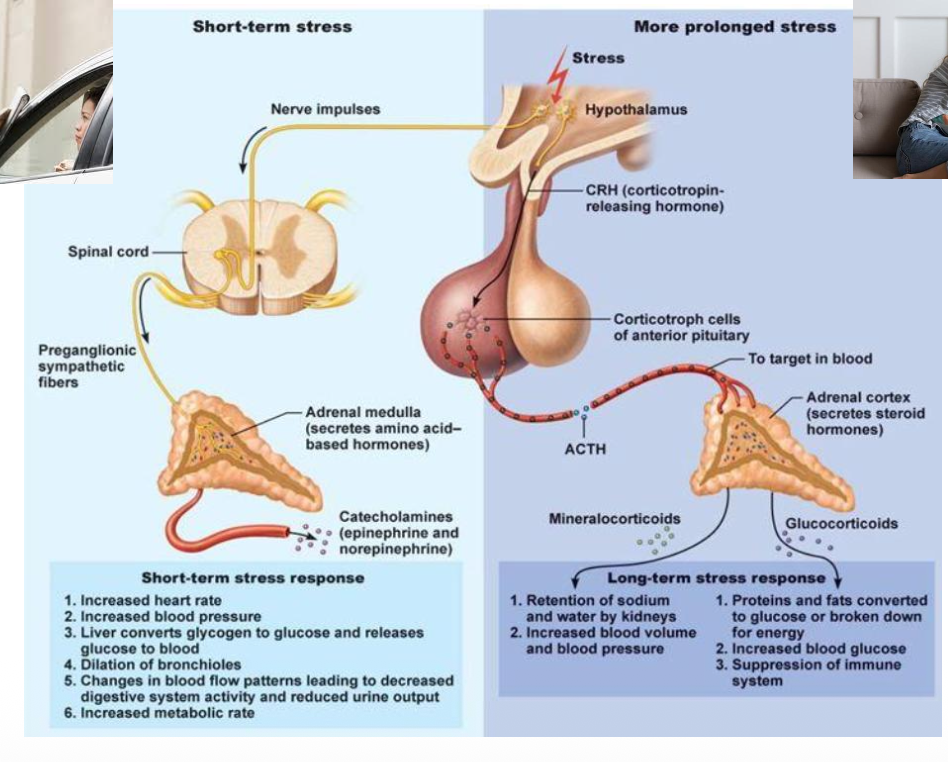
hypothalamic-pituitary-adrenal (HPA axis/stress axis)? 3 pts
adrenal glands are made up of the medulla which is connected with the SNS and produced catecholamines (adrenaline) and the cortex that secretes steroid hormones derived from cholesterol
adrenal cortex is the primary source of glucocorticoids and also produced mineralocorticoids (for blood pressure and electrolyte balance) and androgens (weak sex hormone precursors)
its regulates by the circadian rhythm that allows synchronization of our activity and rest periods with the day/night cycle and physical.psychological stressors such as exercise, hunger, fear, anxiety
hypothalamic-pituitary-adrenal (HPA axis/stress axis): cortisol? 5 pts
necessary for life and is known as the stress hormone
secretion is regulated by the circadiaj rrhythms and stressors
pituitary ACTH induces corticol secretion
cortisol enhances energy mobulization (catabolism) by activating the break down of energy stores in the body’s reserve tissues that include the liver, adipose tissue, and skeletal muscle
suppresses the activity of the immune system and increases the alertness in the brain
hypothalamic-pituitary-adrenal (HPA axis/stress axis): stress responses? 3 pts
acute stress- SNS activation leads to adrenaline secretion
chronic stres- SNA activation +HPA axis sustained activation leads to higher cortisol secretion
long term consequences include physical and menal fatigue, immunosuppression, burnout and mental disorders, metabolic disorders, cardiovascular diseases, and sleep disorders
hypothalamic-pituitary-godonal axis? 7 pts
the brain contriols the reproductive system through pituitary gonadotrophins follicule stimulating hormone and luteinizing hormone (FSH and LSH)
GnRH induces the secretion of gonadotropins
gonads modulate the synthesis of steroid and peptide hormones and maturation of gametes
LH induces the production of testosterone in teh testicles (leading cells)
testosterone is requires for spermatogenesis and the development of mal secondary sexual characteristics
PSH induces the production of sperm (sertoli) cells
LH and FAH regulate the production of progesterone and estrogen and regulate the ovulation and mestrual cycle
hypothalamic-pituitary-godonal axis: how do FSH and LH regulate the menstrual cycle? 3 pts
follicular phase- FSH induces the maturation of the egg and estrogen production
ovulation- LH peak triggers the release of a mature egg
luteal phase- the follicle degrades and becomes a corpus lute producing progesterone (PMS)
pineal gland/melatonin? 4 pts
small structure located below the corous callosum and behind the thalamus
light especially blue spectrum inhibits melatonin secretion
melatonin is secreted during dark periods which is rhythmic and reached max peak during the night
control thw circadian rhythms in sleep, reproduction, body temp etc
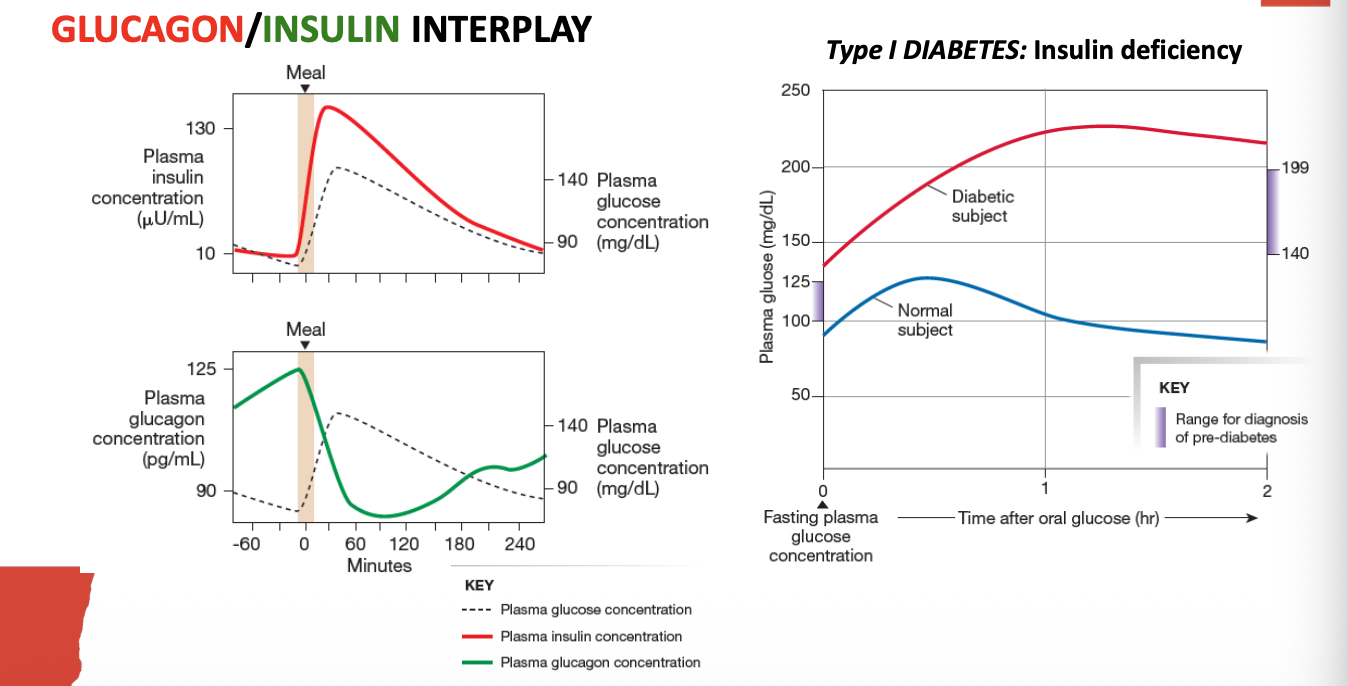
pancreas: glycemia regulation pancreas? 4 pts
mixed gland
digestive role- contributes to digestion and secretes digestive enxymes into the intestines
endocrine role- controls blood glucose levels
insulin increases glycemia, glucagon decreases glycemia, somatostatin inhibits both insulin and glucagon
pancreatitis: insulin cellular mechanism? 1 pt
insulin increases the number of glucose transporters in the plasma membranes of cells temporarily which allows more blood glucose to enter muscle and fat cells which lowers blood glucose levels
pancreas: relation ship with insulin and glucagon? 1 pt
insulin levels increase after eating and reduce blood glucose levels
glucagon levels increase during fasting and increase blood glucose levels
regulation of food intake? 1 pt
the CNS intergrares longer-term state-dependent signals and shorter-term feeding-dependent signals related to nutrient content, satiety, abdominal visceral motor activity of the gut which regulates food intake and energy expenditure
hypothalamic food intake regulation? 5 pts
A. in the arcuate nucleus of the hypothalamus food intake is controlled by two opposing populations of neurons that respond to a combo of neural, hormonal, and nutrient signals to maintain energy balance in the body:
appetite stimulating neurons/orexigenic neurons
satiety inducing neurons/anorexigenic neurons
B. there are two types of regulation:
short-term- controls the start and stop of the meal
long-term- regulation of body weight and energy stores
hypothalamic food intake regulation: short-term control of energy intake? 3 pts
hormone production at the beginning/end of meals regulates hypothalamic centers of appetite regulation with a goal of maintaining glycemia into homeostatic levels
satiety signals activate hypothalamic satiety centers to stop eating through mechanical stretching of the stomach that stimulates the vagus nerve or throuogh insuline (pancreas), cholecystokinin, GLP-I, and peptide YY (small intestines)
hunger signals activate the hypothalamic hunger centers to start eating through the production of ghrelin produced when the stomach is empty, hedonic factors related to reward, taste, and smell, and circadian factors (time of the day)
hypothalamic food intake regulation: long-term control of food intake (lipostatic theory)? 4 pts
goal- to maintain stable lipid deposits in the body
leptin is secreted by adipose tissue in proportion to fat stores and stimulates the satiety neurons in hypothalamuc while inhibiting the hunger ones
high fat stores increase the production of leptin which suppresses appetite while low fat stores decrease the production of leptin which stimulates appetite
dysregulation such as leptin resistance can lead to a perception of starvation despite high fat storage contributing to obesity
functions of leptin? 3 pts
increases sympathetic activity
increases thermogenesis
interacts with thyroid hormones