Origin of the Universe (L1-L10)
 Call Kai
 Learn
Learn Practice Test
 Spaced Repetition
 Match
Match Flashcards
 Knowt Play
1/41

Earn XP
Description and Tags
Name | Mastery | Learn | Test | Matching | Spaced | Call with Kai | Chat |
|---|
No analytics yet
Send a link to your students to track their progress
42 Terms
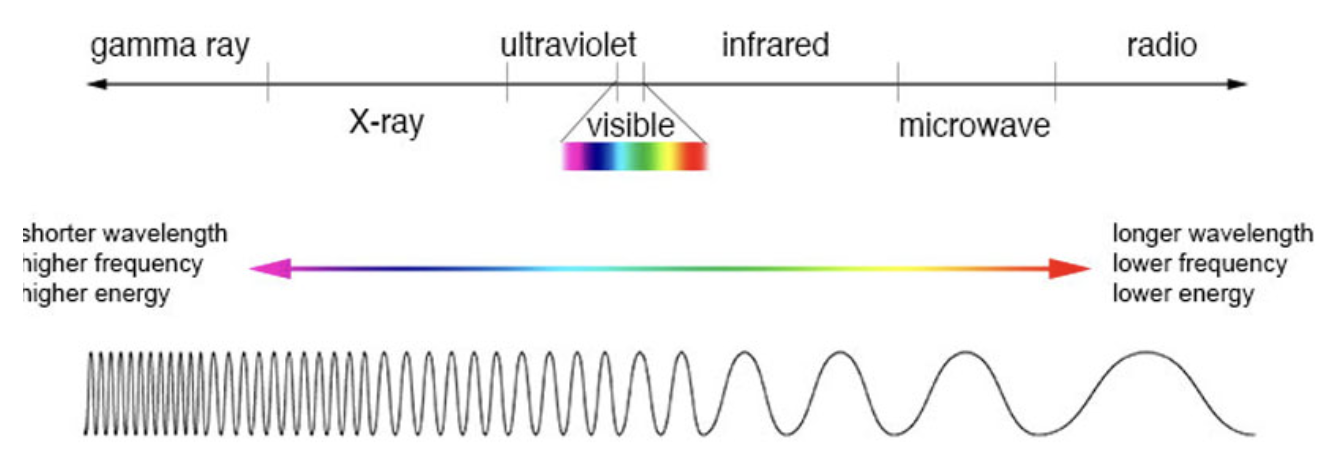
wavelength
the distance from the peak of one light or sound wave to the peak of the next
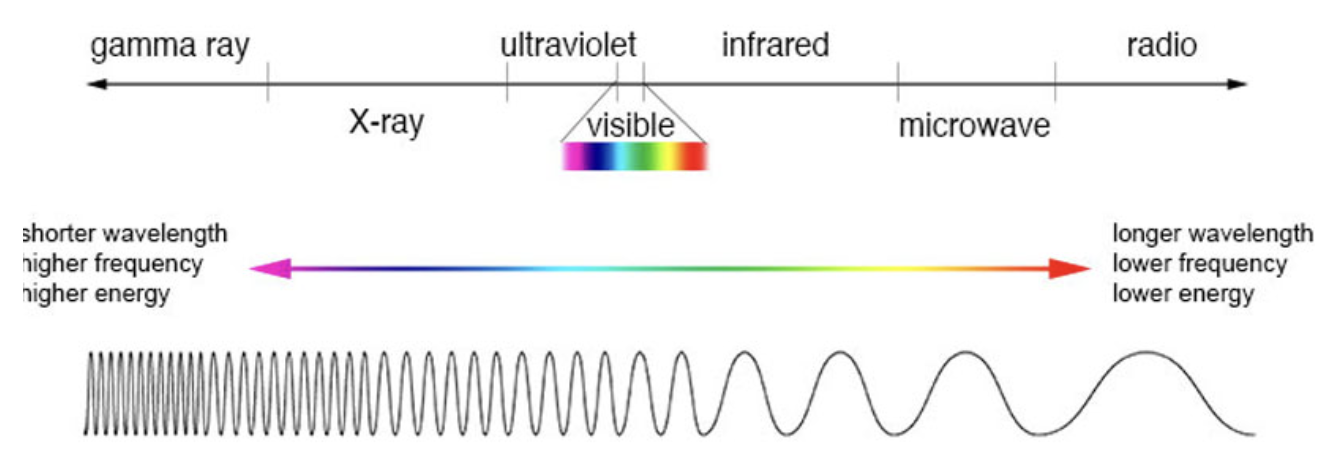
frequency
the number of complete wavelengths that pass a point in a given time; directly corresponds to energy level
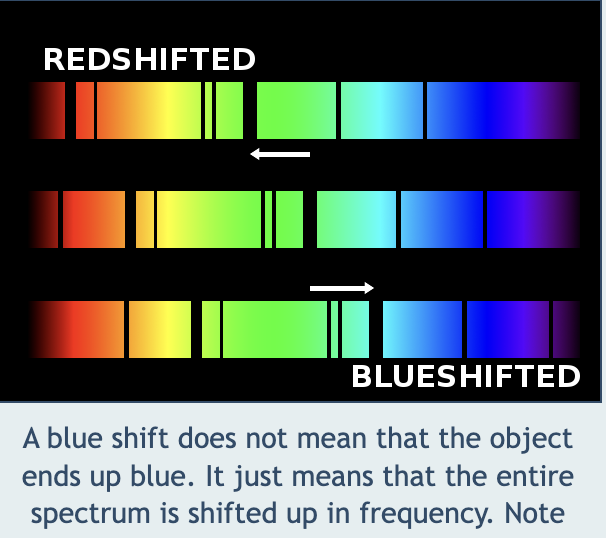
redshift
shift of light to a longer wavelength as it moves away
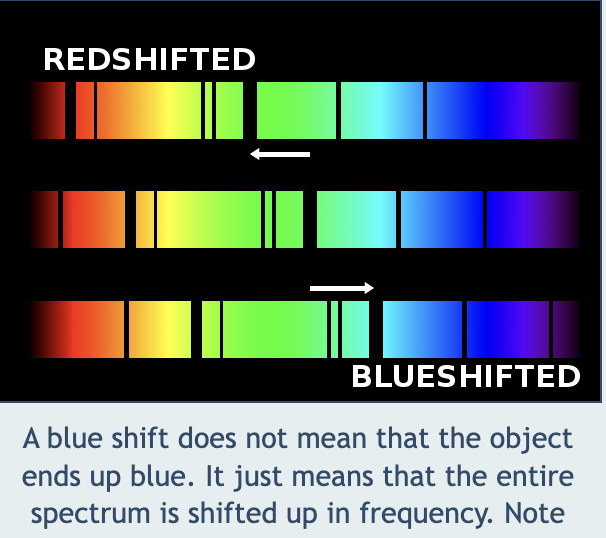
blueshift
shift of light to a shorter wavelength as it moves closer
Is the universe expanding, contracting, or staying the same?
expanding
Are most galaxies moving toward or away from each other?
away
Are most galaxies in redshift or blueshift?
redshift
How does the pitch of a sound change as it gets closer to you?
it gets higher (shorter wavelength)
How does the pitch of a sound change as it gets farther away from you?
it gets lower (longer wavelength)
How does the wavelength of light change as an object moves closer to us?
it gets shorter
How does the wavelength of light change as an object moves away from us?
it gets longer
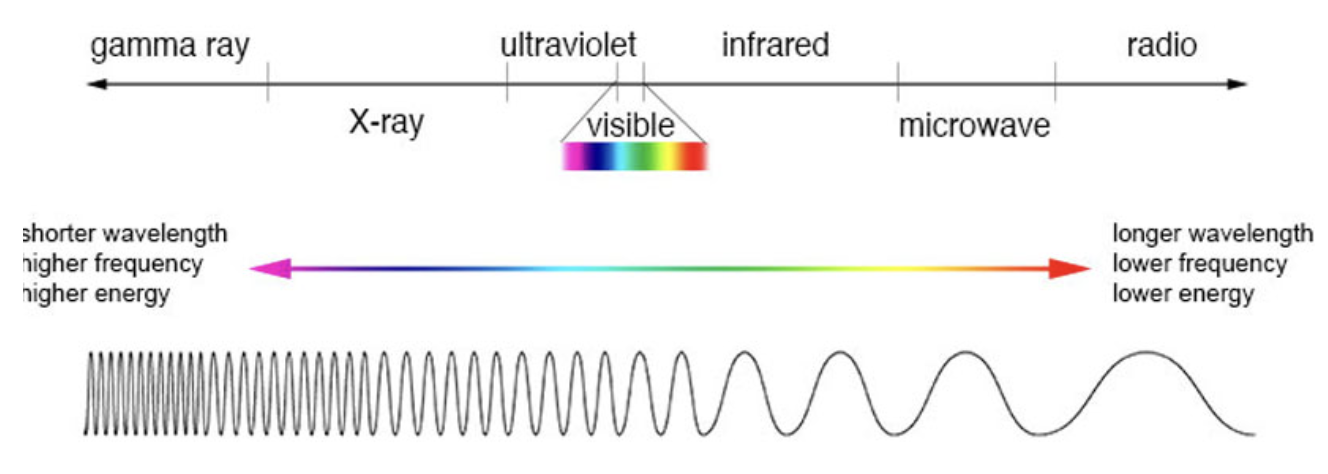
electromagnetic spectrum
all forms of radiation (both visible and invisible) including: (longest wavelength/lowest energy) radio waves —> microwaves —> infrared —> visible light —> ultraviolet —> x-rays —> gamma waves (shortest wavelength/highest energy
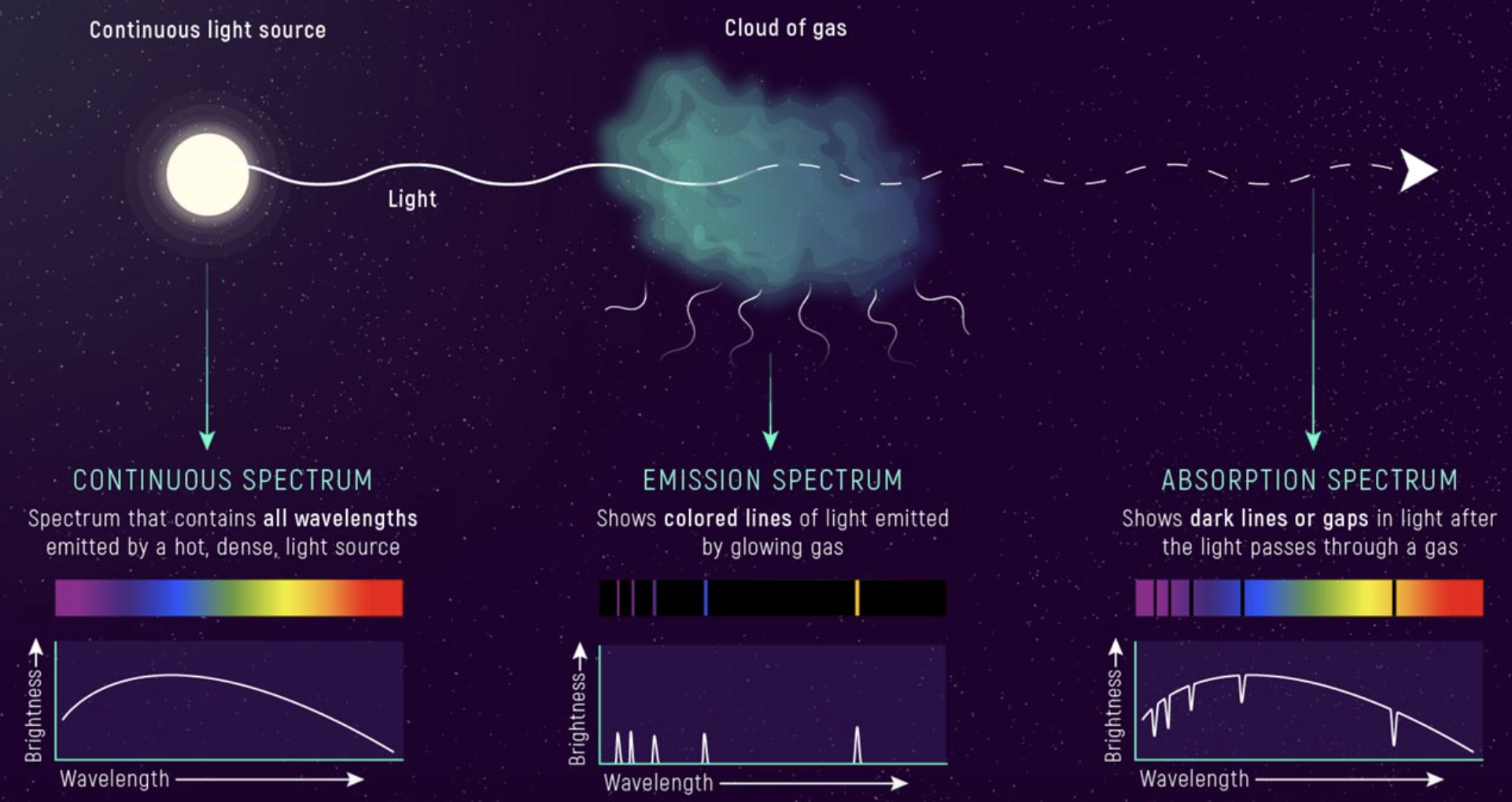
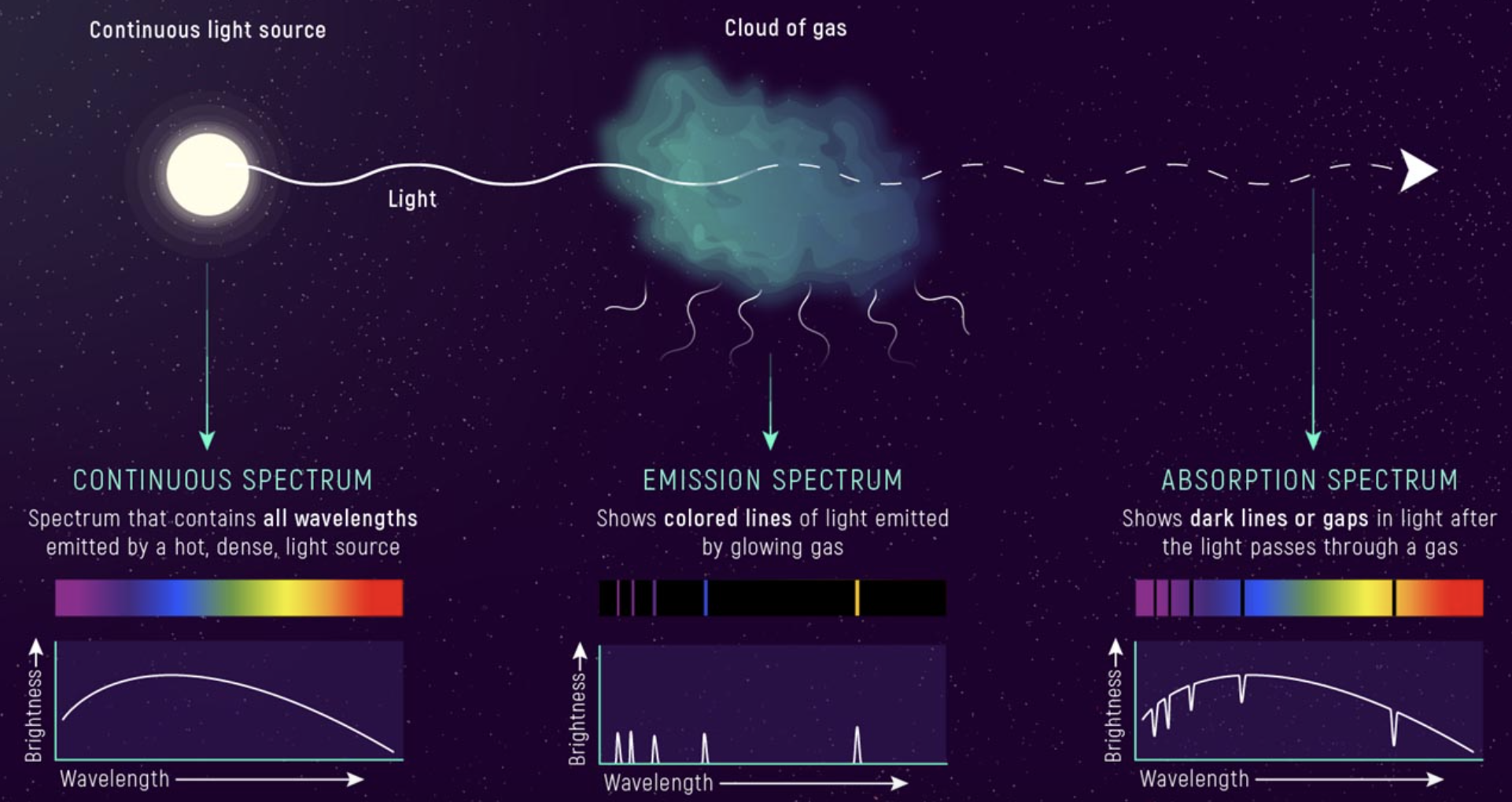
continuous spectrum
“white” light emitted by a hot, dense star that includes all wavelengths of light in a certain range
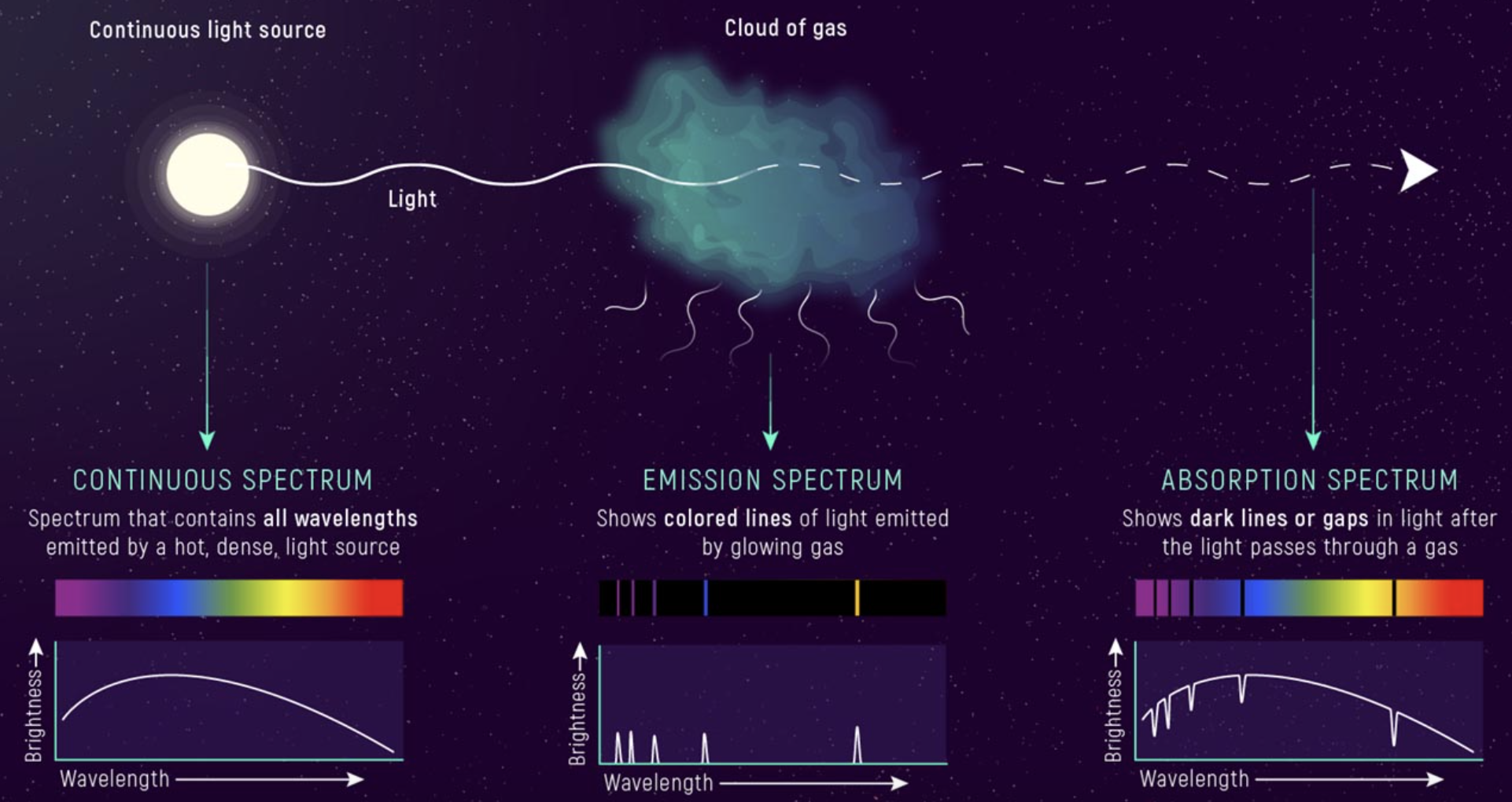
absorption spectrum
When starlight passes through a cloud of gas, some of the light is absorbed and some is transmitted through the gas. The wavelengths of light that are absorbed depends on what elements and compounds in the gas cloud. Dark lines in the spectrum correspond to wavelengths that are absorbed by the gas.
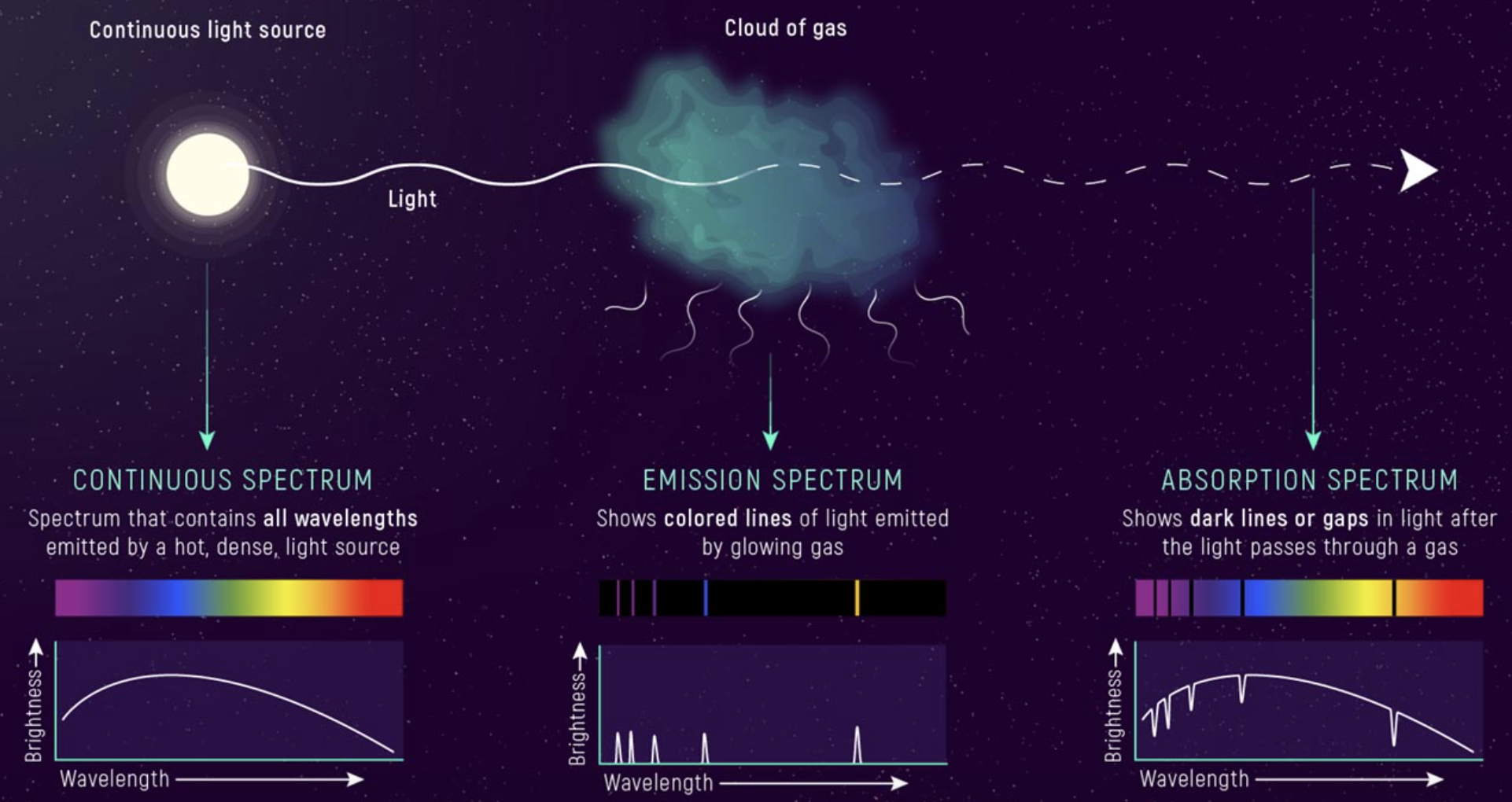
emission spectrum
Starlight can heat up a cloud of gas, exciting the atoms and molecules within the gas, and causing it to emit light. The spectrum of light that a cloud of gas emits depends on its temperature, density, and composition. An emission spectrum consists of a series of colored lines that correspond to wavelengths emitted by the glowing gas.
spectral lines
Dark or bright lines in a spectrum that result from the absorption or emission of light; used to identify elements and molecules in stars, galaxies, and gas clouds.
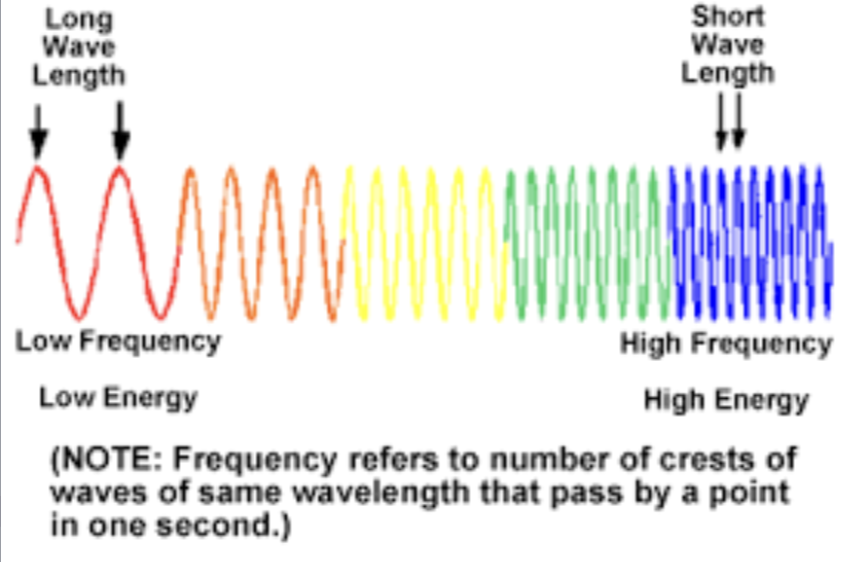
color of visible light with the longest wavelength and lowest energy
red
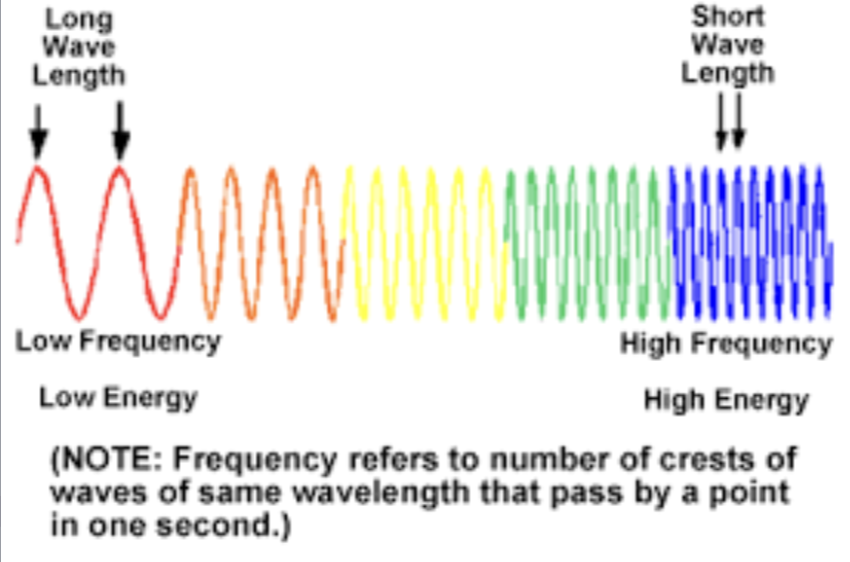
color of visible light with the shortest wavelength and highest energy
blue
3 pieces of evidence for the expansion of the universe from a small, hot, dense mass
1) most galaxies are in redshift
2) existence of CMB coming from everywhere in the universe
3) ratio of hydrogen to helium (3:1)
Why is redshift evidence for the Big Bang?
If everything is moving away from us now, then logically, rewinding time would show everything getting closer together. The Big Bang theory proposes that if we rewind far enough, all the matter and energy in the universe would be concentrated in a very hot, dense state and eventually lead to the expansion of the universe from that initial state.
Why is CMB evidence for the Big Bang?
The Big Bang theory predicts that the early universe was incredibly hot and filled with light. As the universe expanded and cooled, this light would eventually stretch out to become microwave radiation filling all of space. This faint echo of the hot, early universe is exactly what the CMB is.
Why is the ratio of hydrogen to helium (3:1) evidence for the Big Bang?
The Big Bang theory predicts the conditions that existed in the very early universe would have led to a specific ratio of hydrogen to helium, around 3:1. This prediction is based on the conditions necessary for fusing protons and neutrons into helium nuclei shortly after the Big Bang. This predicted ratio is very close to what we measure in the universe today, indicating that the universe was once very dense but that the matter originally produced as spread out.
What is the radial-velocity method for detecting planets?
The radial-velocity method detects exoplanets by observing the variations in the velocity of a star due to the gravitational pull of an orbiting planet. This technique measures shifts in the star's spectral lines caused by the motion towards or away from Earth. If a star is moving away from us, the magnitude of its redshift will increase and decrease predictably over time.
Drake Equation
a formula for estimating the number of intelligent, technological civilizations in our Galaxy, first suggested by Frank Drake
Gravity
A force of attraction between objects that is due to their masses and distance apart
What two factors impact the magnitude of gravitational force?
Mass and distance
HR Diagram
A graph relating the temperature and brightness of stars
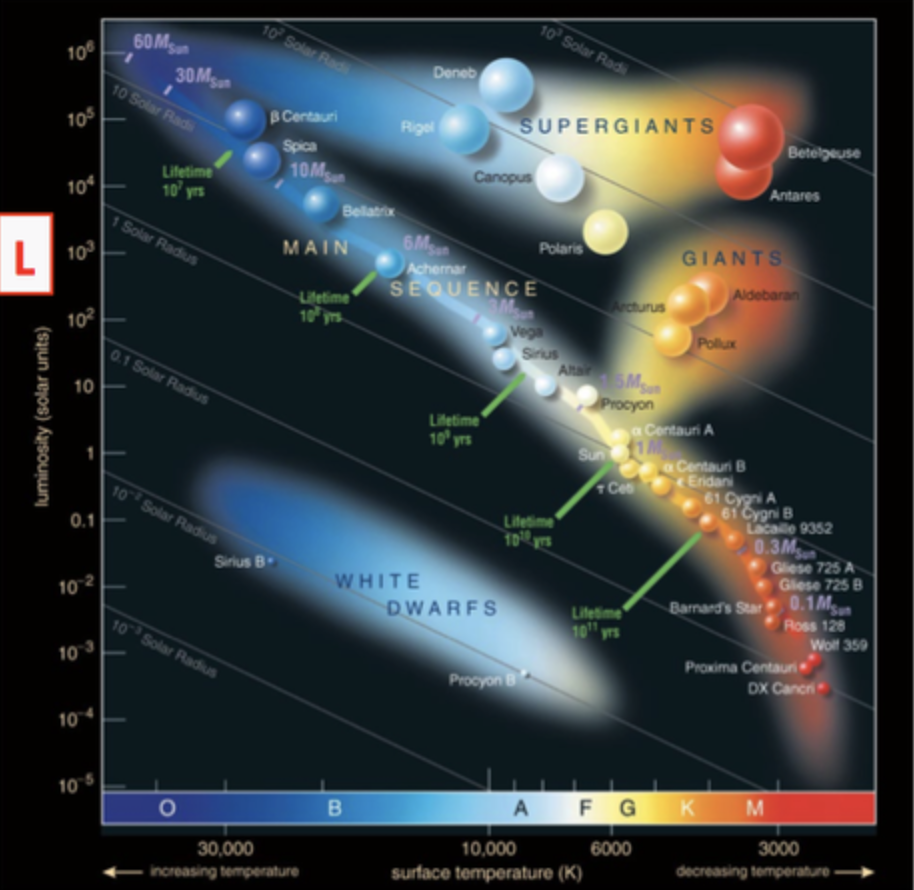
Main Sequence
a diagonal area on an H-R diagram that includes more than 90 percent of all stars; the stage of a star's life when it is most stable and spends the longest time
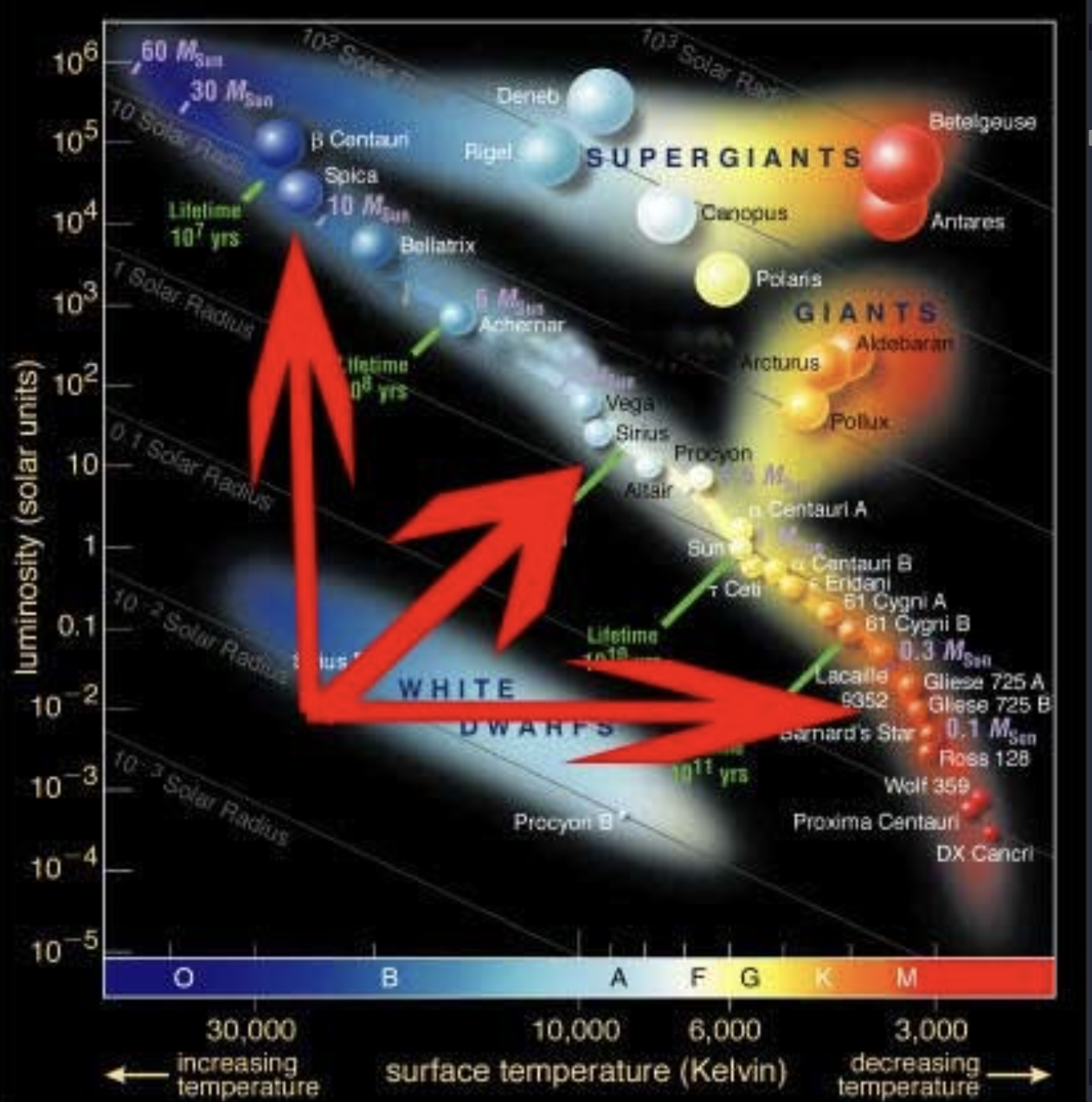
How does the mass of a star relate to its lifespan?
stars with larger masses have shorter lifespans than stars with lower masses
How does the mass of a star relate to its luminosity and temperature?
Stars with greater mass are generally more luminous and have higher surface temperatures compared to lower-mass stars.
What kind of stars turn into black holes?
The most massive stars (not our sun)
What will our sun eventually become?
A red giant and then a white dwarf
What color are the hottest stars in the main sequence?
Blue
What color are the coolest stars in the main sequence?
Red
Why does temperature relate to star color?
Hotter stars emit more high-energy, bluer light, while cooler stars emit lower-energy, redder light
In which stage of a star's life is it the most stable?
main sequence
In which stage of a star's life does it spend the longest amount of time?
main sequence
What two major forces are found in stars?
Gravity (pulling in) and nuclear fusion energy (pushing out)
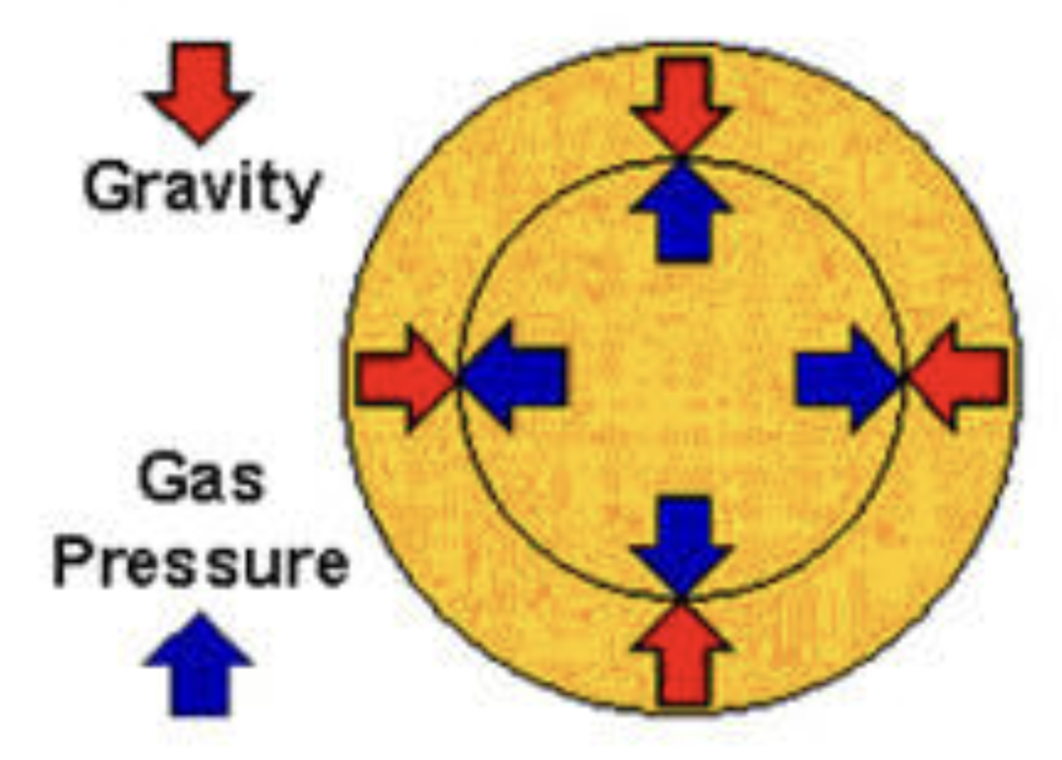
What is nuclear fusion in a star?
the process of combining hydrogen to make the heavier element helium
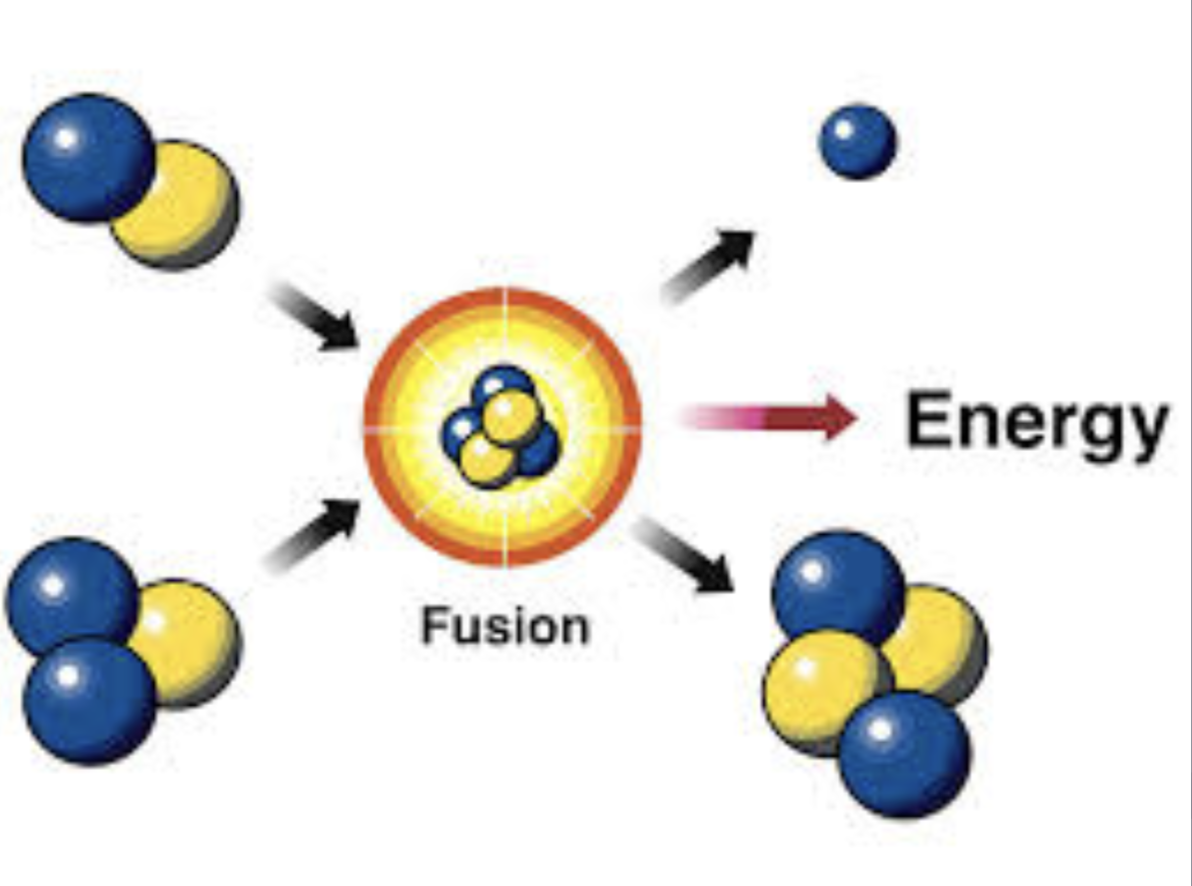
What happens when the star runs out of hydrogen energy?
As the core shrinks, it gets denser and hotter. This intense heat can trigger the fusion of leftover helium into heavier elements like carbon and oxygen. The star inflates and cools, becoming a red giant. Eventually, fusion ceases altogether and gravity condenses the core into an incredibly dense, small, mass
Why do large mass stars have shorter lifespans?
A massive star's core has a much higher pressure and temperature due to its own gravity. This intense environment fuels a much faster rate of nuclear fusion
Do all stars produce elements as heavy as iron?
No, a star has to have a high enough core temperature, so only very massive stars can fuse elements up to iron.