Terms for AP ENGLISH LITERATURE
 View linked note
 Call Kai
 Learn
Learn Practice Test
 Spaced Repetition
 Match
Match Flashcards
 Knowt Play
1/99

There's no tags or description
Looks like no tags are added yet.
Name | Mastery | Learn | Test | Matching | Spaced | Call with Kai | Chat |
|---|
No analytics yet
Send a link to your students to track their progress
100 Terms
Allegory
The representation of abstract ideas or principles by characters, figures, or events in narrative, dramatic, or pictorial form.
Allusion
A reference to a canonical work of literature, usually the Bible, Shakespeare, or mythology.
Alliteration
The repetition of the same consonant sound at the beginning of several words.
Ambiguity
When an author leaves out details or is unclear about an event so the reader will use their imagination to fill in the blanks.
Anaphora
Repetition of a word or phrase at the beginning of successive lines or phrases.
Anecdote
A short story or joke told at the beginning of a speech to gain the audience's attention and illustrate an intended moral.
Antagonist
The protagonist's adversary, not always the villain, but typically so.
Apostrophe
When a character speaks to a character or object that is not present or is unable to respond.
Assonance
The repetition of the same vowel sound in a phrase or line of poetry.
Asyndeton
The omission of conjoining conjunctions when not grammatically necessary for emphasis.
Bildungsroman
A novel of coming-of-age, formation, growth, change.
Blank verse
Poetic lines of unrhymed iambic pentameter.
Caesura
A brief pause in a line of poetry.
Catharsis
The emotional release of the audience by experiencing vicariously the suffering of the characters.
Climax
The turning point in the plot or the high point of action.
Colloquialism
Informal, conversational language.
Connotation
An idea or meaning suggested by a word or thing, but not necessarily in the objective dictionary definition.
Convention
An understanding between a reader and a writer about certain details of a story that does not need to be explained.
Consonance
The repetition of consonant sounds in a phrase or line of poetry.
Couplet
Two rhyming lines in poetry.
Deus ex machina
Character or force that appears to help resolve conflict unexpectedly.
Diction
Specific word choice or the use of words in speech or writing.
Denouement
The final resolution or clarification of a dramatic or narrative plot.
Doppelganger
The alter ego of a character or the suppressed side of one's personality.
Double entendre
A word or phrase open to two interpretations, usually one risqué.
Elegy
A poem or song composed especially as a lament for a deceased person.
Elision
The omission of certain letters to maintain rhythm or create colloquialisms.
Emotive language
Deliberate use of language to instill a feeling or visual.
Enjambment
The continuation of a sentence without a pause beyond the end of a line.
Epic
An extended narrative poem in elevated language, celebrating the feats of a legendary hero.
Epigraph
The introductory quote at the beginning of a novel or play.
Epilogue
A short poem or speech following the conclusion of a story.
Epiphany
Sudden enlightenment or realization.
Epistolary
A novel that tells its story through letters written from one character to another.
Epistrophe
The repetition of a word or phrase at the end of a sentence or clause.
Euphemism
Substituting a harsh comment for a more politically acceptable one.
Euphony
A succession of words which are pleasing to the ear.
Expansion
Adds or removes syllables to maintain the rhythmic meter of a line.
Fable
A short narrative making an edifying point often using animals as characters.
Feminine ending
An unstressed extra syllable at the end of a line of poetry.
Figurative language
Speech that departs from literal meaning to achieve a special effect.
Flashback
When a character remembers a past event relevant to the current action.
Flat character
A literary character whose personality can be defined by one or two traits and does not change.
Foil
A character that accentuates or enhances the distinctive characteristics of another.
Folklore
The traditional beliefs, myths, tales, and practices of a people, transmitted orally.
Foot
A way of describing the stressed syllables within a line of poetry.
Trochee
A metrical foot with one stressed and one unstressed syllable.
Dactyl
A metrical foot with one stressed syllable followed by two unstressed syllables.
Anapest
A metrical foot with two unstressed syllables followed by a stressed syllable.
Spondee
A metrical foot with two stressed syllables.
Foreshadowing
Clues in the text about incidents that will occur later in the plot.
Free verse
Type of verse that contains a variety of line lengths, is unrhymed, and lacks traditional meter.
Genre
A category of artistic composition, as in music or literature, marked by a distinctive style. Ex: Sci-fi, Fantasy, Western, romance
Gothic novel
A genre of fiction characterized by mystery and supernatural horror. ex: Mary Shelley’s Frankenstein
Hamartia
The tragic flaws of a character that lead to their downfall. Ex: Oedipus’ hamartia is his own figurative “blindness” to his murderous past and cursing the man who killed Laius.
Heroine
A woman noted for courage and daring action. Ex: Katniss Everdeen
Homonym
Two words pronounced similarly but with different meanings. Ex: I’m not a businessman, I’m a business, man”
Hubris
Excessive pride usually leading to a hero's downfall. Ex: Oedipus’ Pride
Hyperbole
A figure of speech in which exaggeration is used for emphasis or comic effect. Ex: “That’s the greatest sandwich in the history of the world.”
Illocution
Language that avoids the true meaning of the words. When we speak, sometimes we conceal intentions or sidestep the true subject of a conversation. Ex: If two characters are discussing a storm, on the surface it may seem like a simple discussion of the weather, however the reader should interpret the underlying meaning-that the relationship is in turmoil, chaos, is unpredictable.
Imagery
The use of vivid or figurative language to represent objects, actions, or ideas. Ex: He’s not really a cloud, the flowers aren’t really dancing, but can’t you see and feel it?”
In medias res
A story that begins in the middle of things. A movie starts with a big explosion, and we fill in the details later. (Ex: Oedipus)
Inversion
An intentional digression from the ordinary word order. Ex: “Everything is fine when you listen to the D-O-G/ I got cultivating music that be captivating he/ who listens to the words that I speak” (Snoop Dogg)
Irony
When one thing should occur, but the opposite actually occurs. Example “Water, water everywhere and not to drink.”
Dramatic Irony: When the audience or reader knows something, characters do not know. Ex: Most of Oedipus Rex because we knew who killed his father and is currently sleeping with his mother, but he doesn’t know this.
Verbal Irony When one thing is said, but something else, usually the opposite, is meant. Ex: In Shakespeare’s Julius Caesar, Marc Anthony gives a speech in which he repeatedly refers to Brutus as “an honorable man,” when Brutus just participated in murdering Caesar. Sarcasm is intended to insult its target
Cosmic Irony: When a higher power toys with human expectations or irony is created by divine fortune or fate. Ex: The story of Job from the Bible. God tests Job’s faithfulness by taking everything from him to see if he’'ll curse him. It’s a divine test
Masculine ending
Stressed extra syllable at the end of a line. Ex: “Life is but an empty dream!”
Memoir
An account of the true personal experiences of an author. Ex: “Diary of a Young Girl” by Anne Frank.
Meter
The measured arrangement of words in poetry by accented rhythm number of syllables grouped by stressed syllables, or total number of syllables in a line
Ex: Pentameter=5 feet per line, trimeter= 3 feet per line
Metaphor
A figure of speech making an implicit comparison without using 'like' or 'as'. Ex: “She’s a brick house”
Another example of metaphor
Extended Metaphor: A metaphorical comparison that is developed through a significant amount of a poem. Ex: “Hotel California” by the Eagles
Metonymy
The use of a word or phrase to stand in for something else it is often associated. Ex: Oval office means the executive branch and all its members; the crown means the monarchy’s power and authority; the lamb means Jesus Christ of Nazareth.
Motif
A dominant theme or central idea that occurs in the story. If something happens more than once and reaches the third occurrence it is a motif. Ex: Blindness in Oedipus Rex or King Lear.
Narrator
The teller of the story, the voice of a story.
Different types of Narrators:
First Person: The narrator is a character in the story
Third person objective: The narrator does not tell what anyone is thinking; the “fly on the wall”
Third Person limited: The narrator is able to tell the thoughts of one character
Third Person omniscient: The narrator is able to tell the thoughts of any character.
Novella
A short novel usually under 100 pages.Ex:Of mice and men
Ode
A lyric poem of considerable length, usually of a serious or meditative nature. Ex: John Keat’s “Ode on a Grecian Urn,” “Ode to Psyche” or “Ode on Melancholy”
Onomatopoeia
Words that imitate the sounds associated with the objects or actions they refer to. Ex: “Boom “Buzz” “Murmur”
Paradox
Statement that seems to contradict itself. "Ex: “His old face was youthful when he heard the news”
Parody
A work that imitates the characteristic style of another work for comic effect. Ex: Saturday Nigh Live
Personification
Endowing inanimate objects or abstractions with human qualities. Ex: ""Every Disney Pixar movie ever; Shrek”
Poetic justice
The rewarding of virtue and the punishment of vice in the resolution of a plot. The character, as they say, gets what he/she deserves: the good eventually wins, the bad loses. Ex: Voldemort is defeated, Harry is victorious.
Polysyndeton
The use of multiple conjunctions when not grammatically necessary for emphasis or to maintain meter. Ex: “And Again and Again and Again” (Dr. Dre, “Express Yo’self”
Prequel
A work whose narrative takes place before that of a preexisting work. Ex: Star Wars or Episode 1-3
Prologue
An introduction or preface to a literary work, especially a poem recited to introduce a play. Ex: “Two households, both alike in dignity, / In fair Verona, where we lay our scene…” Romeo & Juliet
Prose
Ordinary speech or writing without metrical structure, written in paragraph form, novels, short stories, non-fiction, essays, etc.
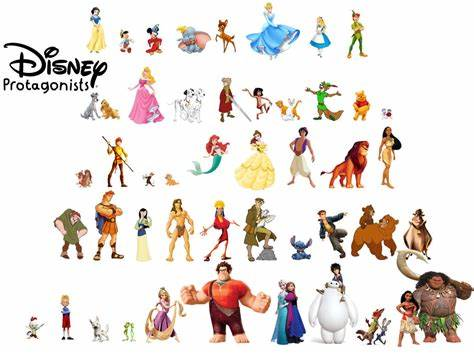
Protagonist
The main character in a drama or literary work.
Pun
A play on words used in a humorous manner.
Ex: “You shall find me a grave man” Pun on his sadness and his imminent death.
Repetition
The successive use of a word or phrase for emphasis or to create a specific sound in the reader’s mind. Ex: “A horse is a horse, of course, of course, no one can talk to a horse, of course, unless of course, the horse is the famous Mr. Ed.”
Rhyme
The repetition of sounds in words.
Different types of Rhymes:
End Rhyme: occurring at the end of a line of poetry, the most common and most obvious form of rhyme.
Internal Rhyme: The rhyming patterns that occur within a specific line of poetry, contrasted with end rhyme. Ex: “The whole crowd goes so loud”
Oblique/Slant/Feminine rhyme: Imperfect rhyme scheme with emphasis on pronunciation on and consonance or assonance. Ex: “Throw your hands in the air, if you’re a true player.”
Perfect/ True rhyme/ Masculine: the exact same sound, only replacing the initial prefix. Ex: “Cat/bat/sat” or Ball/ fall/ call.
Rhyme scheme
The pattern of end rhyme in a poem. Ex: Shakespearean sonnets are ABAB/CDCD/ EFEF/ GG.
Rising action
The events of a plot building up to the climax. Example: Oedipus attempting to figure out what is causing the plague and who killed Laius.
Round character
A character who is developed over the course of the book. ex: Oediupus
Resolution
Solution to the conflict in literature. Often death or epiphany. ex: when hamlet kills Claudius
Satire
A work that attacks human vice or folly through irony or wit. “Political or social commentary found on Saturday Night Live.
Simile
A figure of speech comparing two unlike things using 'like' or 'as'. ex: “fly like an eagle”
Slang
Language occurring chiefly in casual speech, often playful. ex: this party is turnt.
Soliloquy
A character talks to themselves or reveals thoughts without addressing a listener.
Sonnet
A poem of fourteen lines of rhyming iambic pentameter.
Style
The combination of distinctive features characterizing a literary work.
Symbol
Something that represents something else by association. ( example: Rose for love)
Synecdoche
A figure of speech in which a part refers to the whole or vice versa. (Example: “Check out my new wheels” (wheels=car) )
Tragedy
A drama or literary work where the main character suffers extreme sorrow due to a tragic flaw.
Tone
The author's attitude towards the subject matter or the feeling the author wants to instill in the reader through the use of specific word choices and stylistic elements.