Artworks: Week 1-4
 Studied by 0 people
 Call Kai
 Learn
Learn Practice Test
 Spaced Repetition
 Match
Match Flashcards
 Knowt Play
1/84

There's no tags or description
Looks like no tags are added yet.
Name | Mastery | Learn | Test | Matching | Spaced |
|---|
No study sessions yet.
85 Terms
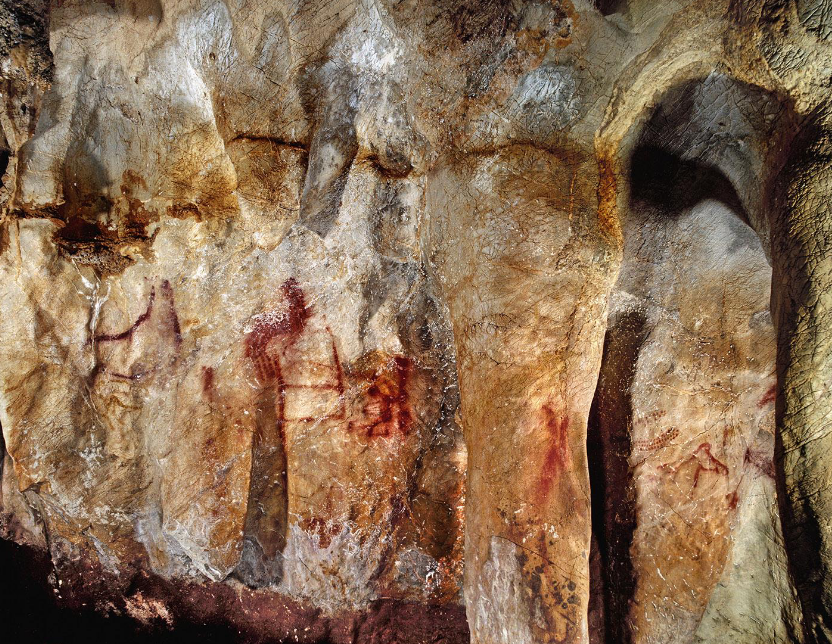
Paintings in the La Pasiega Cave of Monte Castillo, Puente Viesgo, Cantabria, Spain, c. 65,000 BCE
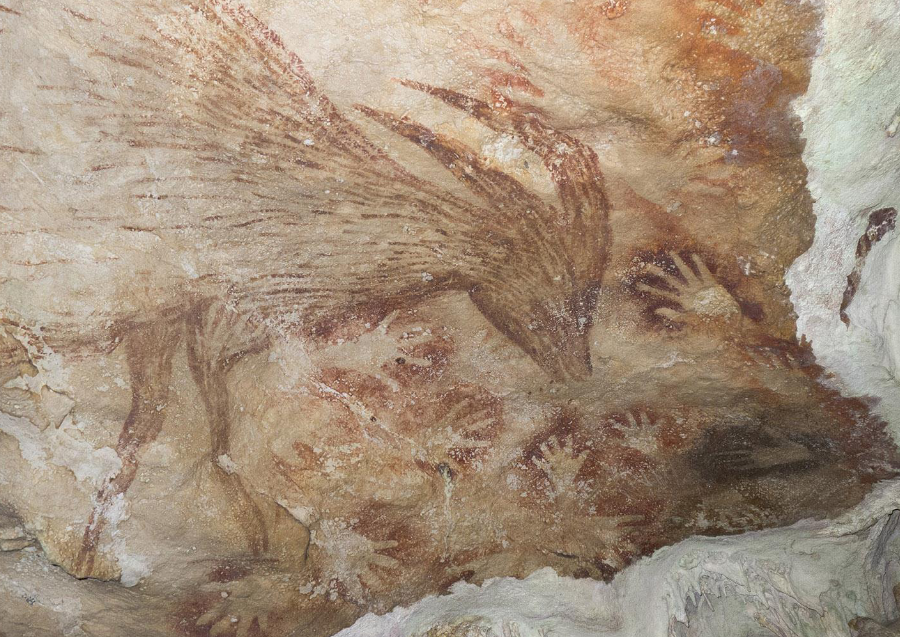
Painting in the Marcos-Pangkep Caves, Sulawesi, Indonesia, c. 37,000–34,000 BCE
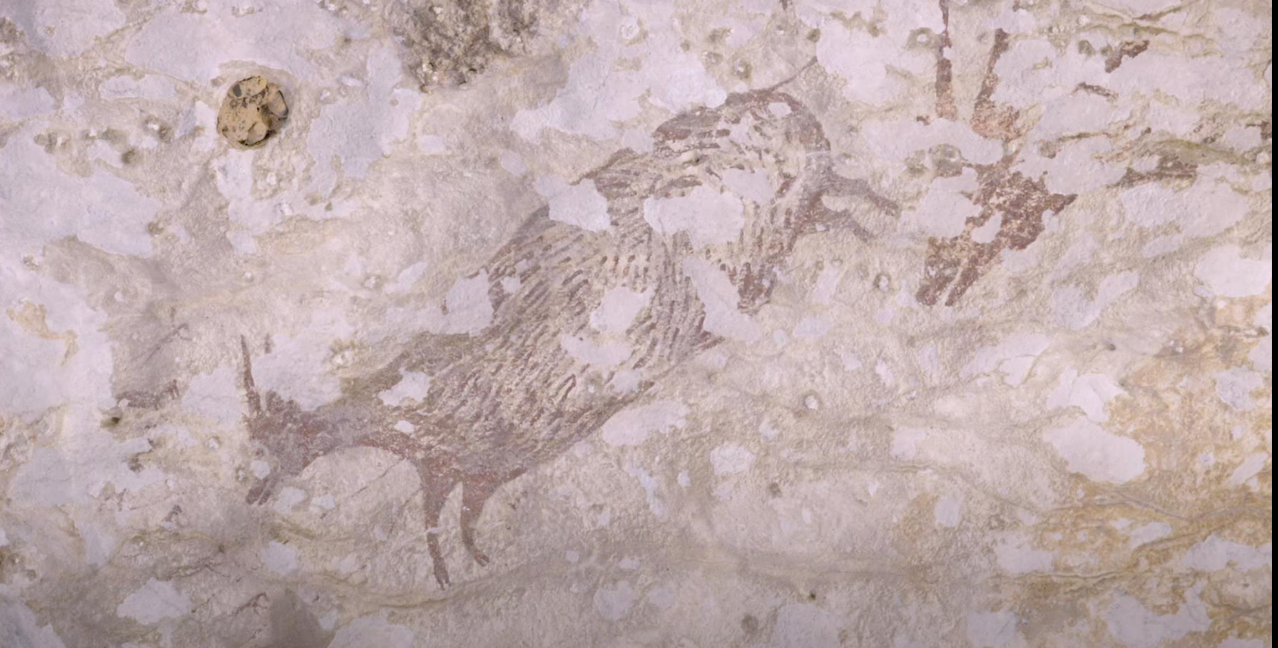
Painting in the Marcos-Pangkep Caves, Sulawesi, Indonesia, c. 37,000–34,000 BCE
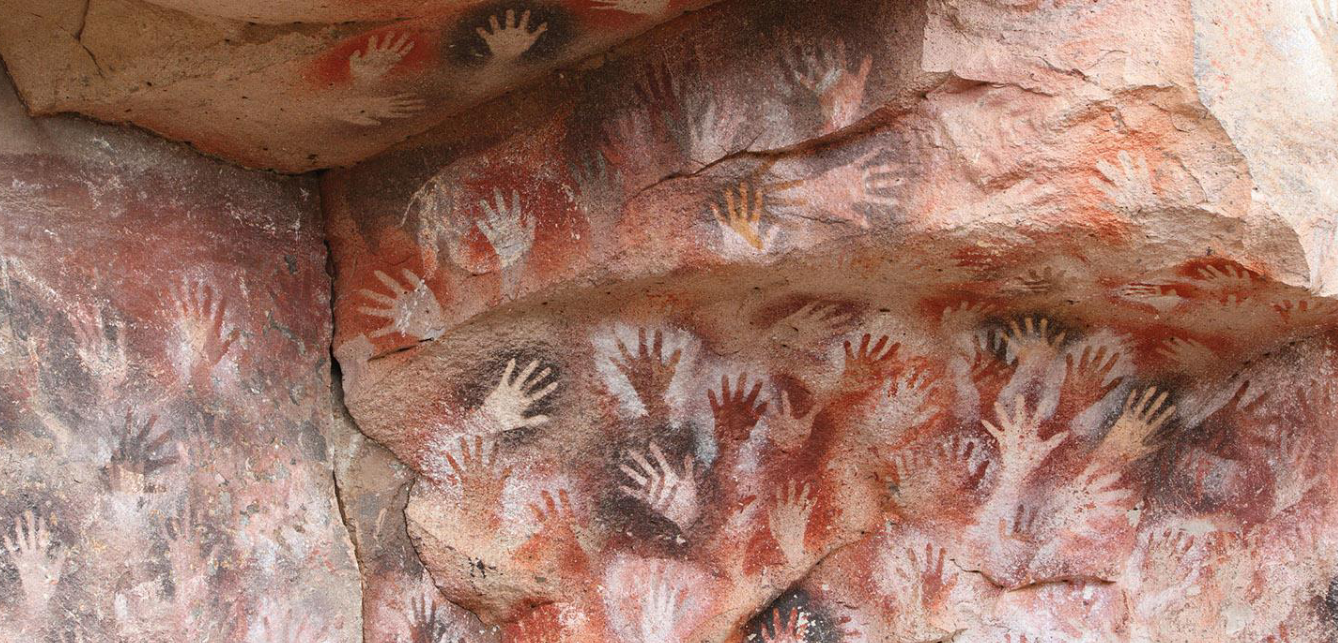
Hand prints and stencils, Cueva de las Manos, Santa Cruz, Argentina, c. 11,000–7000 BCE
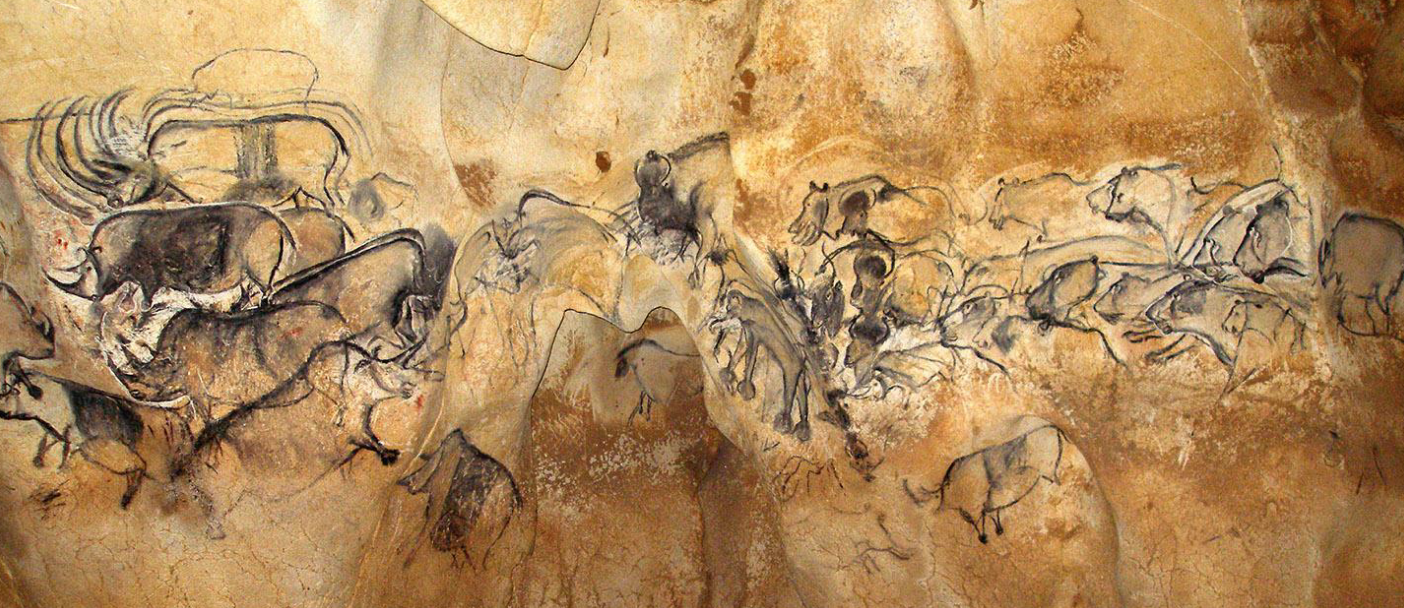
Megaloceros Gallery cave paintings, Chauvet Cave, France, 30,000 BCE
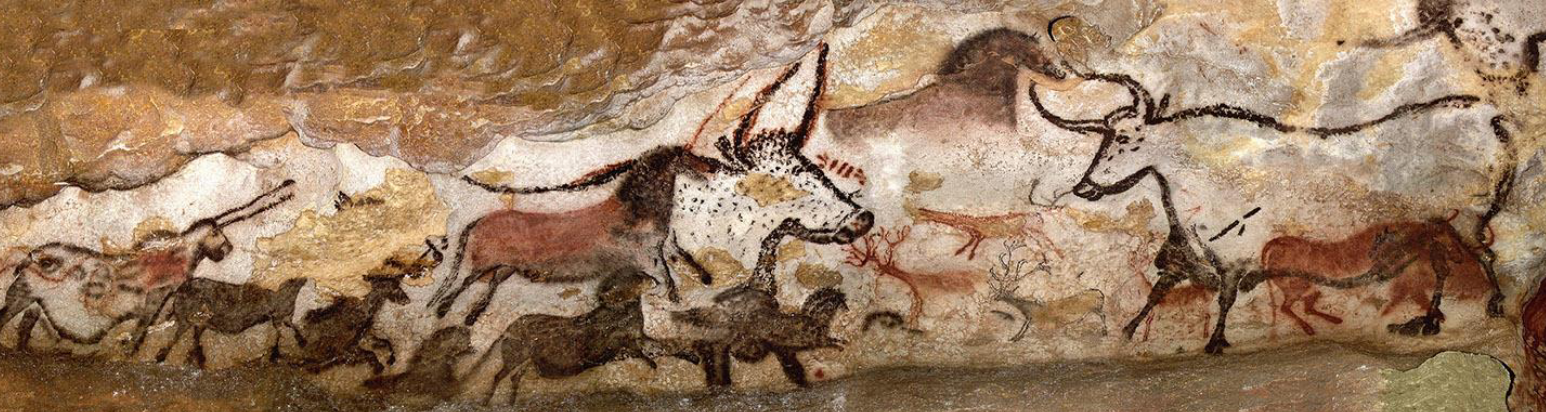
Hall of Bulls, Lascaux Cave, Dordonge, southwestern France, c. 15,000 BCE
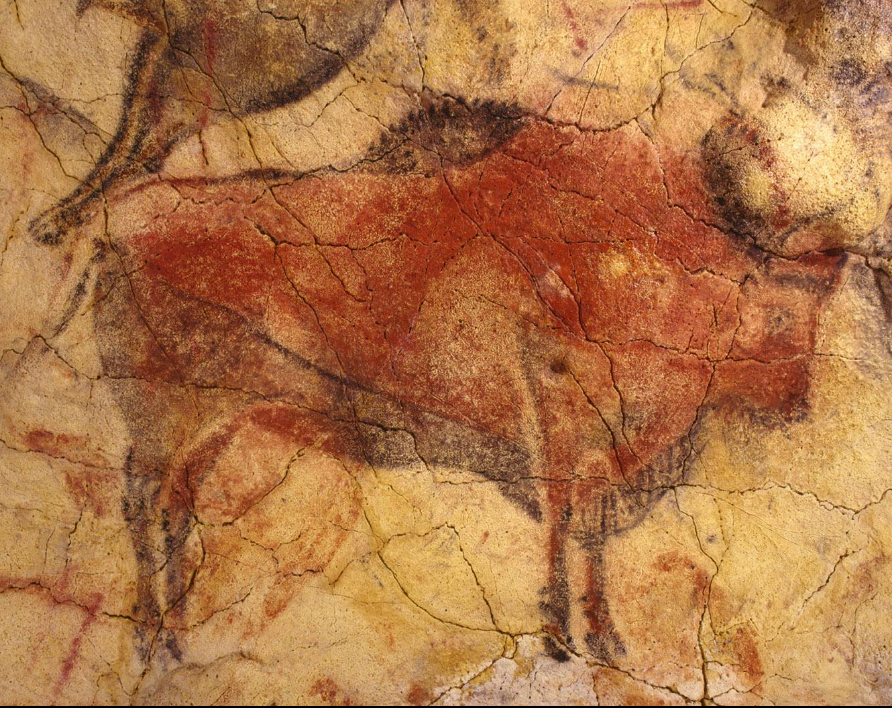
Steppe bison, Altamira Cave, detail from the ceiling of the main hall, Cantabrian Mountains, northern Spain, c. 12,500 BCE
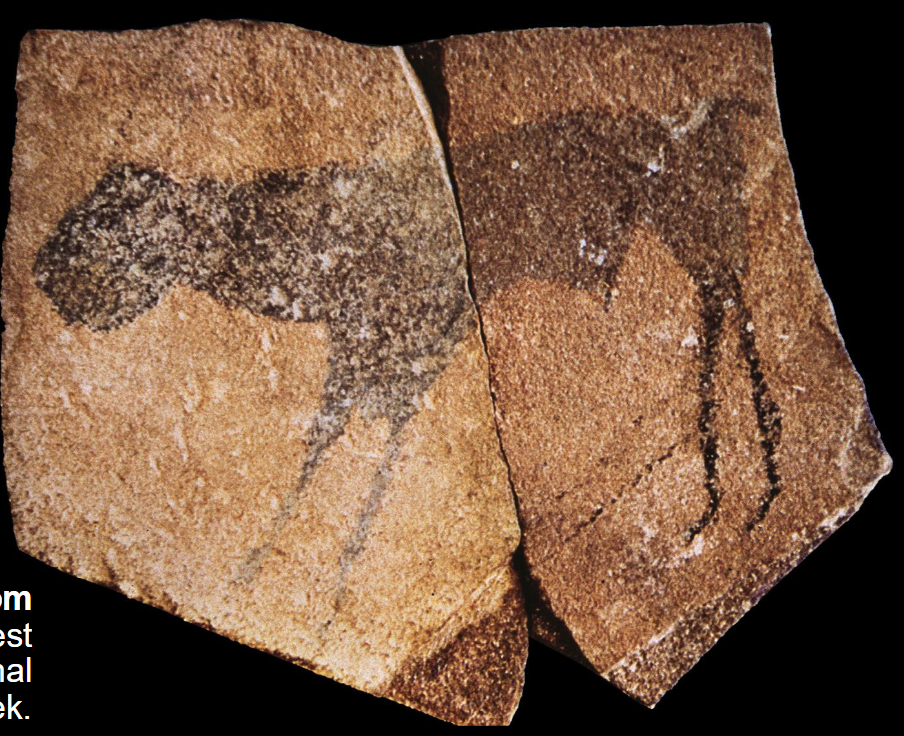
Painted rock fragments from Apollo 11 Cave, Namibia, southwest Africa, 25,500–23,500 BCE. National Museum of Namibia, Windhoek.
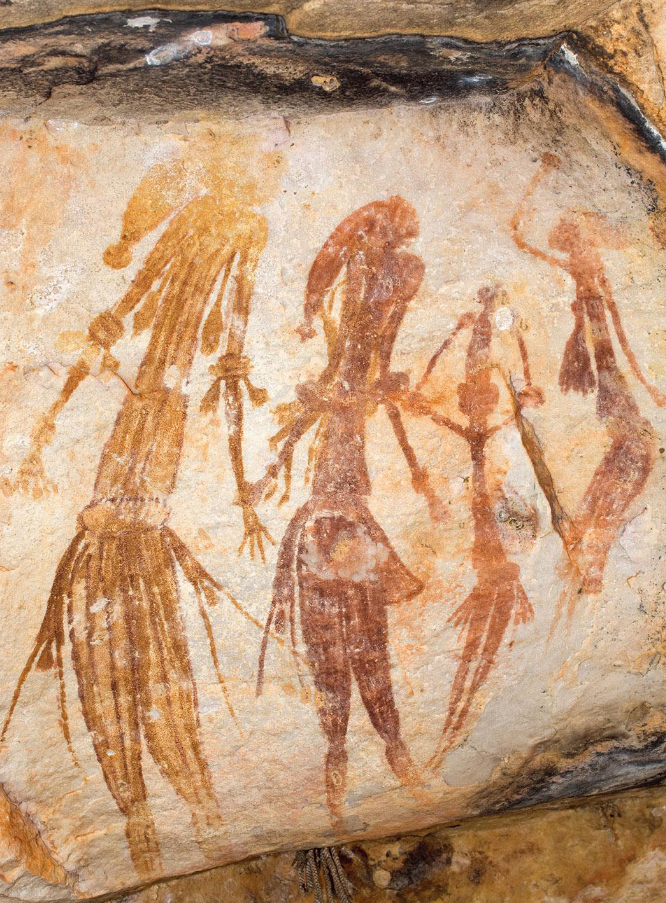
A Group of Gwion Gwion figures, near the King Edward River, Kimberley region, Western Australia, c. 20,000 BCE
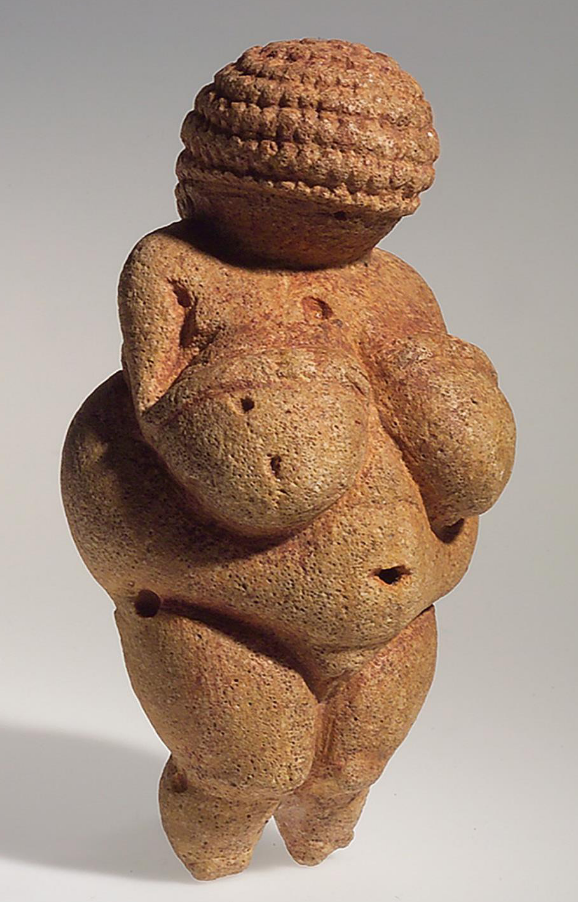
Woman of Willendorf, Austria, 24,000–22,000 BCE. Oolitic limestone, height 4⅜ in. (11.1 cm). Naturhistorisches Museum, Vienna.
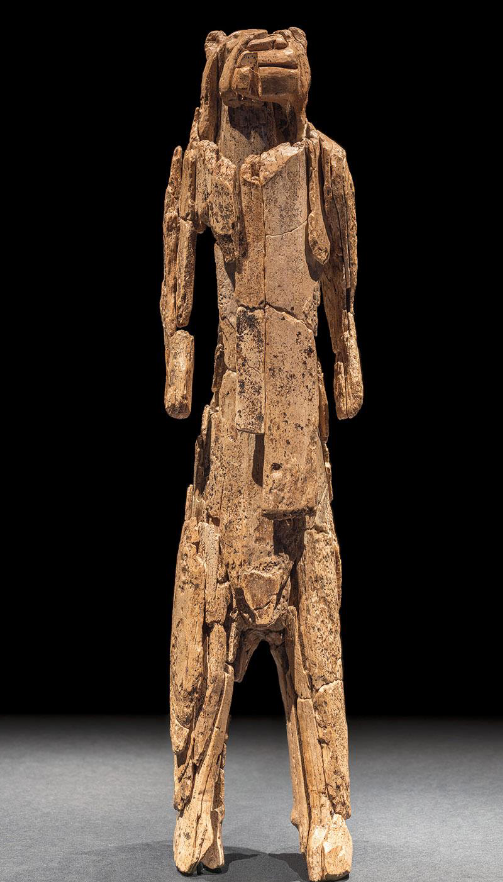
Lion-human figurine, statuette from Hohlenstein-Stadel, southwest Germany, c. 40,000–35,000 BCE. 1” Mammoth ivory, height 11 5/8 in (29.5 cm). Museum Ulm, Germany
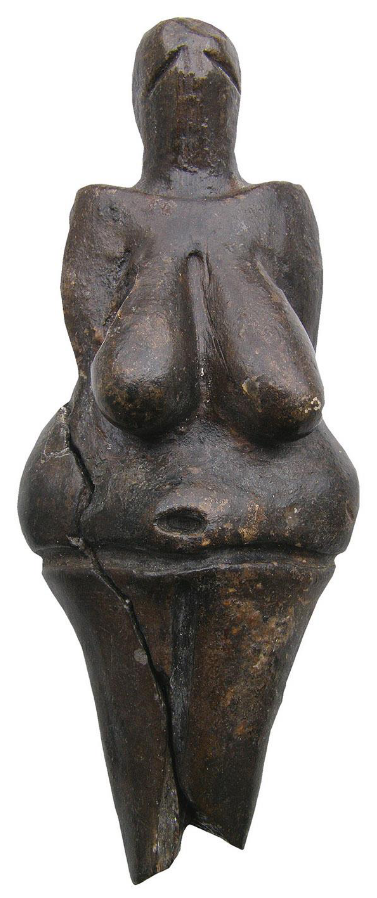
Statuette of a female figure, found at Dolní Věstonice, Moravian basin, Czech Republic, 29,000–25,000 BCE. Fired clay, height 4¼ in. (10.8 cm). Moravian Museum, Brno, Czech Republic.
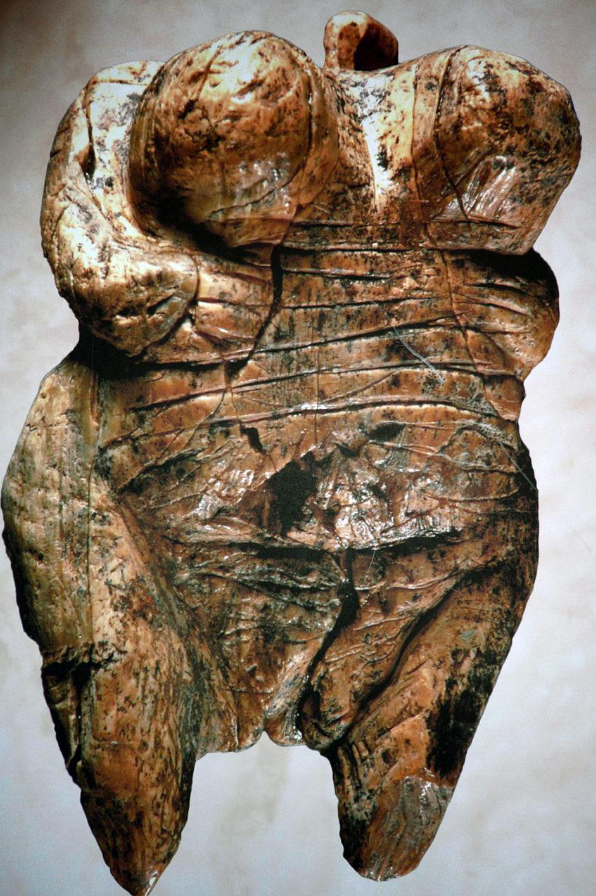
Female figure of Hohlefels,, c. 35,000 BCE., 2.4 inches tall, Ivory, found in cave near Scheiklinge, southern Germany.
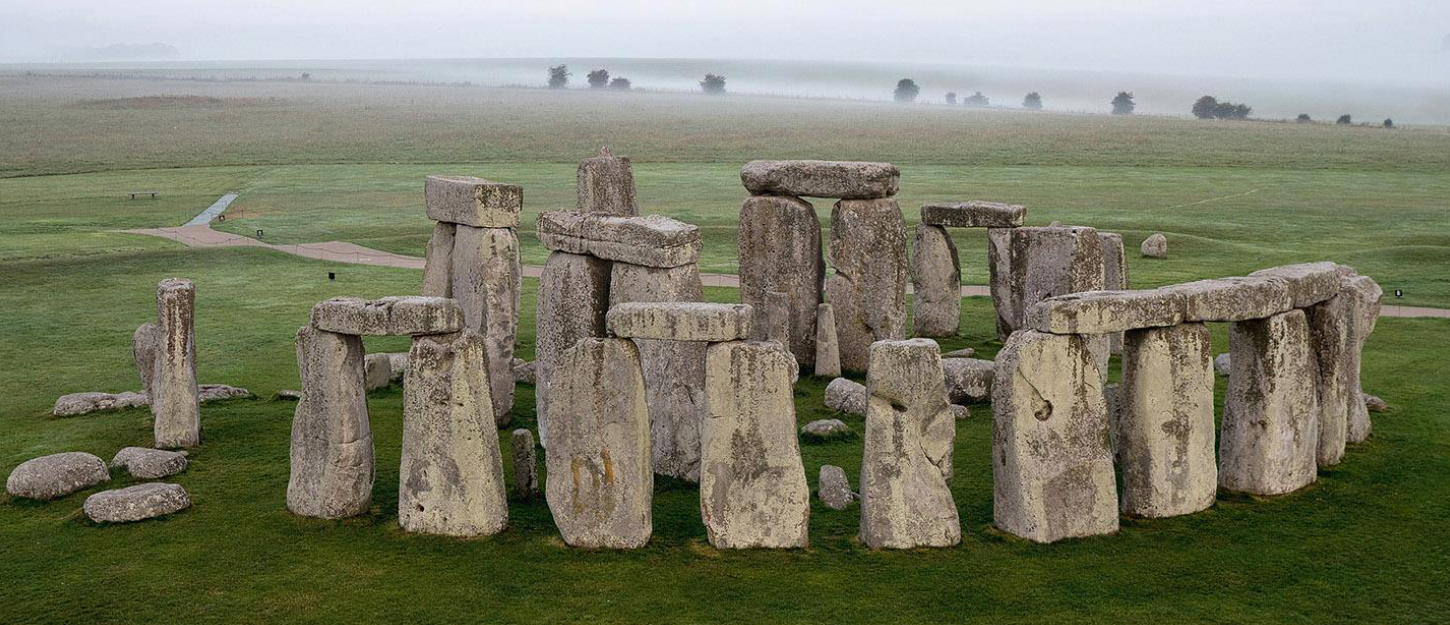
Stonehenge, Salisbury Plain, southern England, 2900–1500 BCE.
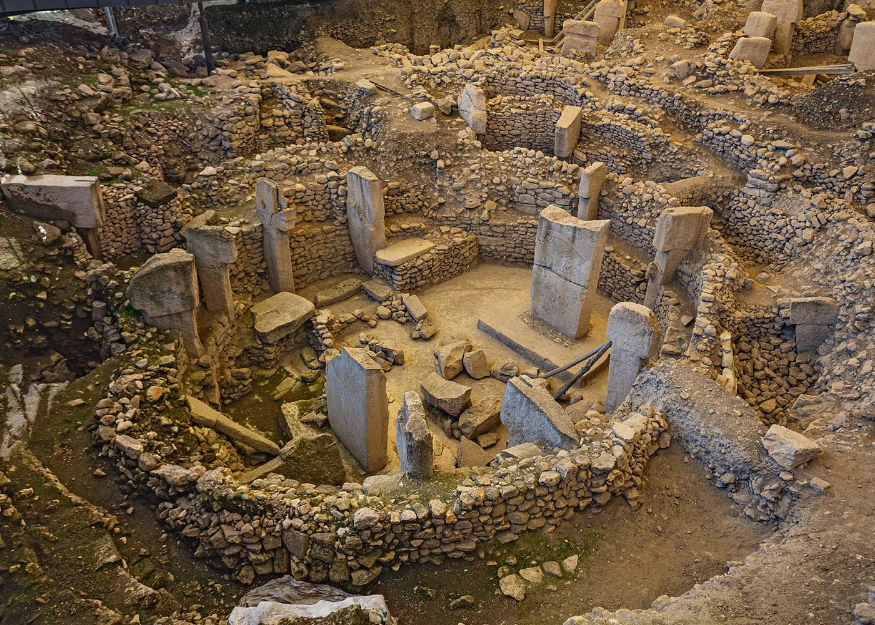
Göbekli Tepe semi-subterranean structure, Southeastern Turkey, c. 9000 BCE.
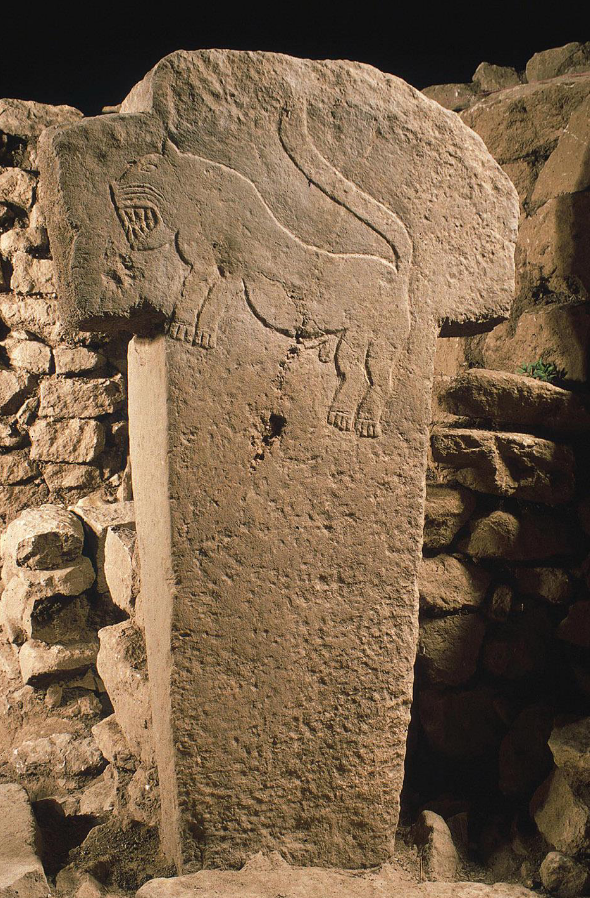
T-shaped pillar with a roaring lion, Göbekli Tepe, Southeastern Turkey, c. 9000 BCE.
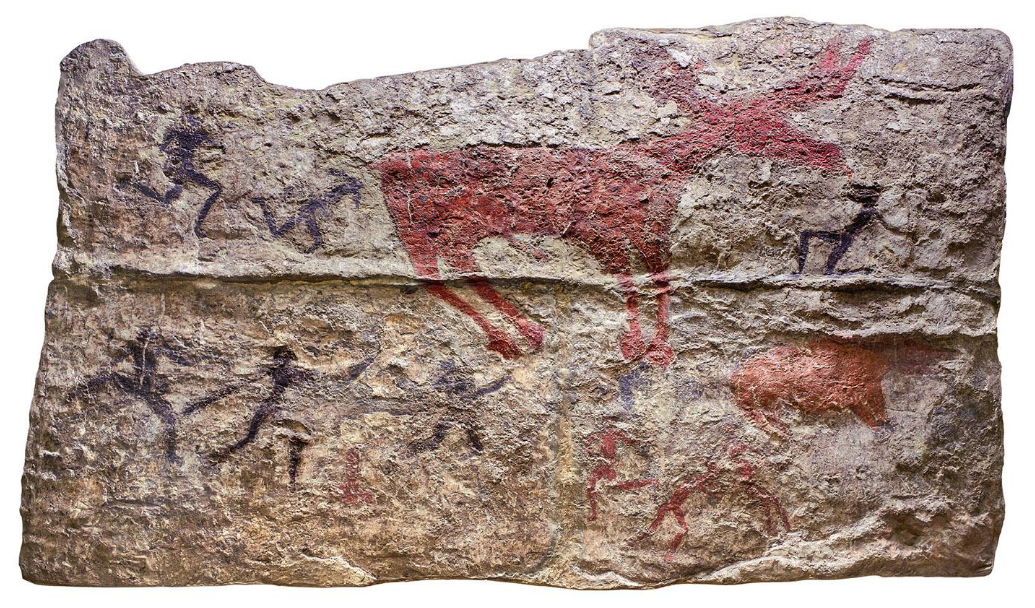
Wall painting from Çatalhöyük, Konya plain, Turkey. 6400–6200 BCE. Anatolian Civilizations Museum, Ankara, Turkey.
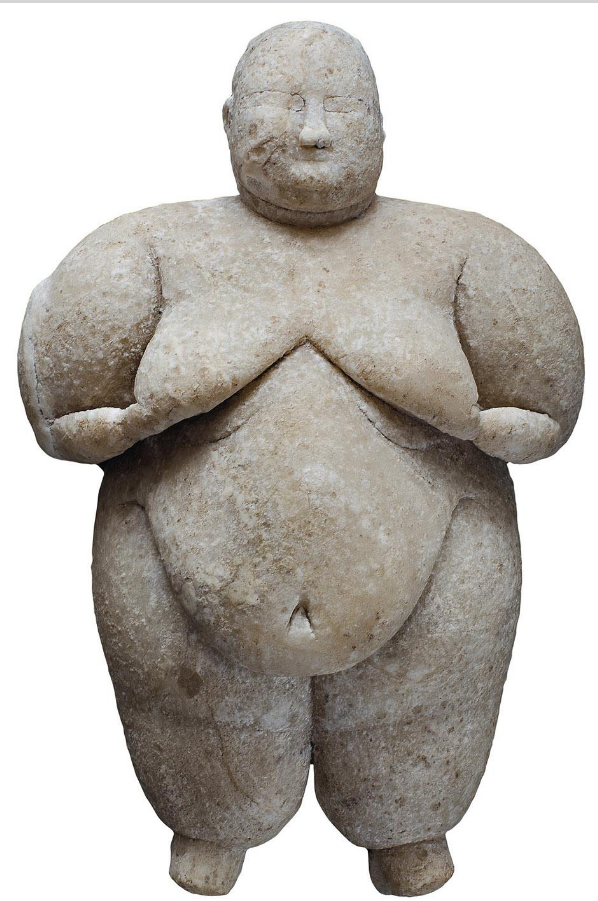
Female figurine from Çatalhöyük , Konya plain, Turkey, 6300–6100 BCE. Limestone/marble, height 6⅝ in. (16.8 cm).
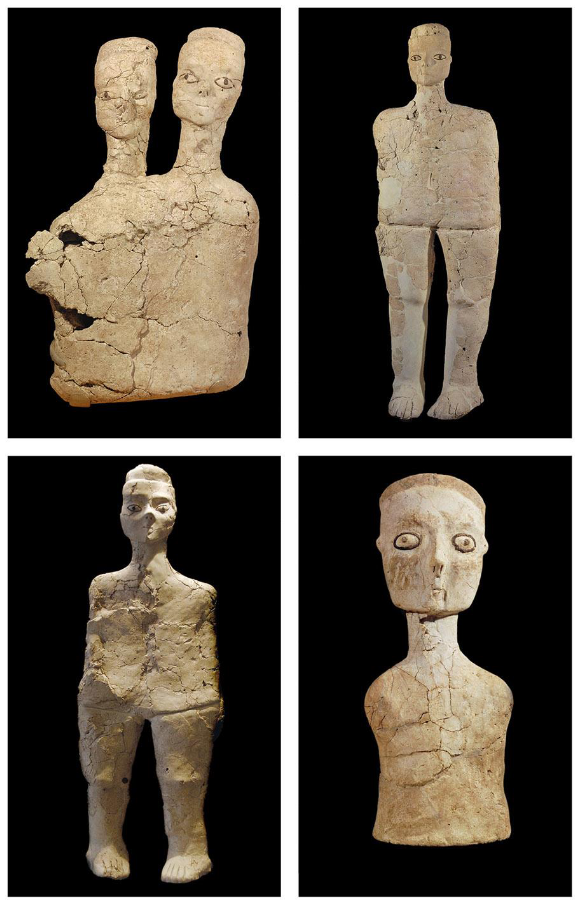
Ain Ghazal statues, Jordan, c. 6750–6500 BCE. Lime plaster, cowrie shell, and bitumen. Approximate height 3 ft. (91 cm). Jordan Archaeological Museum, Amman.
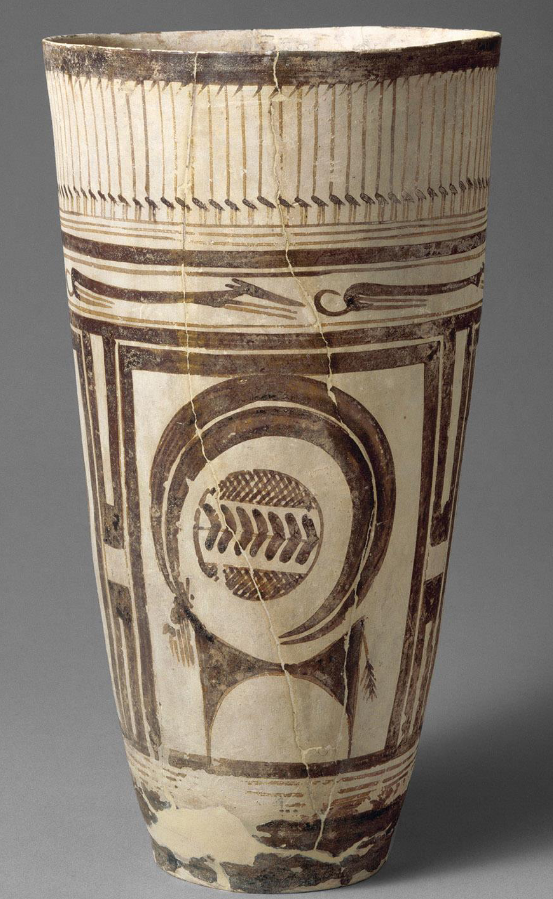
Beaker with decoration of animals, Susa, Iran,
4200–3800 BCE. Painted ceramic, height 11⅜ in. (28.9
cm), diameter 6½ in. (16.5 cm). Musée du Louvre, Paris.
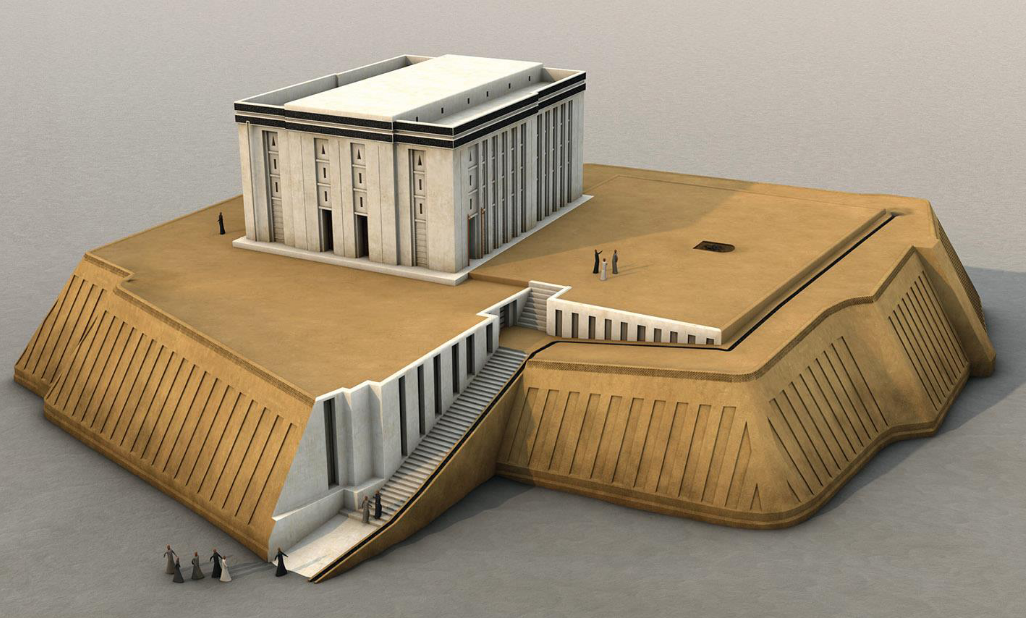
Temple of Anu (White Temple) at Uruk (Warka, Iraq), c. 3300 BCE. Reconstruction proposal, 2012. Whitewashed temple, with niches, approximate area 57½ × 73 ft. (17.53 × 22.25 m).
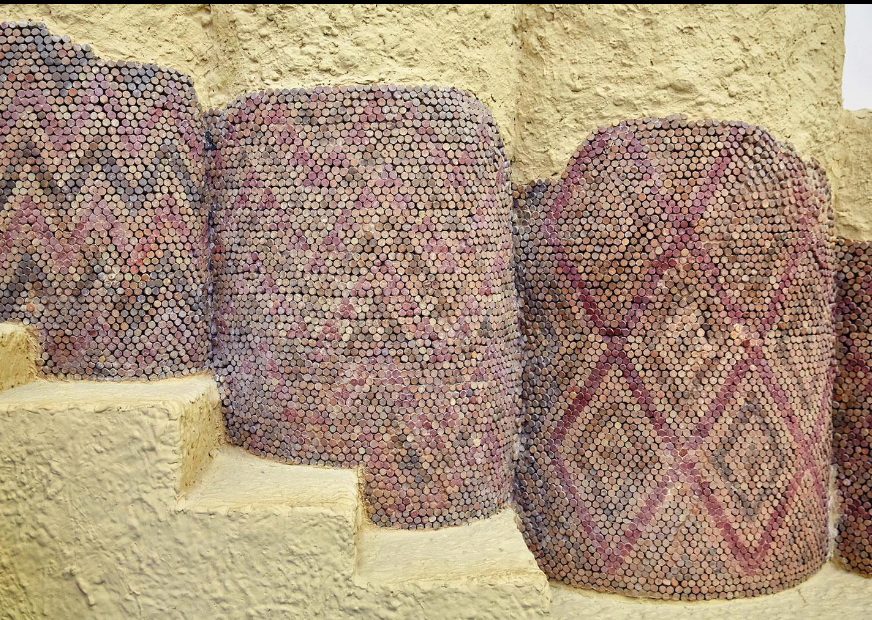
Cone mosaics at Uruk, (Warka, Iraq), late Uruk period, 3300–3100 BCE. Excavated at the Eanna complex. Pergamon Museum, Berlin.
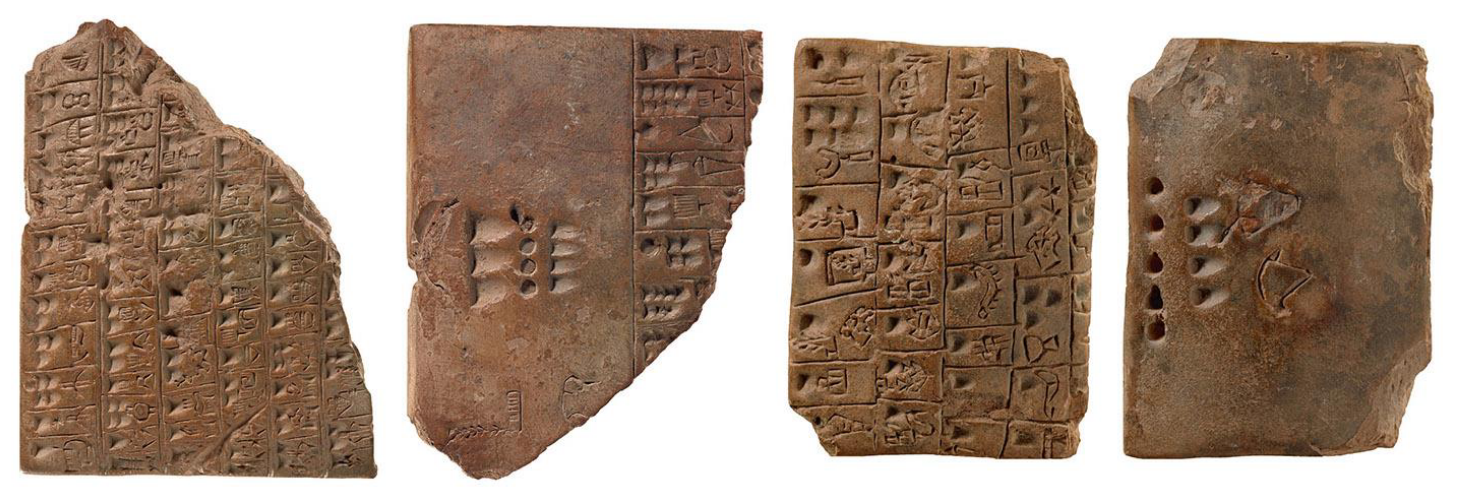
Early tablets from Uruk, from the Eanna precinct. Leftmost tablet: 4 × 3⅛ × 2 in. (9.9 × 7.8 × 5 cm). Vorderasiatisches Museum, Berlin.
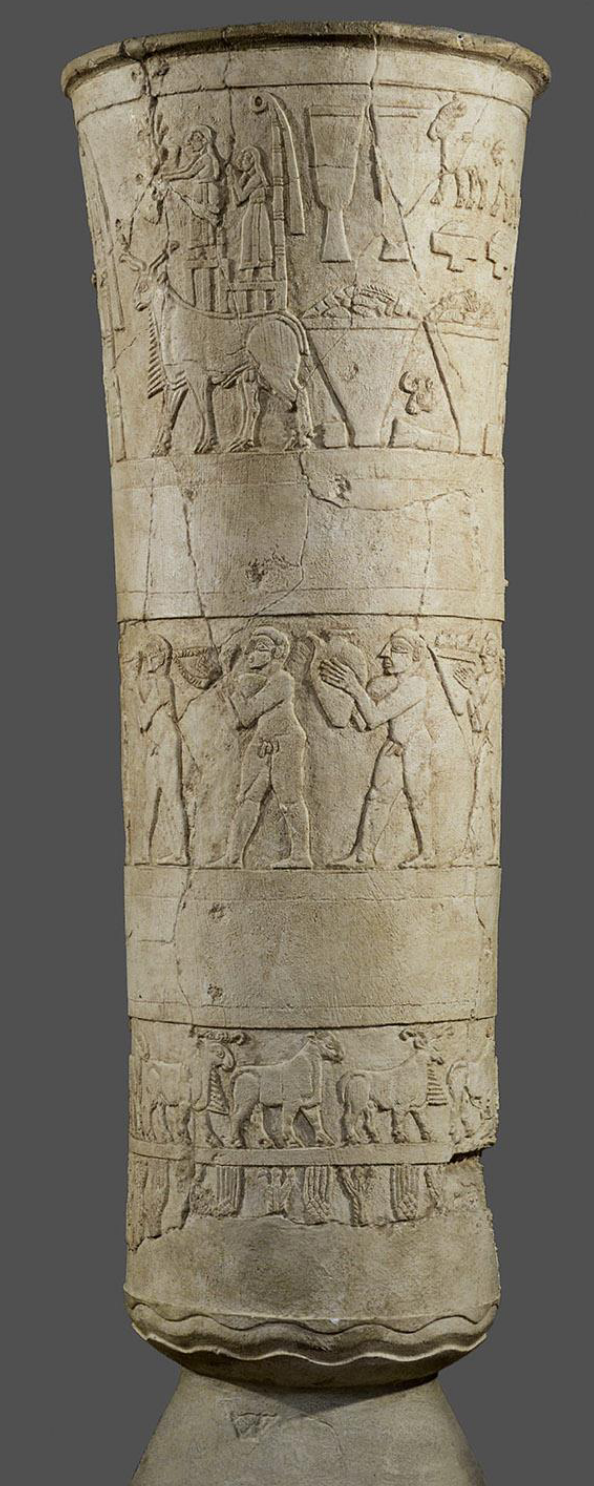
Uruk Vase, carved with low relief representations in registers, c. 3200 BCE. Alabaster, height 41⅜ in. (105.1 cm). Iraq Museum, Baghdad.
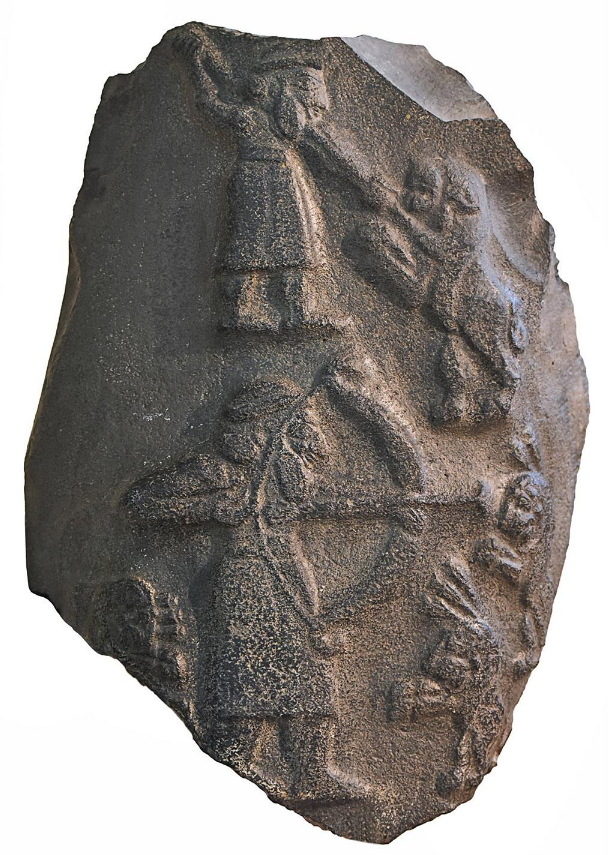
Lion-Hunt Stele from Uruk, (Warka, Iraq), Eanna precinct, 3200 BCE. Basalt, height 31½ in. (80 cm). Iraq Museum, Baghdad.
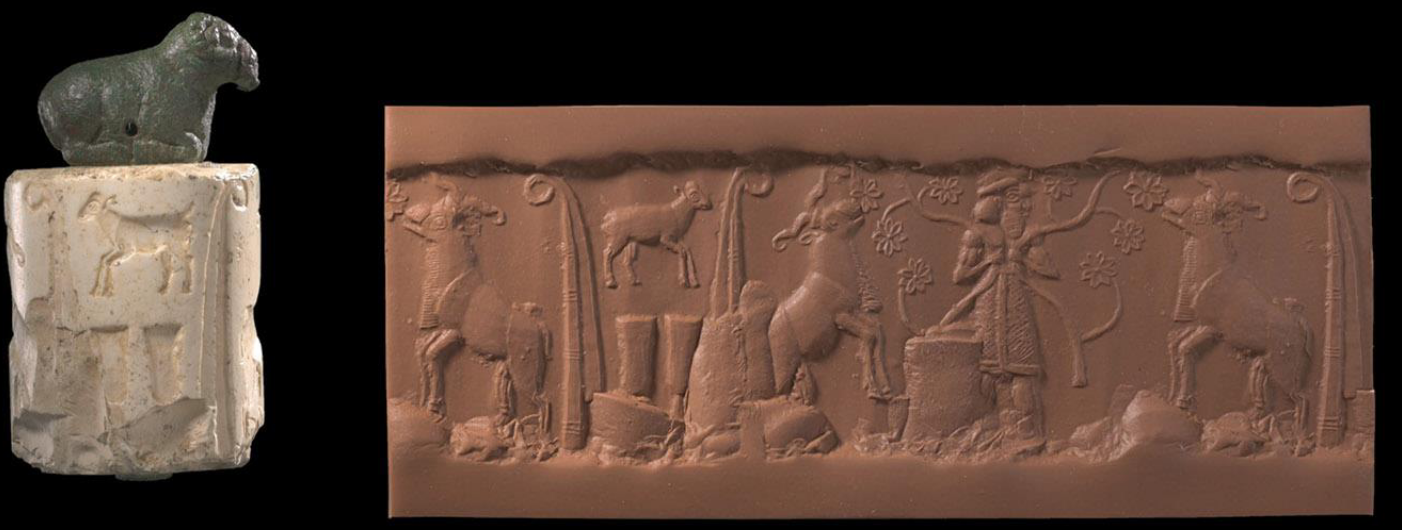
Cylinder seal and its (modern) impression from Uruk, (Warka, Iraq), 3300–3100 BCE. Marble, height 2 in. (5.1 cm). Vorderasiatisches Museum, Berlin.
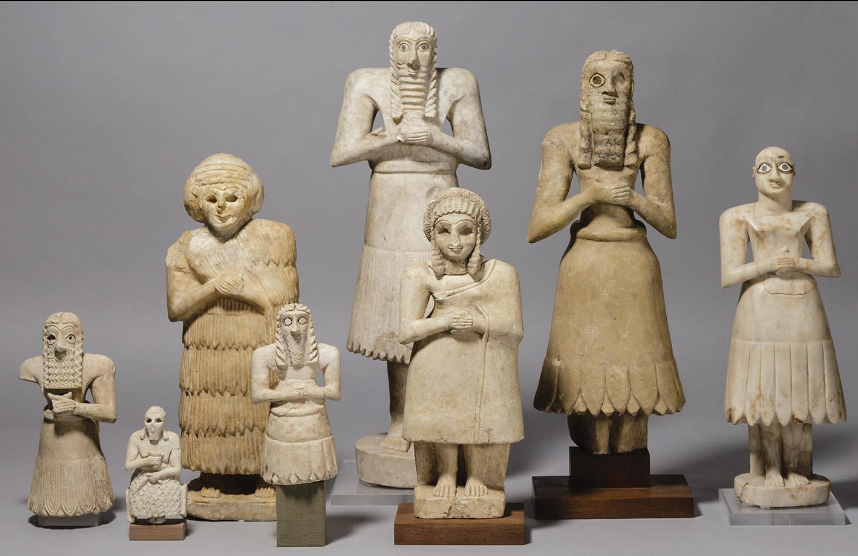
Votive figures from the Temple of Abu, Eshnunna (Tell Asmar, Iraq), 2750–2600 BCE. Gypsum, limestone, and alabaster with eyes inlaid with shell, black limestone, and lapis lazuli, largest figure height 29⅞ in. (75.9 cm). The Oriental Institute Museum, University of Chicago.
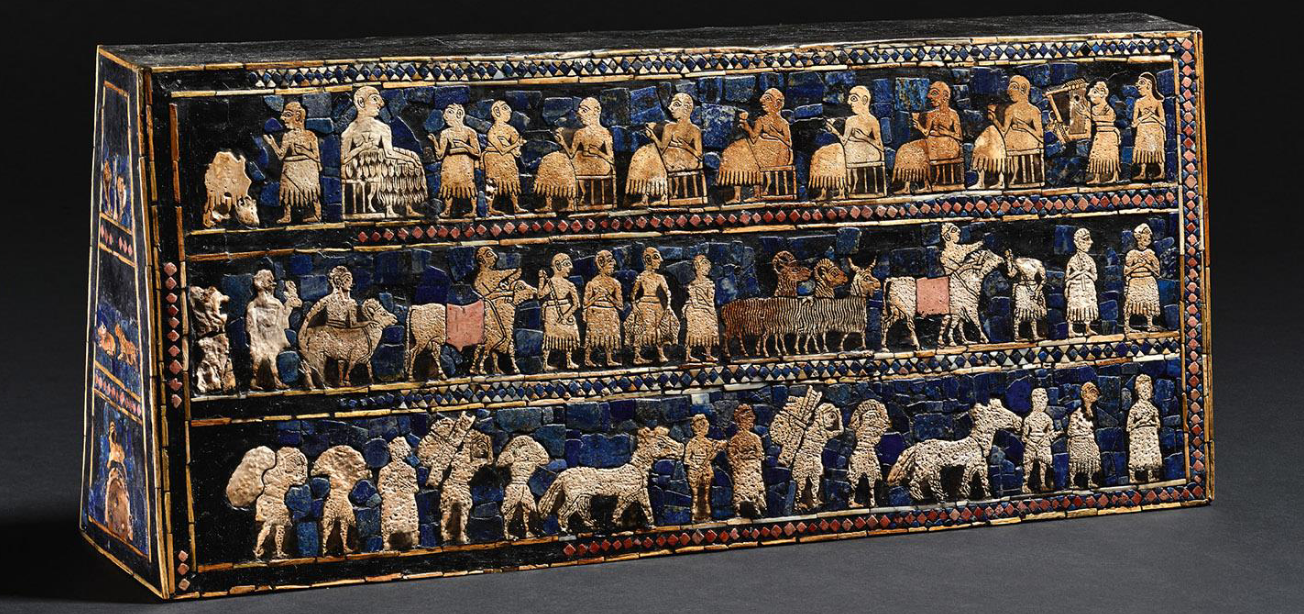
Royal Standard of Ur, feast side. From Tomb 779, Royal Tombs of Ur (Tell el-Muqayyar, Iraq), Early Dynastic IIIA period, 2550–2400 BCE. Wood inlaid with shell, lapis lazuli, red limestone, and bitumen, 7⅞ in. × 18½ in. (20 × 47 cm). British Museum, London.
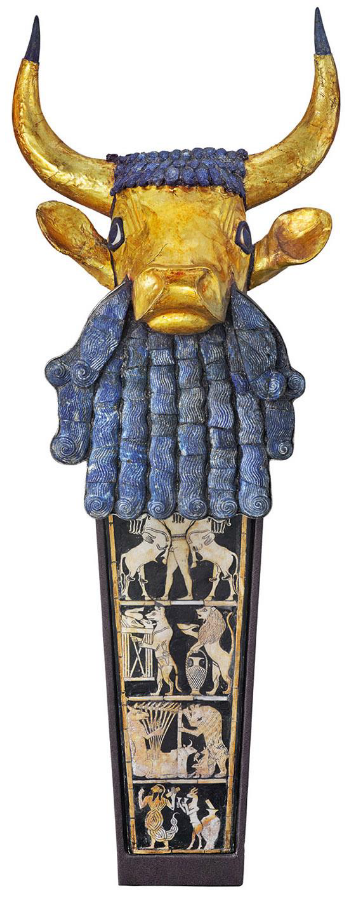
Great Lyre with bearded bull’s head, from Tomb 789, Royal Tombs of Ur (Tell el-Muqayyar, Iraq), Early Dynastic IIIA period, 2550–2400 BCE. Wood, gold, silver, lapis lazuli, shell, and bitumen, length 15¾ in. (40 cm), width 9⅞ in.(25 cm), depth 7½ in. (19 cm). University of Pennsylvania Museum of Archaeology and Anthropology, Philadelphia.
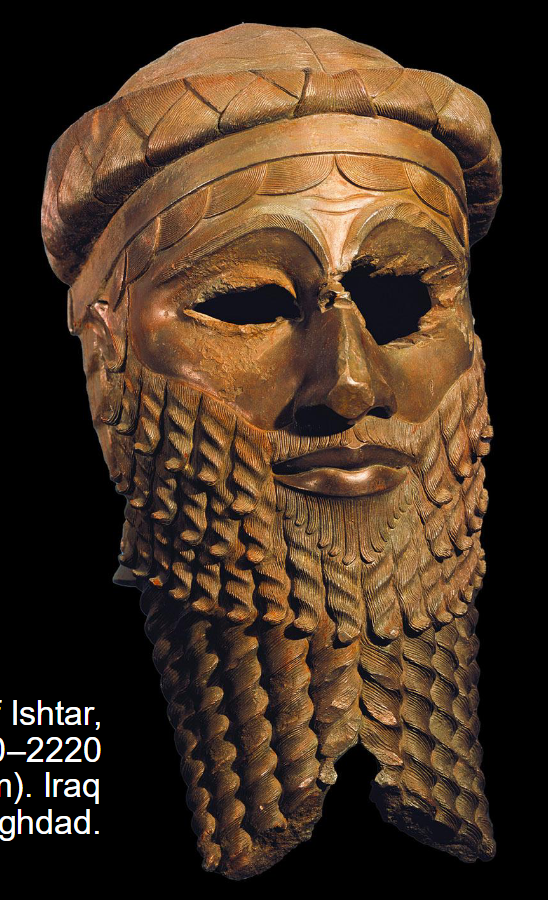
Head of an Akkadian ruler, temple of Ishtar, Nineveh (Mosul, Iraq), Akkadian period, c. 2250–2220 BCE. Copper alloy, height 14⅜ in. (36.5 cm). Iraq Museum, Baghdad.
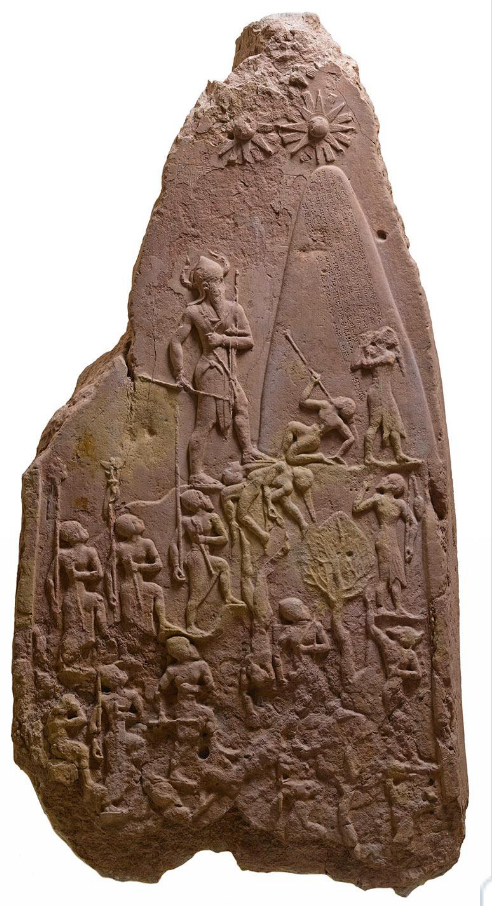
Stele of Naram-Sin, found in Susa, Iran, Akkadian period, 2254–2218 BCE. Limestone, height 6 ft. 6¾ in. (2 m). Musée du Louvre, Paris.
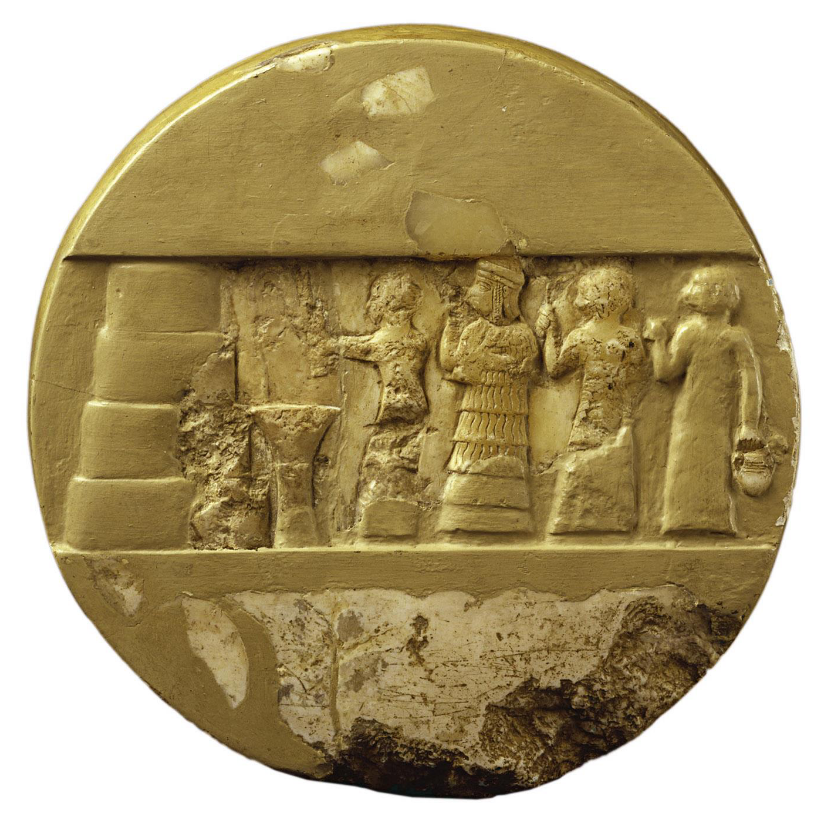
Disk of Enheduanna, found in Ur (Tel el-Muqayyar, Iraq), c. 2300–2275 BCE. Alabaster, diameter 10 in. (25.4 cm). University of Pennsylvania Museum of Archaeology and Anthropology, Philadelphia.
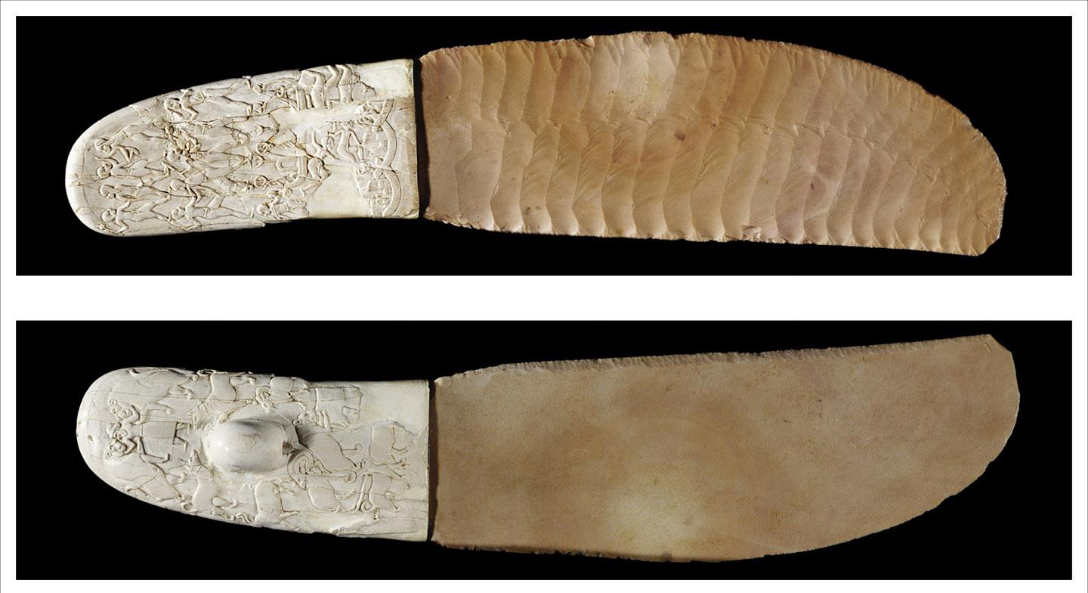
Gebel el-Arak knife (both sides), Gebel el-Arak, Egypt, 3450–3300 BCE (Pre-Dynastic Period). Flint knife and hippopotamus (?) ivory handle, length 10 in. (25.4 cm). Musée du Louvre, Paris.
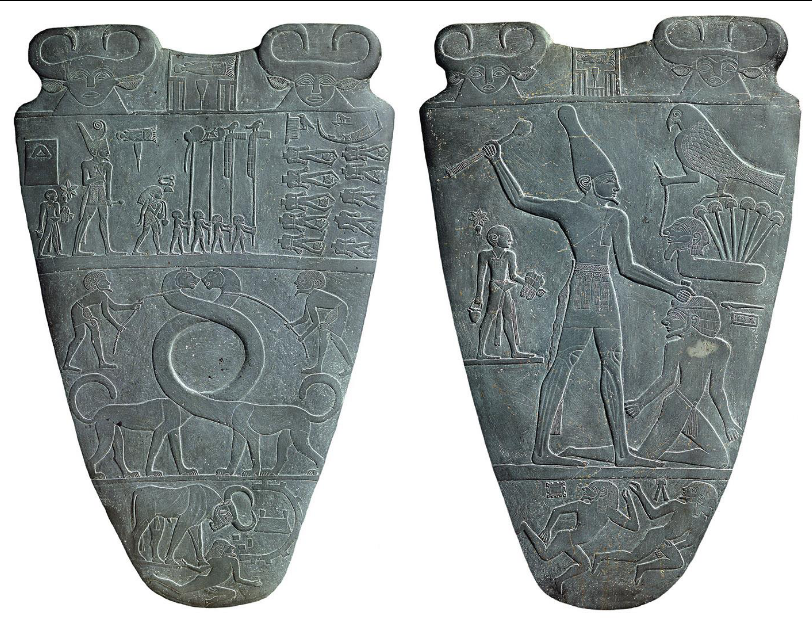
Narmer Palette (both sides). Excavated at the sacred enclosure of Horus, Hierakonpolis, Egypt, end of Dynasty 0, c. 3000 BCE (Pre-Dynastic Period). Graywacke, length 25¼ in. (64.1 cm). Egyptian Museum, Cairo.
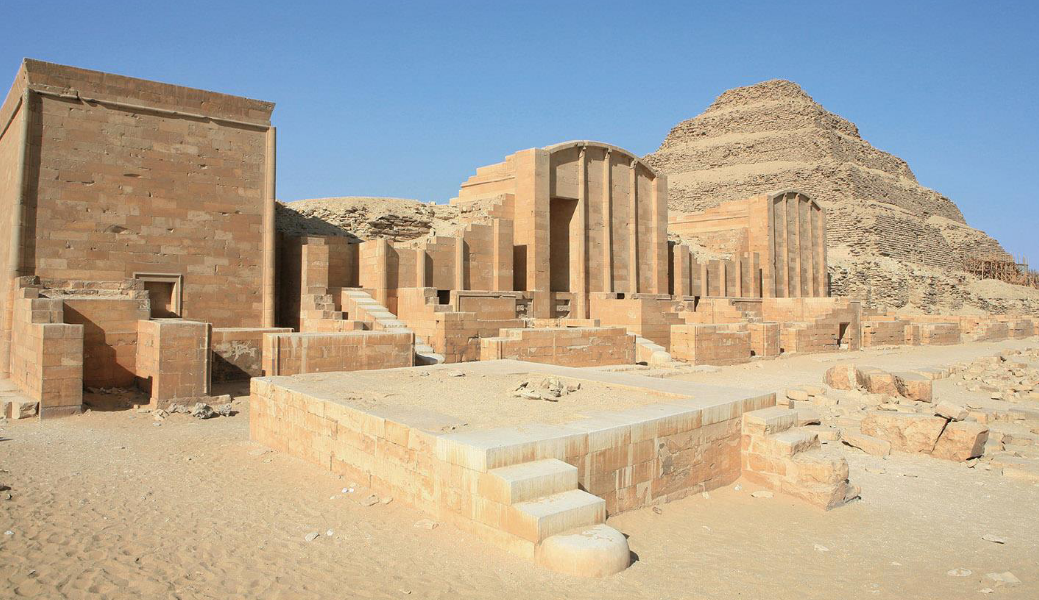
Djoser’s funerary complex, with limestone ashlar buildings for the king’s funerary cult. Saqqara, Egypt. Old Kingdom, Third Dynasty, 2667 –2648 BCE (Old Kingdom).
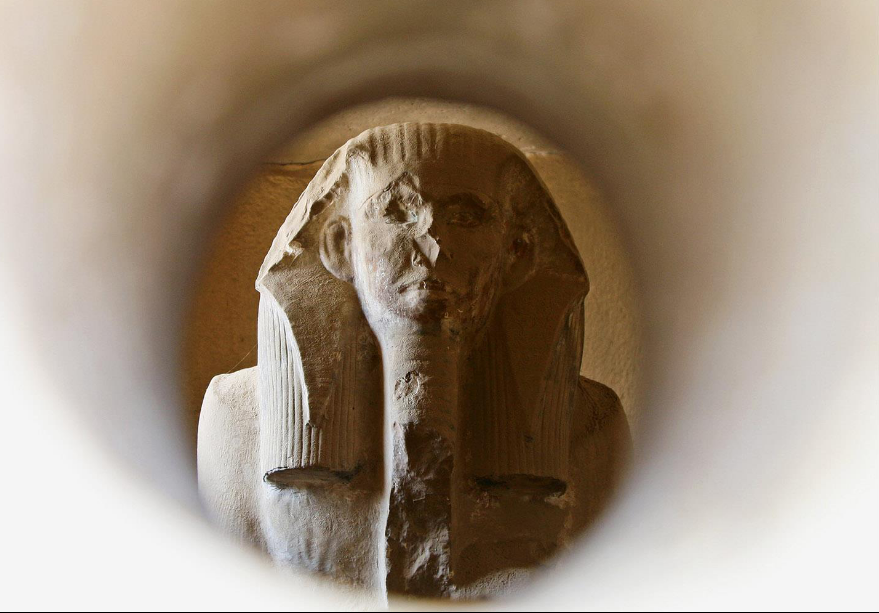
Ka statue of Djoser, Djoser’s funerary complex. Saqqara, Egypt. Old Kingdom, Third Dynasty, 2667–2648 BCE.
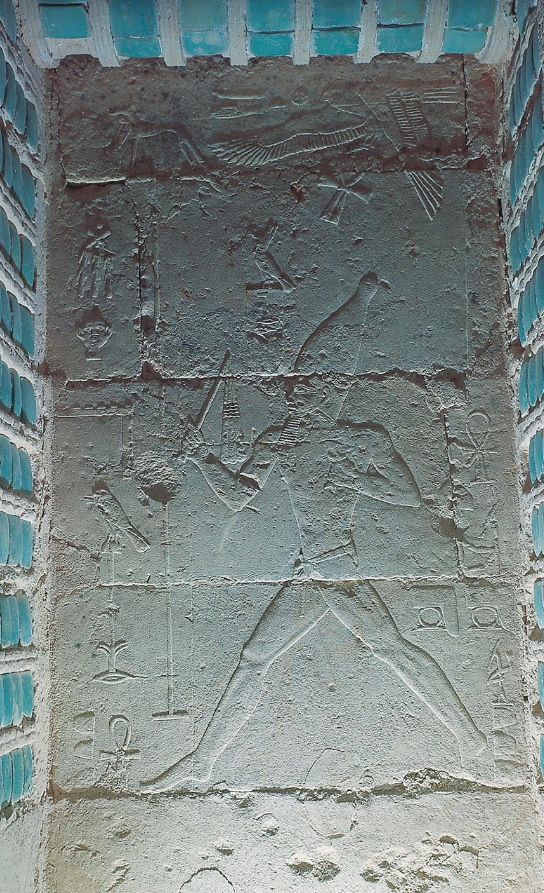
The king running during the Heb-Sed festival, in the underground tomb at Djoser’s funerary complex. Saqqara, Egypt, Old Kingdom, Third Dynasty, 2667–2648 BCE. Stone relief. Ministry of Antiquities, Cairo.
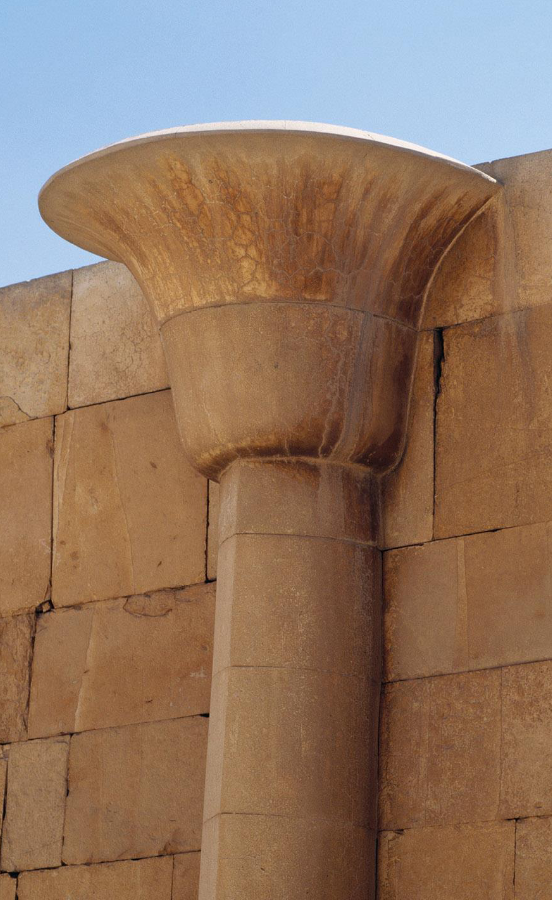
Engaged columns of the House of the North, detail of papyrus-shaped capitals, in the Heb-Sed Court, Djoser’s funerary complex, Saqqara, Egypt, Old Kingdom, Third Dynasty, 2667–2648 BCE.
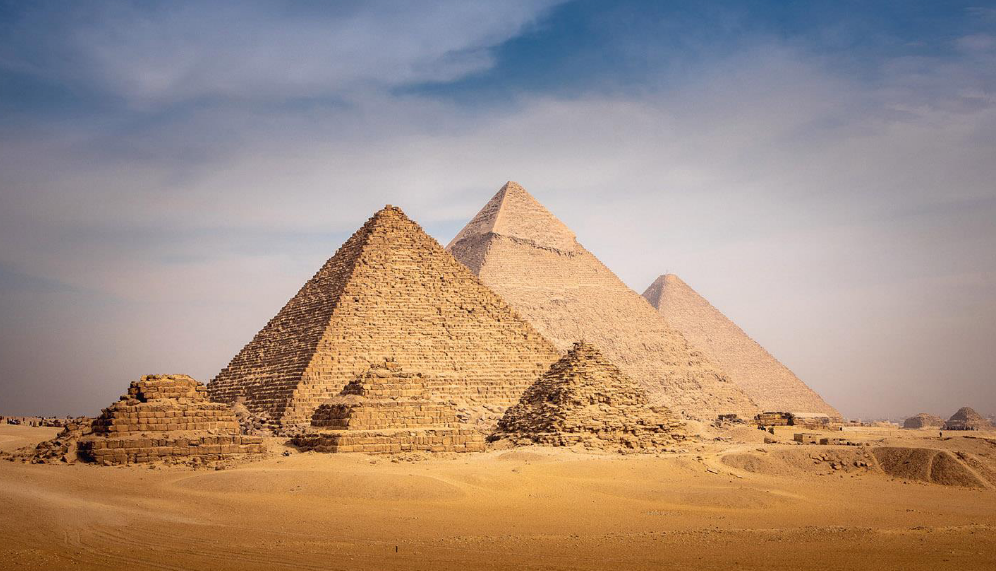
Pyramids on the Giza plateau, Egypt. The pyramid of Khufu is in the foreground; the Great Pyramid of Khafre is in the center; Menkaure’s is on the right, in the background. Old Kingdom, Fourth Dynasty, 2589–2503 BCE.
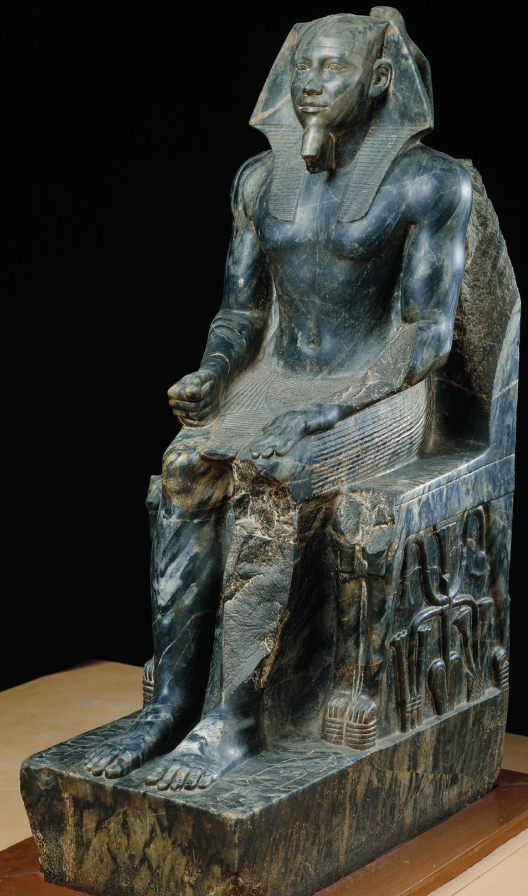
Khafre as the enthroned king, Old Kingdom, Fourth Dynasty, 2558–2532 BCE. Anorthosite gneiss, height 5 ft. 6⅛ in. (1.68 m). Egyptian Museum, Cairo.
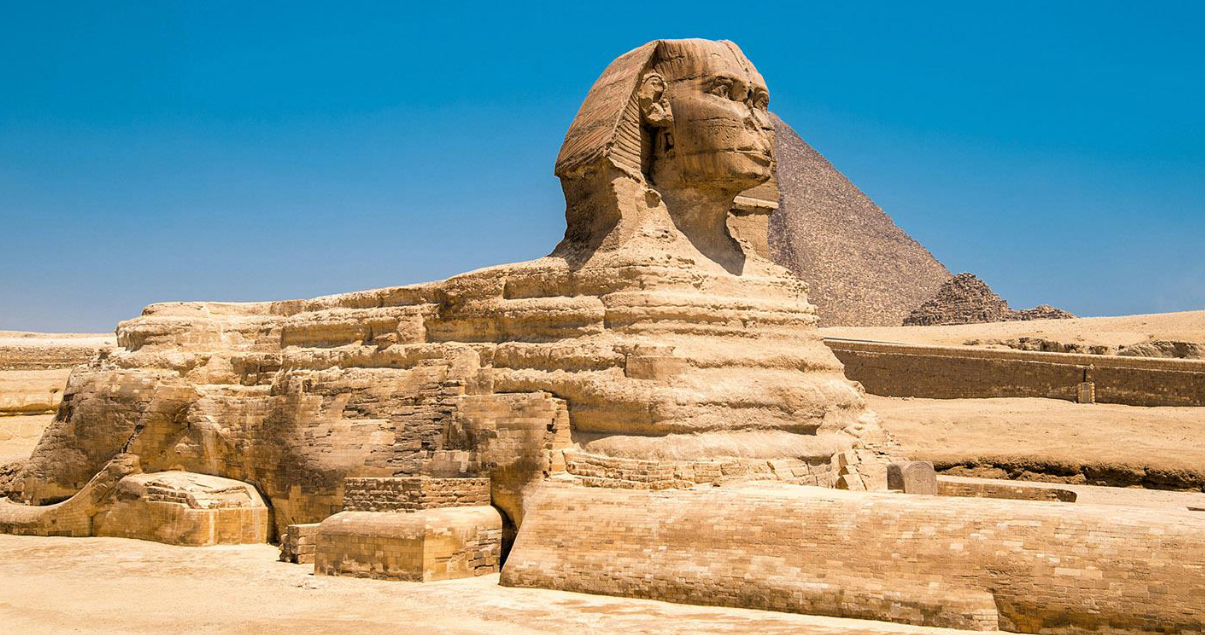
The Great Sphinx, Giza, Egypt, 2558–2532 BCE (Old Kingdom). 60 × 240 ft. (18.29 × 73.15 m)
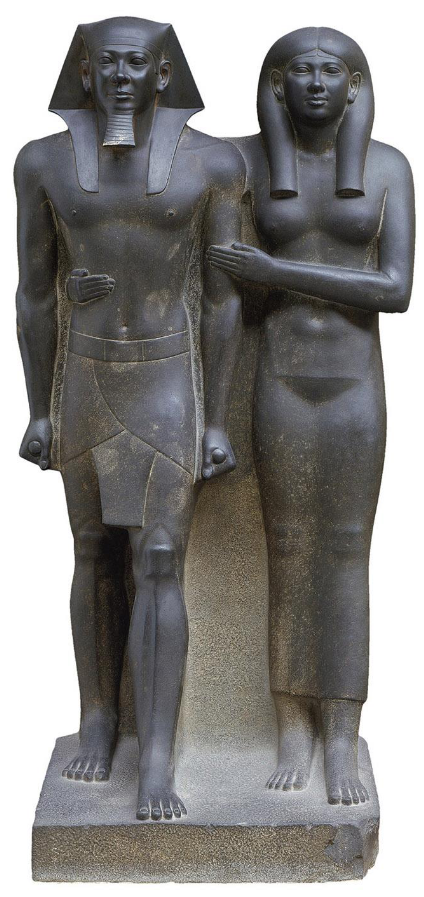
King Menkaure and queen, probably Khamerernebty II. Giza, Egypt, Old Kingdom, Fourth Dynasty, (2532–2503 BCE). Graywacke with traces of red and black pigment, height 4 ft. 8 in. (1.42 m). Museum of Fine Arts, Boston.
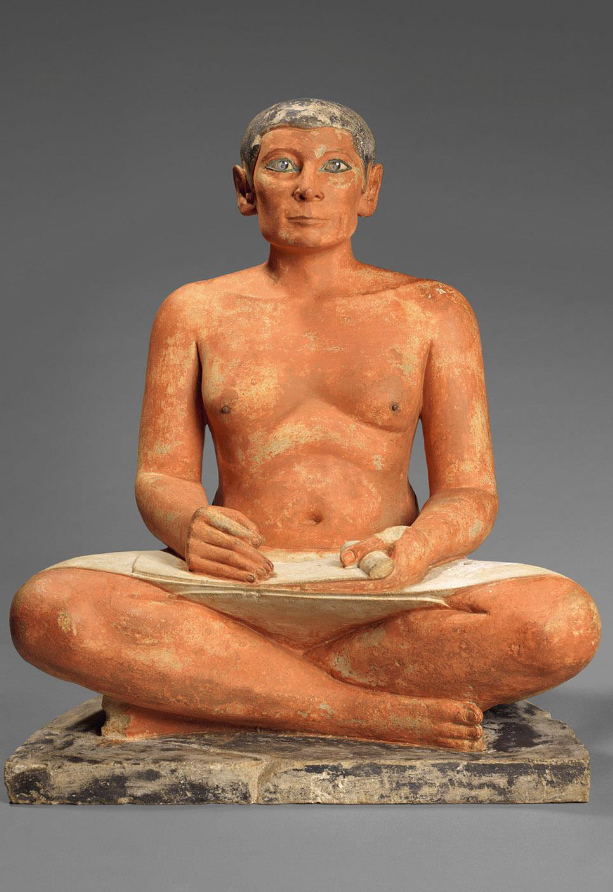
Seated statue of scribe. Found out of context in Saqqara, Egypt. Old Kingdom, Fifth Dynasty, 2494–2345 BCE. Painted limestone, with inlaid eyes of rock crystal, and magnesite mounted in copper, height 21⅛ in. (53.6 cm). Musée du Louvre, Paris.
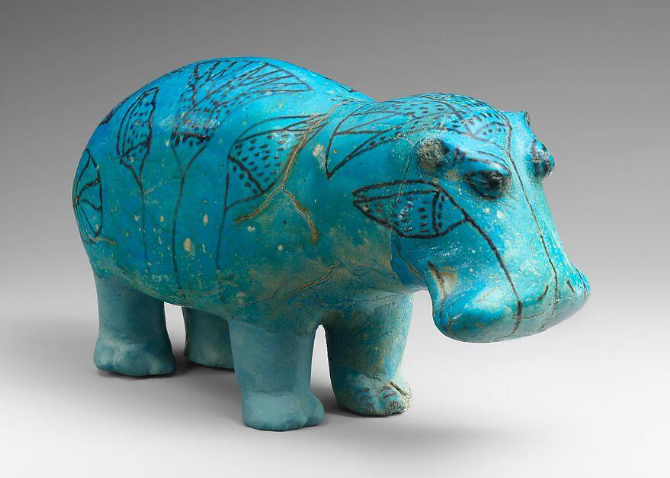
Standing Hippopotamus, c. 1961-1878 BCE. Middle Kingdom, Egypt. faience. (20 x 7.5 x 11.2cm). The Met.
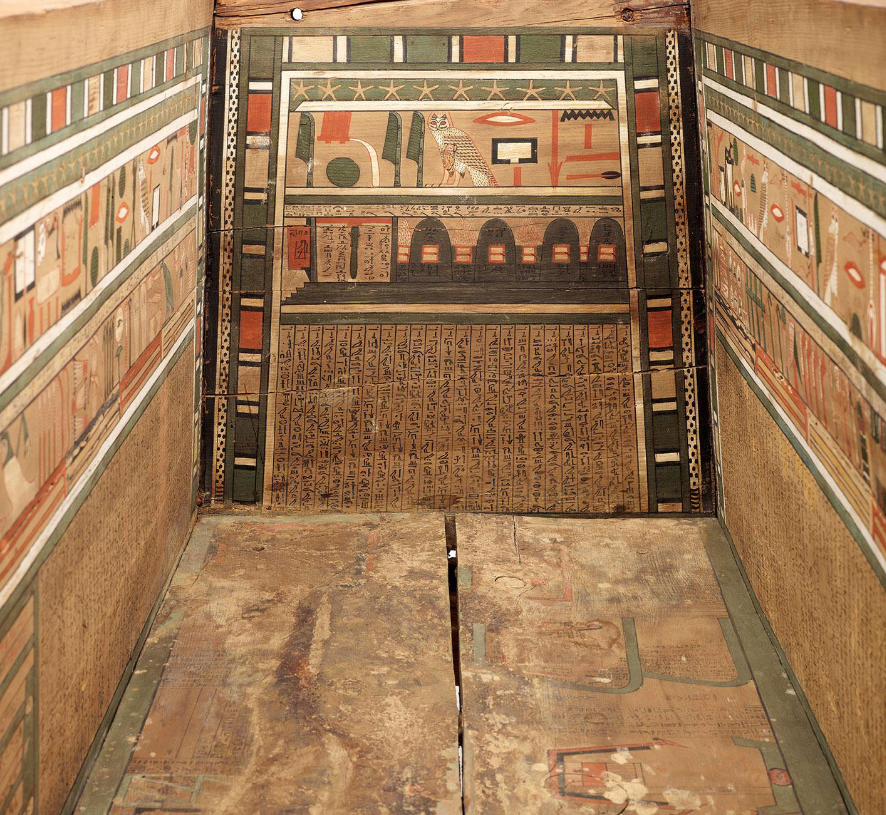
Coffin text in the coffin of Gua, Deir el-Bersha, Egypt, Twelfth Dynasty, c. 1850 BCE (Middle Kingdom). Painted wood, length 7 ft. 5 in. (2.26 m). British Museum, London.
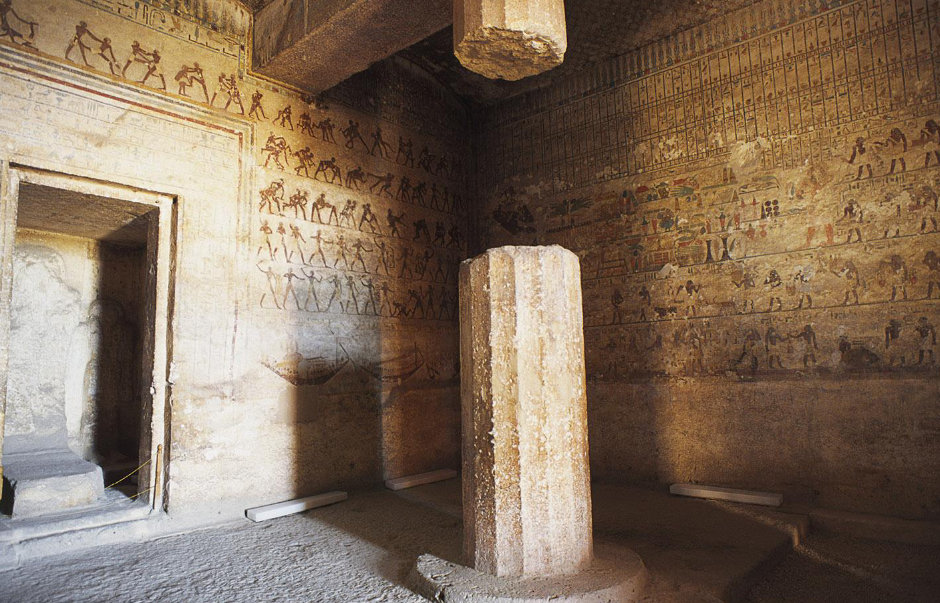
Interior hall of the rock-cut tomb of Amenemhat, Tomb 2 (BH2), Beni Hasan, Abu Qurqas, Egypt, Twelfth Dynasty, c. 1900 BCE (Middle Kingdom).
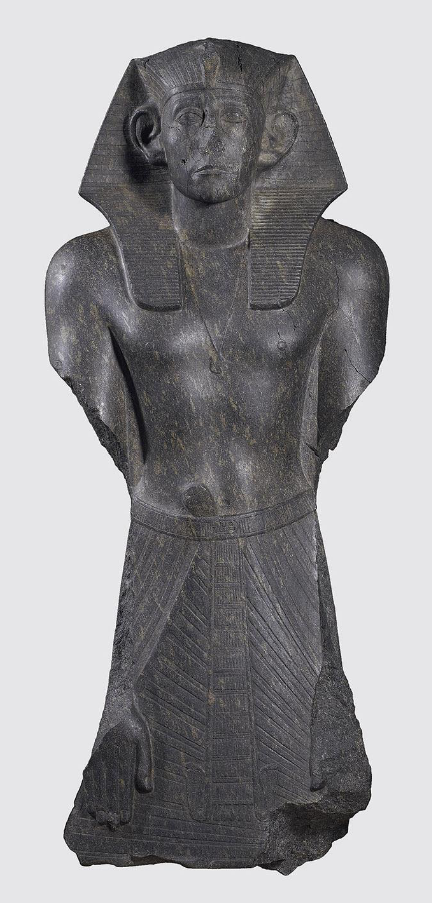
Senusret III, excavated from the funerary complex of Mentuhotep, Lower South Court, Deir el-Bahri, Twelfth Dynasty, 1870–1831 BCE (Middle Kingdom). Granodiorite, height 4 ft. (1.22 m). British Museum, London.
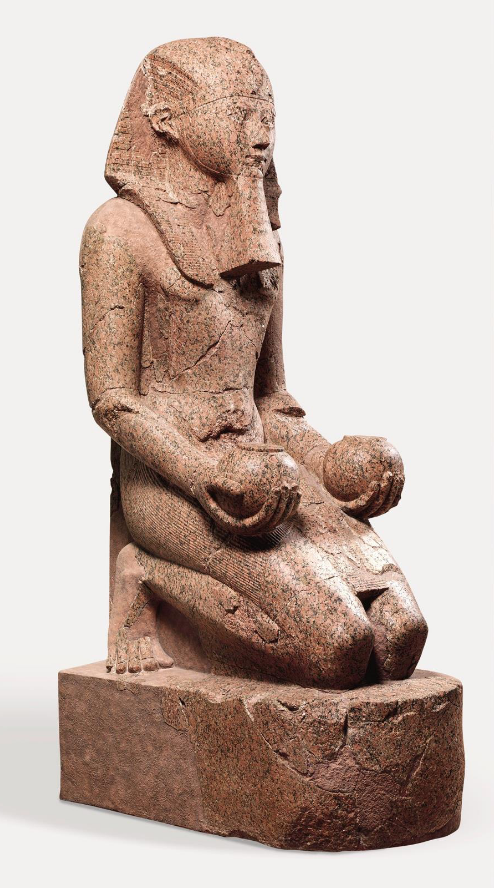
Large Kneeling Statue of Hatshepsut, c. 1479-1458 BCE. New Kingdom, Egypt. granite. The Met.
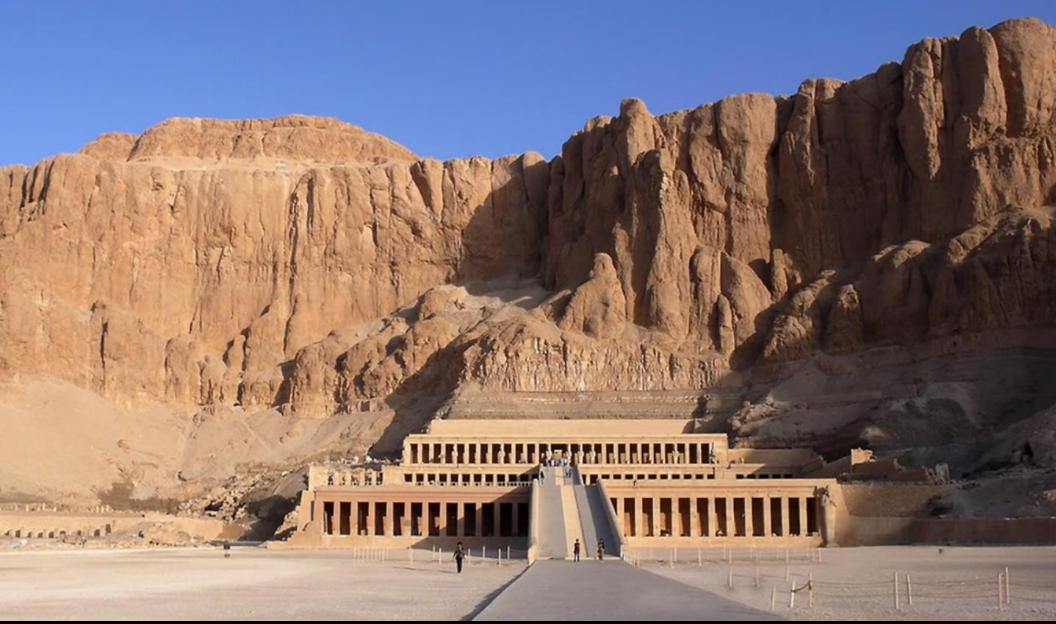
Funerary complex of Hatshepsut. Deir el-Bahri, Egypt, Eighteenth Dynasty, c. 1473–1458 BCE (New Kingdom).
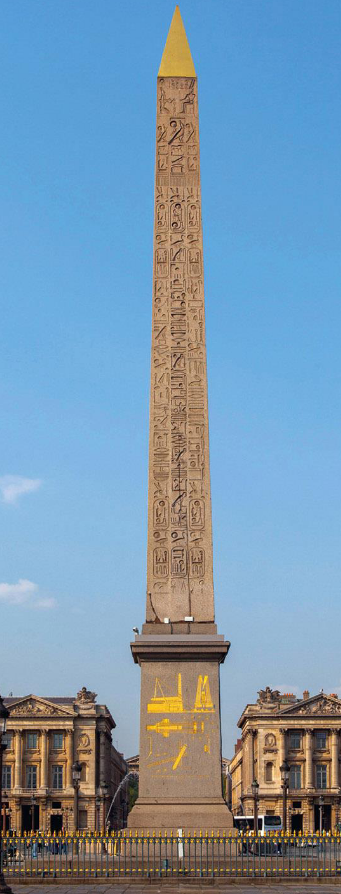
Obelisk taken from the temple complex at Thebes, Luxor, Egypt. Granite, height 75 ft. (22.86 m). Now standing in the Place de la Concorde, Paris.
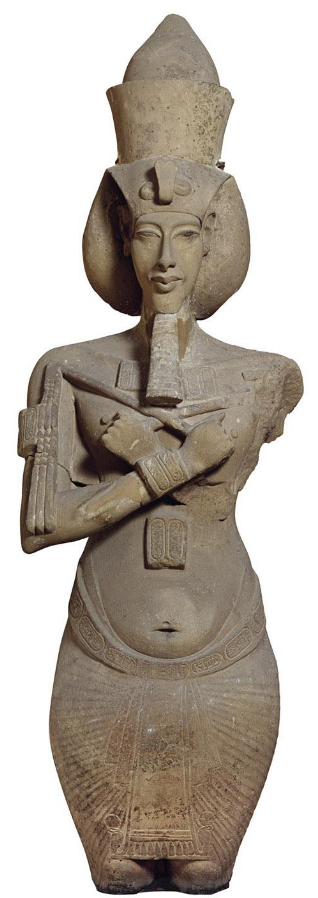
Colossal statue of Akhenaten (Amenhotep IV), from the Aten temple at Karnak, Egypt, Eighteenth Dynasty, New Kingdom. Sandstone, height 12 ft. 9⅞ in. (3.91 m). Egyptian Museum, Cairo
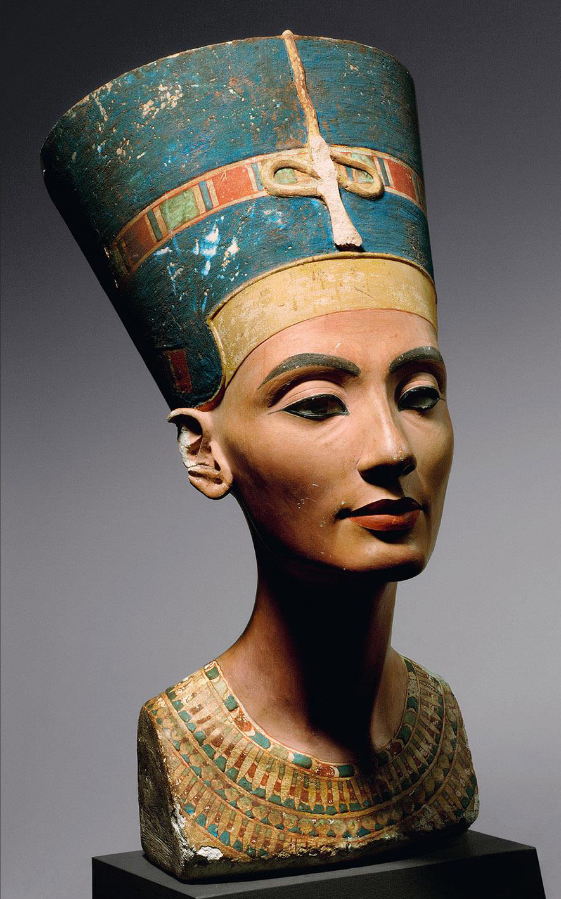
Bust of Nefertiti, from Akhetaten (Tell el-Amarna, Egypt), Eighteenth Dynasty, 1352–1336 BCE (New Kingdom). Painted limestone with gypsum plaster layers, height 18 in. (45.7 cm). Ägyptisches Museum und Papyrussammlung, Berlin.
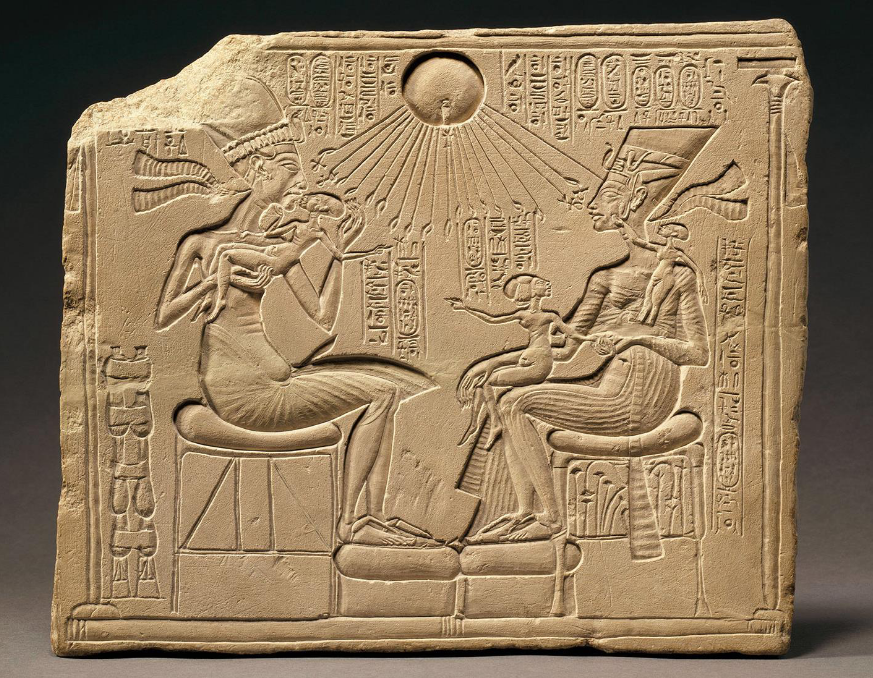
Stele of Akhenaten (Amenhotep IV), Nefertiti, and their children, from Akhetaten (Tell el-Amarna, Egypt), Eighteenth Dynasty, 1352–1336 BCE (New Kingdom). Limestone with painted sunken relief, 17⅛ × 15⅜ in. (43.5 × 39.1 cm). Ägyptisches Museum und Papyrussammlung, Berlin.
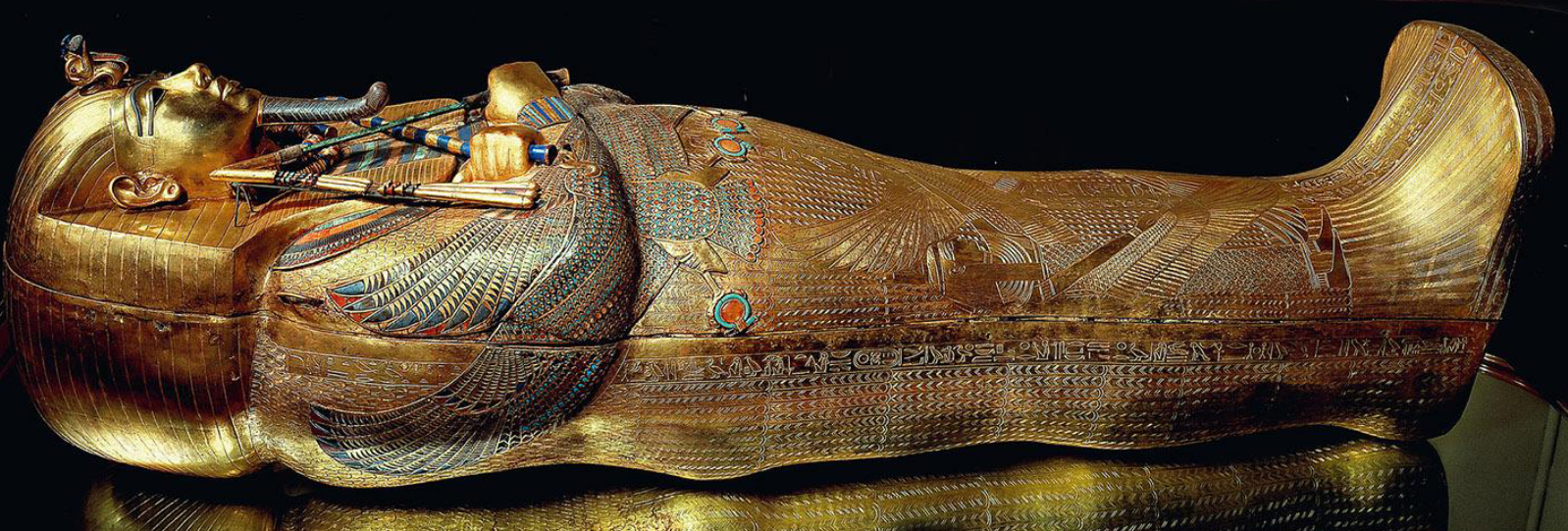
Inner coffin of Tutankhamun, from his tomb in the Valley of the Kings, Eighteenth Dynasty, c. 1327 BCE (New Kingdom). Solid gold with inlaid colored ceramics and semi-precious stones, 20 × 74 × 20 in. (50.8 × 188 × 50.8 cm). Egyptian Museum, Cairo.
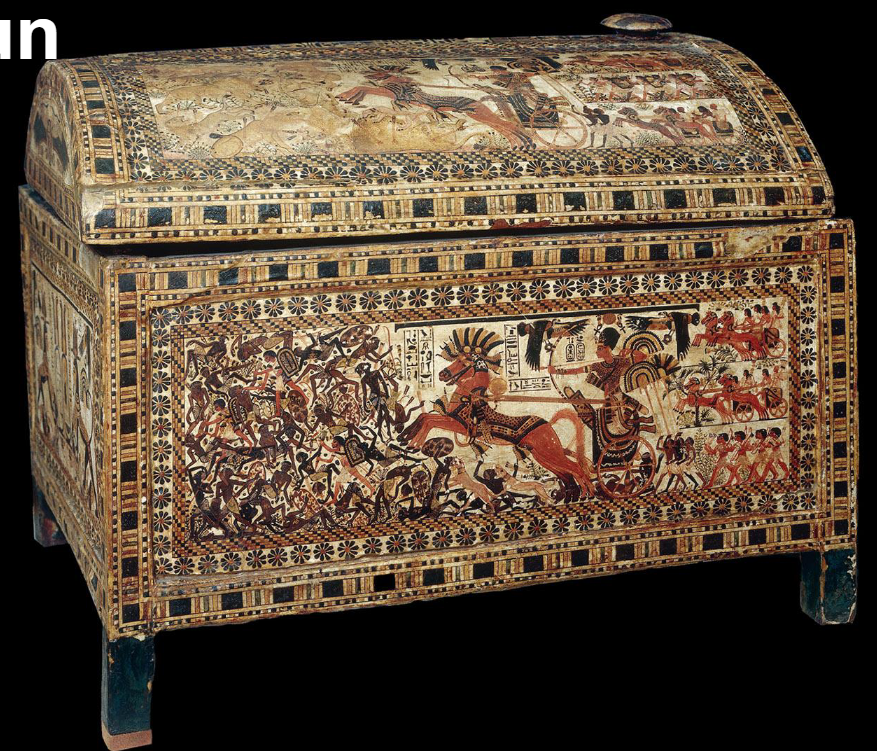
Wooden chest of Tutankhamun, from his tomb in the Valley of the Kings, Egypt, Eighteenth Dynasty, 1336–1327 BCE (New Kingdom). Wood inlaid with ivory, height 17⅜ in. (44.13 cm). Egyptian Museum, Cairo.
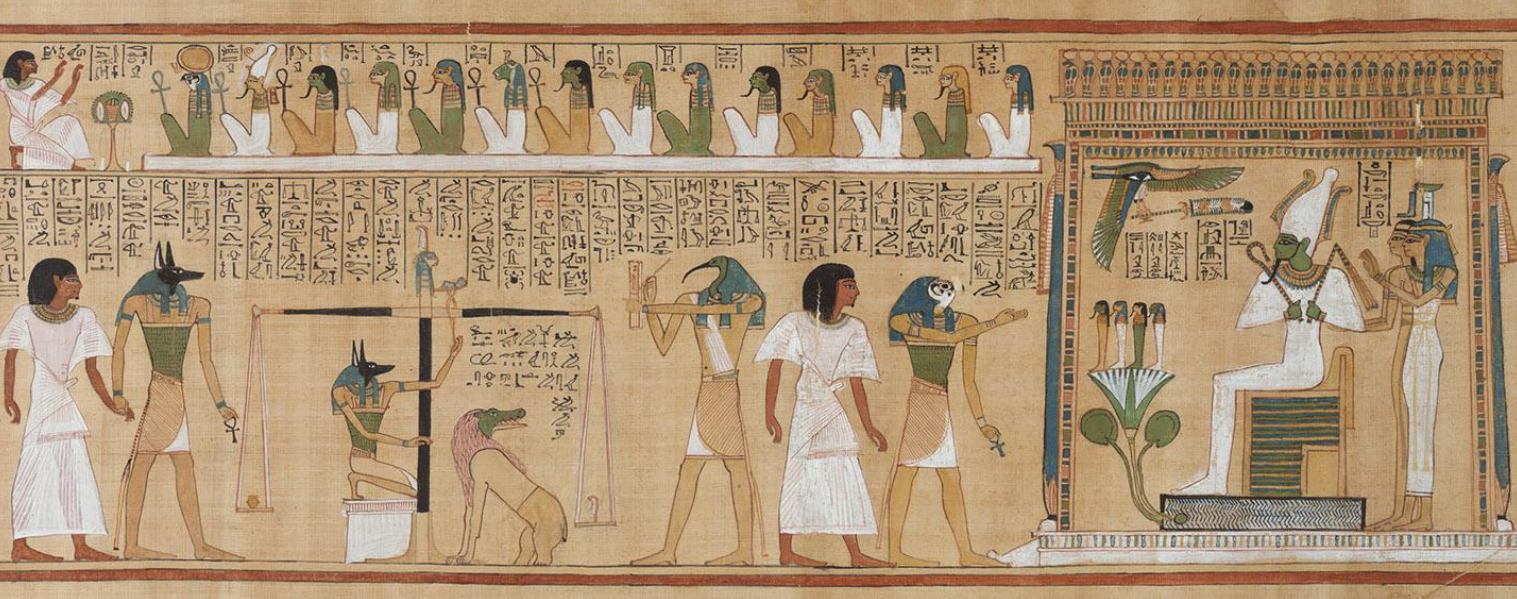
Last Judgment before Osiris, Book of the Dead, c. 1275 BCE (New Kingdom). Painted papyrus, height 15⅜ in. (39.1 cm). British Museum, London.
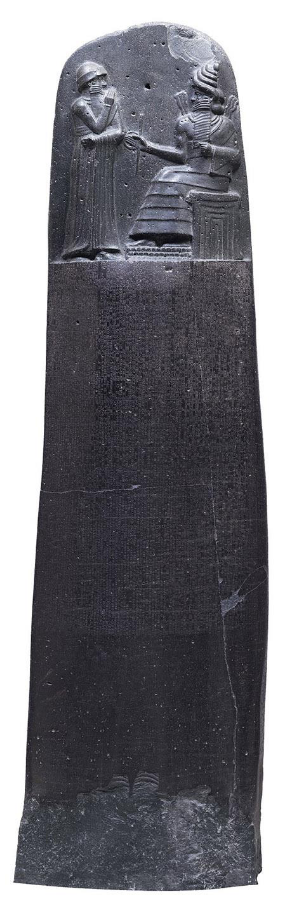
Law stele of Hammurabi. c. 1760 BCE. Originally installed in Babylon but excavated at Susa (Iran). Black basalt, height 7 ft. 4⅝ in. (2.25 m). Musée du Louvre, Paris.
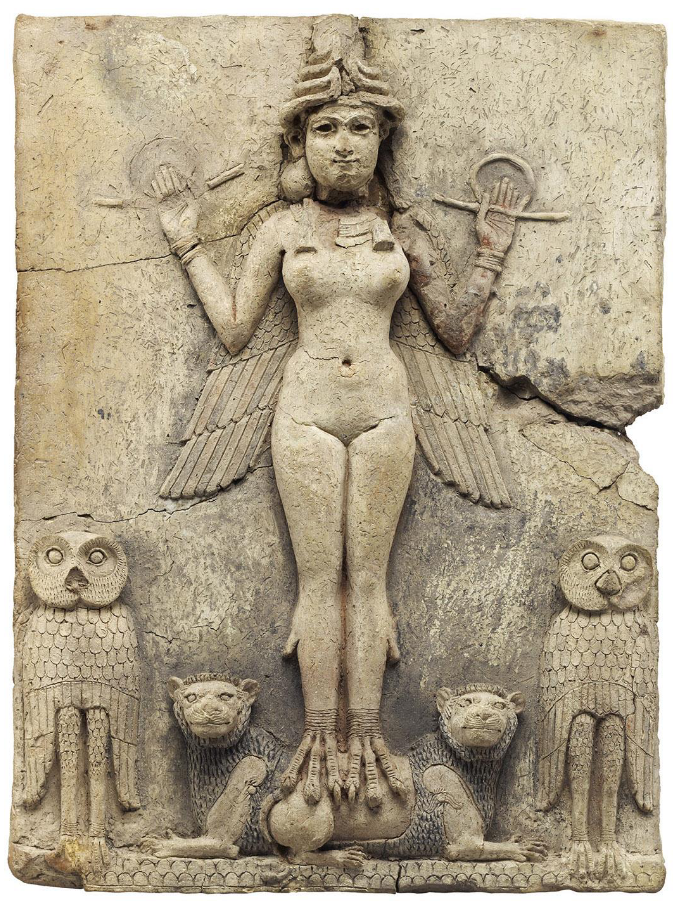
The Burney Relief (“Queen of the Night”), possibly from Larsa, Iraq (provenance unknown; acquired in the1920s in southern Iraq). Old Babylonian, c. 1900–1700 BCE. Straw-tempered clay pressed onto a mold, 19½ × 14⅝ in. (49.5 × 37.1 cm). British Museum, London.
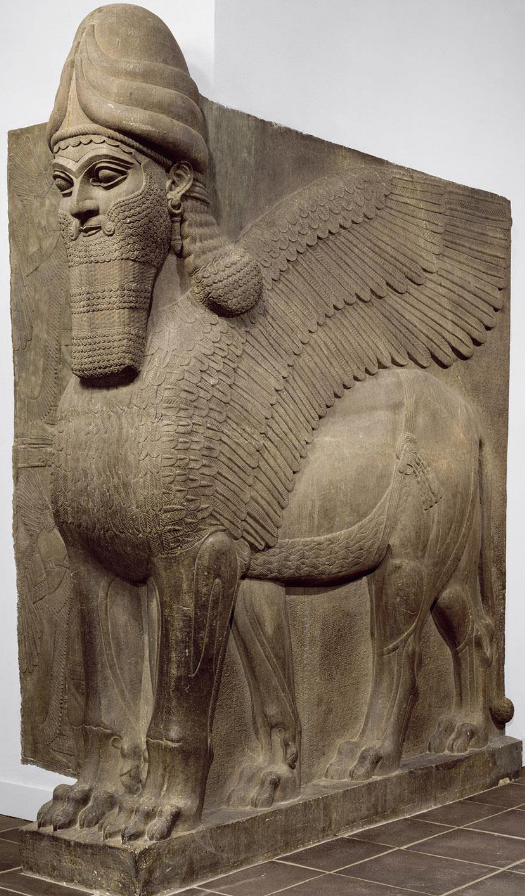
Colossus winged lion (lamassu) that guarded a portal in the Northwest Palace of Ashurnasirpal II at Kalhu (Tell Nimrud, Iraq), Assyrian Empire, c. 879 BCE. Gypsum, 122½ × 24½ in. (3.11 × 0.62 m). Metropolitan Museum of Art, New York.
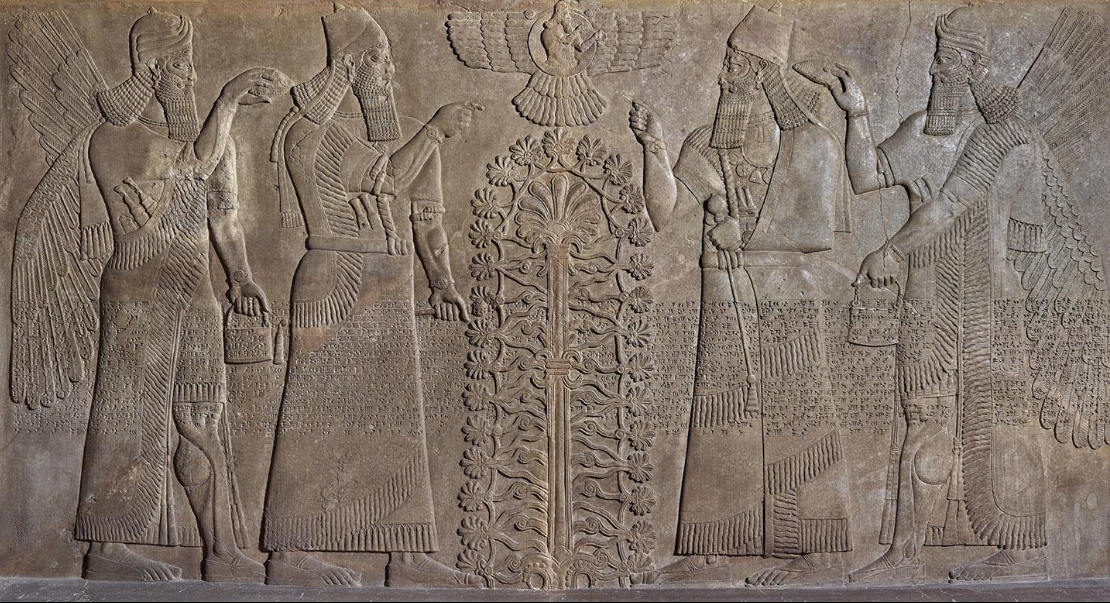
Orthostat from Throne Room (B) of Ashurnasirpal II, Northwest Palace at Kalhu (Tell Nimrud, Iraq). Assyrian Empire, 883–859 BCE. Gypsum, height 76¾ inches (195 cm). British Museum, London.
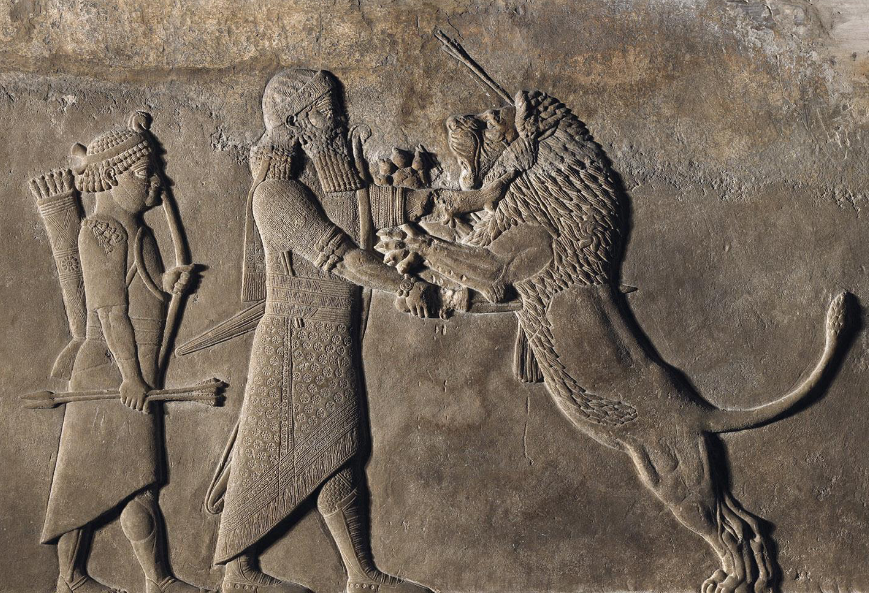
Lion hunt of King Ashurbanipal, from the North Palace, Nineveh (Mosul, Iraq), Assyrian Empire, c. 645–635 BCE. Scene from gypsum relief orthostat; entire relief 24 × 46 in. (61 × 116.8 cm). British Museum, London.
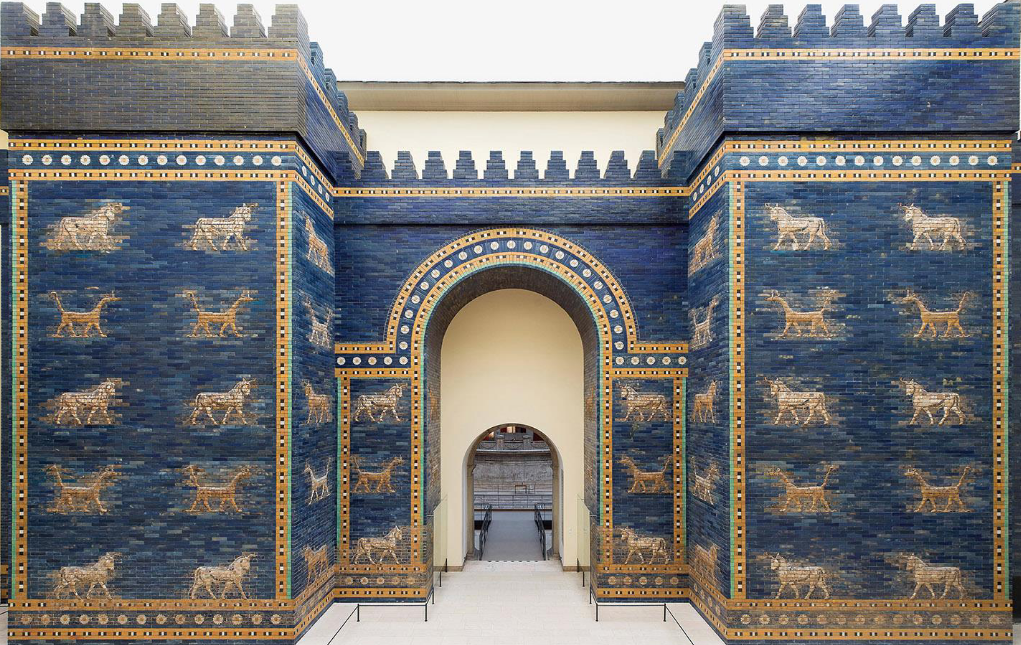
Ishtar Gate of Babylon, (Iraq). 605–562 BCE. Reconstruction at the Pergamon Museum, Berlin.
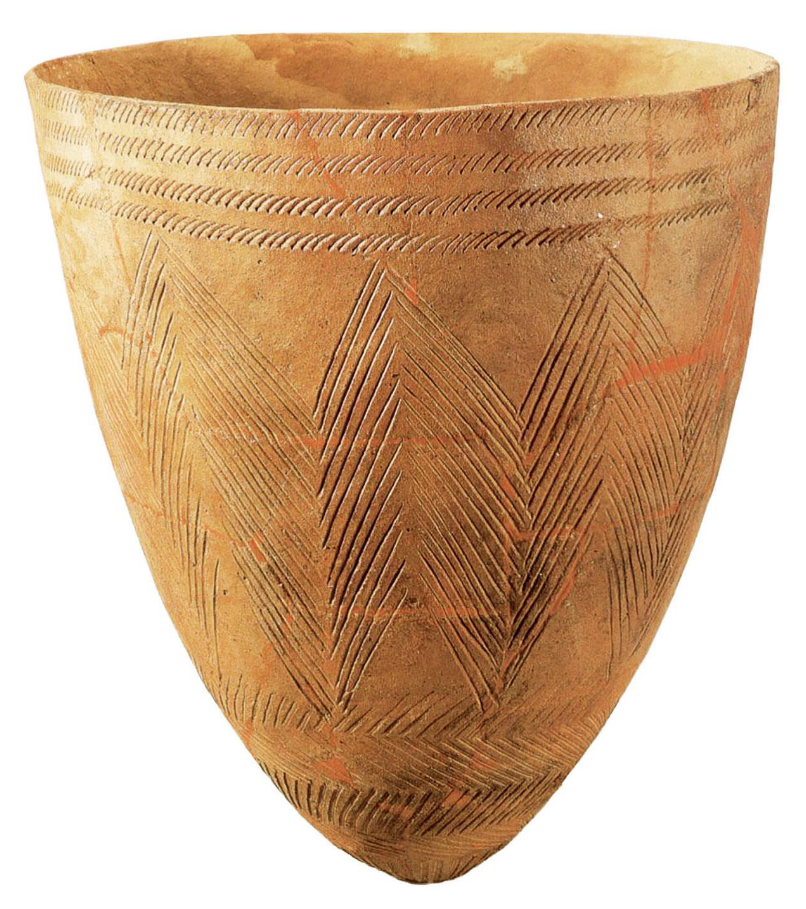
Comb-pattern Jeulmun vessel, excavated from Amsa-dong, Kangdong-gu, Seoul, c. 4000–3000 BCE. Terra-cotta with incised decoration, height 15 in. (38.1 cm). Kyonghui University, Seoul.
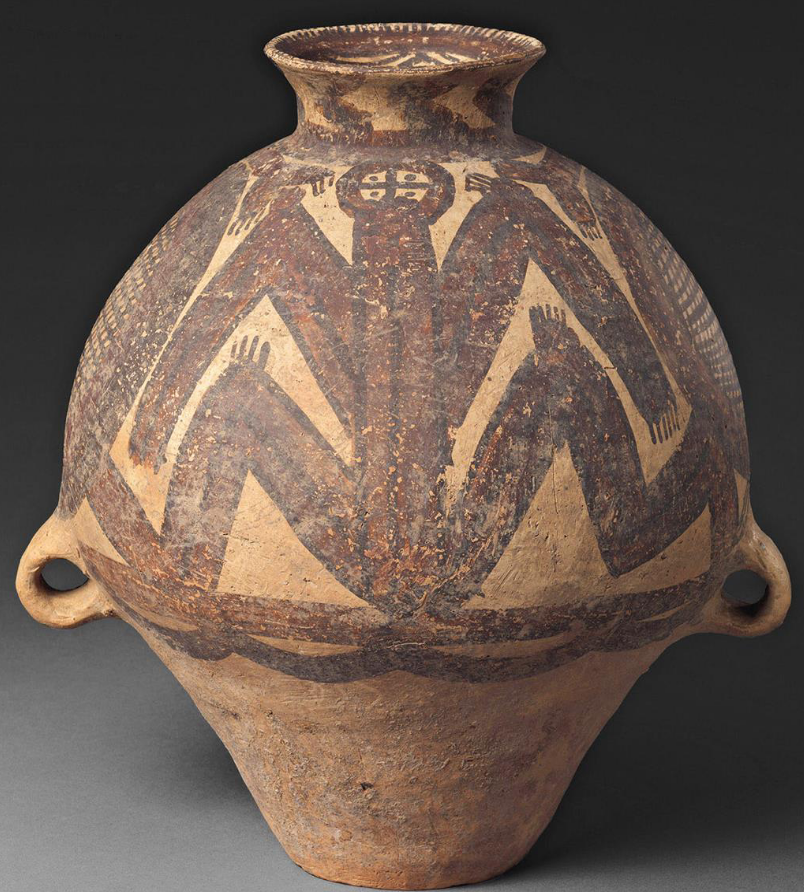
Guan (jar), Neolithic period, Machang phase of the Majiayao culture, c. 2350–2050 BCE. Terra-cotta with pigments, 12⅜ in. × 9¼ in. (31.4 × 23.5 cm). Metropolitan Museum of Art, New York.
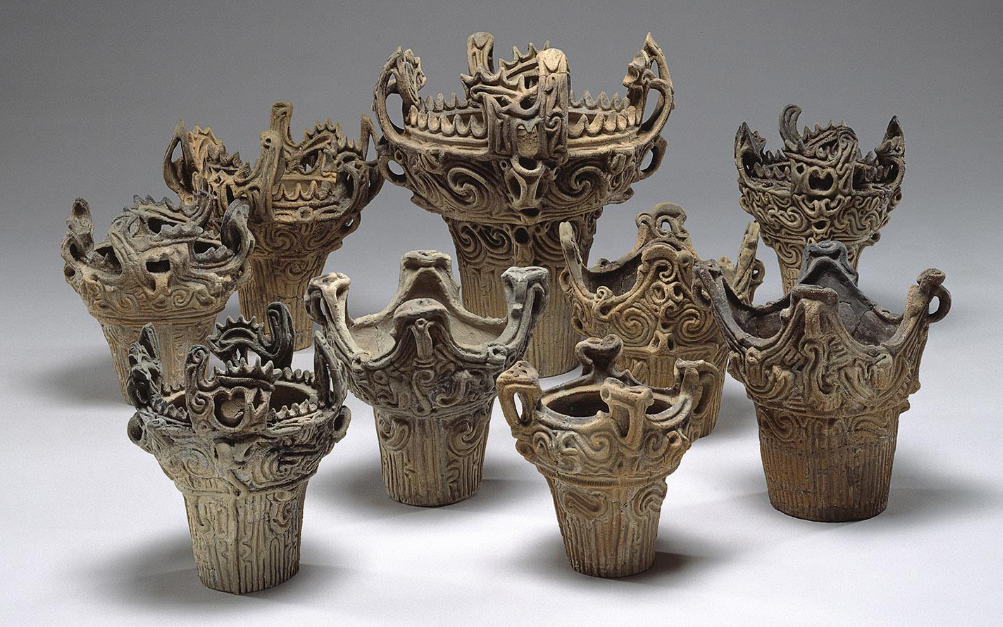
Flame vessels, from Sasayama, Niigata prefecture, Japan, Middle Jōmon period, c. 2500 BCE. Terra-cotta, largest vessel height 8⅜ in. (46.5 cm); diameter 17¼ in. (43.8 cm). Tōkamachi Museum, Japan.
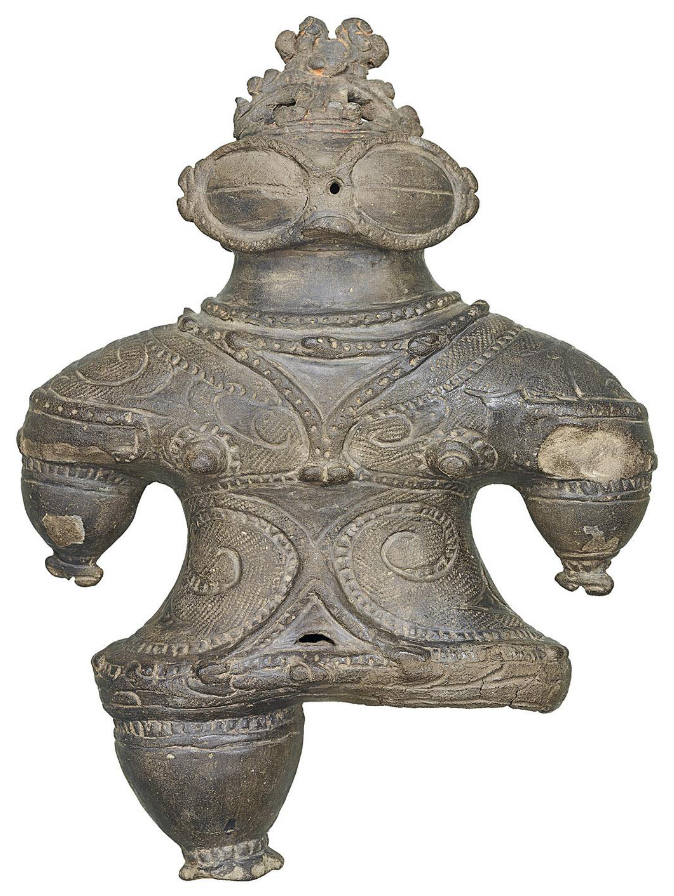
Goggle-eyed dogū, Final Jōmon period, c. 1000–400 BCE. Terra-cotta, height 15 in. (38.1 cm). Tokyo National Museum, Tokyo.
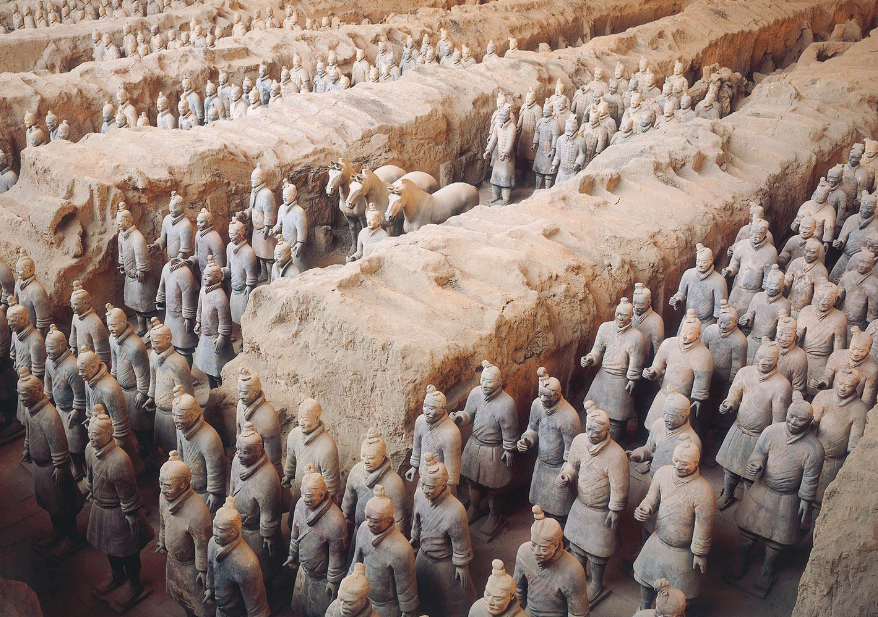
Army, tomb complex of the First Emperor of Qin (Terra-Cotta Army), Pit 2, c. 210 BCE. Terra-cotta, life-size. Lintong, Shaanxi province, China.
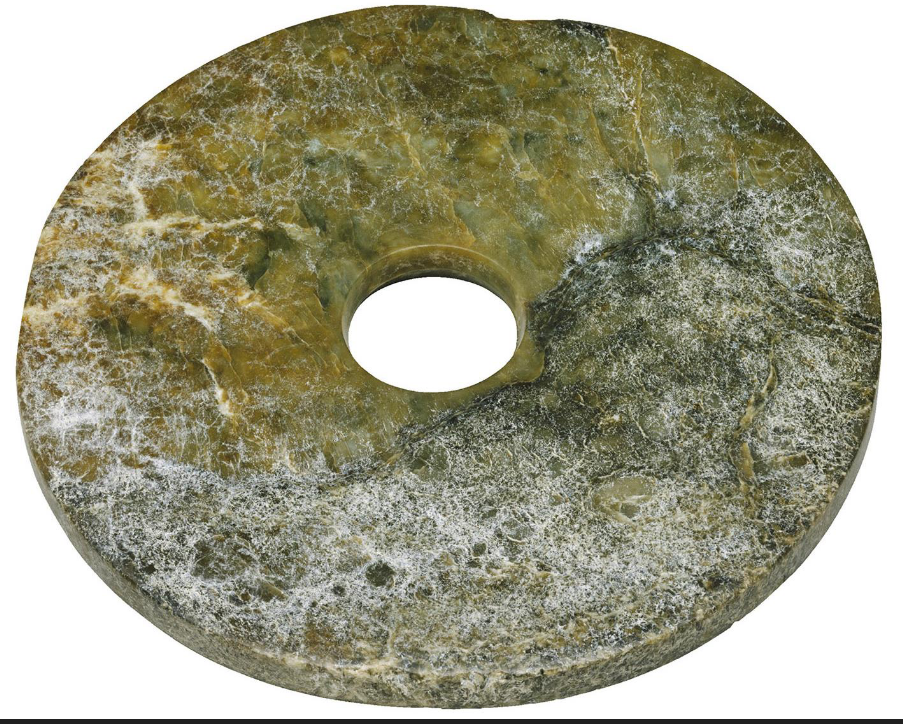
Bi (disk) (oblique view), Neolithic period, Liangzhu culture, c. 3500–2000 BCE. Jade (nephrite), diameter 8⅜ in. (21.3 cm). Metropolitan Museum of Art, New York.
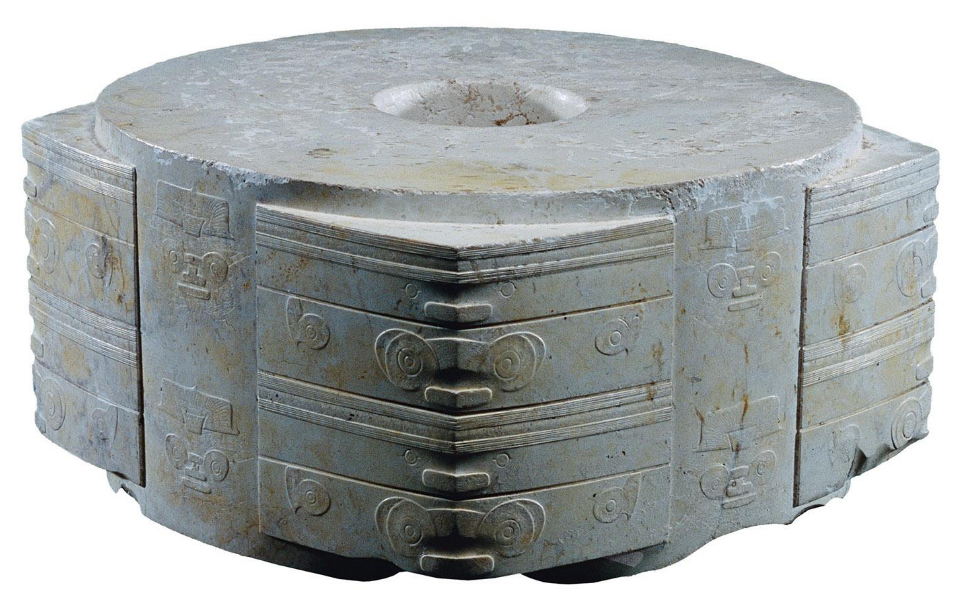
Cong (tube), Neolithic period, Liangzhu culture, c. 3500–2000 BCE. Jade (nephrite), height 3½ in. (8.9 cm). Zhejiang Provincial Institute of Cultural Relics and Archaeology, Hangzhou, China.
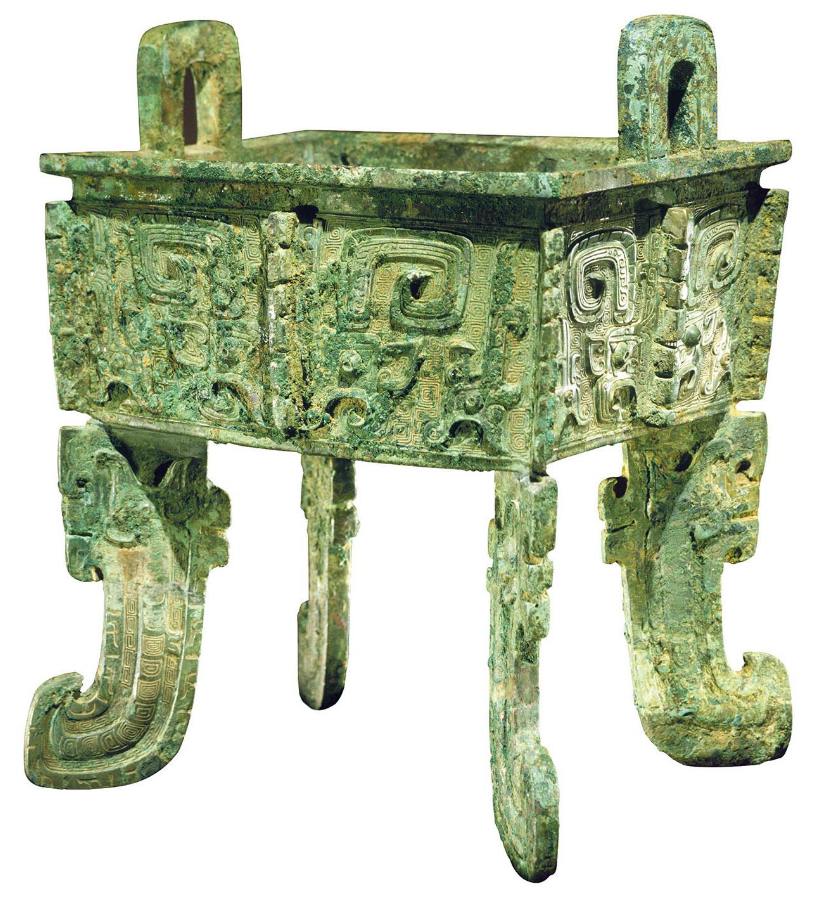
Fang ding with taotie design, from the tomb of Fu Hao, Anyang, Henan, China, Shang dynasty, c. 1200 BCE or slightly earlier. Bronze, height 16⅝ in. (42.2 cm). Institute of Archaeology, Beijing.
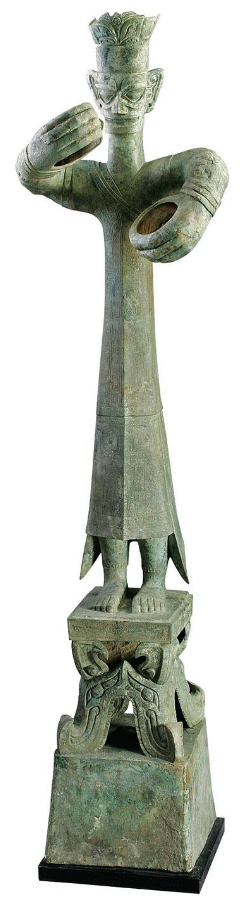
Standing figure, from Pit 2, Sanxingdui, c. 1300–c. 1100 BCE. Bronze, height 8 ft. 7 in. (2.62 m). Sanxingdui Museum, Guanghan, Sichuan province, China.
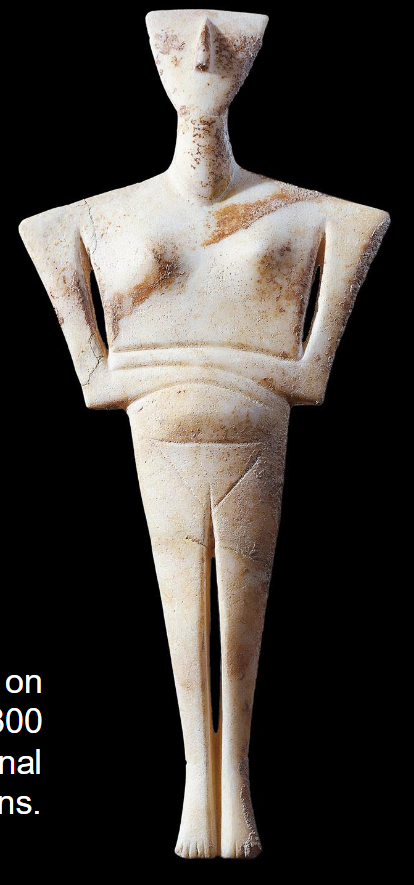
Figure of a woman, from a grave on Syros, Greece, Early Cycladic, c. 2600–2300 BCE. Marble, height 18 in. (45.7 cm). National Archaeological Museum, Athens.
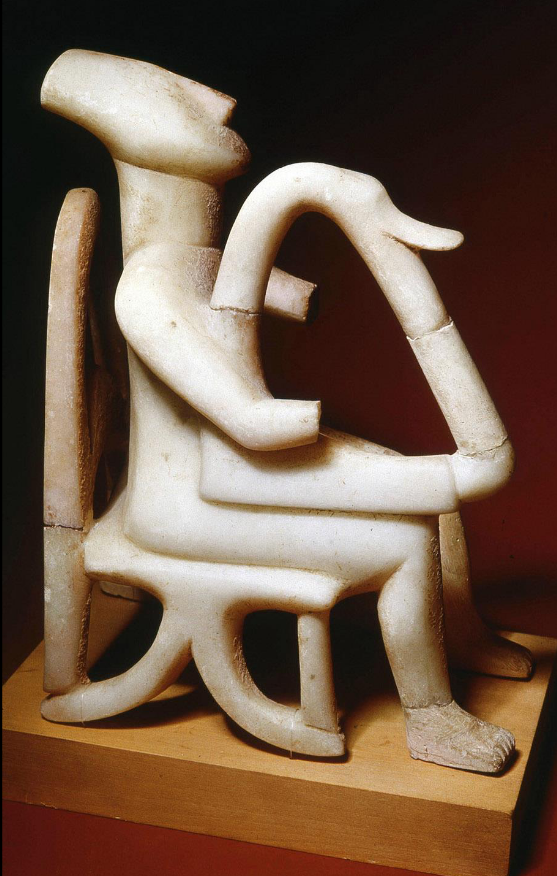
Harp player, Keros, Greece, Early Cycladic, c. 2600–2300 BCE. Marble, height 9 in. (22.9 cm). National Archaeological Museum, Athens.
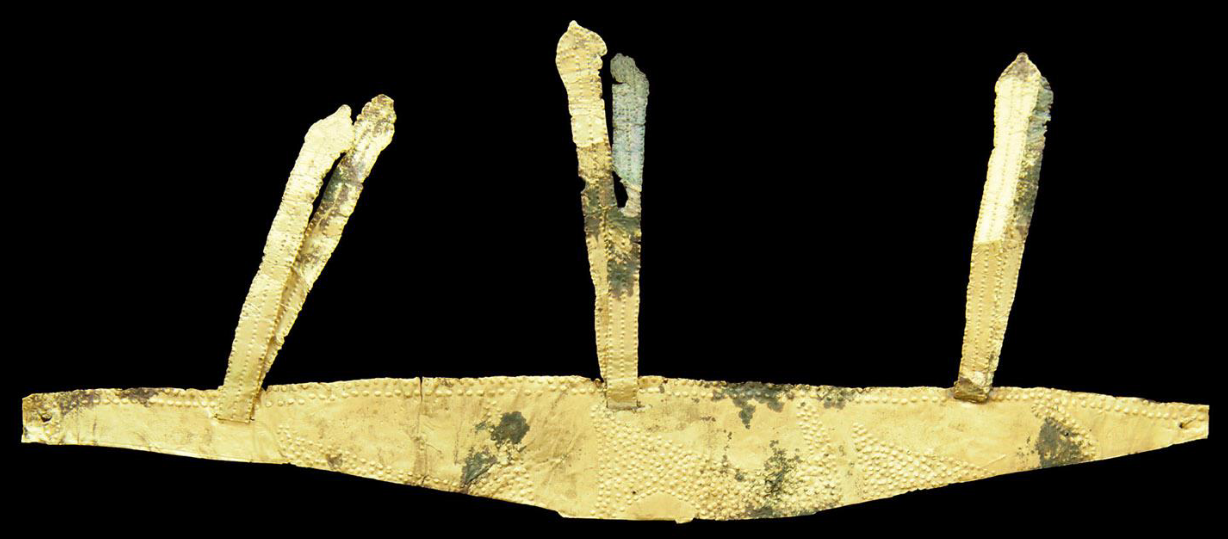
Diadem with antennae, from Tomb IV/V/VI, Mochlos, Crete, Greece, Prepalatial period, c. 2300 BCE. Gold, height 6 in. Agios Nikolaos Museum, Crete.
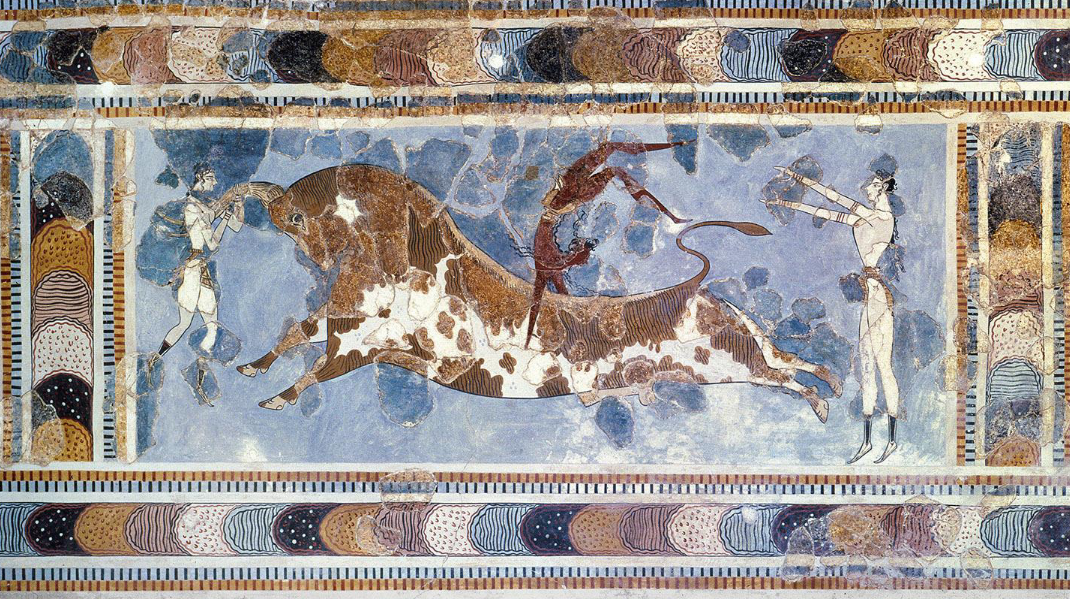
Toreador fresco from the palace at Knossos, Crete, Greece, c. 1400 BCE. Heraklion Archaeological Museum, Crete.
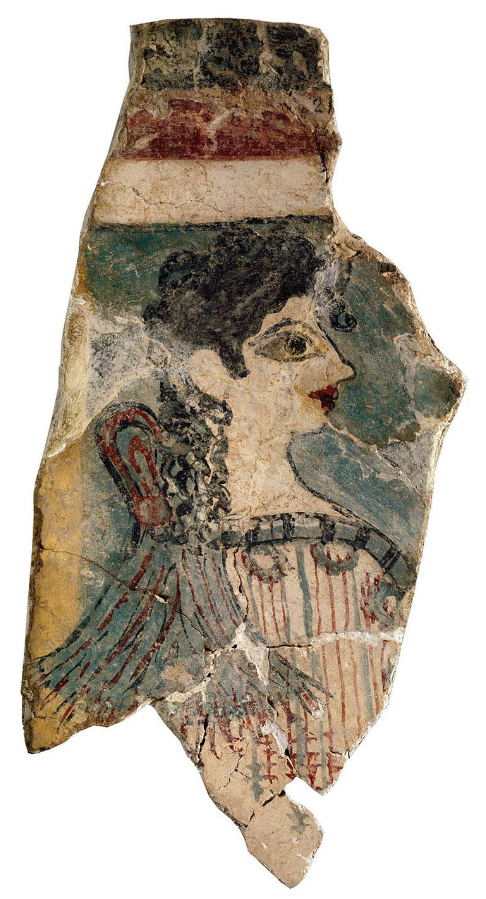
Woman or priestess (known as “La Parisienne”) from the Camp Stool fresco in the palace at Knossos, Crete, Greece, c. 1350 BCE. Fresco, height approx. 8 in. (20.3 cm). Heraklion Archaeological Museum, Crete, Greece.
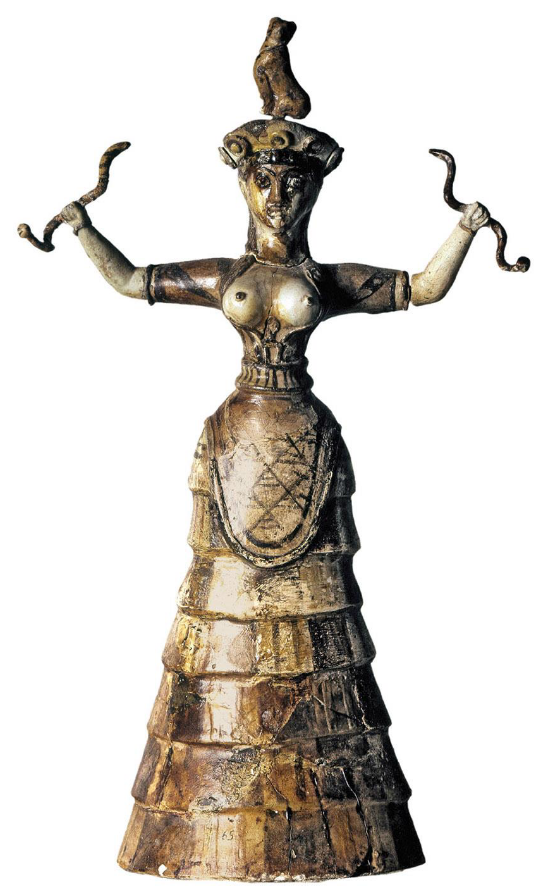
Snake goddess, from the palace at Knossos, Crete, Greece, c. 1600 BCE. Faience, height approx. 11½ in. (30 cm). Heraklion Archaeological Museum, Crete, Greece.
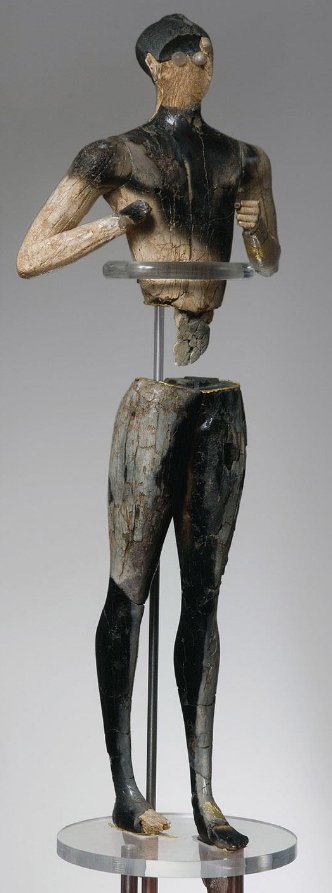
Statuette of a male figure, from Palaikastro, Crete, Greece, c. 1500–1475 BCE. Ivory, gold, serpentine, rock crystal, and wood, height 19½ in. (24.1 cm). Siteia Archaeological Museum, Crete, Greece.
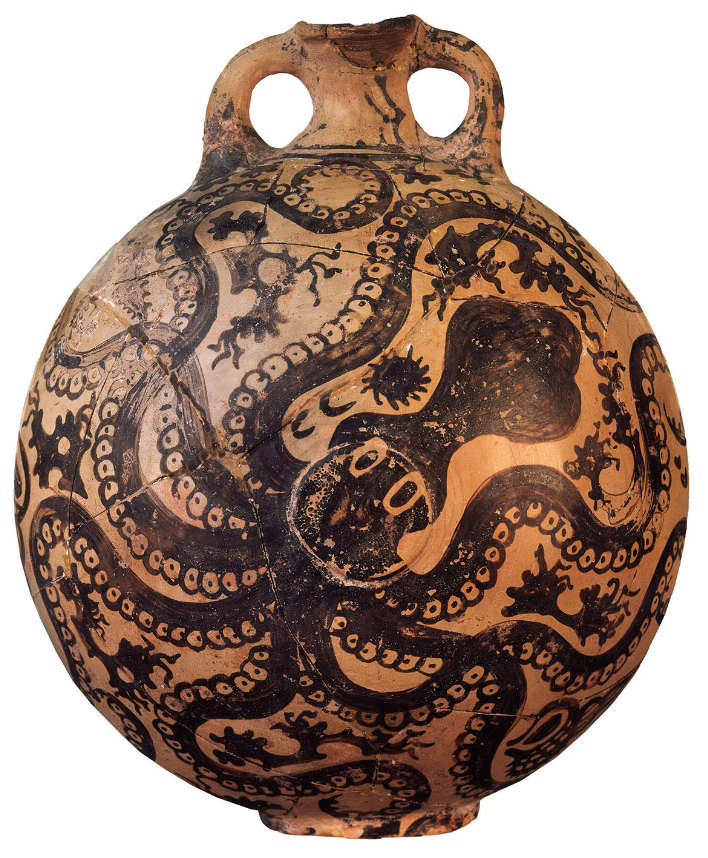
Marine Style octopus flask from Palaikastro, Crete, Greece, Neopalatial period, c. 1500–1450 BCE. Ceramic, height 11 in. (28 cm). Heraklion Archaeological Museum, Crete, Greece.

Flotilla fresco, Room 5, West House, Akrotiri, Thera (Santorini, Greece), New Palace period, c. 1600 BCE. Fresco, approx. height 14 in. (35.5 cm). National Archaeological Museum, Athens. (Minoan infuence)
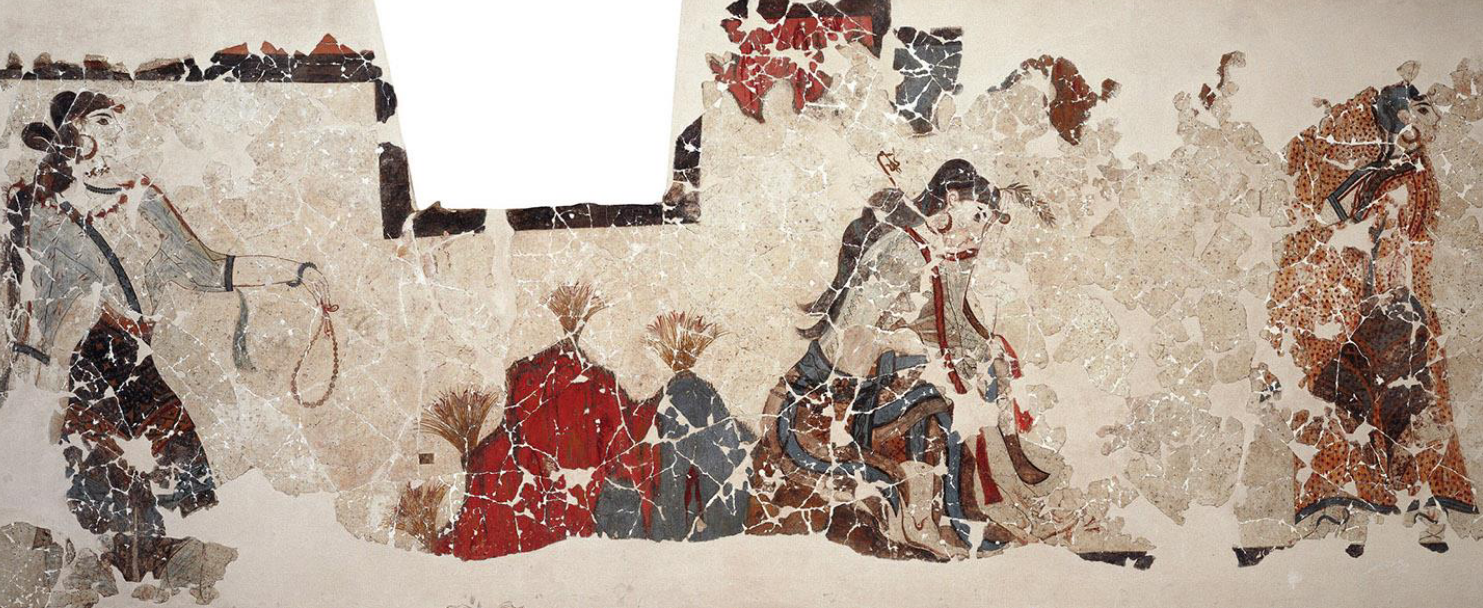
Fresco from House Xeste 3, Akrotiri, Thera (Santorini, Greece), c. 1600 BCE. (Minoan influence)
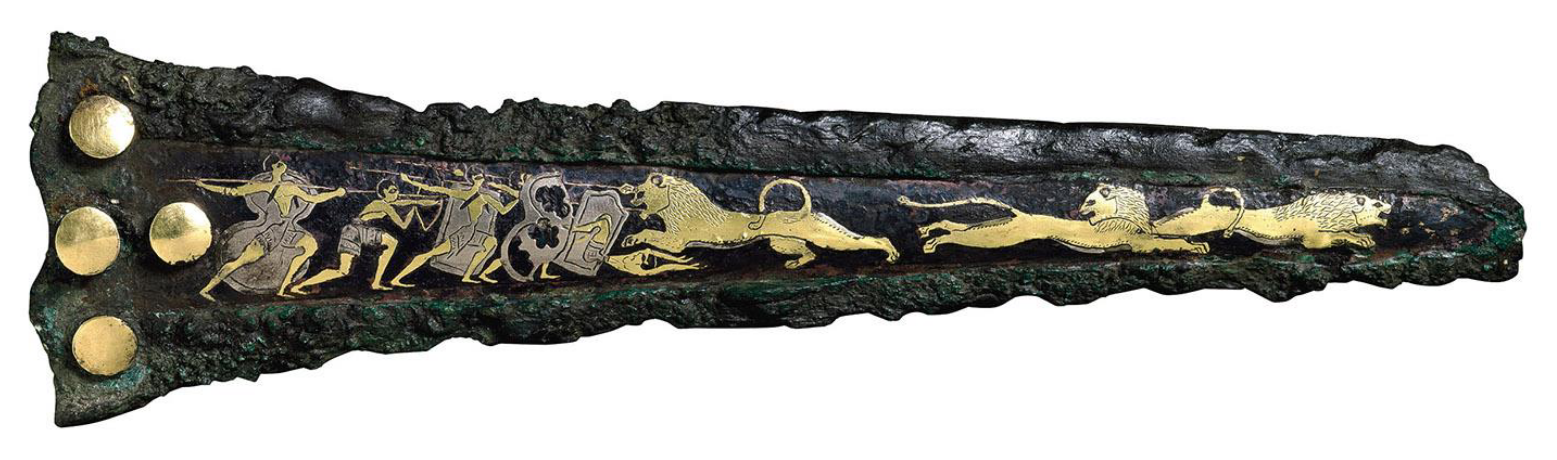
Lion hunt dagger blade, from Shaft Grave IV, Grave Circle A, Mycenae, Greece, sixteenth century BCE. Gold and silver inlaid with bands of niello, length approx. 9½ in. (24 cm). National Archaeological Museum, Athens.
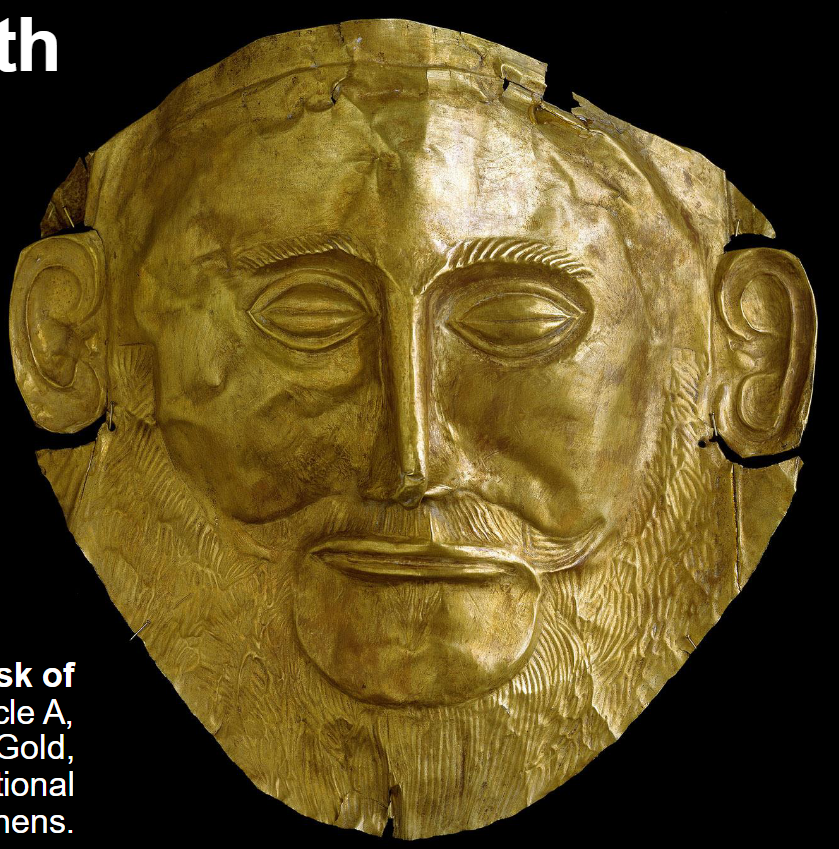
Gold death mask (“Mask of Agamemnon”), from Grave Circle A, Mycenae, Greece, c. 1550–1500 BCE. Gold, height 10¼ in. (26 cm). National Archaeological Museum, Athens.
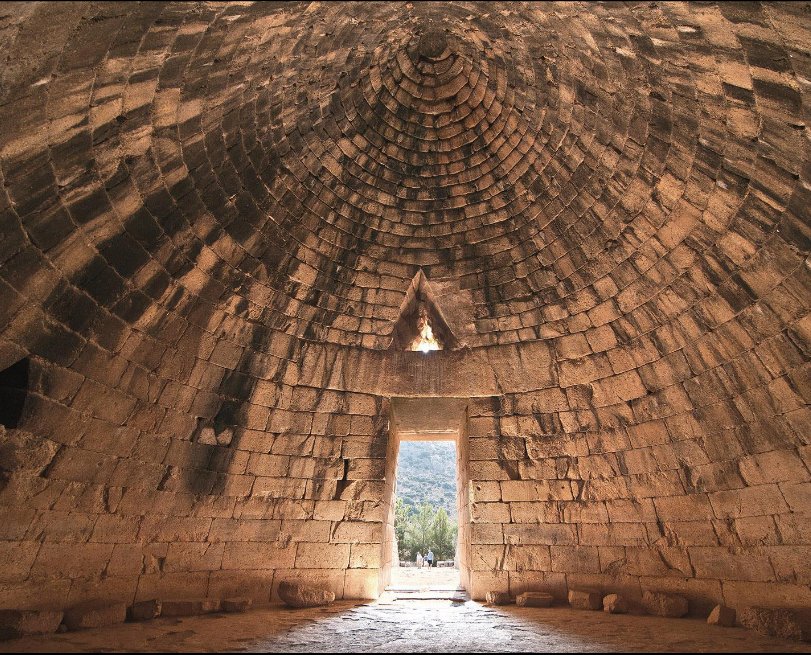
Treasury of Atreus tholos tomb, Mycenae, Greece, c. 1300–1250 BCE.
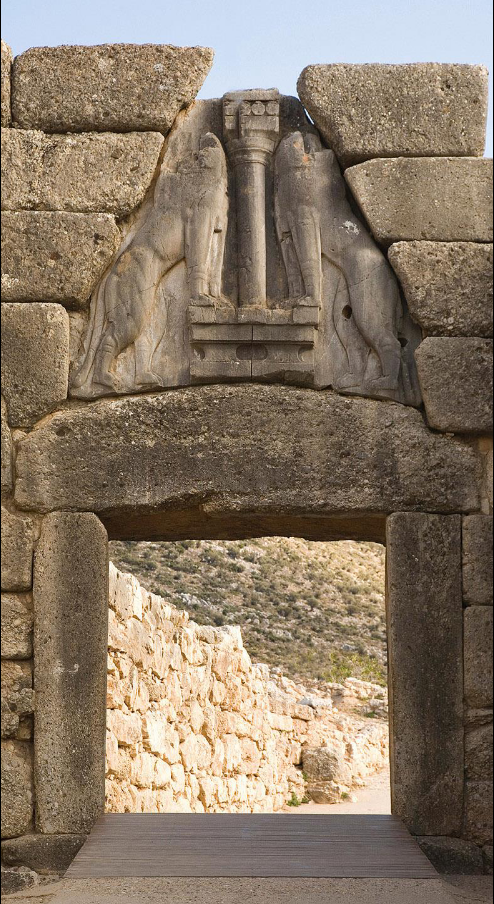
Lion Gate, Mycenae, Greece, thirteenth century BCE. Limestone relief and Cyclopean masonry.