NSG 202: week 1: (Elimination with meds)
 Call Kai
 Learn
Learn Practice Test
 Spaced Repetition
 Match
Match Flashcards
 Knowt Play
1/90

There's no tags or description
Looks like no tags are added yet.
Name | Mastery | Learn | Test | Matching | Spaced | Call with Kai | Chat |
|---|
No analytics yet
Send a link to your students to track their progress
91 Terms
How does nutrition affect elimination?
Diet can affect elimination
fiber, opioids, gluten, lactose intolerance
May not get enough fluids and electrolytes
How does cognition affect elimination?
Dementia, Anxiety, Kids & Elderly get FOMO (they dont want to use the bathroom & miss anything)
Routined toileting
spinal cord or brain injury
How does mobility affect elimination?
lack of movement decreases peristalsis
How do fluids and electrolytes affect elimination?
increase in hydration = good balance of electrolytes
Diarrhea may cause dehydration and lead to electrolyte imbalances
metabolic acidosis
worried abt cardiac, respiratory, muscles, etc
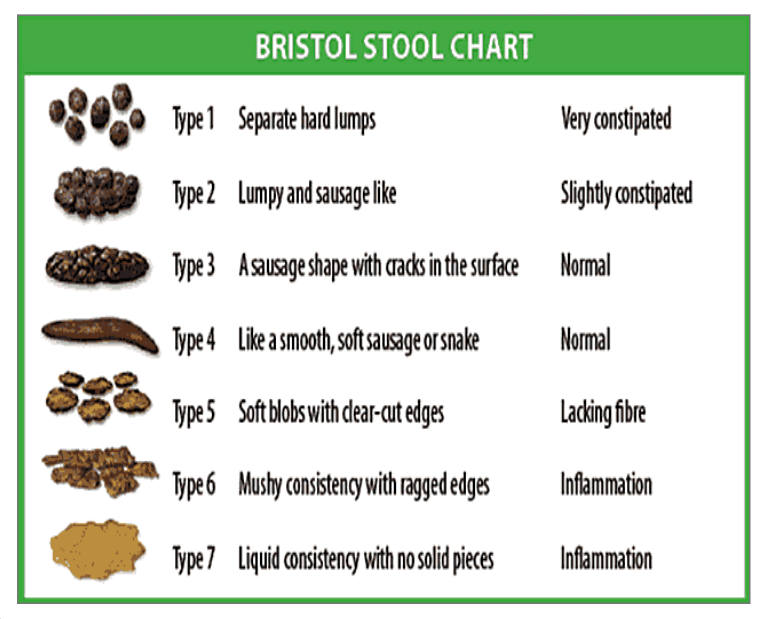
Bristol Stool Chart
type 7: worried about cdiff
cdiff has no form
What causes diarrhea?
ask abt meds
antibiotics, laxative use
dont forget to ask abt OTC meds
if caused by infectious agent, we may want a stool culture, sometimes we may not want to stop diarrhea
stress can give you IBS

Diarrhea
Watery and without form
More than 3 times per day
Diarrhea can lead to:
Leads to
Skin breakdown
Changes in daily activities
Changes in social relationships
Diarrhea Nursing Considerations
Assume diarrhea is contagious unless it has been proven otherwise
use proper PPE
wash your hands
consider a bedside commode if patient is sharing the bathroom with another patient
consider moving patient into isolation if sharing room
patient may need to be in isolation precaution
contact plus
you need to use bleach to clean it, normal disinfectants don't clean cdiff as well
anyone on long term antibiotics can be seen for cdiff
we need to keep patient hydrated
put in an IV if needed
call doctor
we need to keep it from spreading
Do we or don’t we want to stop diarrhea?
whats causing it? is it infectious?
we still need to take meds to kill parasites
you still need fiber + fluids
Can the patient access the bathroom?
do they need a bedpan or commode?
try to make patient as comfortable as possible
you need to look for skin breakdown
you can use a barrier cream to prevent breakdown
fecal management system
A fecal management system (FMS) is a temporary medical device used to collect and contain liquid or semi-liquid stool from bedridden, immobile, or critically ill patients. It diverts waste away from the body through a soft silicone catheter into an external collection bag, protecting fragile skin and preventing infection spread.
assess for dehydration
Diarrhea Clinical Manifestations
abdomen: IAPP
subjective data: how often do you go, patterns, describe the stool’s characteristic
is there any blood in there?
fatty greyish looking stool
steatorrhea
gallbladder issues
diarrhea: hyperactive bowel sounds
high pitched bowel sounds: borborygmi
Diarrhea:
HR speeds up due to dehydration
pulses are weak & thready due to dehydration
severe dehydration may lead to a fever
patients may even experience delirium
some of it may be due to F&E imbalances
you need to be aware of patient’s baseline cognition, especially in older patients
BP may initially begin to increase to compensate, but it may decrease again due to fluid loss
Perfusion may decrease
patient may be at risk for an AKI (which could be as a result of a decrease in perfusion)
every patient in a hospital may be at risk for an AKI
Assessment for Diarrhea
Bowel Sounds
Hyperactive
Abdomen
Palpate for distension & tenderness
Incontinence
Assess perianal area for skin & tissue breakdown
Redness/hyperpigmentation
Fungal infection
Check for hemorrhoids r/t frequency
bleeding doesn’t always have to be from GI
could be hemorrhoids, cancer, ruptured polyp, etc
we need to find out why
Interventions for Diarrhea
Check for underlying problem
Tx that if identified
Monitor F&E
Watch for imbalances
Monitor I&O
Watch for s/s of dehydration
Dietary teaching
High fiber and fluids
make sure older adults aren’t drinking too much fluids before bed
especially men (BPH)
Medications
Teach appropriate use
Toileting
To establish a normal pattern
Provide for privacy
Think like a nurse; Diarrhea
Big worry with dehydration: we are mainly worried abt the heart
look for change of level on consciousness
hemoglobin is high when dehydrated and lower when hydrated
hemoglobin vs hematocrit
Hemoglobin measures the amount of oxygen-carrying protein inside red blood cells, while hematocrit measures the percentage of overall blood volume made up of red blood cells
If body is dehydrated hemoglobin & hematocrit are high
urine specific gravity and urine osmolality
both high in dehydration
urine is going to be dark
we need to check kidney function
creatinine, GFR, BUN
We are worried about metabolic acidosis with diarrhea
We would want to get an IV started
IV fluid may be based on F&E
Think like a Nurse: Nursing Interventions
we may need to monitor weight
I&O
how much water are they drinking
30ml an hour
ABGs
Make sure we have an order for fluids
monitor oxygenation
watch diabetics, can go into DKA
severe dehydration may cause seizure
Everything connects
watch skin turgor
every patient in a hospital is at risk for an AKI
Diarrhea: Clinical Management
Hydration
Adequate dietary fiber
Regular toileting practices
Regular exercise
Skin care
you may have to contact dietician and nutrition
monitor their skin:
how are we cleaning that area?
no soap & water. it would add to the burns and breakdown
pat dry
Constipation
Hard, dry stool that is difficult to pass through the rectum.
Potential Complications:
Hemorrhoids
Anal fissures
Fecal impaction
Rectal prolapse
Bowel Retention/Constipation
Causes: Ignoring the “urge to go” or decreased peristalsis
Leads to retention of stool in the rectum → Stool dries out → Constipation happens → Complications can result
Constipation Risk Factors
All individuals, regardless of age, gender, or race, are potentially at risk
Populations at greatest risk:
Children
Lack of sphincter/muscle control
Unable to identify the urge
Environment
Pregnant Women
Fetus size can impact peristalsis/cause constipation
Prenatal vitamins
Older Adults
Atrophy of smooth muscle in colon
Decreased mucous production
Older adults have an altered thirst mechanism and may not drink enough water
they also have decreased mobility and naturally have decreased peristalsis
Medications
antidepressants, opioids, iron, calcium supplements, antacids (with aluminum or calcium), anticholinergic meds may cause constipation
does the patient have some sort of malignancy, parkinsons, mobility issues,muscular dystrophy, ANS changes, multiple sclerosis?
these are all things that may affects your bowels
modifiable factors: diet, exercise
nonmodifiable factors: age
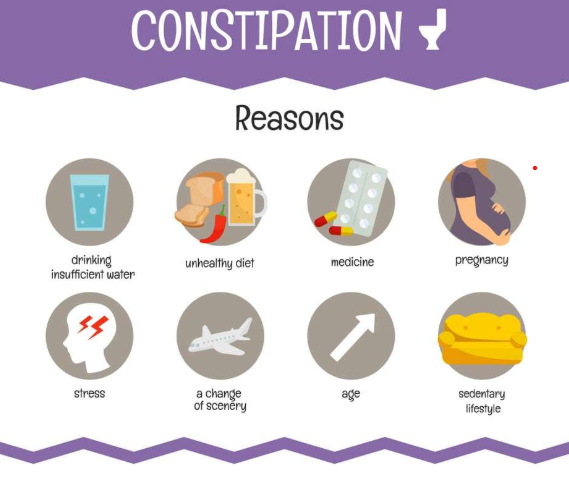
Some causes of constipation
a change in their routines may also be a reason
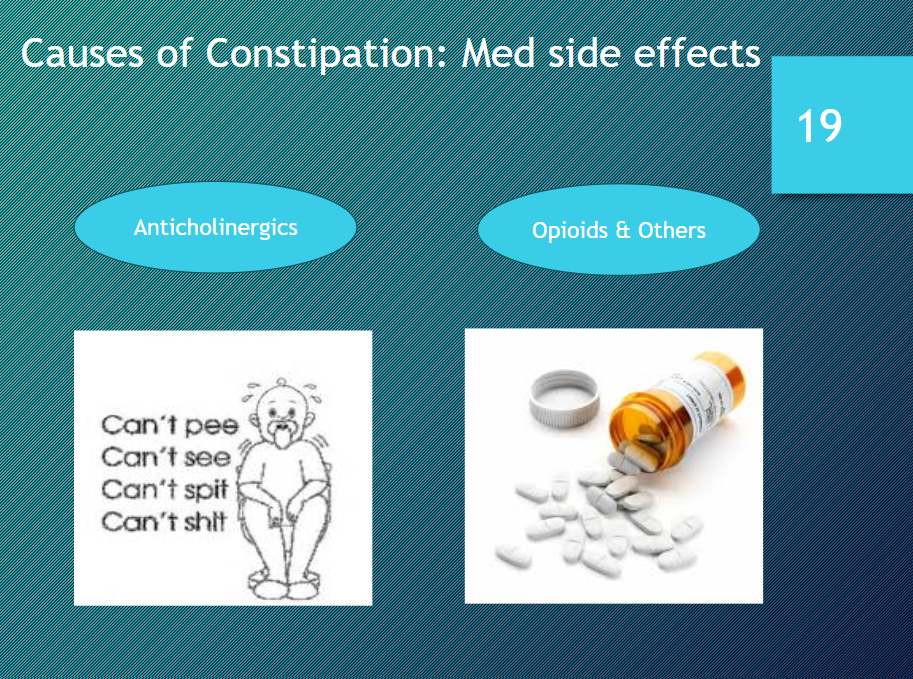
Causes of Constipation: Med side effects
Anticholinergics
Opioids & Others
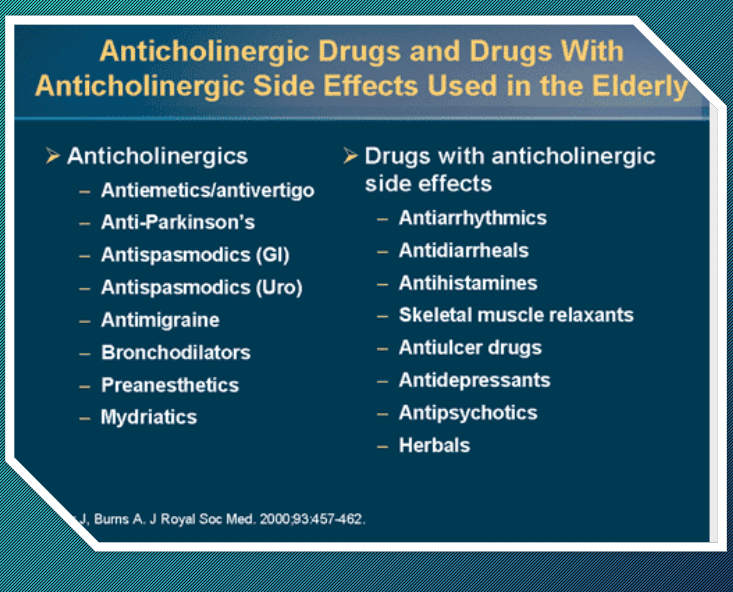
Anticholinergic Drugs and Drugs With Anticholinergic Side Effects Used in the Elderly
Don’t memorize just realize how much the patient may be on
Assessment for Constipation
Bowel Sounds
Hypoactive
Abdomen
Palpate for distention & tenderness
Straining
Check for tears
Check for bleeding
Check for hemorrhoids
Check for rectal prolapse
Check for the underlying issue
Interventions for Constipation
Check for underlying problem
Tx that if identified
Nutrition
Fruits, vegetables, whole grains, adequate fluid
Prevention
How to prevent using diet, fluids, regular toileting
Toileting
To establish a normal pattern
Provide privacy & uninterrupted time
Medications
Teach proper use
Enema
Teach proper use
patient shouldn’t be hooked on enemas and need one every time they have to poop
Pharmacotherapy for Constipation
Laxatives
Bulk-forming agents
metamucil is not addictive
metamucil = contains psyllium or fiber, patients need to take a lot of water
may take a few days to see results
doesn’t replace eating so we may still need fiber
Bowel stimulants
Lubricants
Saline laxatives
docusate sodium (Dulcolax)
Stool softeners
Antibiotics
Antispasmodics
Analgesics
Common Diagnostic Tests for Bowel Issues
Laboratory tests
Stool culture, occult blood
Radiographic tests and scans
X-rays, computed tomography (CT) scans, magnetic resonance imaging (MRI), ultrasound
Direct observation tests
Colonoscopy
colonoscopy is the gold standard
free of red meat for 24-48 hrs
free of red or blue dyes for 24-48 hrs
drink prep for that
they can’t be having stools
about every ten years is standard unless there's an issue or family history
virtual colonoscopy: swallow a camera
can’t get a culture; may not be the best
Clinical Management: Collaborative Interventions
The most common strategies include:
Pharmacotherapy
Incontinence management
Alternative & Complementary Tx
Stress reducing activities
Skin Care
Potential surgery
no bowel sounds are always an emergency unless they're post surgical
can take about 24 hrs, sometimes even a little more, for bowel sounds to return due to anesthetics
Ask good questions:
have they had any abdominal trauma?
are they pregnant?
You can also work with physician and dietitian
Surgical Interventions: Bowel Elimination
Colectomy
Colostomy or ileostomy
Rectal prolapse repair
Hemorrhoidectomy
Other Lower Gastrointestinal Problems
Appendicitis
Peritonitis
Gastroenteritis
IBS
UC
Crohn’s
Appendicitis
Inflammation that occurs when the lumen (opening) of the appendix becomes obstructed (blocked), leading to bacterial infection that invades the appendix wall. The obstruction is usually caused by fecaliths (very hard pieces of feces). When blocked, mucosa secretes fluid, increasing internal pressure and restricting blood flow, resulting in right lower quadrant (RLQ) pain.
Classic presentation: Cramping pain in the epigastric or periumbilical area that progresses and shifts to the RLQ at McBurney's point (between the anterior iliac crest and umbilicus). Abdominal pain is followed by nausea and vomiting. Anorexia is also frequent.
Complications: Gangrene and sepsis can occur within 24-36 hours. Perforation may develop within 24 hours but risk increases rapidly after 48 hours, resulting in peritonitis.
Peritonitis
Inflammation of the peritoneum (the membrane lining the abdominal cavity). Can result from appendix perforation. Presents with temperature greater than 101°F (38.3°C) and increased pulse rate. This is a serious, life-threatening complication.
Abdomen may feel rigid, boardlike, distended
Gastroenteritis
An inflammatory condition of the gastrointestinal tract. The textbook materials distinguish it from appendicitis by symptom sequence: nausea or vomiting before abdominal pain suggests gastroenteritis, while abdominal pain followed by nausea and vomiting suggests appendicitis
Small Bowel Obstruction
Abd discomfort/pain (could come in "waves")
Upper or epigastric abd distension
Nausea (earlier)
Vomiting (may contain fecal material)
Obstipation
obstipation: severe or complete constipation
Severe F&E disturbances
Metabolic alkalosis (not always)
Large Bowel Obstruction
Intermittent lower abd cramping
Lower abd distension
Minimal or no vomiting
Obstipation or ribbon like stools
No major F&E imbalance
Metabolic acidosis (not always)
Intestinal Obstructions
when you have an obstruction, you have to be really good about bowel sounds. Intestines may strangulate and cut of blood supply which is a medical emergency, patient needs to go to OR and get that fixed. That may lead to necrosis which then may lead to sepsis and death.
If there's an obstruction in the bowel, the patient may have an issue with fluids (fluid retention in the intestine), which may lead to hypotension and hypovolemic shock.
Diverticulosis
presence of abnormal pouchlike herniations in the wall of the intestine
Asymptomatic diverticular disease where diverticula (pouches) are present in the intestinal wall. The patient typically has no signs or symptoms, and the condition often goes undiagnosed unless pain or bleeding develops. Diverticula are most often discovered during routine colonoscopy.
Diverticulitis
inflammation or infection of the diverticula
they may get peritonitis
abdomen may feel rigid, board-like, distended
Inflammation of diverticula that occurs in approximately 10-15% of diverticular disease cases. When undigested food or bacteria become trapped in a diverticulum, blood supply to that area is reduced, bacteria invade the diverticulum, resulting in diverticulitis.
What can cause or contribute to constipation?
Adverse drug effects
Insufficient fiber/fluids
Lifestyle
insufficient food or fiber
Hypothyroidism
Neurogenic disorders
any type of brain or spinal cord injuries
Emotions
anxious or stress
Age
Older Adult
Constipation Clinical Manifestations
Fewer than 3 stools per week
Straining
straining can lead to hemorrhoids
Sensation of incomplete evacuation
Sensation of anorectal blockage
Hard stools
Manual evacuation
putting in your finger and manually taking out stool
pts can vasovagal = they can have a low syncopal response
Constipation Non-pharmacological Interventions
Increase fluid intake
Increase fiber intake
Increase physical activity
Drug Types to Treat Constipation
Laxatives
Bulk-forming
Lubricant (emollient)
Surfactant agents (stool softeners)
Cathartics
Saline
Stimulant agents
Miscellaneous agents
Laxatives - Bulk-Forming
increase the bulk of the stool which will increase the urge to have a bowel movement
acts in a similar way to fiber
the size stimulates parestalysis
only meds ok for long term use
if it pulls fluid into the colon pts need to increase their fluid
stool can become too hard if pt doesnt take enough fluids
Laxatives – Bulk-Forming Examples
Psyllium
Metamucil
Natural Fiber
Lubricant
Mineral Oil
Methylcellulose
Citrucel
Polycarbophil
FiberCon
Fiber-Lax
Bulk stimulants Mechanism of Action
Increase Gl motility by increasing size of fecal matter
Helps pull more fluid into intestines
Stimulates local stretch receptors to activate local activity (i.e. peristalsis)
Laxatives – Bulk-Forming Indications for use
Occasional constipation or bowel irregularity
Post MI or CVA
To prevent straining
Long term use in patients who are:
Debilitated
Older
Unable/unwilling to eat adequate diet
Laxatives – Bulk-Forming Avoid in patients with:
Difficulty swallowing
GI tract strictures
narrowing of the GI
in an obstructure we dont want to give any laxatives bc it wont do anything
Unable/unwilling to drink adequate fluids
Bulk stimulants: Adverse Effects
Abd cramping
Severe flatulence
Bloating
Esophageal obstruction
Impaction
Diarrhea
Bulk stimulants: Nursing implications
Must take with plenty of water
at least 8oz
if we dont take enough water we may get esophageal or intestinal obstructions
Lubricant Laxatives: Examples
Mineral Oil
Fleet Oil
Lubricant Laxatives: Mechanism of Action
Not absorbed into system
Lubricates the stool and the intestinal mucosa and prevents water reabsorption from the bowel lumen
The increased fluid content of feces increases peristalsis
Lubricant Laxatives: Indications for use
Fecal Impaction
Generally as an enema
May be used orally - but not method of choice
Should not be used long-term
Lubricant Laxatives: Adverse Effects
Oral
Decreased absorption of fat soluble vitamins & drugs
Lipid pneumonia if aspirated
N/V/D
Abdominal cramping
we dont want to use these long term
if aspirated its a problem bc it goes to the lung
Lubricant Laxatives: Nursing Implications
Should not be used regularly
Best results as a retention enema
ask patient to hold it in as long as they can
Surfactant Laxatives (Stool softeners) Example
Docusate Sodium (Colace)
Surfactant Laxatives (Stool softeners) Mechanism of Action
Decreases surface tension of fecal mass
Allows water to penetrate stool
Also acts to facilitate mixing fat and water in the stool
Stools are softer and easier to expel
Surfactant Laxatives (Stool softeners)
Indications for use
Need to avoid straining
Recent surgery
Hemorrhoids
Post-MI or CVA
Reduce constipation associated with opiate use
Surfactant Laxatives (Stool softeners)
Adverse effects
N/V
Abd cramps
Fecal Impaction
Intestinal obstruction
Stimulant cathartics Example
Bisacodyl (Dulcolax)
Glycerin
Senna
Senokot
Ex-lax maximum strength
Castor oil
stimulates you to go
these work a lot faster
Stimulant cathartics Indications for use
Bowel prep
General Constipation
Not for long term use
Neurogenic bowel dysfunction
Stimulant cathartics Mechanism of action
Irritate Gl mucosa
Pull water into bowel lumen
Increases peristalsis and stool is more watery (softer)
Stimulant cathartics Contraindications
Avoid in acute bowel disorders; can lead to ruptures
Diverticulitis
Gastric retention
Colitis
Bowel obstruction
Avoid in undiagnosed abdominal problem
Renal Disease
Risk for Na, Mg, K, Phos retention
HTN
Can increase BP r/t sodium retention
Stimulant cathartics Adverse Effects
N/D
Abd cramping
Weakness
vagal nerve stimulation bc of suppository or enema, pt can complain of weakness
Stimulant cathartics Nursing Implications:
Do not take within 1 hour of ingesting milk
Should not use longer than one week
Take on empty stomach or at bedtime
if pt has diarrhea then we may not give it at bed time
Swallow drug whole
we want pt to lay down
Saline cathartics Examples
MAGNESIUM CITRATE
MILK OF MAGNESIA
POLYETHYLENE GLYCOL-ELECTROLYTE SOLUTION
GOLYTELY
POLYETHYLENE GLYCOL
MIRALAX
these are used to really empty the bowel:
used for bowel prep
Saline cathartics Mechanism of Action
Draws water into the intestinal tract
Increases intestinal bulk
Produces diarrhea
Saline Cathartics Indication for Use
Constipation
Short-term treatment
Bowel prep
GoLytely
Not safe for long term use
May produce F&E (Fluid & electrolyte) imbalances
Lactulose
synthetic hyperosmotic laxative
For Hepatic Encephalopathy: The drug-induced acidic environment also reduces blood ammonia levels by converting ammonia to ammonium. Ammonium is a water-soluble cation that is trapped in the intestines and cannot be reabsorbed into the systemic circulation. This effect has proved helpful in reducing serum ammonia levels in patients with hepatic encephalopathy
Used in patients with elevated ammonia levels
Lactulose Adverse Effects
Electrolyte imbalance & dehydration
Sorbitol
Sometimes given with:
Kayexalate – reduce potassium
Charcoal – eliminate toxins
Also found in sugar free candies
Acute Diarrhea
Sudden onset in a previously healthy person
Lasts from 3 days to 2 weeks
Chronic Diarrhea
Lasts for more than 3-4 weeks
Non Pharmacological Therapies For Diarrhea
Replace F&E
Clear Liquids
Bland Foods
BRAT diet
Clear Liquids
Flat ginger ale, tea, gelatin, broth
Avoid caffeine
BRAT Diet
bananas, rice, applesauce, toast
helps firm up and slow diarrhea
Diphenoxylate with atropine (Lomotil) & Loperamide (Imodium A-D)
Opiate-related antidiarrheals
Diphenoxylate with atropine (Lomotil)
Opiate-related antidiarrheal
Controlled Substance
Requires prescription
Atropine diminishes euphoric effect
prevents abuse
Loperamide (Imodium A-D)
Opiate-related antidiarrheal
Not Controlled Substance
doesnt have opioid in it, but it is related
doesnt affect the CNS
OTC
Opiate-related antidiarrheals Mechanism of action
Slows perastalysis
Acts on the smooth muscles in the intestine
Diphenoxylate with atropine (Lomotil) Adverse effects
Tachycardia
Dizziness
Headache
Flushing
N/V
Dry Skin and Mucous Membranes
Urinary Retension
Hypotension and respiratory depression
At high doses
Loperamide (Imodium AD) Adverse effects
Dizziness
Drowsiness
Abd Pain
N/V
Constipation
Loperamide (Imodium AD) Black Box Warning
Torsades de Points
Cardiac arrest
Death
Contraindications for Lomotil & Imodium
Diarrhea caused by infectious organisms
Antibiotic associated colitis
Bloody/tarry stools
Undiagnosed abdominal pain
Interactions for Lomotil
Alcohol + Lomotil
Causes increased sedation/CNS depression
Lomotil Patient Teaching
Stop taking once diarrhea resolves
Drink 2-3 quarts of fluid
Avoid laxative fresh fruits
Use with caution if driving
Bismuth subsalicylate (Pepto-Bismol)
Adjuvant antidiarrheal medication
we give this for H. Pylori as well
we give this with PPI and abx
Helps with travelers diarrhea, cramping, abdominal distention
Antidiarrheal Bismuth subsalicylate (Pepto-Bismol)
Coats the walls of the gastrointestinal tract
Tx of diarrhea
Traveler's diarrhea
Do NOT take with ASA
If patient has allergy to aspirin we cant give pepto-bismol
Antidiarrheal: Bismuth subsalicylate
Adverse Effects
Increased bleeding time
dark stools
Constipation,
Confusion
Tinnitus
salicylate toxicity
Metallic taste
Blue tongue
mixes with sulfur in saliva
Probiotics
Probiotics: replaces good gut bacteria
found in yogurt (especially plain)
Also known as intestinal flora modifiers and bacterial replacement drugs
L. acidophilus (Bacid)
Antidiarrheal Probiotics
What is our physical assessment focus when treating diarrhea?
GI
Abd auscultation
Abd palpation
Cardiac
Tachycardia
Integumentary
Tenting
Dry mucous membranes
What should you remember when doing your assessment for diarrhea?
hyperactive bowel sounds with diarrhea
IAPP (inspect, auscultate, palpate, percuss)
Diarrhea Patient Teaching
Teaching
Medications
BRAT Diet
avoid fruit like berries
Rest
Infection control