MCAT - General Chemistry
 Call Kai
 Learn
Learn Practice Test
 Spaced Repetition
 Match
Match Flashcards
 Knowt Play
1/133

There's no tags or description
Looks like no tags are added yet.
Name | Mastery | Learn | Test | Matching | Spaced | Call with Kai | Chat |
|---|
No analytics yet
Send a link to your students to track their progress
134 Terms
What is the fundamental unit of charge?
e = 1.6 × 10⁻¹⁹C
protons = +1e or +1
electrons = -1e or -1
What is the mass of a proton?
approximately one atomic mass unit (amu)
What are isotopes?
atoms that share an atomic number but have different mass numbers
How does the electrostatic force of attraction differ from the gravitational force of attraction for subatomic particles?
because subatomic particles masses are so small, the electrostatic force of attraction between the unlike charges of the proton and electron is far greater than the gravitational force of attraction based on their respective masses
How does the distance of an electron from the nucleus impact its energy level?
electrons closer to the nucleus are at lower energy levels while those that are farther out (in higher electron shells) have higher energy
What are valence electrons?
the electrons that are farthest from the nucleus have the strongest interactions with the surrounding environment and the weakest interactions with the nucleus
What electrons are much more likely to become involved in bond with other atoms and why?
valence electrons are much more likely to become involved in bonds with other atoms because they experience the least electrostatic pull from their own nucleus
Generally, what determines the reactivity of an atom?
its valence electrons
How are valence electrons related to stability?
the sharing or transferring of valence electrons in bonds allows elements to fill their highest energy level to increase stability
How does atomic weight and atomic mass differ?
atomic weight is constant for a given element while atomic mass or mass number varies from one isotope to another
What is the size of an atomic mass unit?
1/12 the madd of the carbon-12 atom, approximately 1.66 × 10⁻²⁴g
What do isotopes differ in?
their number of neutrons
What are the three isotopes of Hydrogen?
Protium → one proton, 1 amu
Deuterium → one proton and one neutron, 2 amu
Tritium → one proton and two neutrons, 3 amu
Why do isotopes exhibit similar chemical properties?
because they have the same number of protons and electrons
What is atomic weight?
weighted average of the different isotopes for an element
How is half-life related to atomic weight?
because half-life corresponds with stability, it also helps determine the relative proportions of different isotopes
What is Avogadro’s number?
6.022 × 10²³
What is Max Planck’s first quantum theory?
energy emitted as electromagnetic radiation from matter comes in discrete bundles called quanta
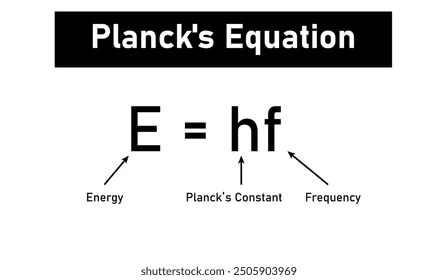
What is Planck’s relation equation for the energy of a quantum?
h = 6.626 × 10⁻³⁴J x s
What is the Bohr model?
hydrogen atom consists of a central proton around which an electron traveled in a circular orbit
the centripetal force acting on the electron as it revolved around the nucleus is created by the electrostatic force between the positively charged proton and the negatively charged electron
What is Bohr’s equation for the angular momentum of an electron orbiting a hydrogen nucleus?
L = (nh)/(2π)
n = principal quantum number
h = Planck’s constant
What is Bohr’s equation for the energy of the electron?
E = -RH/n²
RH = experimentally determined Rydberg unit of energy = 2.18 × 10⁻¹⁸J/electron
n = principal quantum number
How does the energy of an electron change?
in discrete amounts with respect to the quantum number
What happens to the energy of an electron the farther out from the nucleus that it is located (increasing n)?
energy of an electron increases (becomes less negative)
If a proton and electron are separated completely (no attractive force between them), what is the energy?
a value of zero energy
How did Bohr describe the structure of the hydrogen atom?
as a nucleus with one proton forming a dense core around which a single electron revolved in a defined pathway (orbit) as a discrete energy value
What can result in electron “jumping” from one orbit to a higher-energy one?
if one could transfer an amount of energy exactly equal to the difference between one orbit to another
What is ground state?
state of lowest energy in which all electrons are in the lowest possible orbits
atoms of any element will generally exist in the ground state unless subjected to extremely high temps or irradiation
What is an exicited state?
when at least one electron has moved to a subshell of higher than normal energy
Are electrons restricted to specific pathways?
no - they tend to be localized in certain regions of space
What is the Bohr modle of the hydrogen atom (and other one-electron systems such as He+ and Li2+) useful for explaining?
the atomic emission and absorption spectra of atoms
At room temp, what state are the majority of atoms in a sample at?
in the ground state
How can electrons be excited to yield excited states?
by heat or other energy forms
What results in the emission of discrete amounts of energy in the form of photons?
because the lifetime of an excited state is brief, the electrons will return rapidly to the ground state, resulting in the emission of discrete amounts of energy in the form of photons
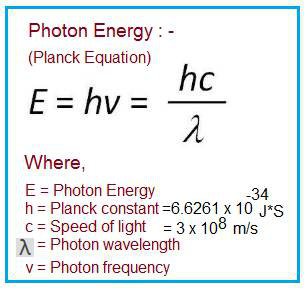
What is the equation for the electromagnetic energy of photons in emission?
What occurs when electrons return to their groumd states?
each electron will emit a photon with a wavelength characteristic of the specific energy transition it undergoes
these energy transitions do not form a continuum but rather are quantized to certain values
What is a line spectrum?
each line on the emission spectrum corresponds to a specific electron transition
Why can an atomic emission spectrum be used as a fingerprint for an element?
because each element can have its electrons excited to a different set of distinct energy levels, each possesses a unique atomic emission spectrum
What is the simplest atomic emission spectrum of all elements?
atomic emission spectrum of hydrogen
What is the Lyman series?
the group of hydrogen emission lines corresponding to transitions from energy levels n greater of equal to 2 to n=1
What is the Balmer series?
group corresponding to transitions from energy level n greater than or equal to 3 to n = 2 and includes four wavelengths in the visible region
How does the Lyman series differ from the Balmer series?
the Lyman series includes larger energy transitions than the Balmer series and therefore has shorter photon wavelengths in the UV region of the electromagnetic spectrum
What is the Paschen series?
corresponds to transitions from n greater than or equal to 4 to n = 3
What equation combines Bohr’s and Planck’s calculations?
equation essentially says the energy of the emitted photon corresponds to the difference in energy between the higher-energy initial state and the lower-energy final state

Why do the wavelengths of absorption correspond exactly to the wavelengths of emission?
because the difference in energy between levels remains unchanged
In addition to a unique emission spectrum, what does every element possess?
a characteristic absorption spectrum
What is required for identification of elements in the gas phase?
requires absorption spectra
When an electron is excited to a higher energy level, what must it absorb?
exactly the right amount of energy to make that transition → this means exciting the electrons of a particular element results in energy absorption at specific wavelengths
What is needed for electrons to move from a lower energy level to a higher energy level?
they must absorb the right amount of energy to do so in the form of light
What happens when electrons to move from a higher energy level to a lower energy level?
they emit the same amount of energy they was required to move from a lower energy level to a higher energy level in the form of light
What was Bohr’s model unable to do?
explain the structure and behavior of atoms containing more than one electron
model’s failure was a result of not taking into account the repulsion between multiple electrons surrounding the nucleus
What are orbitals?
localized regions in which electrons move rapidly
Is it possible to pinpoint exactly where an electron is at any given point in time?
no - the best we can do is describe the probability of finding an electron within a given region of space
What is Heisenberg’s uncertainty principle?
it is impossible to simultaneously determine, with perfect accuracy, the momentum and the position of an electron
if we want to assess the position of an electron → the electron has to stop (thereby removing its momentum)
if we want to assess the momentum of an electron → the electron has to be moving (thereby changing its position)
What does modern atomic theory postulate?
any electron in an atom can be completely described by four quantum numbers: n, l, ml, and ms
What is the Pauli exclusion principle?
no two electrons in a given atom can possess the same set of four quantum numbers
What is an electron’s energy state?
the position and energy of an electron described by its quantum numbers
What limits the values of l?
the value of n
What limits the value of ml?
the values of l
What do the values of the quantum numbers qualitatively give info about?
size, shape, and orientation of the orbitals
What is the principal quantum number (n)?
first quantum number
can theoretically take on any positive integer value
What is the relationship between the principal quantum number and the radius of the electron’s shell?
the larger the integer value of n, the higher the energy level and radius of the electron’s shell
Within a shell, what is the capacity if hold a certain number of electrons?
max # of electrons within a shell = 2n²
What is the relationship between the difference in energy between two shells and the distance from the nucleus?
the difference in energy between two shells decreases as the distance from the nucleus increases because the energy difference is a function of [(1/ni2) - (1/nf2)]
What is the azimuthal (angular momentum) quantum number (l)?
second quantum number
refers to the shape and number of subshells within a given principal energy level (shell)
What does the azimuthal quantum number have important implications in?
chemical bonding and bond angles
How does the value of n limit the value of l?
for any given value of n, the range of possible values for l is 0 to (n-1)
n-value tells you the number of possible subshells
What is spectroscopic notation?
the shorthand representation of the principal and azimuthal quantum numbers
n remains a number
l = 0 → s
l = 1 → p
l = 2 → d
l = 3 → f
What is the max capacity within a subshell to hold electrons?
max # of electrons within a subshell = 4l + 2
What is the relationship between energies of subshells and the value of l?
energies of subshells increase with increasing l value → however, the energies of subshells from different principal energy levels may overlap (i.e. 4s subshell has lower energy than 3d subshell)
What is the magnetic quantum number (ml)?
third quantum number
specifies the particular orbital within a subshell where an electron is most likely to be found at a given moment in time
What are the possible values of ml?
-l to +l, including 0
What is the max number of electrons an orbital can hold?
two electrons
How can the number of orbitals in a subshell be determined?
by the number of ml values
i.e. three values of ml = three orbitals in the subshell
What is the shape of an orbital dependent on?
depends on the subshell in which they are found
What is the shape of the orbitals in the s subshell?
spherical
What is the shape of the orbitals in the p subshell?
dumbell-shaped and align along the x-, y-, and z-axes
What is probability density?
the likelihood that an electron will be found in a particular region of space
What is the spin quantum number (ms)?
fourth quantum number
two possible values (spin orientations): +1/2 and -1/2
What are paired spins?
whenever two electrons are in the same orbital, they must have opposite spins
What are parallel spins?
electrons in different orbitals with the same ms values
What is electron configuration?
the pattern by which subshells are filled, as well as the number of electrons within each principal energy level and subshell
What is the Aufbau principle (building-up principle)?
electrons fill from lower-to-higher-energy subshells and each subshell will fill completely before electrons begin to enter the next one
What is the n + l rule?
states that the lower the sum of the values of the first and second quantum numbers, n+l, the lower the energy of the subshell
if two subshells have the same n+l value, the subshell with the lower n value has a lower energy and will fill with electrons first
When writing the electron configuration for cations, how do you determine what subshell to remove electrons from?
remove electrons from the subshells with the highest value of n first
if multiple subshells are tied for the highest n value, then electrons are removed from the subshell with the highest l value among these
What is Hund’s rule?
states that, within a given subshell, orbitals are filled such that there are a mac number of half-filled orbitals with parallel spins
basis for preference is electron repulsion
What are the two exceptions to Hund’s rule?
Chromium (and other elements in its group) → [Ar] 4s13d5
Copper (and other elements in its group) → [Ar] 4s13d10
a full d subshell outweighs the cost of moving an electron out of the 4s subshell → elements in same group have similar behavior, moving one electron from the highest s subshell to the highest d subshell (similar shifts can be seen with f subshell but never for the p subshell - extra stability doesn’t outweigh the cost)
What does the presence of paired or unpaired electrons affect?
the chemical and magnetic properties of an atom or molecule
What are paramagnetic materials?
materials composed of atoms with unpaired electrons will orient their spins in alignment with a magnetic field, and the material will thus be weakly attracted to the magnetic field
What are diamagnetic materials?
materials consisting of atoms that have only paired electrons will be slightly repelled by a magnetic field
Given sufficiently string magnetic fields beneath an object, what can happen to any diamagnetic substance?
it can be made to levitate
What are valence electrons?
electrons that are in its outermost energy shell, are most easily removed, and are available for bonding
“active” electrons and to a large extent dominate the chemical behavior of an atom
For elements in Group IA and IIA (groups 1 and 2), what subshell electrons are valence electrons?
only the highest s subshell electrons are valence electrons
For elements in Group IIIA and VIIIA (groups 13 and 18), what subshell electrons are valence electrons?
the highest s and p subshell electrons are valence electrons
For transition elements, what subshell electrons are valence electrons?
the highest s and d subshells, even though they have different principal quantum numbers
For elements in the lanthanide and actinide series, what subshell electrons are valence electrons?
the highest s and f subshells, even though they have different principal quantum numbers
For all elements in period three (starting with sodium) and below, what subshell electrons are valence electrons?
they may accept electrons into their d subshell which allows them to hold more than eight electrons in their valence shell, violating the octet rule
What is the periodic law?
states that the chemical and physical properties of the elements are dependent in a periodic way upon their atomic numbers
What is true of elements in the same group?
they have the same electronic configuration in their valence shell and share similar chemical properties
What does the roman numeral above each group represent?
the number of valence electrons elements in that group have in their neutral state