Module 3 Lecture 3
 Call Kai
 Learn
Learn Practice Test
 Spaced Repetition
 Match
Match Flashcards
 Knowt Play
1/15

There's no tags or description
Looks like no tags are added yet.
Name | Mastery | Learn | Test | Matching | Spaced | Call with Kai | Chat |
|---|
No analytics yet
Send a link to your students to track their progress
16 Terms
CFTR
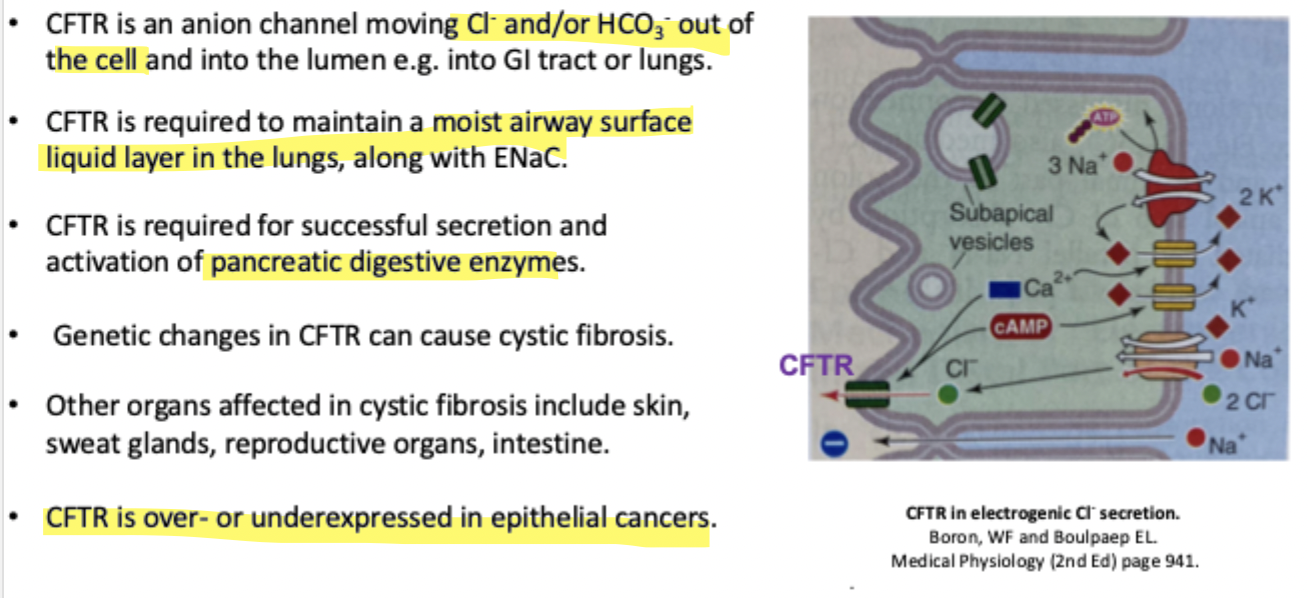
EMP process in cancer

hgih CFTR in breast cancer
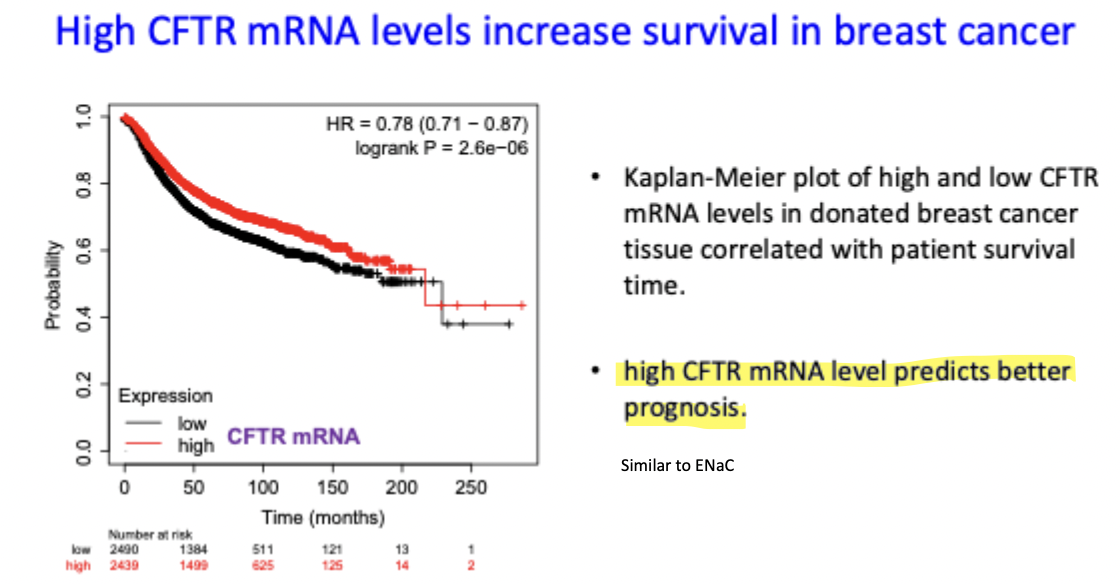
CFTR in breast cancer
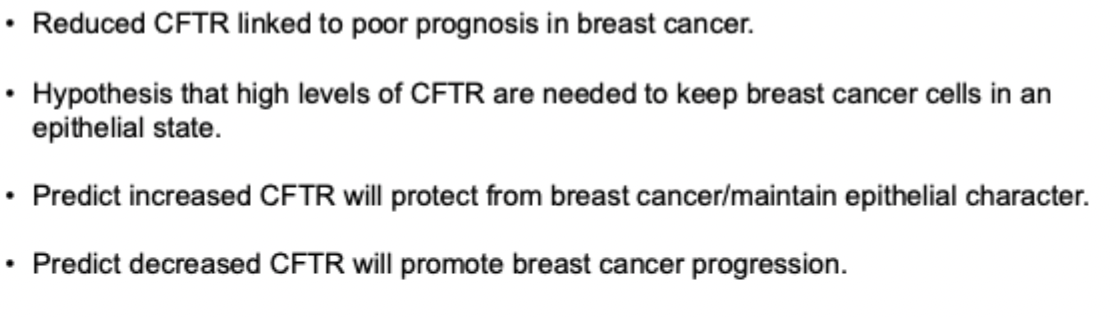
changes in CFTR and epithelial phenotype in breast cancer

This is really the only paper looking at this - this was published in 2013 and there hasn’t been much on the topic since then
In the presence of TGFb can see there is much less CFTR present
Shown in both fluorescence and western blot - good evidence about CFTR helping to maintain an epithelial phenotype
Show an increase in migration when there is a decrease in CFTR
Fits with the other results shown
Also remember the scratch assay from last lecture that showed this similar trend for ENaC
changing CFTR levels and changing between mesenchymal and epithelial phenotype in cancer

These results showed that a knockdown of CFTR led to junction markers expression being reduced, as well as LAM which is a mesenchymal marker being greatly overexpressed in these situations
Showed that changing numbers of these markers alone may be enough to transition into a mesenchymal or stay in an epithelial state
Invasion assay - going through the matrix, described in previous lectures (indication of migration and invasion)
CFTR and ENaC and these results show that this seems to have major consequences on epithelial vs mesenchymal phenotype in breast cancer cells - seem to follow the same trend based on reslts shown here and in ENaC lecture.
high CFTR and breast tumour size
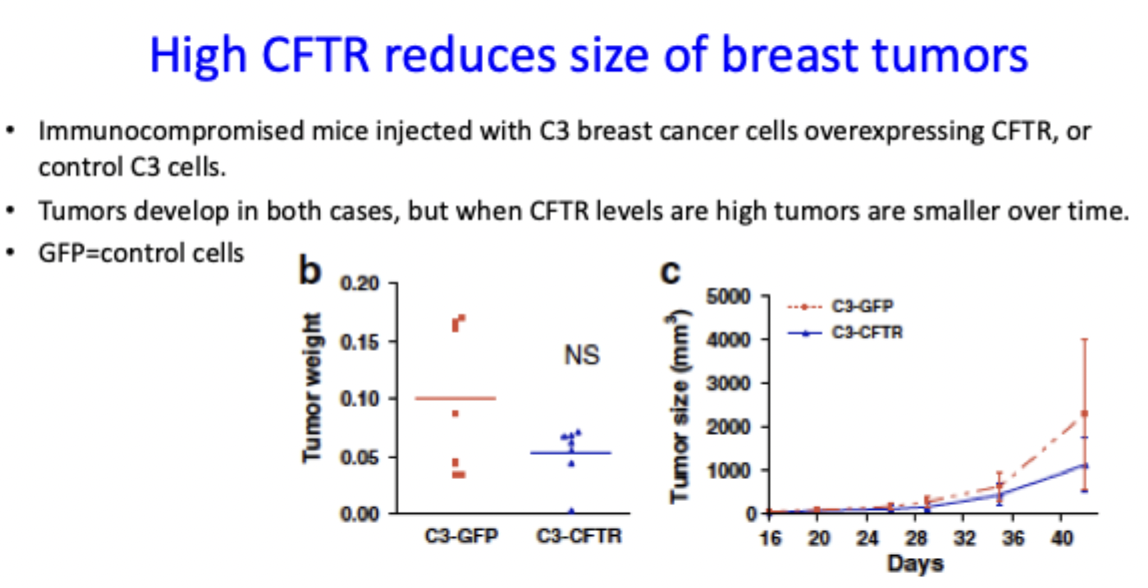
Results aren't super convincing but they did show that there seems to be some difference in tumour weight
Not significant because it is so variable, particularly in the controls
Then looked at tumour size over 40 days:
Controls grew larger, but only see this difference after a while - more than 40 days
Indicating that high levels of CFTR may reduce tumour size
Again variable so indication more than being a highly significant study
decrease in CFTR and NF-kB
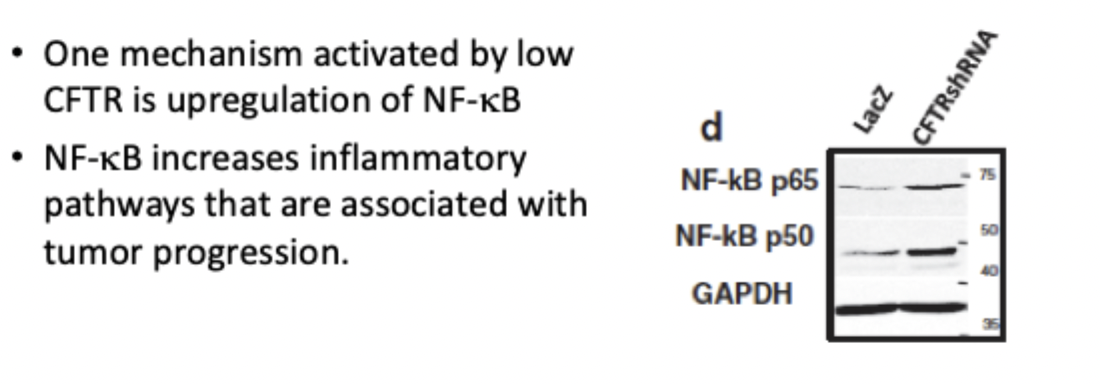
Also have to think about the tumour microenvironment - interactive relationship
Complex
So shows there are other influences
Showed that knocking down CFTR led to a large increase in NFkB highly inflammatory subunits
So shows the influence of CFTR on the cancer mircoenvironment
calcium signalling and control of processes

Calcium drives many diverse cellular processes
calcium entry and exit in the cell
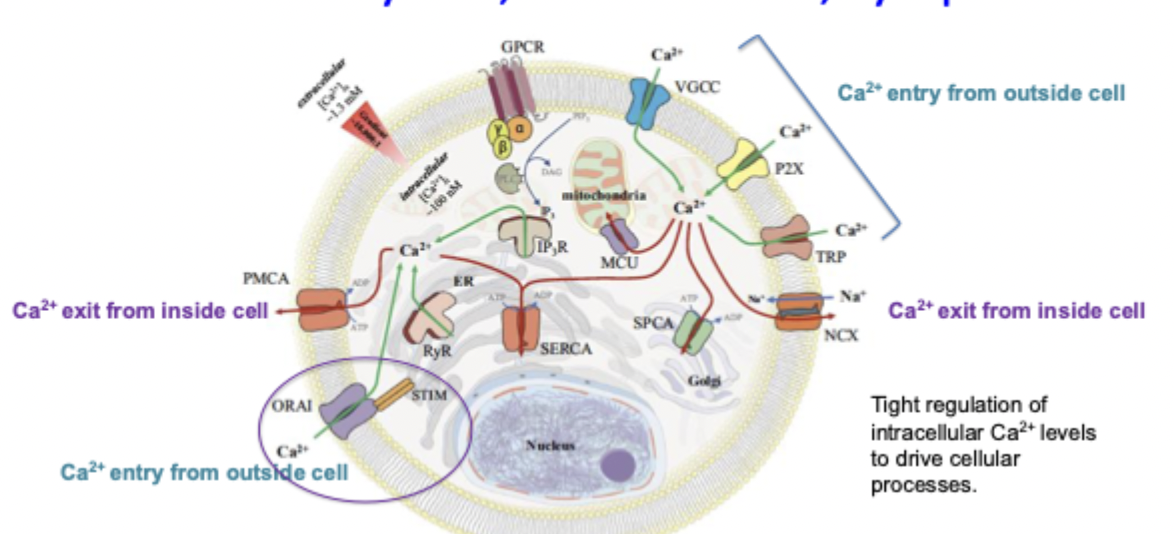
Good evidence that calcium channels and transporters important in maintianing conc and association with cancer
Don’t need to know this diagram
Calcium low in cytosol, a lot stored inside compartments such as SR and mitochondria
Highly controlled where calcium is exiting to keep levels low
ORAI and STIM associated with cancer
STIM is the sensor and is associated with the ER/SR so regulating how much calcium can be released from here
ORAI is the pore in the cell membrane that can upon up when stimulated by STIM to bring calcium into the cell
Highly regulated
calcium levels in breast cancer

Calcium high inside cancer cells
calcium channels ORAI and STIM in breast cancer

Not directly looking at proliferation but the health of cells and how often they are proliferating
Good data aboutthe imprtance of calcium channels in breast cancer
Orai1-STIM1 in breast cancer migration

This is done using a. video of the cells to see how far they move over time
Seem to be good at migrating in controls but not when there is a knockdown of the ORAI and STIM
Orai-STIM in cancer in breast cancer metastasis

Then took it further with an animal model
Basically the exact same as above but in vivo
In the STIM knockout the tumour initially grew and then completely disappeared
In the ORAI knockout a tumour developed and then went away as well - a little but of tumour activity but nothing in comparison with the controls
Shows the importance of keeping levels of these channels low to stop the progression of breast cancer

Showed basically the same thing - significant decrease in tumour burden and size for both the ORAI and STIM, but a larger difference was seen in the STIM knockout
calcium in cell migration, invasion and metastasis

Allows the cell to keep moving along this tunnel that it has made
matrix metalloproteinases (MMPs) in metastasis

MMPs released from the cell, degradation of ECM so cell can move through the body and into the blood vessel and then come out of th eblood vessel at a secondary site, causing metastasis
Also important in angiogensis - important for tumour growth.