DAT BIOL - the nervous system
 Call Kai
 Learn
Learn Practice Test
 Spaced Repetition
 Match
Match Flashcards
 Knowt Play
1/135

There's no tags or description
Looks like no tags are added yet.
Name | Mastery | Learn | Test | Matching | Spaced | Call with Kai |
|---|
No analytics yet
Send a link to your students to track their progress
136 Terms
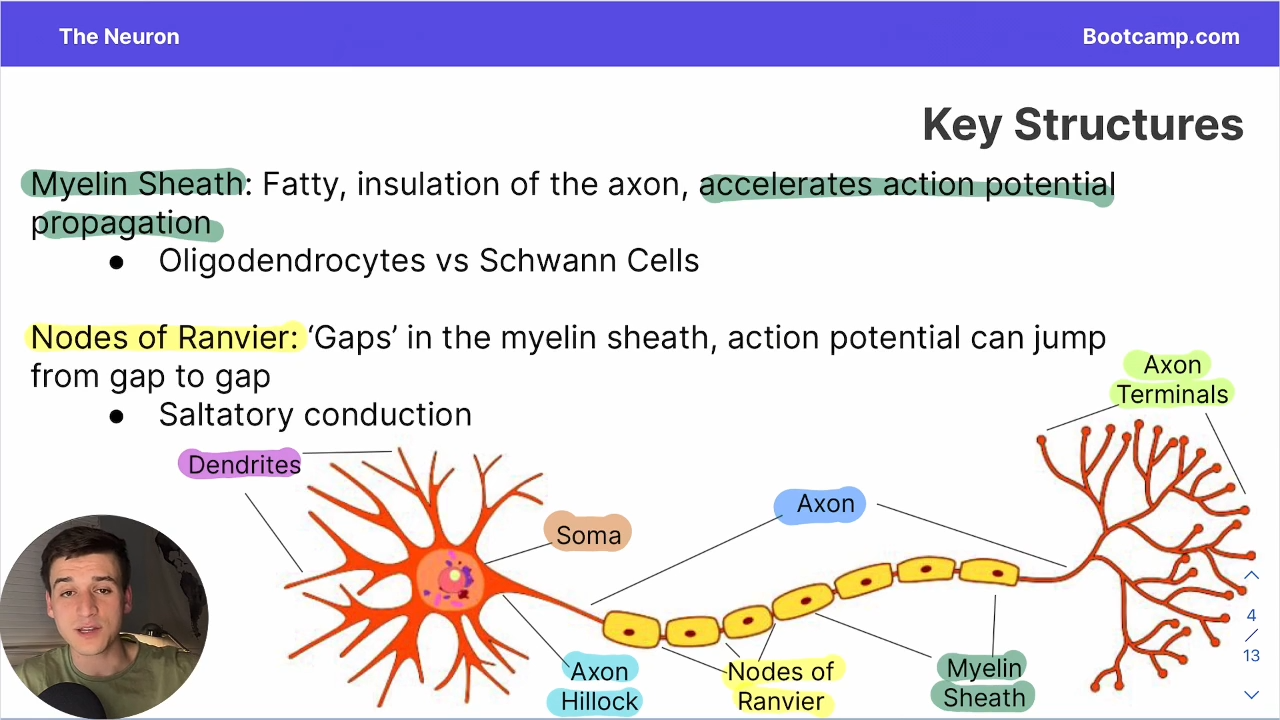
neuron
The funtional unit of the nervous system
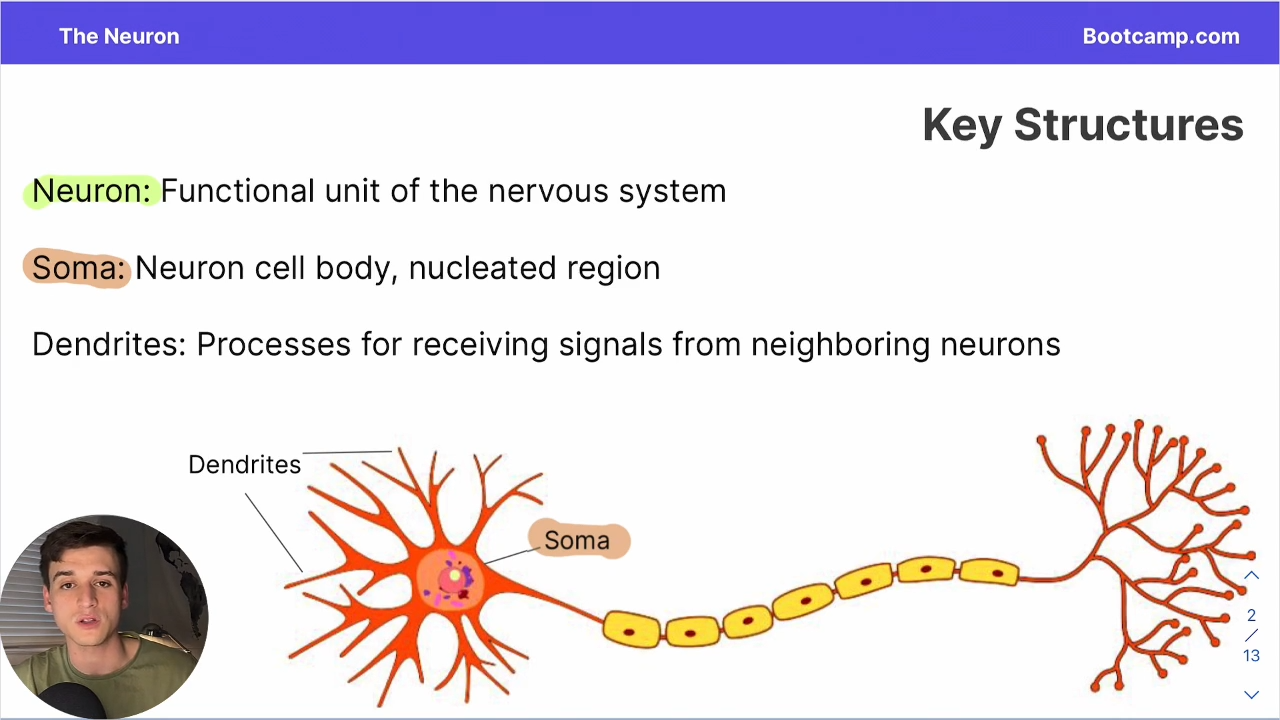
soma
the neuron cell body, the nucleated region
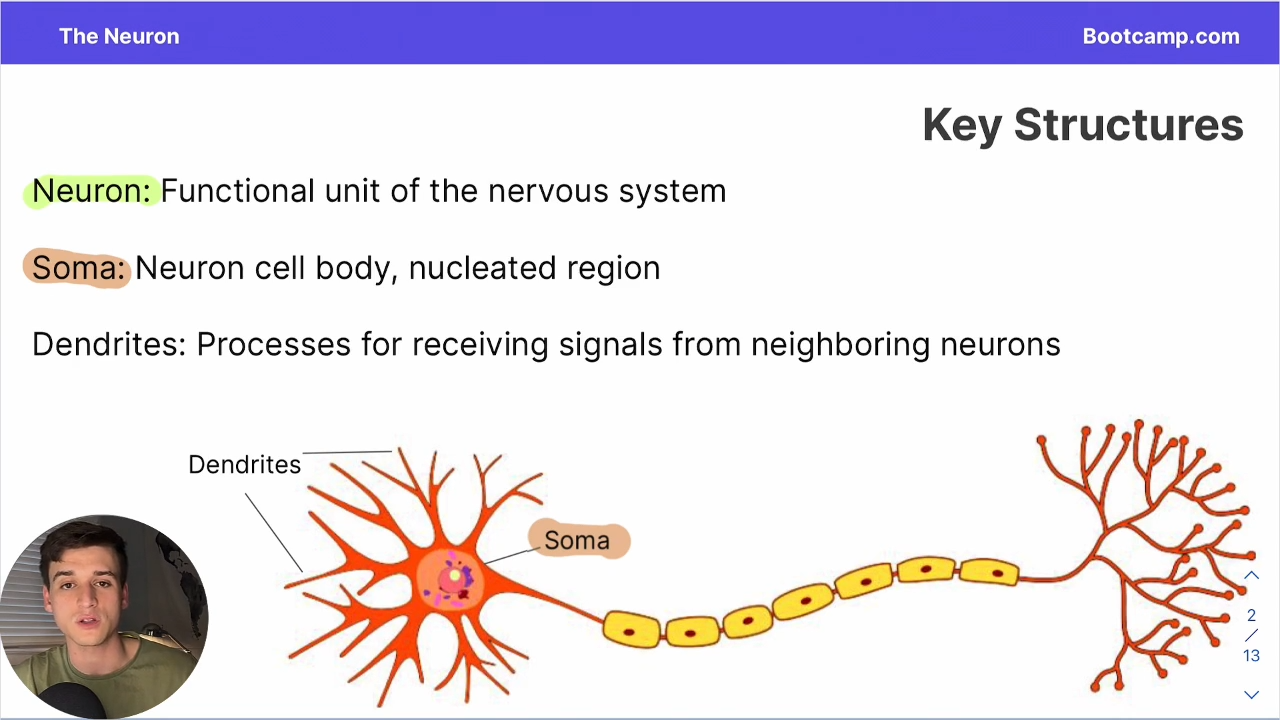
Dendrites
processes for receiving signals from neighboring atoms
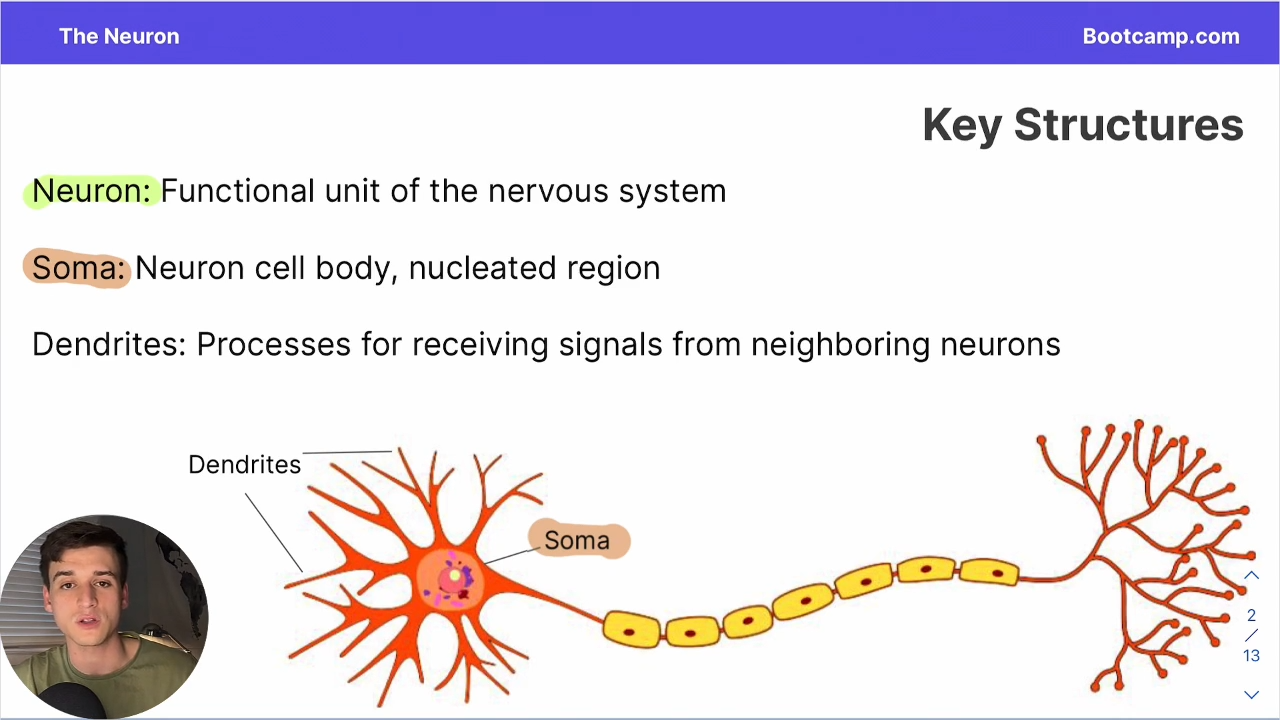
Axon
process for sending signals to neighboring neurons
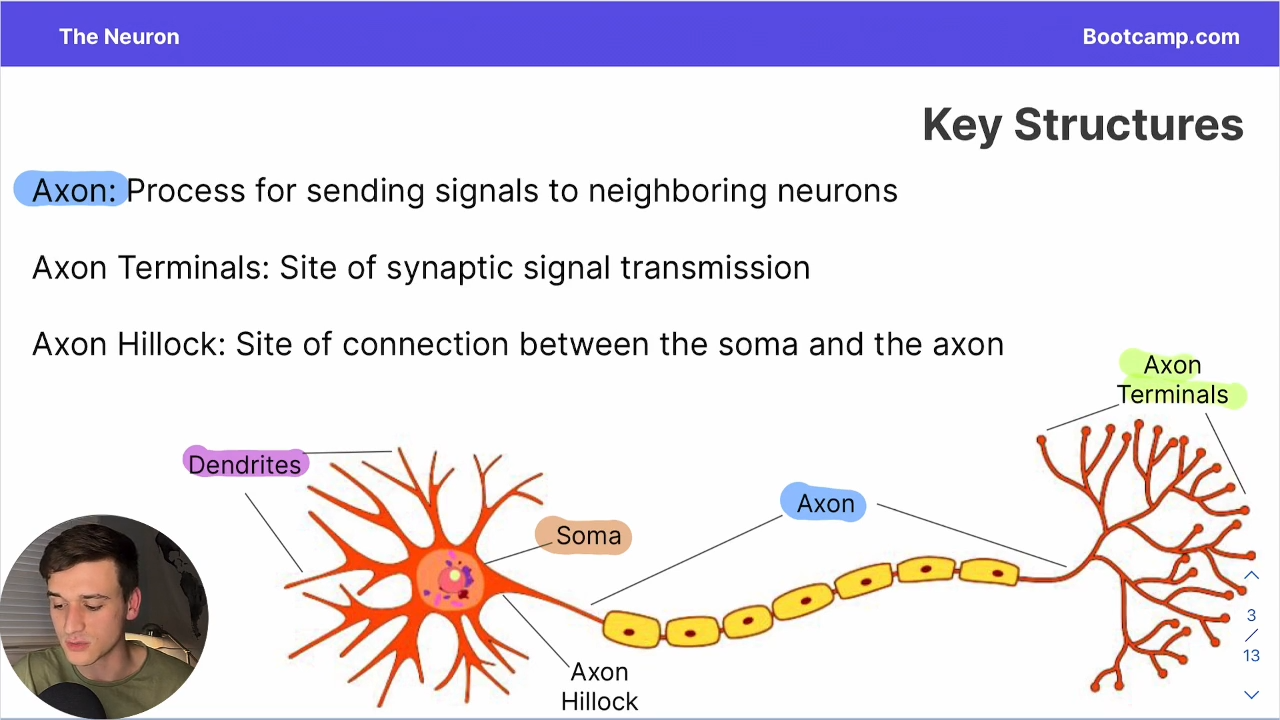
Axon terminals
Site of signal transmission
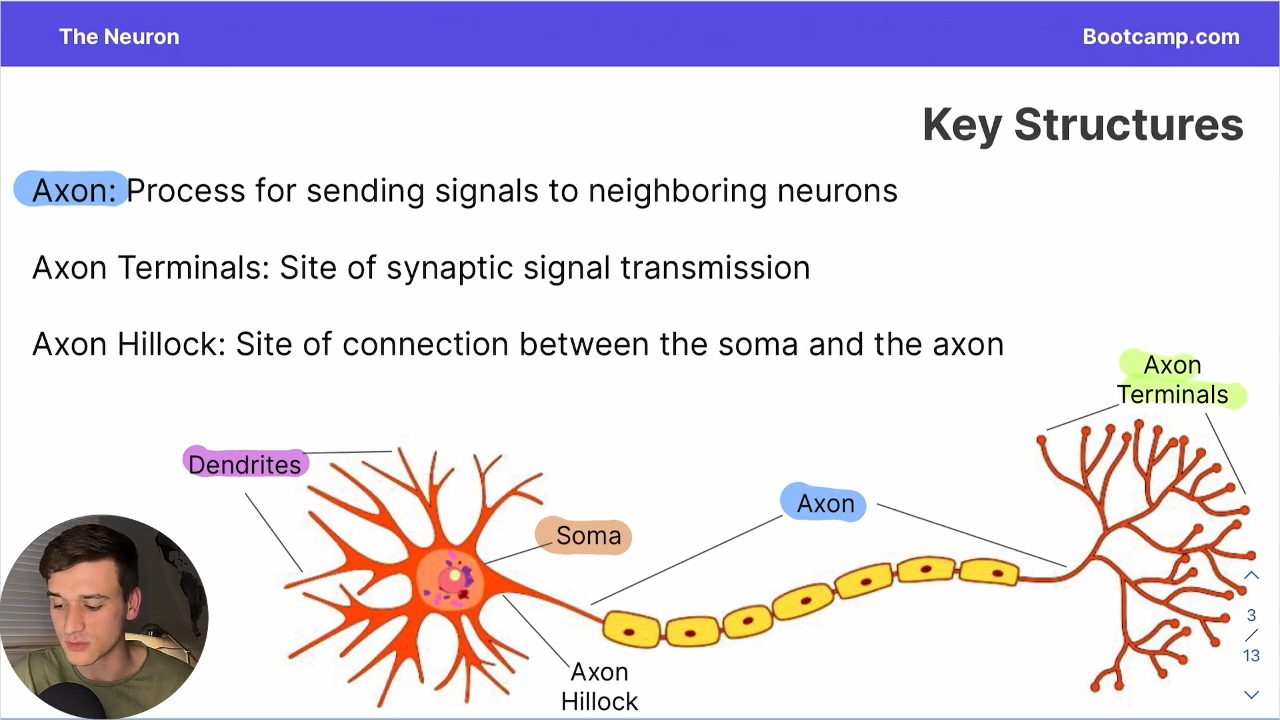
Axon hillock
Site of connection between the soma and the axon
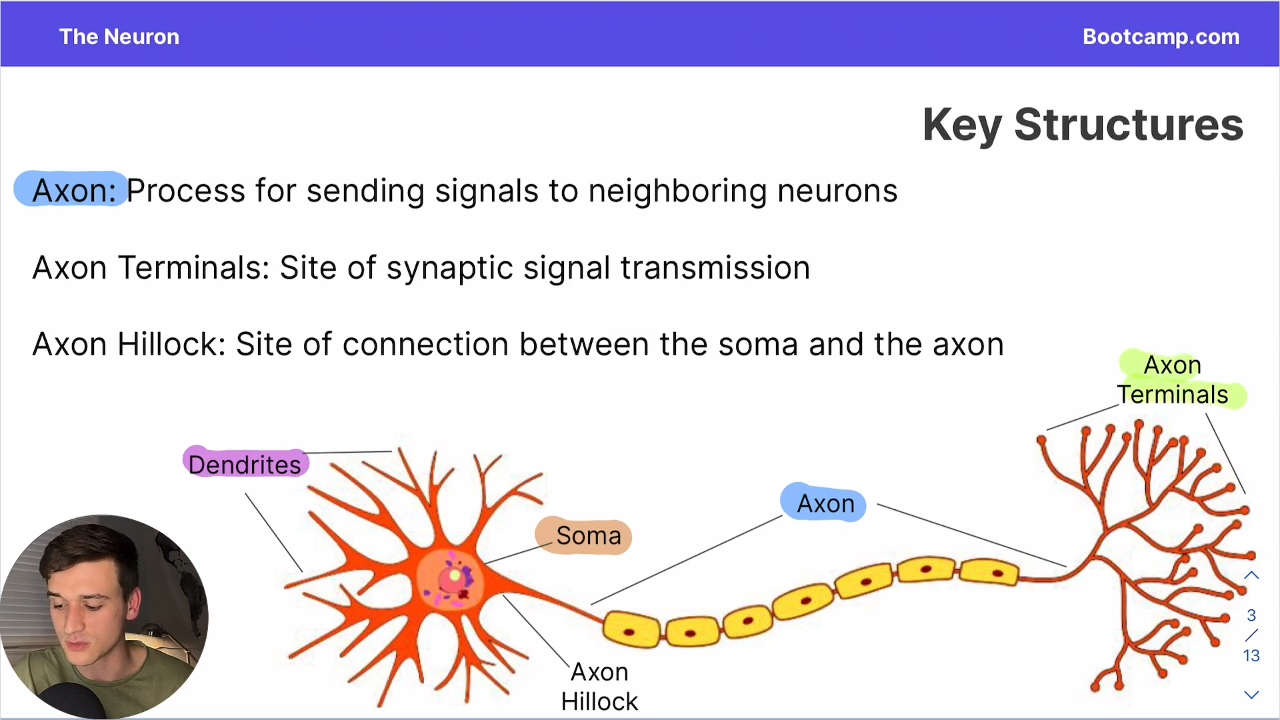
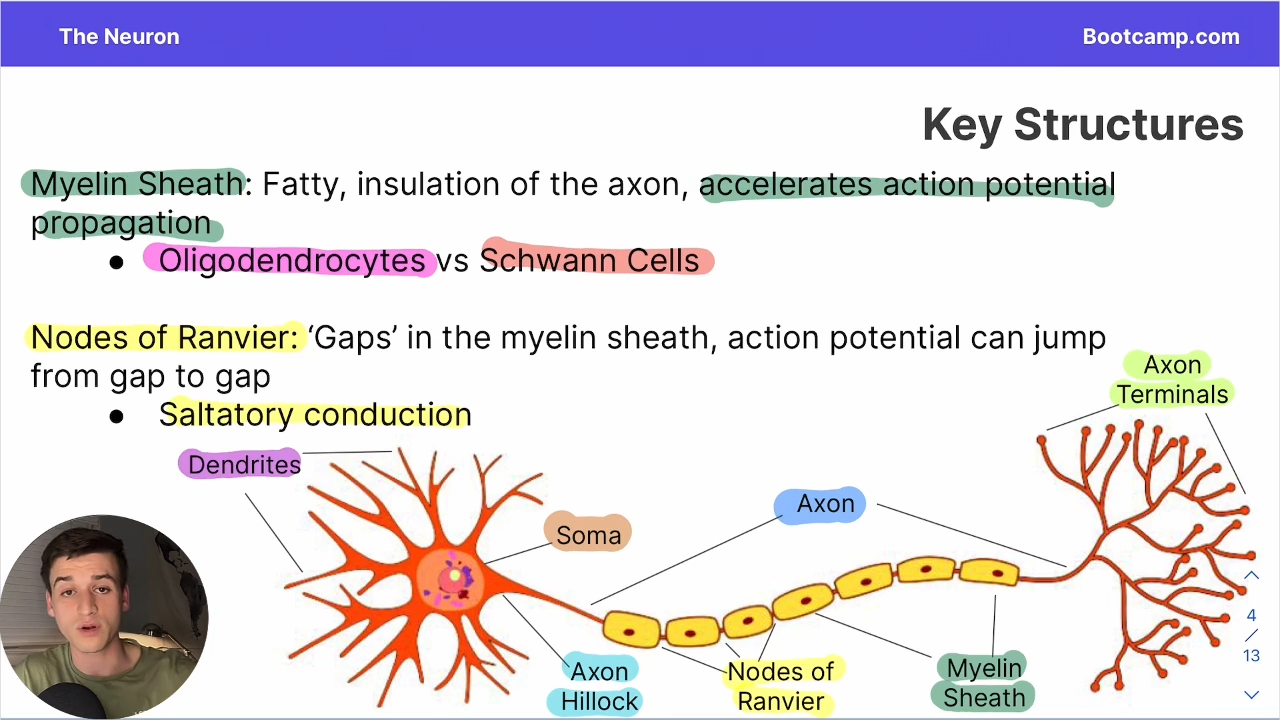
Myelin sheath
Fatty insulation of the acon which accelerates action potential propegation
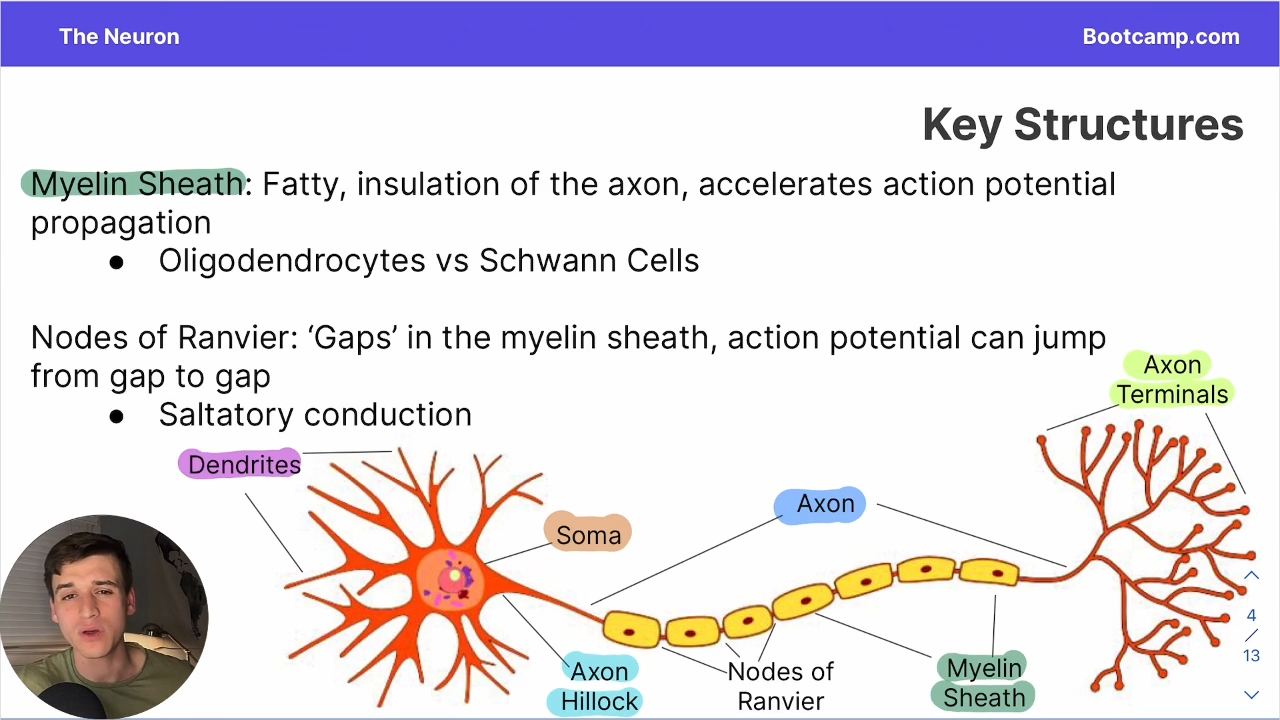
Nodes of ranvier
gaps in the myelin sheath in whoch action potential can jump from gap to gap
Oligodendrocytes
create the myelin sheath in the CNS
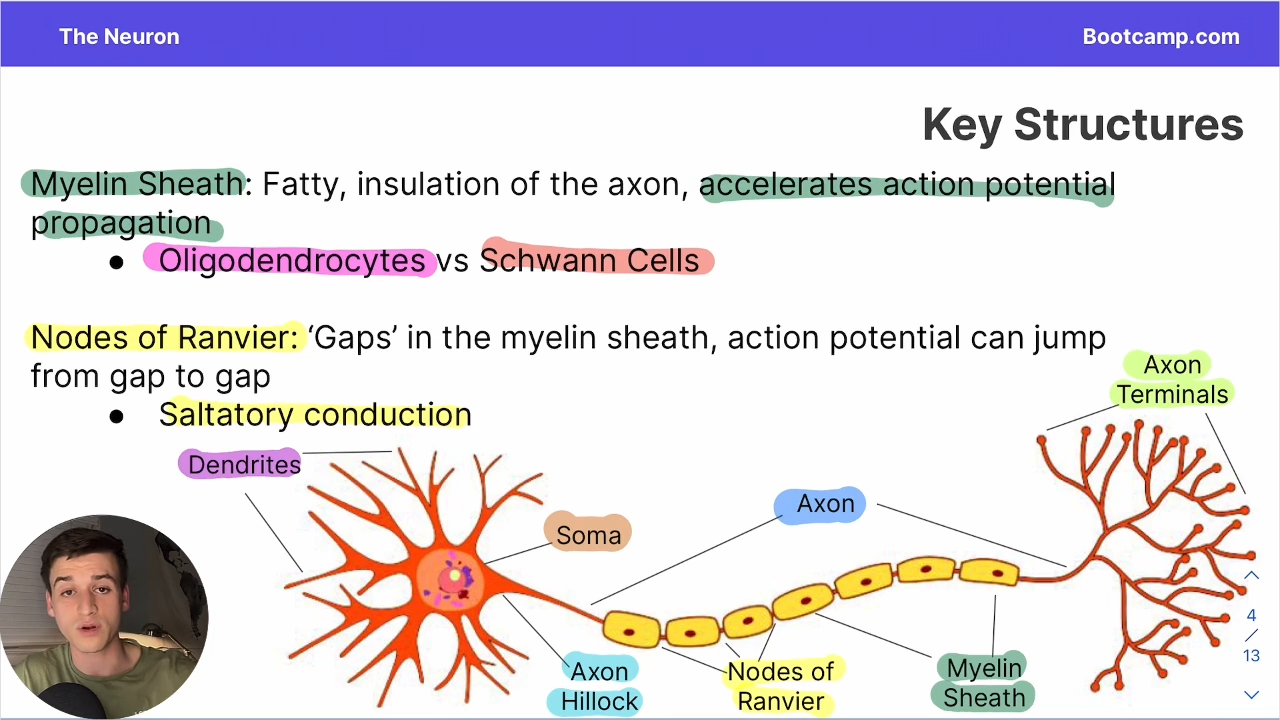
Schwann cells
create myelin sheath in PNS
action potential
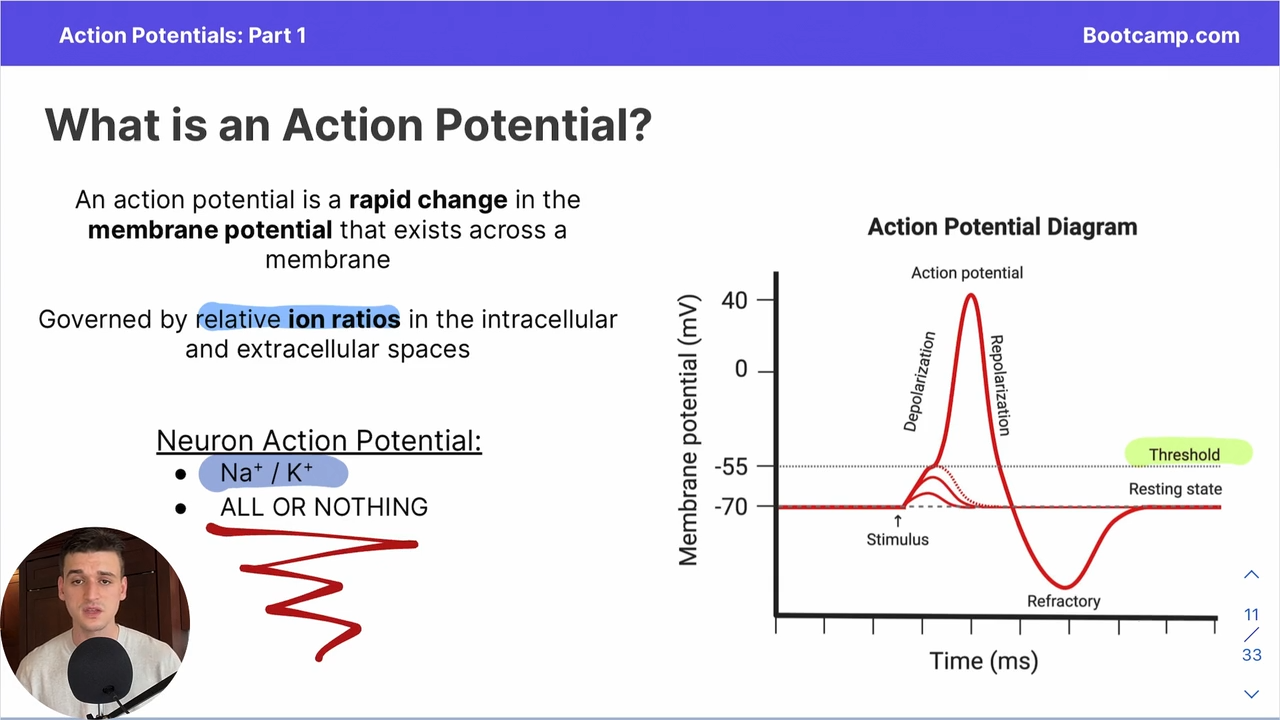
a rapid change in the membrane potential that exists across a membrane
action potential
a rapid change in the membrane potential that exists across a membrane
goverened by relative ion ratios in the intracellular and extracellular spaces
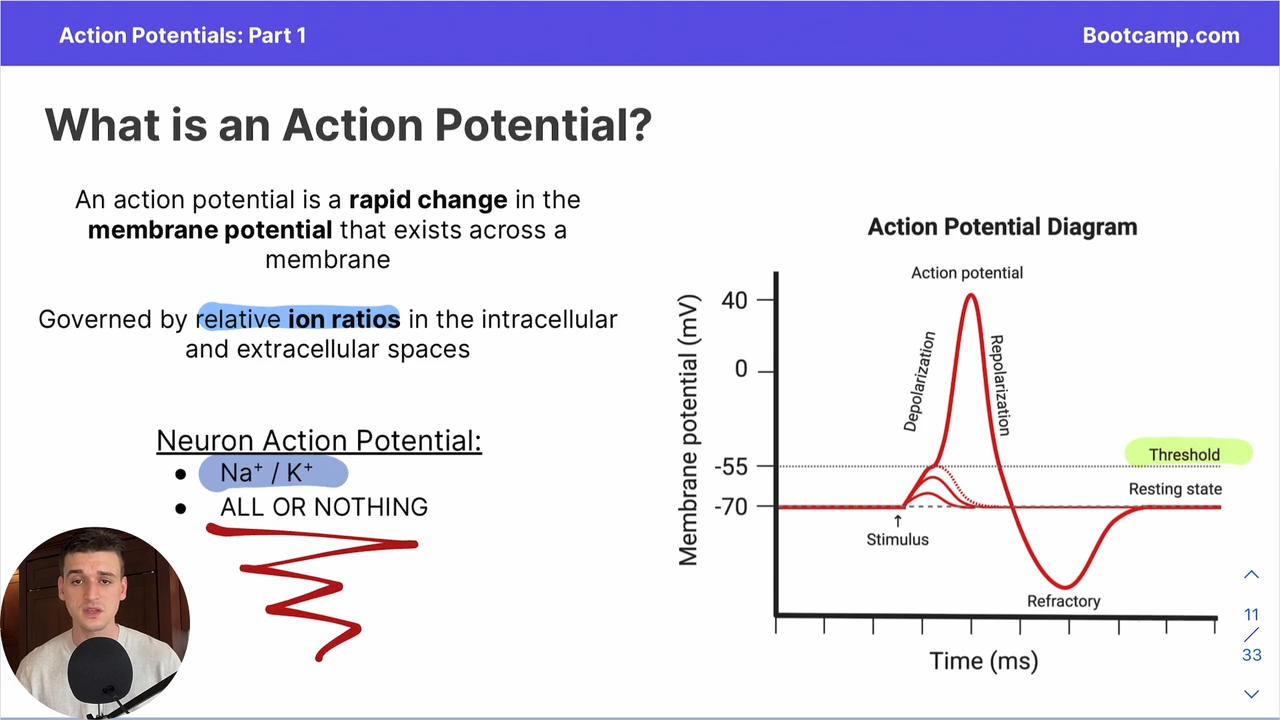
What ions are involved in neuron action potentials
sodium and potasium,
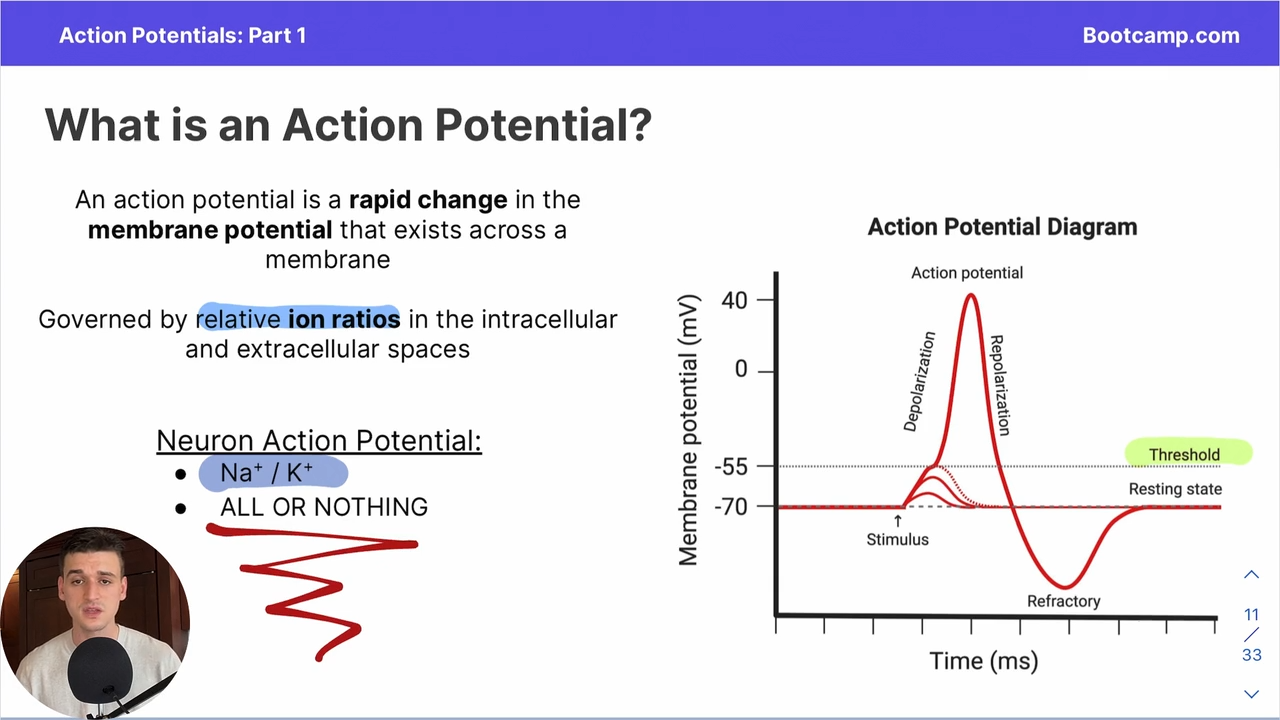
What is the resting state potential
-70mV, voltage is more negative inside than it is outside
What ions are being pumped in the resting state
SALTED BANANAS
3 Na+ out 2K+ in
using sodium potassium ATPase pumps
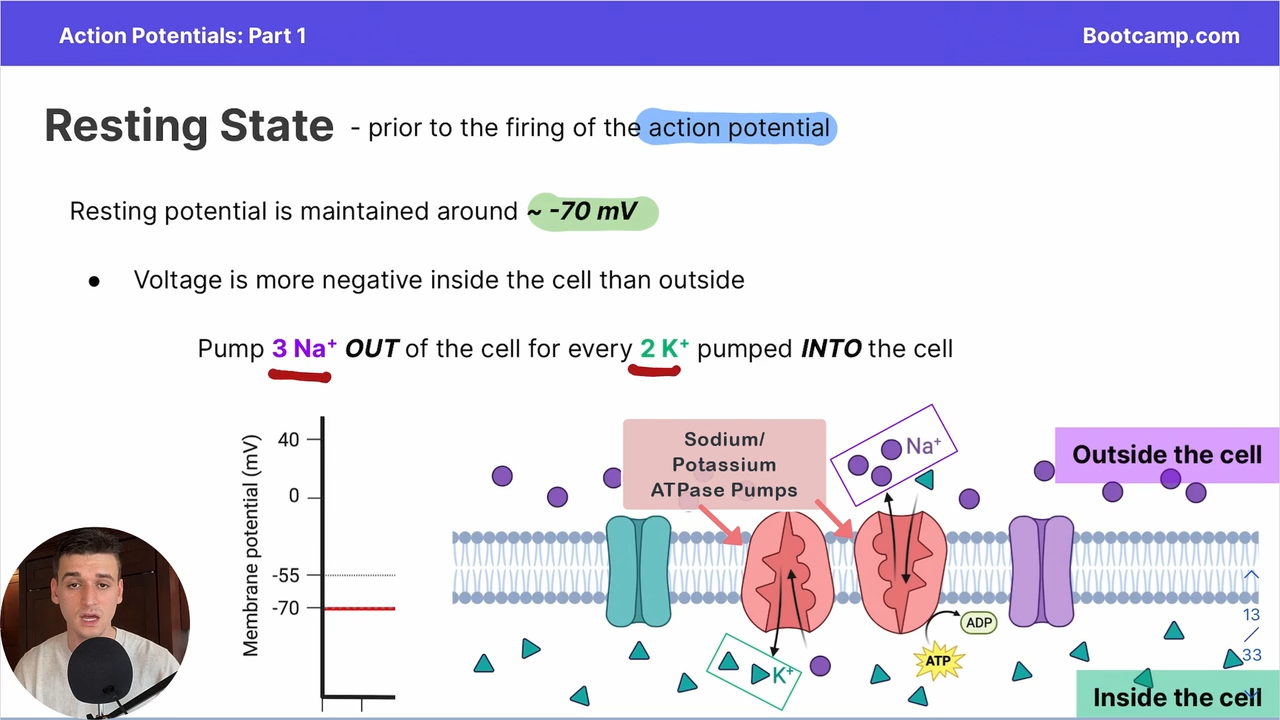
What is the neuron threshold
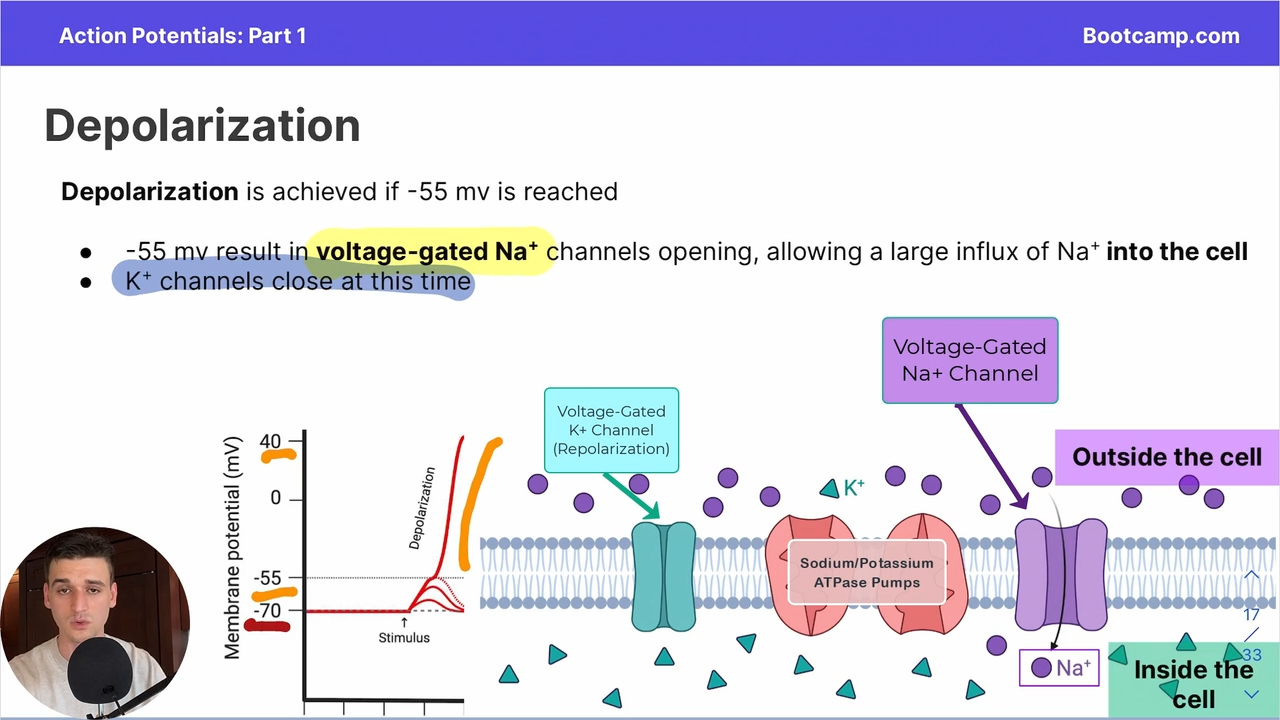
-55mV, stimulus causes some Na+ to go back into the cell
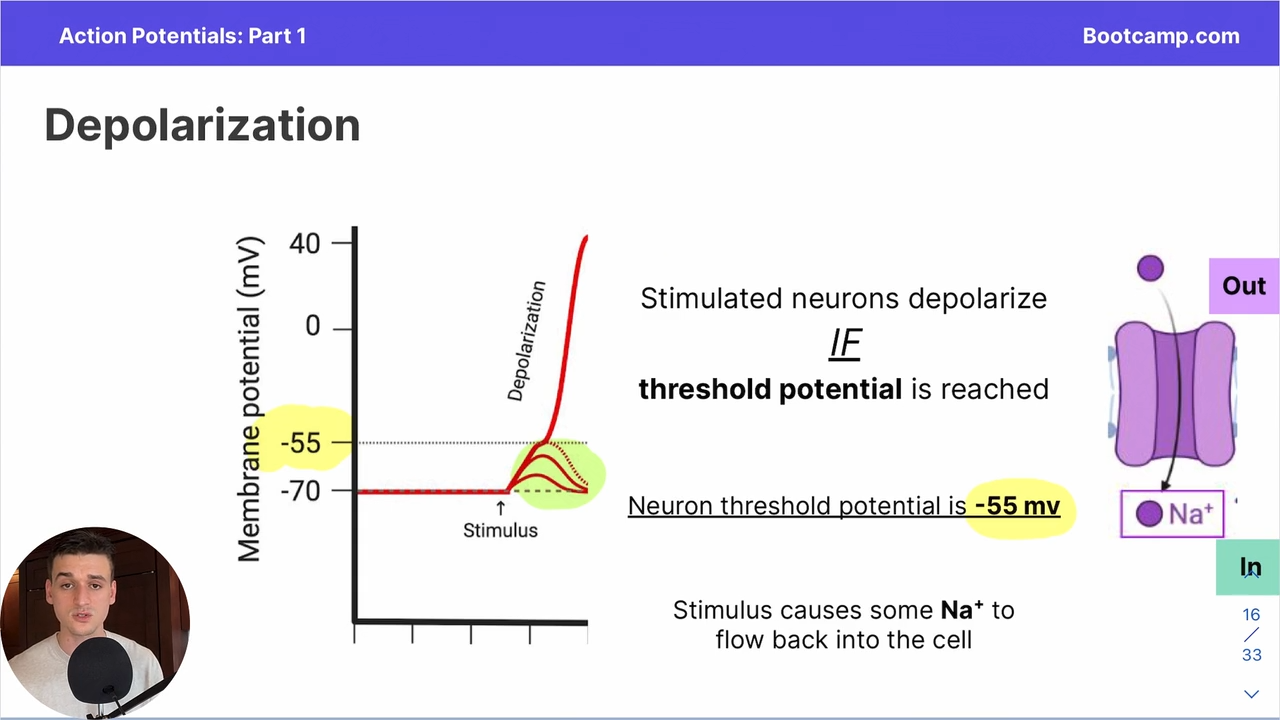
Depolarization
-55 mV results in a voltage gates Na+ channel opening, allowing a large influx of NA+ into the cell, with K+ channels closing
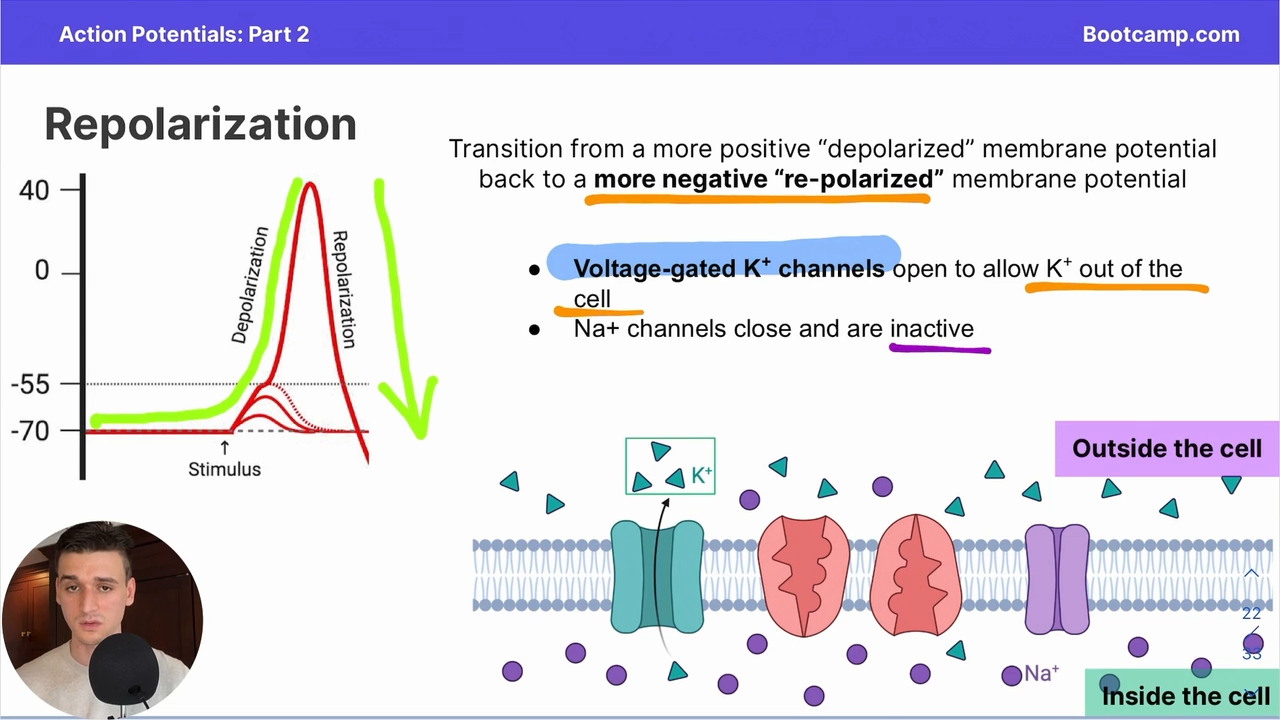
repolarization
Transition from a more positive depolarized membrane potential to a more negative repolarized membrane potential
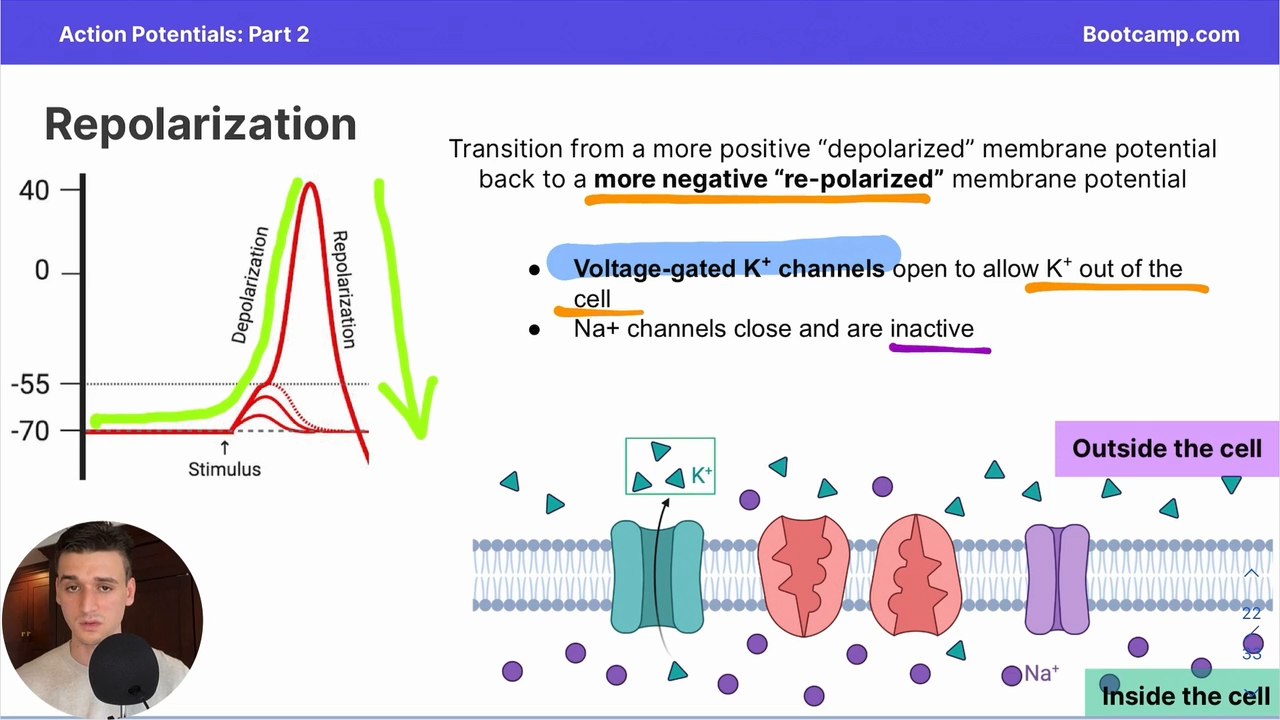
What happens in the cell during repolarization
a volatge gated K+ channgel allows K+ out of the cell
Na+ IONS CLOSE AND ARE INNACTIVE
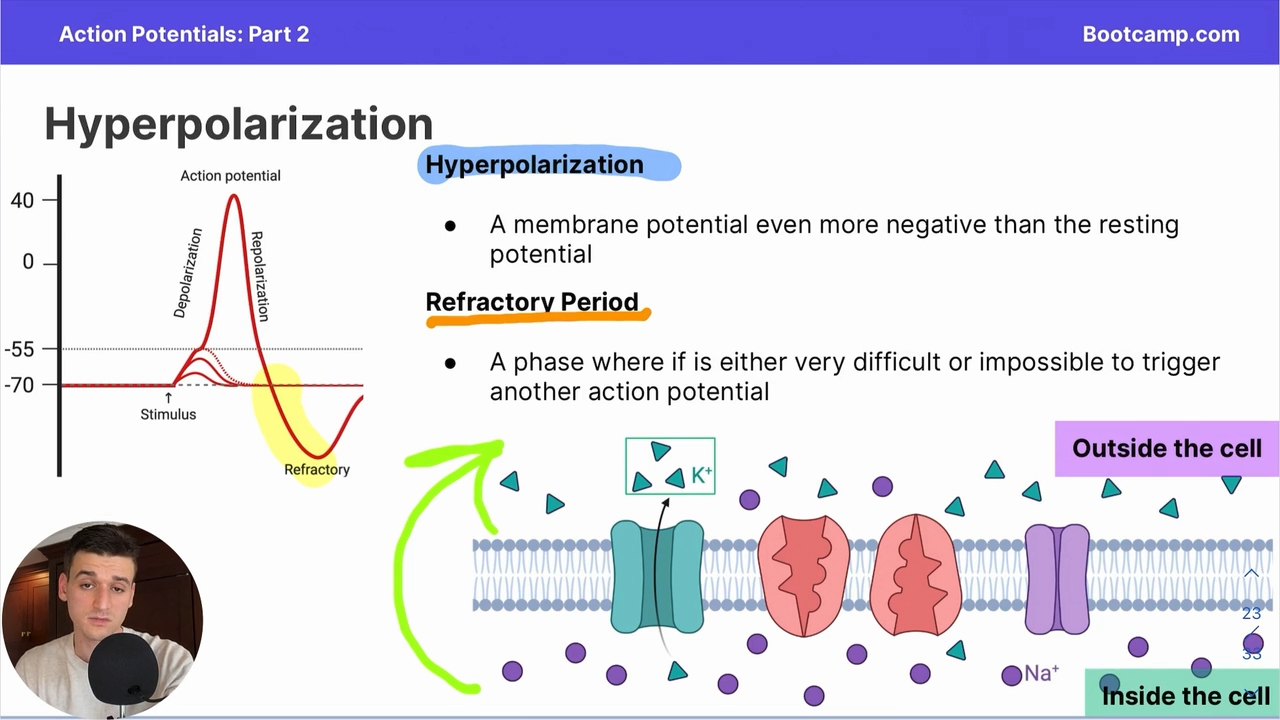
Hyper polarization
a membrane potential is even more negative than the resting potential
what happens during Hyper polarization
The sodium potastium atpase starts taking over to counter the voltage gated potassium channels
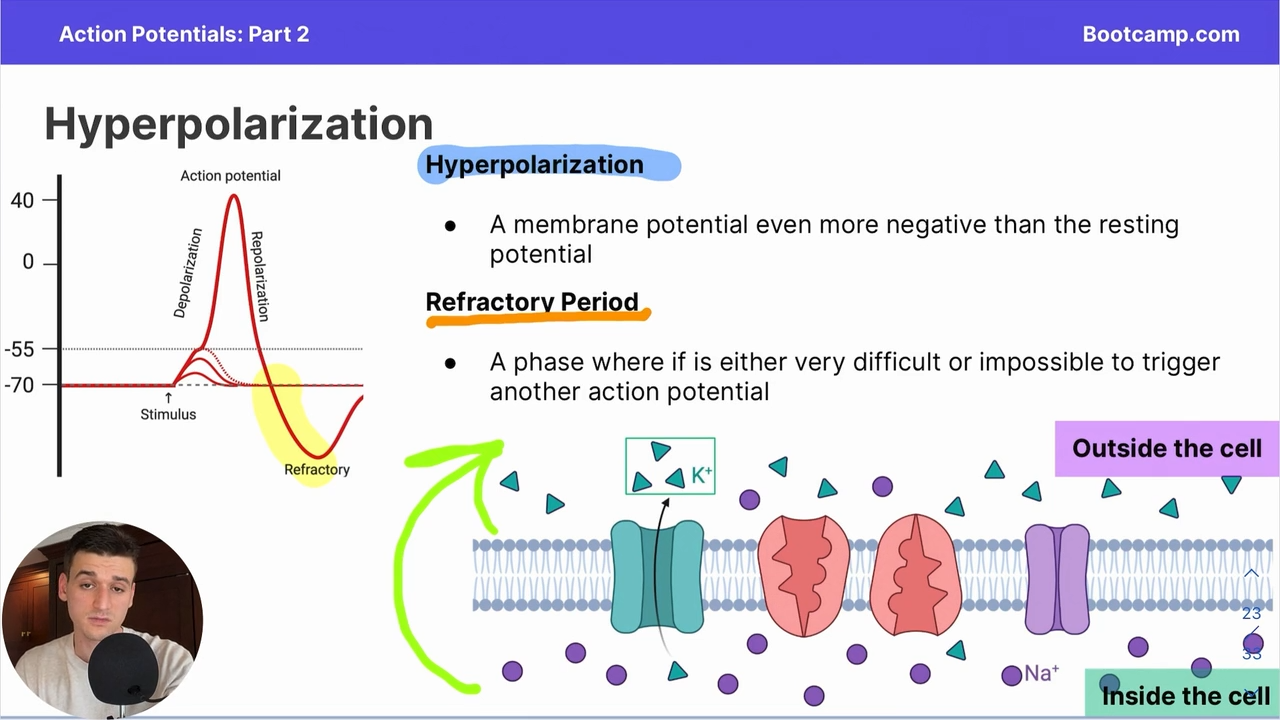
Refractory period
during hyperpolarization, phase where it is very diffiult or imposible to trigger another action potential
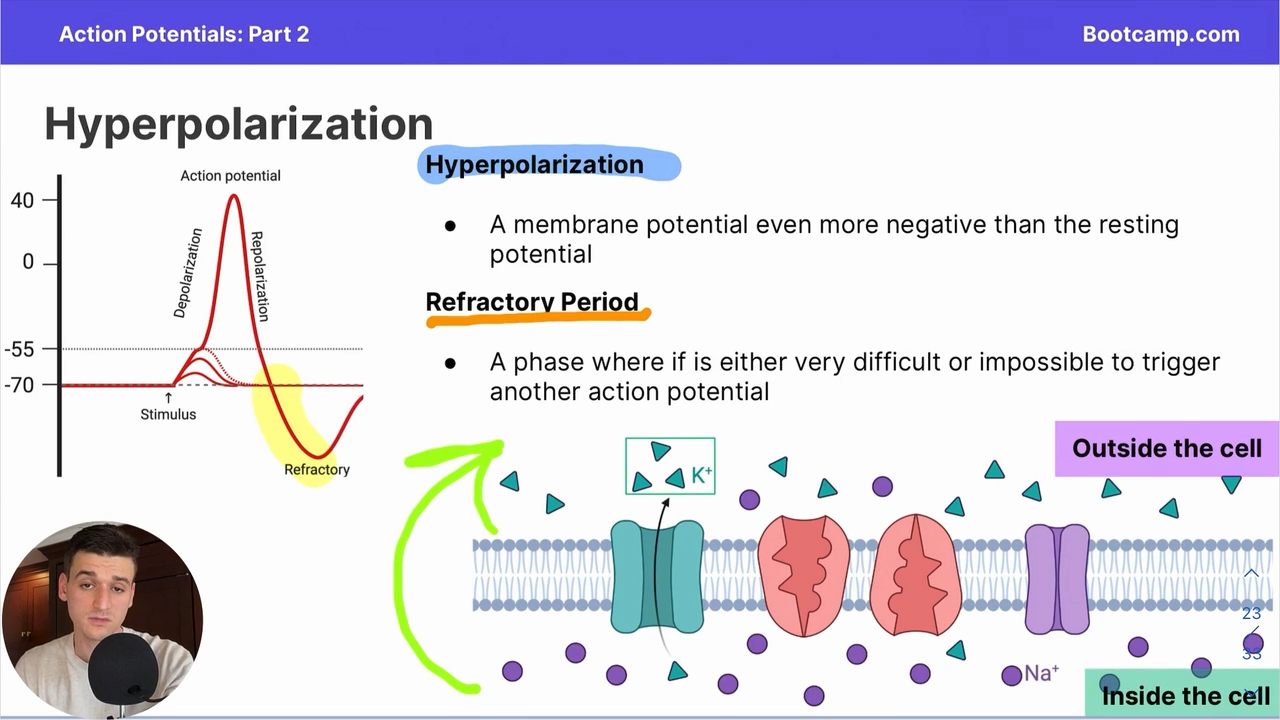
Why does hyperpolarization go so negative
Due to the fact that voltage gated potassium ion channels take a while to close
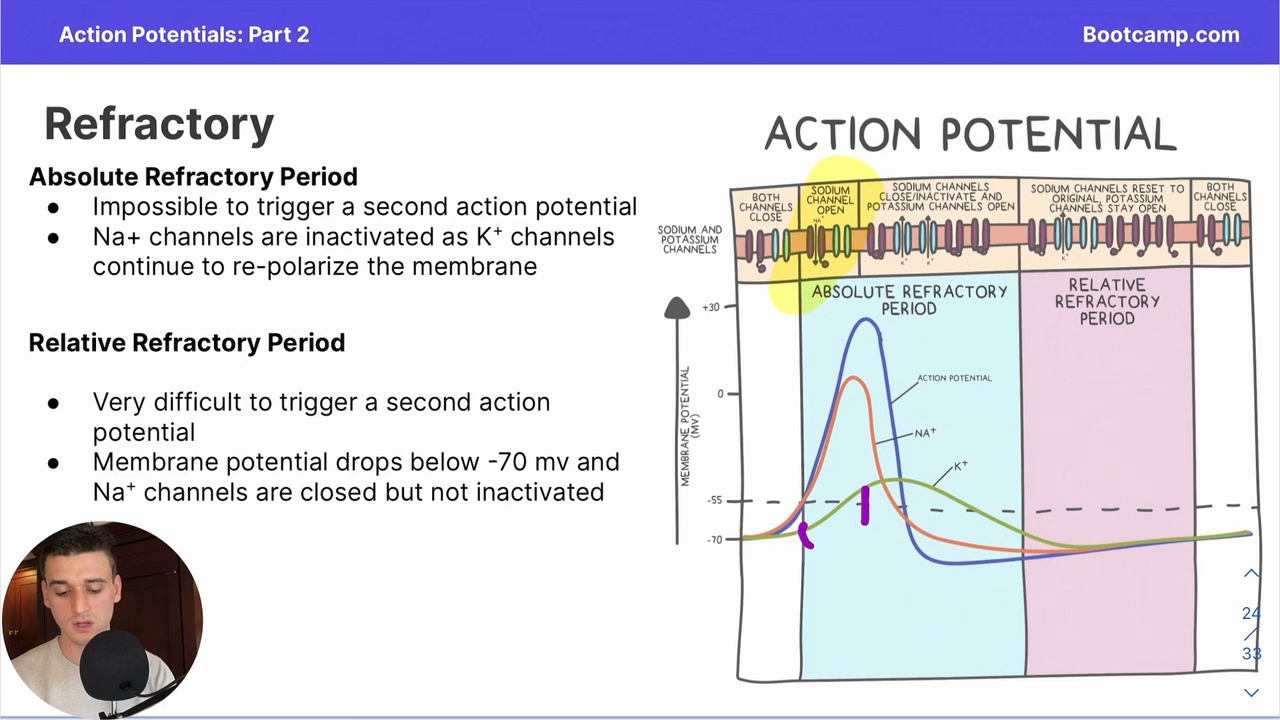
Absolute refractory period
Na+ channels are innactivated as K+ channels continue to repolarize the membranes
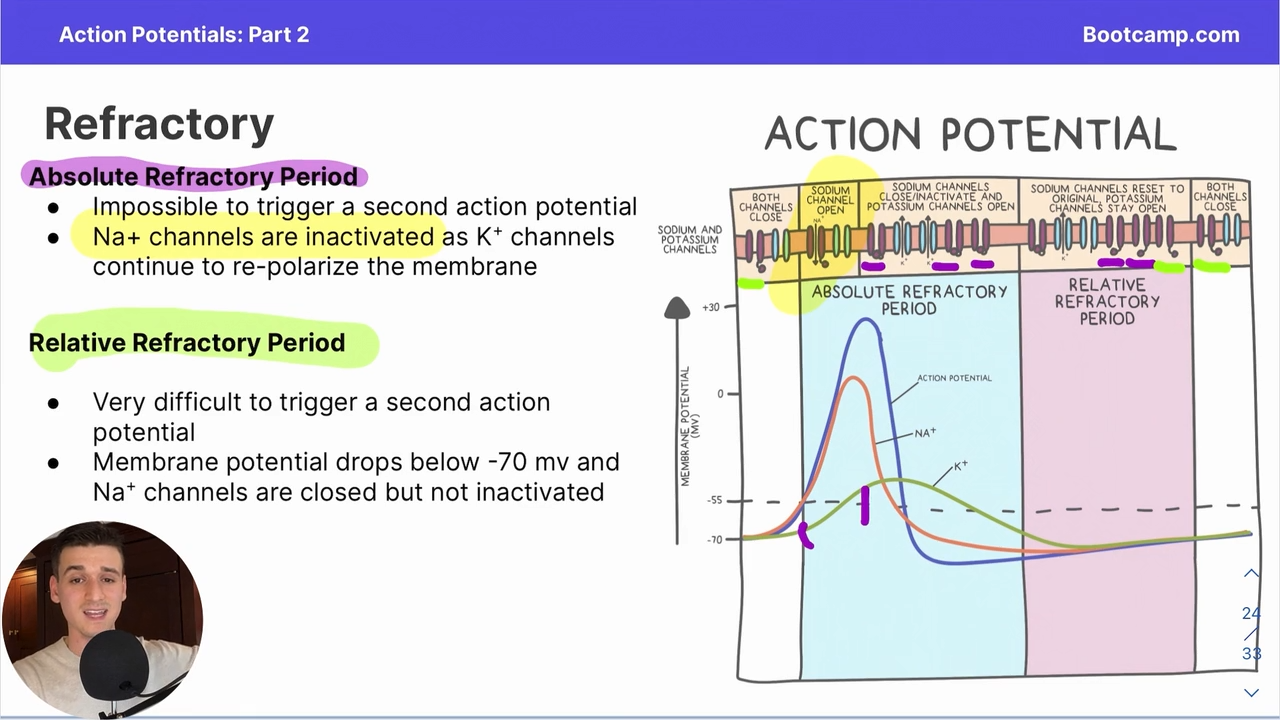
Relative refractory period
DURING HYPERPOLARIZATION
Very difficult to trigger a second action potential , in which Na+ channels are closed but not inactivated
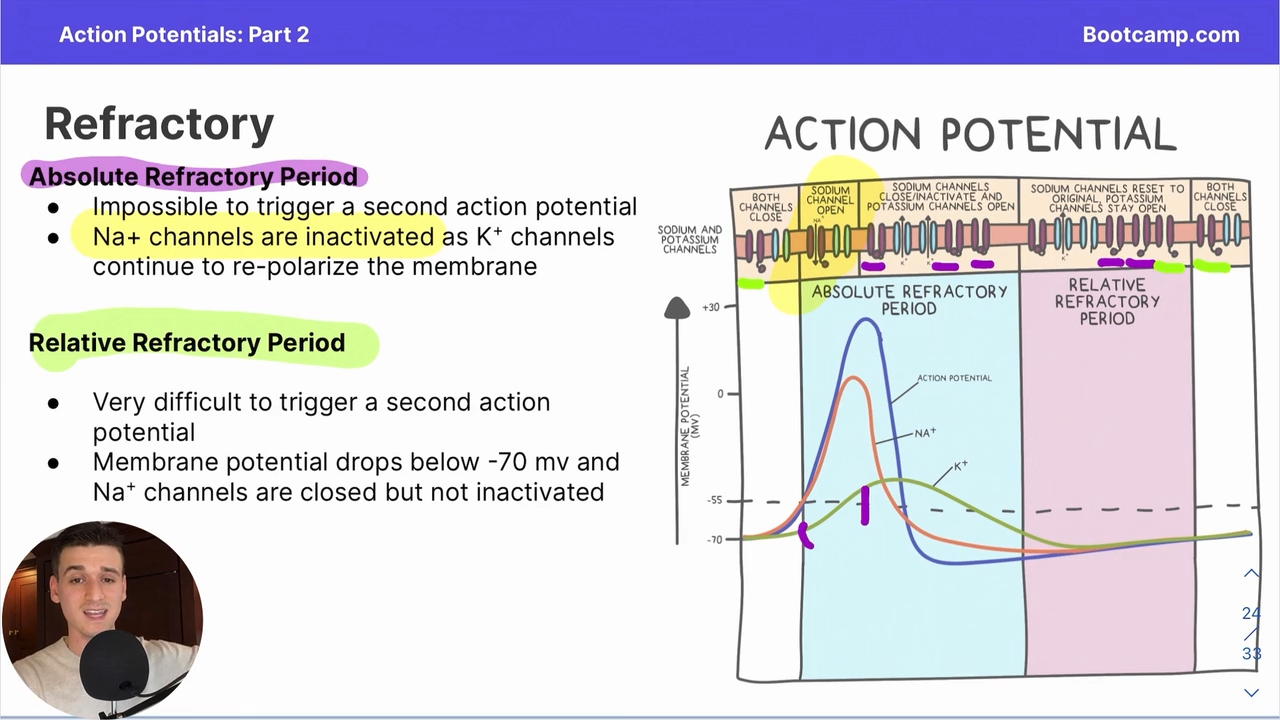
Synaptic transmission
The transmission of chemical signals from one neuron to another across an interneuron space called a synapse using teurotransmitters
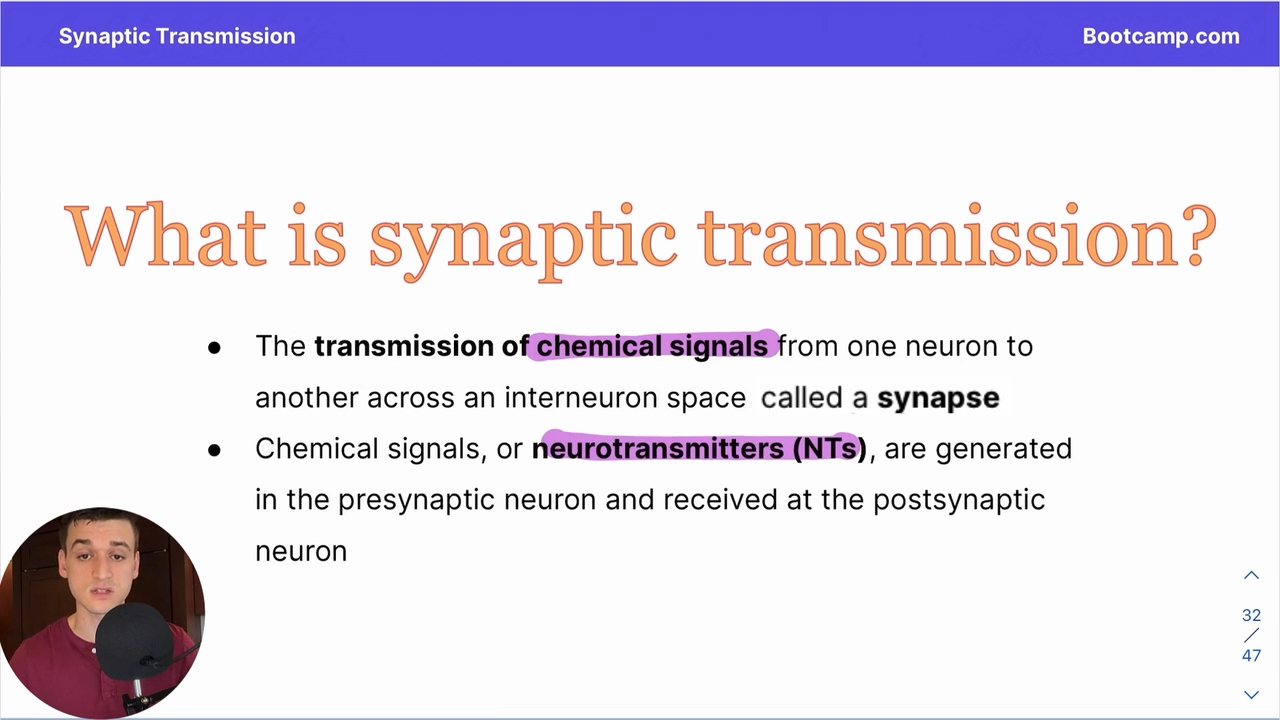
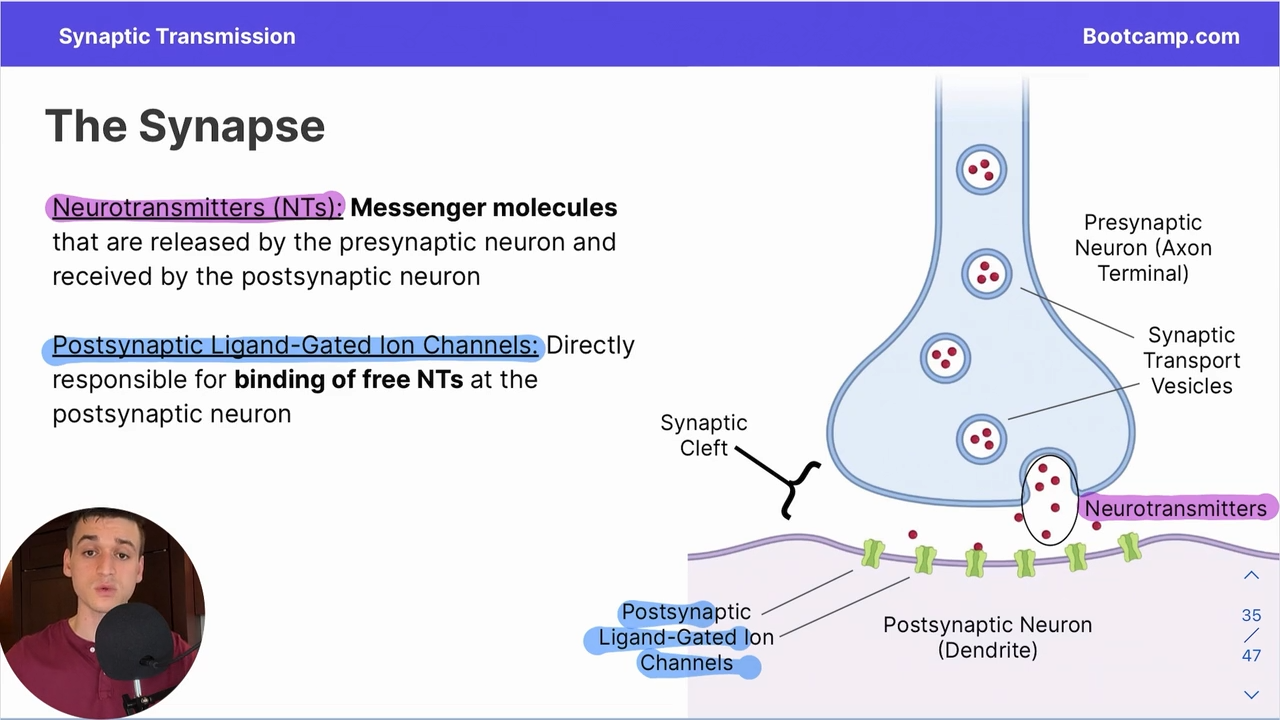
Synapse
The space between two neurons, including the presynaptic and postsynaptic neurons
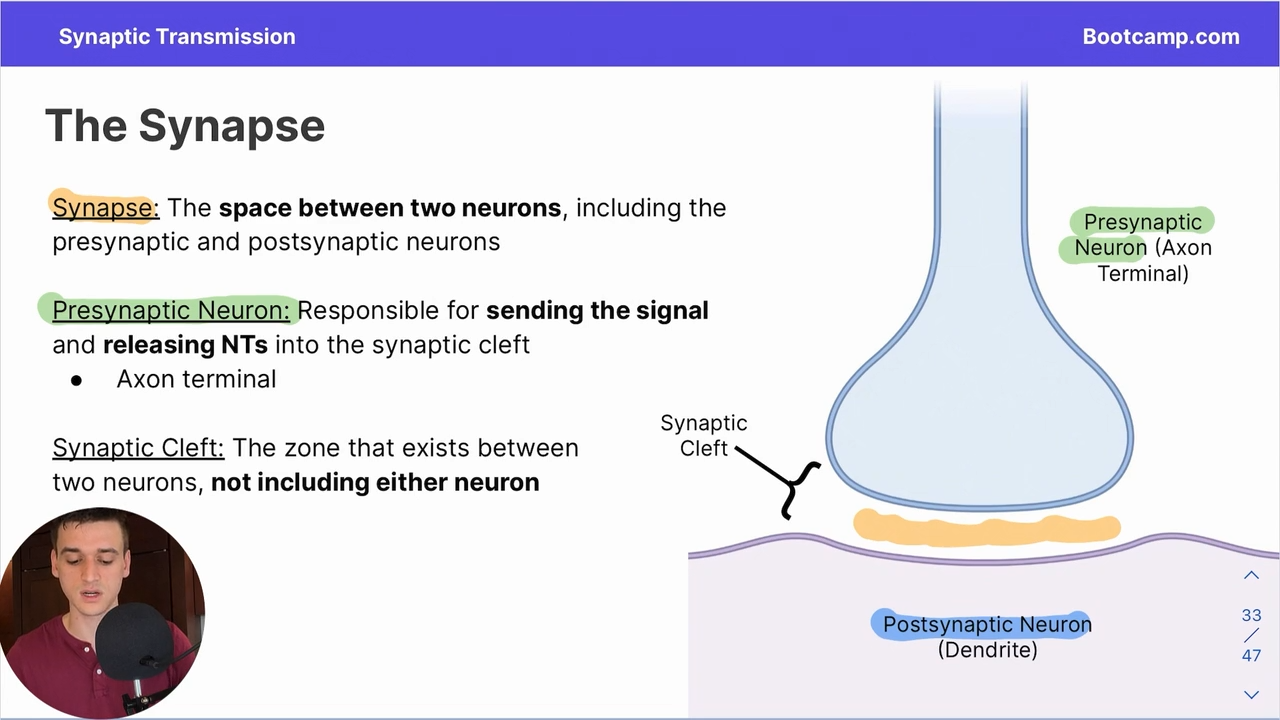
Presynaptic neurons
responsible for sending the signal and releasing NTs into the synaptic cleft (AKA SYNAPTIC TERMINAL)
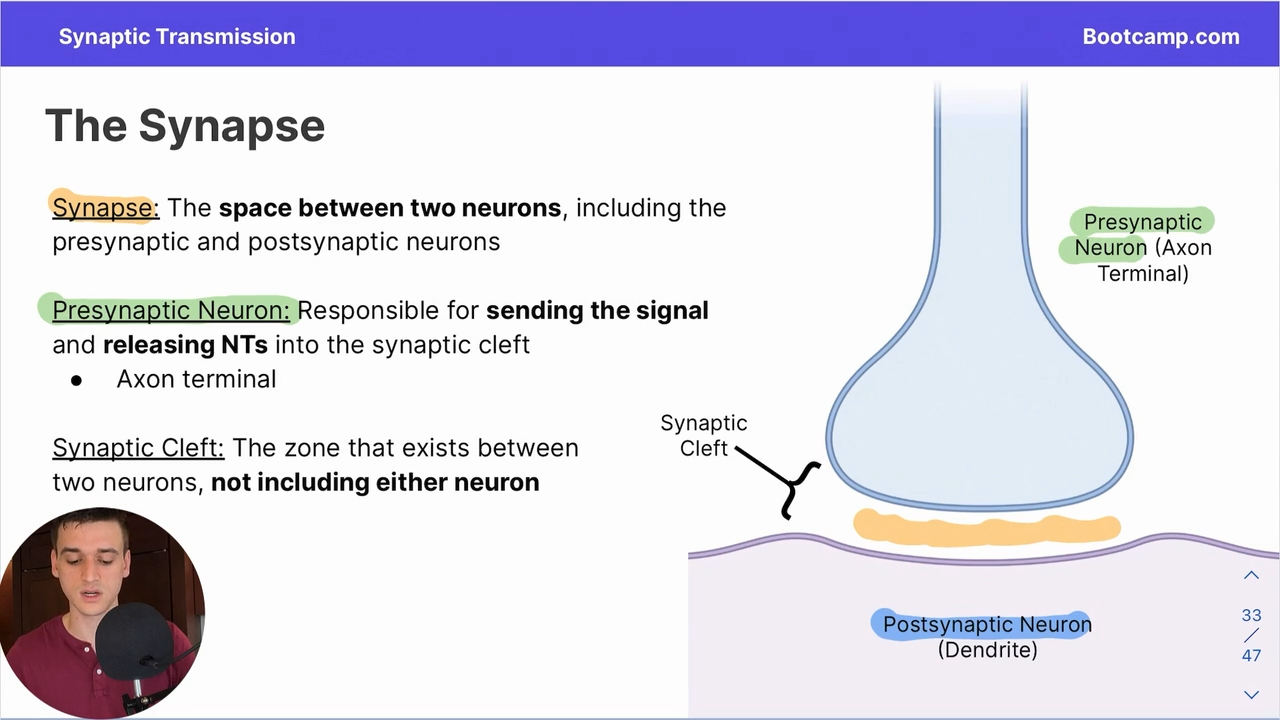
Synaptic cleft
The zone that exists between two neurons, not including either neurons
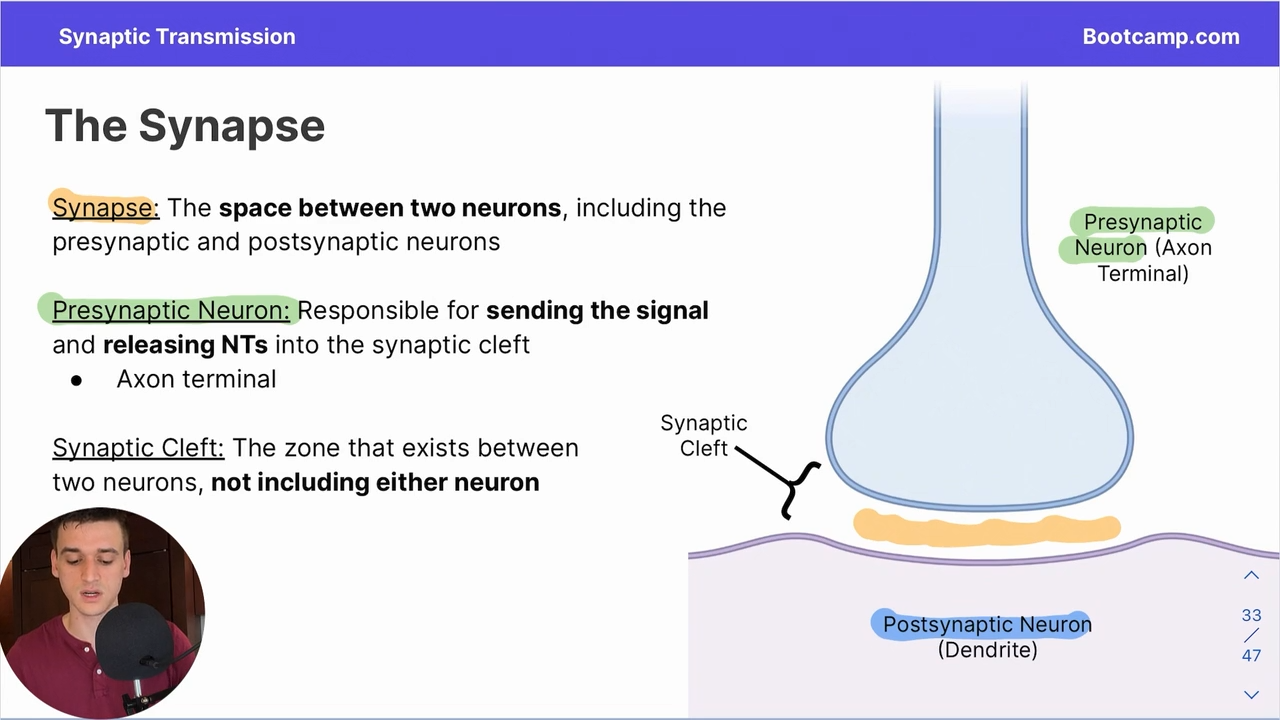
Postsynaptic neurons
responsible for signal reception and interacting with NTs
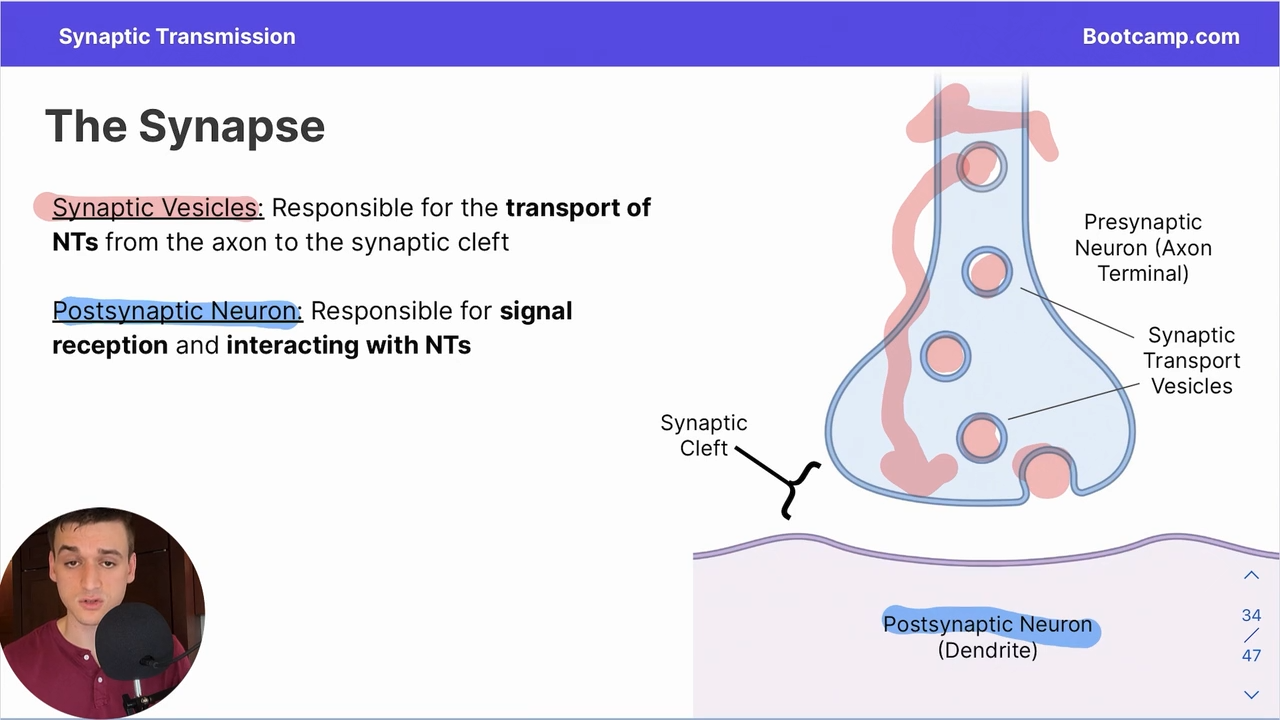
synaptic vesicles
Responsible for the transport of NTs from the axon to the synaptic cleft
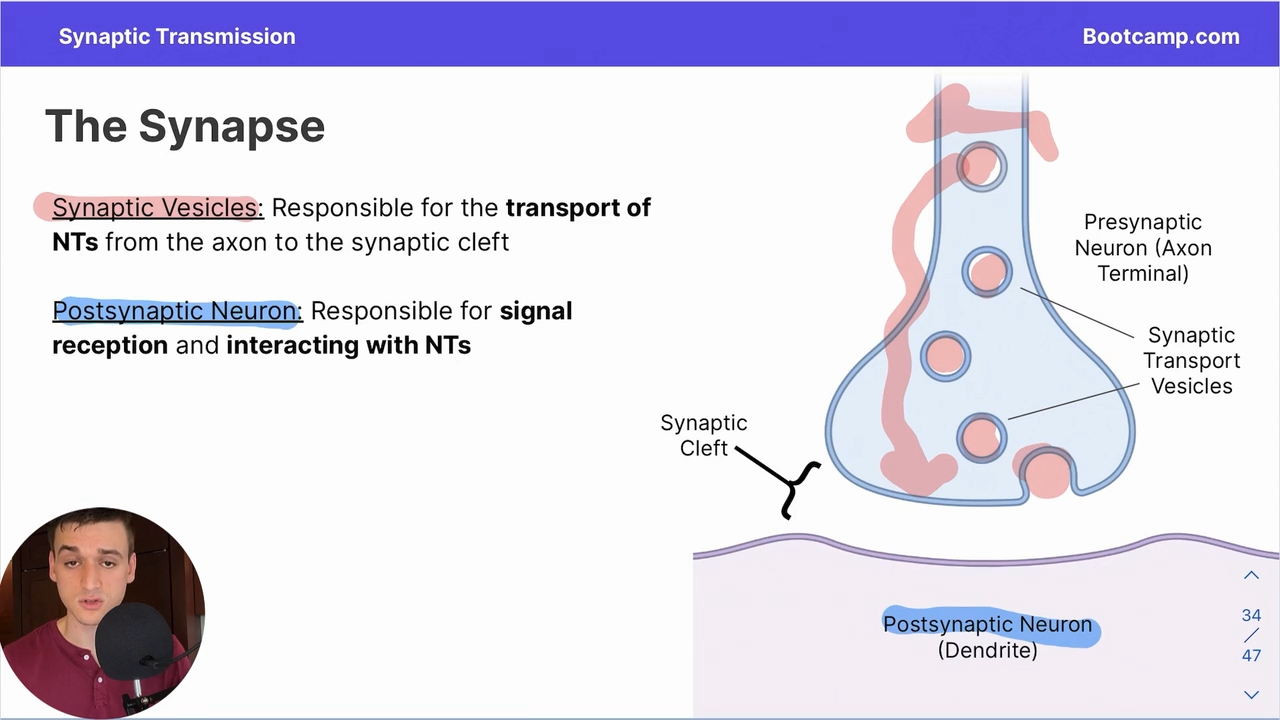
Neurotransmitters
messenger molecules that are released by the presynaptic neuron and received by the postsynaptic neuron
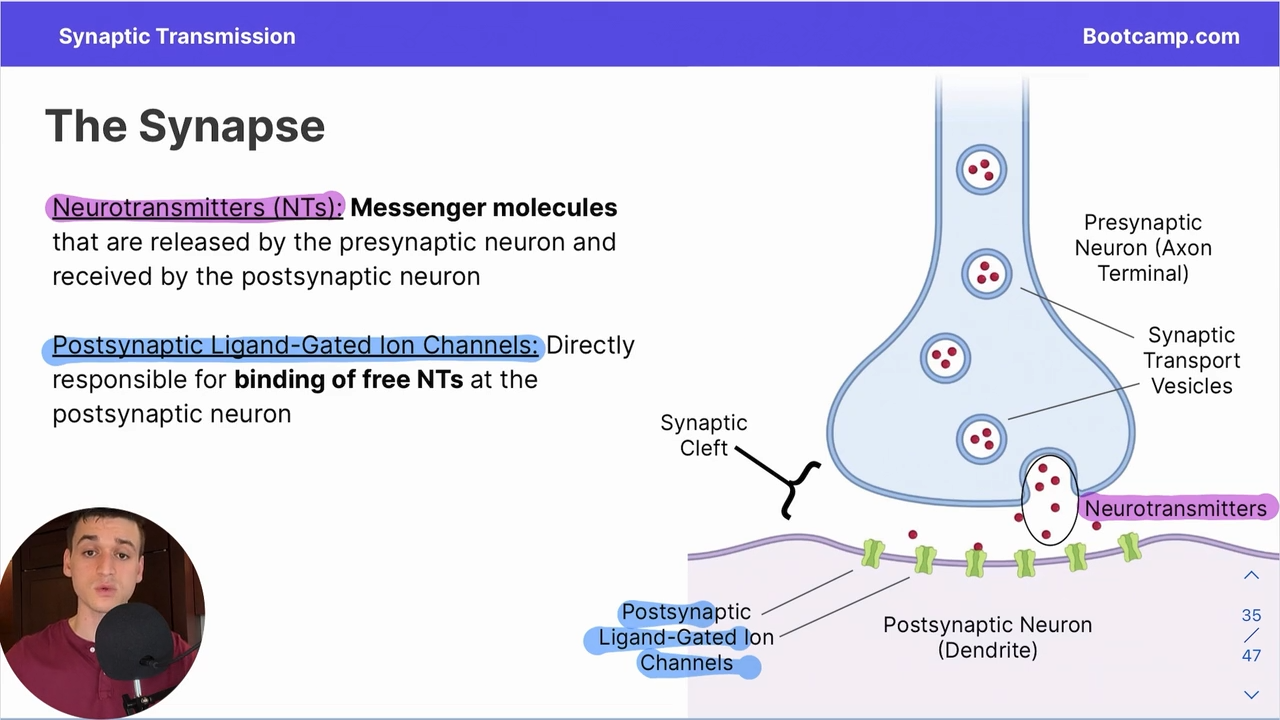
Post synaptic ligand gated Ion channels
Directly responsible for the binding of free NTs at the post synaptic neuron
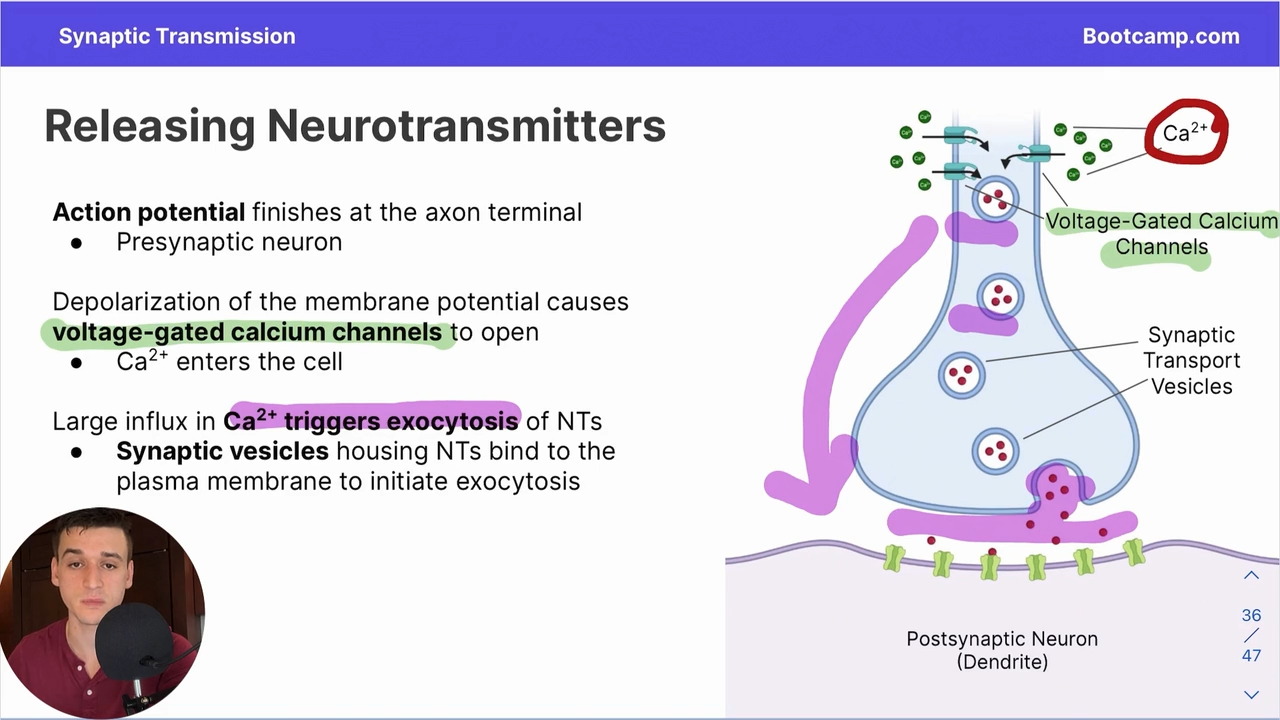
How are neurotransmitters released
Upon receiving an action potential, a large influx in Ca2+ by voltage gated Ion channels triggers exocytosis of synaptic vescicles
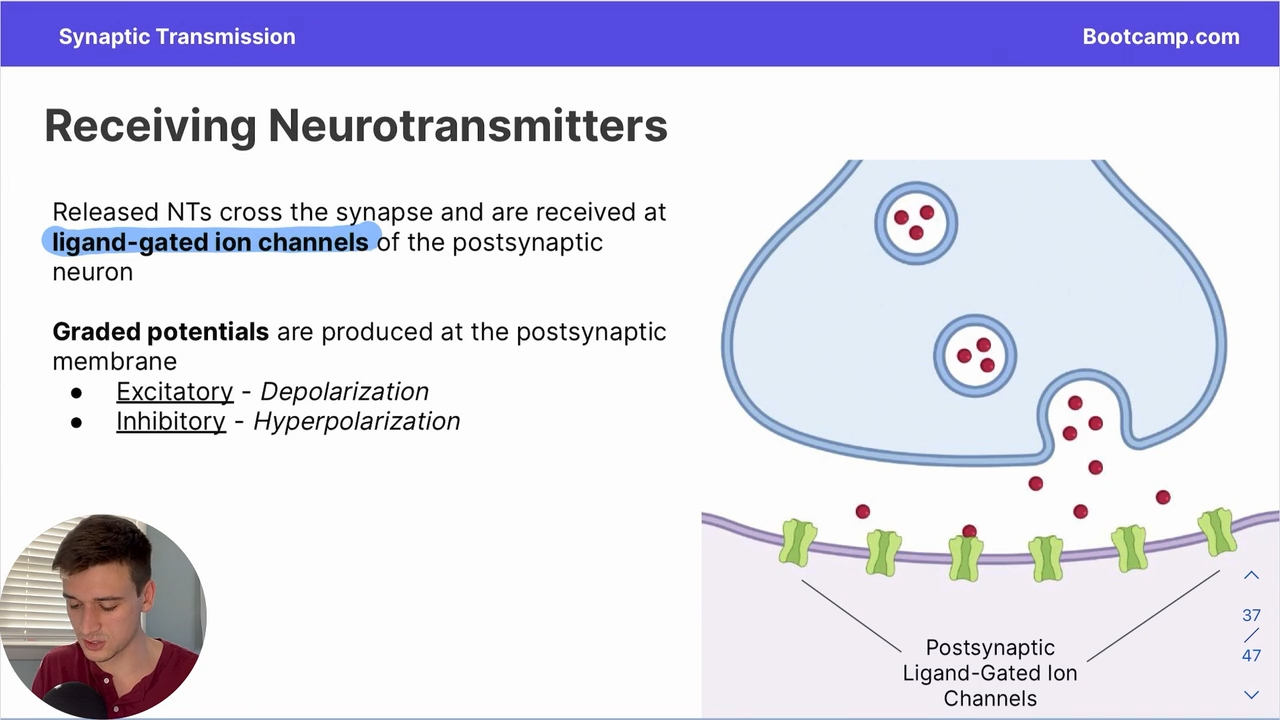
how are NTs receieved
NTs cross the synapse and are received at ligand gated ion channels of the postsynaptic neuron , causing graded potentials
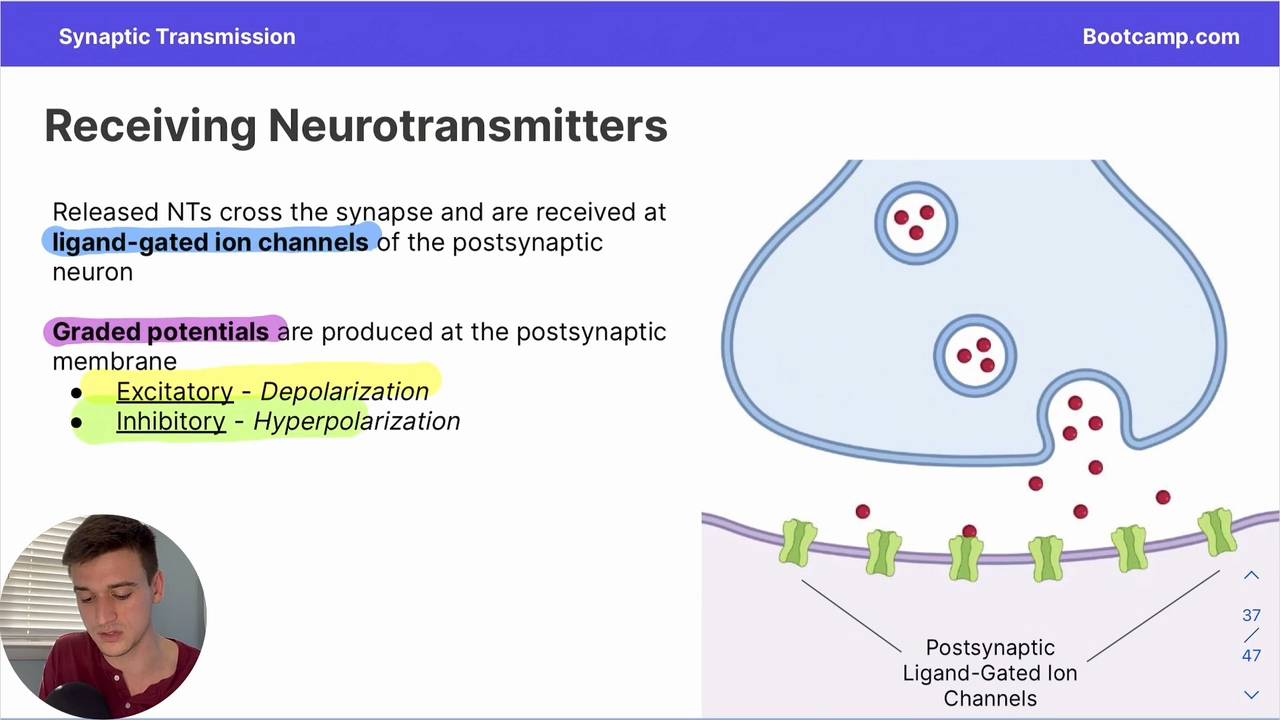
Graded potentials
produced at the post-synaptic membrane, can be excitatory (depolarization) or inhibitory (hyperpolarization)
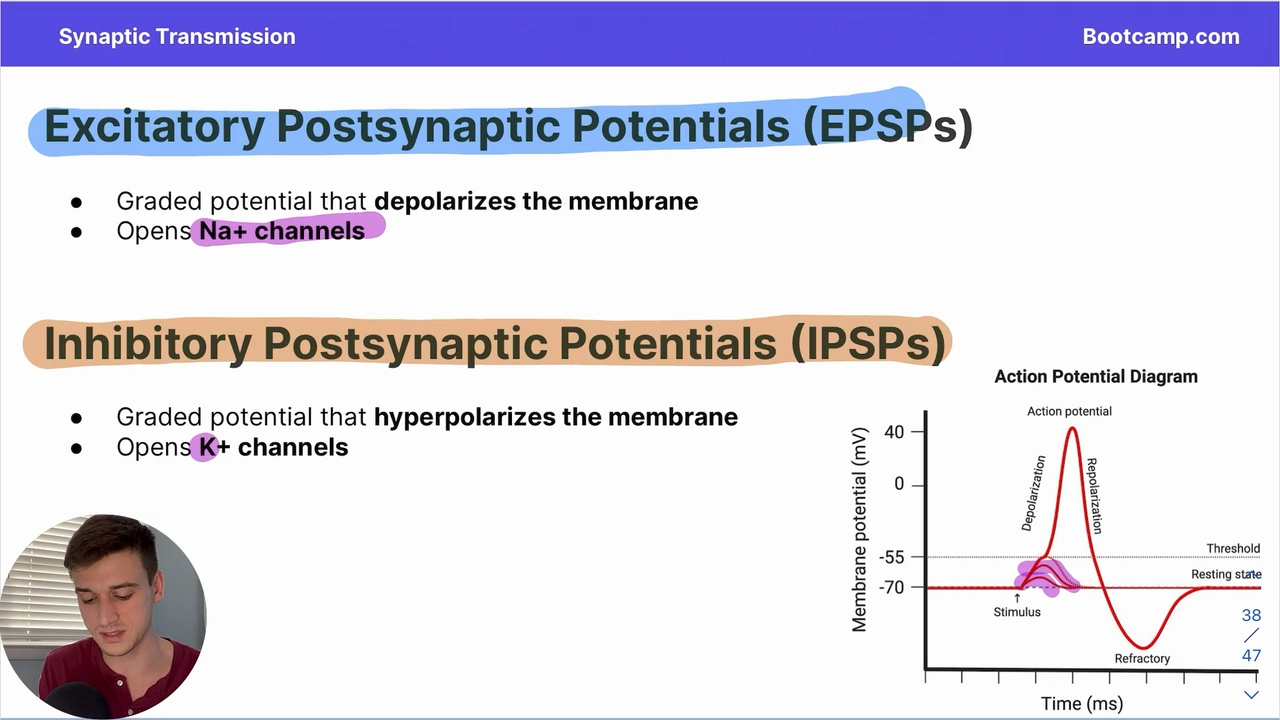
Exitatory postsynaptic potentials
graded potential that depolarizes the membrane and opens Na+ channels
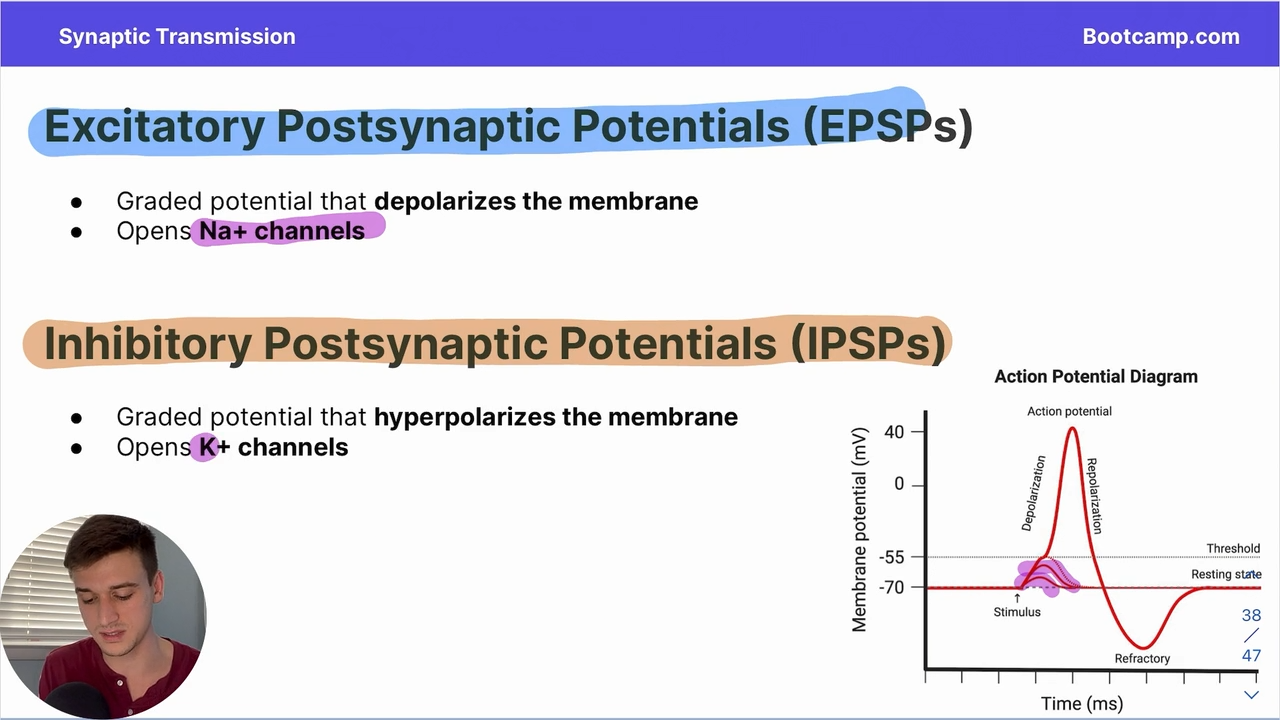
inhibitory postsynaptic potentials
graded potential that polarizes the membrane and opens K+ channels
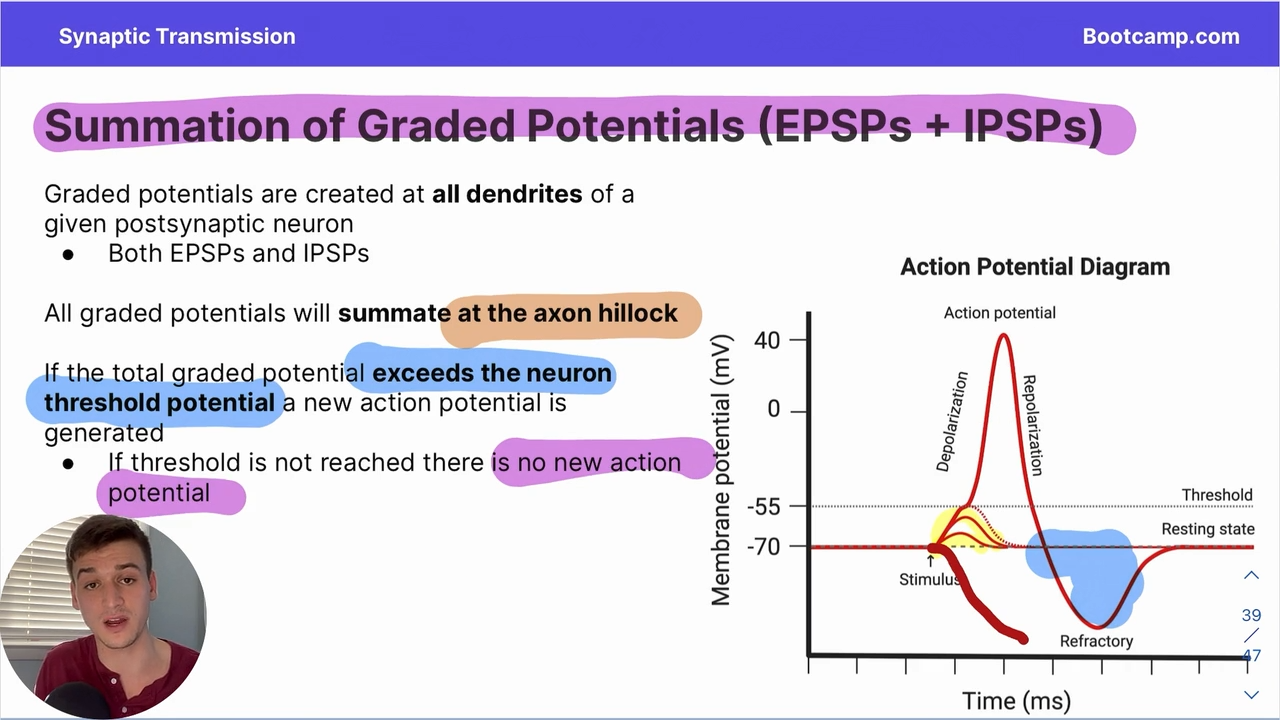
Summation of Graded potentiaals
all graded potentials summate at the axon hillock, potentially reaching that -55 threshold
Glutamate
the main ENT of the CNS
ENT
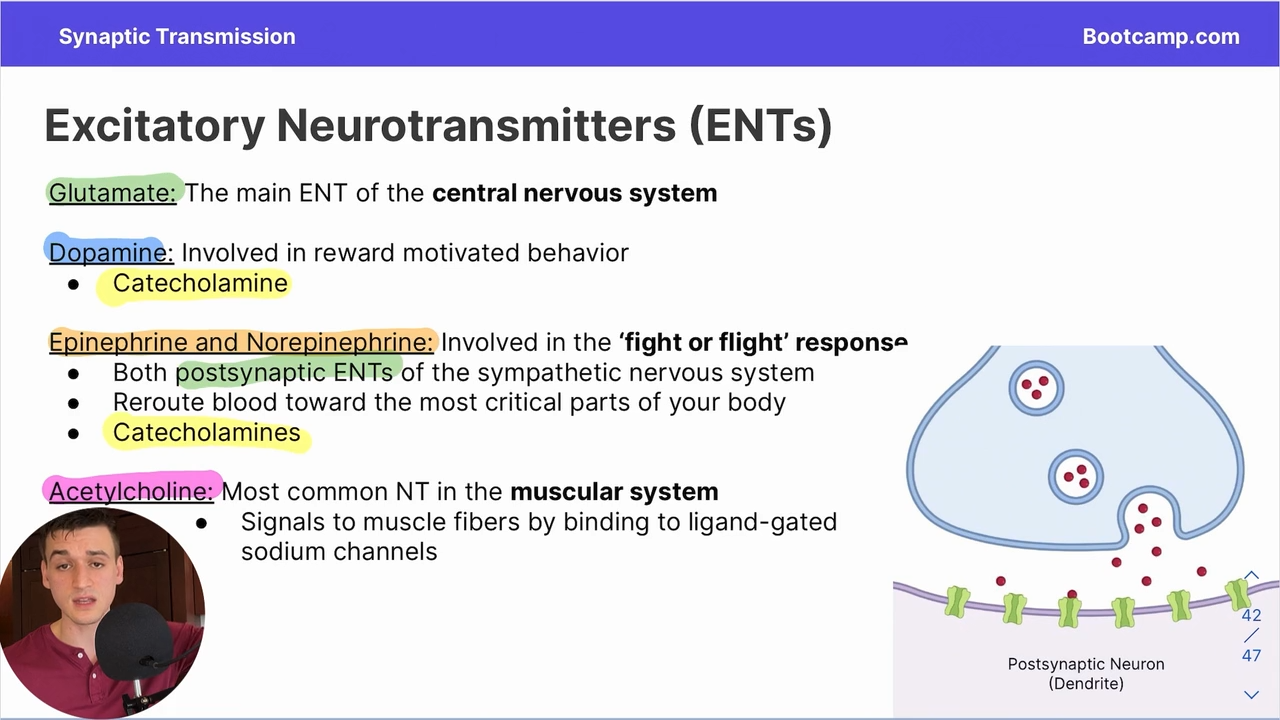
Dopamine
ENT
that is involved in reward of motivated behavior
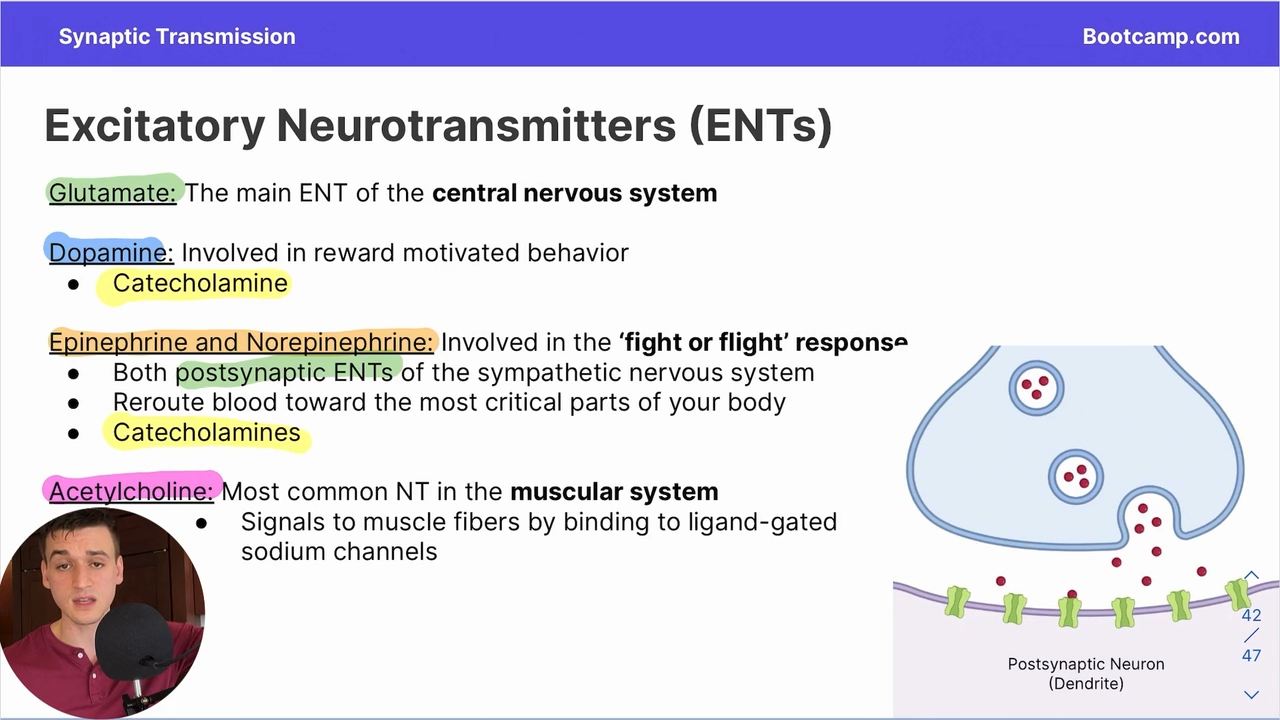
Epinephrine and norepinephrine
Involved in the fight or flight response
reroute blood flow to the most critical parts of the body
ENT
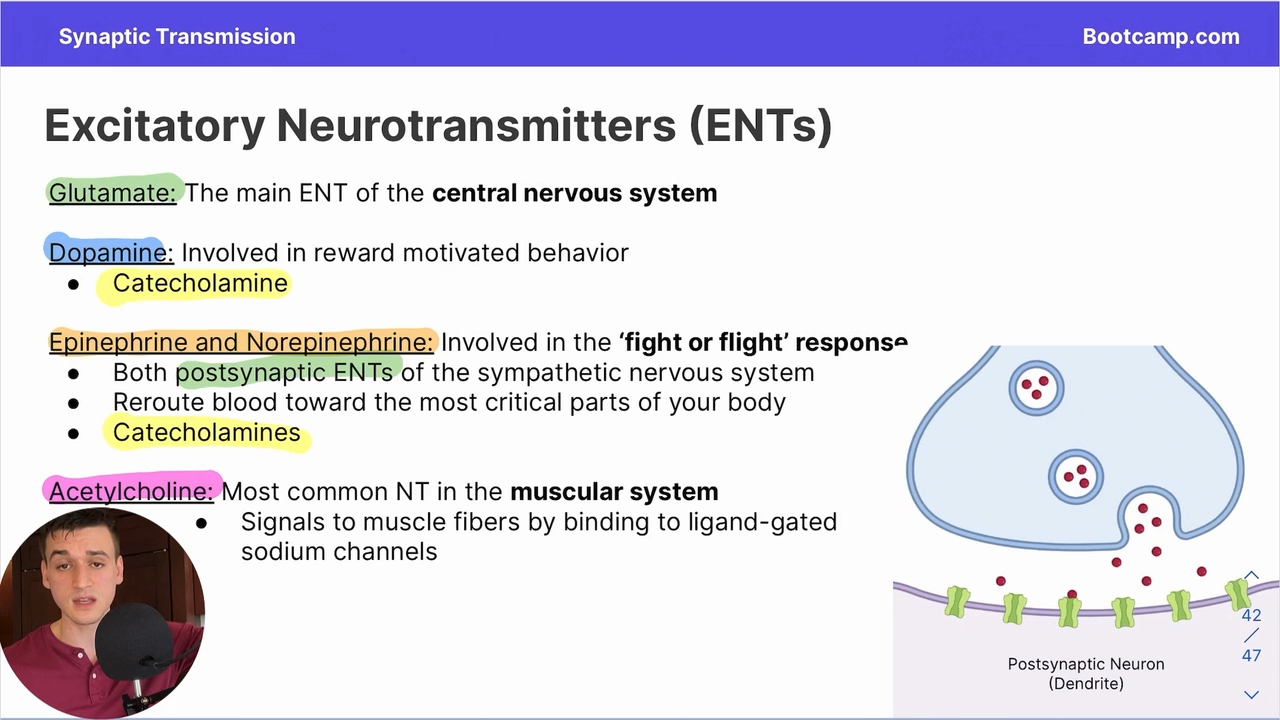
Catecholamines
dopamine, epinephrine, and norepinephrine
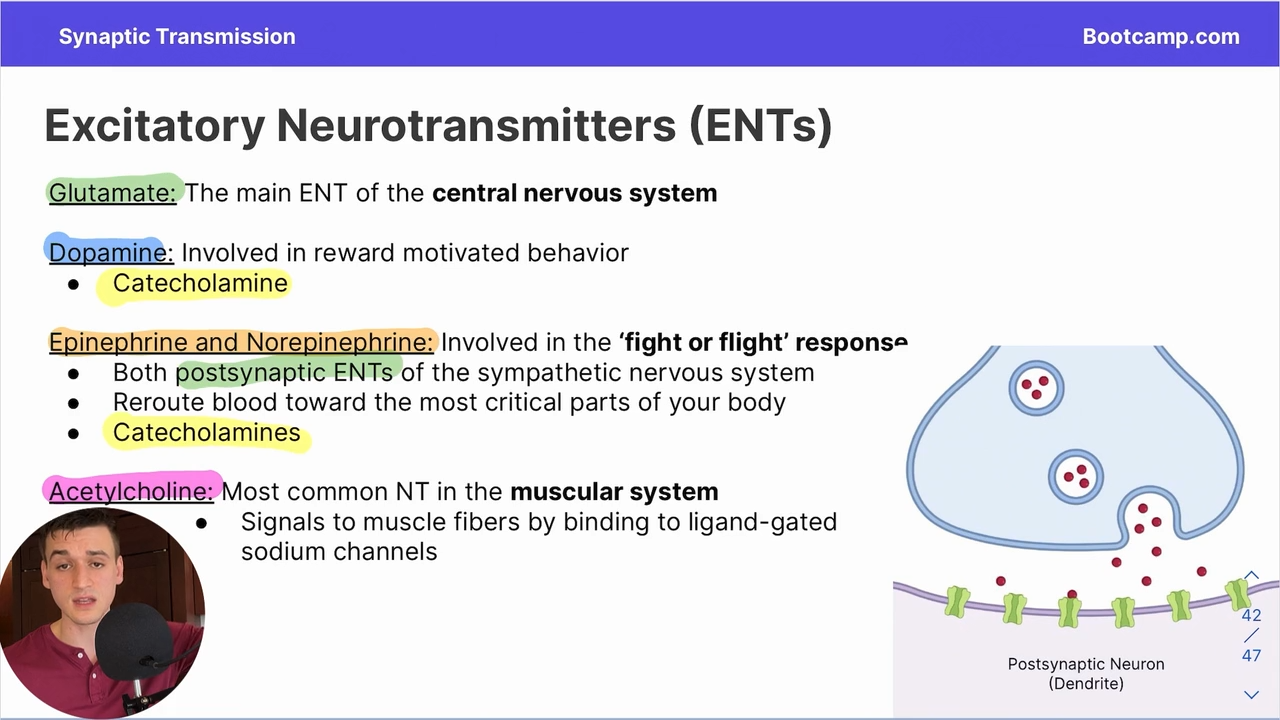
Acetylcholine
The most common NT in the muscular system, signals to muscle fibers by binding to ligand gated sodium channels
ENT
Mnemonic to remember ENTs
good dogs eat apples IN ORDER OF PREVAENCE (not really, only glutamate)
Glutamate
epinephrine/norepinephrine
Acetylcholine
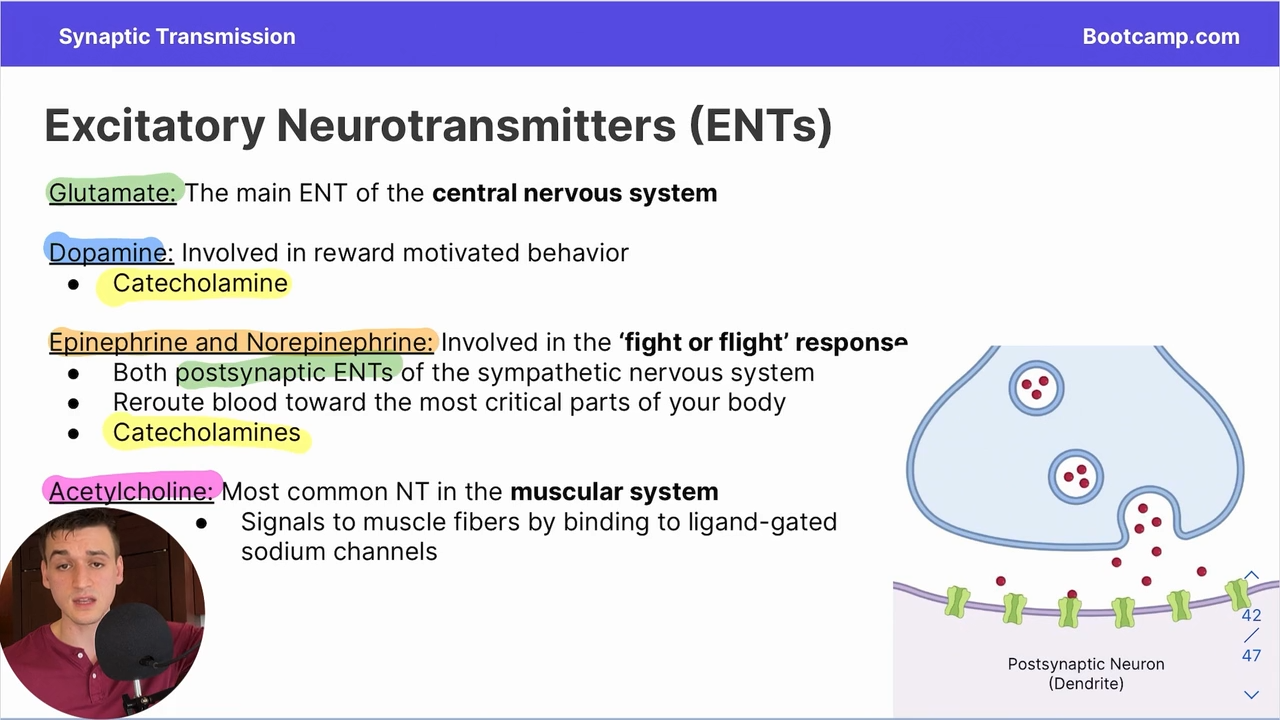
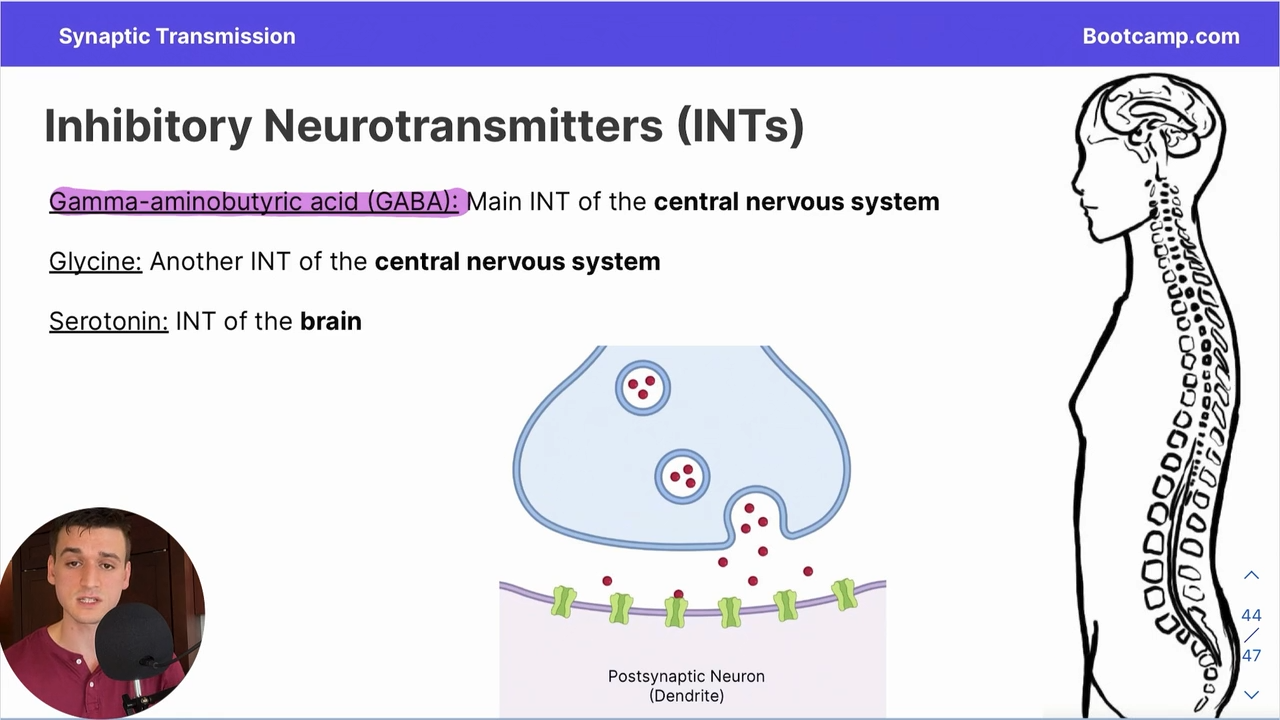
GABA
main INT of the CNS
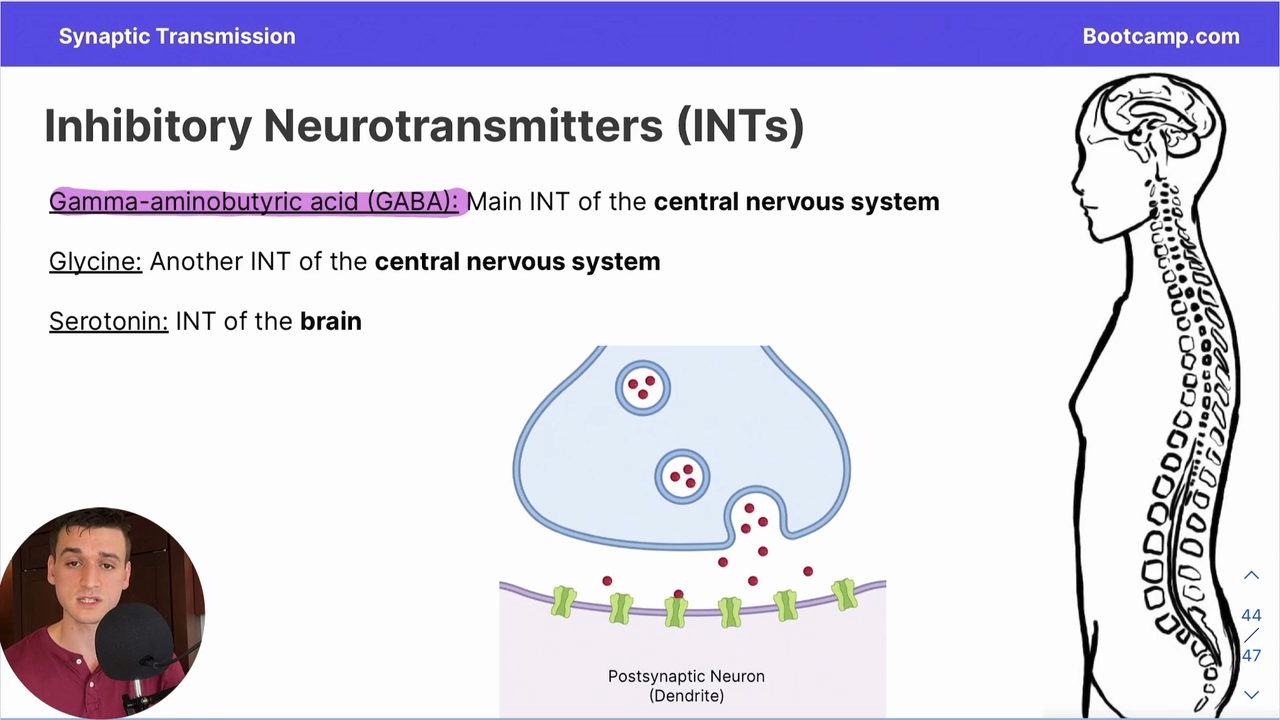
Glycine
INT of the CNS
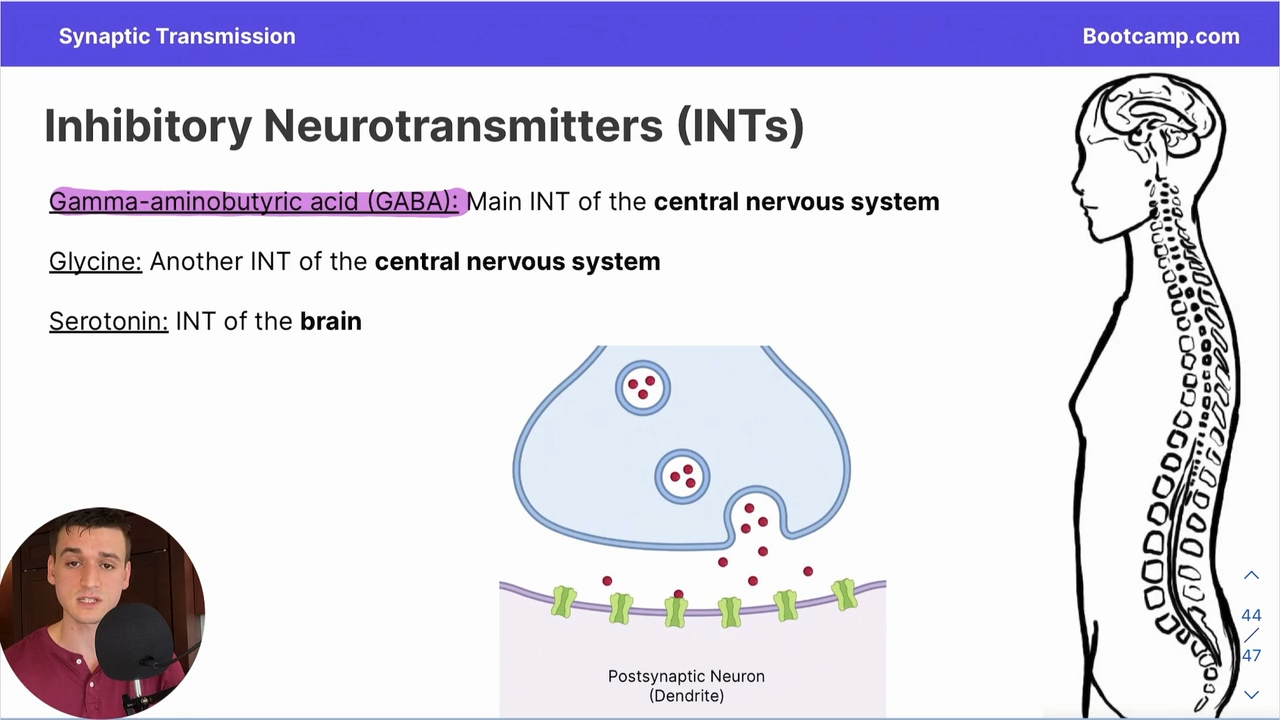
serotonin
INT of the brain
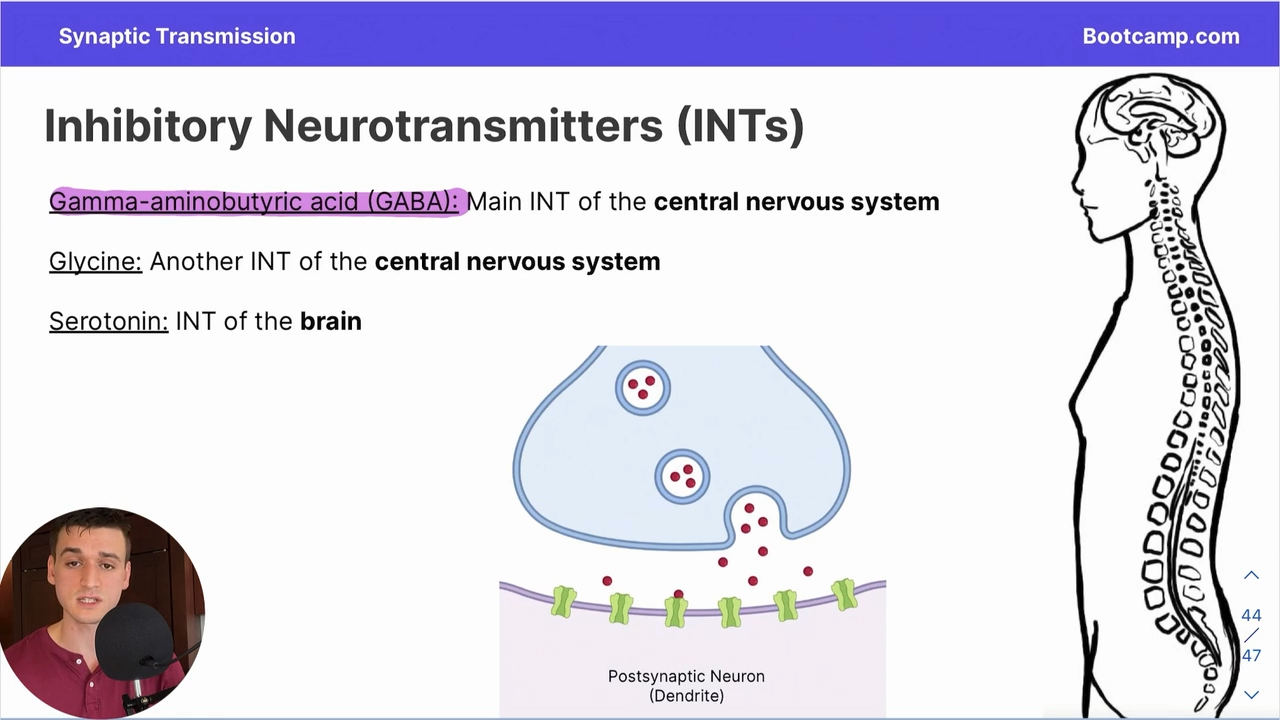
mnemonic for INTs
Good Guys Suck
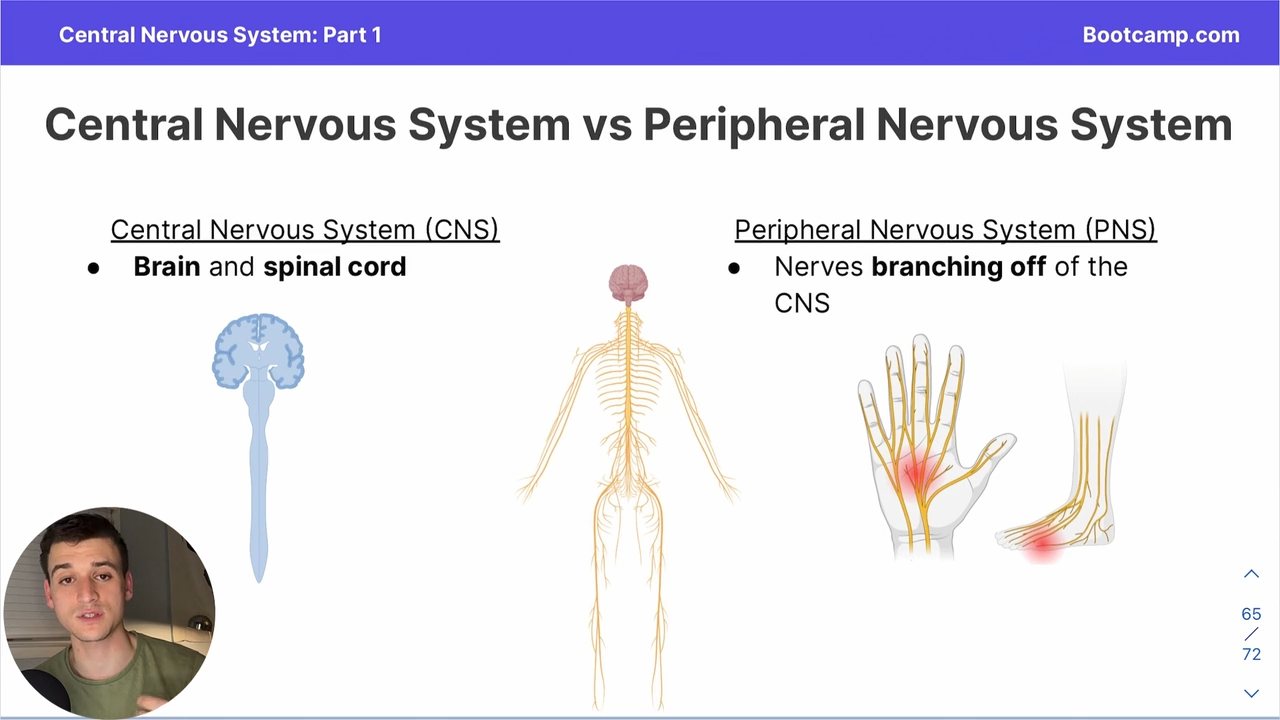
Central nervous system
Brain and spinal cord
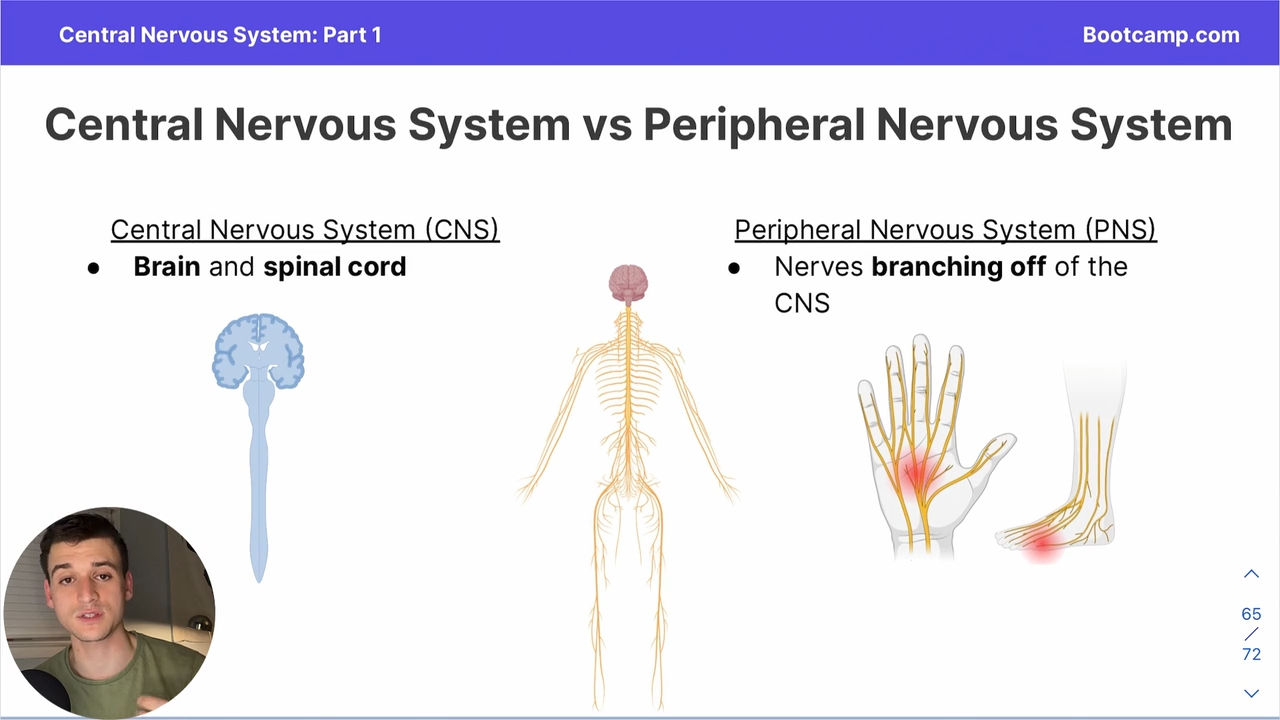
Peripheral nervous system
nerves branching off the CNS
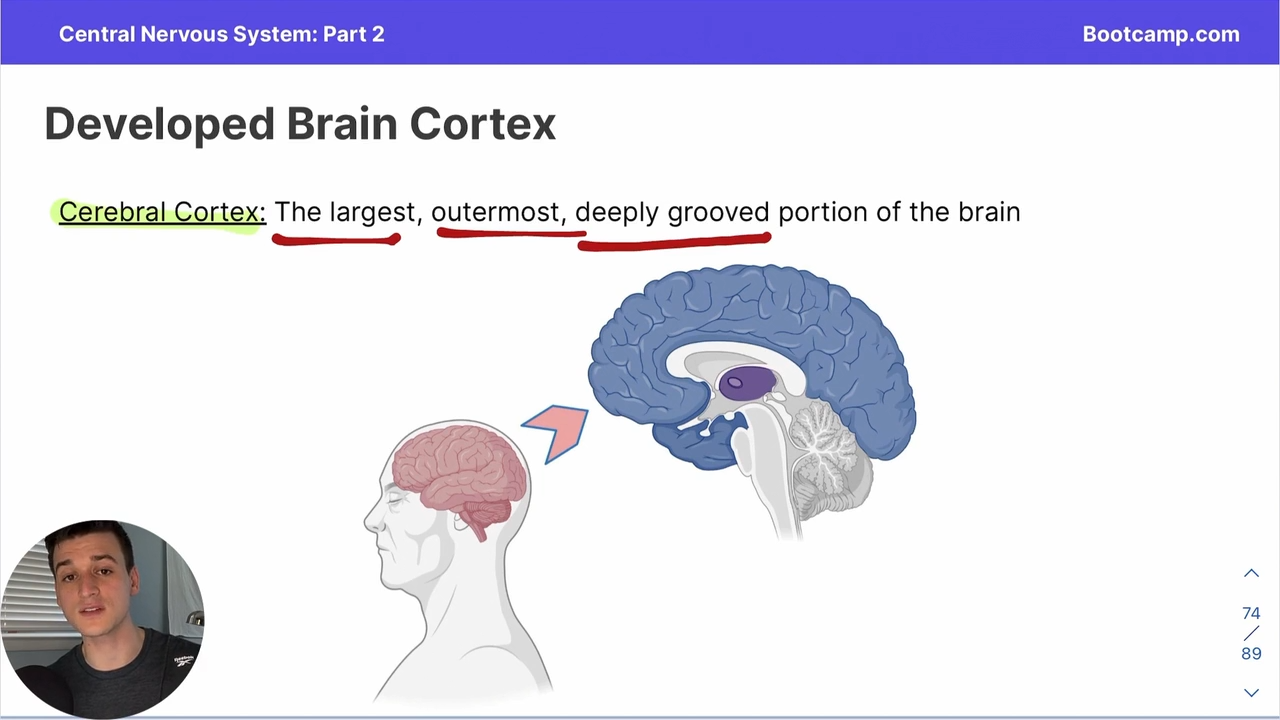
cerebral cortex
The largest, outermost, deeply grooved portion of the brain
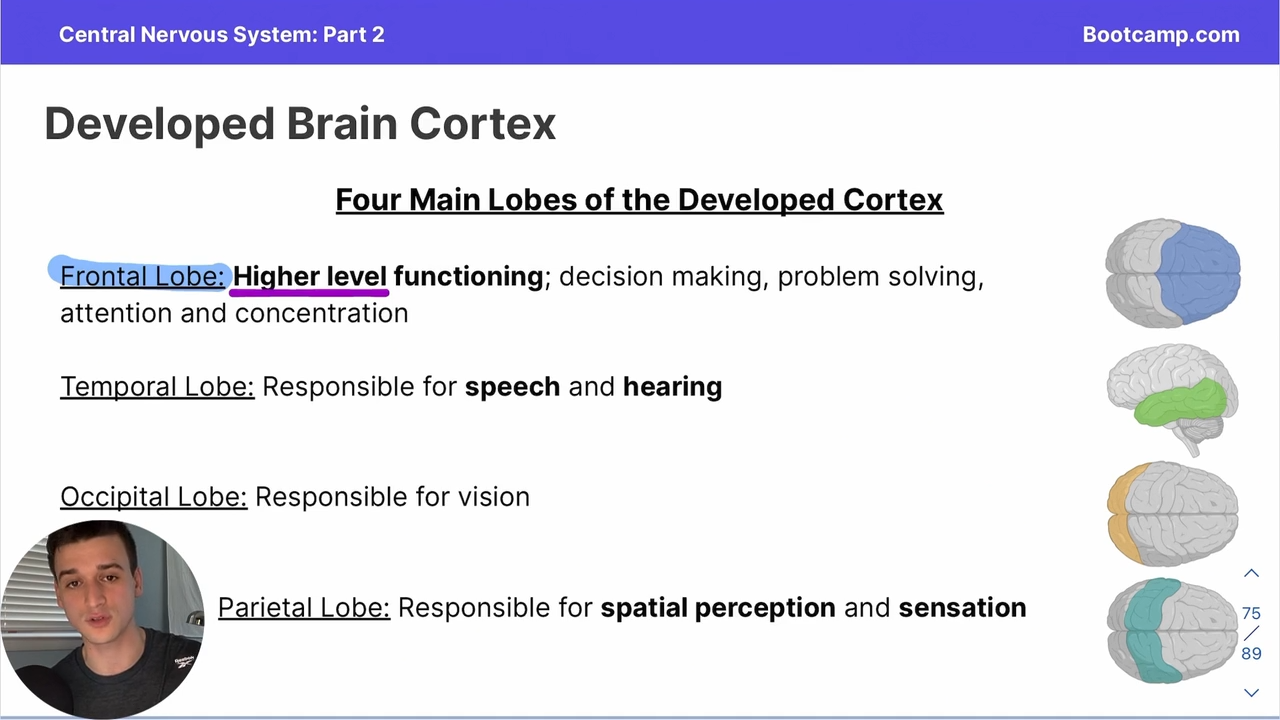
Frontal lobe
Higher level functioning, decision making, problem solving, attention and concentration
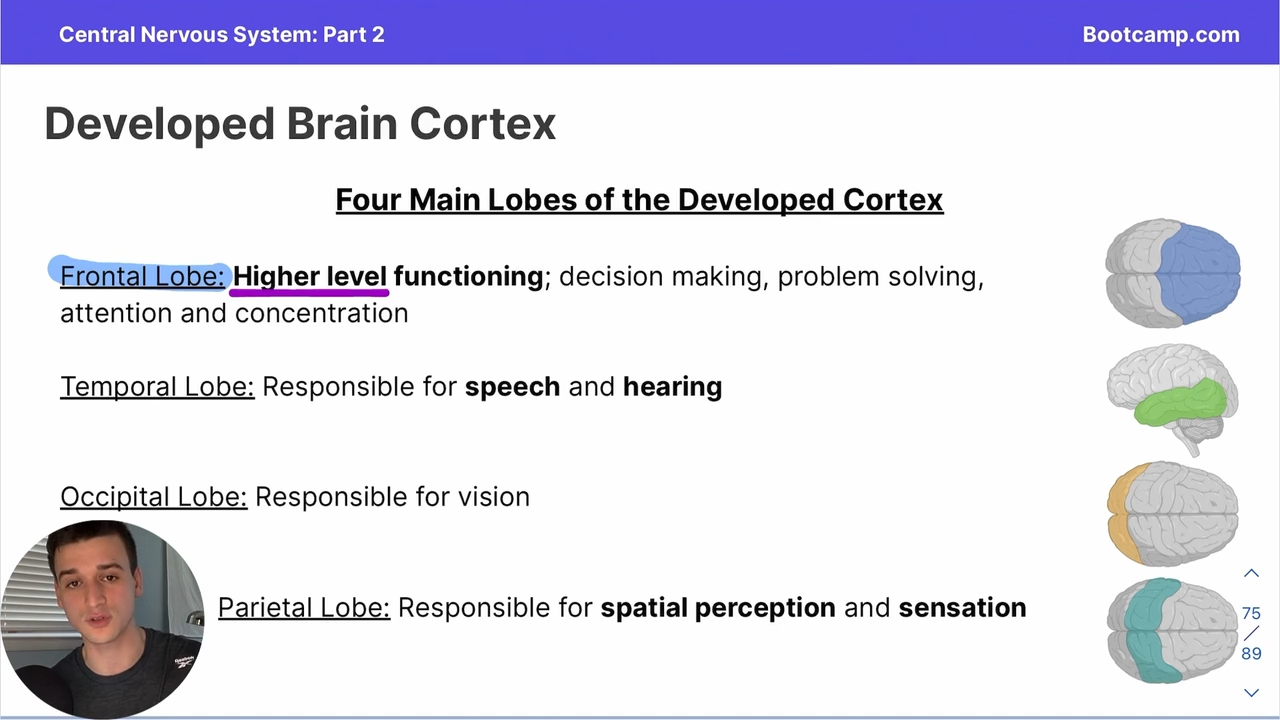
Temporal lobe
responsible for speech and hearing
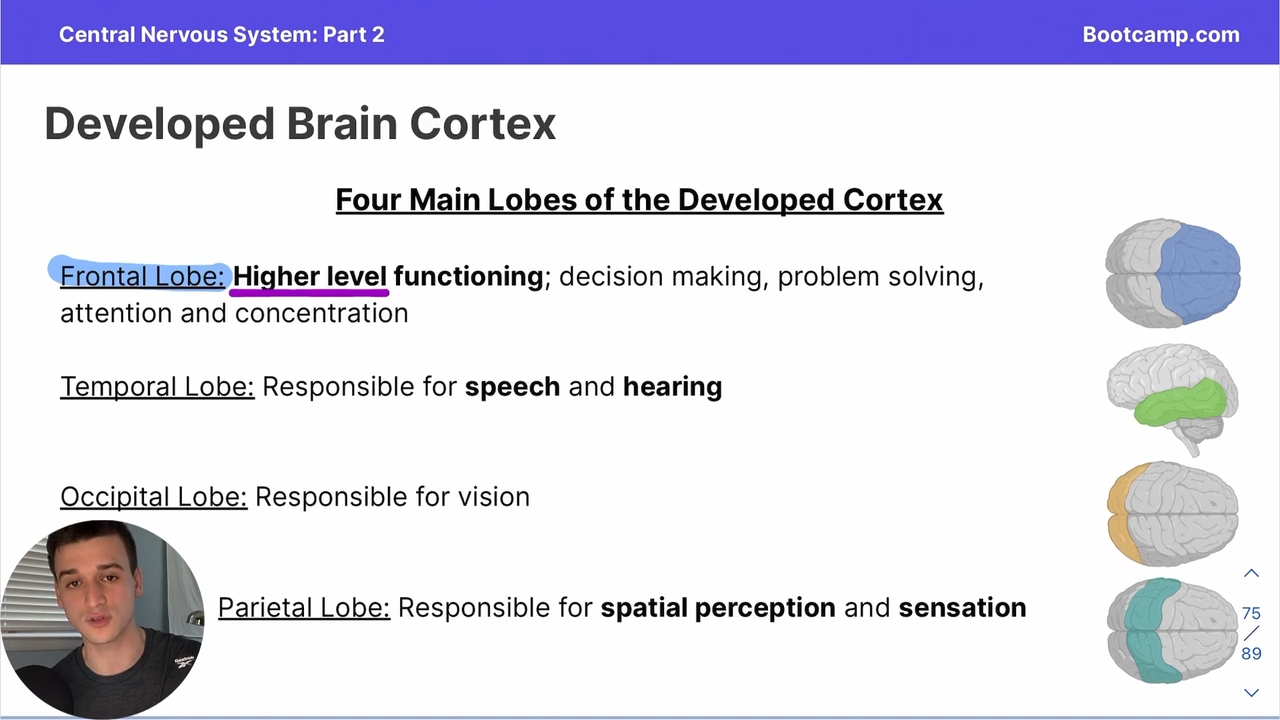
occipital lobe
responsible for vision
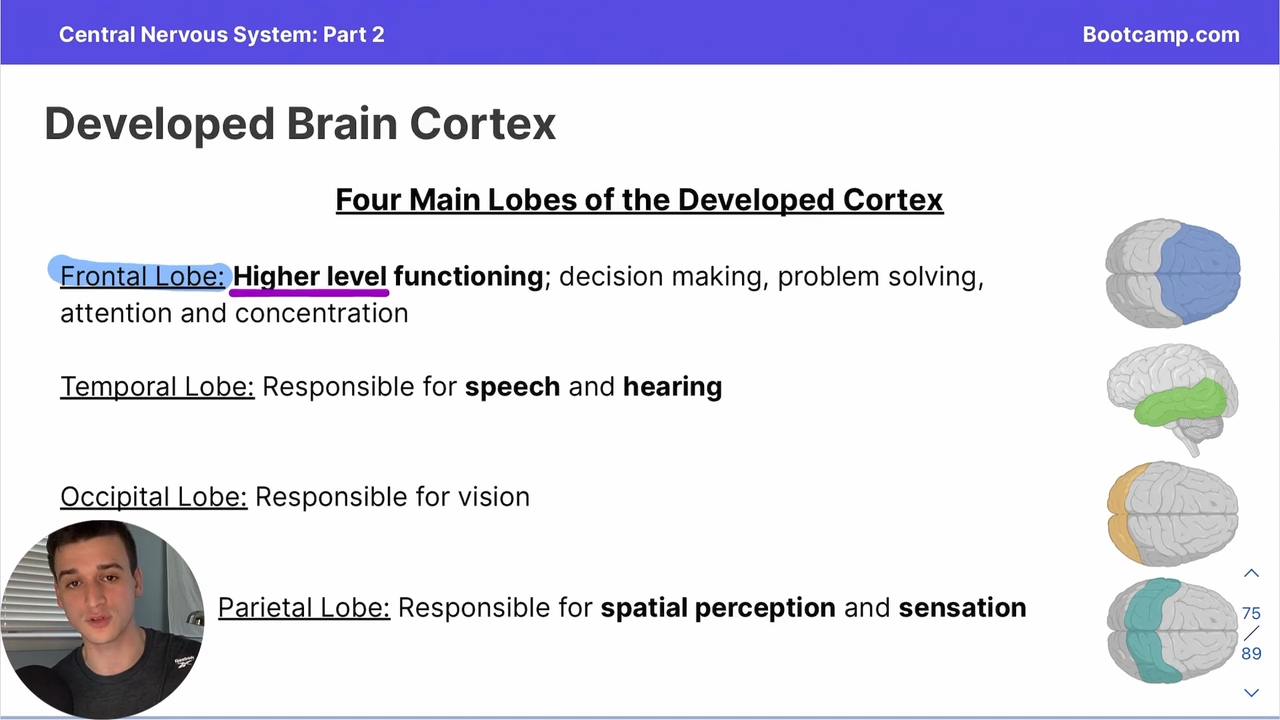
parietal lobe
responsible for spatial perception and sensation
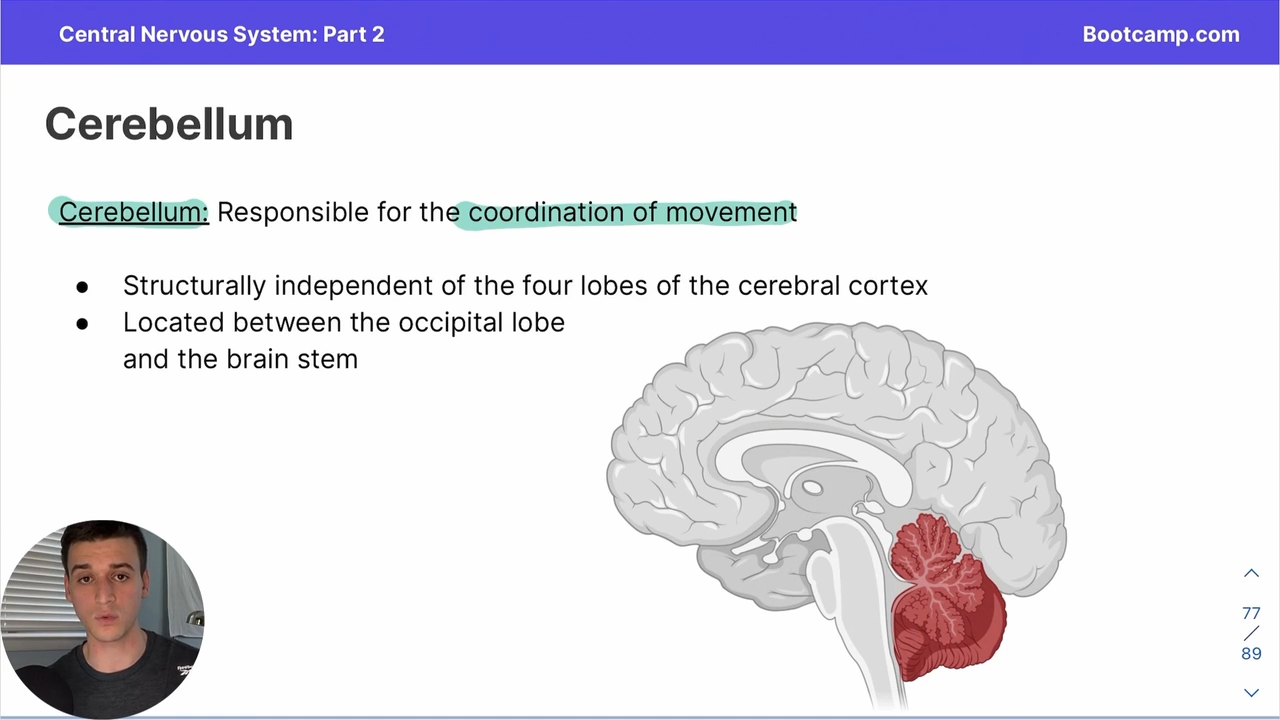
Cerebellum
Responsible for coordination of movement
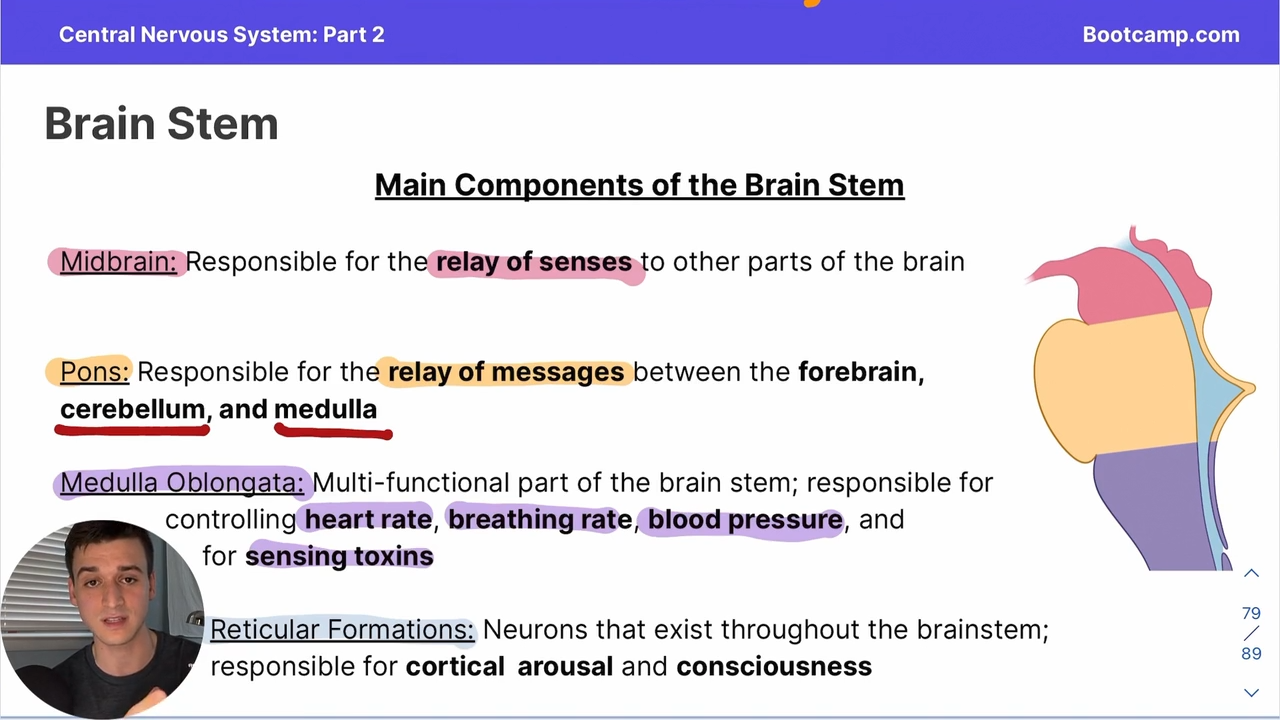
Brain stem
involved in the control in automatic functions
made up of midbrain, medulla and pons + reticular formations
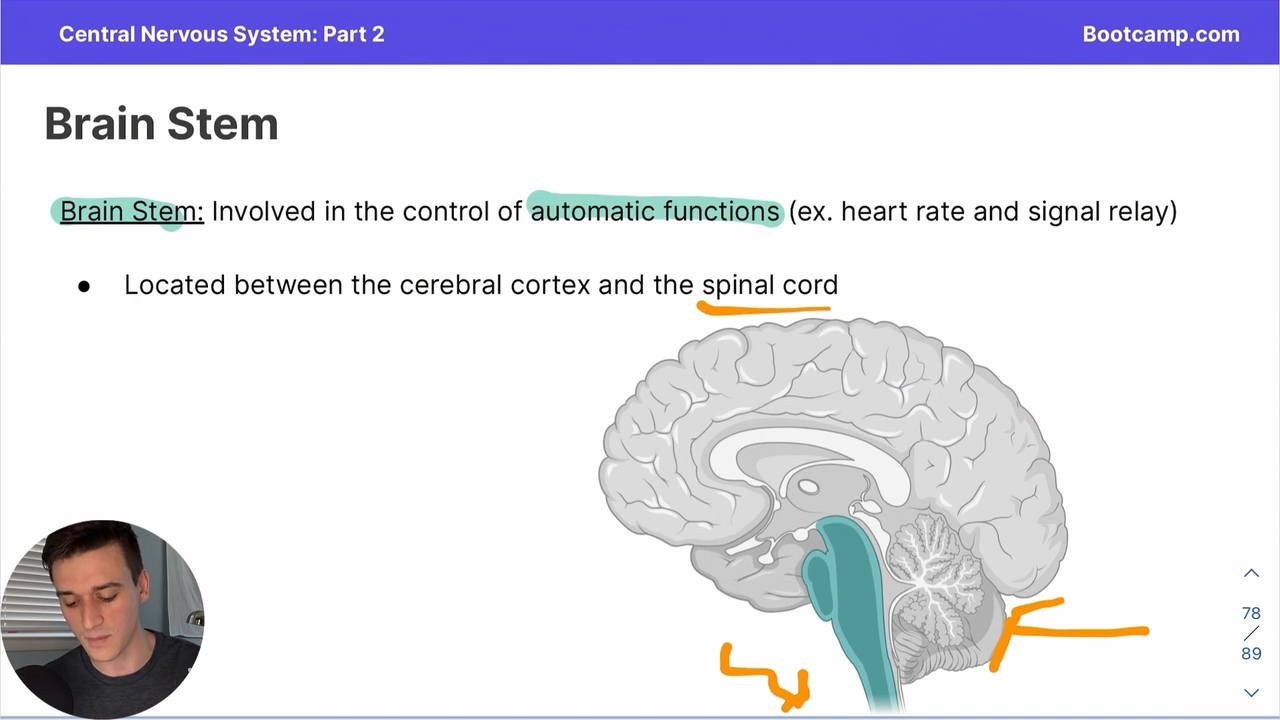
midbrain
In the brain stem
Responsible for the relay of senses to other parts of the brain
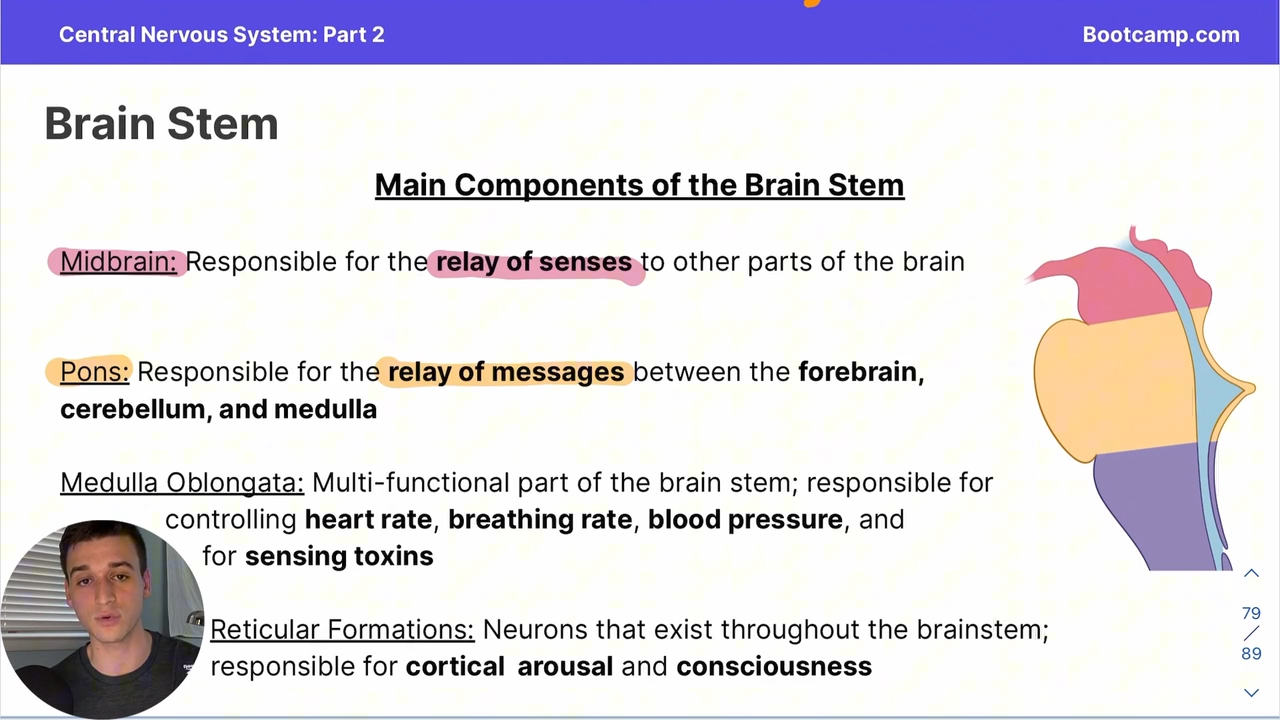
Pons
Responsible for the relay of messages between the forebrain, cerebellum, and medulla
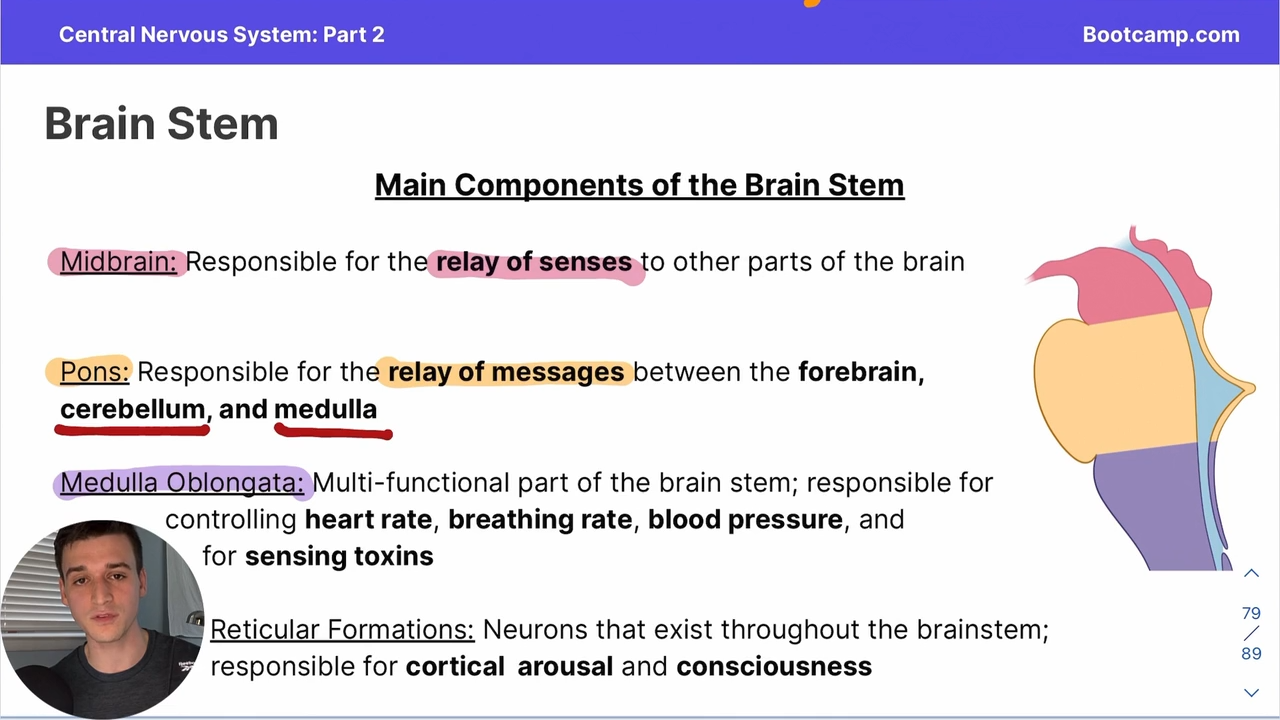
medulla oblongata
part of the brainstem that controls RATES , heart pressure, and senses toxins
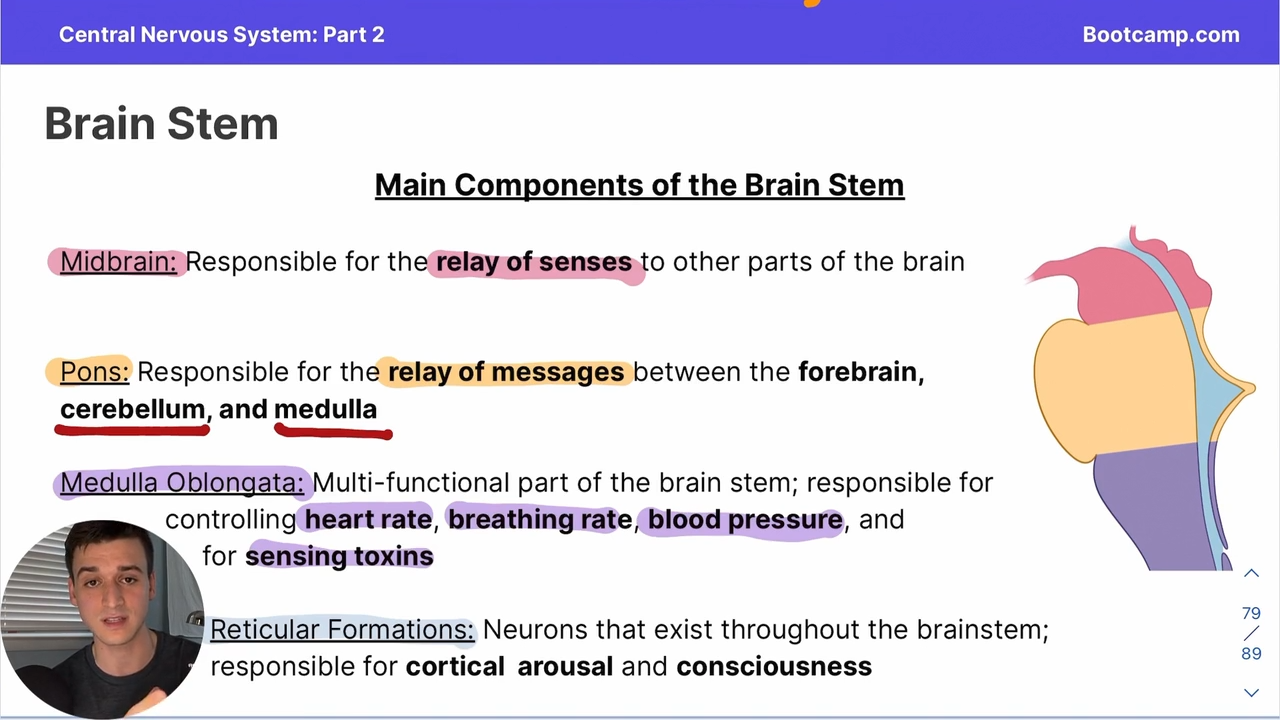
Reticular formations
Neurons that exist throughout the brainstem, responsible for cortical arousal and consciousness
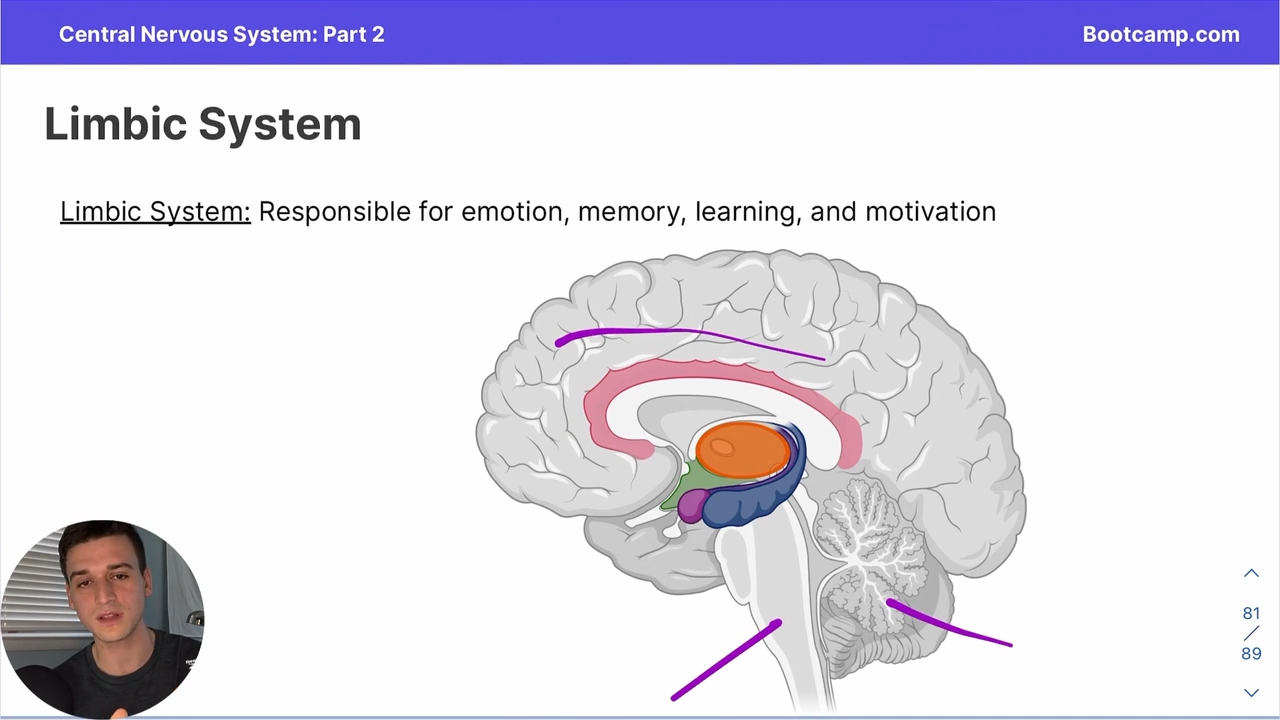
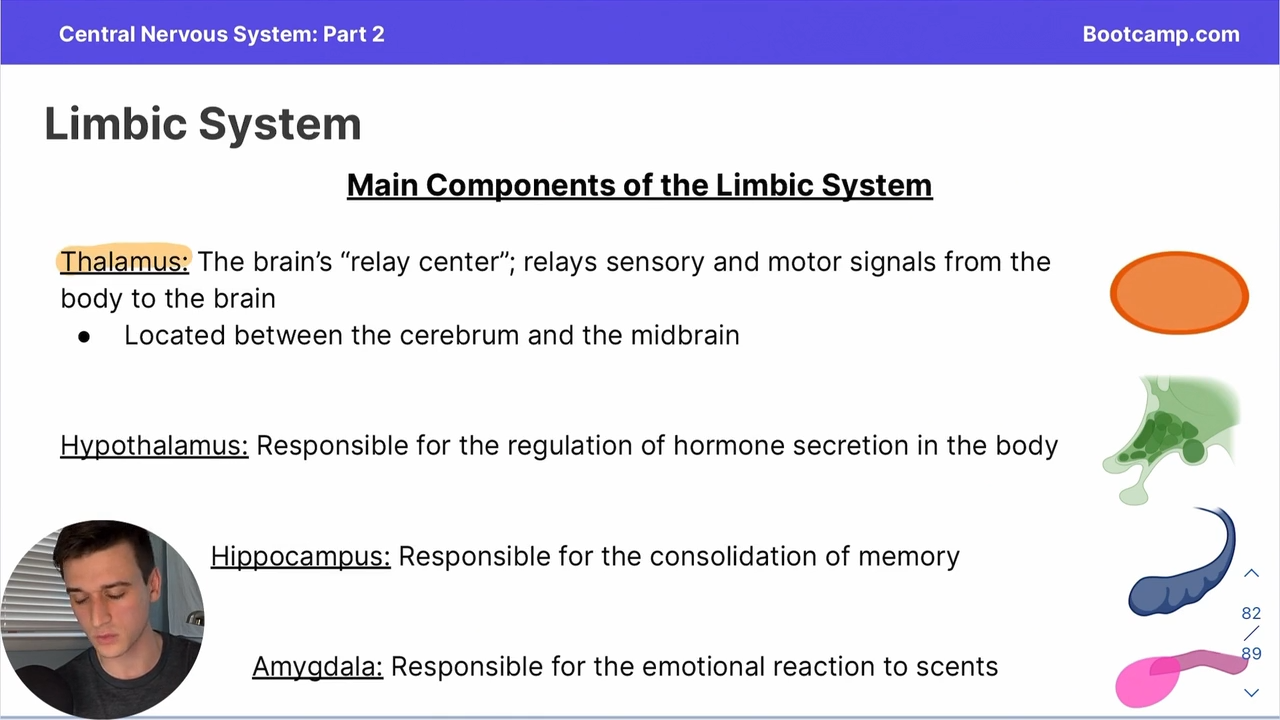
Limbic system
Responsible for emotion, memory, learning and motivation
consists of the thalamus, hypothalamus, hippocampus, and amygdyla
Thalamus
in the limbic system, relays sensory and motor signals from the boddy to the brain
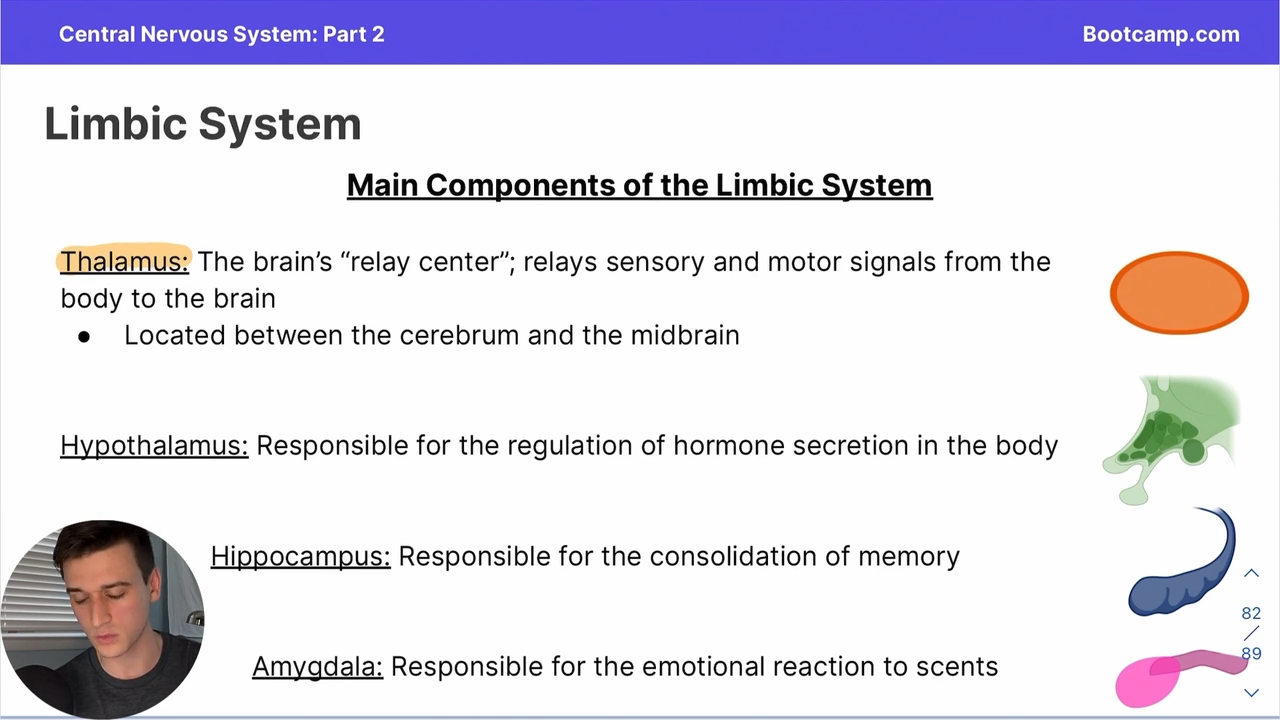
Hypothalamus
in the limbic system, regulates bodily hormones
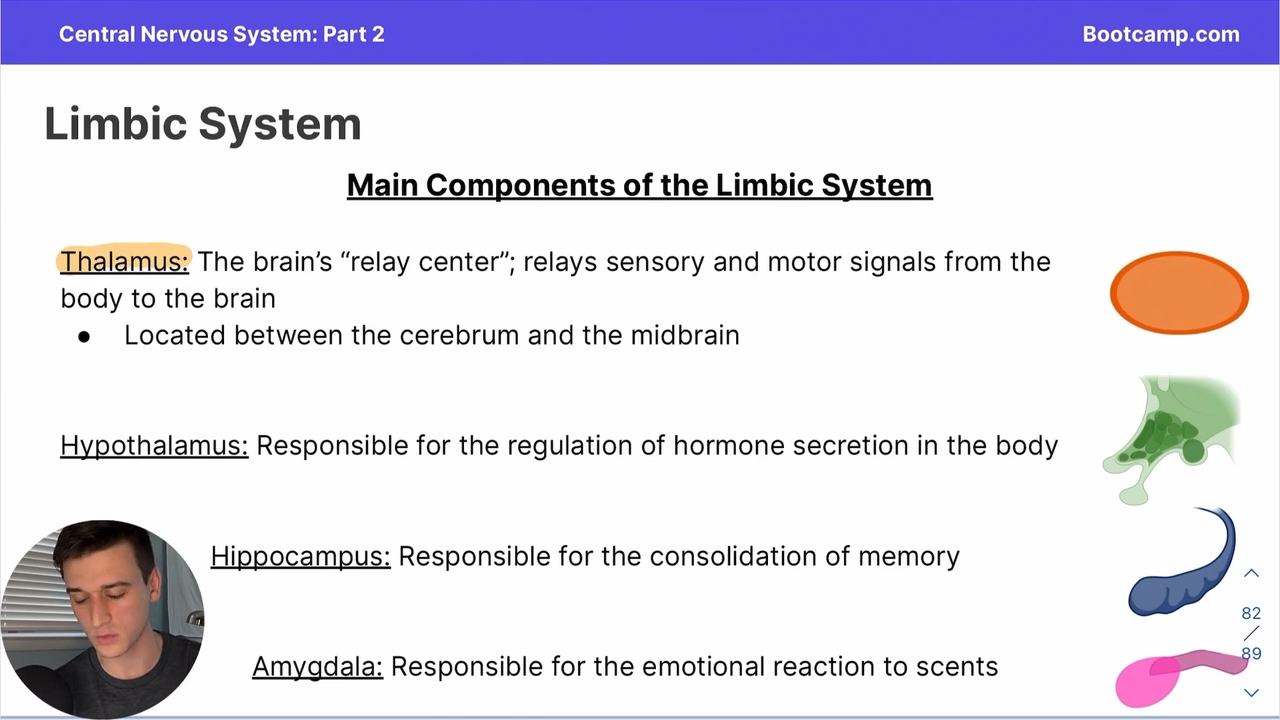
Hippocampus
in the limbic system, responsible for memory
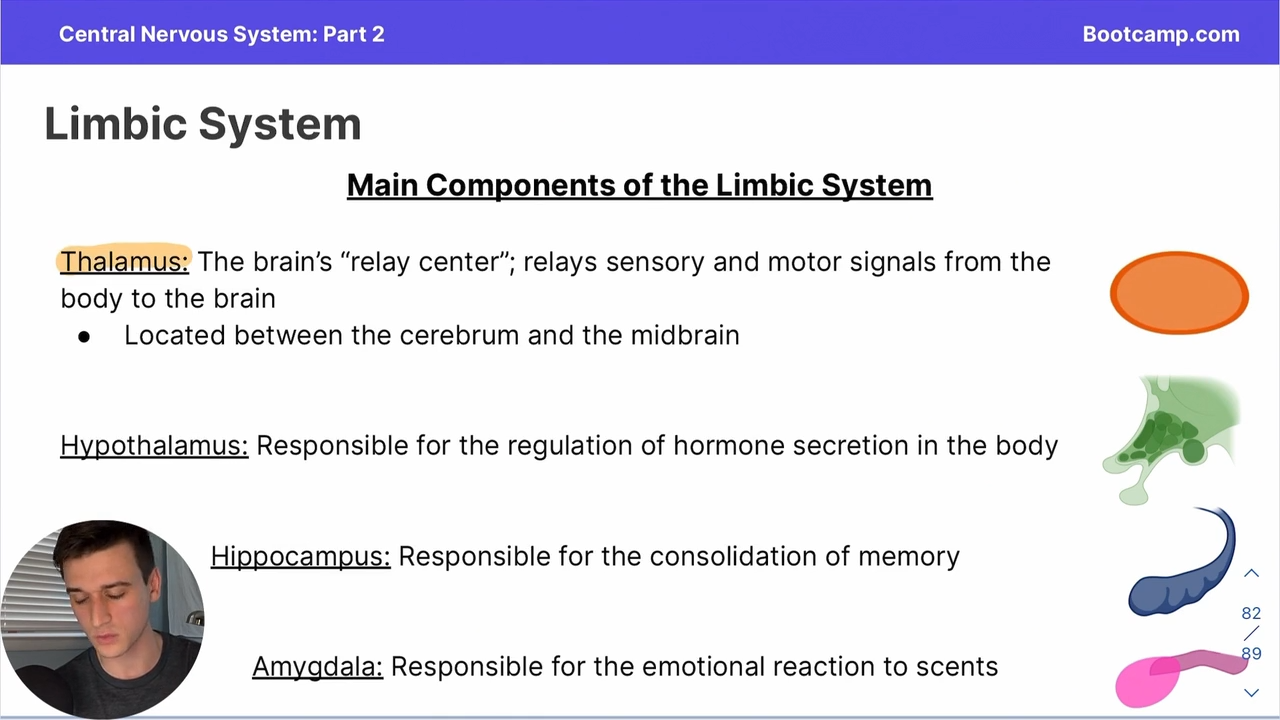
amygdala
resposible for emotion of scents
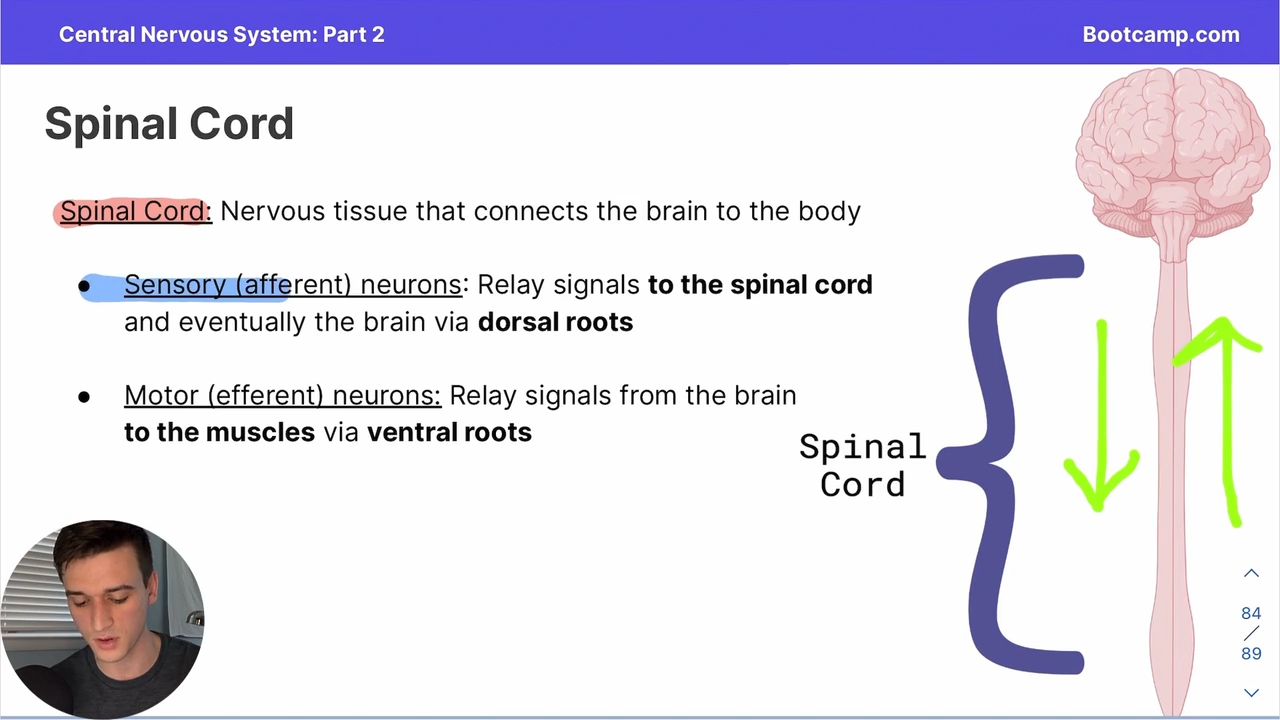
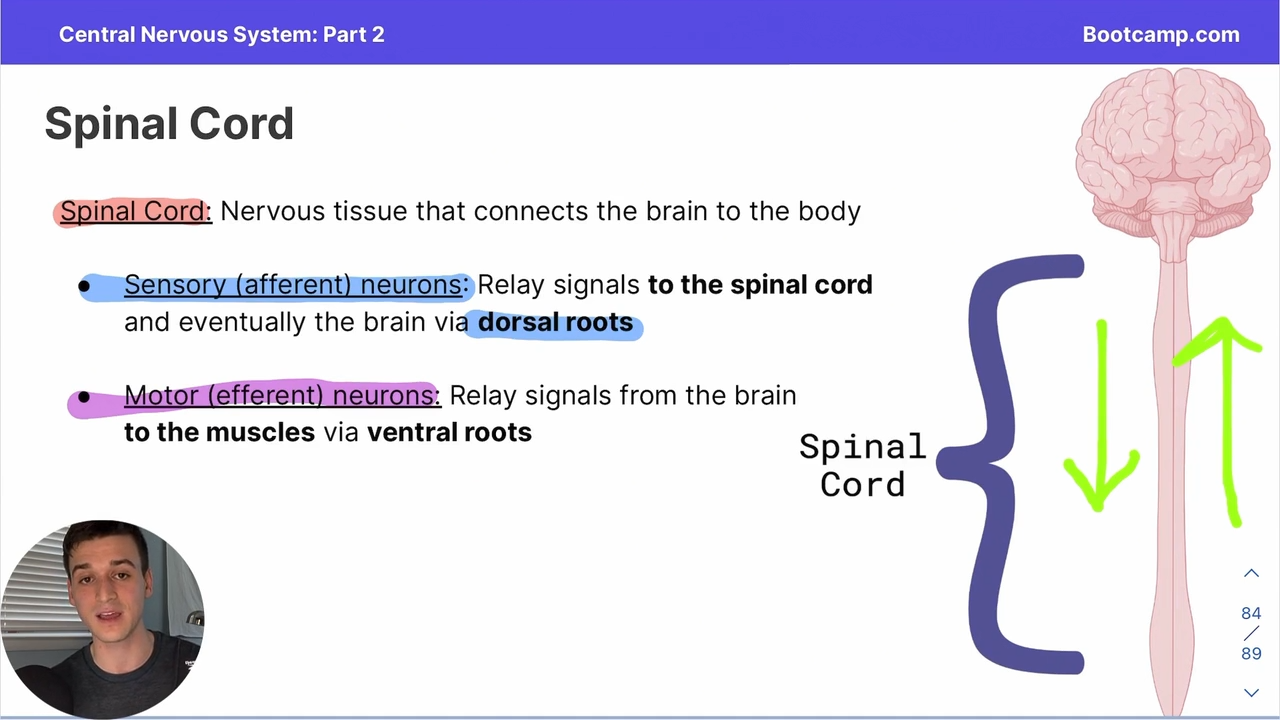
Spinal cord
nervous tissue that connect the brain to the body
Sensory (afferent) neurons
Relay signals to the spinal cord and eventually the brain via the dorsal roots
AFTER THERE IS A SIGNAL
motor (efferent) neurons
relay signals from the brain to the muscles via ventral roots
EFFECT CHANGE
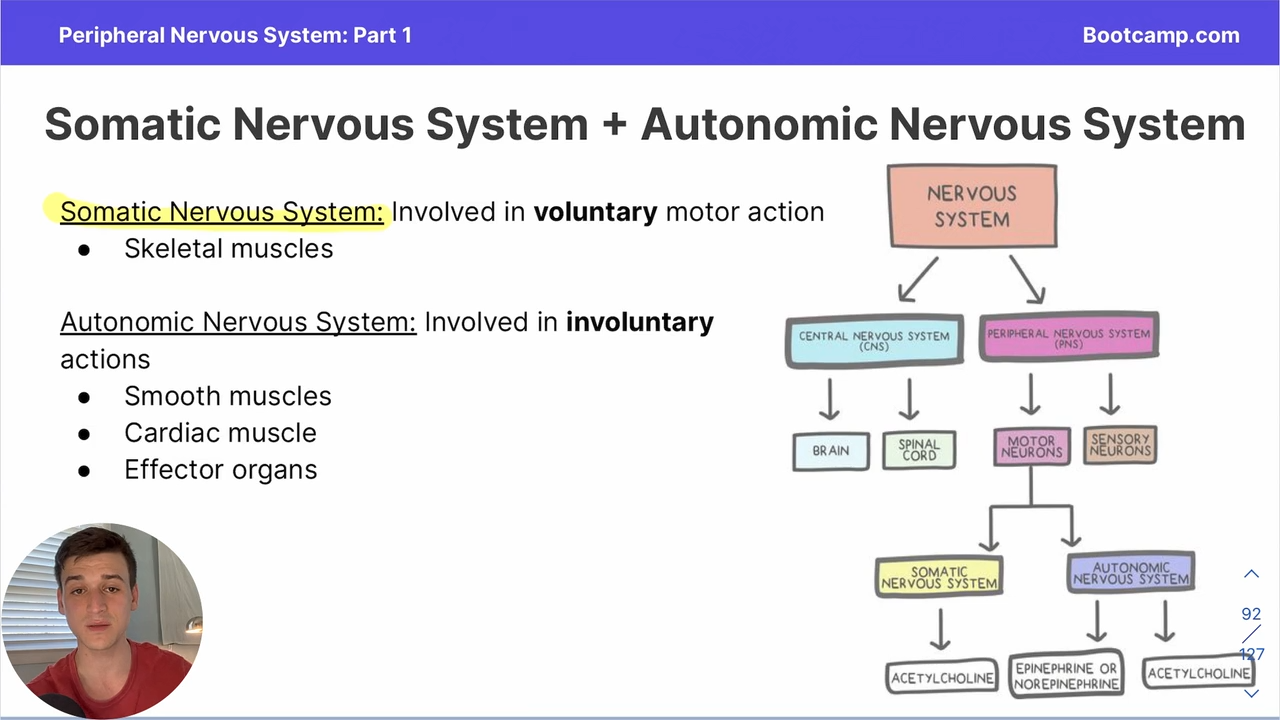
Somatic nervous system
part of the peripheral nervous system, involved in voluntary actions
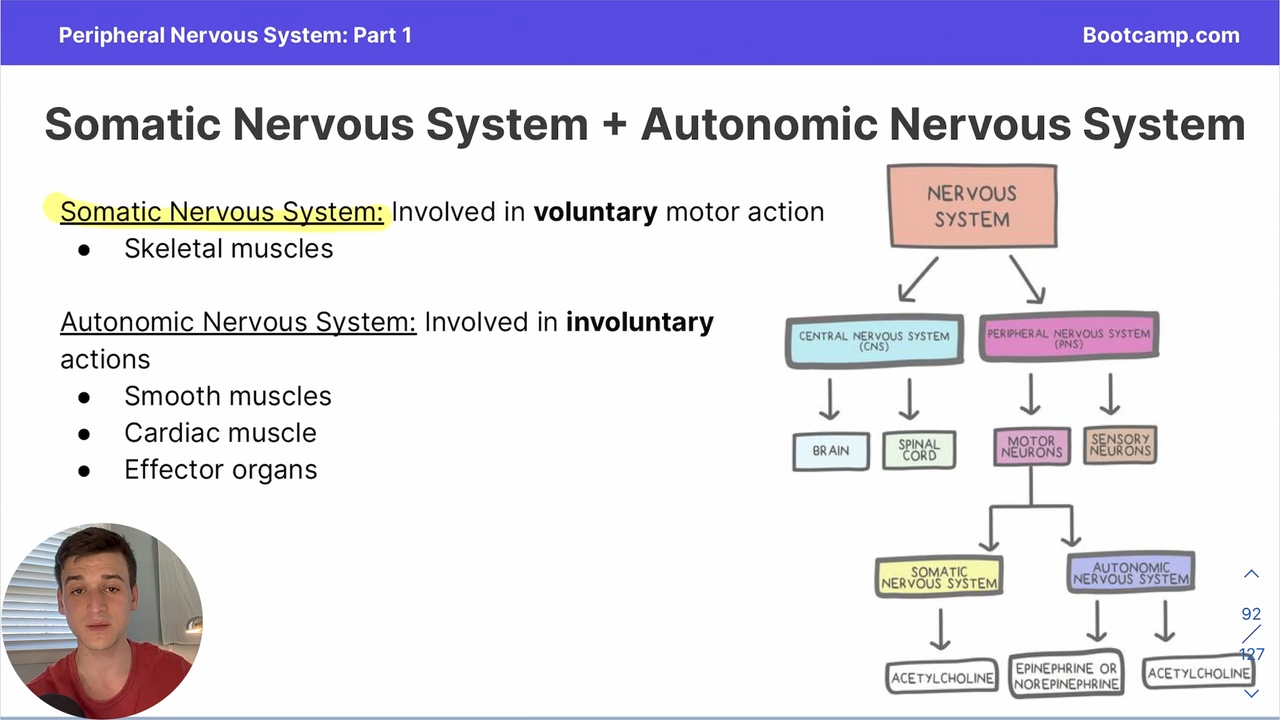
Autonomic nervous system
part of the peripheral nervous system, involved in involuntary actions
Mechanoreceptors
Responsible for reception of mechanical stimuli
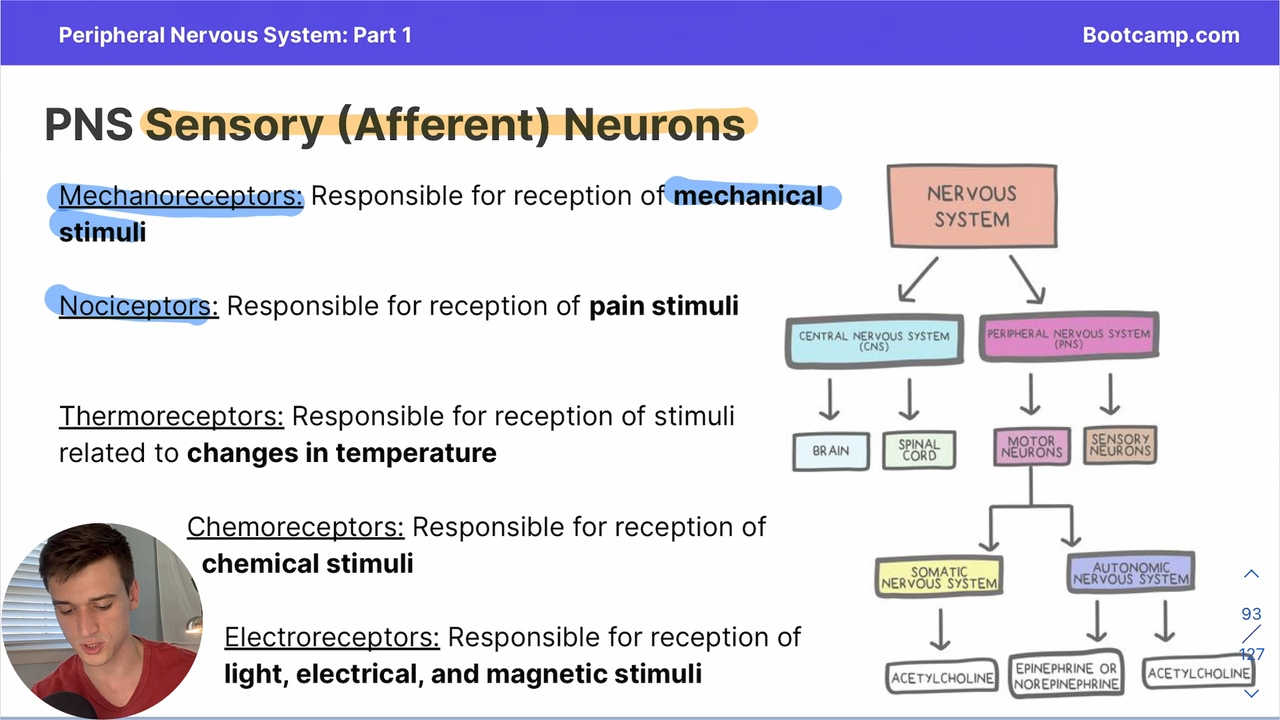
Nociceptors
Responsible for reception of pain stimuli
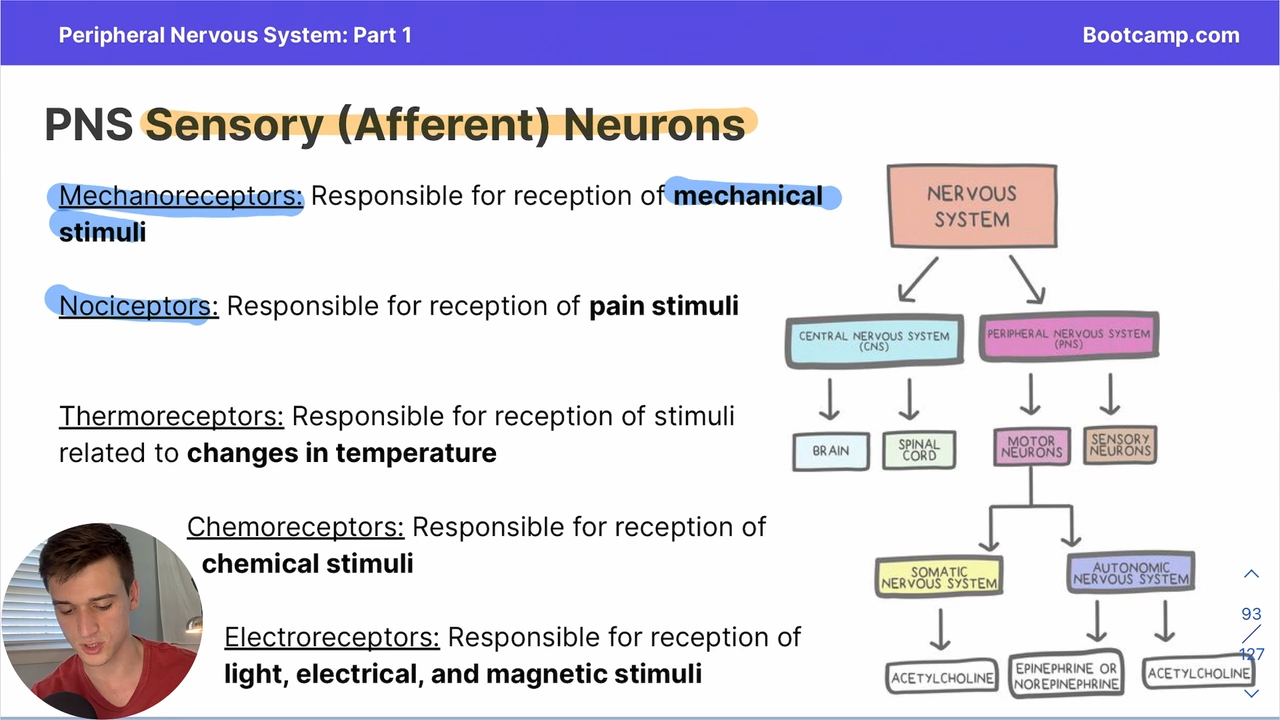
Thermoreceptors
Responsible for reception of stimuli related to changes in temperature
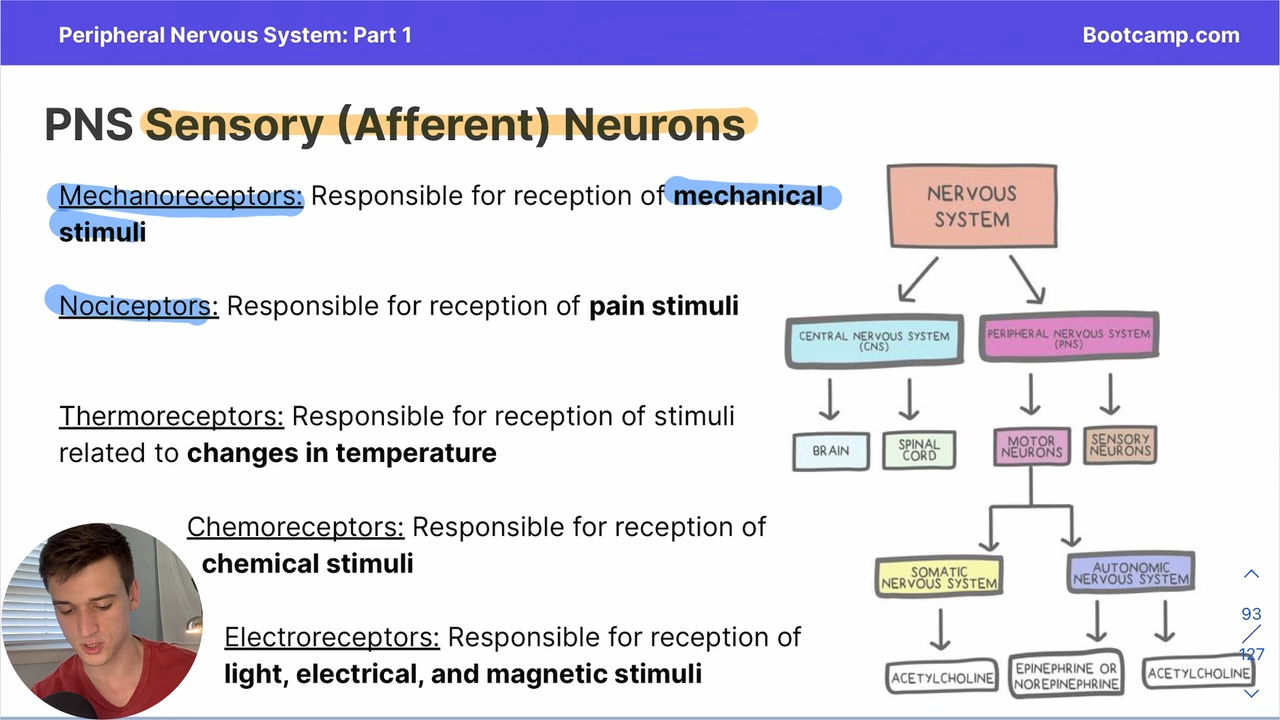
Chemoreceptors
chemical stimuli
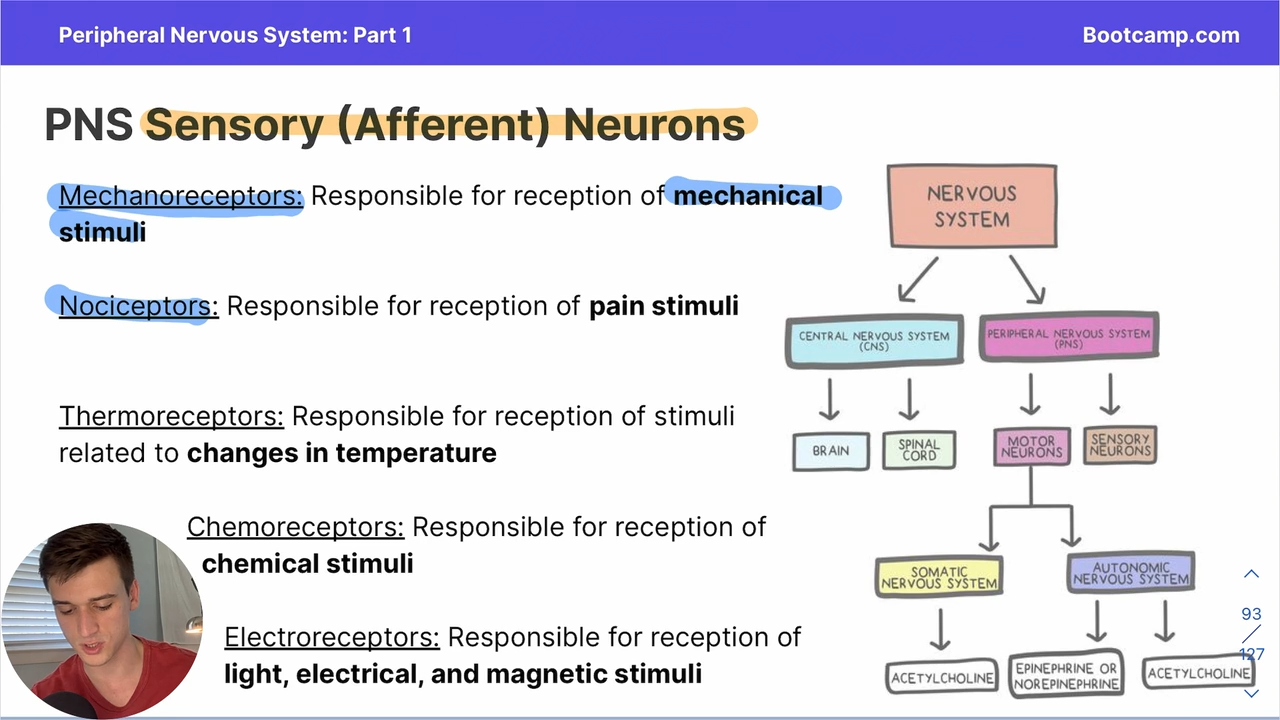
Electroreceptors
Responsible for reception of light, electrical, and magnetic stimuli
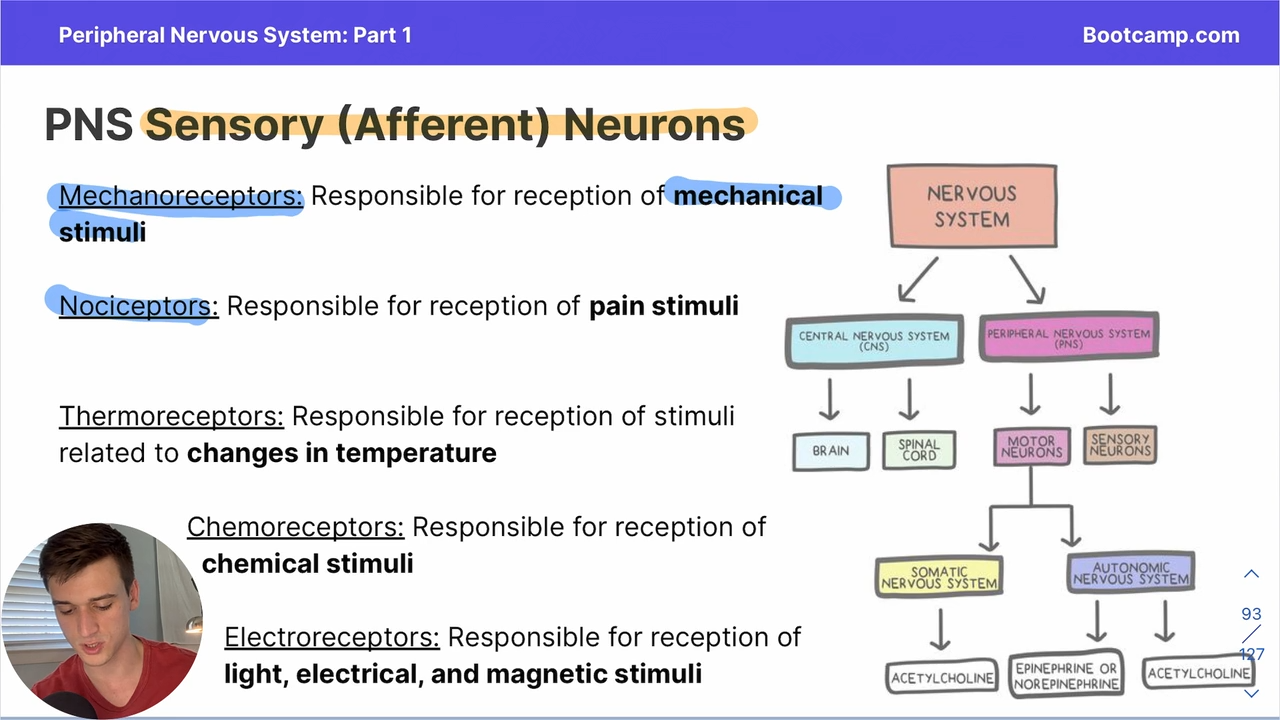
What is the autonomic nervous system split into
the parasympathetic nervous system and the sympathetic nervous system
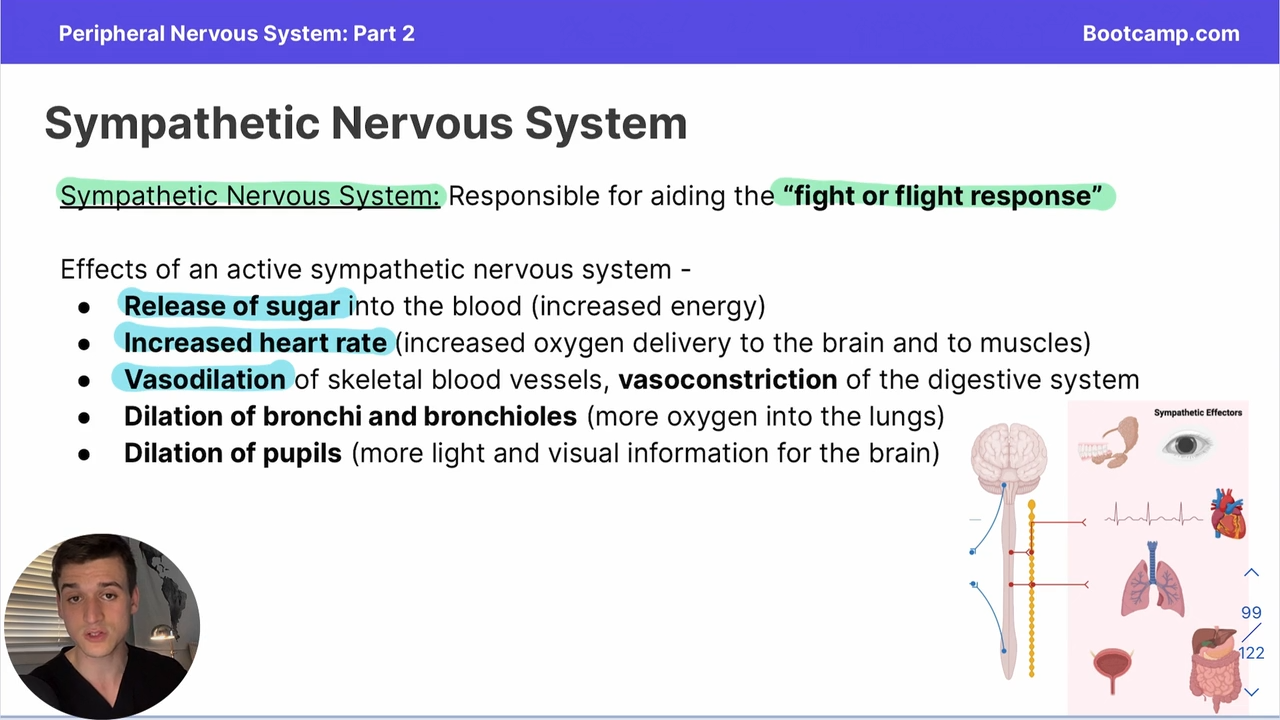
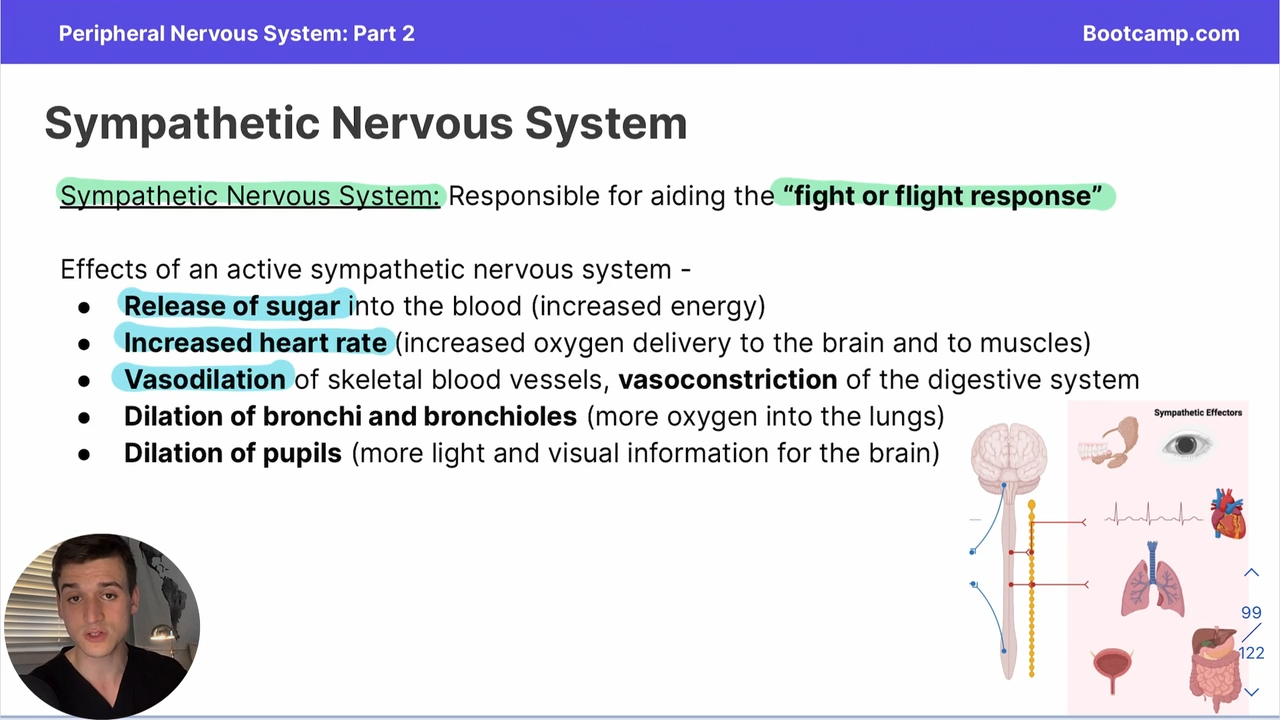
Sympathetic Nervous System
Responsible for aiding the “fight or flight response”
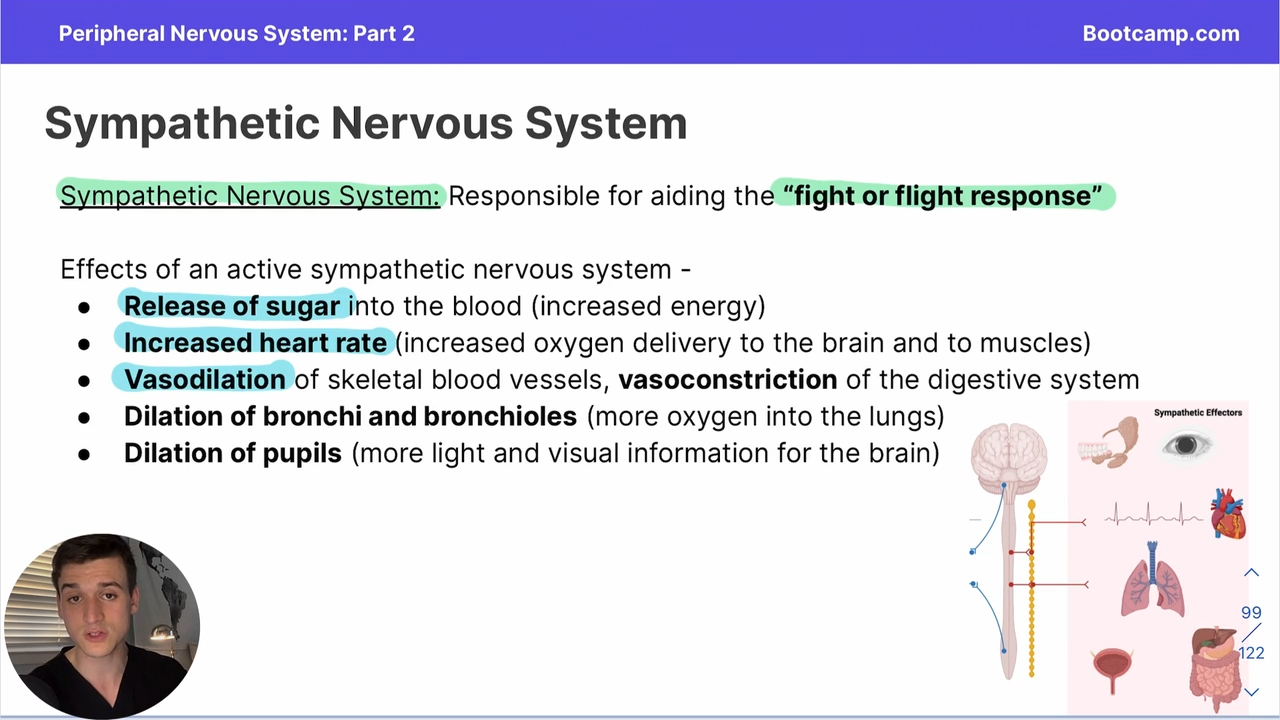
Effect that SNS has on sugar
Release of sugar into the blood (increased energy)
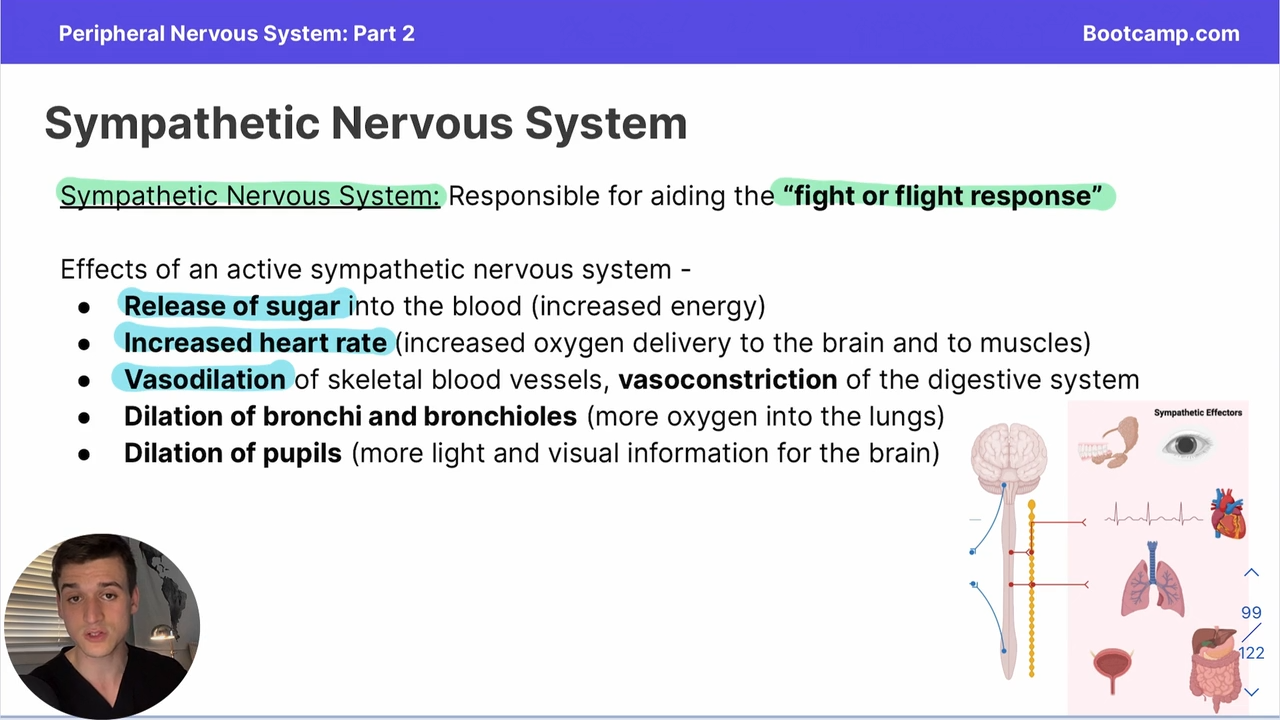
Effect that SNS has on heart rate
Increased heart rate (increased oxygen delivery to the brain and to muscles)
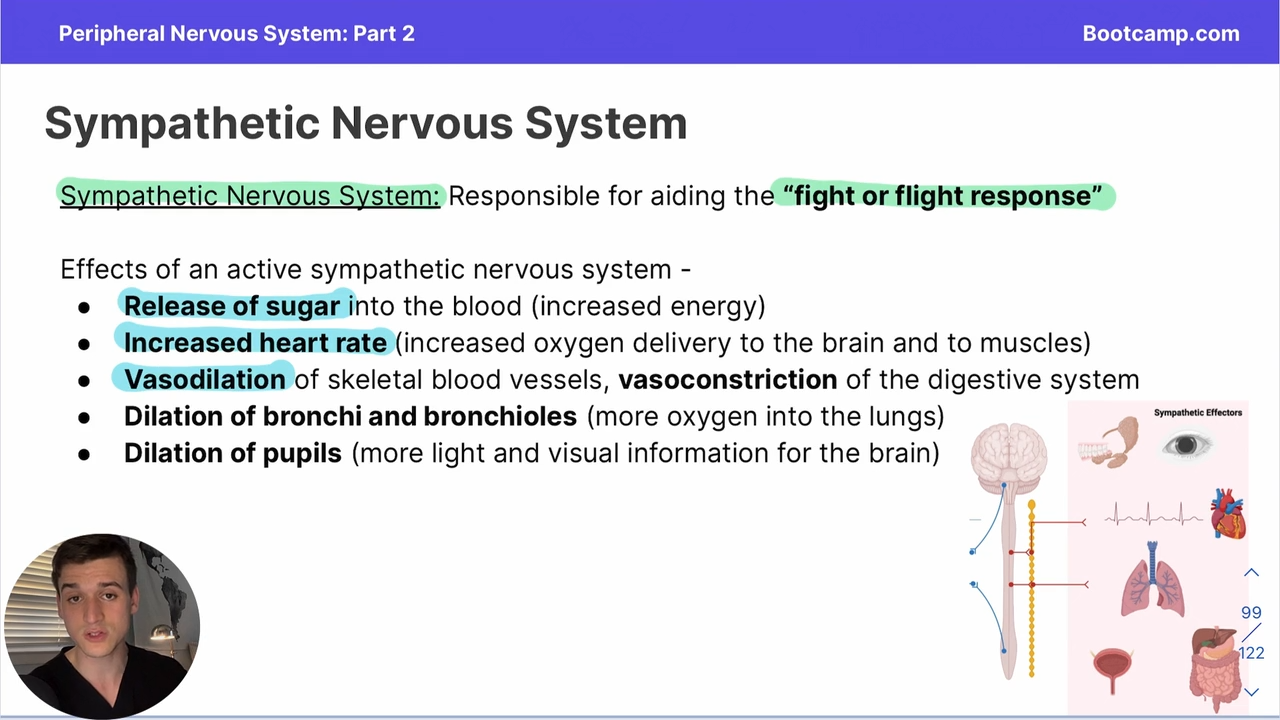
Effect that SNS has on blood vessels
Vasodilation of skeletal blood vessels, vasoconstriction of the digestive system
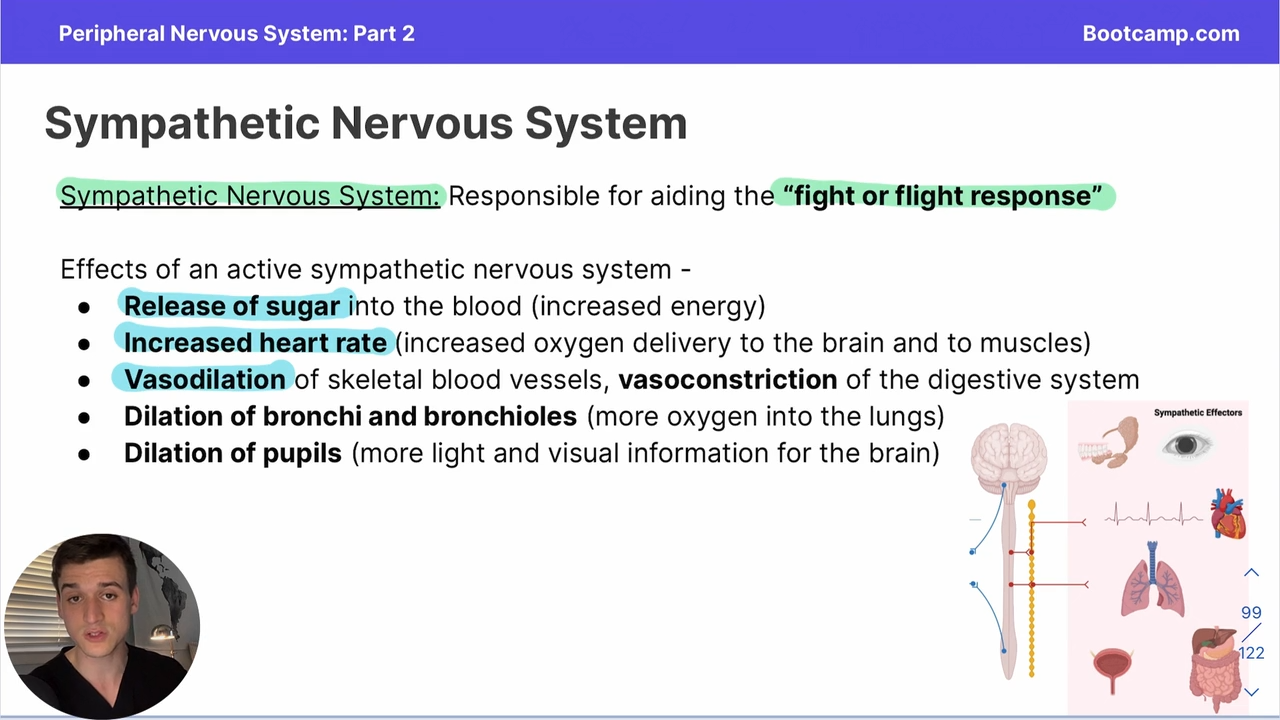
Effect that SNS has on lungs
Dilation of bronchi and bronchioles (more oxygen into the lungs)
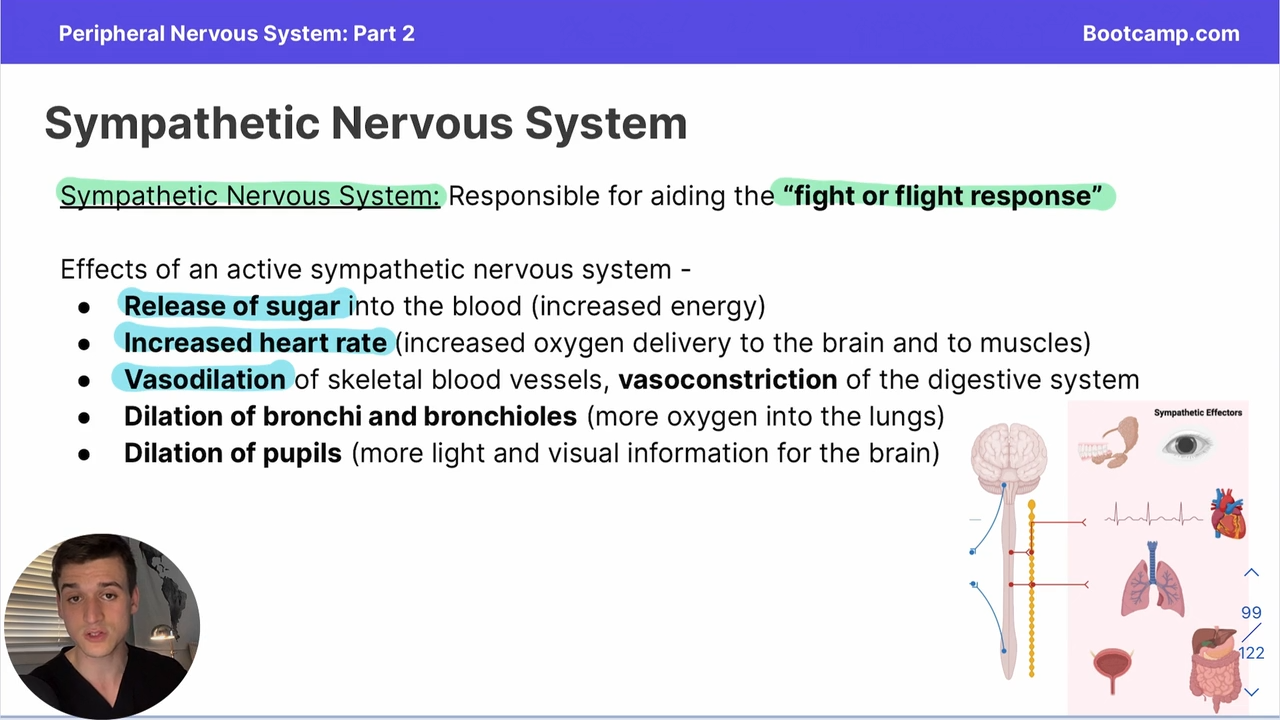
Effect that SNS has on pupils
Dilation of pupils (more light and visual information for the brain)
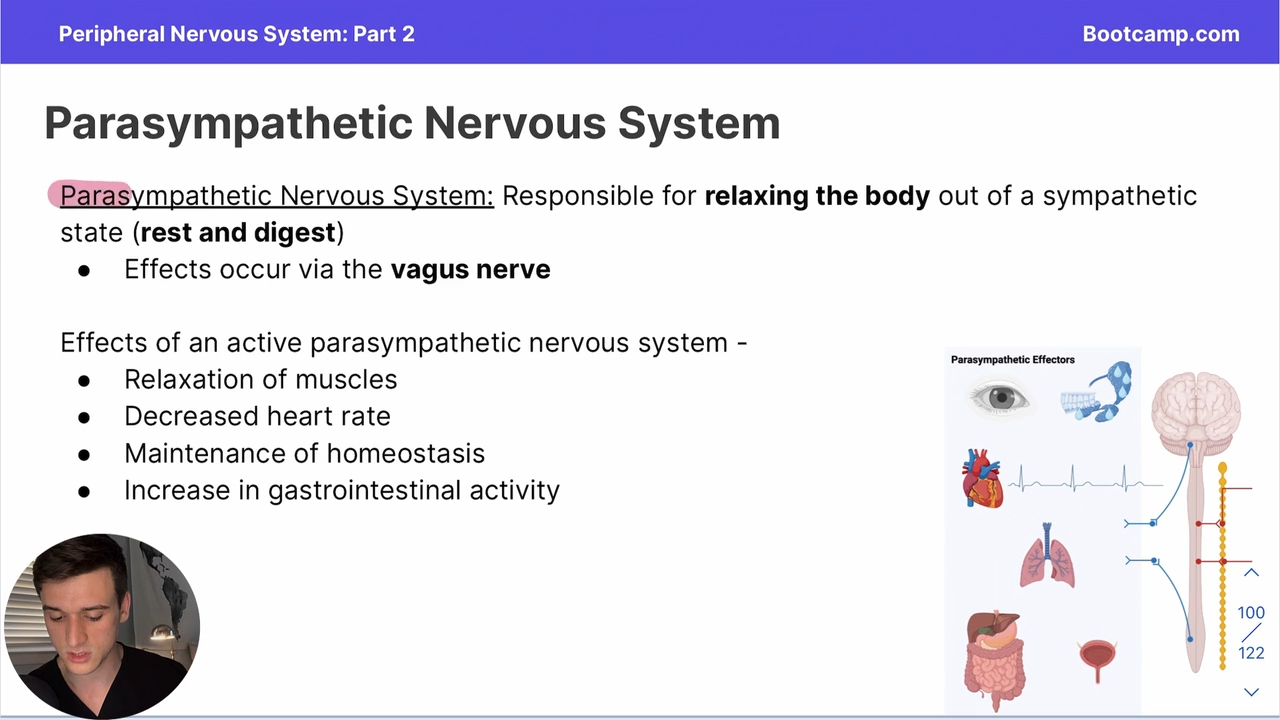
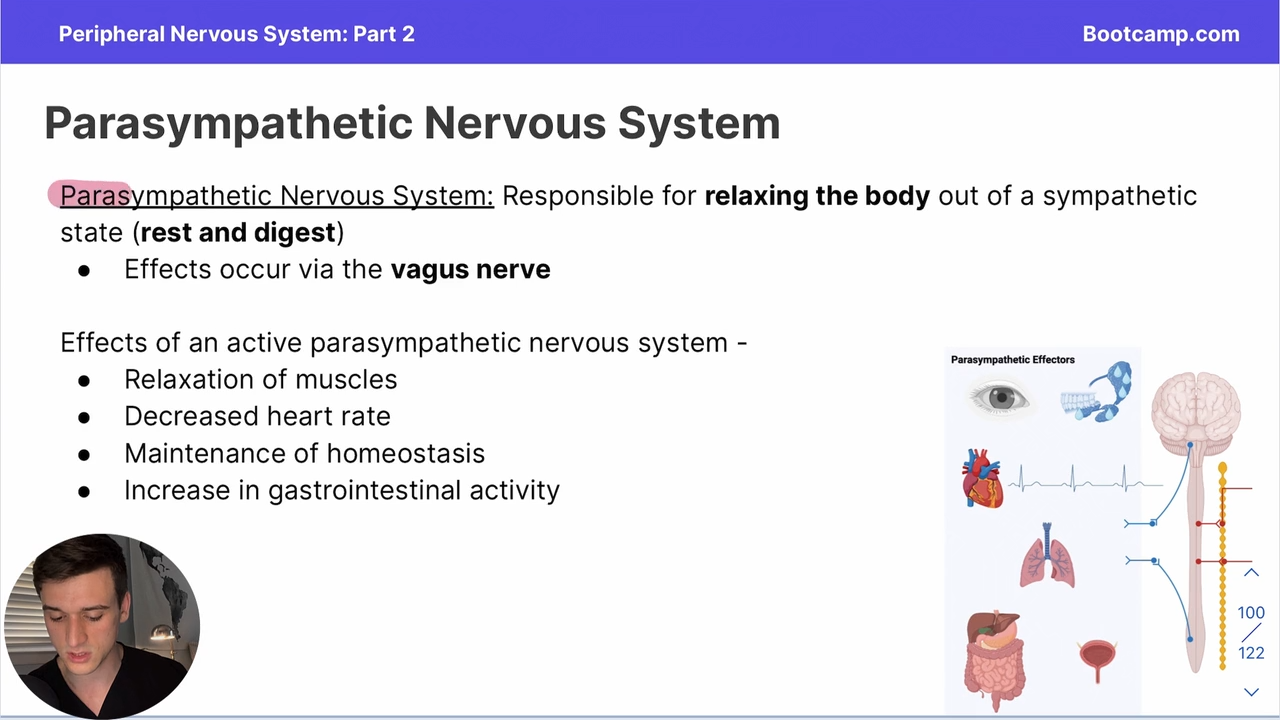
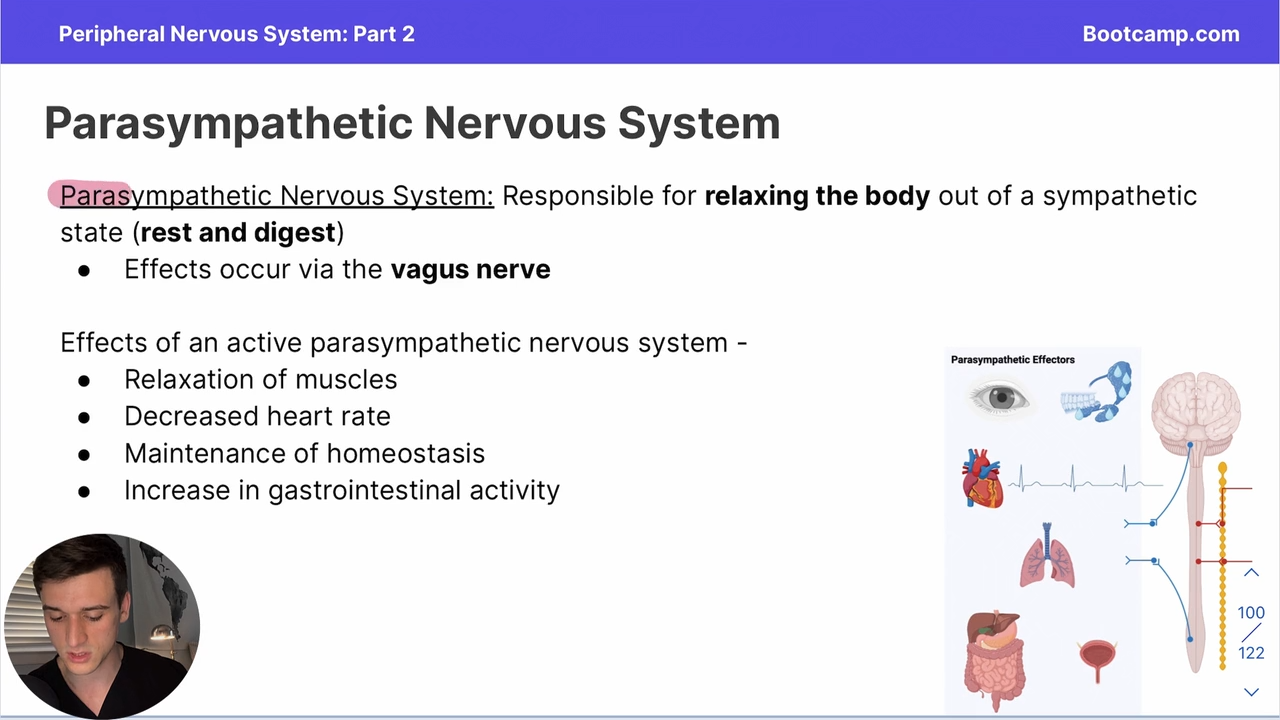
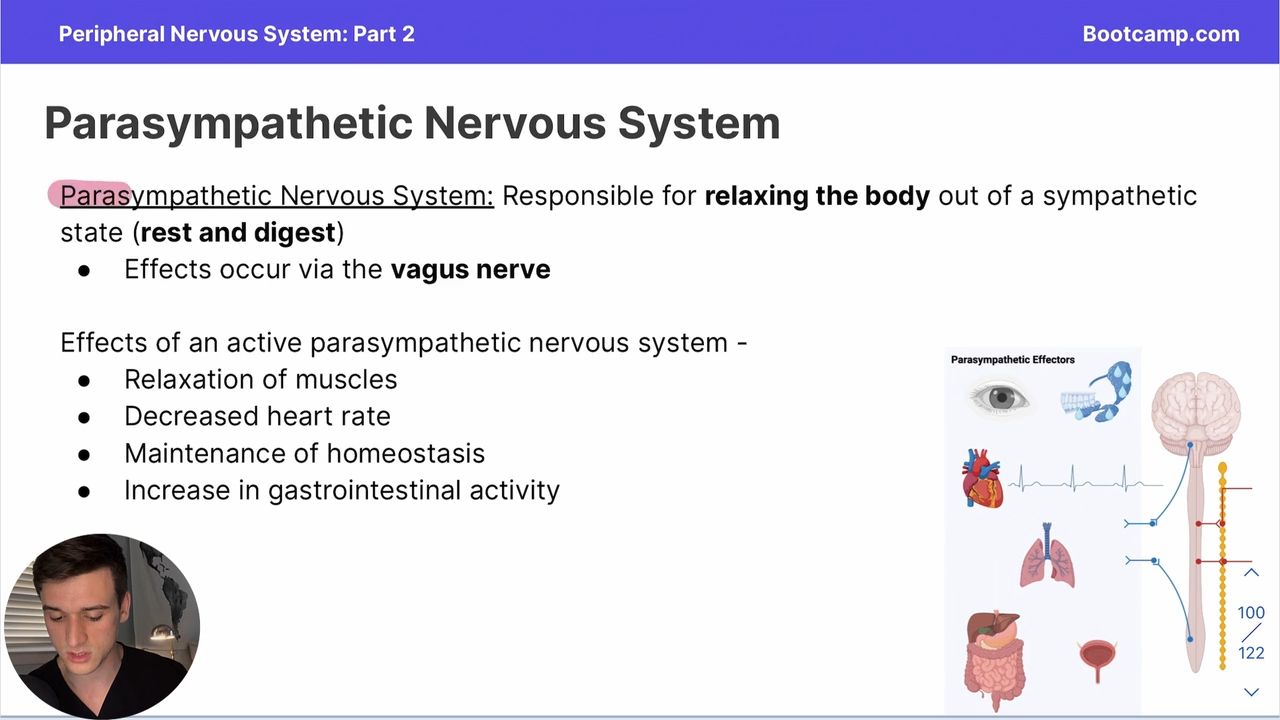
Parasympathetic Nervous System
Responsible for relaxing the body out of a sympathetic state (rest and digest)
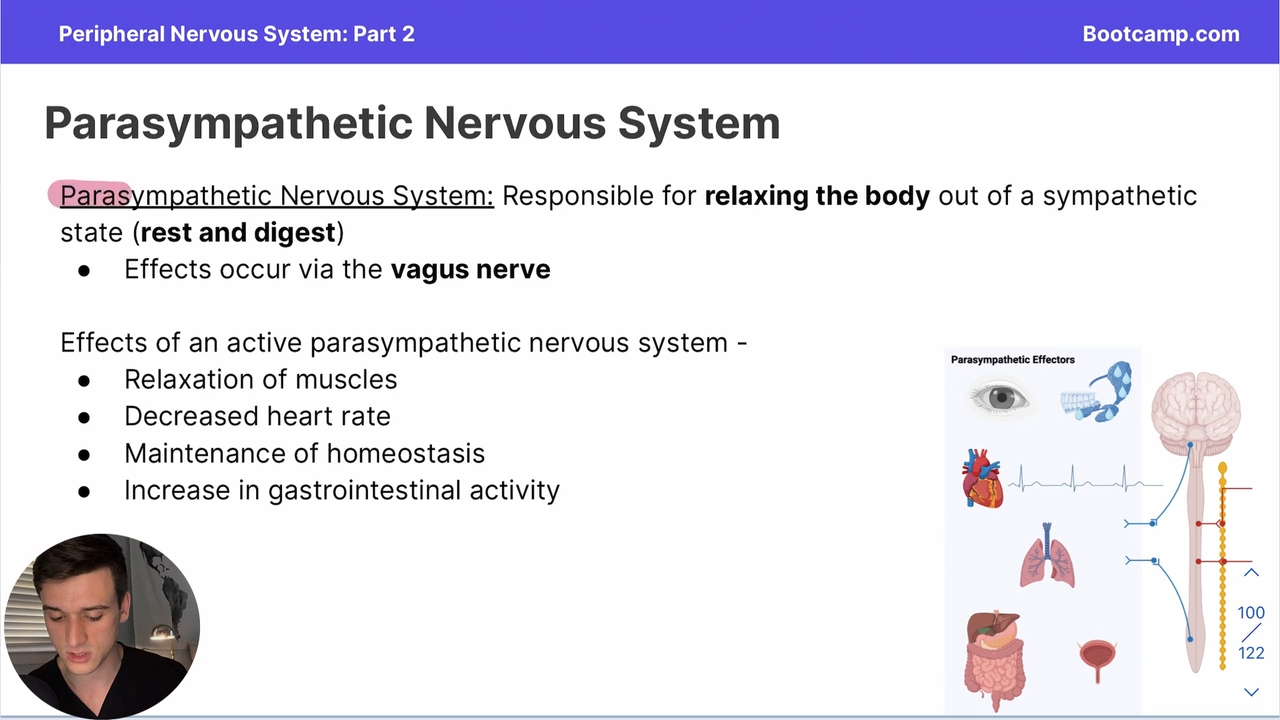
how do parasympathetic effects occur
via the vagus nerve
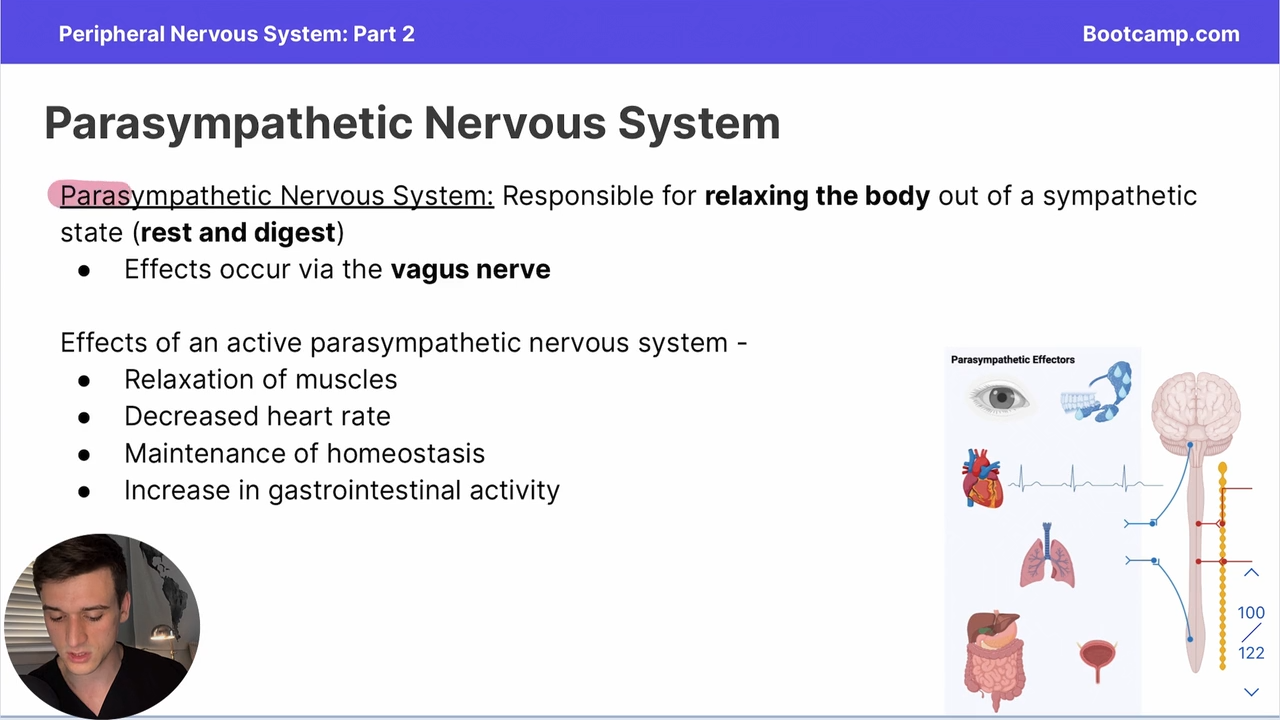
Parasympathetic system effect on muscles
Relaxation of muscles
Parasympathetic system effect on heart rate
Decreased heart rate
Parasympathetic system effect on GI activity
Increase in gastrointestinal activity
parasympathetic system effect on homeostasis
it is maintained
Ganglion
a cluster of nerve cell bodies in the Peripheral nervous system synapsing between preganglionic and postganglionic neurons
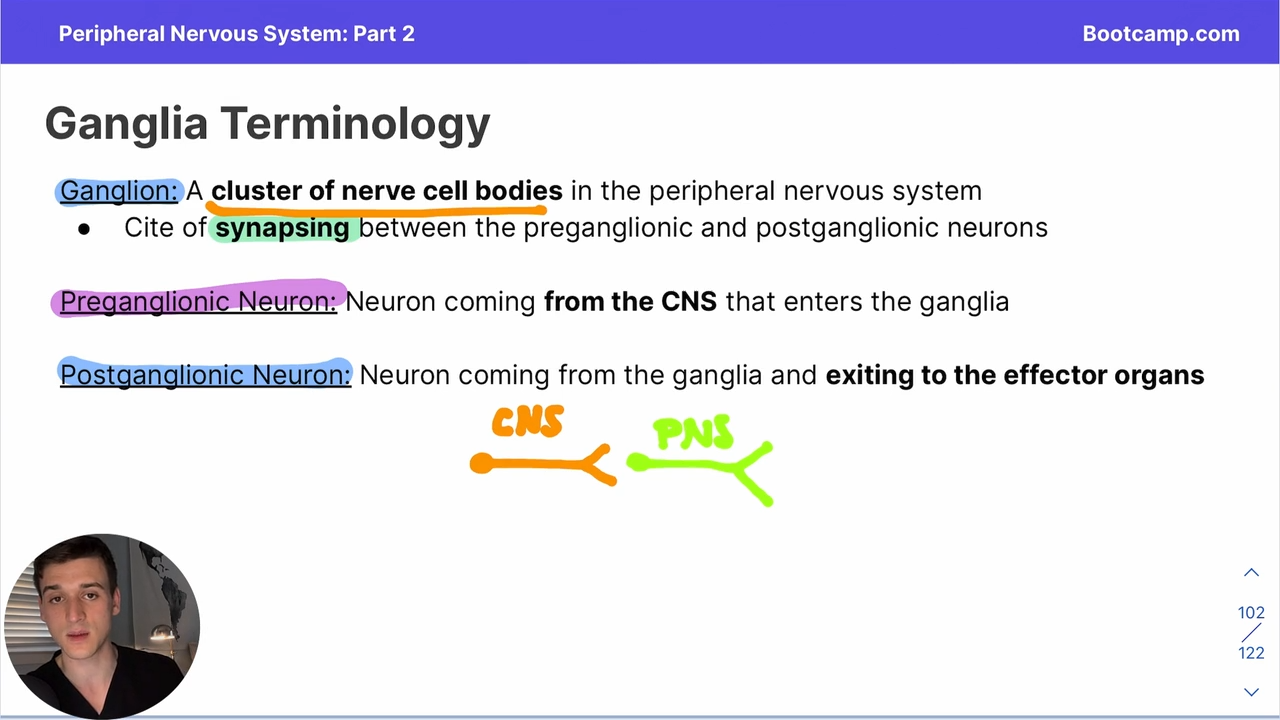
preganglionic neuron
Neuron coming from the CNS that enters the ganglia
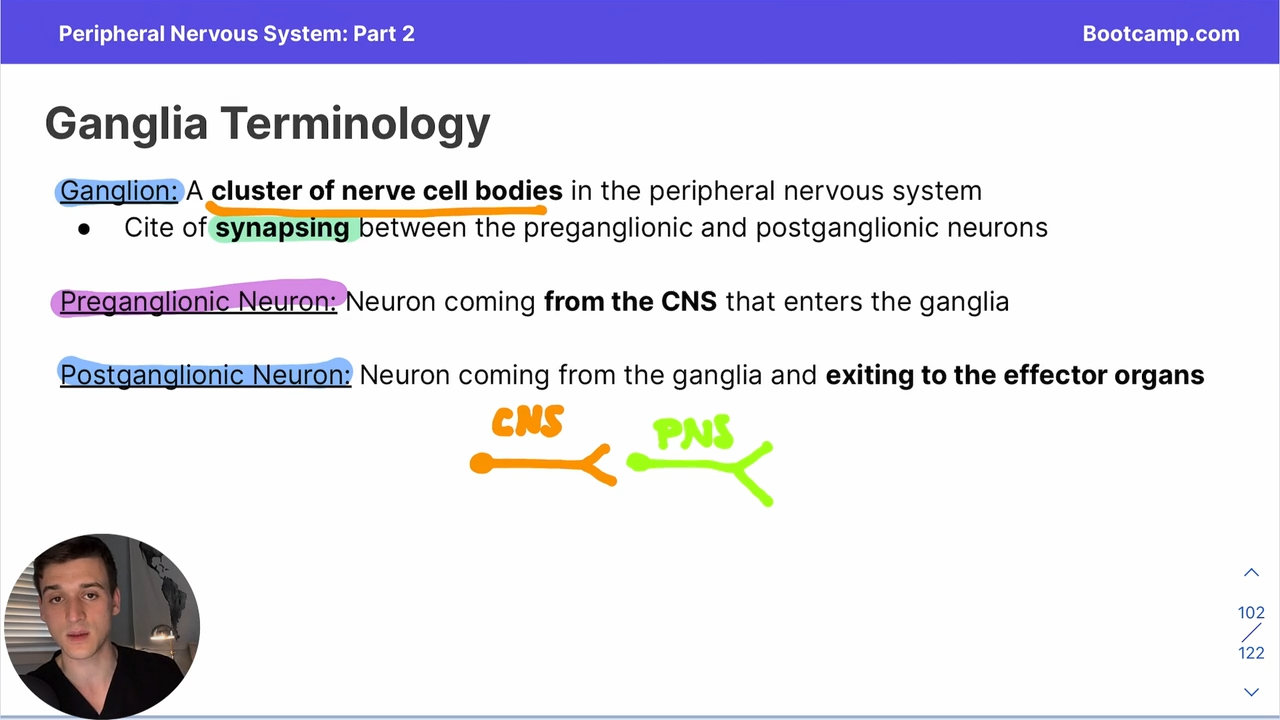
postganglionic neuron
Neuron coming from the ganglia that exits to effector organs
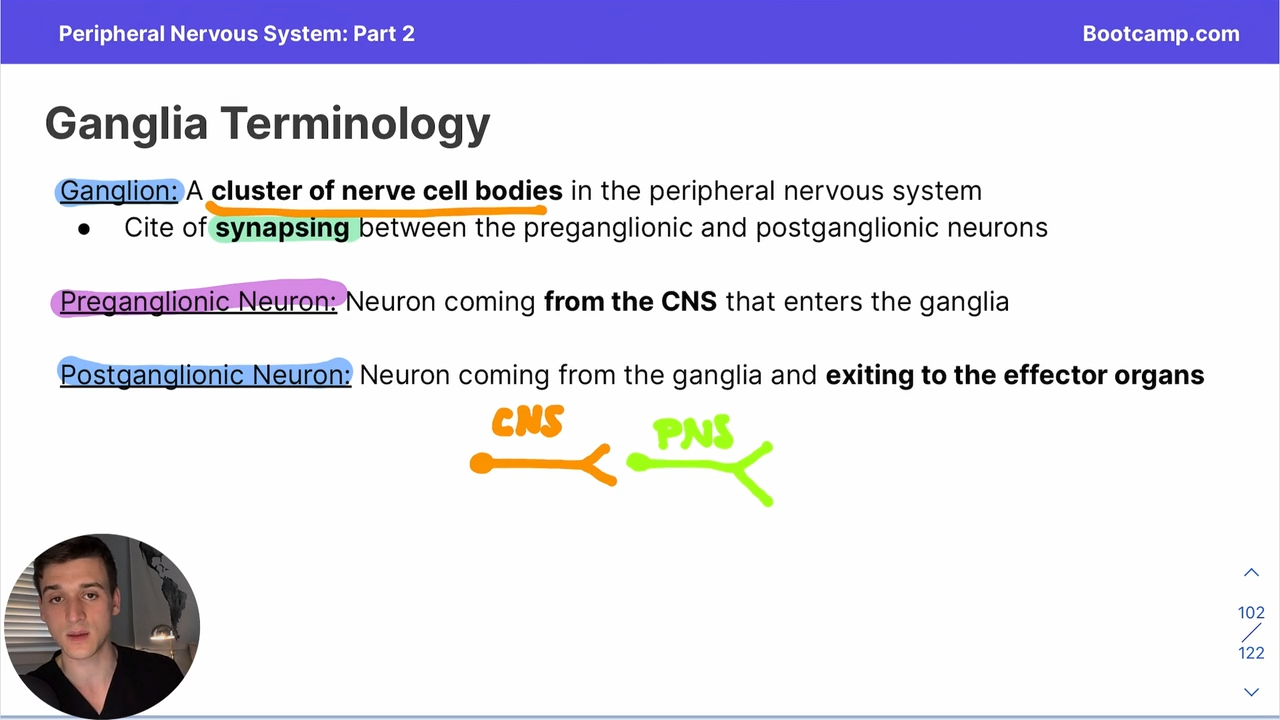
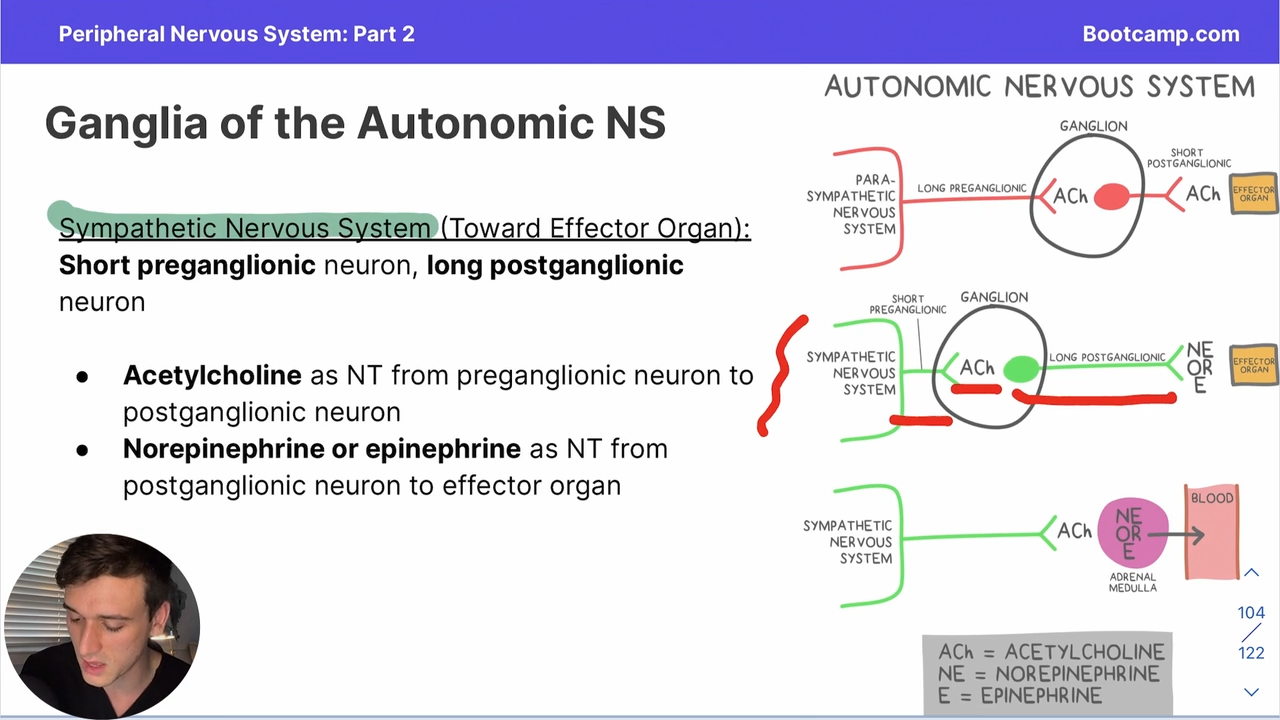
Sympathetic nervous system ganglion lengths
Short preganglionic neuron, long postganglionic neurons
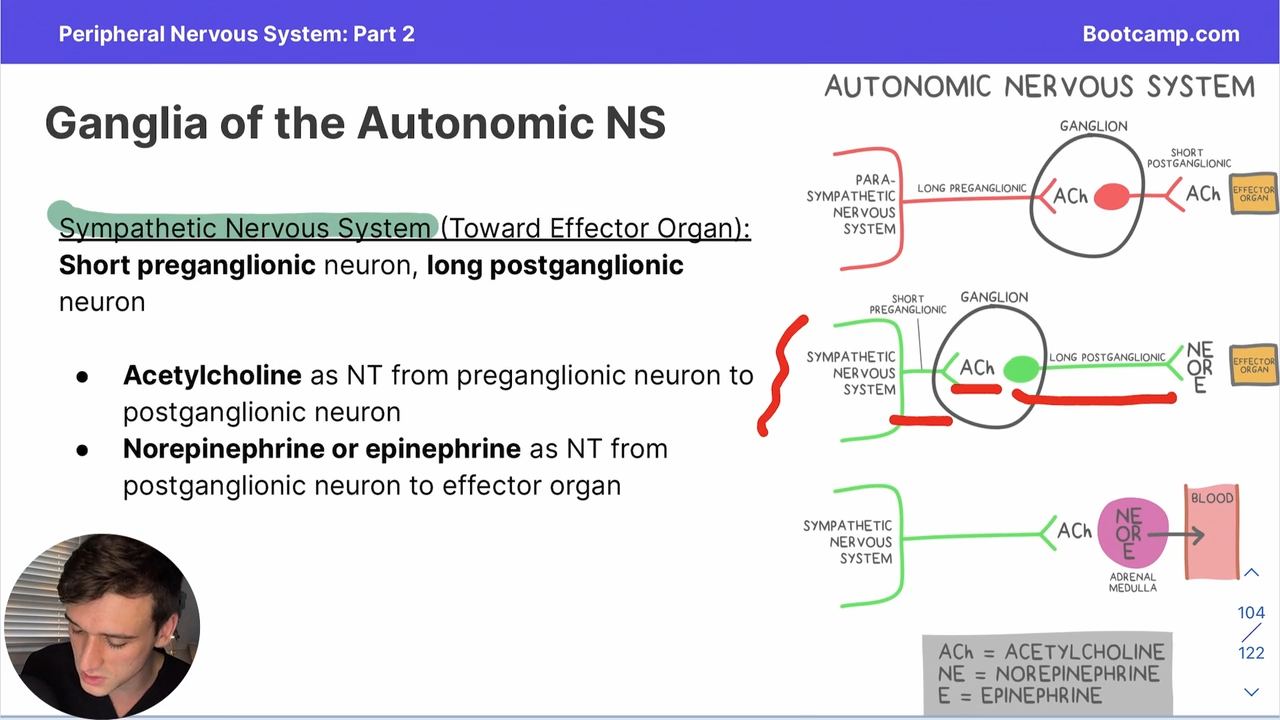
What is released from the preganglionic neuron in the Sympathetic nervous system
Acetylcholine, short
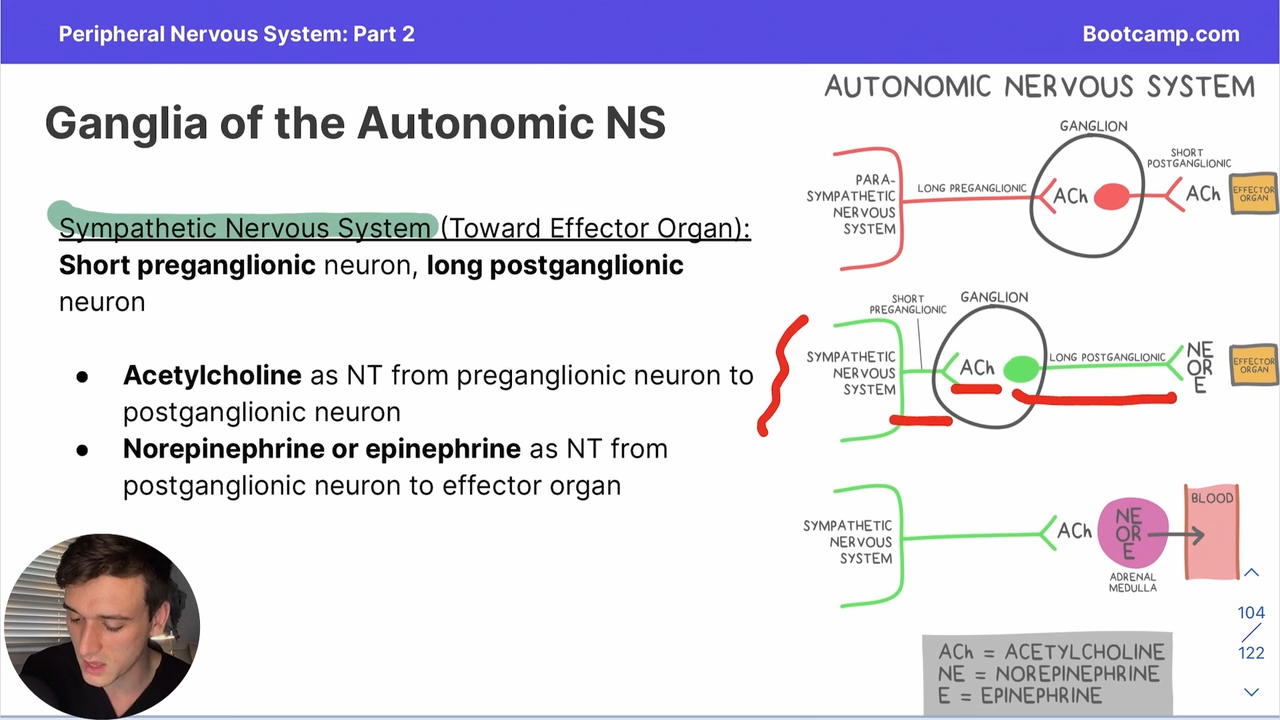
What is released from the postganglionic neuron in the Sympathetic nervous system
norepinephrine and epineprine, long
paraympathetic nervous system ganglion lengths
long preganglionic neuron, short postganglionic neurons
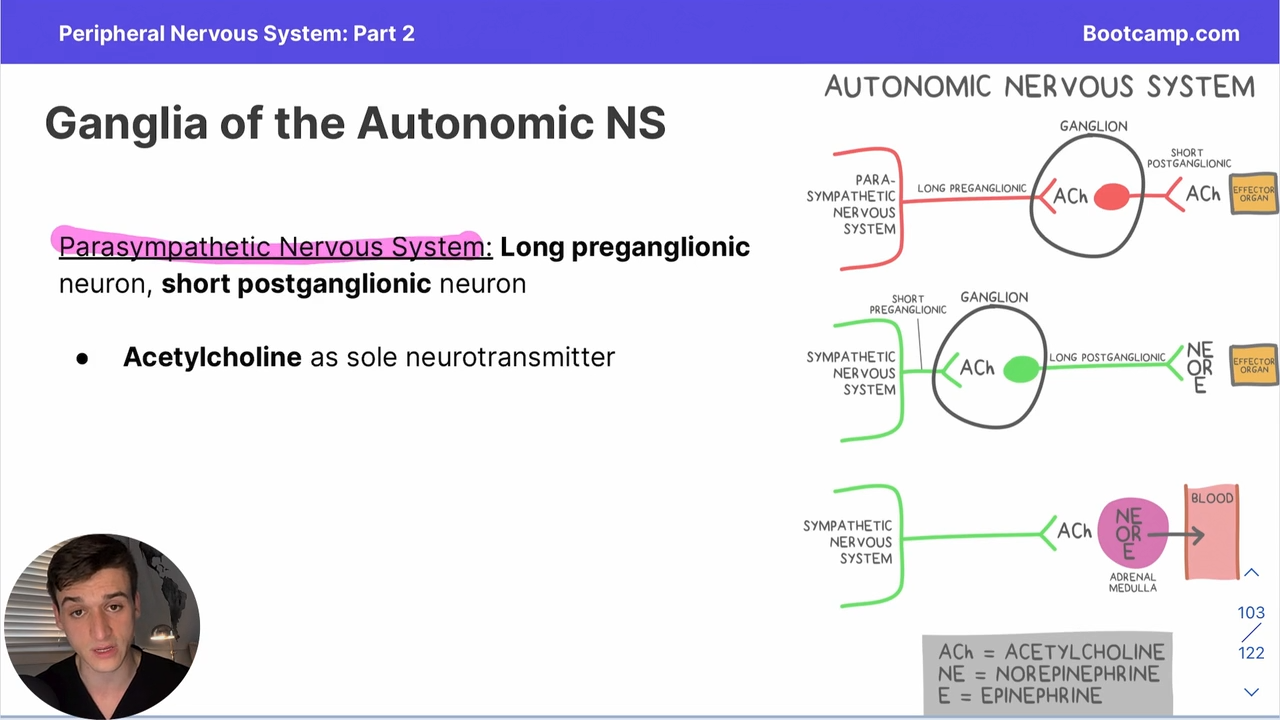
What is released from the preganglionic neuron in the parasympathetic nervous system
acetylcholine
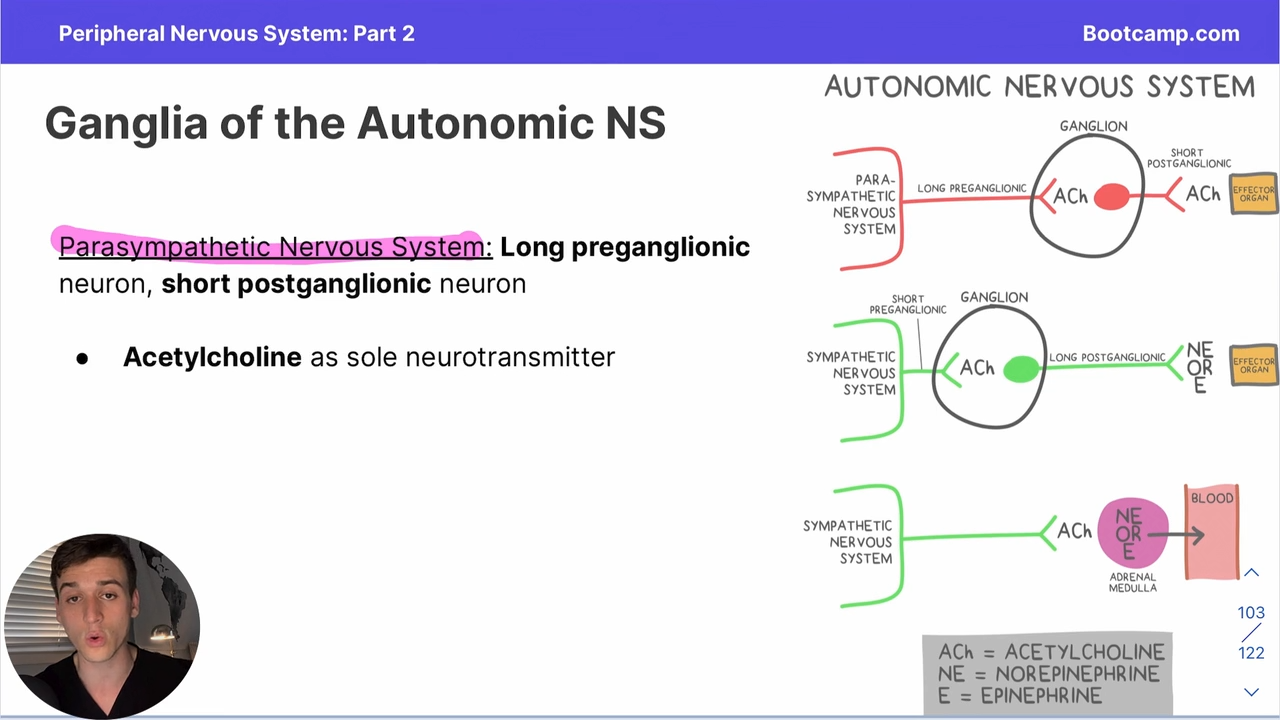
What is released from the postganglionic neuron in the parasympathetic nervous system
acetylcholine
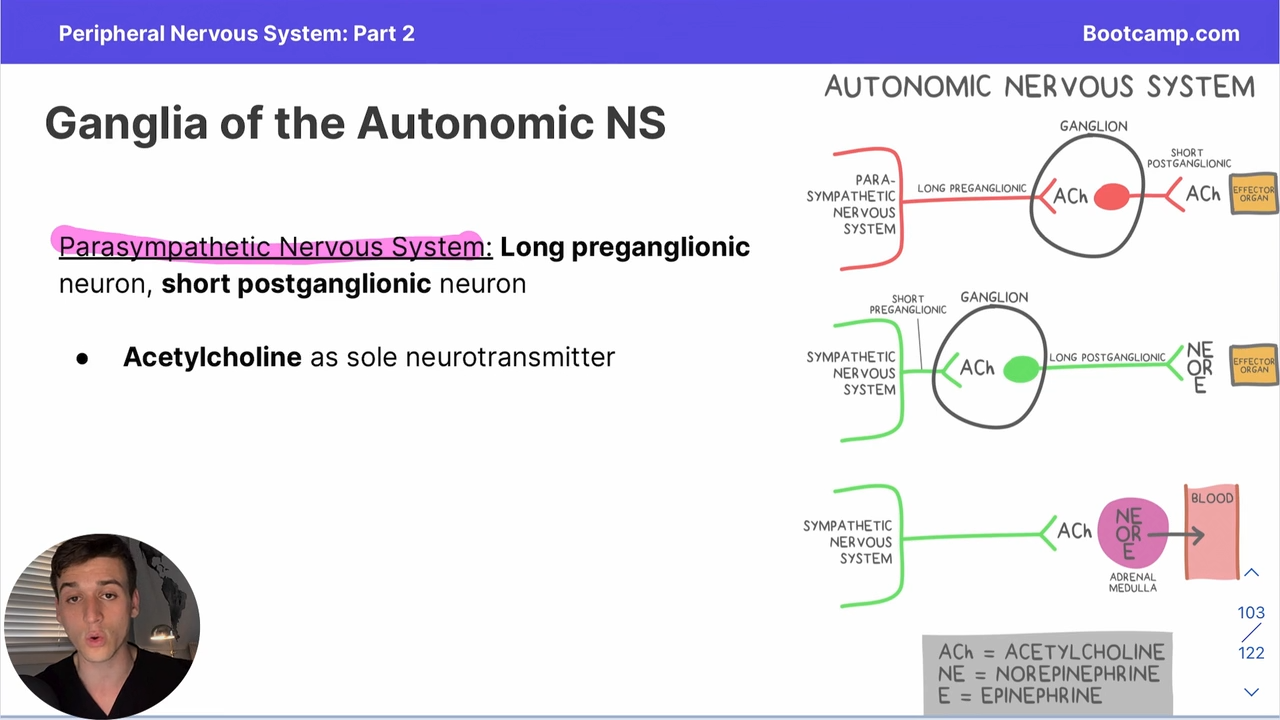
Where can the preganglionic neuron release acetylcholine into in the sympathetic nervous system
into the adrenal medulla