fixed partial dentures
 Call Kai
 Learn
Learn Practice Test
 Spaced Repetition
 Match
Match Flashcards
 Knowt Play
1/57

Earn XP
Description and Tags
lecture given 8/27/2026
Name | Mastery | Learn | Test | Matching | Spaced | Call with Kai | Chat |
|---|
No analytics yet
Send a link to your students to track their progress
58 Terms
why should we replace a missing tooth/teeth?
correction of existing disease, prevention of future disease, restoration of function, improvement of appearance
fixed partial denture
any dental prostheses that are luted, screwed, or mechanically attached or otherwise securely retained to natural teeth, tooth roots, and/or dental implants/abutments that furnish the primary support for the dental prothesis and restorating teeth in a partial edentulous arch
it cannot be removed by the pt
what are the components of an FPD?
retainer crown, connector, pontic, abutment
retainer crown / fixed dental prothesis retainer
the part of a fixed partial denture that unites the abutment(s) to the remainder of the restoration
connector
the portion of a fixed partial denture that unites the retainer(s) and pontic(s)
pontic
an artificial tooth on a FPD that replaces a missing natural tooth, restores its function, and usually restores the space previously occupied by the clinical crown
abutment
a tooth, or a portion of a tooth that serves to support and/or retain a prosthesis
what treatment considerations should you make when replacing a missing tooth/teeth
FPD should be designed as simply as possible
abutment teeth should be selected and examined carefully
span length/evaluation of the edentulous space
pt condition
ante’s law
the root surface of the abutments should be higher or equal to the root surface of the teeth being replaced
is ante’s law based in evidence?
not really
crown to root ratio
a measure of the length of tooth occlusal to the alveolar crest of bone compared with the length of root embedded in the bone
what is the optimal crown to root ratio for a tooth being considered as an abutment for an FPD?
2:3, with 1:1 being the maximum acceptable ratio
root morphology when evaluating abutment teeth
roots that are broader labiolingually than mesiodistally are preferable to roots that are round in cross-section
mutli-rooted teeth with widely separated roots will offer better periodontal support than roots that converge, fuse, or generally present a conical configuration
unless bone support has been weakened by advanced periodontal disease, a single missing tooth can almost always be replaced by a ________ that includes _______
3 unit FPD, one mesial and one distal abutment tooth
excessive flexing can lead to…
fracture of a porcelain veneer, breakage of a connector, loosening of a retainer, or unfavorable soft tissue response
the relationship between deflection and length of span (is/is not) linear
is not
the deflection will be ___ x greater if the span length is doubled
8
the deflection will be ___x greater if the span length is tripled
27
how can you minimize flexure?
create connectors that are as large as possible for optimal strength
double width of connector = double stability
double height of the connector with single width = 8x stability
connectors should not impinge on gingival tissues and be at least 1mm above the crest of the interproximal soft tissue
connectors should be designed to…
counter the forces being applied to the restoration under function
in posterior restorations, occlusal forces are mainly…
vertical
in anterior restorations, in addition to vertical forces, _____ stress in a ____ direction is caused by _____ and _____ movements
horizontal
sagittal
protrusive
lateral
t/f connector dimensions are critical for fracture resistance of monolithic lithium disilicate FPDs
true
with FPDs, a gingival embrasure with a broader radius of curvature reduced stress concentration under loading and…
improved fracture resistance at the gingival area of the connector
what are the types of fixed partial dentures?
conventional tooth supported FPD
resin-bonded tooth supported FPD
implant supported FPD
all can be all metallic, metal and ceramic, or all ceramic
is there a difference between metal or ceramic FPDs?
survival rates are equal (100%)
success rates differ- 80% for zirconia and 100% for metal ceramic
conventional tooth supported FPD
most common method for replacing a missing tooth
will use an abutment tooth on each end of the edentulous space
tooth preparation and margin design should follow standard guidelines according to the planned restorative materal (all metal, metal/ceramic, all ceramic)
why is proper reduction important?
lack of clearance/reduction is the number 1 reason for a remake
proper reduction allows for the restoration to have correct contours, esthetics, and strength
where do you not want occlusal reduction to be? (slide42)
at the junction of 2 materials- should be entirely on one materal
pontic design
must be carefully designed and fabricated to facilitate plaque control and adjust to existing occlusal conditions
cleansable tissue surface, access to abutment teeth, no pressure on ridge
shaped to look like a tooth, correct alignment to edentulous ridge, sufficient space for material
rigidity, strong connectors, well designed framework
height and width should allow placement of a pontic that appears to emerge from the ridge and mimics the appearance of the neighboring teeth
loss of residual ridge contour may lead to…
esthetic problems, food impaction, and percolation of saliva during speech
pontics with tissue contact
ridge lap (saddle)
modified ridge lap
ovate
conical
pontics without tissue contact
sanitary (hygienic), modified sanitary (hygienic)
seiberts class I
faciolingual loss of tissue width with normal ridge height
seiberts class II
loss of ridge height with normal ridge width
seiberts class III
combination of loss in both dimensions
what biologic considerations are needed for pontic design?
related to maintenace and preservation of the residual ridge
ridge contact should be pressure free to prevent ulceration and inflammation and occur exclusively on keratinized attached tissue
as the surrounding tissues change with the loss of a tooth, a pontic cannot exactly duplicate the loss tooth
t/f FPDs are always easy to clean, pts don’t need to be educated on efficient OHI
false- caries are #1 complication of FPD
what pontic design should you never use?
saddle/ridge lap, it cannot be cleaned!
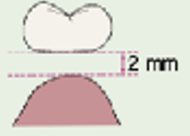
what is the recommended location, advantages, disadvantages, indications, contraindications, and possible materials for a sanitary/hygienic pontic?
recommended locations: posterior mandible
advantages: good access for oral hygiene
disadvantages: poor esthetics
indications: nonesthetic zones, impaired oral hygiene
contraindications: where esthetic is important, minimial vertical dimension
materials: all metal

what is the recommended location, advantages, disadvantages, indications, contraindications, and possible materials for a conical pontic?
recommended locations: molars without esthetic requirements
advantages: good access for oral hygiene
disadvantages: poor esthetics
indications: posterior areas where esthetics are of minimal concern
contraindications: poor oral hygiene
materials: metal-ceramic, all resin, all ceramic
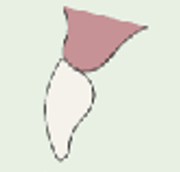
what is the recommended location, advantages, disadvantages, indications, contraindications, and possible materials for a modified ridge lap pontic?
recommended locations: high esthetic requirement like anterior teeth and premolars, some max molars
advantages: good esthetics
disadvantages: moderately easy to clean
indications: most areas with esthetic concern
contraindications: where where minimal esthetic concern exists
materials: metal-ceramic, all resin, all ceramic
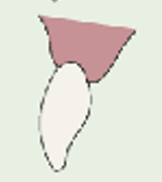
what is the recommended location, advantages, disadvantages, indications, contraindications, and possible materials for an ovate pontic?
recommended locations: very high esthetic requirement like max incisors, canines, and premolars
advantages: superior esthetics, negligible food entrapment, ease of cleaning
disadvantages: necessitates surgical preparation, not for residual ridge defects
indications: desire for optimal esthetics, high smile line
contraindications: pt unwillingness to undergo surgery, residual ridge defects
materials: metal-ceramic, all resin, all ceramic
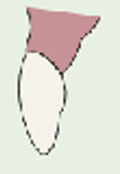
what is the recommended location, advantages, disadvantages, indications, contraindications, and possible materials for a modified ovate pontic?
recommended locations: very high esthetic requirement like max incisors, canines, and premolars
advantages: superior esthetics, negligible food entrapment, ease of cleaning
disadvantages: necessitates surgical preparation
indications: where horizontal ridge width is not sufficient for a conventional ovate pontic
contraindications: pt unwillingness to undergo surgery
materials: metal-ceramic, all resin, all ceramic
resin bonded tooth supported FPD
may have one abutment tooth on each side of the edentulous space OR abutment(s) on one end only
what is the issue with 2 abutment resin bonded tooth supported FPD?
one can get de-cemented which can lead to caries
has a higher failure rate than cantilever FPDs
what are the advantages of resin bonded tooth supported FPD?
reduced cost, no anesthetic needed, supragingival margins, minimal tooth preparation
what are the disadvantages of resin-bonded tooth supported FPD?
irreversible, longevity, no major alignment correction possible, cannot be used in pts with deep occlusal vertical overlap
what is most important to minimize fatigue caused by cycling?
the number and distribution of occlusal contacts on an all ceramic FPD
what are some preparation modifications you can make when planning/designing an FPD?
retentive boxes and grooves
double abutments
arch curvature- when pontics lie outside of the inter-abutment axis line, the pontics act as lever arms
pier abutment
tilted molar abutments
cantilever FPD
double abutments
using 2 teeth on each side of the edentulous space instead of just one
possible consideration to overcome unfavorable crown to root ratio
the secondary abutment must have at least as much root surface area, favorable crown to root rato, and be as retentive as the primary abutments
when looking at arch curvature, secondary retention must extend…
a distance from the primary inter-abutment axis equal to the distance that the pontic lever extends in the opposite direction
pier abutment / intermediate abutment
a natural tooth or implant abutment that is located between terminal abutments that serve to support a fixed or removable dental prosthesis
because of the curvature of the arch, the faciolingual physiologic moveemnt of the anterior teeth occurs at a considerable angle to the faciolingual movement of a molar
to attempt to overcome the bending motion, a non-rigid connector can be used
when you have a pier abutment, where should the location of the stress-breaking device be?
distal to the pier! if placed here, movement in a mesial direction will seat the key into the keyway
if placed mesial, mesially directed movement will unseat the key
what should you do in the case of tilted molar abutment?
ortho
if pt declines ortho…
FPD can be created using a proximal half crown as a retainer on a tilted molar abutment, telescope crown and coping as a retainer on a tilted molar abutment, or a non-rigid connector on the distal aspect of a premolar retainer can compensate for the inclination of the tilted molar
cantilever FPD
abutment(s) are located on one end only
generally should be used to replace one tooth and have at least 2 abutments
not ever recommended to do on a distal extension
t/f FPD don’t need to be temporized as the intended final restoration
false! they must be to avoid supraeruption or drifting
t/f abutments must be prepped parallel to each other for a path of insertion
true duh