I. Basic Principles Part 1
 Call Kai
 Learn
Learn Practice Test
 Spaced Repetition
 Match
Match Flashcards
 Knowt Play
1/126

There's no tags or description
Looks like no tags are added yet.
Name | Mastery | Learn | Test | Matching | Spaced | Call with Kai | Chat |
|---|
No analytics yet
Send a link to your students to track their progress
127 Terms
c. Quality
Totality features or conformance to specifications of a product
a. Standardization
b. Validation
c. Quality
d. Compliance
✓ Fit for their intended use
✓ Safe and effective
✓ Compliant with regulations
Quality ensures that products are: (3)
a. Specifications
A list of detailed requirements or standards (acceptance criteria for the prescribed test procedures) with which a product has to conform to ensure suitable quality
a. Specifications
b. Guidelines
c. Protocols
d. Monographs
c. Total Quality Management
A combined team effort to develop, produce, market, distribute, and control products that are safe and will be effective for the time they remain in the marketplace
a. Quality Management System
b. Good Manufacturing Practice
c. Total Quality Management
d. Quality Assurance
b. Quality Management System
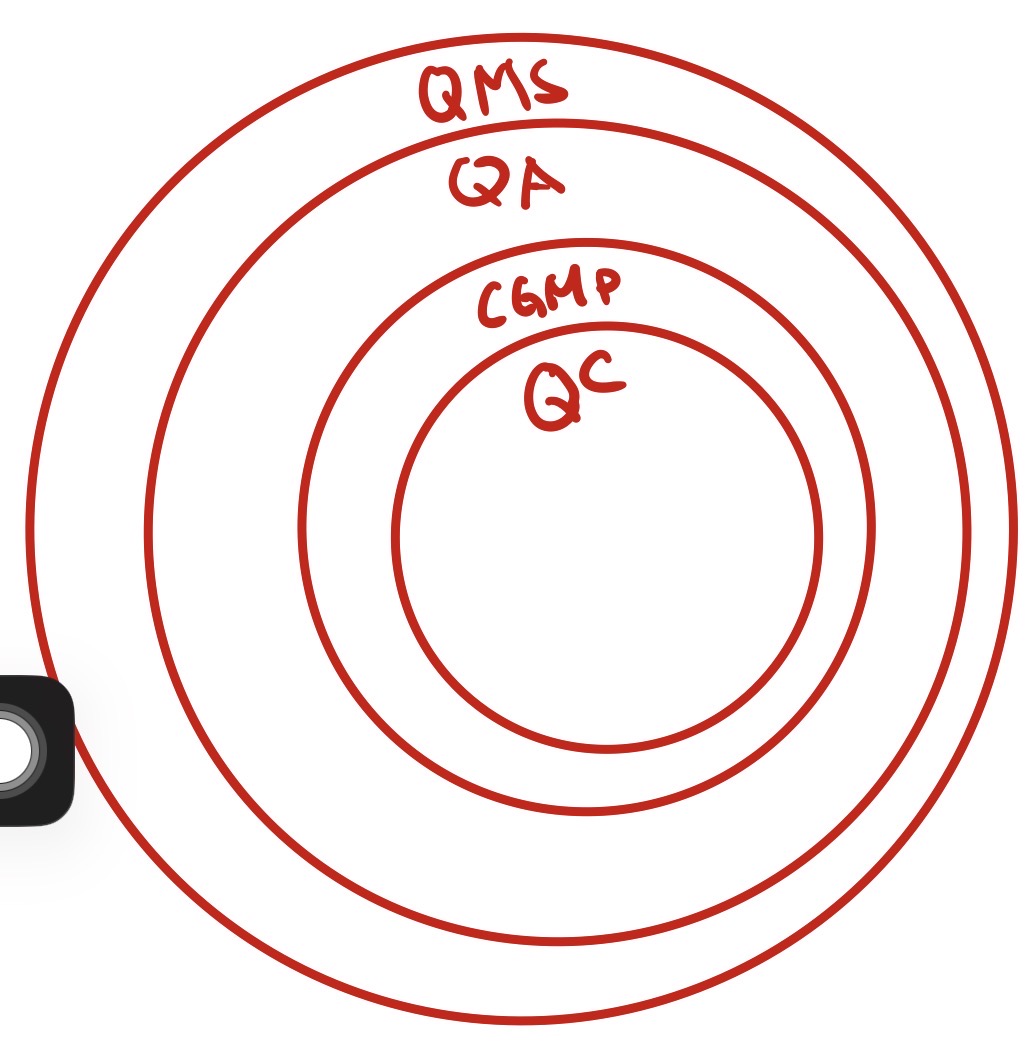
An appropriate infrastructure, encompassing the organizational structure, procedures, processes and resources, and systematic actions necessary to ensure adequate confidence that a product or service will satisfy given requirements for quality
a. Total Quality Management
b. Quality Management System
c. Standard Operating Procedure
d. Quality Control System
ISO 9001
BEQ: ISO standard for QMS
d. Quality Assurance
The sum total of the organized arrangements made with the objective of ensuring that products are of the quality required for their intended use
a. Quality Control
b. Quality Management System
c. Total Quality Management
d. Quality Assurance
c. Current Good Manufacturing Practice
Part of QA which ensures that products are consistently produced and controlled to the quality standards appropriate to their intended use
a. Quality Assurance
b. Standard Operating Procedure
c. Current Good Manufacturing Practice
d. Quality Management System
c. Current Good Manufacturing Practice
cross-contamination - unintended material
mix-up - confusion
Aimed primarily at diminishing the risks inherent in any pharmaceutical production, such as cross-contamination and mix-up
a. Quality Assurance
b. Standard Operating Procedure
c. Current Good Manufacturing Practice
d. Quality Management System
b. PIC/S
The cGMP guideline used under AO 2012-0008
a. WHO-GMP
b. PIC/S
c. ISO 9001
d. USP-GMP
c. Pharmaceutical Inspection Cooperation Scheme
PIC/S stands for:
a. Pharmaceutical Inspection Control System
b. Pharmaceutical Integration and Compliance Scheme
c. Pharmaceutical Inspection Cooperation Scheme
d. Pharmaceutical Industry Certification System
d. Quality Control
The part of cGMP concerned with sampling, specifications and testing, and the organization, documentation, and release procedures
a. Quality Assurance
b. Quality Management System
c. Total Quality Management
d. Quality Control
d. Quality Control
QA-process oriented
QC- product oriented
Ensure that the necessary and relevant tests are actually carried out and that materials are not released for use, nor products released for sale or supply, until their quality has been judged to be satisfactory
a. Quality Assurance
b. Quality Management System
c. Total Quality Management
d. Quality Control
b. Satisfactory
Under Quality Control, materials are not released for use, nor products released for sale or supply, until their quality has been judged to be:
a. Validated
b. Satisfactory
c. Standardized
d. Compliant
c. Product Quality Review
Regular periodic quality reviews of all registered drug products to verify consistency of the existing process and to identify product and process improvements
a. Quality Risk Management
b. Quality Management System
c. Product Quality Review
d. Quality Assurance
b. Quality Risk Management
probability or severity of harm (high, low or intermediate)
A systematic process for the assessment, control, communication, and review of risks to the quality of the product
a. Product Quality Review
b. Quality Risk Management
c. Total Quality Management
d. Quality Control
assessment, control, communication, and review
Quality Risk Management steps
b. Risk
Probability of occurrence of harm and severity of harm
a. Hazard
b. Risk
c. Defect
d. Deviation
d. Quality Unit
An organizational unit independent of production which fulfills both QA and QC responsibilities
a. Quality Control Unit
b. Quality Assurance Unit
c. Quality Management System
d. Quality Unit
a. QA
Ensures that quality policies are followed
a. QA
b. QC
a. QA
Audit and monitoring
a. QA
b. QC
a. QA
Primary contact with regulatory agencies
a. QA
b. QC
a. QA
Prepares SOPs
a. QA
b. QC
b. QC
conducts sampling, inspection, and testing of RM, PM & FP
a. QA
b. QC
b. QC
conducts in-process testing
a. QA
b. QC
b. QC
performs environmental monitoring
a. QA
b. QC
b. QC
tests product complaint samples and on-going stability
a. QA
b. QC
b. Quality Manual
A handbook that describes the various elements of the QMS for assuring the quality of the test results generated by a laboratory
a. Standard Operating Procedure
b. Quality Manual
c. Validation Protocol
d. Technical Guideline
c. Monograph
A written standard published in a compendium which specifies all the tests to be conducted on a particular material or product, and the expected results
a. Specification
b. Protocol
c. Monograph
d. Guideline
USP/NF, BP, Ph.Eur IP, JP, PP
Compendium (compilation of monographs) ex:
every year
except PP (last edition was 2004)
Compendium (compilation of monographs) is updated every ___
c. Philippine Pharmacopeia
The pharmacopeia that contains halamang gamot monographs
a. United States Pharmacopeia
b. British Pharmacopeia
c. Philippine Pharmacopeia
d. International Pharmacopeia
d. Official
Tests found in the current edition of a pharmacopeia
a. Unofficial
b. Non-official
c. In-house
d. Official
b. Unofficial
Tests only found in previous editions of a pharmacopeia
a. Official
b. Unofficial
c. Non-official
d. Compendial
c. Non-official
In-house tests conducted on a material or product
a. Official
b. Unofficial
c. Non-official
d. Monograph-based
d. Standard Operating Procedure
An authorized written procedure giving step-by-step instructions for performing operations, both general and specific
a. Quality Manual
b. Monograph
c. Technical Guideline
d. Standard Operating Procedure
b. Certificate of Analysis
monograph- expected result
coa- actual result
A document containing the actual results of all tests conducted on a specific material or product to show compliance or non-compliance with established standards
a. Monograph
b. Certificate of Analysis
c. Standard Operating Procedure
d. Quality Manual
c. Material Safety Data Sheet
A document that contains information on the potential health effects of exposure to chemicals and on safe working procedures when handling chemical products
a. Certificate of Analysis
b. Standard Operating Procedure
c. Material Safety Data Sheet
d. Quality Manual
c. Sampling
The process of selecting a certain portion of a product for the purpose of testing and inspection
a. Testing
b. Inspection
c. Sampling
d. Monitoring
d. 100% Inspection
costly
some tests are destructive
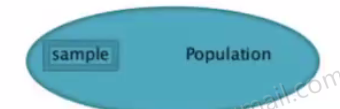
The type of sampling that is not always possible
a. Random Inspection
b. Spot Inspection
c. Batch Inspection
d. 100% Inspection
c. n plan
by default, we use n plan unless indicated sa tanong ang source
always round up (n,r at p)
The sampling plan used for uniform materials supplied from a recognized source
a. p plan
b. r plan
c. n plan
d. q plan
c. n = 1 + √N
The formula used in the n plan
a. 0.4√N
b. 1.5√N
c. 1 + √N
d. 0.4√N
d. p plan
The sampling plan whose main purpose is to test for identity of uniform materials supplied from a recognized source
a. n plan
b. r plan
c. q plan
d. p plan
c. p = 0.4√N
The formula used in the p plan
a. p = 1 + √N
b. p = 1.5√N
c. p = 0.4√N
d. p = 2√N
d. r plan
new supplier
The sampling plan used for materials suspected to be non-uniform received from a source that is not well known
a. n plan
b. p plan
c. q plan
d. r plan
d. r = 1.5√N
The formula used in the r plan
a. r = 1 + √N
b. r = 0.4√N
c. r = 2√N
d. r = 1.5√N
c. MIL-STD-105E
developed by US national defense
The most common sampling plan for packaging materials used before
a. BS 6001-1
b. ISO 2859
c. MIL-STD-105E
d. ANSI/ASQ Z1.4-2008
b. BS 6001-1, ISO 2859, ANSI/ASQ Z1.4-2008
The most common sampling plan for packaging materials used now
a. MIL-STD-105E
b. BS 6001-1, ISO 2859, ANSI/ASQ Z1.4-2008
c. USP General Chapter <1>
d. PIC/S Sampling Guidelines
c. All
The sample taken when the number of containers is 5 or less in a sampling plan for natural materials
a. 10%
b. 10% rounding up to the nearest multiple of 10
c. All
d. 50%
d. 10%
The sample taken when the number of containers is 6 to 50 in a sampling plan for natural materials
a. All
b. 5%
c. 10% rounding up to the nearest multiple of 10
d. 10%
c. 10% rounding up to the nearest multiple of 10
The sample taken when the number of containers is 50 or more in a sampling plan for natural materials
a. All
b. 10%
c. 10% rounding up to the nearest multiple of 10
d. 20% rounding up to the nearest multiple of 10
d. 5 bags
Using the sampling plan for natural materials, how many bags are sampled from 41 bags?
a. 4 bags
b. 6 bags
c. 41 bags
d. 5 bags
b. Control Charts
Graphs on which the quality of the product is plotted as manufacturing is actually proceeding
a. Sampling Plans
b. Control Charts
c. Quality Graphs
d. Process Charts
QA
Who make QC charts?
c. p-Chart
proportion = # defectives/ sample size
more versatile than np chart
used when sample size varies
more common than np
The type of control chart used for proportion of defectives where n is variable
a. np-Chart
b. X Bar Chart
c. p-Chart
d. r-Chart
proportion = # defectives/ sample size
portion of defectives formula
d. np-Chart
only used when sample size is constant
The type of control chart used for non-proportion number of defectives where n is constant
a. p-Chart
b. X Bar Chart
c. r-Chart
d. np-Chart
c. X Bar Chart (mean)
The type of control chart used for measurable characteristics
a. p-Chart
b. np-Chart
c. X Bar Chart
d. r-Chart
c. Warning Limit
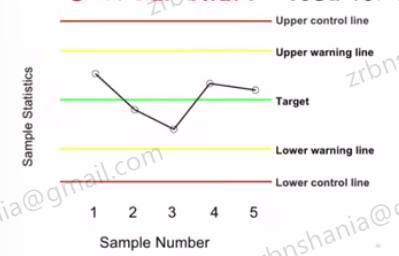
The limit in an X Bar Chart that alerts the operator to closely monitor the process
a. Action Limit
b. Control Limit
c. Warning Limit
d. Tolerance Limit
c. Warning Limit
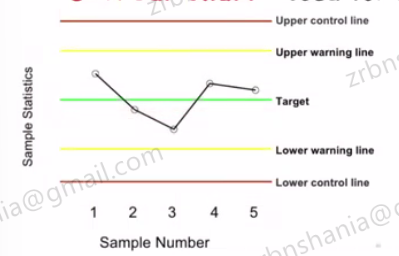
The limit in an X Bar Chart that is set at 2 standard deviations
a. Action Limit
b. Control Limit
c. Warning Limit
d. Tolerance Limit
d. Action Limit
The limit in an X Bar Chart that alerts the operator to stop the process and do corrective action
a. Warning Limit
b. Tolerance Limit
c. Control Limit
d. Action Limit
a. Action Limit
stop the operation
The limit in an X Bar Chart that is set at 3 standard deviations from the mean
a. Action Limit
b. Control Limit
c. Warning Limit
d. Tolerance Limit
d. Validation
The action of proving and documenting that any process, procedure, or method actually leads to expected results
a. Verification
b. Calibration
c. Qualification
d. Validation
c. Prospective
The type of validation that occurs prior to implementation
a. Concurrent
b. Retrospective
c. Prospective
d. Historical
d. Prospective
The preferred type of validation
a. Retrospective
b. Concurrent
c. Historical
d. Prospective
d. Prospective
Type of validation that is more costly because repeated 3 times
a. Retrospective
b. Concurrent
c. Historical
d. Prospective
c. Concurrent
The type of validation that occurs during actual use of the process
a. Prospective
b. Retrospective
c. Concurrent
d. Sequential
d. Retrospective
The type of validation that occurs after production use has occurred
a. Concurrent
b. Prospective
c. Sequential
d. Retrospective
d. Retrospective
The type of validation that is based on review of historic information
a. Concurrent
b. Prospective
c. Sequential
d. Retrospective
c. Qualification
The action of proving that premises, systems, or equipment work correctly and actually lead to expected results
a. Validation
b. Calibration
c. Qualification
d. Verification
d. Design Qualification
The type of qualification conducted at the Vendor's Site involving structurally validated products
a. Installation Qualification
b. Operational Qualification
c. Performance Qualification
d. Design Qualification
d. Design Qualification
The type of qualification conducted prior to purchase of a new type of instrument
a. Installation Qualification
b. Performance Qualification
c. Operational Qualification
d. Design Qualification
d. Installation Qualification
The type of qualification conducted at installation of new, old, or existing unqualified instruments
a. Design Qualification
b. Performance Qualification
c. Operational Qualification
d. Installation Qualification
c. Operational Qualification
The type of qualification conducted after installation or major repair of each instrument
a. Design Qualification
b. Installation Qualification
c. Operational Qualification
d. Performance Qualification
c. Performance Qualification
The type of qualification conducted periodically at specified intervals for each instrument
a. Operational Qualification
b. Installation Qualification
c. Performance Qualification
d. Design Qualification
d. Performance Qualification
The type of qualification that involves calibration and maintenance conducted after use
a. Design Qualification
b. Installation Qualification
c. Operational Qualification
d. Performance Qualification
c. IQ, OQ, and PQ only
The qualifications conducted before use of an instrument at the Owner's Site
a. DQ and IQ only
b. DQ, IQ, OQ, and PQ
c. IQ, OQ, and PQ only
d. IQ, OQ, and PQ
a. DQ only
The qualifications conducted before purchase of an instrument at the Vendor’s Site
a. DQ only
b. DQ, IQ, OQ, and PQ
c. IQ, OQ, and PQ only
d. IQ, OQ, and PQ
a. PQ only
The qualifications conducted after use of an instrument at the Owner's Site
a. PQ only
b. DQ, IQ, OQ, and PQ
c. IQ, OQ, and PQ only
d. IQ, OQ, and PQ
a. Verification
The process by which a pharmacopeial method or validated analytical procedure is demonstrated to be suitable for the analysis to be performed
a. Verification
b. Qualification
c. Calibration
d. Validation
c. Calibration
The set of operations that establish, under specified conditions, the relationship between values indicated by an instrument or system
a. Verification
b. Qualification
c. Calibration
d. Validation
c. Calibration
For measuring, recording, and controlling, or the values represented by a material measure, and the corresponding known values of a reference standard
a. Verification
b. Qualification
c. Calibration
d. Validation
b. Product Defect
Non-conformance to a standard or requirement
a. Out-of-Specification
b. Product Defect
c. Non-conformity
d. Critical Deviation
a. Out-of-Specification
Test results that fall outside the specifications
a. Out-of-Specification
b. Critical Defect
c. Product Defect
d. Major Deviation
a. critical
b. major
c. minore
Types of defects according to magnitude: (3)
a. Critical
The type of defect according to magnitude that may endanger the life of the patient
a. Critical
b. Major
c. Serious
d. Minor
c. Major
The type of defect according to magnitude that does not endanger the life of the patient but affects the function of the product
a. Critical
b. Minor
c. Major
d. Moderate
b. Minor
The type of defect according to magnitude that does not endanger the life of the patient nor does it affect the function of the product
a. Major
b. Minor
c. Critical
d. Moderate
c. Critical
ARBS contaminated with n-nitrosodimethylamine
a. Major
b. Minor
c. Critical
b. Minor
Smudge ink on product label
a. Major
b. Minor
c. Critical
a. Major
Suppository doesn’t melt
a. Major
b. Minor
c. Critical
a. variable
b. attributive
Type of defects According to Measurability
d. Variable Defect
The type of defect according to measurability that is measured by an instrument
a. Attributive Defect
b. Critical Defect
c. Major Defect
d. Variable Defect
b. Attributive Defect
The type of defect according to measurability that is measured by inspection
a. Variable Defect
b. Attributive Defect
c. Minor Defect
d. Major Defect
a. variable (brooke-field viscometer)
Lotion has high viscosity
a. variable
b. attributive
b. attributive
Lotion acetic acid odor
a. variable
b. attributive
a. Internal Defect
b. Performance Defect
c. Ocular Defect
The type of defect according to nature (3)
c. Ocular Defect
The type of defect according to nature that can be seen by the naked eye
a. Internal Defect
b. Performance Defect
c. Ocular Defect
d. Attributive Defect
a. Internal Defect
The type of defect according to nature that cannot be seen by the naked eye
a. Internal Defect
b. Performance Defect
c. Ocular Defect
d. Attributive Defect
b. Performance Defect
can also be major defect
if both nasa choices, priority ng sagot: magnitude > measurability > nature
The type of defect according to nature that has a defect in function
a. Internal Defect
b. Performance Defect
c. Ocular Defect
d. Attributive Defect