microbiome techniques exam 2
 Call Kai
 Learn
Learn Practice Test
 Spaced Repetition
 Match
Match Flashcards
 Knowt Play
1/107

There's no tags or description
Looks like no tags are added yet.
Name | Mastery | Learn | Test | Matching | Spaced | Call with Kai | Chat |
|---|
No analytics yet
Send a link to your students to track their progress
108 Terms
what is the central dogma?
DNA -> RNA -> protein
define genetic materials
compounds that carry information that code for all necessary components and reactions of life
what kind of genetic material do bacteria and higher organisms have?
DNA
what kind of genetic materials do viruses have?
RNA or DNA
define a replicon
any DNA molecule that can replicate itself
- chromosomes, plasmids, and viral nucleic acids
define a gene
a segment of DNA that codes for a protein, gives a characteristic
define gene expression
the process by which information encoded in a gene is converted into a protein or RNA
define genotype
genetic makeup of an organism
define phenotype
physical characteristics of an organism
how many possible amino acids can make up a protein?
20
what kind of bond combines amino acids?
peptide bonds
what nucleic acid is found in DNA?
deoxyribose
what is the structure of DNA?
a polymer of deoxyribose nucleotides linked by phosphodiester bonds
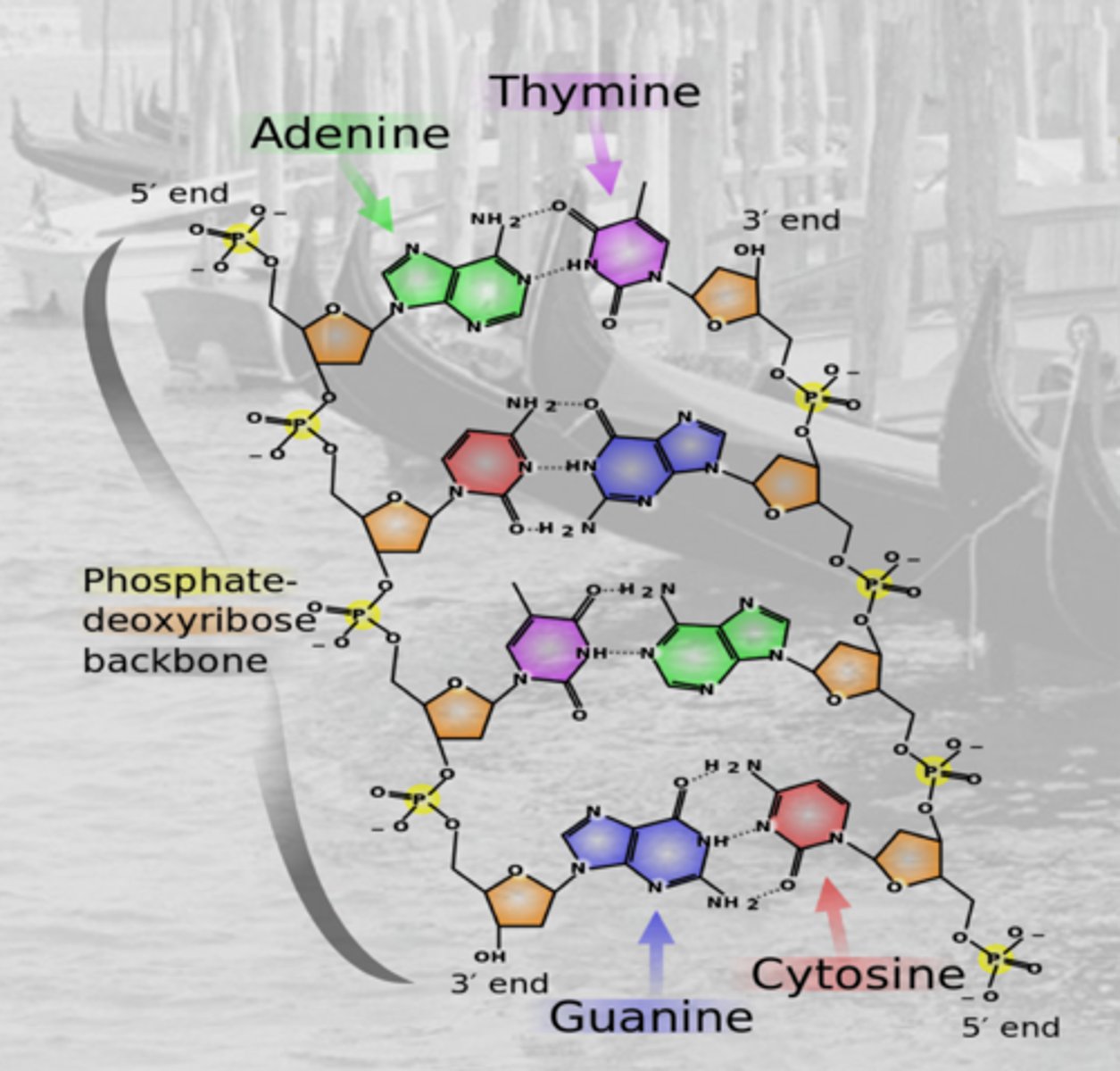
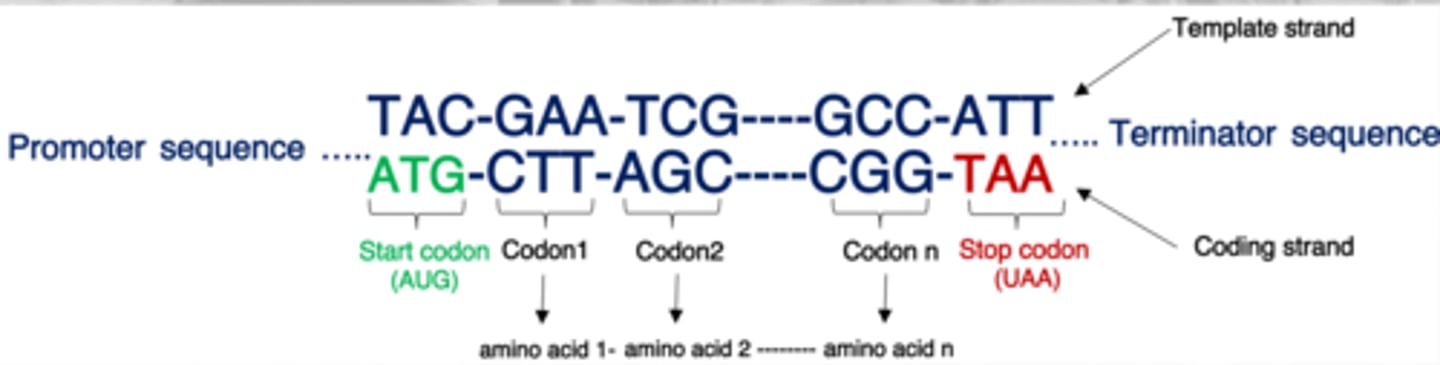
describe the coding system of DNA
includes 3 base pairs to create a codon, each codon will then represent an amino acid
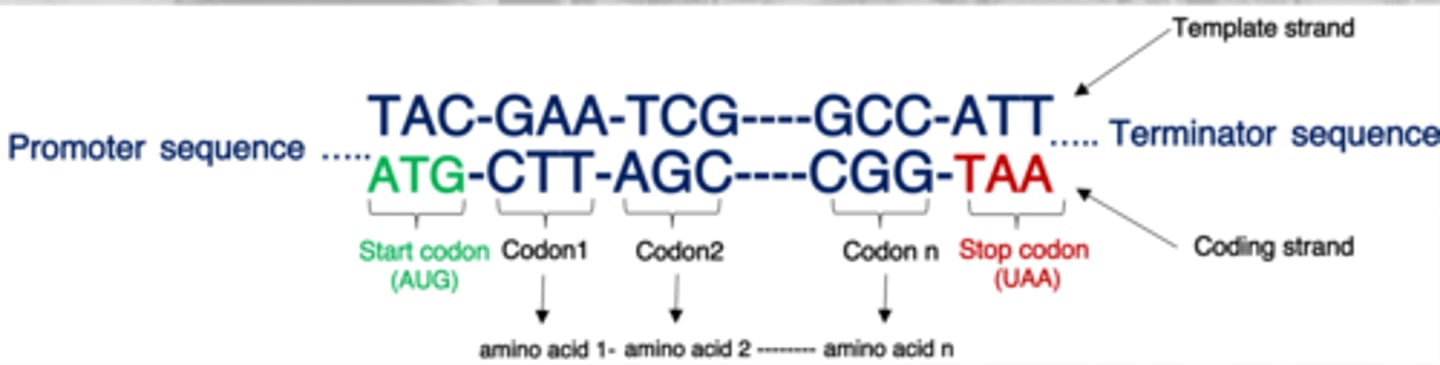
how could a codon serve as a signal?
could tell translation to start or stop
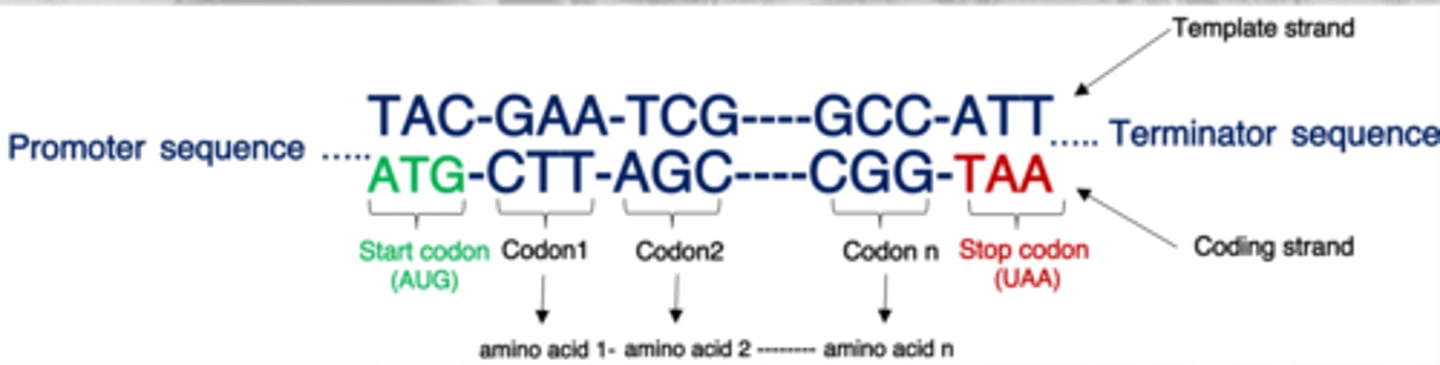
define a coding/sense strand
the strand of DNA that serves as the copying strand
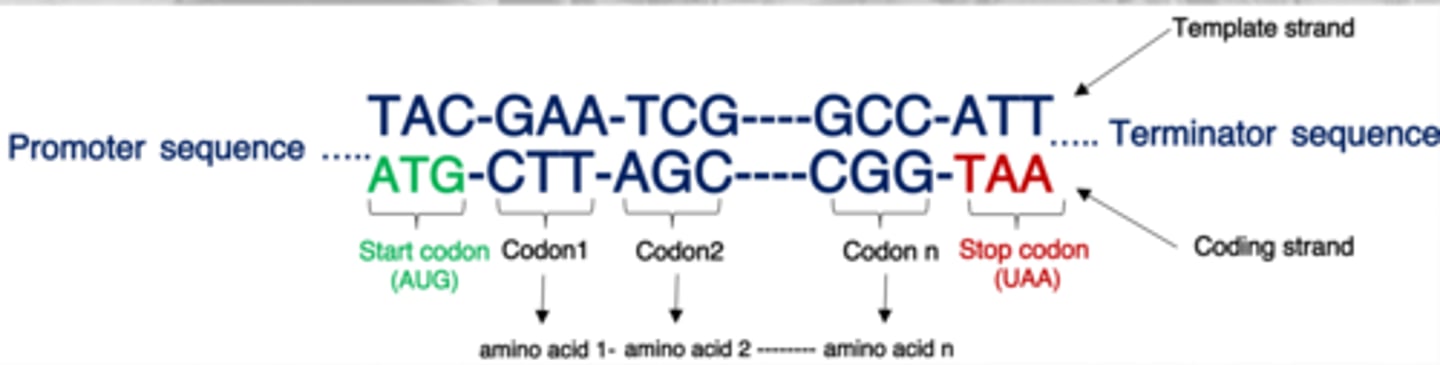
define a template/anti-sense strand
the strand of DNA that is not copied
DNA helicase
DNA helicase: separates helix into 2 strands
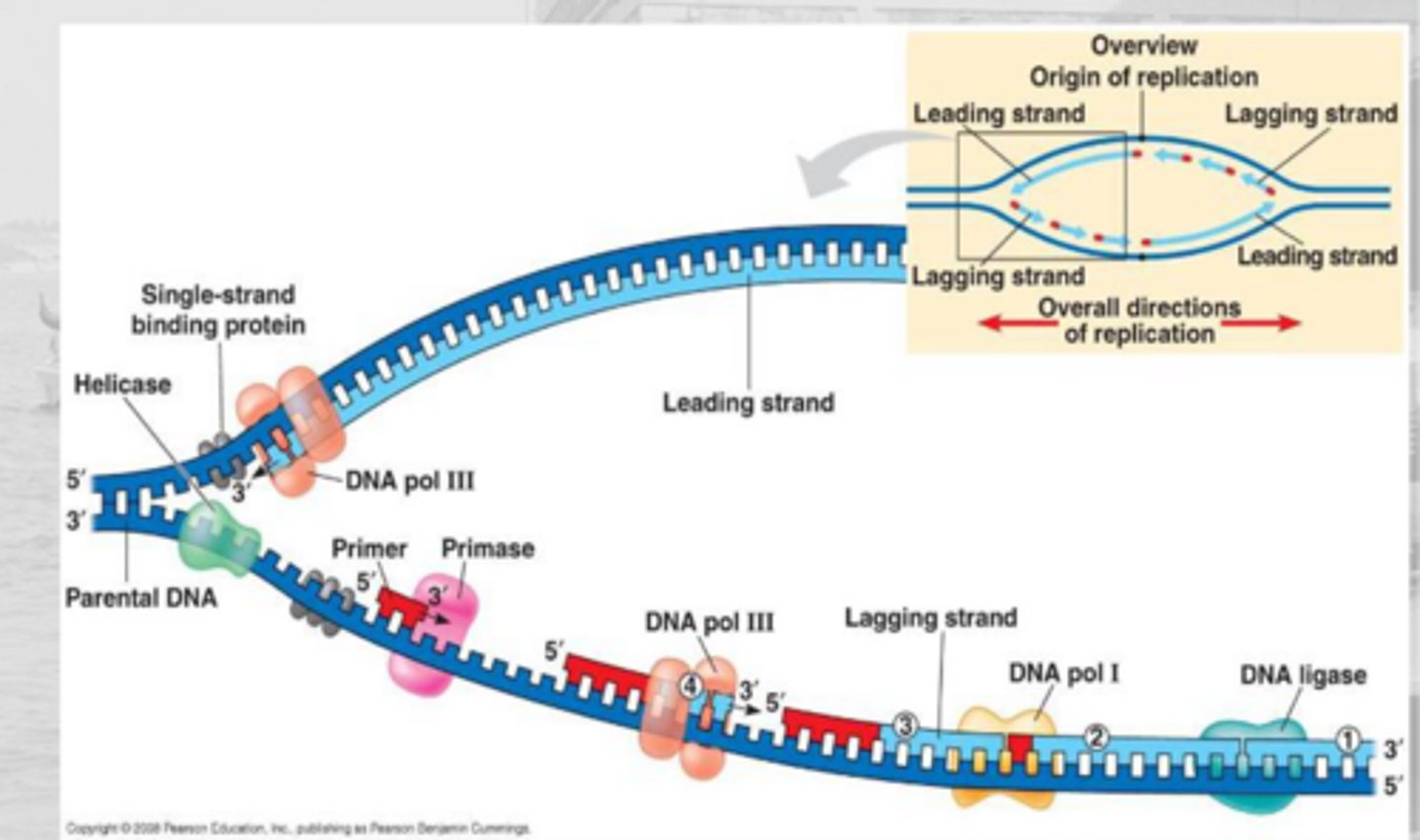
DNA polymerase
DNA polymerase: synthesizes new DNA from coding strand
- 5' to 3'
- includes a primer to bind nucleotides
replication fork
replication fork: the region where DNA helix separates
leading vs lagging strand
leading: elongates continuously
lagging: Okazaki fragments due to interrupted copying
what nucleic acid is in RNA?
ribose
how does RNA differ from DNA in terms of bonding?
is single stranded - U instead of T
what are the different types of RNA?
mRNA, tRNA, rRNA
what are the two steps of gene expression (aka protein synthesis)
transcription: making a copy of a gene into mRNA
translation: synthesizing proteins from mRNA
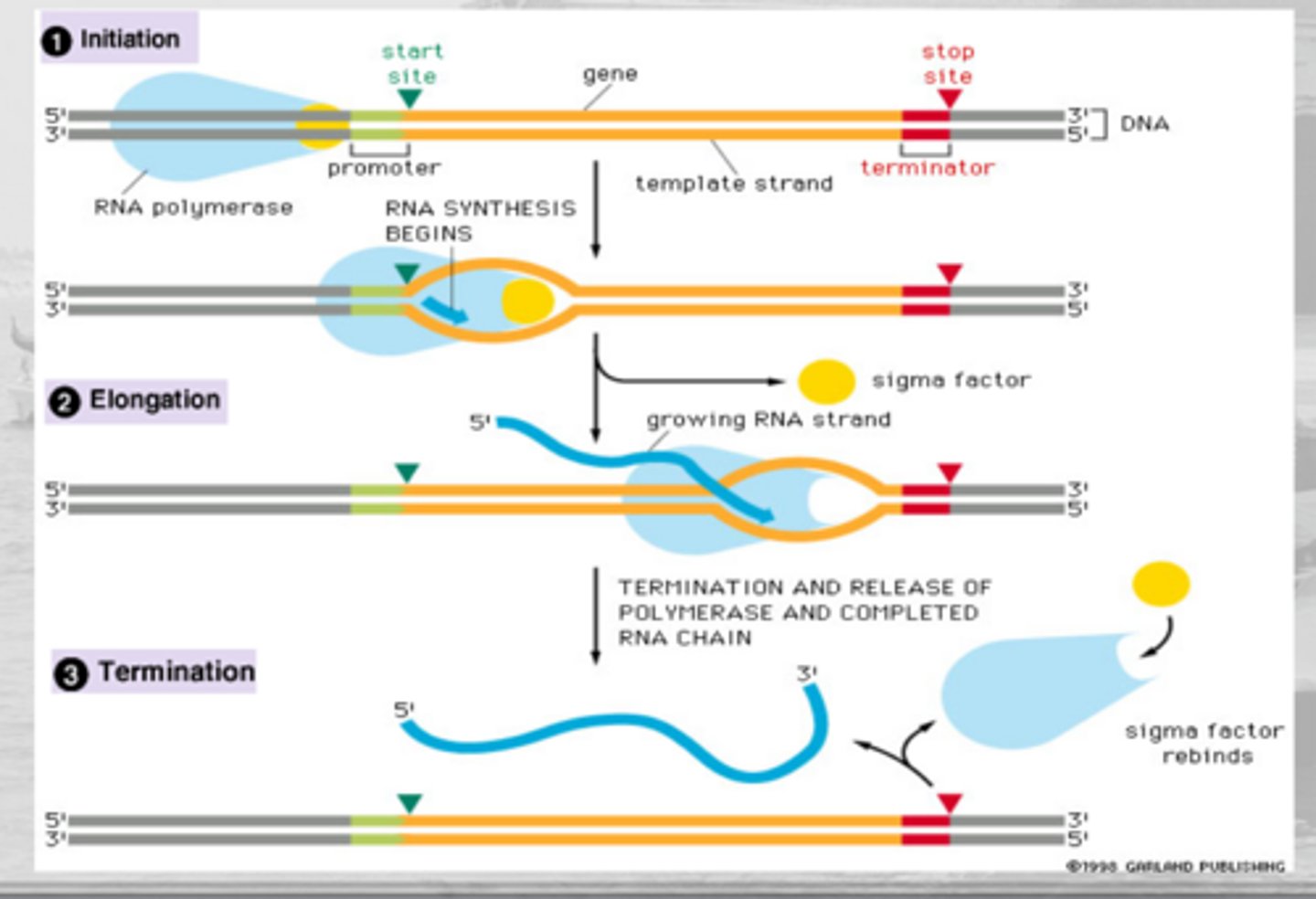
what are the steps of transcription?
1. initiation: RNA polymerase binds to a promoter sequence
2. elongation: RNA polymerase synthesizes in the 5' to 3' direction
3. termination: mRNA synthesis ends at the terminator sequence
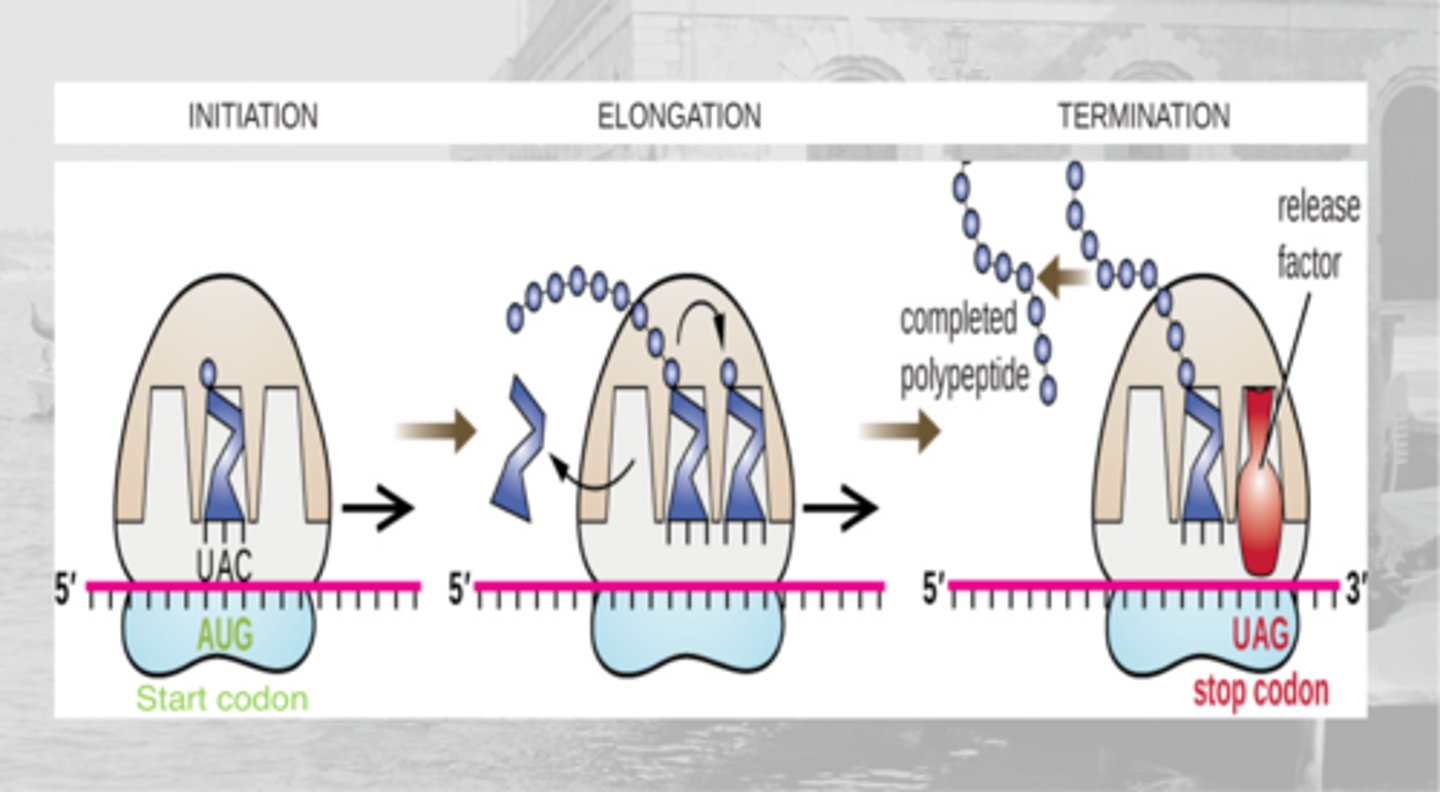
what are the steps of translation?
1. initiation: translation complex forms (ribosome+mRNA), start codon (AUG) is detected, and tRNA bring the corresponding amino acid (methionine)
2. elongation: codons are read and tRNA adds to the polypeptide
3. termination: stop codon is detected (UAA, UAG, UGA), translation complex dissociates, and polypeptide releases
define a mutation
a permanent change in the nucleotide sequence of DNA
what can cause a mutation?
- spontaneous (mistakes in replication)
- chemicals (mutagens)
- radiation (UV)
what are the different types of mutations?
point mutations (change in a single nucleotide) and segment mutations (deletions, replacements, inversions, and insertions)
what are the consequences of mutations?
- no effect (silent mutations)
- altered protein
- gene inactivation (harmful effects)
- new characteristic
what are the 4 methods of genetic exchange in bacteria?
transformation: uptake of DNA directly from the environment
transduction: transfer of DNA through a bacteriophage
conjugation: transfer of DNA through bacterial mating (ex. plasmids)
transposition: movement (jumping) of DNA sequences from one DNA molecule to another in the same cell
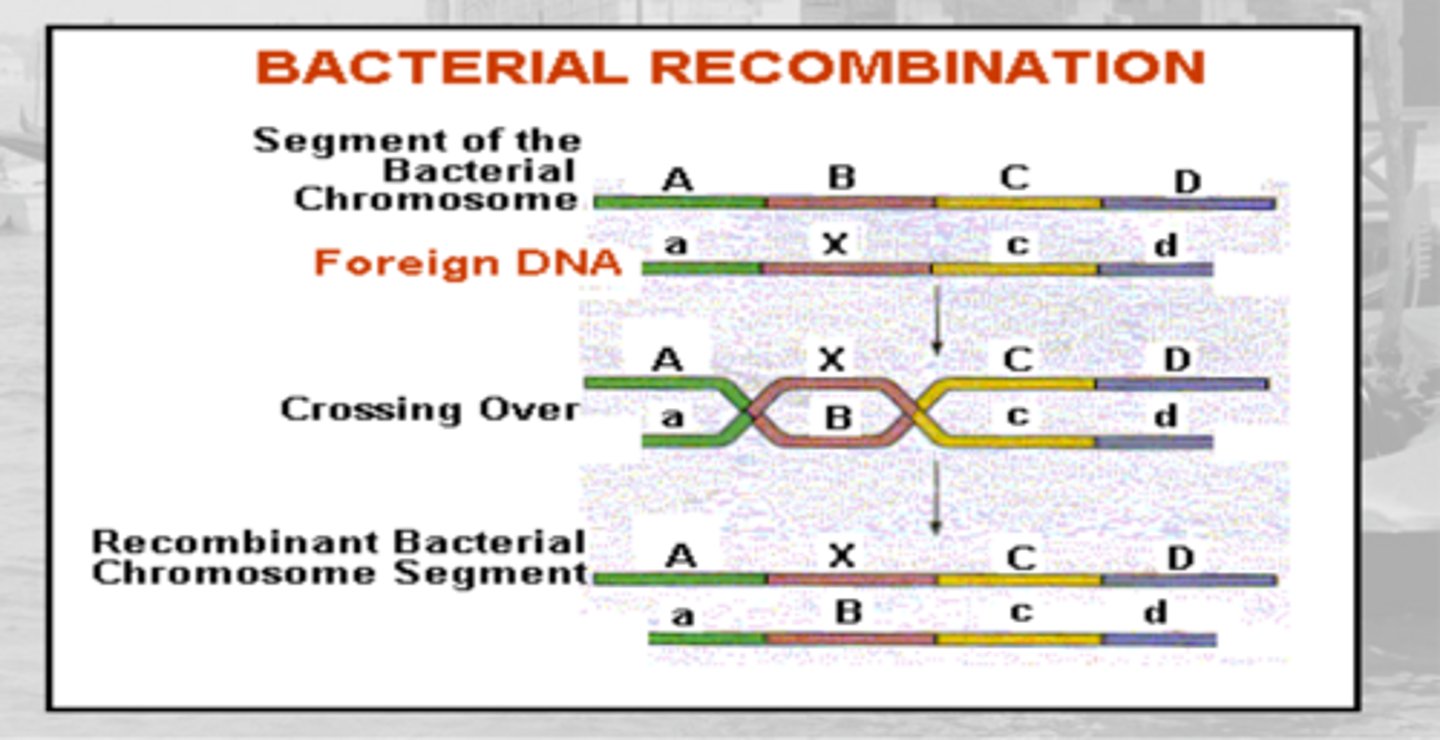
what is the process of transferring DNA to a bacterial cell and integrating it into chromosomal DNA?
recombination
what are the steps of viral replication?
1. attachment
2. penetration
3. uncoating
4. replication
5. assembly
6. release
class I (and class VII) virus
class I: positive and negative strand of DNA
- depended on host polymerase
(class VII is similar)
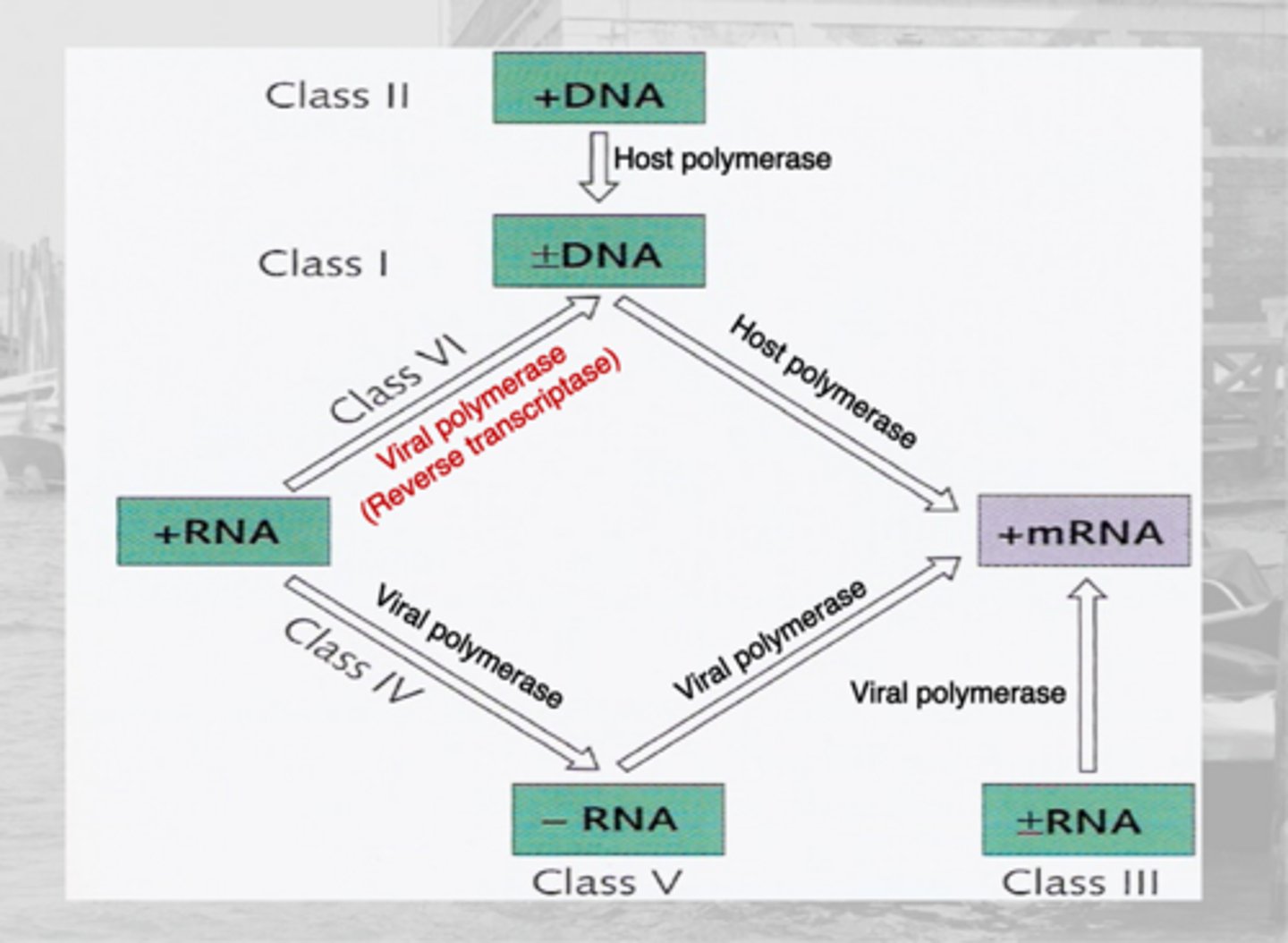
class II virus
class II: positive strand of DNA
- dependent on host polymerase
class III virus
class III: positive and negative strand of RNA
- uses viral (own) polymerase
class IV virus
class IV: positive strand of RNA
- uses viral polymerase
class V virus
class V: negative strand RNA
- uses viral polymerase
class VI virus
class VI: retrovirus
- reverse transcriptase (HIV)
what is the purpose of nucleic acid extraction?
obtain pure DNA/RNA for further lab analysis
what contaminants need to be removed in nucleic acid extraction?
- proteins
- carbohydrates
- lipids
- DNA if wanting to analyze RNA and vice versa
methods of nucleic acid extraction - cell lysis
- detergents
- enzymes
- sonication
- mechanical disruption
methods of nucleic acid extraction - removing proteins/carbs
- chloroform/phenol (pH critical)
- salting out
- digestion
what does the pH tell us about chloroform/phenol method? *
if the pH is acidic of chloroform/phenol, only RNA will be extracted
methods of nucleic acid extraction - recovering nucleic acids
- precipitation
- solid phase
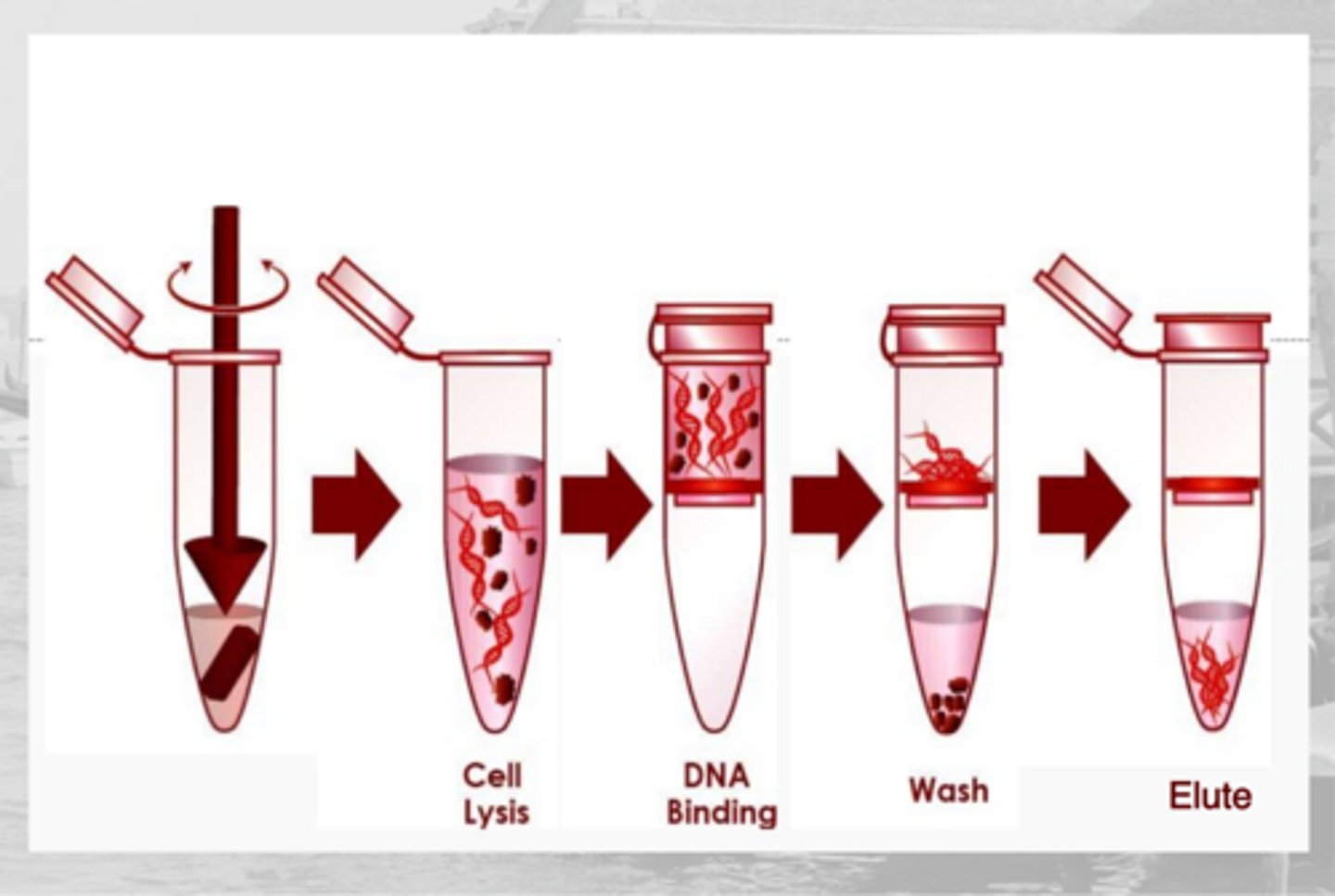
what are the steps of spin column method?
1. cell lysis (break down sample)
2. selective DNA binding (by the column)
3. wash (DNA remains up top, waste at bottom)
4. elute
what do we use for the extraction of RNA?
RNAse free reagents and disposables
- treat with DEPC followed by autoclaving
what can we use to quantify nucleic acids?
spectrophotometric (large amount of DNA, also looks at quality) and fluorescence dyes (small amount of DNA)
define electrophoresis
the movement of compounds by electricity
what is the purpose of electrophoresis
determines molecular weight and charge of proteins and nucleic acids
slab electrophoresis
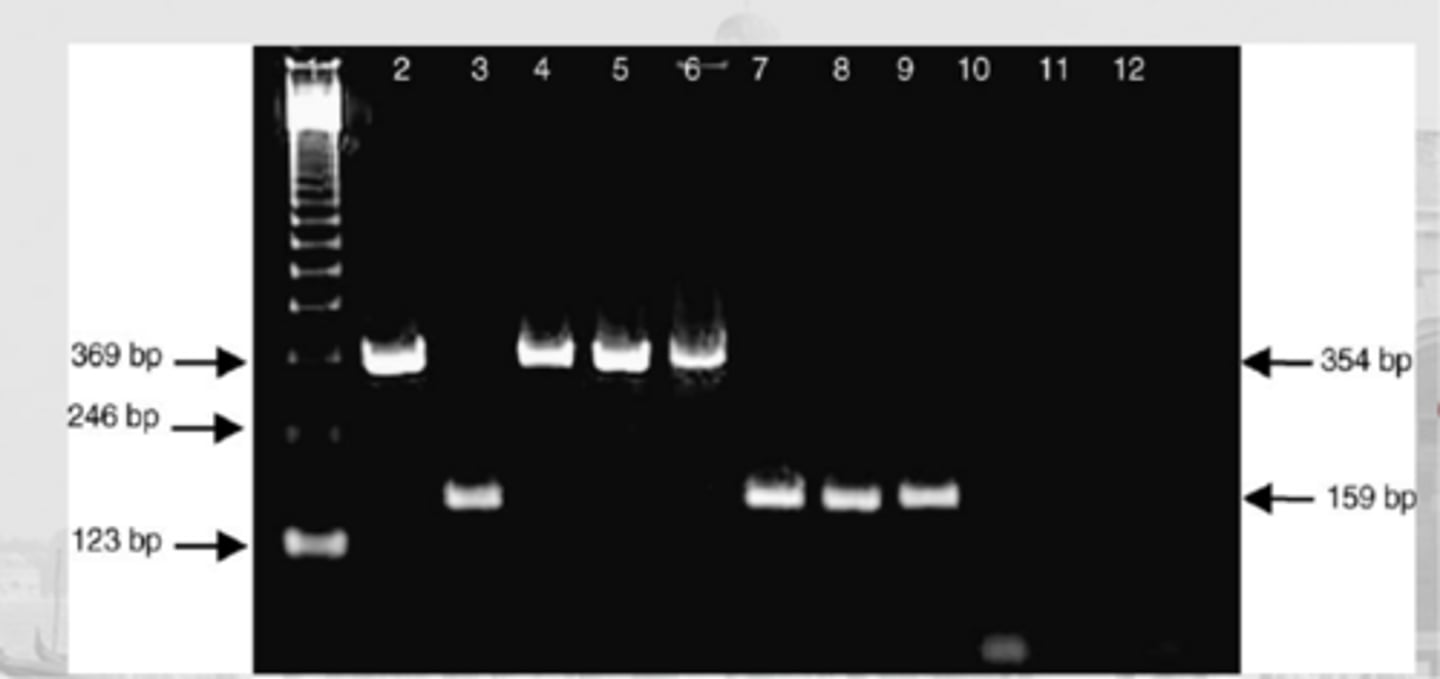
1. agarose gel electrophoresis
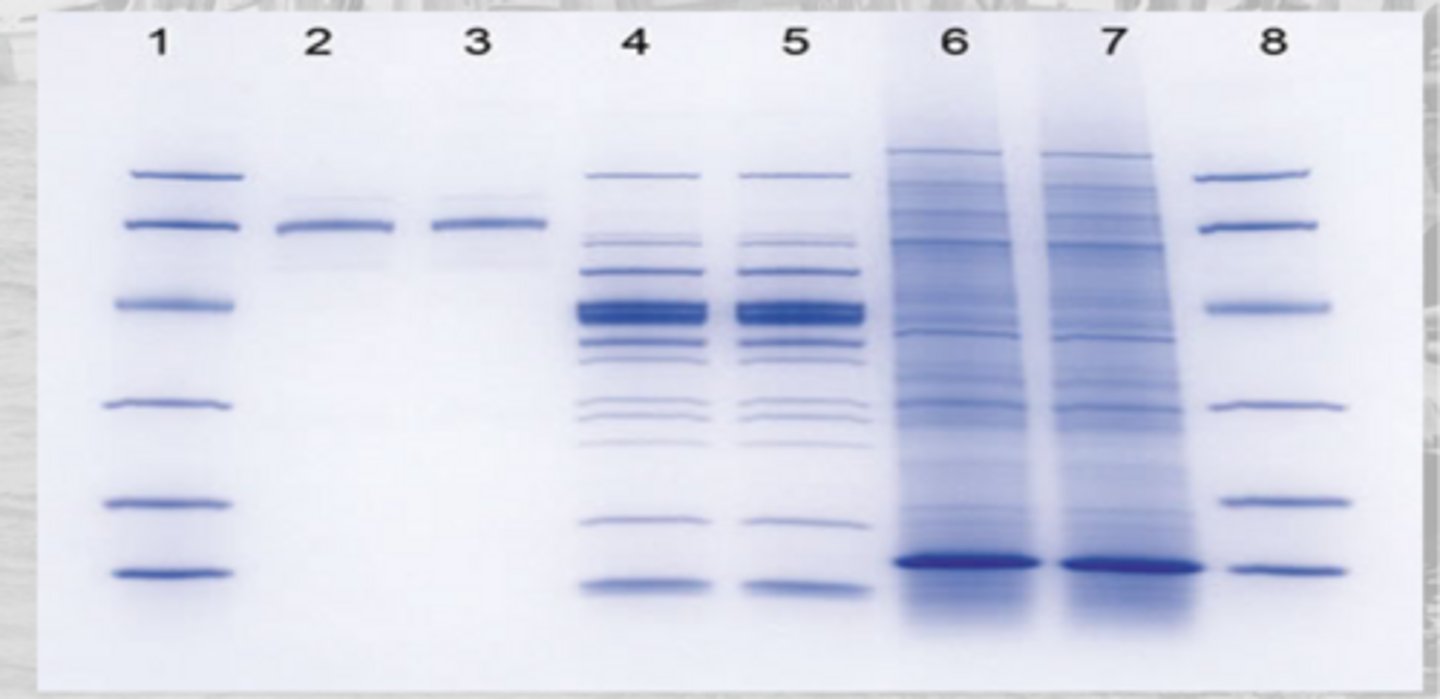
2. SDS gel electrophoresis
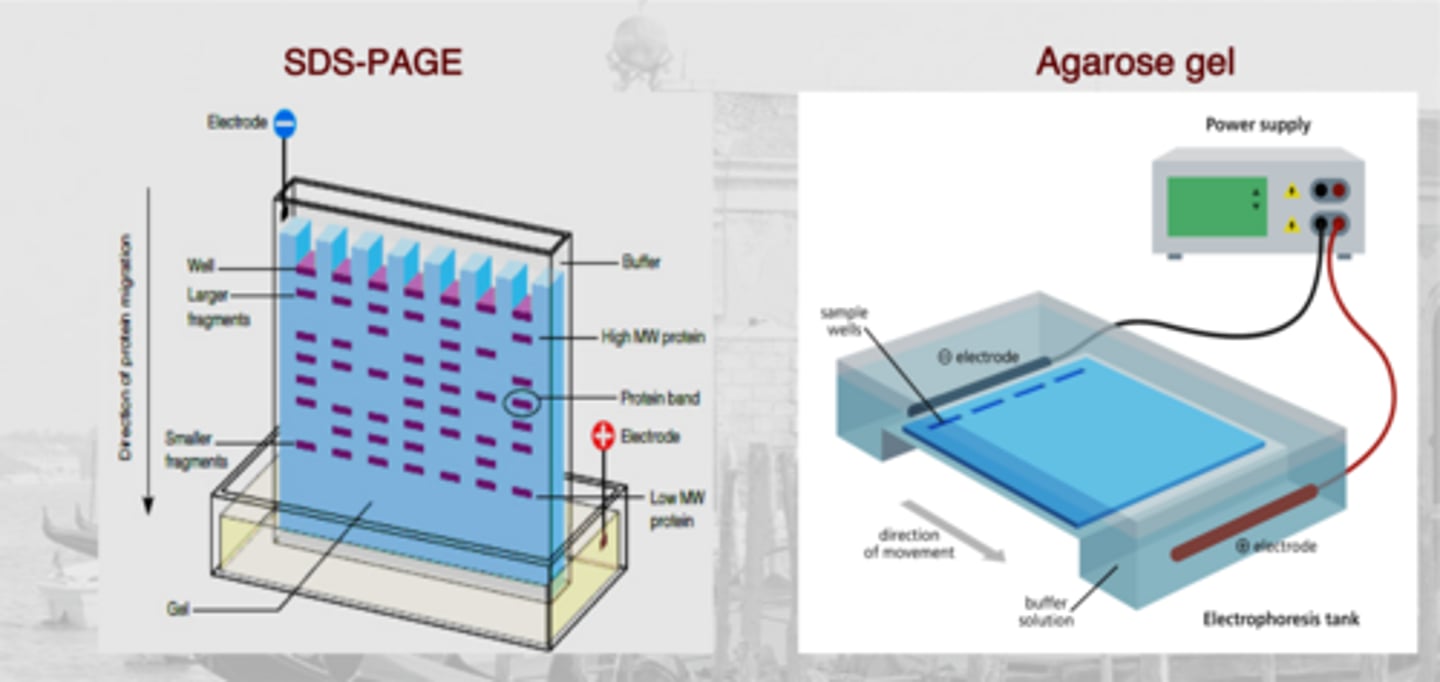
what is an agarose gel stained with?
ethidium bromide
what is an SDS gel stained with?
coomassie-blue
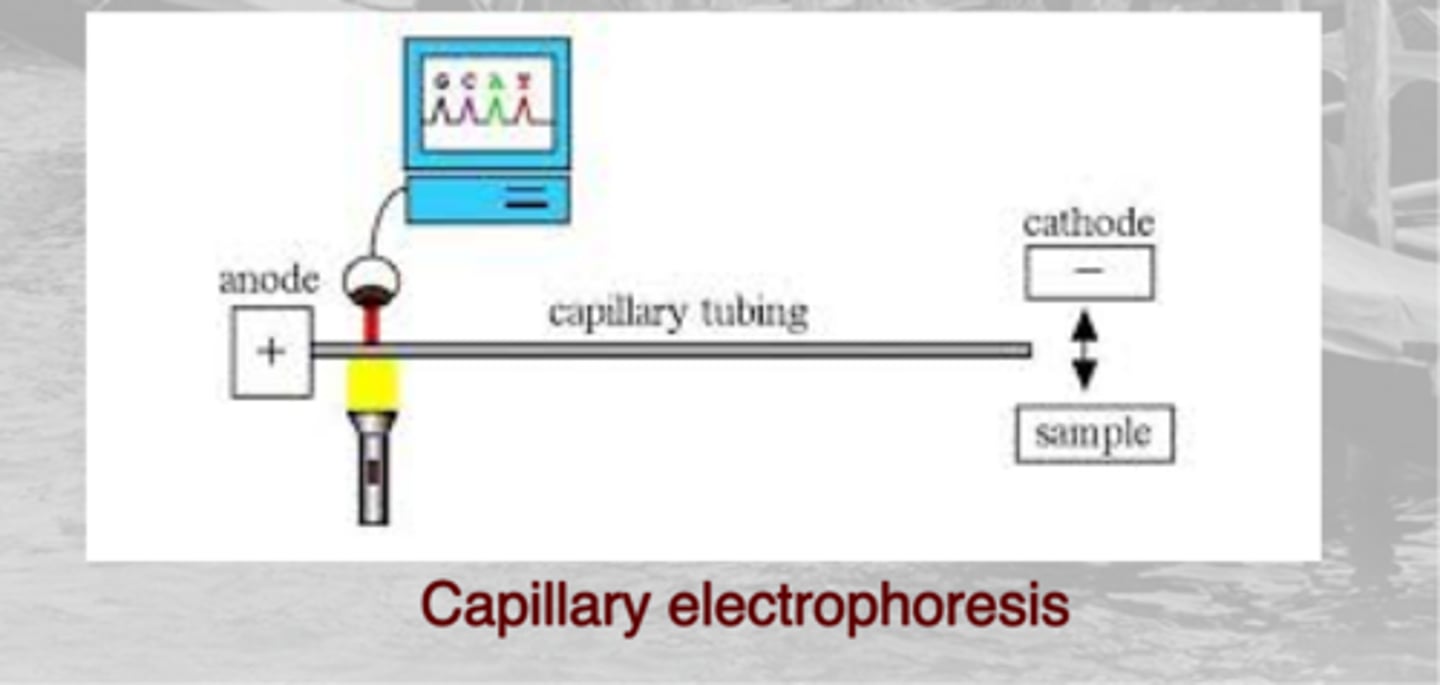
capillary electrophoresis
used when sequencing DNA
what is the purpose of adding restriction enzymes to a solution in vivo? *
cut DNA at specific sites to allow insertion of a fragment and prepare the ends
define nucleic acid hybridization?
the base pairing of one strand of a nucleic acid to a complementary sequence on another strand
what are the uses of nucleic acid hybridization?
- detect and semi quantify microbes in a sample
- localize a microbe in a sample
- identify a gene in a sample
- detect gene mutations
- study gene expression
define a probe
a fragment of DNA or RNA of variable length which is used to detect the presence of homologous nucleotide sequence (DNA/RNA target) in a sample
describe a genomic DNA probe
- fragment (by PCR or DNA cloning)
- or whole genome
- long
describe an RNA probe
- by transcription of cloned DNA
- long
describe an oligonucleotide probe
- by chemical synthesis
- short
what are the 2 methods of probes labeling?
- by strand synthesis: replacing existing nucleotides in a DNA strand with labeled ones
- by end labeling: adding a label to the 5'' end of the probe
what are the 2 label types of probes?
- radioactive
- non radioactive: fluorophores and haptens
what are the 3 strand synthesis techniques?
nick translation: replacing existing nucleotides in a DNA strand with labeled ones, random primers, and riboprobe: cloned DNA
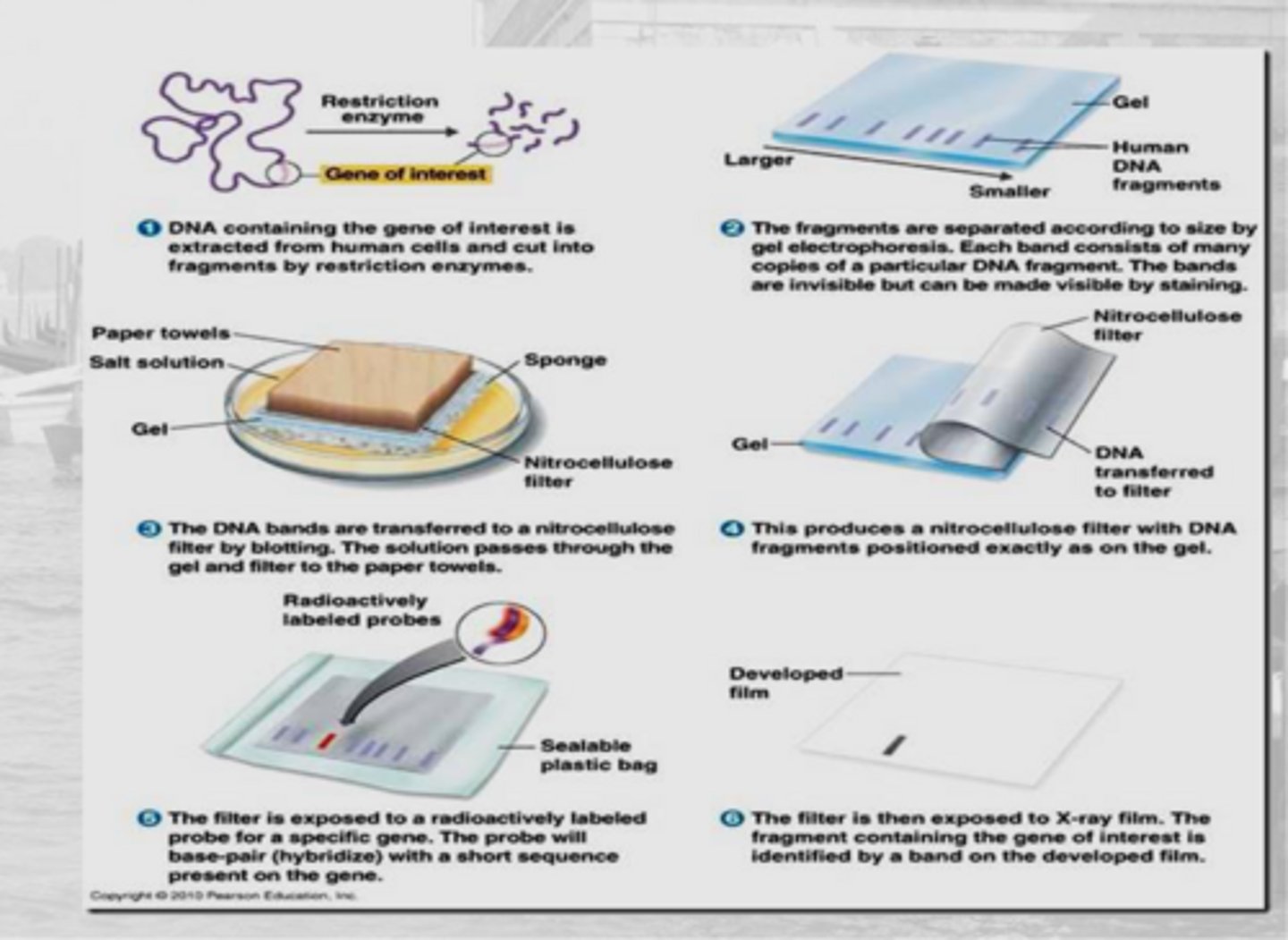
define southern blotting *
uses a DNA probe to detect a sequence in a DNA sample and identify the size of the fragment containing it
- UV light causes cross linking
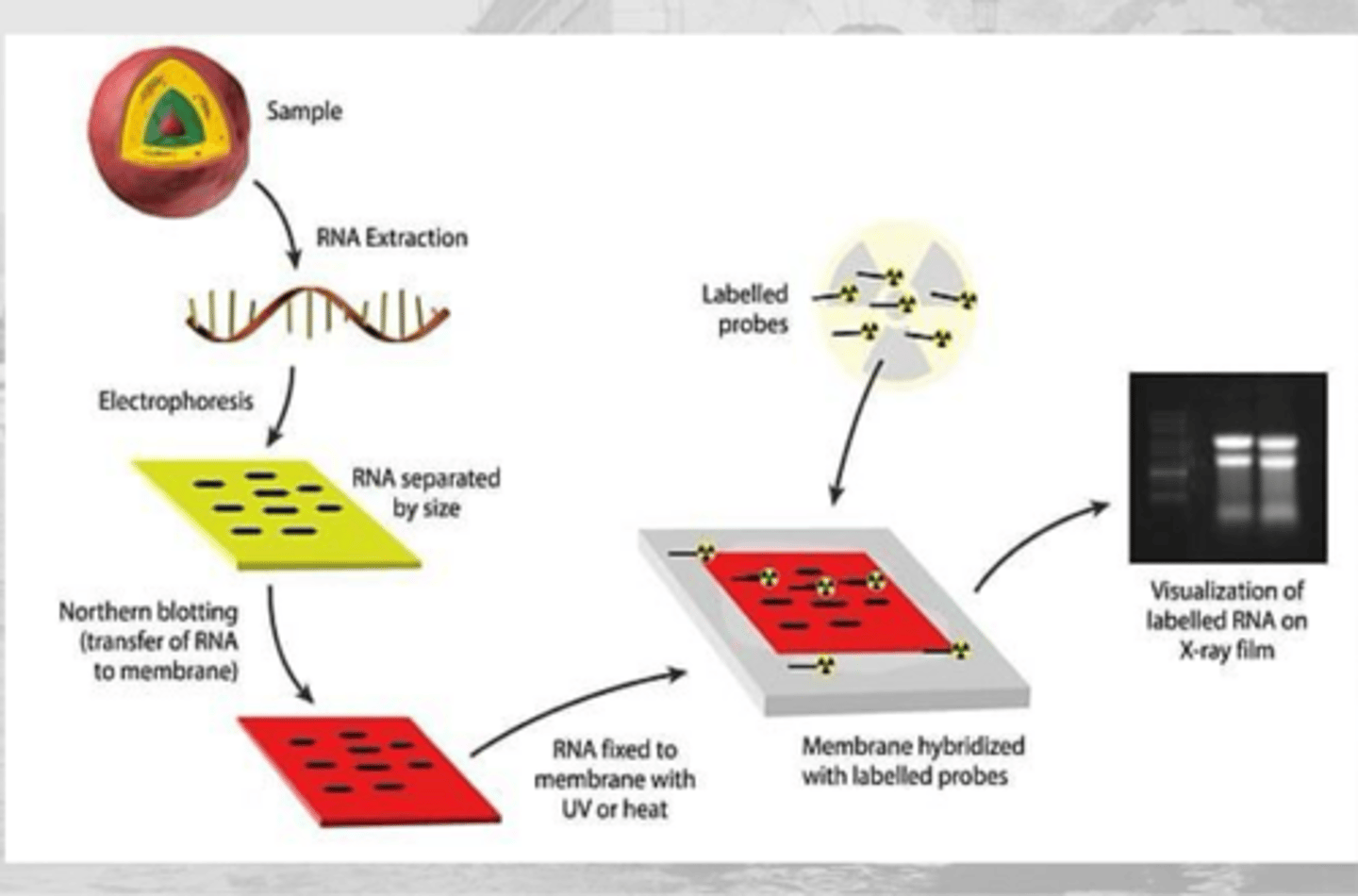
define northern blotting
uses a DNA or RNA probe to assess presence and quantity of mRNA in a sample (gene expression)
- RNA is the starting material
- a buffer is present to allow strands to anneal
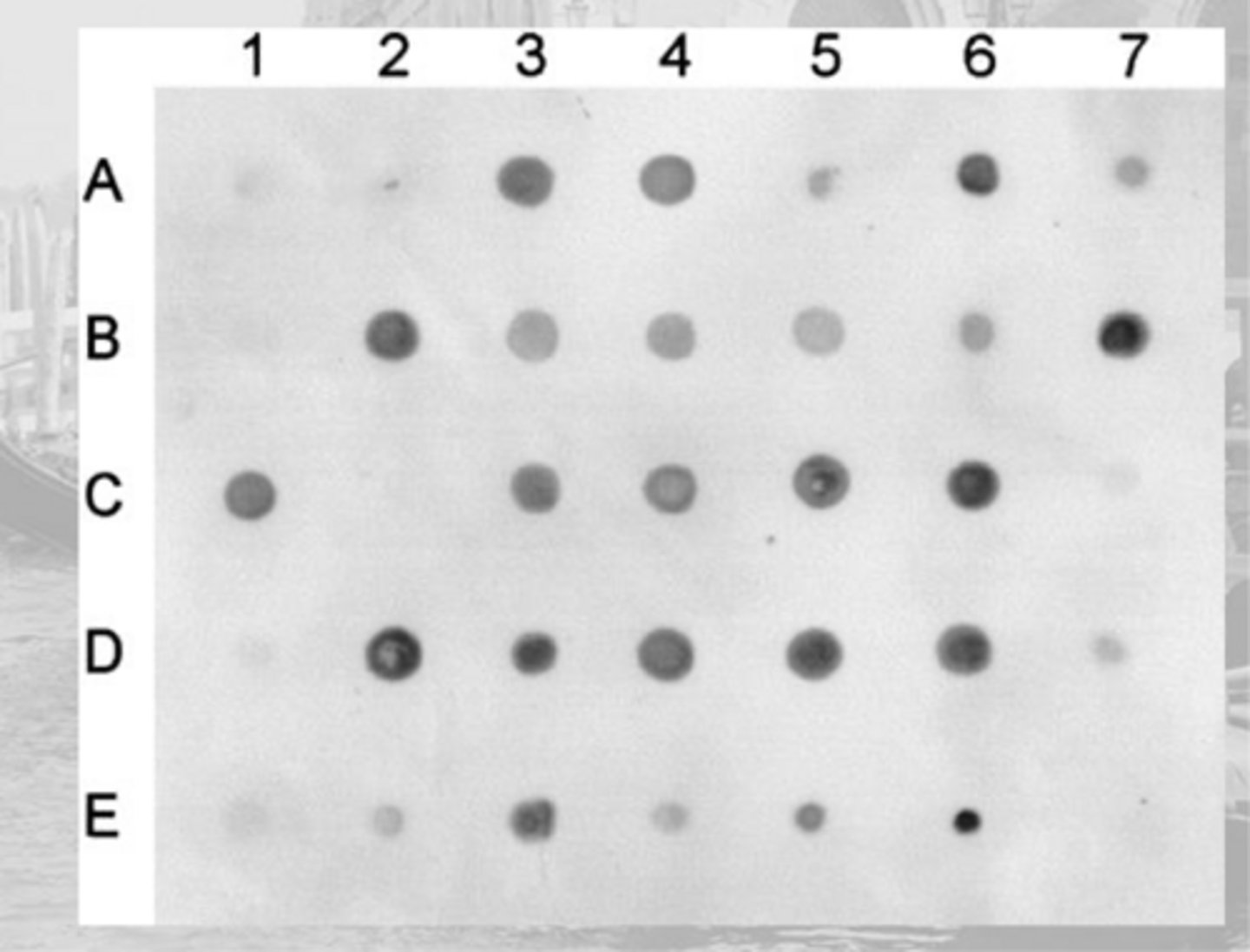
define dot blotting
simple form of southern and northern blots: detect and semi quantitate DNA or mRNA sequence in a sample without separation (no electrophoresis)
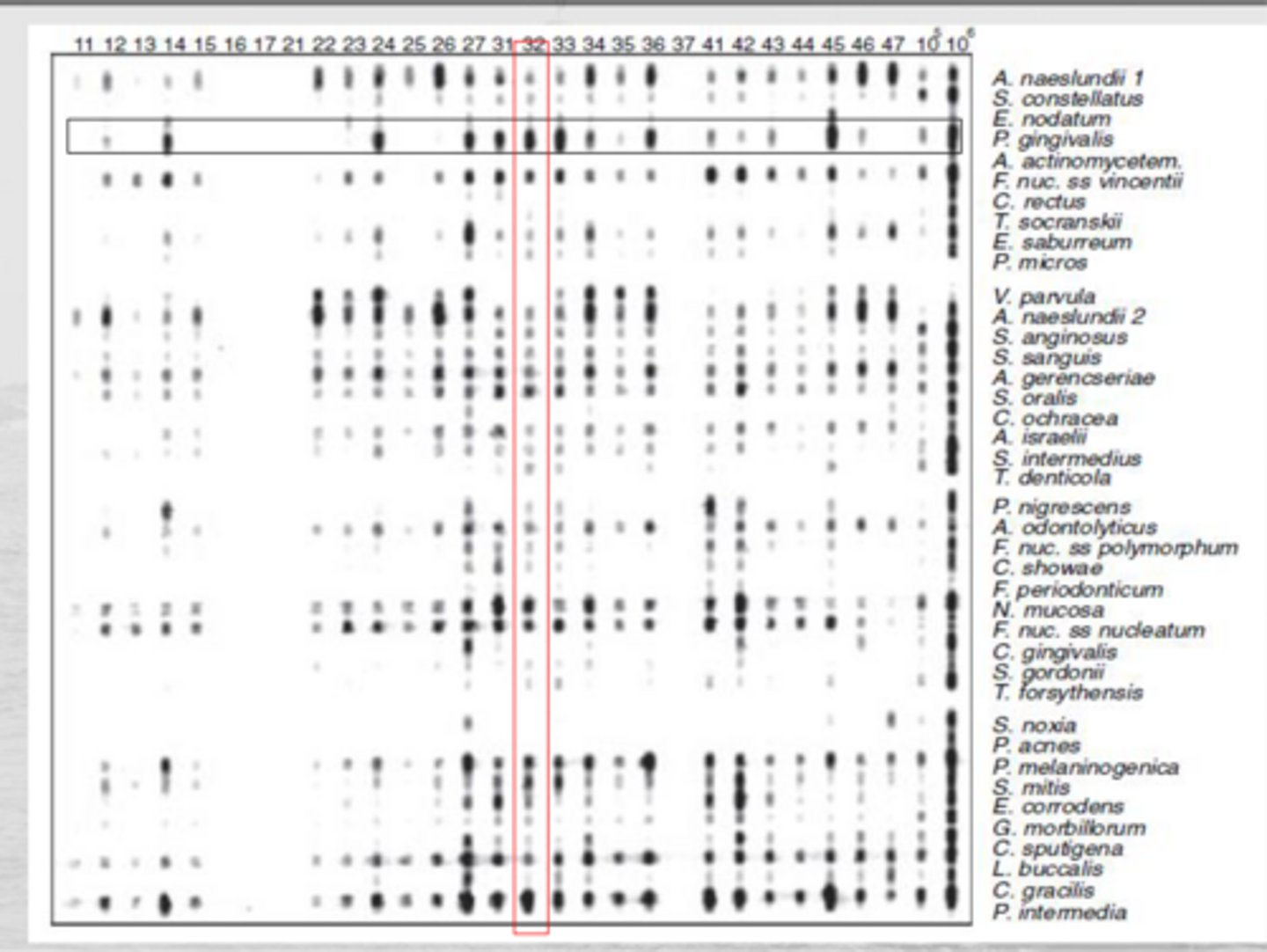
define checkboard DNA-DNA hybridization *
a high throughput version of dot blot used for analysis of dental samples: detection and semi quantification of up to 40 bacterial species in up to 28 dental samples using whole genomic probes
- positive reaction: bacteria binds to sample
- negative reaction: no signal present
- is it closer to 100,000 or 1,000,000?
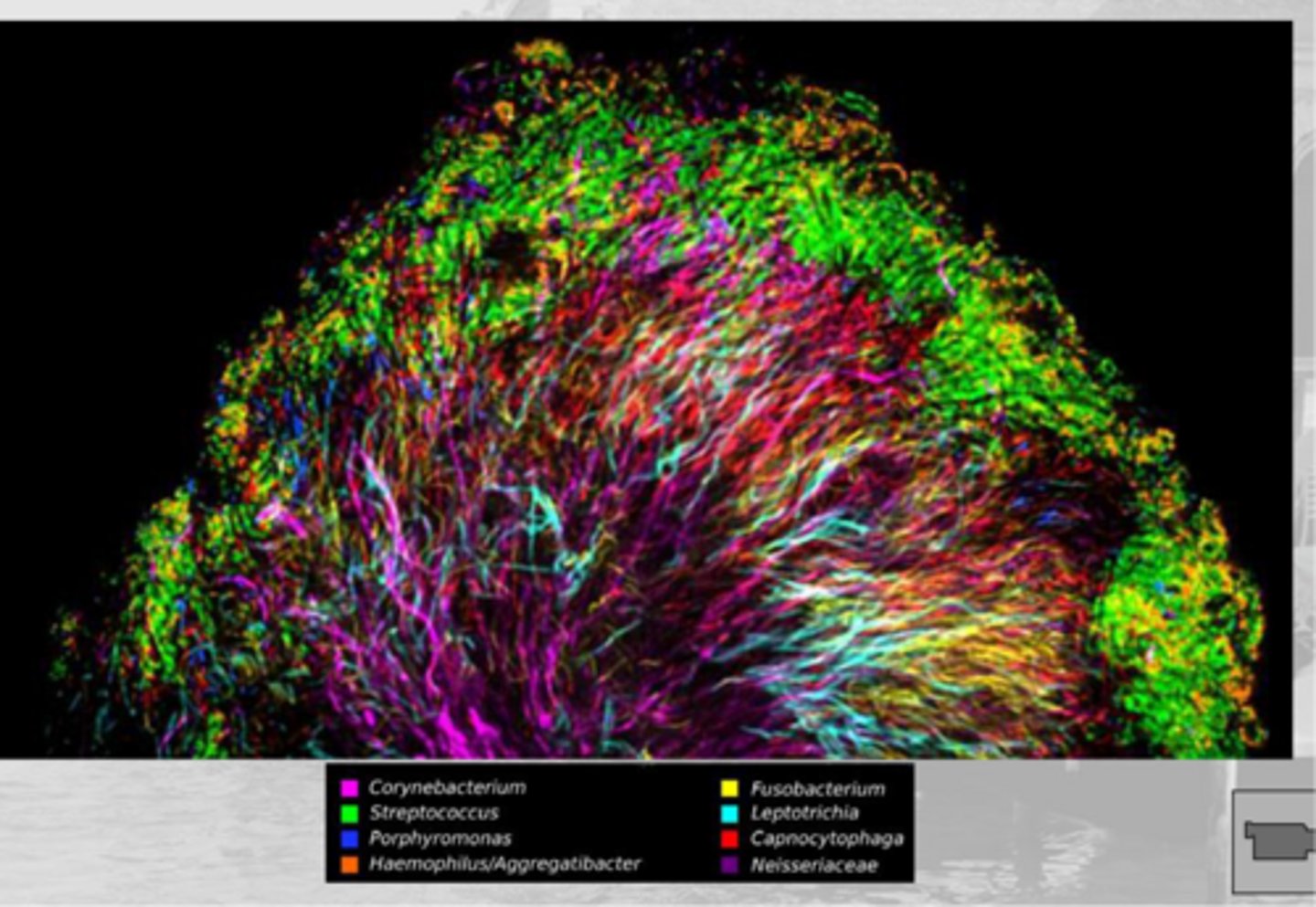
define in situ hybridization
uses a DNA or RNA probe, usually fluorescent, to detect and localize a DNA or mRNA in a tissue or cells
- no electrophoresis
define DNA microarrays
a glass or silicon chip with thousands of unlabeled DNA probes spotted on it for hybridization with labeled nucleic acids from samples
- red dots mean treated sample
- green dots mean control
- white dots mean no expression
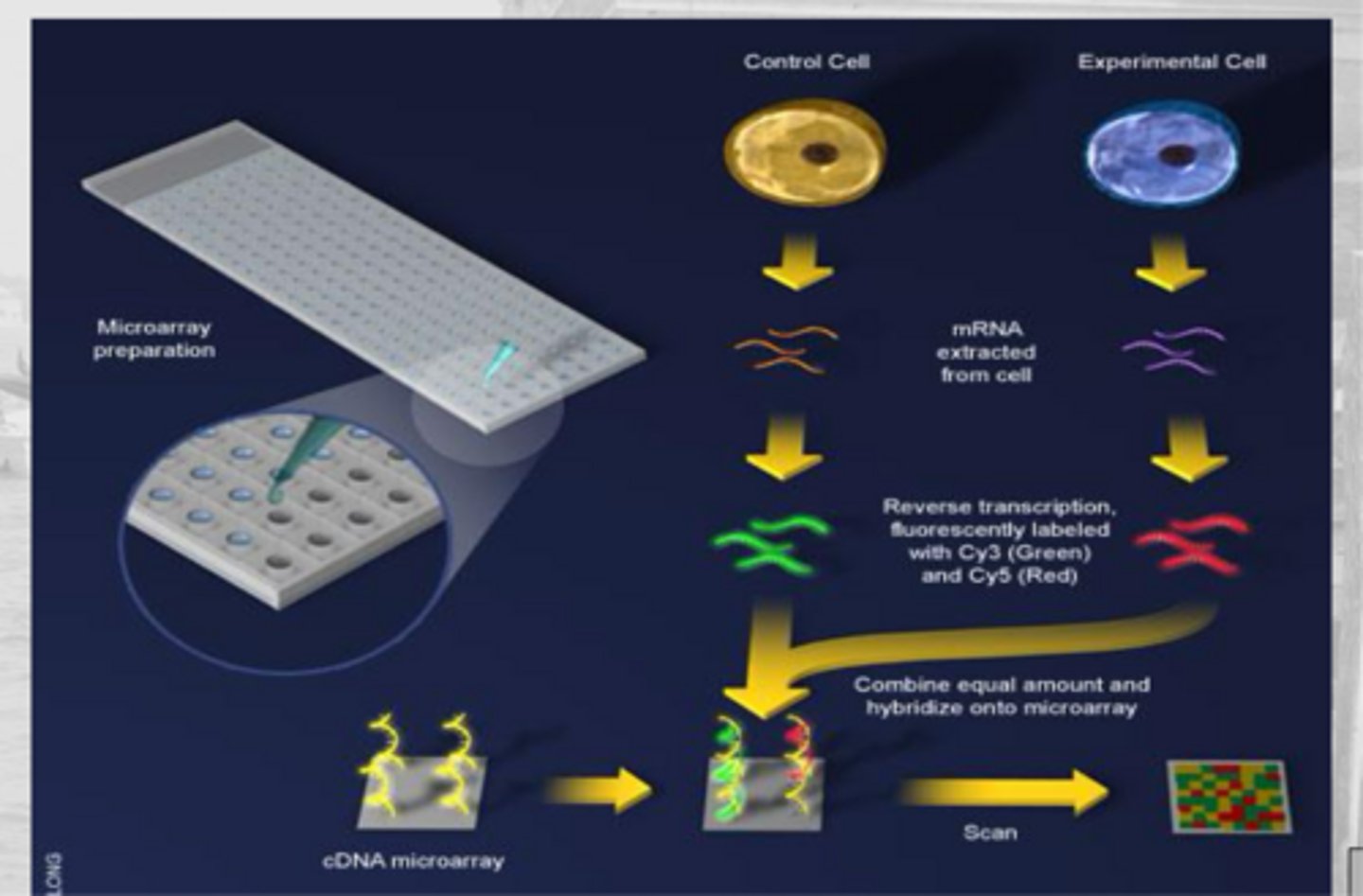
what are the uses of DNA microarrays?
- detection and quantification of microbes in a sample
- study/compare gene expression
- detect gene mutations
- detect gene copy variations
what are nucleic acid amplification techniques?
techniques that involve making identical copies of a specific DNA segment in detectable quantities in vitro
what are the applications of nucleic acid amplification?
- pathogen detection/quantification
- detection of resistance and virulence genes
- genotyping
- gene expression
- mutualistic/allelic discrimination
- preparing libraries for sequencing
what are the 3 steps of PCR
1. denaturation: separation of the DNA strands (94 °C)
2. annealing: primers hybridize to the separated strands
3. extension: synthesis of new strands by DNA polymerase
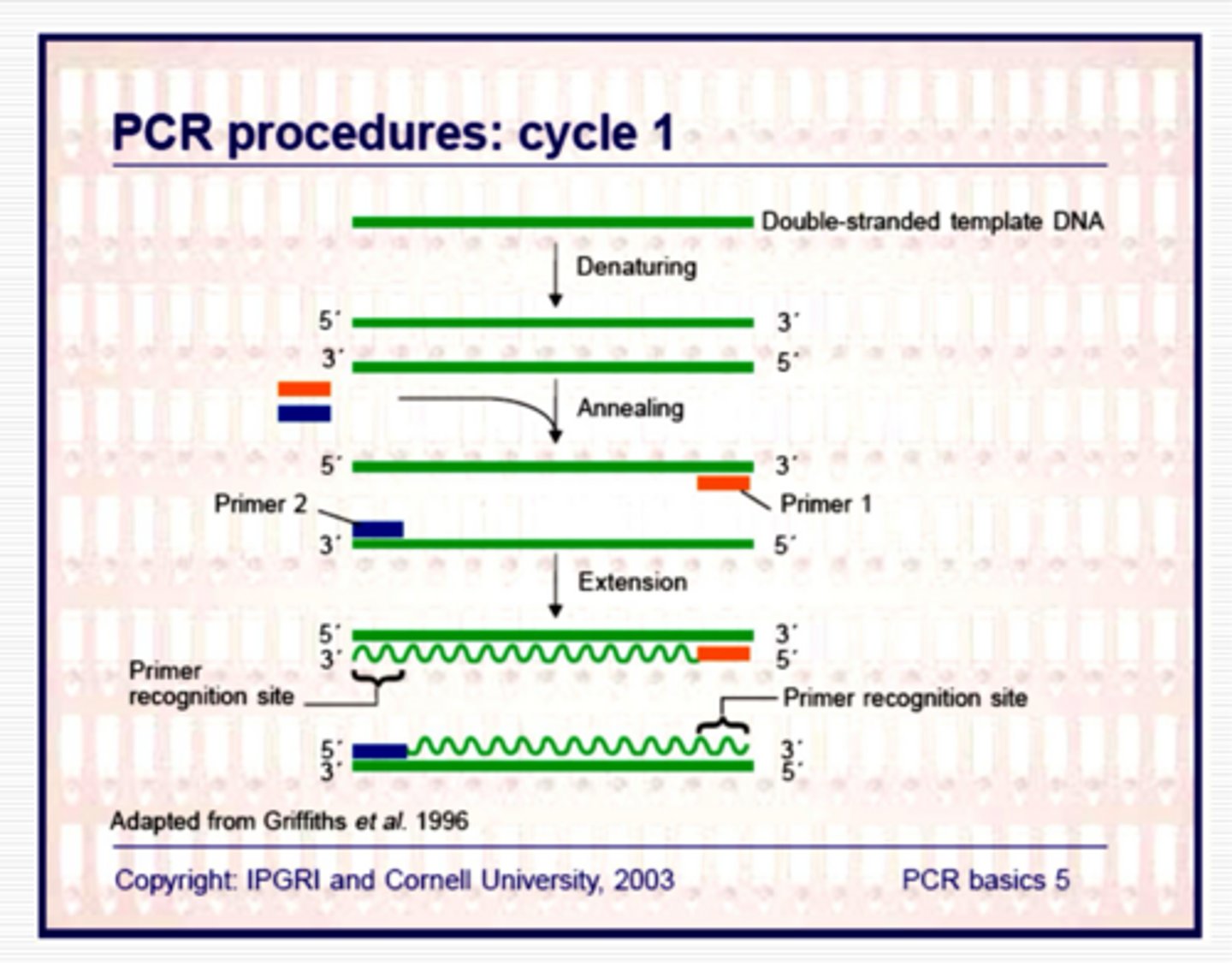
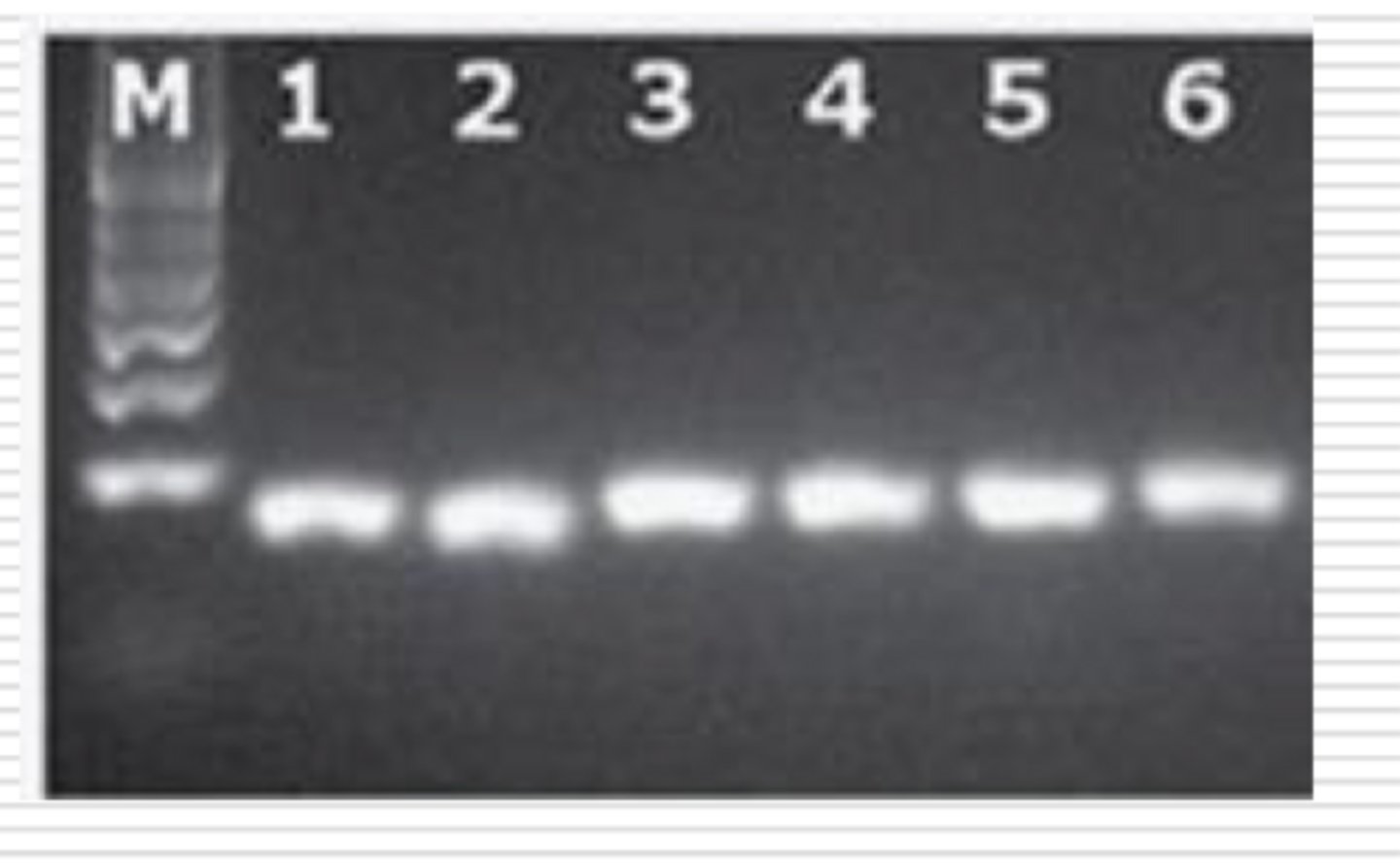
define conventional PCR
end of the reaction (gel electrophoresis)
define real-time PCR
during the reaction (fluorescent dye)
what are the commonly used thermostable polymerases?
taq polymerase and pfu polymerase
what are the characteristics of primers?
- 15 to 20 nucleotides long
- determine specificity of the reaction
- melting and annealing temperatures need to be close
- avoid hairpin formation
how do you calculate melting temperature? *
melting temperature (Tm) = 4(G+C) + 2(A+T)
T or F: taqman probes are more specific than SYBR green *
T
define absolute quantification
using a standard curve prepared by serial dilution of whole genomic DNA or plasmid with target sequenced clone using digital PCR
- tells exactly how much we have
define relative quantification *
the quantity of gene in a sample is measured relative to that in another sample or another gene in the same sample
- don't know the quantity
- can be used to compared samples
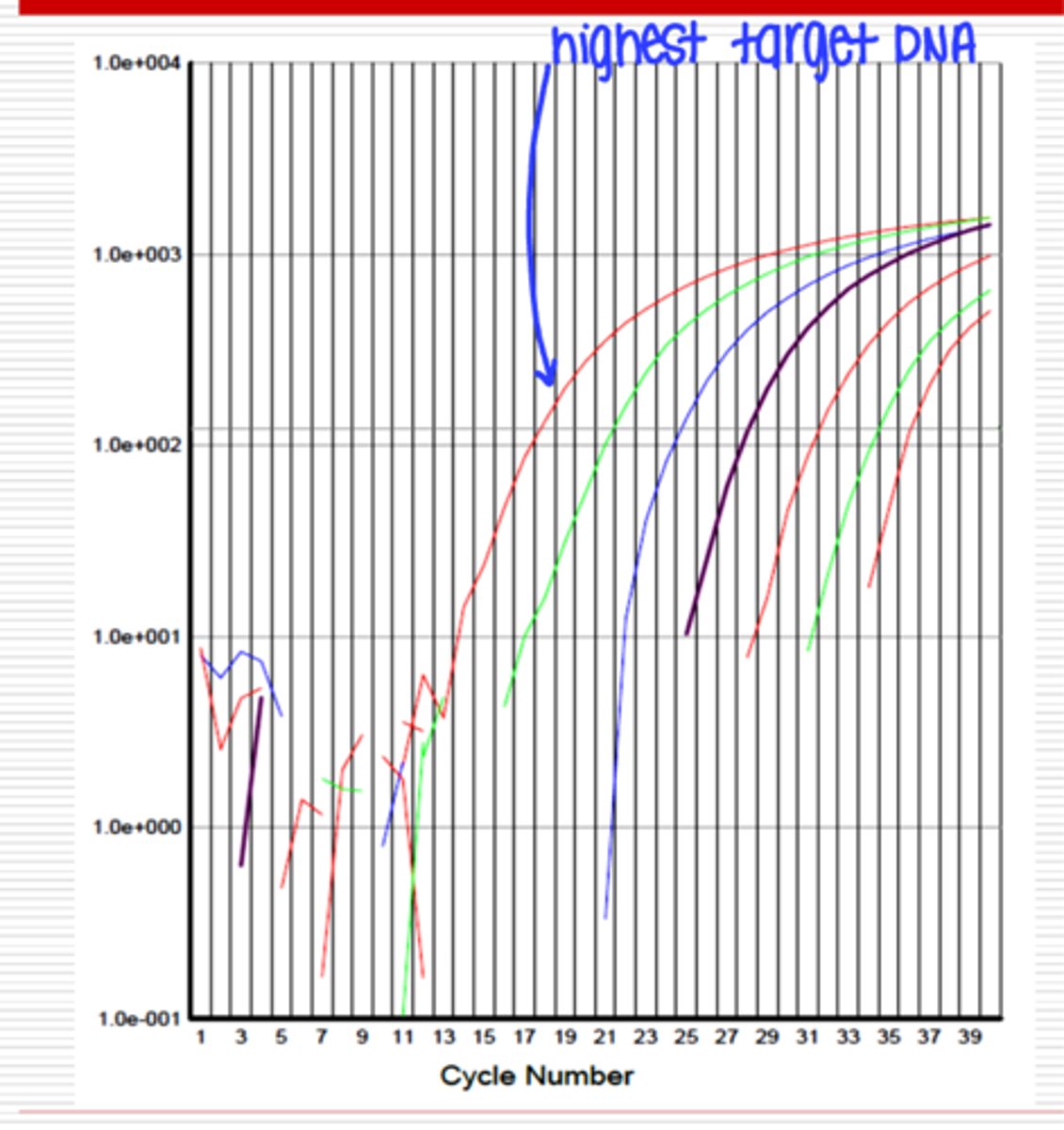
standard curve reading *
know which has the highest target DNA
- needs the least amount of cycles
define hot-start PCR
prevent non-specific amplification during the set up of PCR reaction
- needs high temperature
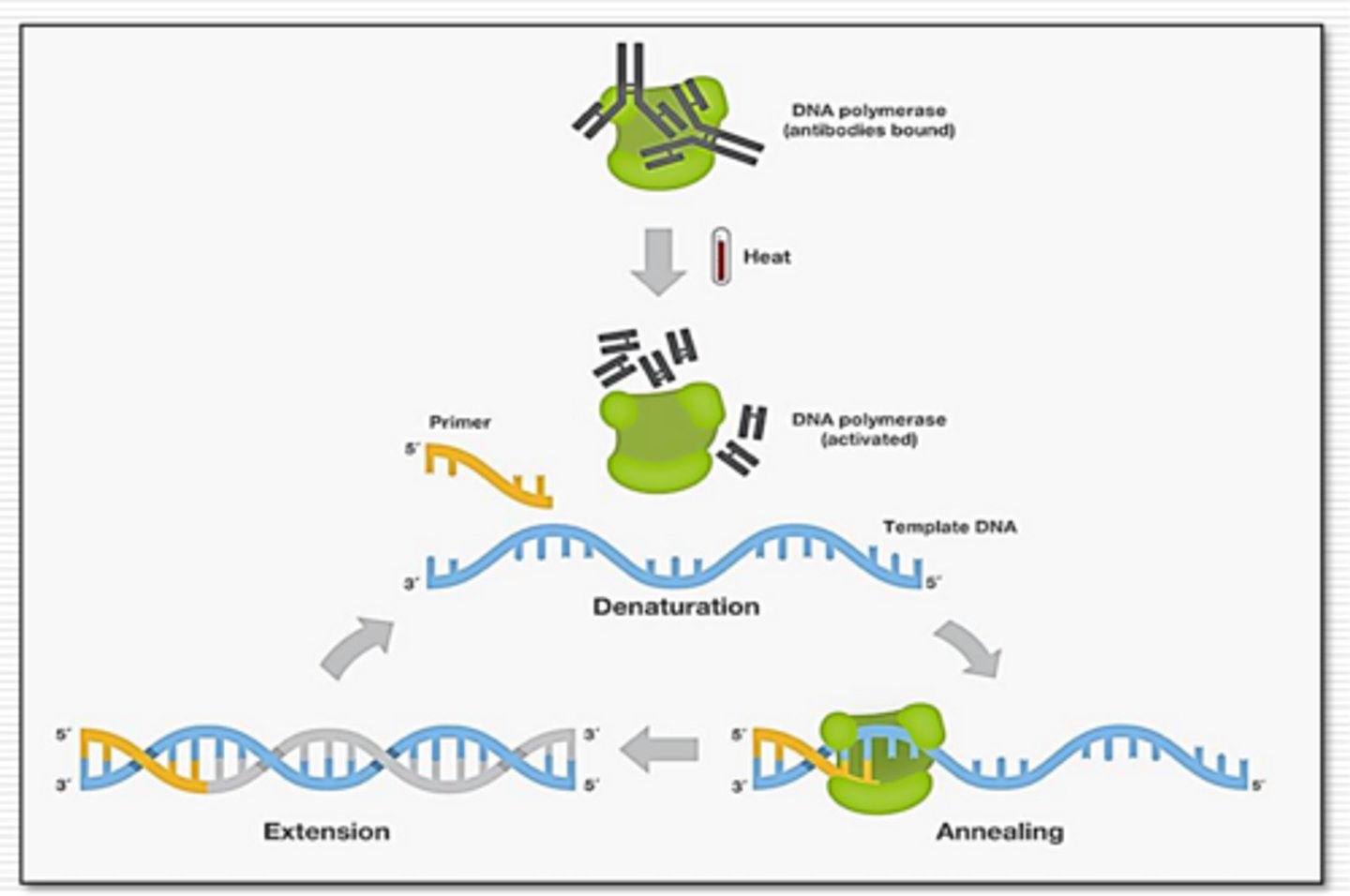
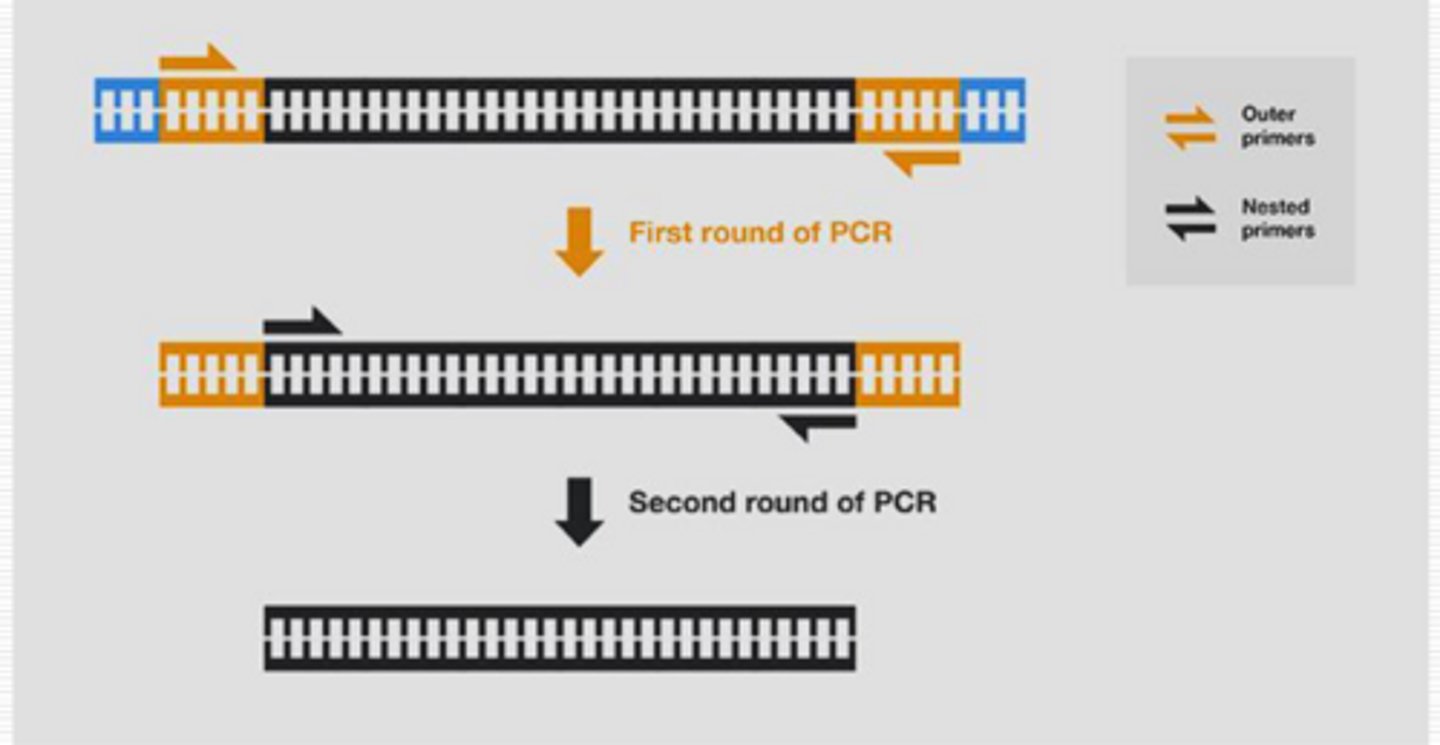
define nested PCR
2 sets of primers (larger and smaller), more specificity
- larger replicated first
- smaller used on amplified large sample
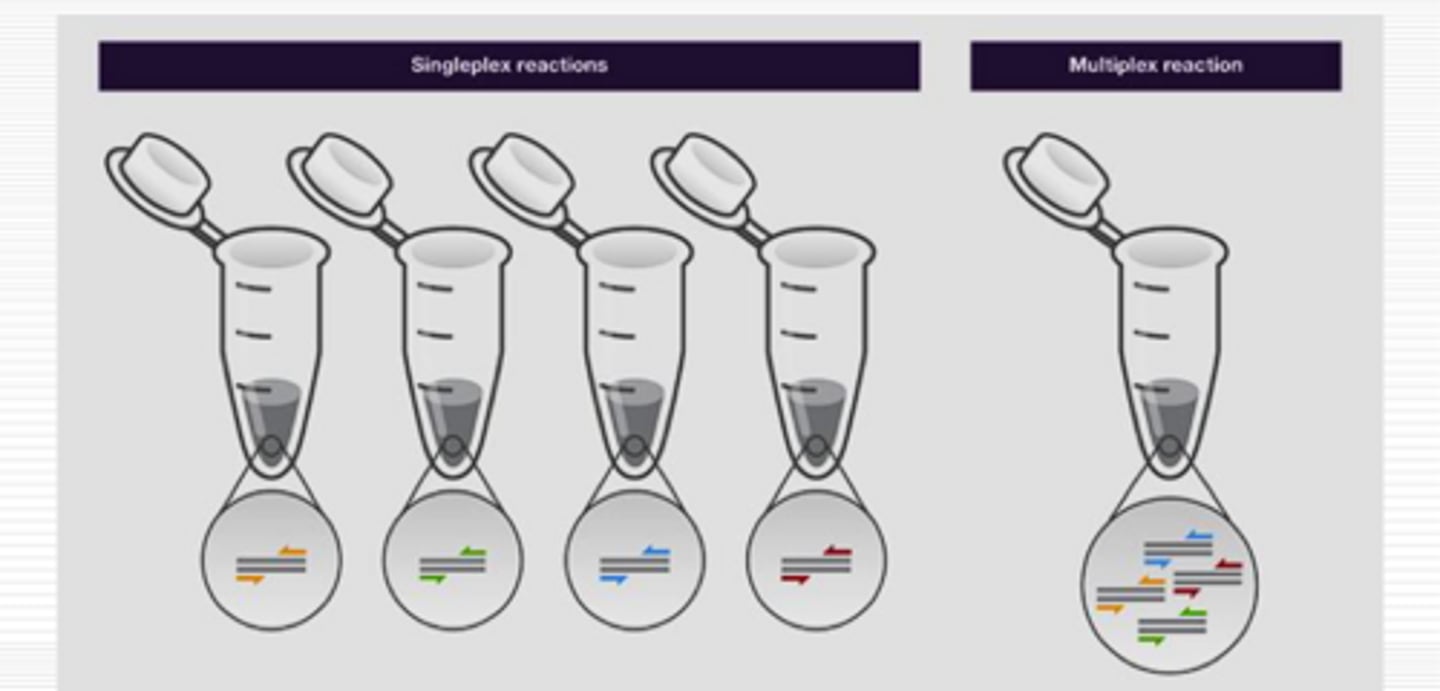
define multiplex PCR
everything is done in one tube and different probes are used to distinguish the different viruses
- cannot use SYBR green
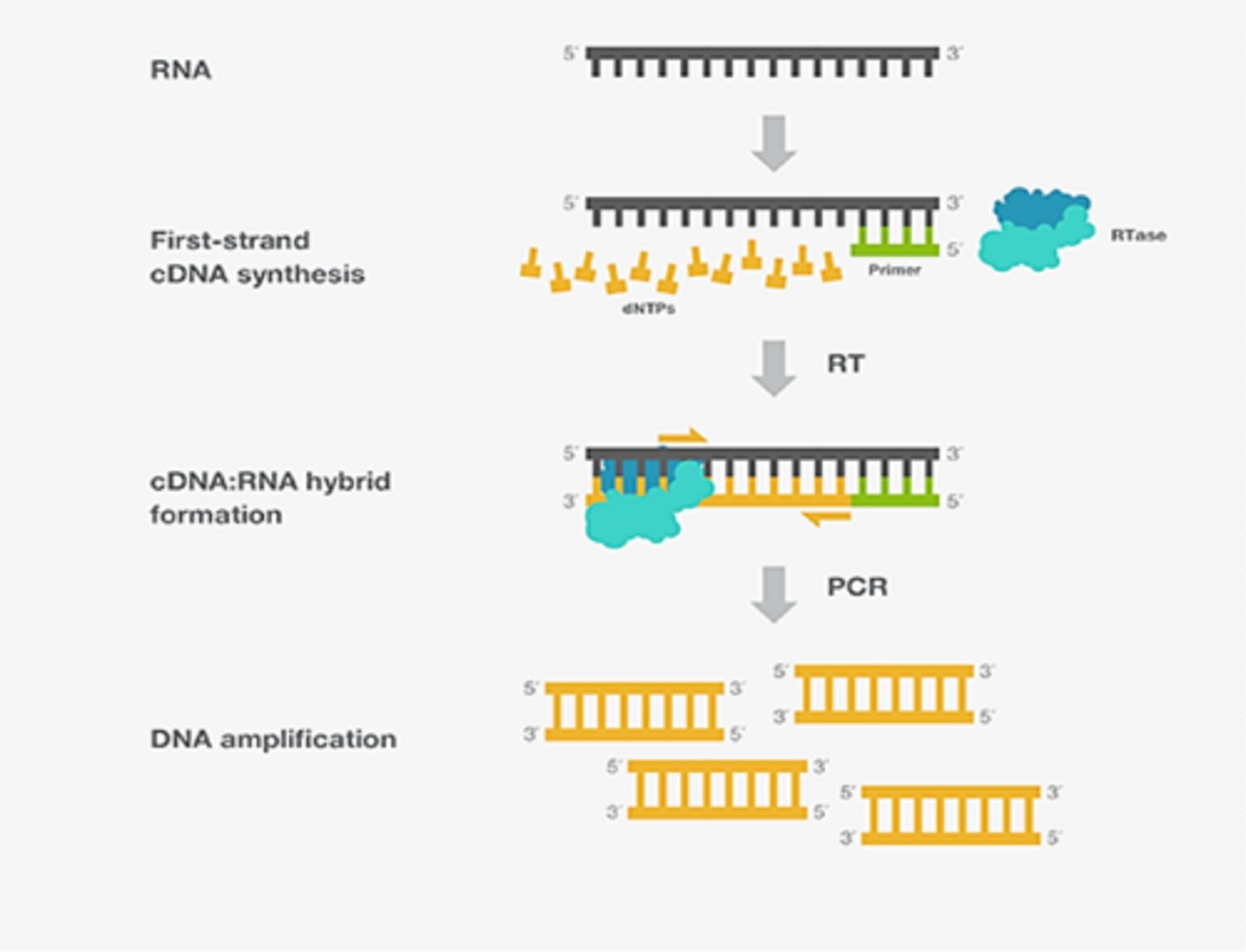
define reverse transcriptase PCR
mRNA is converted to cDNA in order to do PCR
- can be done in 1 or 2 tubes
what are the common problems in PCR?
false positive and false negatives
how can we prevent false positives in PCR? *
avoiding contamination
- separating work spaces (extraction room, clean room, etc)
- using UV light
- aliquoting of reagents
- including a negative control
- using real time PCR
- usage of UDG (breaks amplification when uracil present)
- using barrier disposable dip
- autoclaving tools
- design specific primers and probes
- use HOTSTART taq polymerase!
what is special about filter tips?
avoids contamination
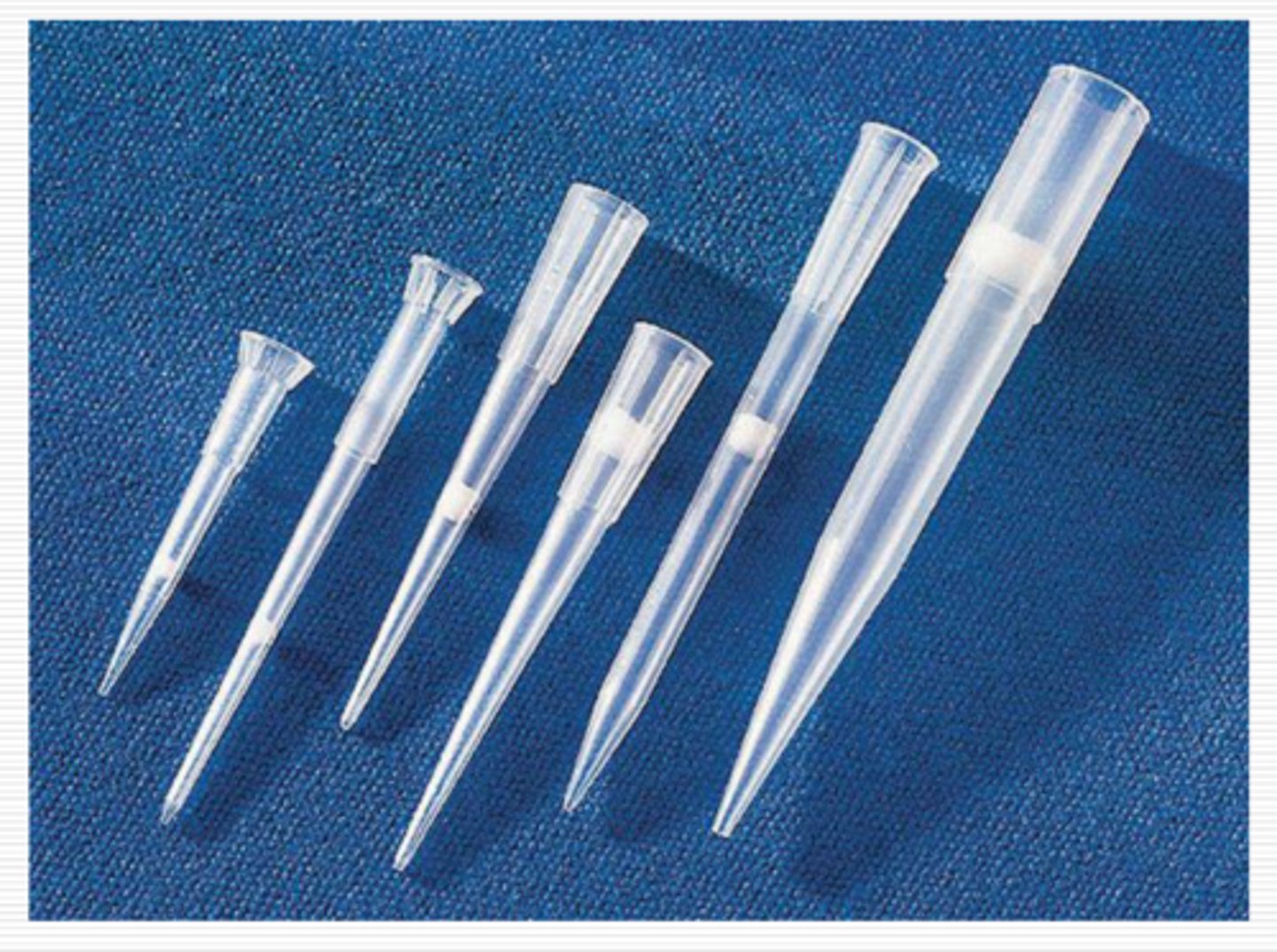
how can we prevent false negatives in PCR?
- use sensitive nucleic acid extraction methods
- avoid nucleic acid degradation
- control for PCR reaction inhibitors - include internal control!
- appropriate reaction conditions - include positive control!
- make sure primers cover all genotypes/subtypes!
define nucleic acid sequencing
the process of determining the precise order of nucleotides on a DNA/RNA segment
how can we sequence targeted portions?
marker gene sequencing
- identify a microbe
- microbial taxonomy
- explore microbial community structure
study specific genes
- in single microbes
- in microbial communities
how can we sequence whole DNA/RNA? *
single microbe
- study genetic makeup - genome
- study gene expression - transcriptome
microbial communities
- community structure and functional potential - whole metagenome
- community function - whole metatranscriptome
first generation sequencing
- chemical cleavage method (maxam and gilbert)
- chain termination reaction (sanger), gold standard
next generation sequencing (NGS)
- pyrosequencing
- sequencing by synthesis
- sequencing by ligation
- semiconductor sequencing technology
- newer generations
sanger vs NGS *
sanger: sequence one genome, expensive, high accuracy, long reads (gold standard)
NGS: millions of fragment sequences, cheap, low accuracy, short reads
what is the alternative to genome sequencing?
PCR
steps of NGS technologies
1. library preparation
2. clonal amplification
3. cyclic array sequencing