SABS I Lecture 4: Bacterial Classification
 Call Kai
 Learn
Learn Practice Test
 Spaced Repetition
 Match
Match Flashcards
 Knowt Play
1/53

There's no tags or description
Looks like no tags are added yet.
Name | Mastery | Learn | Test | Matching | Spaced | Call with Kai | Chat |
|---|
No analytics yet
Send a link to your students to track their progress
54 Terms
- Streptococcus mutans
- gram positive
- facultative anaerobe
What is the primary microbe responsible for caries in the oral cavity? It is gram negative or positive? What is the type of bacteria?
type strain
one strain of a species; serves as the permanent reference specimen for the species
phylotype
term used for bacteria that are unculturable (cannot be grown in a lab)
16SrRNA
the phylotype is used for uncharacterized microbes for while only _________ gene sequence data are avaliable
traditional methods (physical traits)
The phylotype cannot be classified by which methods?
2% (approximately 30 bp for 16S rRNA)
The phylotype designation applies if the DNA sequence of the gene differs from known species by how much?
97%
members of a phylotype share at least _________ similarity of their DNA with each other
phenotypic taxonomy (pre-genetics)
traditional method of characterization and identification; requires that bacteria can be cultured in a lab
genotypic taxonomy
distinguishes closely related organisms (often in addition to phenotypic traits) using their DNA or RNA, and not observable traits to classify them
identify different taxa (diversity) in a bacterial community
What does genotypic taxonomy helps to do?
- shape
- size
- structural arrangement (microscopic and macroscopic)
- cellular structures
What does morphology consist of?
- cell shape
- spore formation and spore location
- Gram stain
- motility
- flagella
- fimbriae
Examples of morphology
0.5-1 um
smallest bacteria length
up to a few um
largest bacteria length
- rod
- coccus
- spiral
basic shapes of bacteria
shape
What is the first classification phenotypically?
- shape variations
- associations
phenotypic morphology types
- regular
- irregular
shape variations of cocci
- short
- long
- curved
- bent
- pleomorphic
- ends pointed, round, or flat
shape variations of rods
- bends
- spiral
other shape variations besides cocci and rods
- chains
- clusters
(regular, irregular)
types of phenotypic morphology associations
chains
"strepto" means
clusters (that look like grapes)
"staphylo" means
rod-shaped
bacillus means
bacillus
What would this be known as?

diplobacillus
What would this be known as?

streptobacillus
What would this be known as?

coccobacillus
What would this be known as?

coccus
What would this be known as?

diplococcus
What would this be known as?

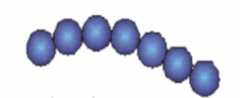
streptococcus
What would this be known as?
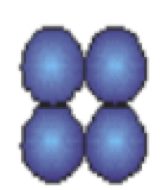
tetrad
What would this be known as?
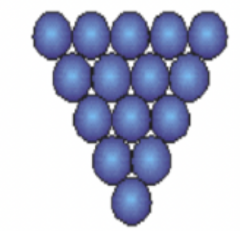
staphylococcus
What would this be known as?
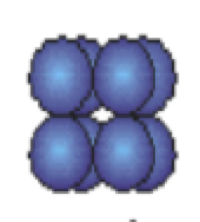
sarcina
What would this be known as?
positive, leftover sugars (saccrolytic), lactic acid (acidogenic), 4.5-5, secondary, low, CO2, oxygen (facultative anaerobe)
streptococcus mutans info:
gram _________ feeds on _______ _________ and creates ________ __________ and can tolerate pH _______. __________ colonizer which is associated with caries. best in _______ oxygen or extra _______, can grow without ________.
primary colonizers
type of colonizer that attaches to healthy, clean tooth; "the good guys"
staphylococcus aureus
gram positive bacteria found only temporarily in the oral cavity; colonizes the skin
negative, facultative anaerobe, critically ill
Escherichia coli is a gram _________ bacteria that is a ___________ ___________ (type) not found in healthy dental plaque but can be found in ________ ________ patients
Escherichia coli
Rods are always compared to which bacteria?
positive, rod (branching bacilli), capnophilic, obligate anaerobe, oral surgeries
Actinomyces israelii is a gram _________ bacteria that is a _________ (shape), __________, _____________ _________ (type) but can tolerate microaerophile conditions. It is usually harmless but can be an issue with ______ ________
negative, obligate anaerobe, opportunistic, acidgenic, capnophilic, aciduric
Fusobacterium nucleatum is a gram _______ bacteria that is a ________ _________ (type) in dental plaque. It is an __________ pathogen, so it helps build biofilm by sticking different bacteria together. It is not _______ nor ________ but it is _________ (refering to what it likes/capabilities)
vibrio
What would this be known as?

spirillum
What would this be known as?

spirochete
What would this be known as?

- oxygen requirements
- growth temperature
- pH tolerance
- Carbon and nitrogen sources used
- metabolic product formation
- special nutritional requirements (vitamins, iron, etc.)
physiology/biochemistry components of bacterial classification
- cell wall and outer membrane components
- protein profile
chemical composition requirements of bacterial classification
genotypic taxonomy
used for distinction between closely related genera, species, and strains
- polymerase chain reaction
- next-generation sequencing
- '-omics' (genomics, transcriptomics, proteomics, metabolomics)
current molecular biology techniques for genotypic taxonomy include
genomes or single genes (16S rRNA gene)
current molecular biology techniques are used to either compare
microscopy, culture, biochemical tests, molecular tests
simplified scheme for bacterial identification
- gram stain
- shape
- motility
microscopy portion of bacterial identification
growth conditions (nutrients, oxygen requirements, etc.)
culture portion of bacterial identification
- composition of cell wall
-metabolomics
biochemical tests portion of bacterial identification
16S rRNA sequencing
molecular tests portion of bacterial identification