Other Systems 2 FF (GI, pregnancy)
 Call Kai
 Learn
Learn Practice Test
 Spaced Repetition
 Match
Match Flashcards
 Knowt Play
1/32

There's no tags or description
Looks like no tags are added yet.
Name | Mastery | Learn | Test | Matching | Spaced | Call with Kai | Chat |
|---|
No analytics yet
Send a link to your students to track their progress
33 Terms
common physiological changes during pregnancy
1. weight gain 25-35 lbs
2. MSK posture more kyphotic and lordotic
3. BP LOW in 1st and 2nd trimester, HIGH in 3rd
4. resting HR increases by 10-20
why and when do you avoid supine lying when pregant
No supine after 1st trimester because it can compress inferior vena cava which decreases cardiac output
- should lay on left side
preeclampsia
- acute hypertension after the 20th week of gestation (>140/90 and then a second one after 4 hours confirms it)
- increase protein in urine, hyperreflexia, edema, headache and sudden weight gain
what is different about eclampsia
occurs after birth and involves seizures
some contraindications to exercise while pregnant
early dilation of cervix, vaginal bleeding during 2nd/3rd trimester, uncontrolled maternal diabetes, premature labor, placenta previa
treatment for diastasis recti depending on separation diameter
> 2 cm: abdominal bracing and head lift
> 4 cm: abdominal bracing and breathing
GERD presentation
- heartburn 30 min after eating and at night lying down
- dysphagia
- hoarseness of voice
- atypical chest pain
treatment for GERD
- maintain upright positions and avoid supine
- eat meals 3-4 hours before sleep
- exercise 2-3 hours after or before eating
- avoid spicy, chocolate, fatty food, peppermint
what refers pain to mid-back/scapula
PEGS
pancreas, esophagus, gallbladder, stomach
what refers pain to L shoulder
heart, diaphragm, spleen and tail of pancreas
what refers pain to R shoulder
gall bladder, liver and head of pancreas
what refers pain to pelvis/low back/sacrum
colon, appendix, pelvic viscera
pancoast tumor
upper lung tumor
- refers in C8-T2 and mimics TOS
- pain at top of shoulder and ipsilateral shoulder
Kehr's sign
pain to L shoulder when supine and legs are raised which increases abdominal pressure
- may indicate ruptures spleen
RUQ pain
good luck harry potter kid
- gall bladder
- liver
- head of pancreas
- peptic ulcer
- R kidney
LUQ pain
don't be silly kid harry
- diaphragm
- body/tail of pancreas
- spleen
- L kidney
- heart
RLQ pain
appendix, Crohn's disease
LLQ pain
diverticulitis, ulcerative colitis, IBS
cholecystitis presentation
blockage or impact of gallstones in the cystic duct
- pain in RUQ or radiating to R scap
- nausea, vomit, low fever
- pain increases with ingestion of fatty food
(+) Murphy Sign
Murphy's Sign
palpate near R subcostal margin as patient takes deep breath
- pain w/ inspiration = positive (cholecystitis)
where does a hiatal hernia refer to?
shoulder pain (L)
- symptoms similar to GERD
where does a femoral hernia refer to?
lateral pelvic wall and groin pain
where does an inguinal hernia refer to?
groin pain
where does an umbilical hernia refer to?
umbilical ring in mid to lower abdomen
gastric ulcers vs duodenal ulcers
gastric: lesions in stomach due to NSAIDs, stress, anxiety or H pylori
- pain increases w/ PRESENCE of food
duodenal: lesions in duodenum due to H pylori
- pain increases w/ ABSENCE of food
peptic ulcer emesis and stool presentation
coffee ground emesis and melena tarry stools
irritable bowel syndrome presentation
- spastic, nervous or irritable colon that is painful in the morning or after eating
- symptoms disappear after defecation and sleeping
- ribbon like stools
- pain in LLQ
differential diagnosis of GI bleeding
peptic ulcer: coffee ground emesis
ulcerative colitis: bloody diarrhea
duodenal ulcer: melena
liver/pancreas/colon: white, clay gray stool
bleed in GI tract: red blood in stool
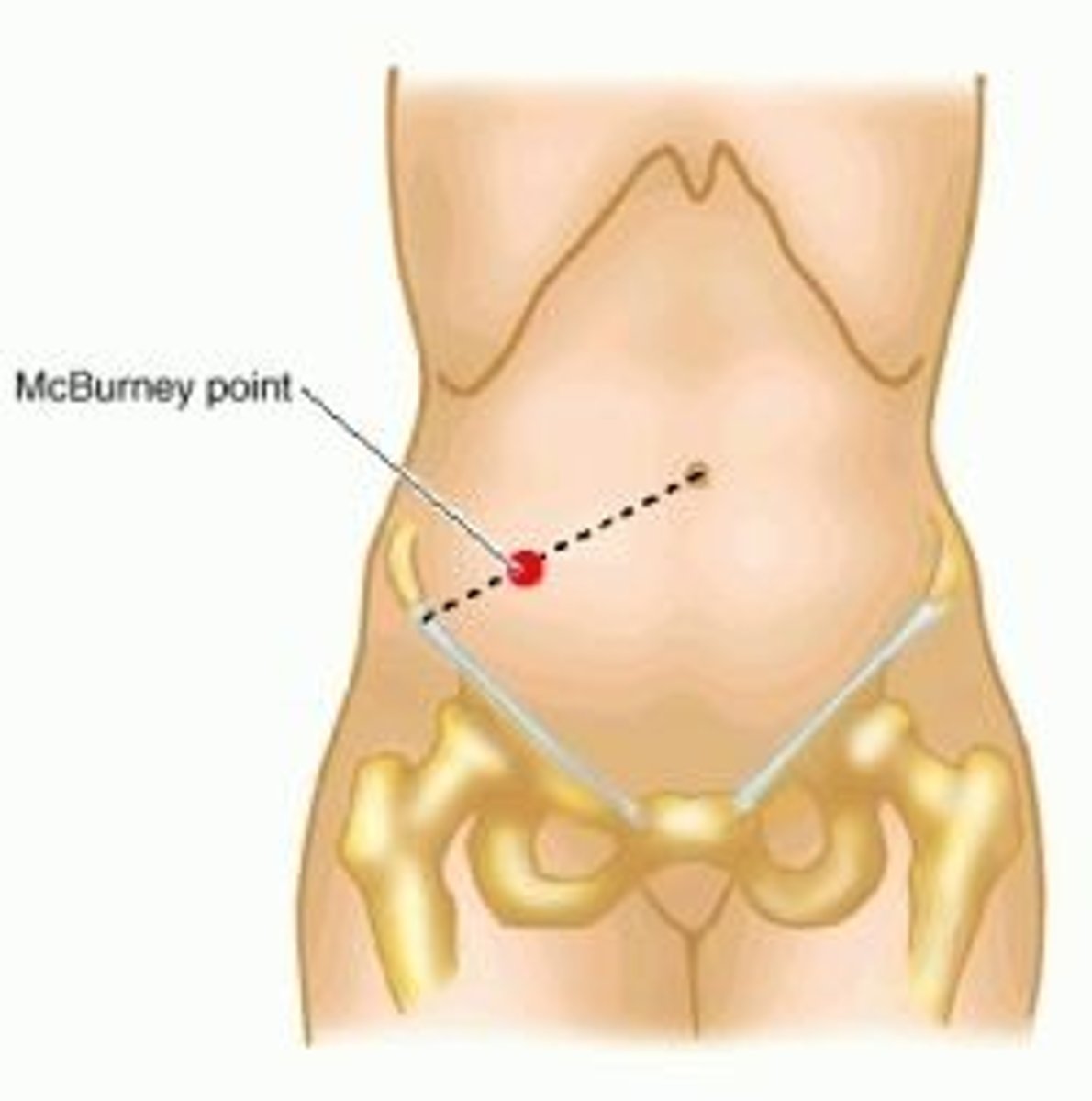
appendicitis presentation
- pain in RLQ starts in waves and progresses to steady
- anorexia, nausea, vomiting, fever, leukocytosis
- McBurney's, Rovsing's, Blumber's sign
McBurney's point
press and painful
Rovsing's test
palpation to LLQ
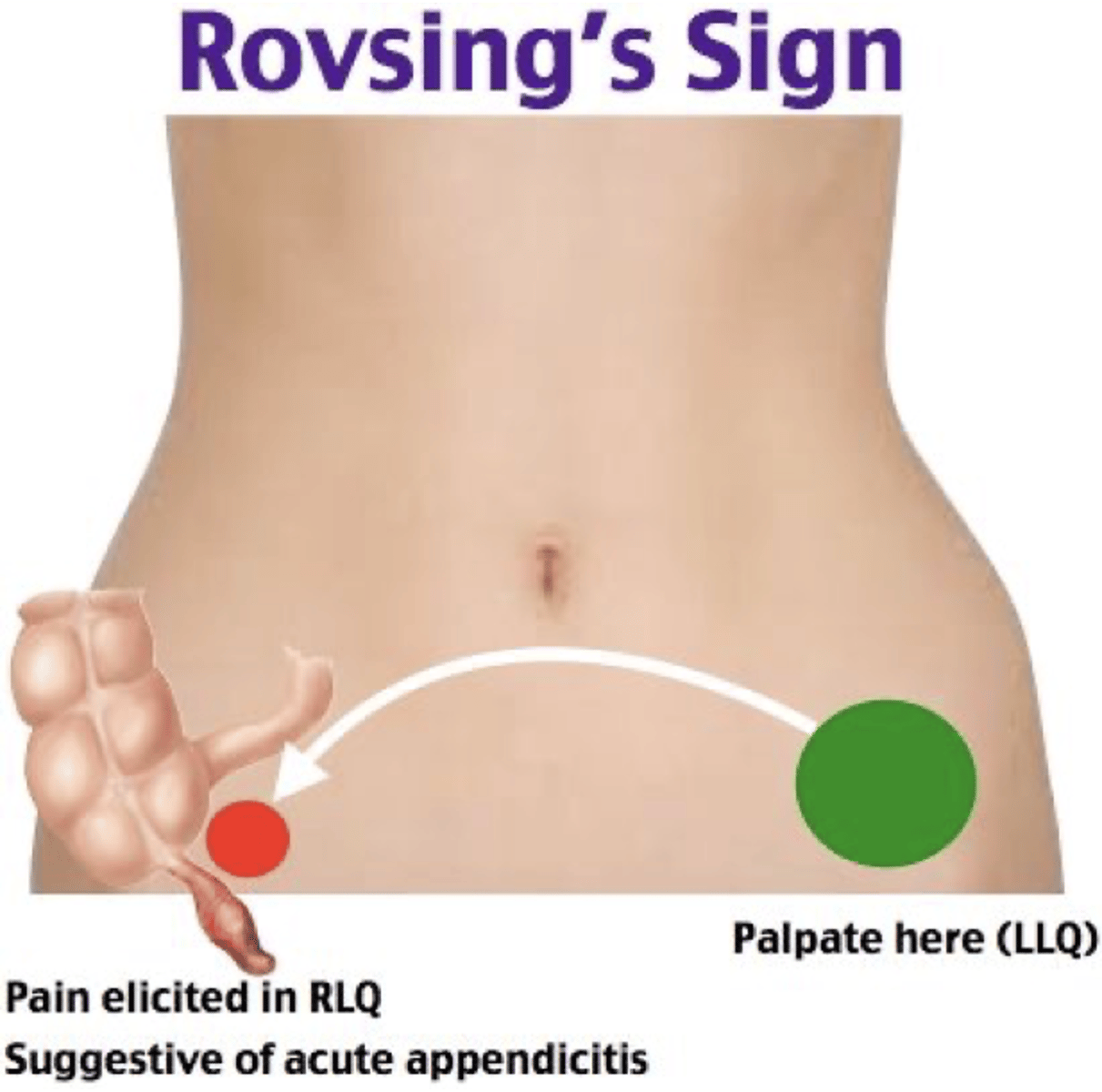
pinch and inch test
on RLQ = appendicitis
on LLQ = diverticulitis
Blumberg's sign
rebound tenderness