40 Anesthesia for Patients with Respiratory Disease
 Call Kai
 Learn
Learn Practice Test
 Spaced Repetition
 Match
Match Flashcards
 Knowt Play
1/39

There's no tags or description
Looks like no tags are added yet.
Name | Mastery | Learn | Test | Matching | Spaced | Call with Kai | Chat |
|---|
No analytics yet
Send a link to your students to track their progress
40 Terms
A = alveolar gas where PaO2 is 99 mmHg
a = arterial blood where PaO2 is 92
What is the A - a gradient?
Hemoglobin concentration and oxygen binding capacity of hemoglobin, partial pressure of O2
What are some of the factors that effect oxygen getting from air to the alveolus (or content of arterial O2)?
Hypoxemia
This is low arterial oxygen tension which harms impeding oxygen transfer from blood to the cells, meaning there is not enough oxygen
Hypoventilation
What causes hypercarbia?
Hypoxemia and hypercarbia
Name some of the most common respiratory issues of a patient under anesthesia
1. hypoventilation
2. V/Q mismatch (should be 1 in health)
3. decreased FIO2 (fraction inspired oxygen) (ex. changes w altitude)
4. RIGHT TO LEFT shunt
5. diffusion impairment (like with cardiovasc. dz or pulmonary edema)
*Name the 5 causes of hypoxemia* (low O2 in blood)
a. shunt
Select which of these conditions refers to "perfusion without ventilation"
a. shunt
b. dead space
b. dead space
Select which of these conditions refers to "ventilation without perfusion"
a. shunt
b. dead space
0
What is the V/Q mismatch like in a shunt?
Infinity (in theory)
What is the V/Q mismatch like with dead space?
Anatomic, alveolar, equipment/apparatus, and physiologic
What are the different types of dead space?
Anatomic dead space
Which type of dead space means there is no gas exchange in the upper airways like the nares, larynx, pharynx, trachea, bronchi and non-respiratory bronchioles?
Alveolar dead space
Which type of dead space means there are areas of the lungs that are poorly perfused but adequately ventilated?
Physiologic dead space
Which type of dead space is the sum of anatomical and alveolar dead space, defined as the sum of all parts of the tidal volume that do not participate in gas exchange?
Equipment or apparatus dead space
Which type of dead space refers to what we create during anesthesia, like with the ET tube, anywhere flow goes back and forth?
Dogs have about 35% dead space when awake, but that increases to 50% under inhalant anesthesia
What is the difference in dead space in NORMAL dogs versus dogs under inhalant anesthesia?
Airway resistance INVERSELY PROPORTIONAL to radius of airway to the fourth power (RADIUS MATTERS A LOT)
What is the relationship between airway resistance and the radius of the airway?
Upper airway resistance
Overall, brachycephalic breeds have lots of airway resistance where?
Chemoreceptors
What receptors in the brainstem are VERY SENSITIVE TO SMALL DEVIATIONS of normal CO2?
CO2
Is the body more sensitive to changes in *O2 or CO2*
Inverse
What is the relationship between PaCO2 level and alveolar ventilation?
If you are given hemoglobin (for example 3.9), you can multiply it by 3 and this is about your PCV (around 12) = which would be severe anemia
How can you determine PCV from hemoglobin?
Lack of O2 carrying capacity = must get hemoglobin to normal. Try and avoid elective surgeries until corrected
A 3 year old male neutered domestic shorthair cat has severe anemia due to Mycoplasma haemofelis. Hemoglobin is 3.9 and Reticulocytes are 181 (regenerative). What are you anesthetic concerns?
General anesthesia compromises ventilation and oxygenation leading to an inability to compensate
What is risk of pulmonary disease like under anesthesia?
PaO2 under 60 mmHg
What is considered hypoxemia?
1. increase FiO2
2. check equipment
3. provide supplemental oxygen and monitor in recovery
What should you do if your animal starts to experience hypoxemia?
Reposition, improve depth of respiration if possible, monitor closely in recovery
What can you do to correct ventilation perfusion abnormalities under anesthesia?
Pneumothorax
What is this?
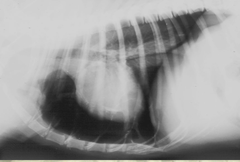
Decrease anesthetic depth
Provide ventilation
Monitor in recovery
How can you stop hypoventilation from becoming a problem (prevent ETCO2 from going over 50-60 mmHg)?
Extrapulmonary
Diaphragmatic hernia, upper airway obstruction, pleural space disease, obesity, rib fractures, bandaging and space occupying lesions are all examples of *intrapulmonary or extrapulmonary* respiratory dysfunction
Intrapulmonary
Pneumonia, pulmonary edema, hemorrhage, atelectasis, interstitial disease, thoracic airway obstruction and thoracic collapsing trachea are all examples of *intrapulmonary or extrapulmonary* respiratory dysfunction
Upper airway obstruction from stenotic nares, soft palate elongation, hypoplastic trachea, and everted laryngeal saccules
What defines brachycephalic airway syndrome
Smaller than anticipated size
What is the ET tube size like for brachycephalics?
Sternal with tongue pulled out
You should expect a prolonged extubation with brachycephalic patients. What position do they need to be kept in?
They depress ventilation and they already have a hard time breathing
Why do you need to be extra careful with opioids in brachycephalics?
Asthma
Cats commonly have WHAT lower airway disease?
Minimize stress
Ketamine for bronchodilation
Induce swiftly and place on inhalant
How can you "control asthma" when putting cats under anesthesia?
PREOXYGENATE
What do you NEED TO DO for animals like brachycephalics or cats with asthma before fully putting them under anesthesia
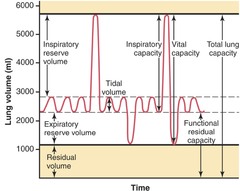
Functional residual capacity (includes expiratory reserve volume and residual volume)
Which part of the lung volume or capacity are you affecting with preoxygenation?
ET tube
Overall, which is the BEST METHOD to preoxygenate in theory?