11 - Epaxial & Hypaxial Muscles
 Call Kai
 Learn
Learn Practice Test
 Spaced Repetition
 Match
Match Flashcards
 Knowt Play
1/124

There's no tags or description
Looks like no tags are added yet.
Name | Mastery | Learn | Test | Matching | Spaced | Call with Kai | Chat |
|---|
No analytics yet
Send a link to your students to track their progress
125 Terms
The sphincter colli superficialis, platysma, and cutaneous trunci muscles are all _____ muscles
superficial/cutaneous
![<p>The [epaxial/hypaxial] muscles are associated with extension</p>](https://assets.knowt.com/user-attachments/4a847166-c575-4fd9-a94d-b252277fbb9c.png)
The [epaxial/hypaxial] muscles are associated with extension
epaxial
![<p>The [epaxial/hypaxial] muscles are associated with flexion</p>](https://assets.knowt.com/user-attachments/38bece20-720a-466e-a1fc-cfc742742f44.png)
The [epaxial/hypaxial] muscles are associated with flexion
hypaxial
The epaxial muscles will be [deep/superficial] to the extrinsic muscles
deep
The _____ muscles have 3 parallel columns - lateral, middle, and medial
erector spinae
The lateral column of the erector spinae muscles:
iliocostalis muscle
The middle column of the erector spinae muscles:
longissimus muscle
The medial column of the erector spinae muscles:
transversospinalis system
Right after removing the most dorsal extrinsic muscles of the thoracic limb (trapezius, rhomboideus, cleidocephalicus, omotrasversarius and latissimus dorsi) the first layer of the epaxial muscle are _____ and the _____
splenius; serratus dorsalis
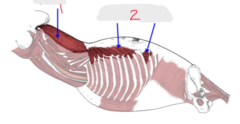
What is 1?
splenius
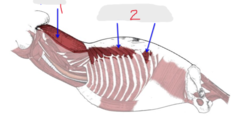
What is 2?
serratus dorsalis (cranialis & caudalis)
After removing splenius and the serratus dorsalis muscle a complex system of muscles is described as the _____
erector spinae
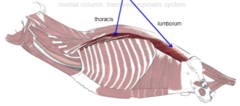
What muscle is shown?
iliocostalis
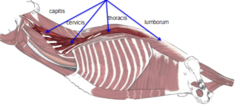
What muscle is shown?
longissimus
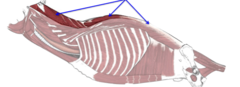
What muscle is shown?
transversospinalis system
What muscles make up the transversospinalis system?
-Semispinalis capitis (biventer, complexus)
-Spinal & semispinalis thoracis & cervicis
-Multifidus (cervicis, thoracis, lumborum)
-Obliquus capitis (cranial & caudal)
-Rectus capitis dorsalis
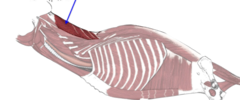
What muscle, part of the transversospinalis system, is shown?
semispinalis capitis
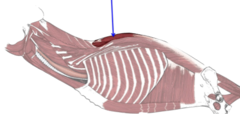
What muscle, part of the transversospinalis system, is shown?
spinal & semispinalis thoracis & cervicis
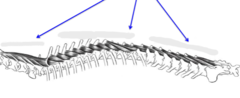
What muscle, part of the transversospinalis system, is shown?
multifindus
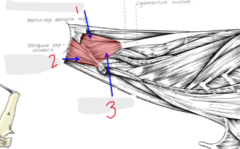
What muscle is 1?
rectus capitis dorsalis
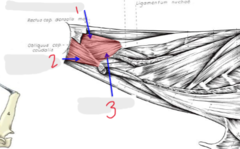
What muscle is 2?
obliquus capitis cranialis
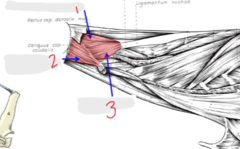
What muscle is 3?
obliquus capitis caudalis
-A thick lamina of connective tissue composed of layers that cover the deep muscles beneath the thoraco-lumbar region.
-Muscles are also enclosed within the layers
-This fascia tissue crosses the entire dorsal area of the trunk
thoracolumbar fascia
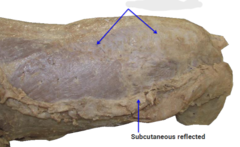
What are the top arrows pointing to?
thoracolumbar fascia
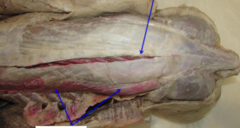
What muscle are the bottom arrows pointing to?
iliocostalis
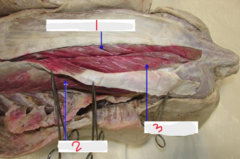
What is 1?
transversospinalis
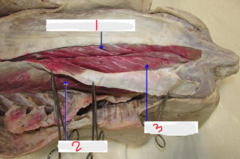
What is 2?
iliocostalis
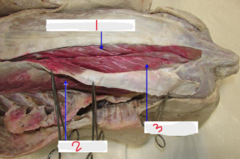
What is 3?
longissimus
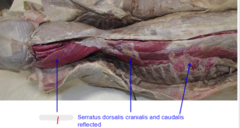
What is 1?
splenius
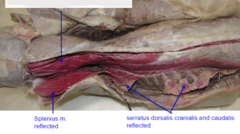
What is the top arrow pointing to?
semispinalis capitis
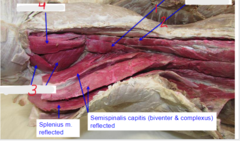
What is 1?
multifindus
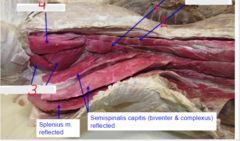
What is 2?
spinal cervicis
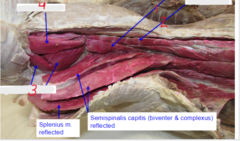
What is 3?
obliquus capitis
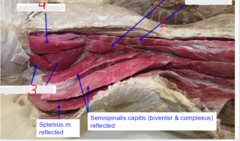
What is 4?
rectus capitis dorsalis
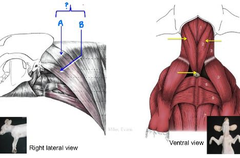
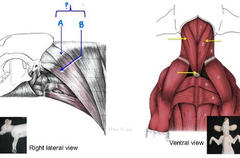
What muscle is this?
Sternocephalicus
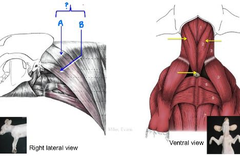
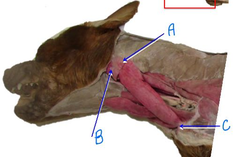
A
occipital part of sternocephalicus
B
mastoid part of sternocephalicus
A
occipital part of sternocephalicus
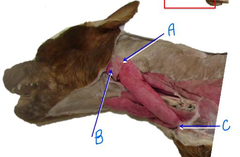
B
mastoid part of sternocephalicus
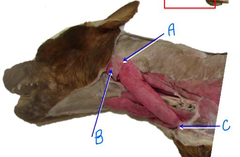
C
manubrium of the sternum
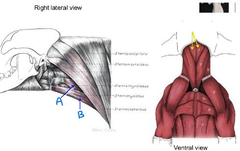
What muscles are these?
A-sternothyroideus
B-sternohyoideus
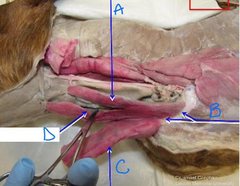
A
Sternothyroideus
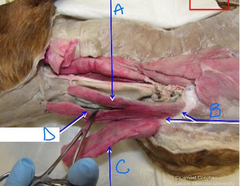
B
Manubrium of the sternum and first costal cartilage
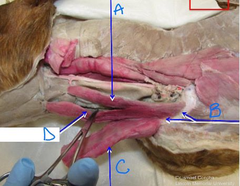
C
Sternocephalicus
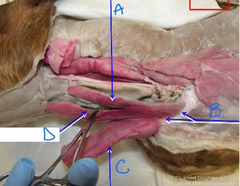
D
Sternohyoideus
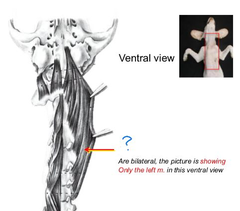
Longus capitis
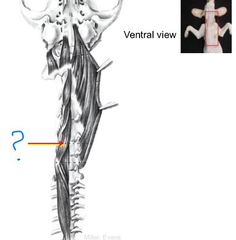
Longus colli
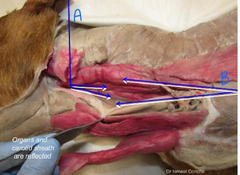
A
Longus colli
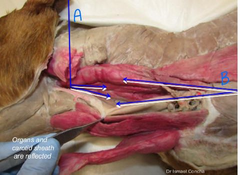
B
Longus capitis
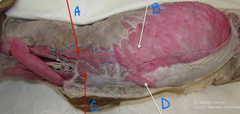
A
Scalenus
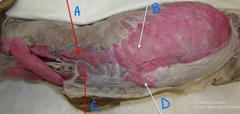
B
External abdominal oblique
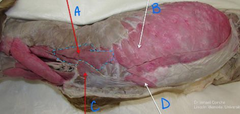
C
Rectus thoracis
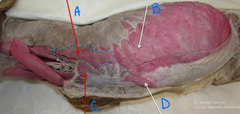
D
Rectus abdominis
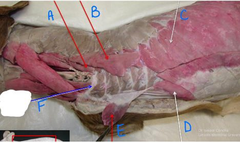
A/B
Scalenus
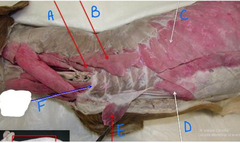
C
External abdominal oblique
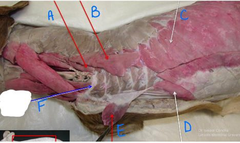
D
Rectus abdominis
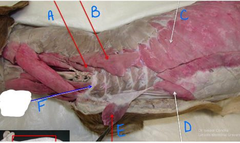
E
Rectus thoracis
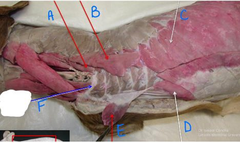
F
First costal cartilage
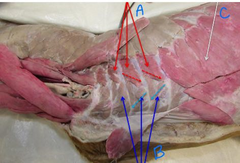
A
External intercostal
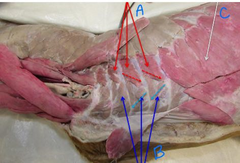
B
internal intercostal
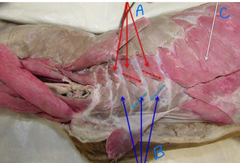
C
External abdominal oblique
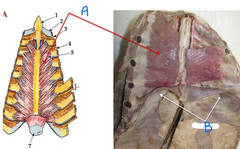
A
Transverse thoracis
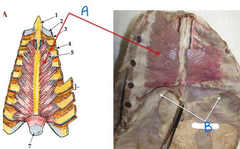
B
Diaphragm
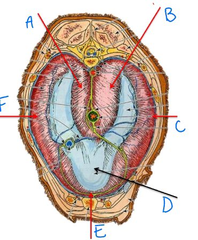
A
Lumbar part of diaphragm
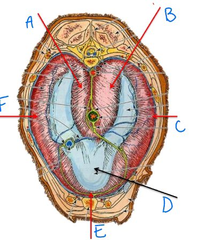
B
Lumbar part of diaphragm
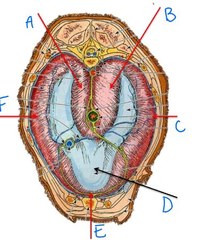
C/F
Costal parts of diaphragm
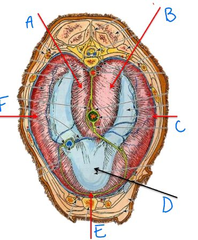
D
Tendinous center of diaphragm
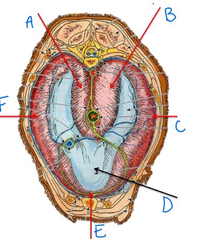
E
Sternal part of diaphragm
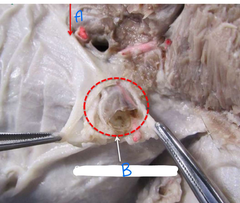
A
inguinal ligament
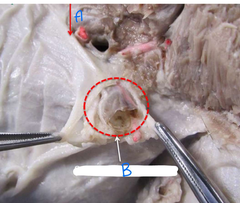
B
superficial inguinal ring
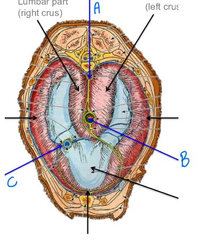
A
Aortic hiatus of diaphragm
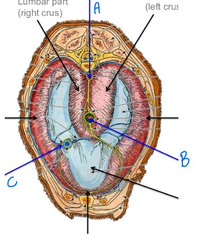
B
esophageal hiatus of diaphragm
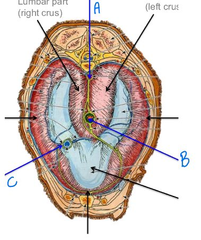
C
cava foramen of diaphragm
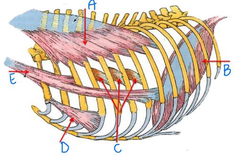
A
serratus dorsalis cranialis
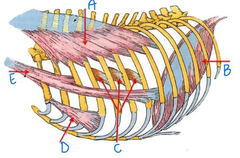
B
diaphragm
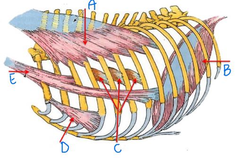
C
external intercostal muscles
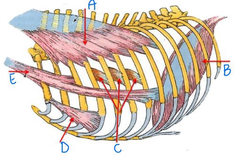
D
rectus thoracis
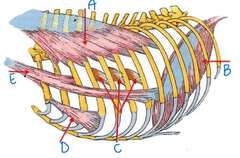
E
scalenus
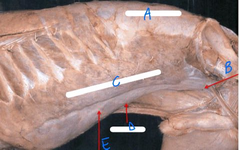
A
thoracolumbar fascia
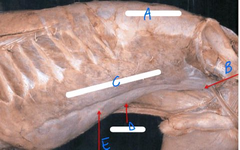
B
prepubic tendon
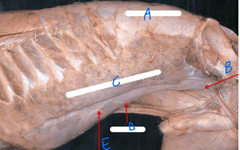
C
external abdominal oblique
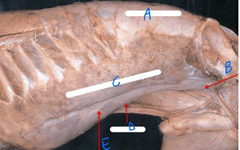
D
lina alba
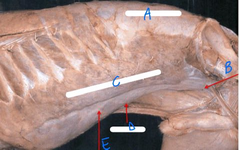
E
aponeurosis
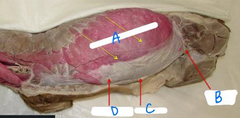
A
external abdominal oblique
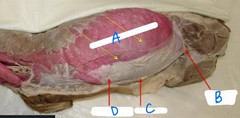
B
prepubic tendon
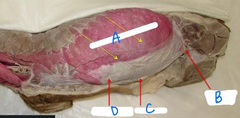
C
linea alba
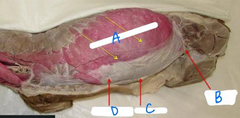
D
aponeurosis
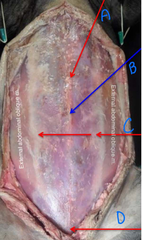
A
linea alba
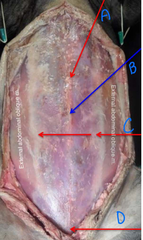
B
umbilicus
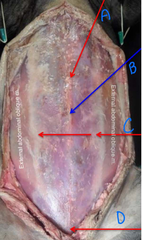
C
aponeurosis
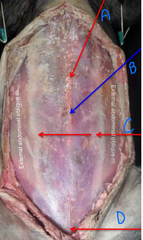
D
prepubic tendon
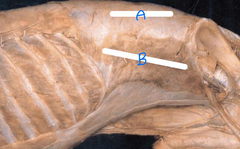
A
thoracolumbar fascia
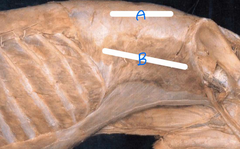
B
internal abdominal oblique
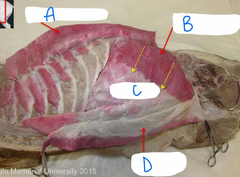
A
External abdominal oblique
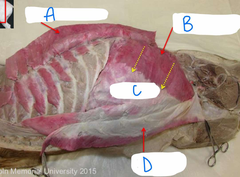
B
Internal abdominal oblique
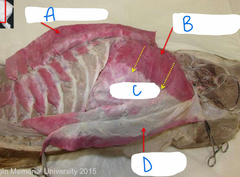
C
Aponeurosis of internal abdominal oblique
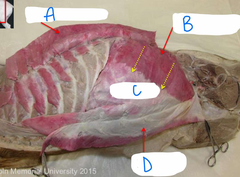
D
aponeurosis of external abdominal oblique
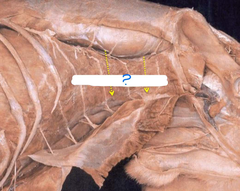
Transversus abdominis
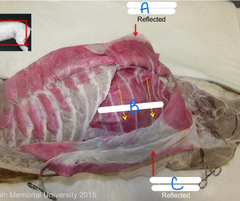
A
aponeurosis of internal abdominal oblique
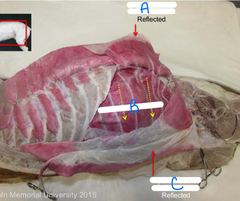
B
transverses abdominis