Lecture 3: Amino Acid Structures and Properties
 Call Kai
 Learn
Learn Practice Test
 Spaced Repetition
 Match
Match Flashcards
 Knowt Play
1/18

There's no tags or description
Looks like no tags are added yet.
Name | Mastery | Learn | Test | Matching | Spaced | Call with Kai | Chat |
|---|
No analytics yet
Send a link to your students to track their progress
19 Terms
Side info: Case Study
Strength training, influencers promote branched-chain amino acids supplements
BCAA are also found in foods with high in proteins
Are these scientifically accurate claims
How can be distinguish between different amino acids?
which two interactions required for holding the protein together and interacting with other molecules
why is hydrophilic AA important?
distinct side chains that contributes to the protein’s structure and function
Non-covalent and covalent interactions between function groups essential to hold the protein together and interact with other molecules
interactions of water and hydrophilic AA help solubize proteins
What are proteins made up of?
what is the chain called
what are three components of a singular AA
why are they important for diet
proteins made up of polymers of AA residues linked together through peptide and amide bonds to form polypeptides
AA made up of the amino group, carboxyl group and the side chain R
some AA essential in diet (as we cannot make it ourselves) and
Non-essential can be made from metabolites that we already have in the body (synthesized)
*don’t need to memorize which are essential and which are non-essential
state the six letters that don’t associate with one letter amino acids
JUZBOX
Chiral Amino Acids
when is the AA consider chiral?
Two characteristics of chiral molecules - what is this molecule called
What else (type of molecules) also exhibit optical activity
Why are L amino acid important - why do they only use this, instead of their mirror image D isomer?
the asymmetric alpha carbon (all groups attached but be different from each other) results in chirality
Characteristics - for enantiomers
non-superimposable
Mirror images
isomers also exhibit optical activity
L amino acids are physiologically relevant structures found in plants and animal proteins
Q to mentimeter: Ila, leu val
Glycine is not chiral (the only one)

Why do human cells only use L-amino acids
protein syntheses have evolved to recognize and incorporate L-amino acids, D are left to the side and not use
D can be used in inhibitors, still bind a form some reactions but runs cannot occur
D-amino acid can still participate in non-covalent interactions, but doesn’t occur in human cells
Both can form peptide bonds and are both similarly chemically stable
The 20 standard amino acids at pH 7.4

Non-covalent Interactions
With groups can form an H bond with water? (4 groups)
H bonding within the backbone or side chains
Hydrophobc interactions between what two things in a protein
Ionic interactions (why are they important, 3 things)
Salt bridges
H bonds can form between hydroxyl, carboxyl, thiol and amino groups to help with protein solubility
H bonds can form between AA side chains or backbone within a protein’s structure
Hydrophobic interactions can occur between aliphatic and hydrophobic side chains (with only H and C atoms in their side chain)
Ionic interactions are important for ligand, cofactor and/or substrate binding in enzymes (charged molecule in the picture of the amino acids)
Salt bridges can form between positively and negatively charged amino acids as well

Disulfide bonds
When does the bond occur
What two locations can it occurs
Why are the bonds important
What enzymes help in the bonding process (in which specific part of the rnx)
What does the bonding produce?
covalently cross-link two cysteines together
Bonds can occur in an intrachain or between two polypeptide chains
Linkages stabilize structures - very strong disulfide bond
Protein Disulfide Isomerase PDI enzymes can help catalyze the oxidization rxn
Bonding process produces 2H+ and 2 e-

Secreted vs Cytosolic proteins
When are disulfide bonds formed (in which part of the cell) in secreted cells
How are disfulfide bonds formed for cytosolic proteins
How are the disulfide bonds broken
Secreted proteins: Post-translational modification occur in secreted proteins once passed through the ER
Cytosolic proteins contain free cysteines due to the reducing nature of the cytosol (they do not form disulfide bonds (reduction occurs which breaks the disulfide bonds)
for both, the bonds can be broken by the reducing agents in the cytosol or in the lab

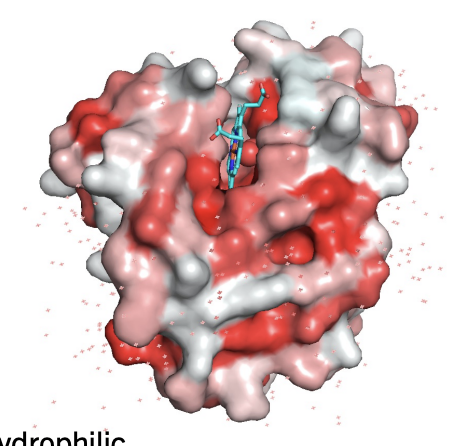
Hydrophobic amino acids
where are most regions found
(two locations and why)
Within the proteins: the maximize the hydrophobic interactions (away from water)
A little bit on the surface: to allow for non-covalent interactions
Post-translational modifications
what can be modified of the side chains (two things and two affects)
Remind yourself about the disulfide bond
Four important covalent modifications
Removal or addition of functional groups, changes the structure and thus changes it’s function or begin the proteins degradation
The disulfide bond is an example of a post-translational modification
Important covalent modifications
Phsophorylation
Ubiquitination (degradation)
Glycosylation
Acetyl, methyl, hydroxyl, and carboxyl (adding functional groups)
Cofactor/ligand binding is also important
Amino acid modifications
hydroxyproline
carboxyglutamate
Carbohydrate-asparagine adduct
Phosphoserine
hydroxyproline
carboxyglutamate
Carbohydrate-asparagine adduct
Phosphoserine

Histone Acetylation (PTM)
In what location does this occur
occurs on key lysine residues affecting gene regulation
The molecule, lysine become more neutral, not binding to DNA as strongly

Amino acid metabolism
what can it be metabolized to form (4 possible molecules)
hormones
neurotransmitters
nitrogenous bases (DNA/RNA)
energy-producing intermediates (proteins sometimes used for energy)

Amino Acid Derivative

Amino Acid Properties
what does the sequence determine about the protein
Why is the primary sequence important (what info does it provide us with)
What does mutation lead to?
amino acid sequence determines the 3D structure of proteins, revealing their evolutionary history
Also making it easier to determine the protein’s functions with homology searches (similar functions of the ancestor)
Mutations in primary sequence changes the function and/or lead to disease
Types of mutations
silent: changes the codon but not the protein being made
E.g. UUU to UUC
non-conservative: changes the proteins properties
E.g UUU to UCU (changed hydrophobic to polar)
Conservative: conserves the properties - or doesn’t
E.g. UCU to
