Ptolemies
 Call Kai
 Learn
Learn Practice Test
 Spaced Repetition
 Match
Match Flashcards
 Knowt Play
1/42

There's no tags or description
Looks like no tags are added yet.
Name | Mastery | Learn | Test | Matching | Spaced | Call with Kai | Chat |
|---|
No analytics yet
Send a link to your students to track their progress
43 Terms
Egypt - Context
Egypt used to foreign rule, e.g., Persian rule + Alexander
Egypt in an easily defensible position
Nile + rivers provide multiple benefits: Fertility, Trade & communication, connections.
Bureaucratic system inherited from the Persians: Postal services, effective taxation systems, etc.
A rich and easy-to-rule kingdom
Conflicts primarily with the Near East: Israel, Gaza, Jordan, etc.
Alexander and Ptolemy I
Alexander took Egypt in 332 BCE.
Alexander is crowned as Pharaoh, founds Alexandria, and leaves Cleomenes as governor
Ptolemy kills Cleomenes after A.’s death
Ptolemy was given Egypt in the meeting of the Generals and the splitting of the empire
Stole Alexander’s corpse and had it buried in the new capital of Alexandria: Important for the legitimacy of the Ptolemies to own A.’s corpse
The Tomb of Alexander
Identified in textual sources, but archaeological remains are underwater
Located in the Ptolemaic palace complex
Became an important monument: great care and attention were given to the body and tomb
An important symbol of legitimacy
Tomb lost at some point: potential locations associated with other religious, locations or figures in the modern World
The Tomb of Alexander - Sources
Diodorus: Coffin made from gold, A.’s body filled with spices, chest covered with gold, laid in a purple robe with gold embroidery, design meant to honour A.’s achievements.
Strabo: Ptolemy carries off A.'s body, places it in Alexandria, and moves the body into a glass coffin instead of gold.
The Ptolemies
Longest reigning Egyptian dynasty
The final Hellenistic Kingdom to fall to Rome
Longevity is informed by multiple factors: Ease of rule, defensible positions
The geography of Egypt made it easily defensible
Working within Egyptian and Persian traditions of monarchy and government: Provided a model for rulership
The Ptolemies as Pharaohs
Crowned as pharaohs in traditional Egyptian ceremonies in the temple of Ptah in Memphis, following Egyptian and Persian tradition
Established a priesthood for A.: Calendar/ years named/ counted after the priests of A.
Married their sisters, participated in Macedonian polygamy
Established the cult of Pharaohs: worshipped alongside A.
Had close relations with major temples
Religion and Legitimacy
Ptolemies represent themselves as Pharaohs
Pharaohs had a close association with religious practice
Religious practice became associated with the Legitimacy of traditional Egyptian monarchs, emulated by the Ptolemies to legitimise their rule
The gods are seen to support the Ptolemies in battle/ conflict and decide the length of their reign: Ptolemies are divinely ordained
Ptolemaic kings presented as bringing unity to the cosmos, uniting Upper and Lower Egypt
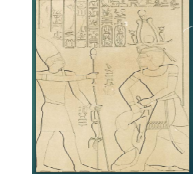
Religion and Legitimacy - Ptolemy III
Depicts: Ptolemy III presenting a captive to Monthu, who hands the king a ceremonial mace to execute the captive.
Ptolemy presented as a traditional Pharaoh in this depiction
Presented with a close relationship to the gods, emphasising piety
Inscription written in Hieroglyphs: traditional for Egyptian religious imagery
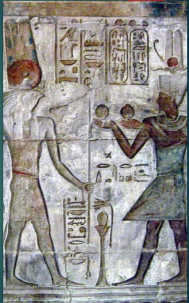
Religion and Legitimacy - Ptolemy IV
Depicts: Ptolemy IV and Monthu at the temple of Hathor
Vertical Text: Monthu- “I give you the power over every other foreign land”
Horizontal Text: Ptolemy- “Givimg wine to his father”
Hathor = Goddess of love, music, and the realm of the dead
Monthu = God of war
Gods described as the father of Ptolemy: Divine origins
Ptolemy shows piety/ service to the gods
Shows how the gods support Ptolemaic rule and conflict: rule is divinely ordained, the gods legitimise and support Ptolemaic expansion and conflict
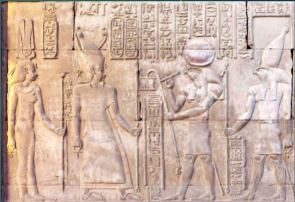
Religion and Legitimacy - Ptolemy VI
Depicts: Ptolemy VI + Cleopatra II (His wife) depicted with Konshu and Horus, who inscribes on a palm leaf the length of Ptolemy VI’s rule
Shows the king is divinely ordained
Horus is the ruler of Lower and Upper Egypt, associating Ptolemy with this quality
Ptolemaic kings often presented with their wives: emphasises a close connection and the role of the Queen
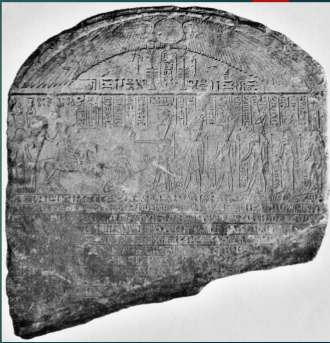
Religion and Legitimacy - Dual identity - Raphia Stele
Depicts: An Egyptian scene, but the king is shown in Macedonian Greek-style cavalry wear and an Egyptian crown.
Shows a mixture of Egyptian and Macedonian images
Hellenistic Kings often considered Greek due to a combined Greek and Macedonian identity
Contrasts with traditional views that separate Ptolemaic Egyptian and Macedonian identity
Egyptians somewhat allowed kings to depict themselves as foreign kings.
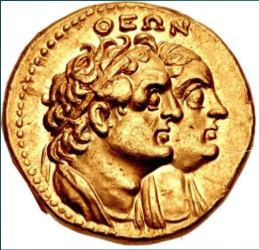
Ptolemaic kings as Hellenistic Kings
Ptolemaic kings also depicted themselves in traditional Greek styles
Seen particularly on coinage
Sculptors often depict Ptolemaic kings in Greek styles: Iconography often mirrors A.’s, e.g. curly hair, contrapposto gaze- looking slightly up or to the side
Shows Greek cultural influence
Egyptians somewhat allowed different depictions of their monarchs
Important for legitimising the Ptolemies to Greeks within and outside their borders
Presented as successors to A. : Important to legitimacy
Ptolemaic Queens
Brother-sister marriages, modelled on Egyptian traditions and gods, distinguished the royal household from the general population
Ptolemaic queens were often co-regents: either with their husbands or sons
Role as co-regent remains unknown: the extent of political power remains highly debated
Held an important honorary and symbolic role: As wives and mothers of the future kings
More visible than women were previously in Greek history, with individuals recognisable, depicted in a multitude of ways

Queens and Motherhood
Depicts: Ptolemy III suckling on Isis, Queen Arsinoe standing behind, both Isis and Arsinoe are depicted extremely similarly
Isis = goddess of birth and rebirth, brings the new year and flooding of the Nile
Ptolemy III presented as a divine son
Queen Arsinoe’s role as a mother is emphasised, associated with birth, renewal and fertility (of the land and individually)
shows how royal women could also be associated with royal ritual
Piety and good relationships with their children were points of praise for Hellenistic royal women
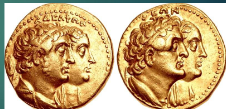
Queens and Kings
Depicts: Obv-Ptolemy I and Berenice I, Rev-Ptolemy II and Arsinoe (married)
The dynastic nature of Ptolemaic rule emphasised
Royal unity emphasised
Good relations with their husbands were praised in Hellenistic royal women
Emphasises the brother-sister marriages of the Ptolemaic kings
Queens in politics
Epigraphic evidence suggests Hellenistic queens generally: Had their own courts, helped maintain good relations with soldiers, and participated in diplomatic affairs
However, evidence of their participation is often sparse
Ptolemaic Queens and Warfare
Evidence of Ptolemaic queens accompanying their Brother-husbands on campaign
Played a key role in maintaining good relations with the king’s armies
Ptolemaic Queens and Warfare - Sources
Polybius: Arsinoe accompanied Ptolemy IV to the battle of Raphia, helped Ptolemy address and appeal to his soldiers in the phalanx, and appears to have been close to Ptolemy throughout the battle
Maccabees: Arsinoe accompanied Ptolemy IV to the battle of Raphia, addressed the troops directly herself, in tears, urging them to protect the women and children close to them, and promised the soldiers gold if they won the battle
Sources show the queen’s important role in maintaining relations with the soldiers: Polybius emphasises unity with Ptolemy, Maccabees emphasise Arsinoe’s independence
Autonomy of the Queen is different in both: Maccabees emphasise the Queen’s personal access to money

Ptolemaic Queens and Warfare - Sources
Depicts: Bernice II as a personification of naval prowess, wearing a tunic underneath armour, an anchor broach, crowned with a ship prow and dolphins
Ptolemaic queens associated with military prowess: purely iconography or real roles in battle/ conflict
Divine queens
Queens and princesses are often deified after death
Worshipped in the same ways as other goddesses
Cults and cult images of the queens were established
War and Kingship
Disputes over land continued throughout the Ptolemaic rule
The primary enemy was the Seleucids for control of Syria and core resources such as timber
Constant conflict driven by ideological and logistical reasons: Emphasise legitimacy, improve image of the king, present the king as leader or defender of the people, conflict necessary to maintain big armies, control over important regions and resources
War and Kingship - Syrian Wars
6 total Syrian wars
1) Victory for Ptolemy II - pushed into Asia Minor
2) Antiochus II reclaims territory in Asia Minor - war ended with a marriage alliance between Berenike II and Antiochus
3) Seleucid succession war results in Berenike + her sons’ deaths, Ptolemy III declares war on the new king in revenge, gains land in Syria, as far as Babylon
4) Resulted in the biggest battle of the Hellenistic period - Ptolemies lost territory but maintained a foothold in Syria
Temple Construction
Ptolemaic kings emphasised their relationship with the Egyptian priesthoods, helping them be accepted as pharaohs and be presented as such
Important for legitimising the king’s rule
Kings also developed this relationship themselves through the construction/ repair of important temples
Ptolemaic king continues the Pharaonic tradition of temple repair: repairs responsible for modern preservation
Follows traditional Egyptian styles, particularly Ramses III, with no attempts to Hellenise Egyptian temples
Greek Cities in Egypt
Greek cities maintained independence
Didn’t have to integrate into Egyptian culture
Resembled free city-states
Interacted with those around them
Maintained Greek practices
Cities and land were given to Greeks as a reward for military service
Greek Cities in Egypt - Naucratis
City in the Nile Delta
Founded by Royal Decree in the 6th Cent.
settled primarily by Greek Mercenaries w/ Permission from the Pharaoh
Featured Greek institutions, Greek-style temples, and religion
The first Greek city built before Alexander’s campaigns
Served as an important harbour between Alexandria and southern Egypt
Had its own laws and could award citizenship to its inhabitants
Greek Cities in Egypt - Ptolemais Hermaiou
Founded by Ptolemy I
A Greek polis settled by Greek-speaking colonists and given semi-autonomous status with its own local government
Could award citizenship to its inhabitants: citizenship was hereditary, creating a separate class of Greek citizens in Egypt
Greek Cities in Egypt - Alexandria
Founded on the Med. shore on the site of a pre-existing Egyptian town, founded by Alexander - development guided by the Ptolemies
Transformed into the Royal capital
Famous for its library and the lighthouse of Pharos, one of the 7 ancient wonders of the world
Library founded by Ptolemy II: housed 1000’s of scrolls from various scholars and philosophers from across the Med. - an important cultural and learning centre
Knowledge and collection of knowledge helped legitimise the king
A multicultural city with Greeks, Egyptians and Jewish populations living there
Life in Ptolemaic Egypt
Individuals of Greek descent also lived outside of Greek poleis and did not have citizenship
Intermarriage was common outside of Greek poleis, and bilingual children were common
Greeks adopted aspects of Egyptian culture, e.g., religious and funereaty practice - Greeks would be mummified with Egyptian-style stele with Greek writing
Language and Literacy
Greek was the official administrative language
Greek language influenced the Egyptian language with loan words
The Egyptian language was spoken widely outside Alexandria
Religious texts are primarily written in Egyptian hieroglyphs, used for royal inscriptions, and demotic scripts used for funerary
Private letters demonstrate that people with Greek names didn’t necessarily speak Greek
Religious syncretism and legitimacy
Greek and Egyptian gods went through a process of syncretism: combining the qualities and iconography of Greek and Egyptian gods
A key method of creating mutual understanding allowed for interaction between the two cultures
Sepsis was the most prominent syncretised deity, with a cult possibly being founded by royal decree: featured aspects of Zeus, Poseidon, Osiris, Amun-Ra, and Hades, with his consort being Isis (a brother-sister marriage)
Sepsis’ most important associations were with the Apis Bull and Osiris
Became an extremely popular deity, spreading to Rome and Greece
A figure both Egyptians and Greeks could invest in: Important for legitimising Ptolemaic rule for both Egyptians and Greeks
e.g. Isis=Aphrodite (sun disc = cow horns), Thoth/ Anubis=Hermes (baboons), Horus=Apollo etc.
War and Conflict - The Egyptian revolt
Egyptians revolting against Greek rule
Rebels claimed land and set up an independent state with their own Pharaoh, driving Ptolemaic forces out of Thebes
The new pharaoh was recognised by the priesthood at Thebes
Other rebellions occurred in the North
From 186, the Ptolemies reassert control
Motivation for the rebellions remains obscured - sources simplify the series of rebellions - particularly Polybius - there is speculation that revolts were motivated by the apparent wealth
War and conflict - Succession
Problems occurred with the succession of Ptolemy IV
Murdered by his advisors
Also murdered his wife Arsinoe III to prevent their son from taking the throne
Culprits were killed when Ptolemy V ascended to the throne
War and Conflict
After the 4th Syrian wars, Ptolemaic Egypt entered a period of decline
The stability of Egypt is under threat
Rome
A decline in Egypt had been happening since the battle of the Raphia in the 4th Syrian war: increased rebellions, discontent, weak kings, poor advisors etc.
Decline possibly exaggerated by our sources - difficult to guess the true extent of the decline
Ptolemies consistently had to deal with Rome - becoming more involved in Hellenistic conflicts - and attempted to maintain good relations with Rome through gifts
Cleopatra and Caesar become a couple and have Caesarion
Mark Antony assumes control of the eastern Roman provinces - begins relations with Cleopatra
Antony and Cleopatra were defeated at the Battle of Actium - after some time, both committed suicide
Octavian turns Egypt into a directly ruled province
Sources - The Canopus decree
A unique source - not narrative-based: provides a window into administrative culture and the voices of individuals
Honours Ptolemy III for Various reasons: returning stolen statues, securing grain at personal expense, supporting various religious institutions, and putting down rebellions
Rewards the king with a new cult and caste of priests to carry out worship
Further outlines the deification of Ptolemy’s deceased daughter and associated religious events/ practices
Through titles and epithets, Ptolemy is presented in the traditions of Egyptian pharaohs
Statues of the daughter mimic a style of ritual statues - deified as a goddess of virgins
Highlights the nature of Ptolemaic kingship: its close relationship with religion/ priesthood, the king’s role to ensure prosperity, the king’s divine nature and the king’s role as a military force
Highlights the importance of imperial women to the state ideology/propaganda, the importance of the Ptolemaic cult and the prominence of women in Hellenistic kingdoms
Sources - The Rosetta Sone
Outlines the benefits King Ptolemy conferred on the temples and his subjects
Highlights the divine nature of the king as a god, from a god, son of Isis and Osiris
Highlights the king’s piety - sighting his benefactions of money and grain to various temples
Ptolemy rewarded with increased honours
Highlights the divine nature of Ptolemaic kings
Emphasises the king’s religious duties and role as a priest, important for legitimising their claim to the throne
Sources - Coins of Berenike II
Coins appear to have been minted with the authority of Berenike
Berenike is also seemingly depicted on the obverse of the coin
Some take this as evidence of Berenike’s authority and power as queen
However, others attribute the coin to a depiction of Berenike I, issued by her son, meant to reinforce dynastic ties
Others suggest that an appearance on a coin doesn’t correlate with whose authority it was minted with
Leaves a conflicting impression of the limits/ extents of the queen’s authority in Ptolemaic Egypt
Administration - setting the scene
Inherited administrative systems from Persia: including a postal service, forms of taxation etc.
Persian administration was paired with new developments to improve the economic activity of Egypt e.g. staging posts for transporting people/ armies and goods
Wealth primarily based on Egypt’s agricultural capabilities
Friends and family of the king made up key admin. roles
Integrated both Greek and Egyptian administrative classes
Egypt’s religious practices made integration of Greeks easier
Foundation for administration was literature
Administration - Systems
Succession based on familial generations - a smooth system - though sometimes faced succession difficulties
Main admi. concerns were: defence, revenue, control combined with cultural concerns of a mixed population
System of land reward was established for Greek and later Egyptian infantry - securing loyalty of the army
New crops introduced to increase revenue - particularly cash crops e.g. olive and vines
Greeks and Egyptians both participated in admin - evidence by the use of Demotic and Greek scripts + poor Greek from Egyptian writers
Retained support from Egyptian population by respecting traditional laws and courts
Potentially introduces a policy of Hellenization - Greek literature privilege’s, Greek schooling encouraged, common for Egyptian to adopt Greek names (a common reaction to relate to new controlling powers
Administration - Taxes
A monetarised tax system was introduced
The majority of land (royal land) was subject to rent and taxation
Private land owned by temples still owed royal taxes
Land survey were carried out to estimate potential revenues
Greek financial systems were integrated into pre-existing Egyptian/ Persian ones
Temples
Temples were major land-holders with developed economic institutions and centres of cult
The pharaoh traditionally formed a key link between the gods and the people
Maintaining good relations with the temple was therefore essential for the Ptolemies
Ptolemies allowed temples to administer themselves - withing an overarching framework f royal administration
Ptolemies often invested in restring temples
High priests would be buried alongside the Ptolemaic rulers
The king would actively participate in traditional religious festivals in person
The Ptolemaic monarchy
Egypt the most subject to monarchic rule - with only three major Greek/ independent cities
The kings physical presence was important to the people of Egypt - kings regularly participated in traditional public religious festivals
Ptolemaic monarchy also had a Greek foundation: Ptolemy I studied Greek literature on kingship, utilised similar hierarchical titles of friendship to Macedonian and other Hellenistic kingdoms
Image as a pharaoh was also important - Ptolemies adopted epithets that carried divine connotations
Introduced a dynastic cult - Primarily based on Greek dynastic cults
Members of the dynasty would also be deified - in line with traditional Egyptian religion
Royal names became limited to high ranking positions
The kings presented as divine in nature - embedding them in Egyptian society as priests, kings and gods
Ptolemies - Medicine
Ptolemy I supported the study of medicine
Founded a school of medicine alongside the library and museum at Alexandria
Discoveries made vis dissection and vivisection
Produces two notable doctors: Praxargos of Kos - Discoveries related to the heart and blood + Herophilos of Chalcedon - Discovered nerves, studies the pulse, pioneered dissections