Rhetorical Devices
 Call Kai
 Learn
Learn Practice Test
 Spaced Repetition
 Match
Match Flashcards
 Knowt Play
1/31

There's no tags or description
Looks like no tags are added yet.
Name | Mastery | Learn | Test | Matching | Spaced | Call with Kai | Chat |
|---|
No analytics yet
Send a link to your students to track their progress
32 Terms
Anecdote
A brief story or tale
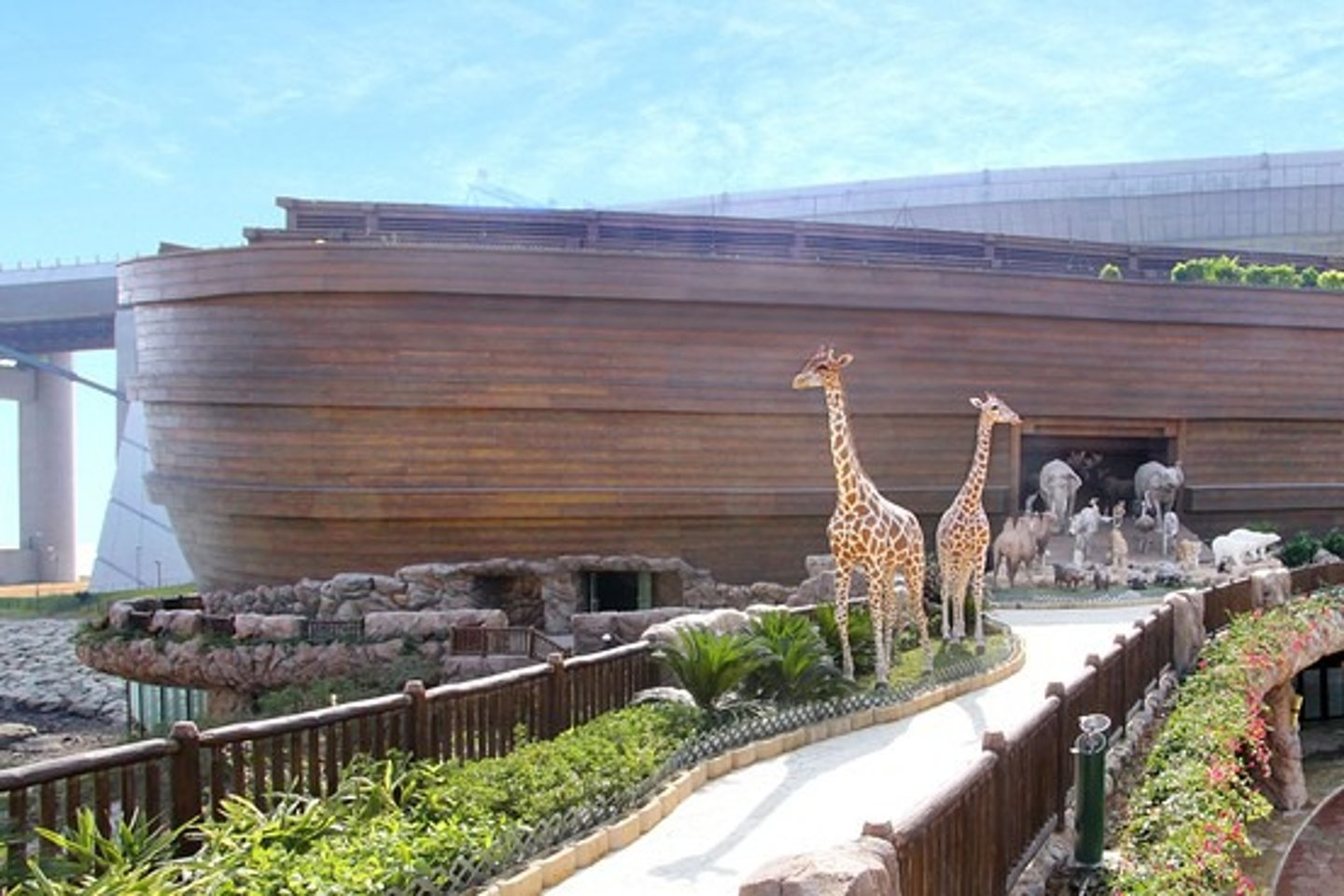
Allusion
a brief reference to a historical or literary
figure, event, or object that the audience should be familiar with
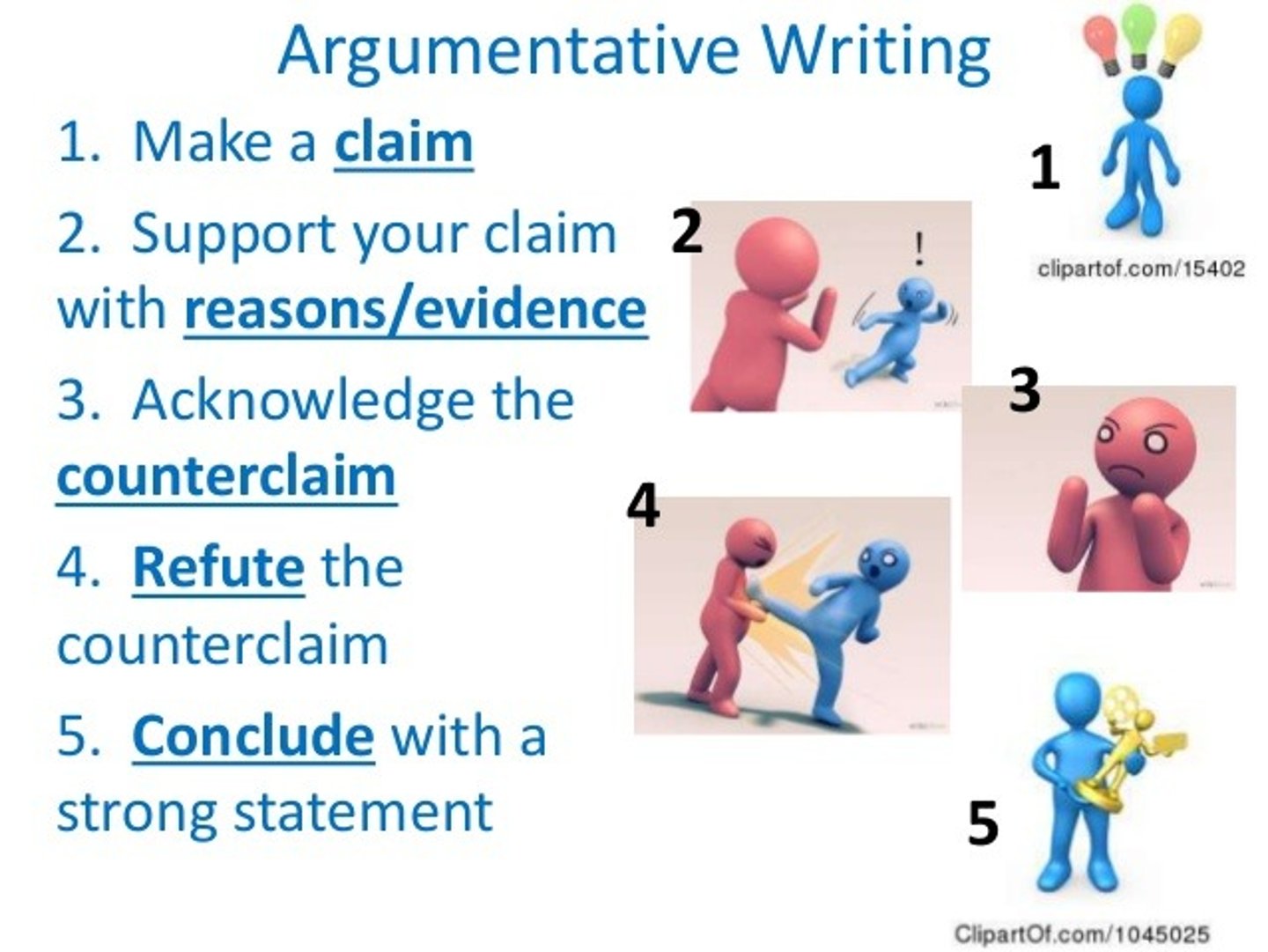
Analogy
Comparison of two things that are alike in some respects. Metaphors and similes are both examples of this device. "Like sand through the hour glass, so are the days of our lives."
Thesis (Claim)
Focus statement of an essay; premise statement upon which the point of view or
discussion in the essay is based.
Metaphor/Extended Metaphor
a comparison between two unlike things/the comparison happens for an extended time (throughout a poem or throughout a novel)
Pathos:
Emotional appeal
attempts to affect the listener's personal feelings
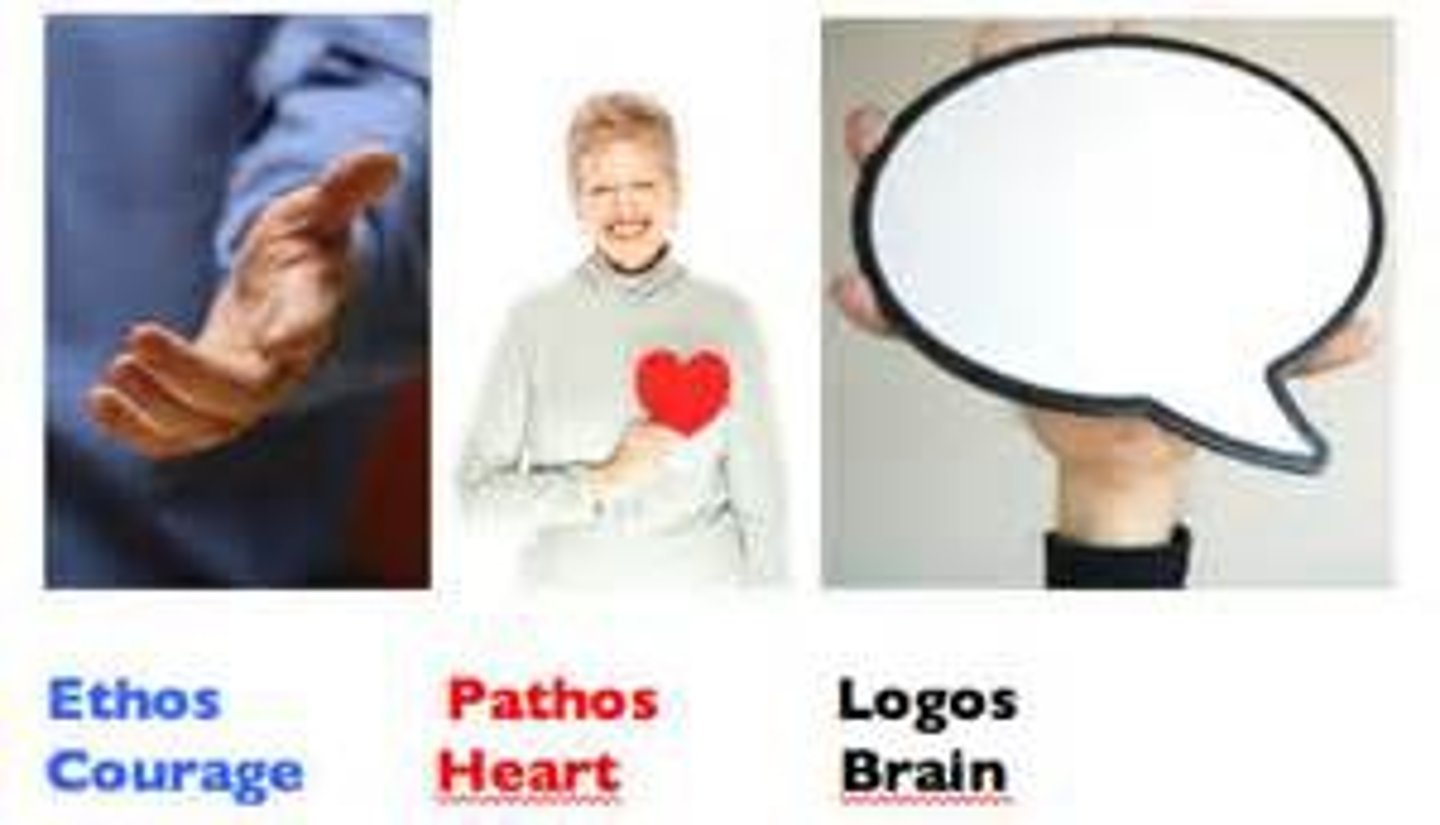
Logos:
Logical appeal
attempts to persuade the listener through use of deductive reasoning, logic, or intelligence
Ethos:
Appeal to authority or ethics
either claims to be an expert or relies on information provided by experts, makes audience want to "do the right thing"
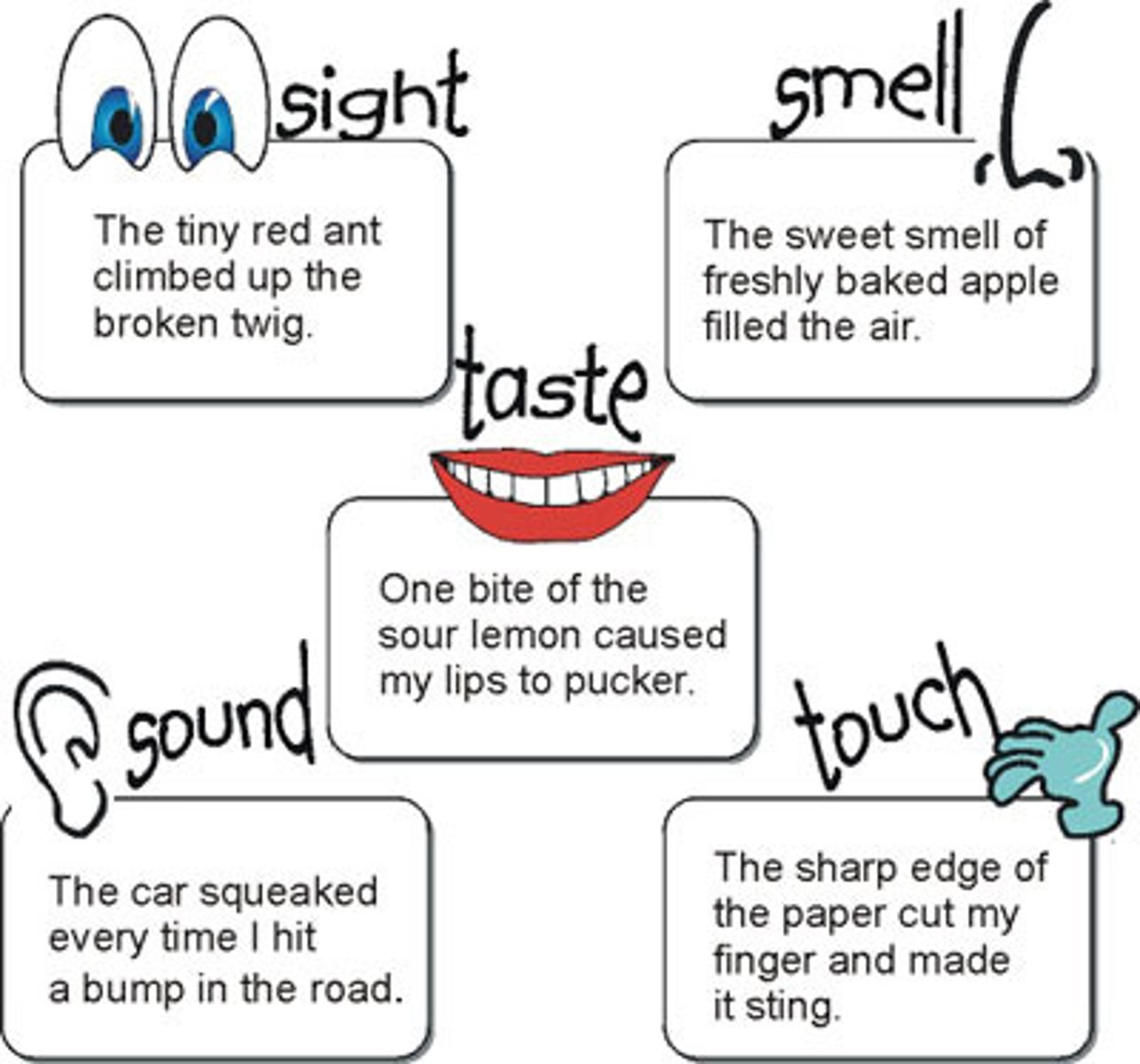
Imagery
Sensory details in a work; the use of figurative language to evoke a feeling, call to mind an idea, or describe an object. Involves any or all of the five senses.
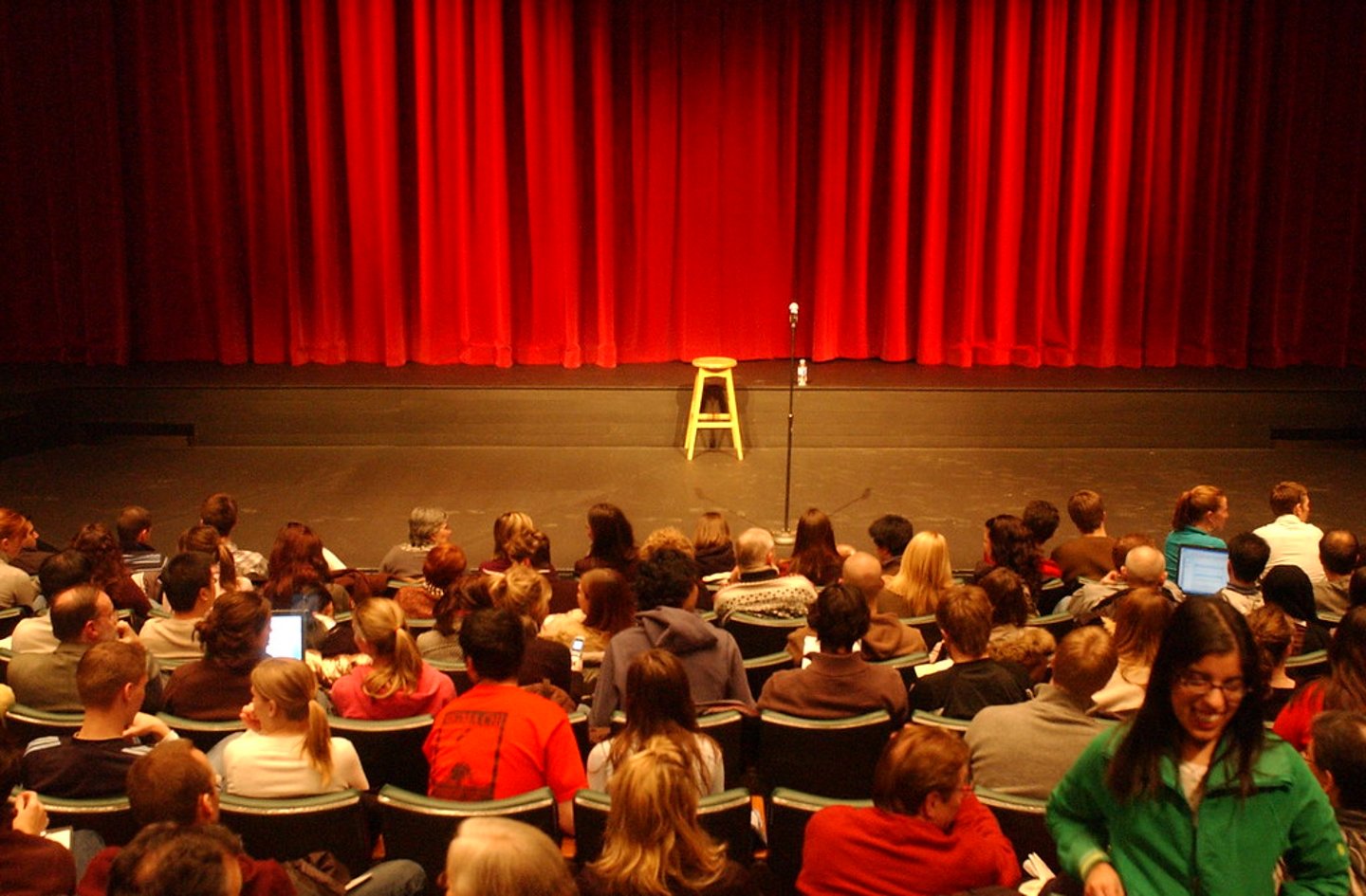
Audience
The person(s) reached by a piece of writing.
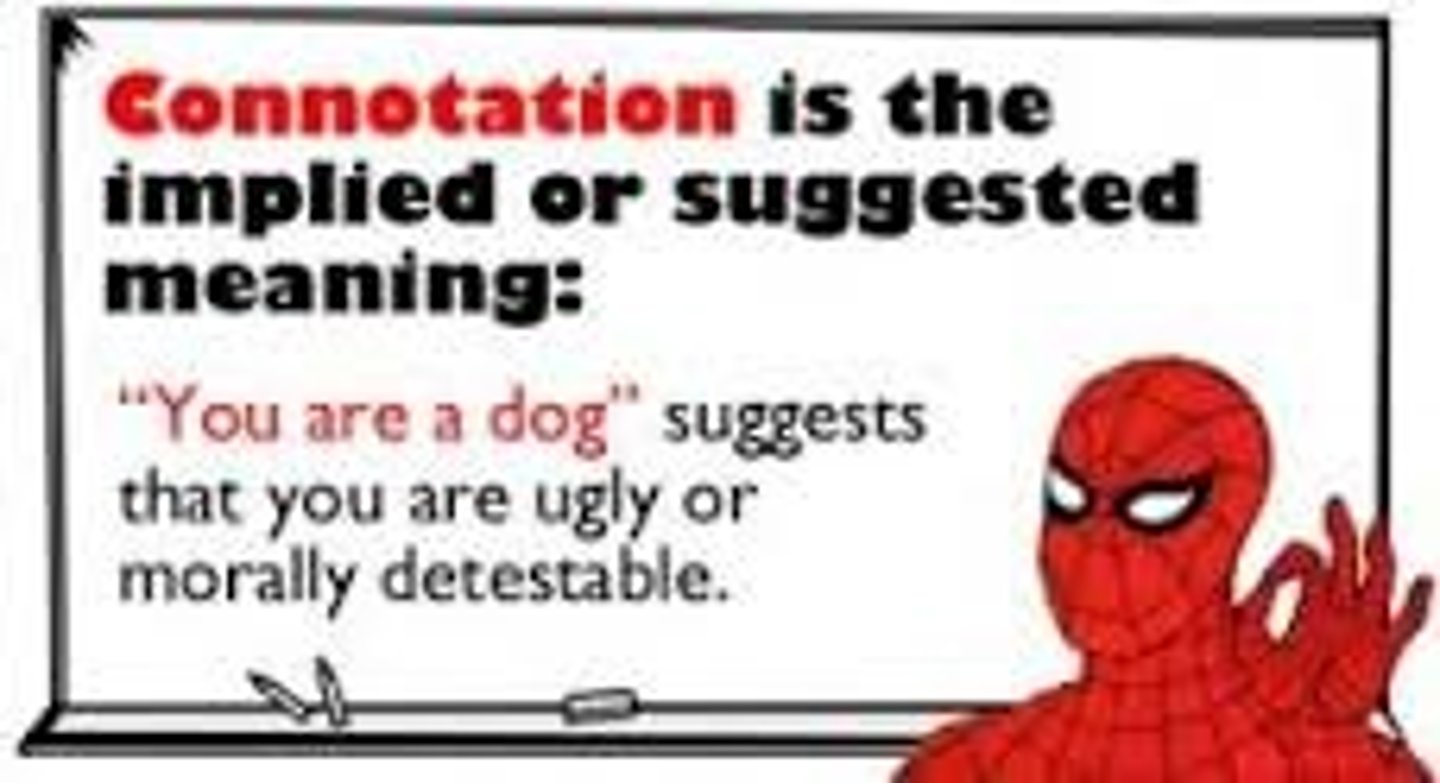
Connotation
What is implied by a word or the feelings associated with a word. Can be negative, positive, etc.
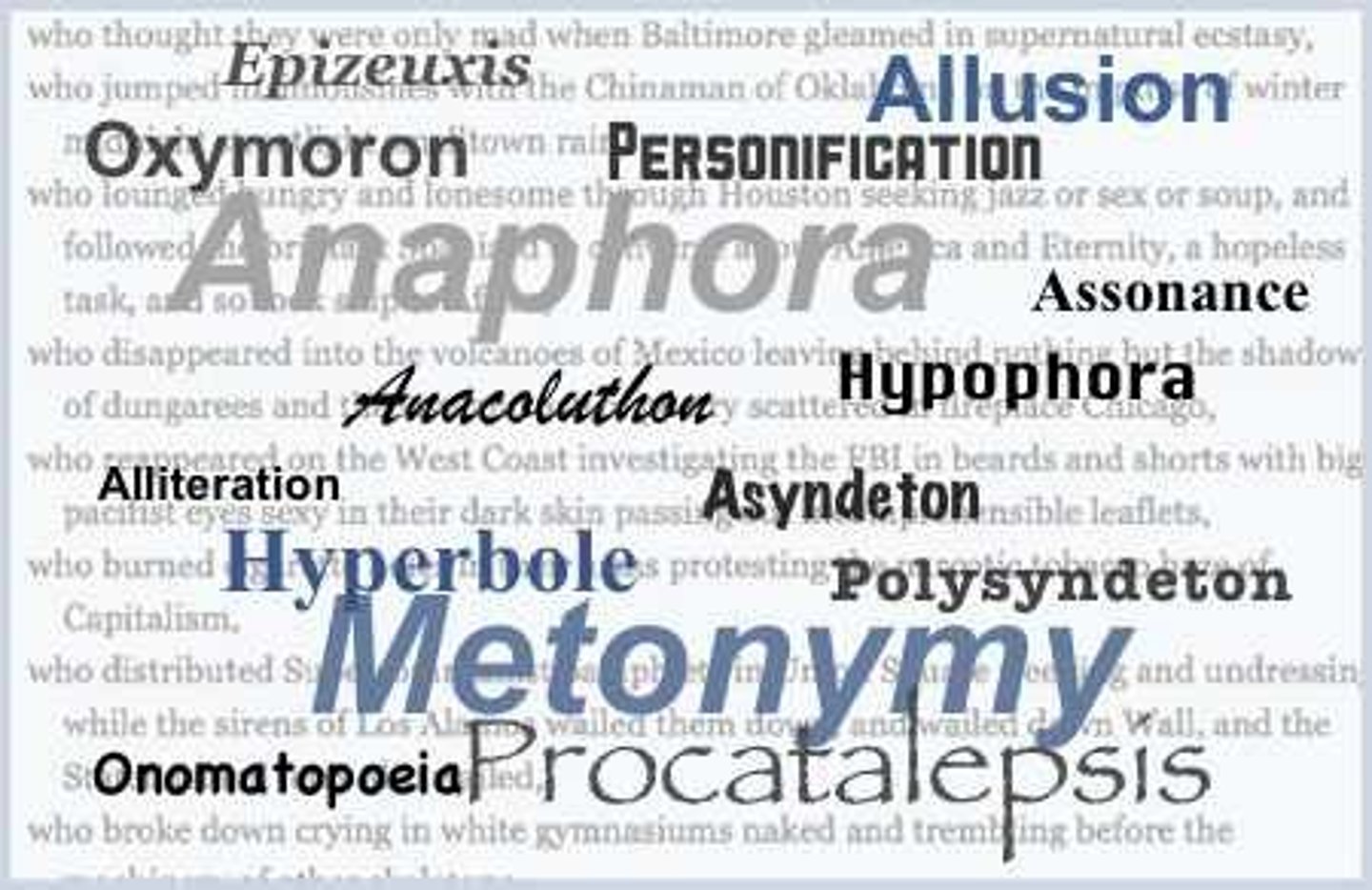
Rhetorical Devices
Techniques writers use for Argumentative/Persuasive writing and speaking
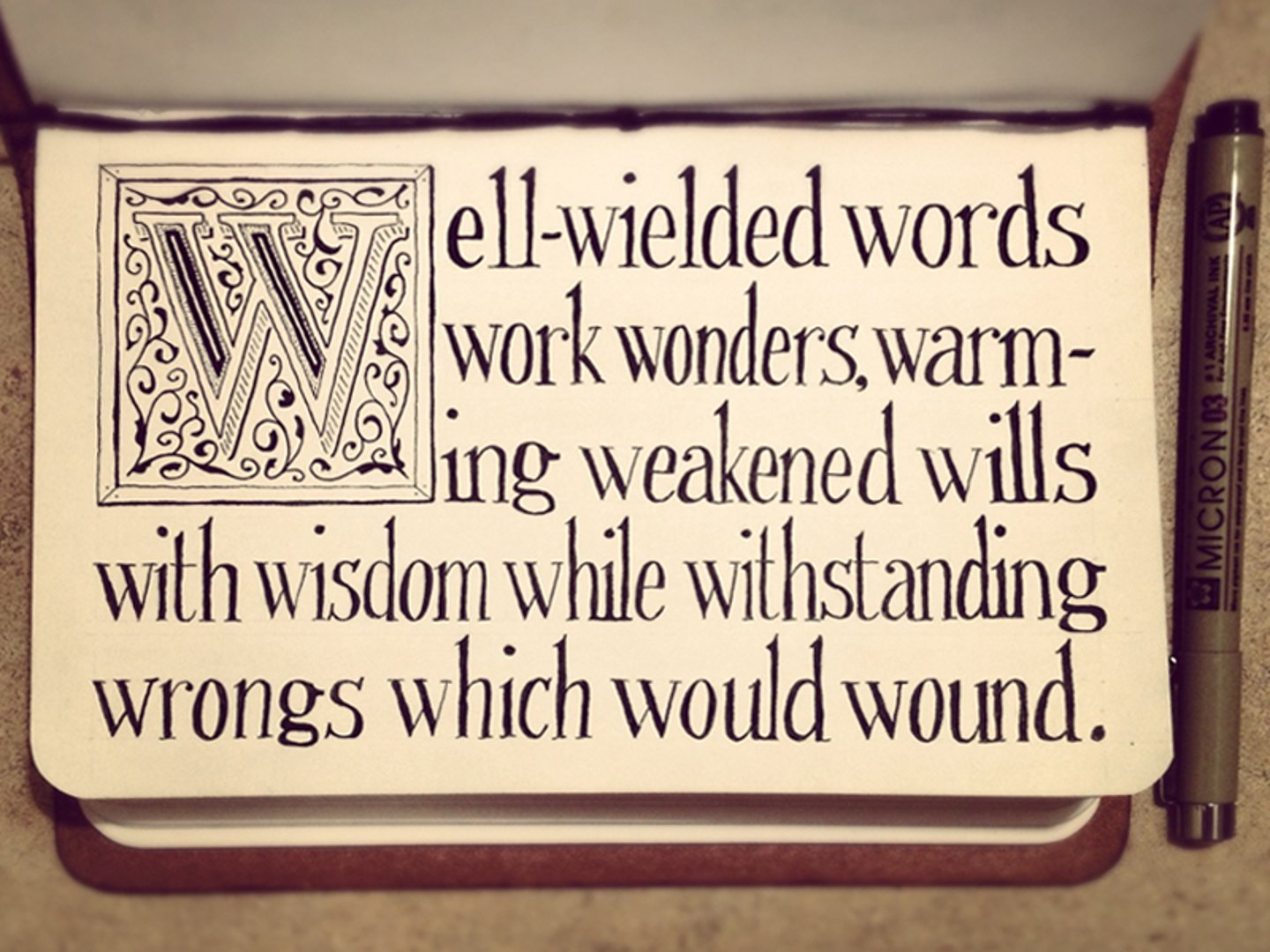
Alliteration
the occurrence of the same letter or sound at the beginning of adjacent or closely connected words.
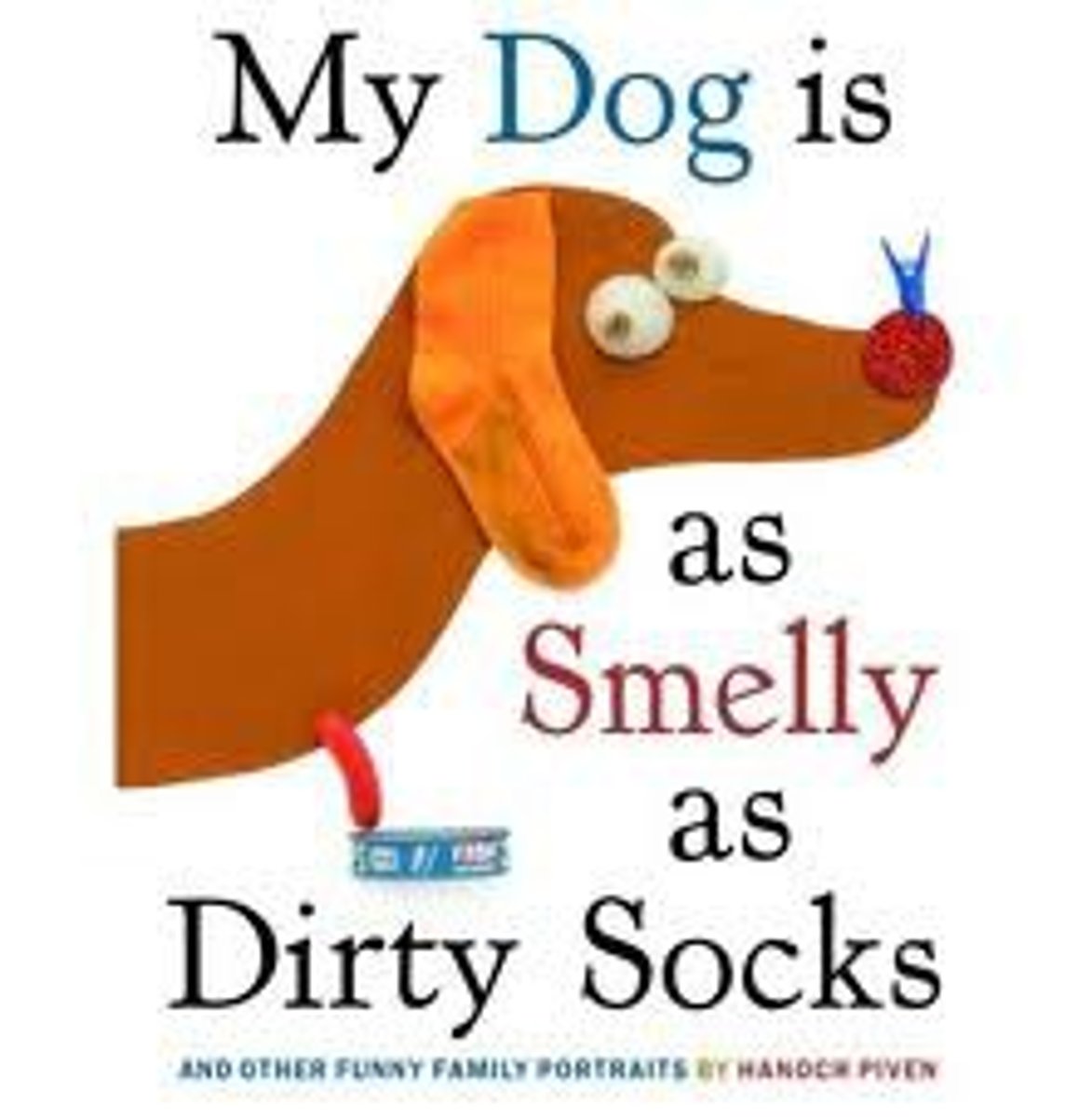
Similie
A comparison using "like" or "as"
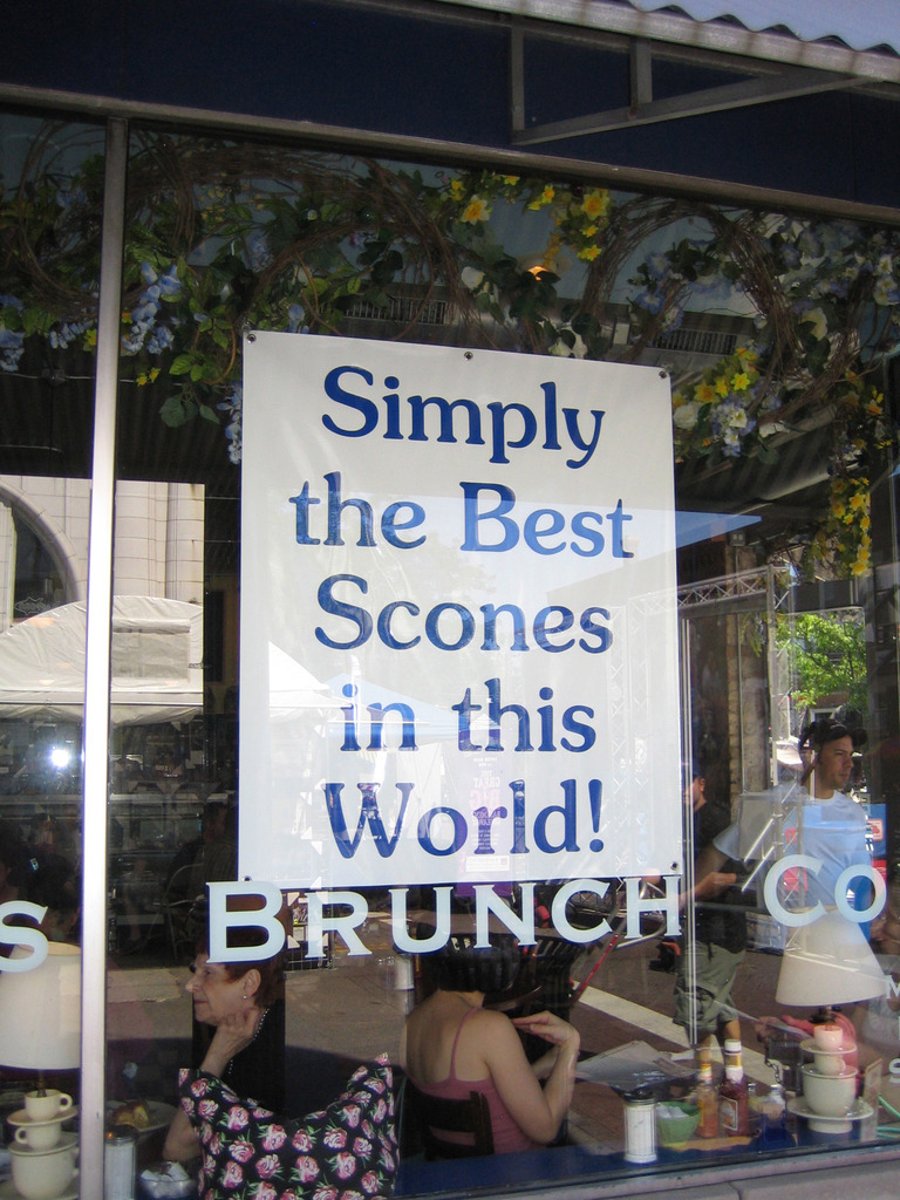
Hyperbole
exaggerated statements or claims not meant to be taken literally.
Parallelism
Use of components in a sentence that are grammatically the same; or similar in their construction, sound, meaning, or meter.
Rhetorical Question
A question asked merely for effect with no answer expected.
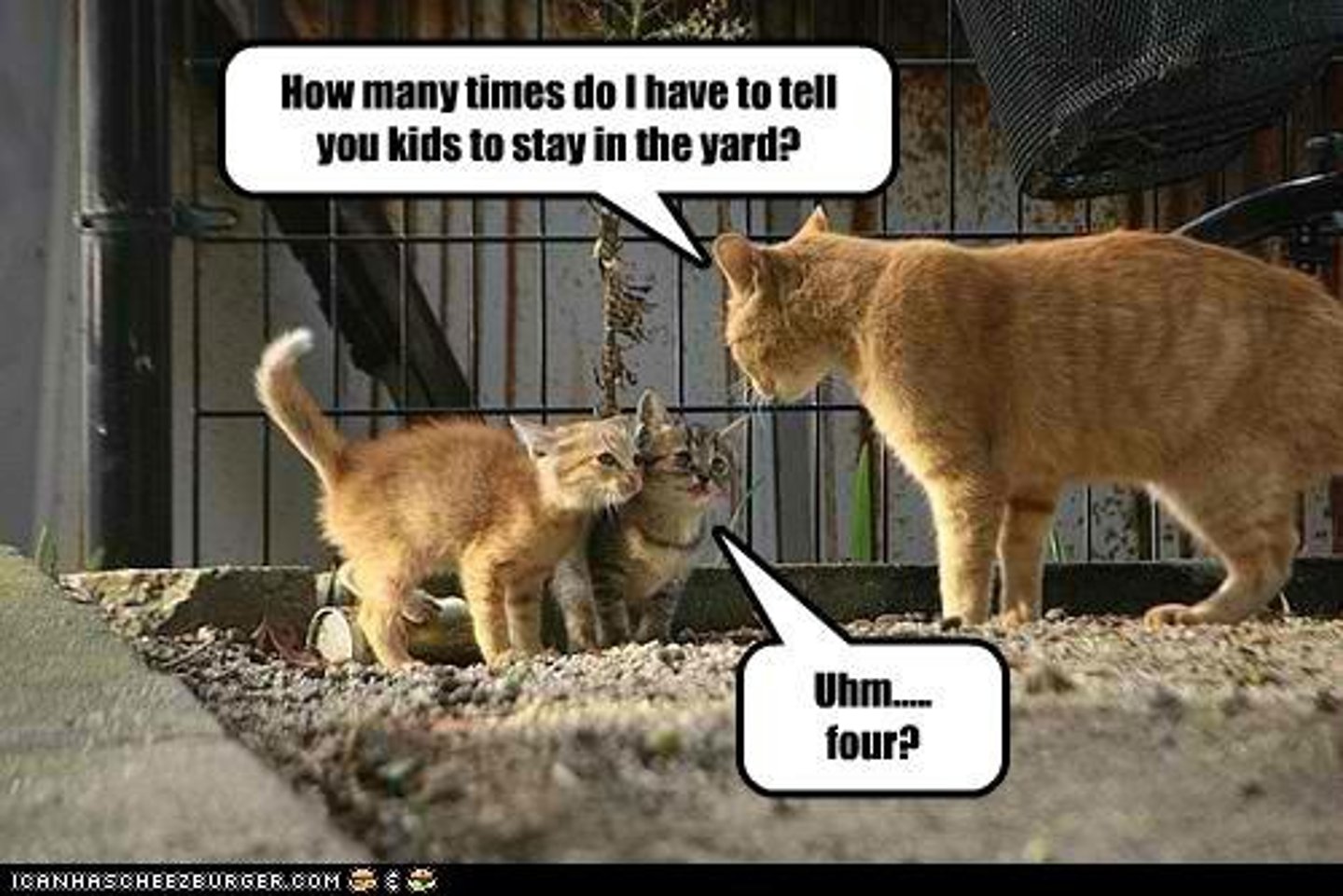
Metaphor
a figure of speech in which a word or phrase is applied to an object or action to which it is not literally applicable. (Does NOT use like or as.)
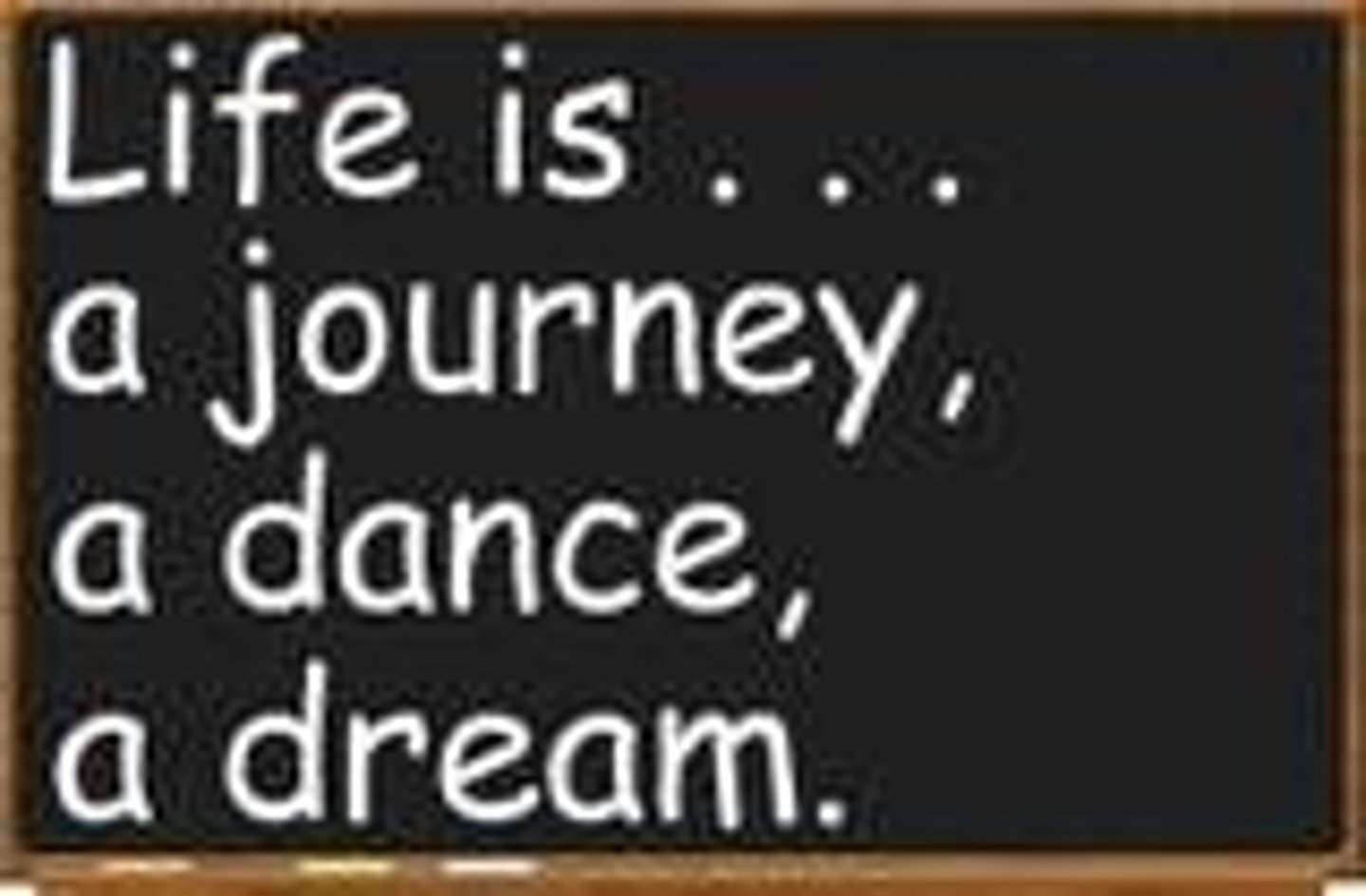
Repetition
the action of repeating something that has already been said or written.
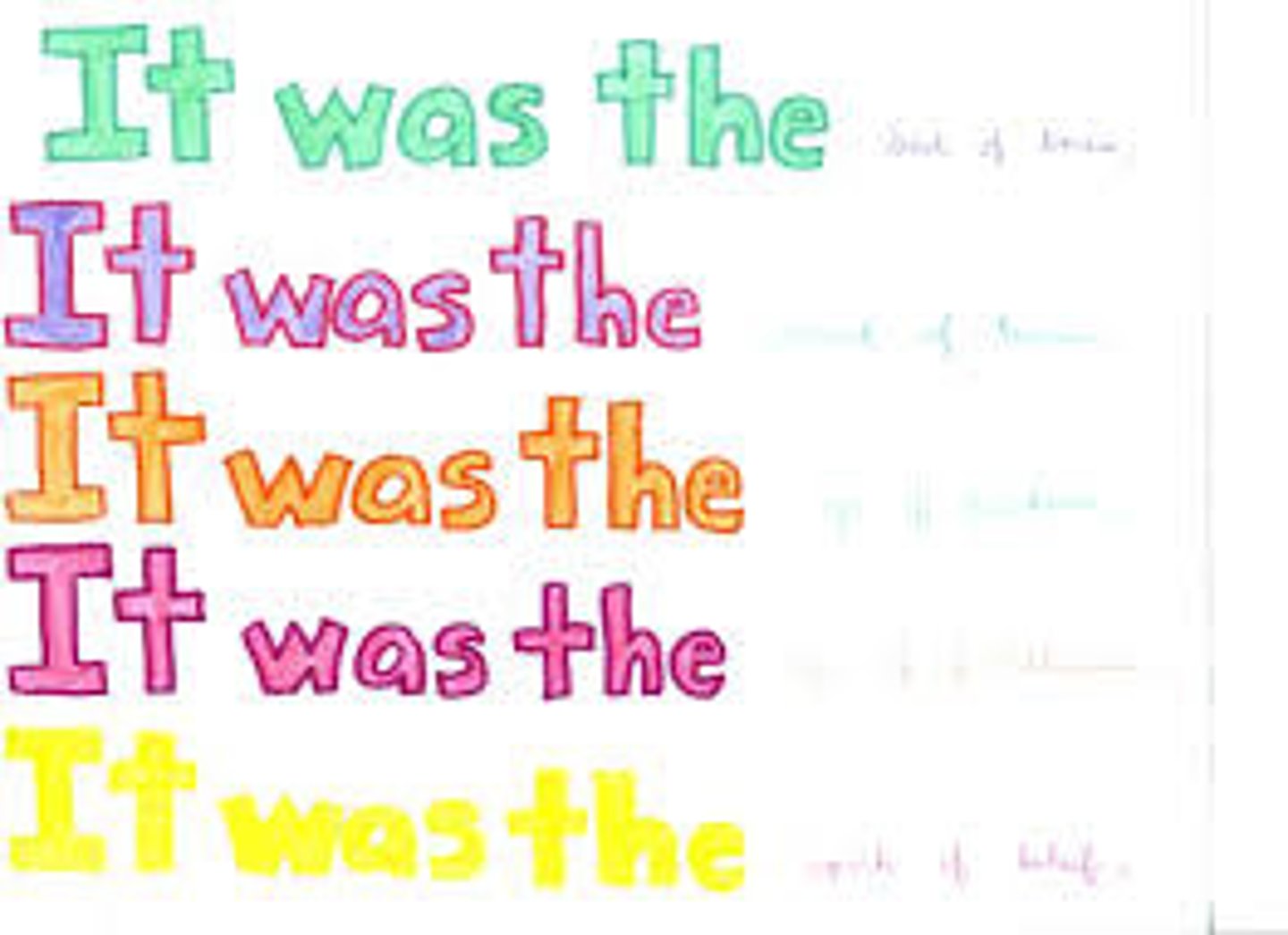
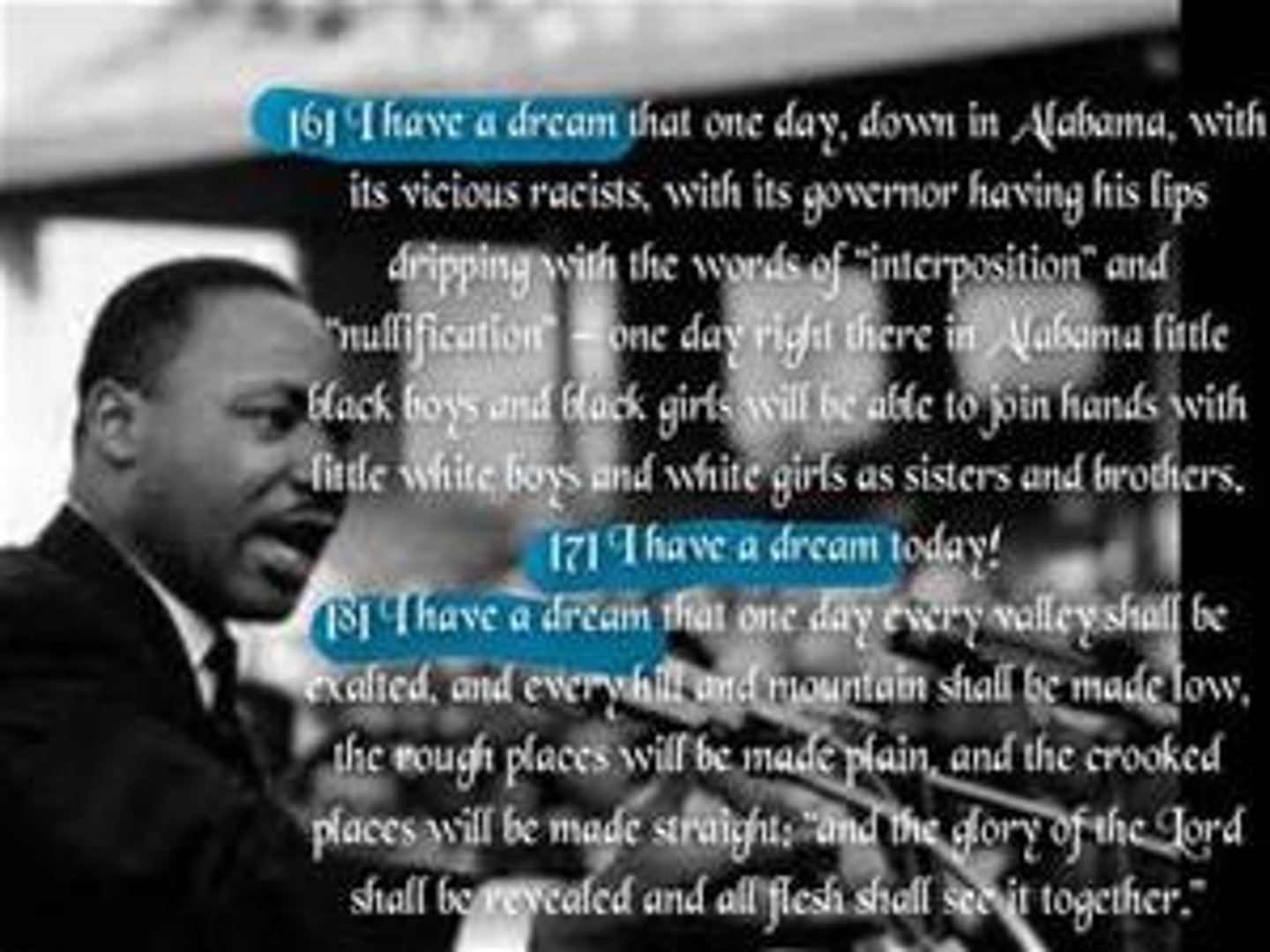
Anaphora
the repetition of a word or phrase at the beginning of successive clauses
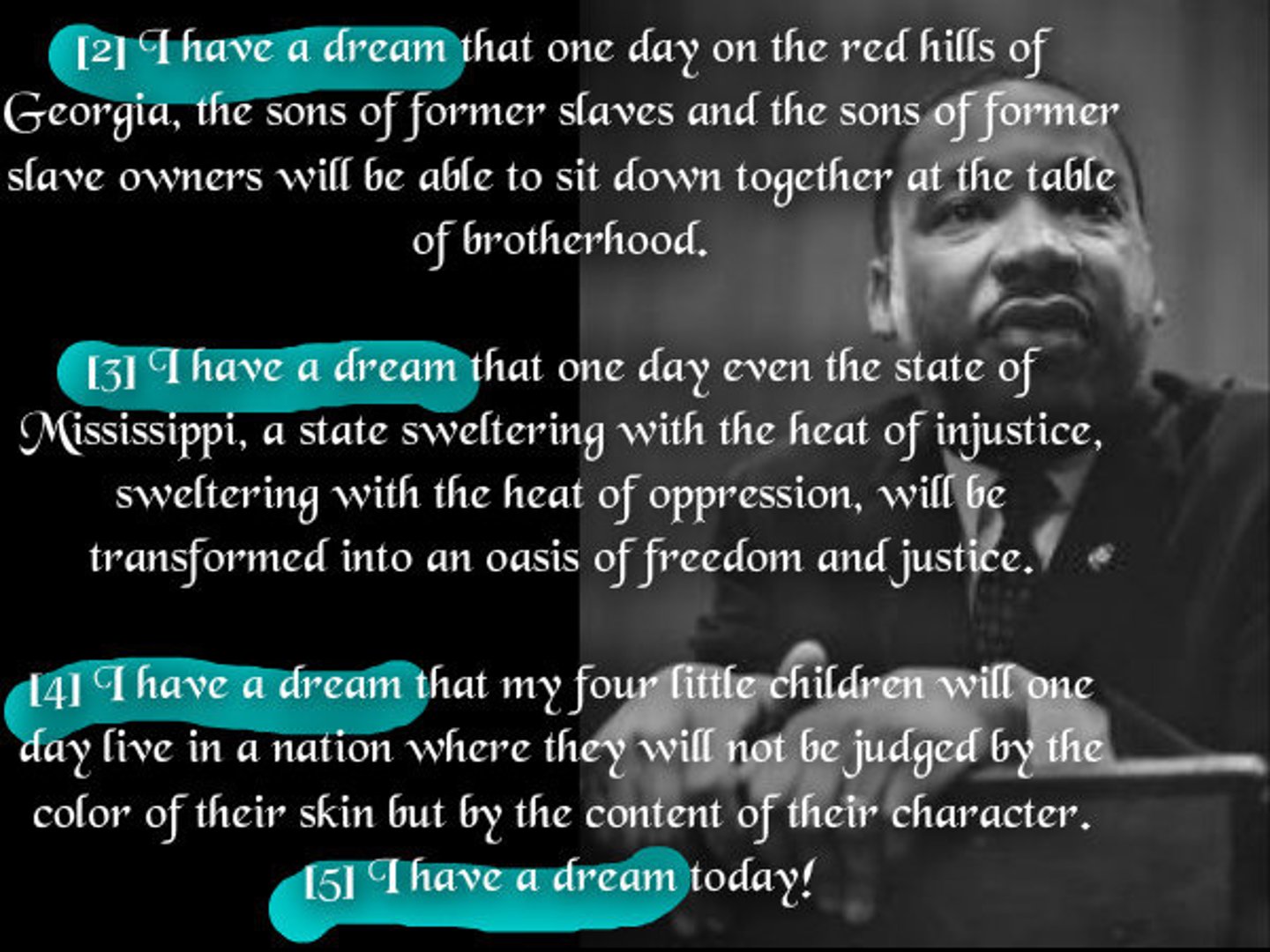
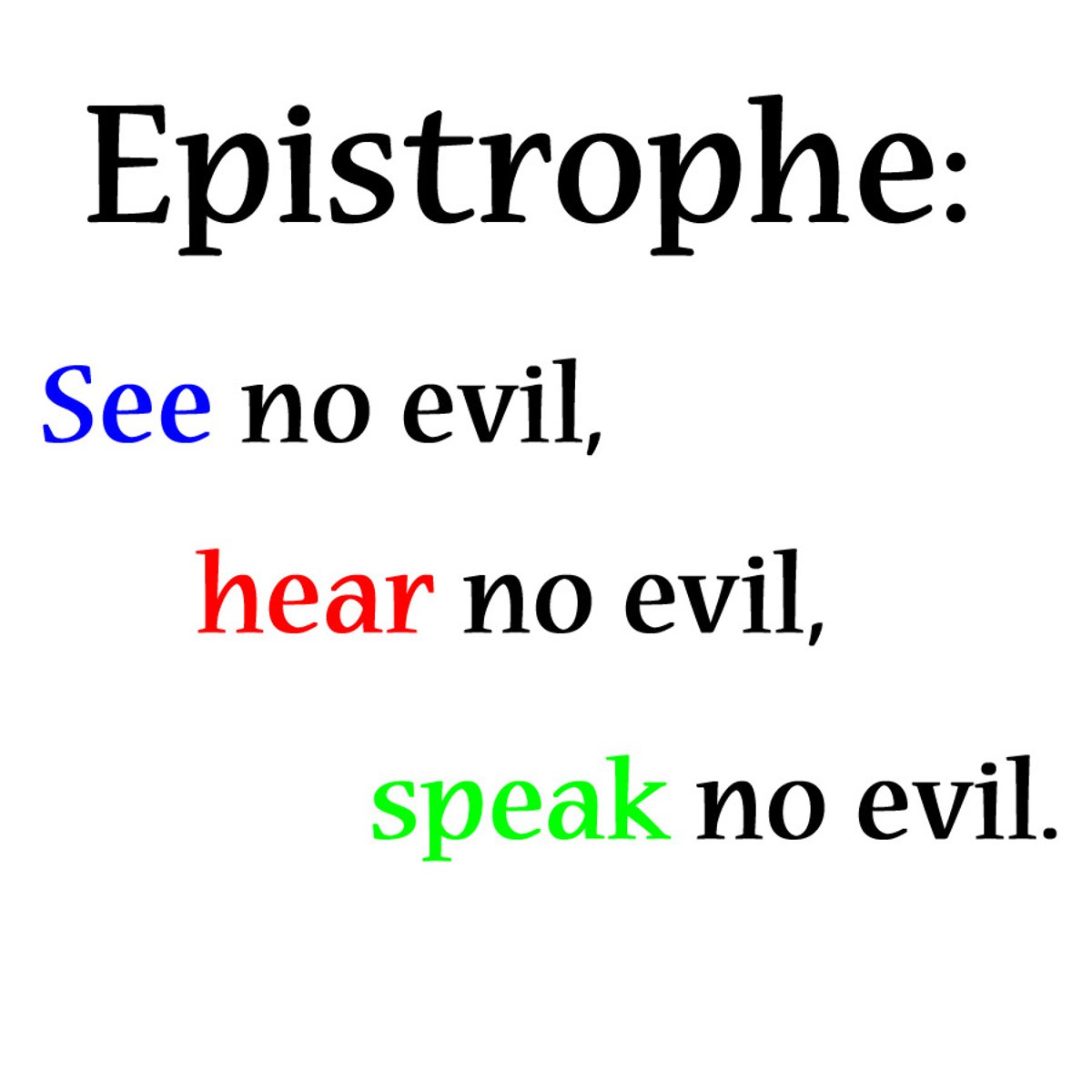
Epistrophe
Ending a series of lines, phrases, clauses, or sentences with the same word or words.
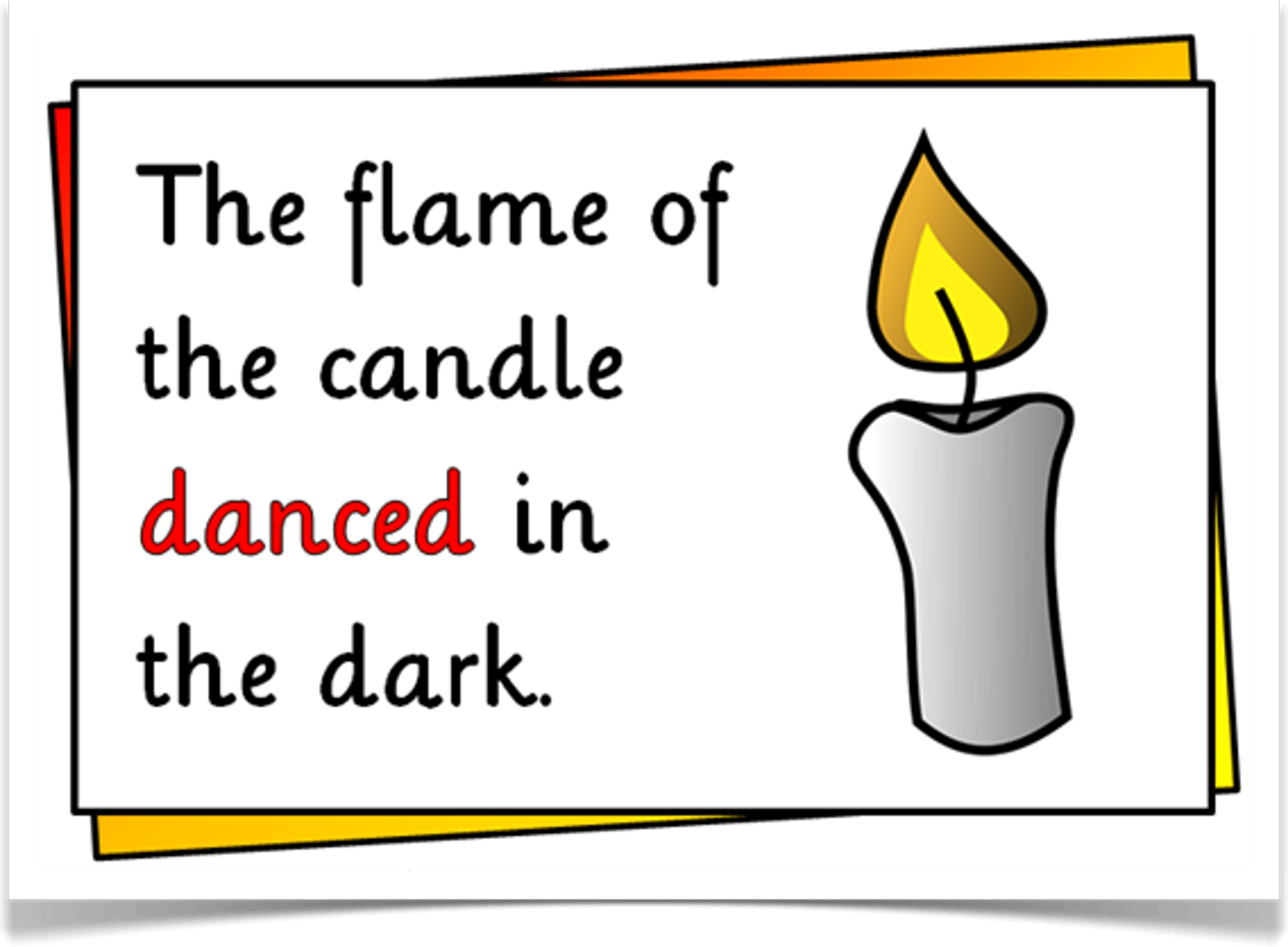
Personification
the attribution of a personal nature or human characteristics to something nonhuman, or the representation of an abstract quality in human form.
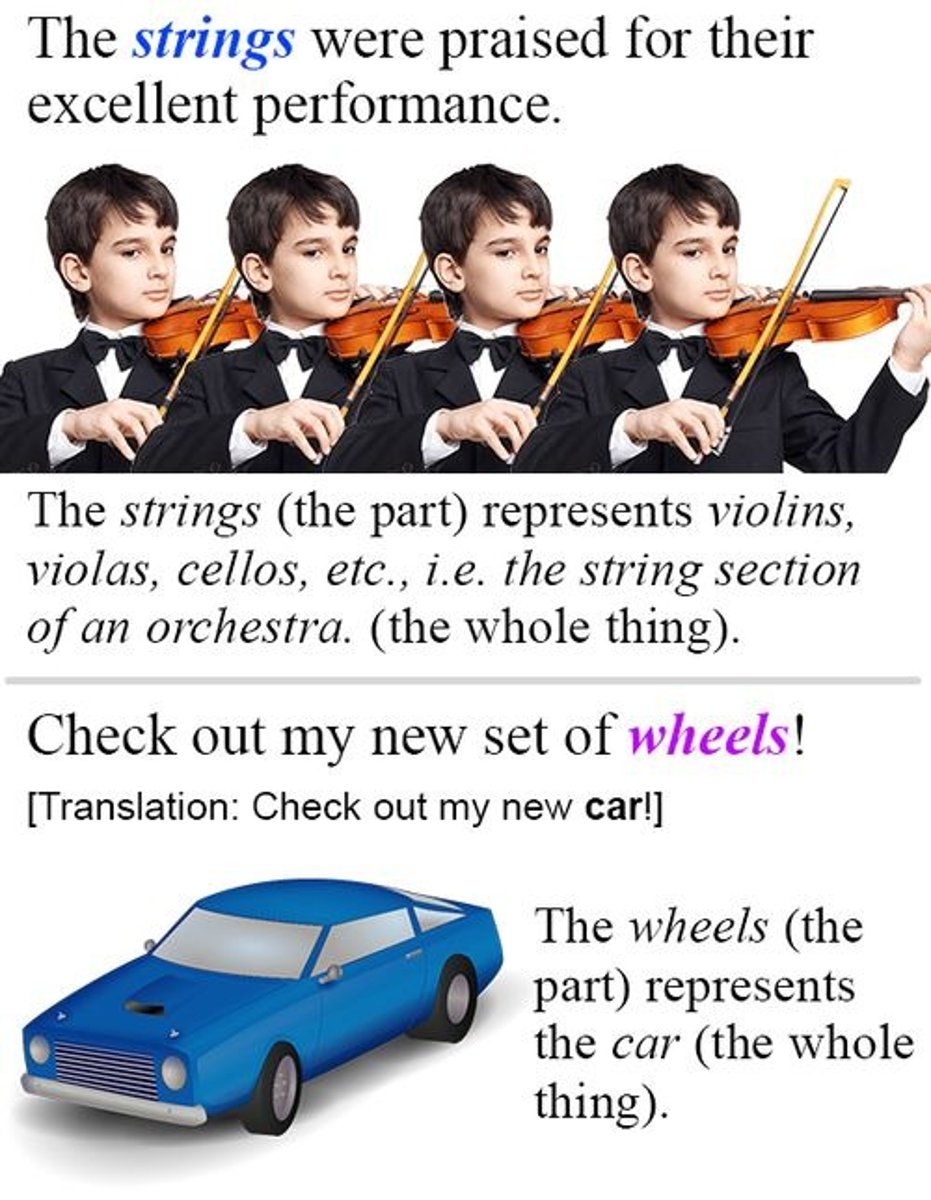
Synecdoche
A figure of speech in which a part is used for the whole
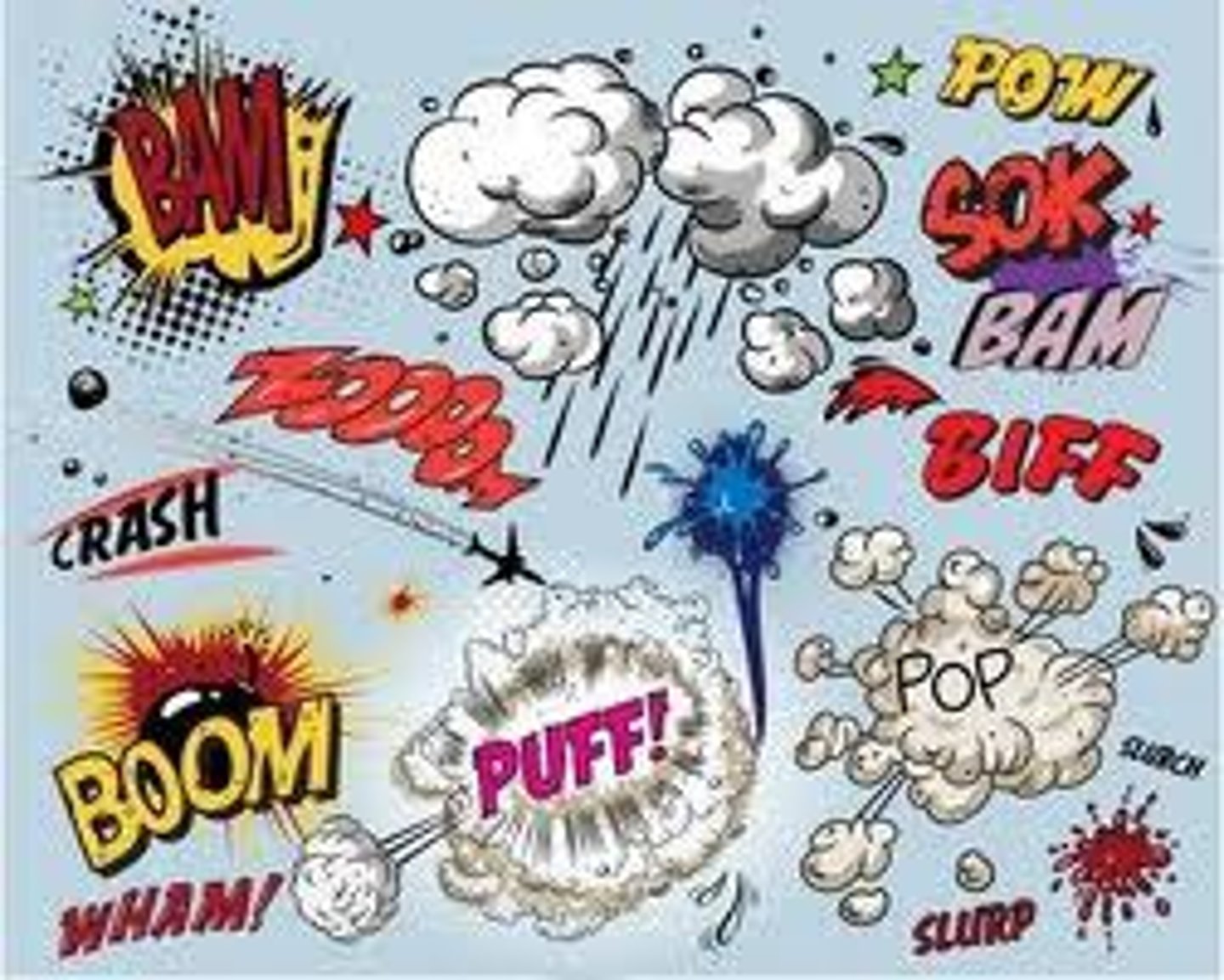
Onomatopoeia
A word that imitates the sound it represents.
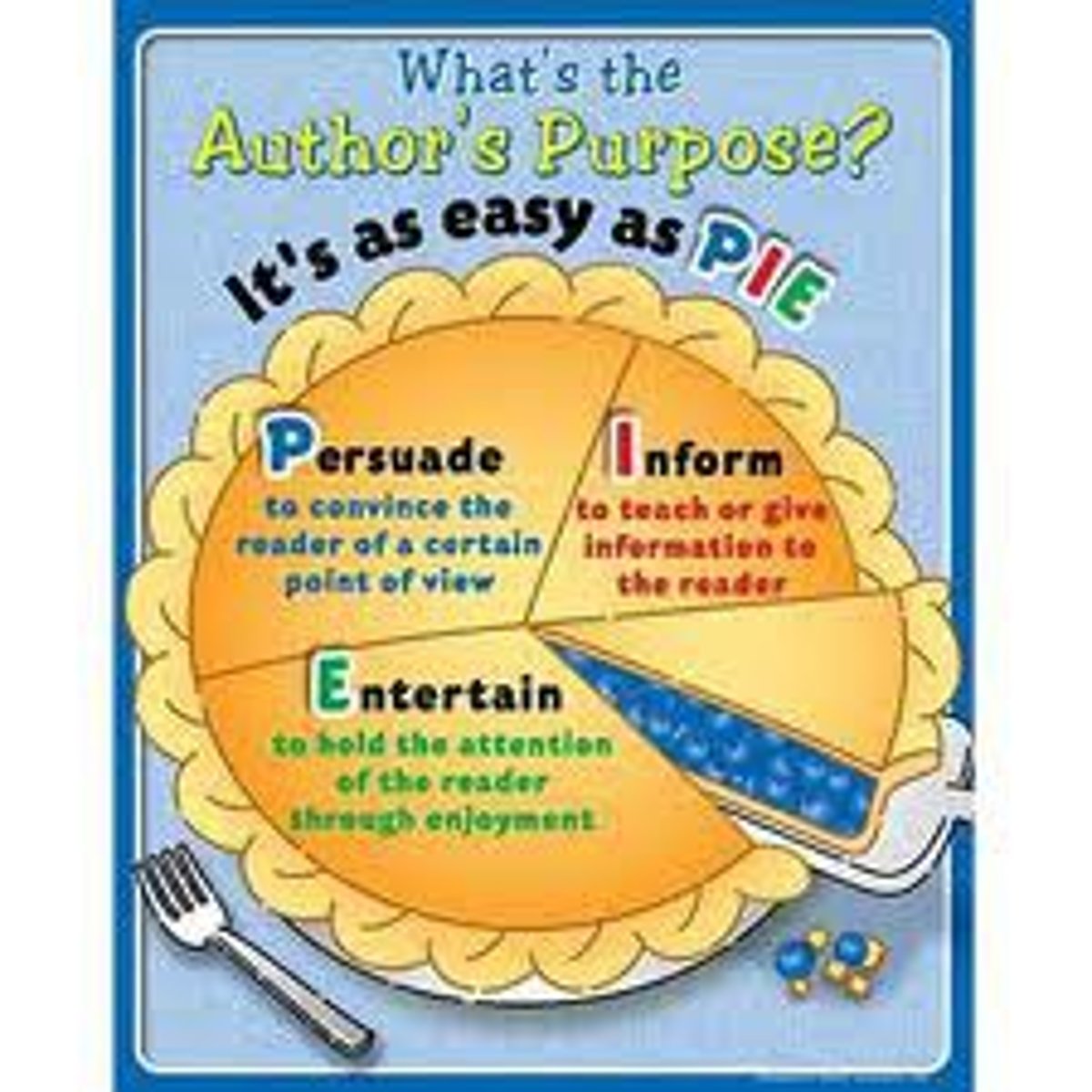
Author's Purpose
The reason the author has for writing. ( Inform, persuade, express, & entertain)
Antithesis
Ideas that contrast one another.
Enumeration
A list of detailsor examples used to support a point or idea.
Exemplum
A short narrative or example used to illustrate a point or argument.
Diction
The way words influence tone, emphasis, and the reader’s perception.
1st pov
Writer’s perspective
2nd pov
Reader’s perspective
3rd pov
used with a passive voice