Kaarten: H10: Forensic Intelligence, Organized Crime Networks & Disruption | Quizlet
 Studied by 0 people
 Call with Kai
 Learn
Learn Practice Test
 Spaced Repetition
 Match
Match Flashcards
 Knowt Play
 Podcast
1/33

There's no tags or description
Looks like no tags are added yet.
Name | Mastery | Learn | Test | Matching | Spaced | Call with Kai |
|---|
No study sessions yet.
34 Terms
Forensic intelligence
refers to the systematic collection, processing, and interpretation of forensic case data to produce timely, actionable insights for investigations and broader intelligence functions
treats forensic traces as data points that can reveal patterns, relationships, and structures across cases
is fundamentally an intelligence product, comparable to HUMINT or SIGINT, but rooted in scientific evidence
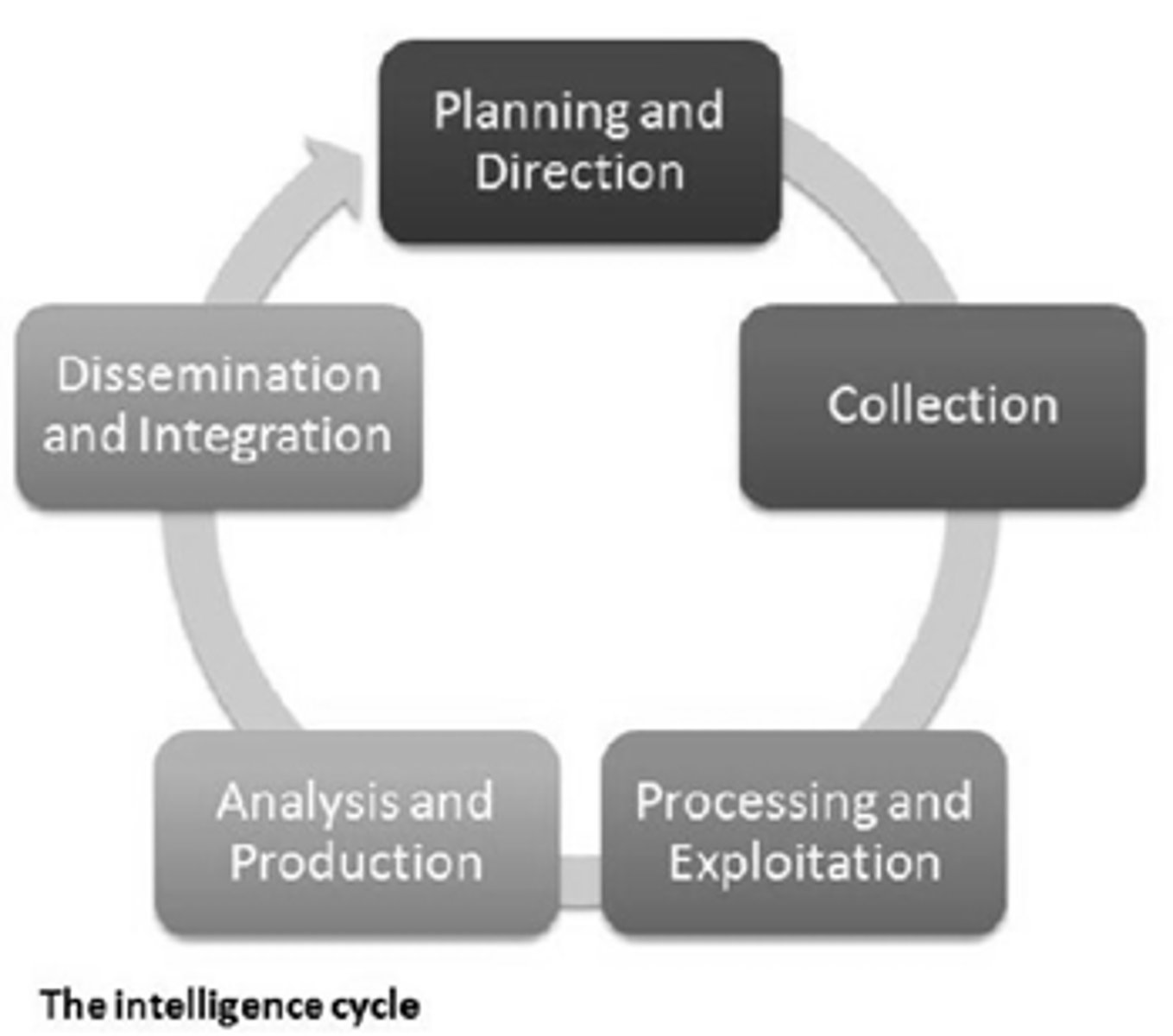
FI and the Intelligence Cycle
FI aligns with the full intelligence cycle, from collection (crime scenes, lab results) to analysis (linking traces across cases) to dissemination (briefings, reports) and feedback loops.
This positions FI not as a specialized niche, but as a core contributor to intelligence-led policing, enabling law enforcement to detect broader criminal patterns.
Effective FI implementation requires integration across agencies, databases, and investigative roles
Why FI Matters for Criminal Analysis
FI helps overcome linkage blindness, the inability to recognize related cases because information is siloed
It enhances situational awareness by identifying connections that traditional police data may not capture.
FI supports the detection of serial offending, cross-jurisdiction crime patterns, and hidden co-offending structures, improving both tactical and strategic decision-making
It plays a major role in modern intelligence-led policing systems, especially for serious and organized crime.
Traditional Forensic Science
· Retrospective; used after a case is already identified
· Focuses on confirming or refuting details within a specific case
· Primarily produces evidence for prosecution
· Often involves long processing times (months)
· Evidence pipelines lab workflows
· Less oriented toward strategic or preventative policing
Forensic Intelligence (FI)
· Proactive; used to generate investigative leads early
· Reveals hidden connections across cases or offenders
· Supports early-stage investigations and operations decision-making
· Modern FI delivers results in days or weeks
· Enables real-time intelligence generation
· Boosted by rapid DNA, digital forensics, and integrated databases
· Aligns with intelligence-led policing and strategic disruption efforts
Added Value of Forensic Intelligence
Integrating FI into criminal analysis has been shown to increase offender identification rates, case linkage, and clearance rates 22% more offenders detected and 44% more links when combining police and DNA data
FI contributes deep insights into offender behaviour by linking traces across time, space, and case types, offering a richer view of criminal patterns.
It improves the understanding of serial offending, co-offending, and the geographic or temporal structure of crime series
FI and Big Data
FI aligns naturally with Big Data analytics, as effective FI requires aggregating diverse datasets (DNA, fingerprints, ballistics, police records).
Benefits include:
- Enhanced detection of complex relational patterns
- Improved ability to uncover hidden structures in criminal activity
- Stronger predictive analytics for emerging crime trends
Risks include concerns about privacy, bias in forensic datasets, and false negatives that disproportionately impact vulnerable populations
DNA Databases as a Transformational Tool
National and international DNA databases represent one of the biggest advancements in FI, enabling high-confidence connections across cases and jurisdictions.
DNA traces can connect previously unrelated crime scenes, reveal serial offenders, and support both investigative and intelligence functions
DNA contributes disproportionately to investigations involving sexual violence, homicide, organized crime, and repeat offenders
Challenges to FI Feasibility
Major barriers include legacy IT systems, fragmented databases, and inconsistent data formats that limit interoperability
Many police organizations are still reactive rather than proactive, making it difficult to adopt FI’s intelligence-based mindset
Full FI integration requires cross-agency cooperation, standardized protocols, and trained generalist forensic advisors capable of bridging science and policing
What Is a Criminal Network?
Criminal networks are sets of actors (nodes) connected through relationships (edges) such as co-offending, communication, financial transfers, or shared forensic traces
Network analysis offers a holistic perspective on crime patterns, revealing structures, subgroups, and vulnerabilities that single-case investigations cannot detect.
Understanding network form is essential for designing disruption strategies that minimize adaptation and maximize operational impact
Types of Criminal Networks
Hierarchical networks
Cell-based networks
Entrepreneurial/market-based networks
--> Recognizing the network form helps determine the most effective disruption strategy
Cell-based networks
(e.g., terrorist groups, 'Ndrangheta clans, Albanian diaspora groups)
operate in compartmentalized units designed to limit information flow
disruption is difficult because arresting one cell rarely impacts others
Key Network Metrics (5)
Degree
Betweenness centrality
Clustering coefficient
Largest Connected Component (LCC)
Average shortest path length
Key Network Metrics (5) - degree
how many direct connections a node has; high-degree nodes are important, but not always critical, OC networks often shield leaders from high-degree positions
- Leaders don't have a high-degree -> have to protect them
Key Network Metrics (5) - betweenness centrality
measures how often a node lies on the shortest path between others
High-betweenness nodes (e.g., couriers, brokers) are often good disruption targets because removing them impacts communication flow
Key Network Metrics (5) - clustering coefficient
indicates how tightly knit a node's neighbors are
high clustering is common in gang sets and family-based criminal groups
Key Network Metrics (5) - largest Connected Component (LCC)
the biggest cluster in the network
attacking nodes that keep the LCC together can fragment the structure
Key Network Metrics (5) - average shortest path length
measures network efficiency; short paths mean information or contraband moves quickly
OC Example: Mexican Cartel Logistics Networks
Logistics & Transport in Cartel Networks
- Research on the Sinaloa Cartel and the Cártel de Jalisco Nueva Generación (CJNG) highlights that their transport and movement networks depend less on visible leadership and more on “brokers” and “facilitators.”
These brokers:
- Often display high betweenness centrality while maintaining relatively low degree centrality, making them structurally indispensable while remaining under the radar.
- Are embedded across multiple nodes of the network, enabling efficient coordination without overt hierarchical oversight.
- Example: In the Mexico Alliance Network study of 2021 (176 nodes, 226 edges) such logistic hubs emerged as critical intermediaries.
Historically, disruption efforts have targeted top leaders (“kingpins”), which may yield immediate disorder but often accelerate violence and decentralisation of the network.
- Network-analysis findings suggest a more effective strategy: targeting middle-tier logistic hubs (e.g., brokers/facilitators) rather than the apex leadership. This approach is likely to degrade network function with less destabilising fallout.
--> first study that stated that we should stop cutting of the heads, and focus on new ways to disrupt/stop networks
kingpin
=> target the top/leader (-> cut of the head)
- Is done very commonly
- Very good in media, but they aren't good overall
--- They cause a lot of panic and chaos for the communities that there in and for the OCG
--- A ton of violence within the group to see who will take over, but also withing other OCGs
--- there will be a lot of damage, but it doesn't really stop the operations
What Is BEFORINTEL?
Building the Foundations of a Forensic Intelligence Tool in Belgium
= a national scientific initiative designed to evaluate how forensic data can be integrated into operational criminal intelligence.
It aims to map Belgium’s forensic datasets, assess feasibility of national integration, and propose guidelines for a full-scale FI system within Belgium’s legal constraints.
The project is unique because it attempts full-domain integration (DNA + trace + police data) rather than focusing on one crime type or forensic modality.
Focus on Serial Offending & Co-Offending
Objectives of BEFORINTEL (3)
Objective 1: Map forensic data sources across Belgium (DNA, fingerprints, toolmarks, trace evidence).
Objective 2: Test the feasibility and added value of combining forensic data with police records using network analysis.
Objective 3: Develop a national roadmap for implementing a forensic intelligence tool—legal, technical, operational guidelines for police, magistrates, and ministries.
--> These objectives position Belgium to become a leading FI adopter in Europe.
Why Belgium Needs FI
Belgium produces over 60,000 forensic reports annually, but much of this information is never integrated across cases.
Forensic data currently sits in siloed databases (NGD, NTD, police systems), limiting cross-case learning.
Linkage blindness is a recurrent issue in Belgium due to jurisdictional fragmentation and decentralized policing.
FI could significantly boost detection rates for serial offenders, cross-jurisdictional crime series, and covert organized crime cells (De Moor, 2018).
Belgium’s Key Forensic Data Sources
NPD (National Police Database): detailed administrative and investigative crime records.
NGD (National Genetic Database): DNA profiles and cluster matches, managed by NICC.
NTD (National Traces Database): fingerprints, footprints, toolmarks, earprints, etc.
--> These datasets rarely “talk to each other,” limiting strategic interpretation.
--> BEFORINTEL addresses this interoperability gap by building integrated datasets
Why DIS Adds Strategic Value
DNA-based case linkages introduce entirely new investigative bridges, connecting cases that share no suspects, locations, or police-reported associations
Forensic-only edges often connect geographically distant or cross-jurisdictional cases, helping overcome silos between police districts or provincial offices.
DIS data frequently links high-severity crime types—homicide, trafficking, sexual violence—because these offences tend to produce biological traces.
These features make FI especially powerful in organized crime and serial offending, where networks operate covertly and do not rely on visible social ties.
OC Case Example: Belgian Drug Network (Illustrative Composite)
In Belgium’s synthetic drug production landscape, DNA traces have connected meth lab sites, mobile lab components, and violent enforcement events across multiple regions—even when no suspects overlap.
Police-only networks showed isolated criminal events, but DIS data added forensic bridges linking production, storage, and distribution phases of the supply chain.
This type of FI-supported mapping reveals the infrastructure of organized crime, not just the individuals involved.
Such hidden connective structures are crucial for understanding operational roles within flexible, market-based organized crime groups.
Why Ego Networks Matter for Investigations
Ego networks highlight the local impact of adding forensic intelligence: how a single case becomes more or less central depending on new connections.
They are intuitively understandable to investigators, making them strong tools for briefings and operational analysis.
Ego networks can reveal:
- Newly connected cases
- Unseen bridges between crime types
- Possible serial offending patterns
- Unexpected ties through forensic evidence
This micro-level view helps investigators prioritize cases, reopen dormant files, or expand an investigation’s scope
Why Disrupt Criminal Networks?
Disruption aims to weaken operational capability, delay criminal processes, and create openings for investigative action.
It is central to combating human trafficking, drug smuggling, terrorism, and transnational organized crime.
Effective disruption reduces:
- Offender mobility
- Information flow
- Access to specialized resources (chemists, money handlers, weapons brokers)
Research shows that well-targeted disruption can slow crime, reduce violence, and destabilize illicit supply chains
Classic Disruption Strategies (5)
High-degree targeting: removes the most connected offenders; effective in dense co-offending networks but less effective in cell-based organized crime.
High-betweenness targeting: focuses on brokers, couriers, facilitators—research consistently shows this is more effective in both covert and flexible networks
High-closeness targeting: removes individuals central in information flow; useful for dismantling communication pathways.
Random removal: establishes a baseline; OC networks are generally resilient to random removals.
Resource-based disruption: seizing assets, chemicals, weapons, vehicles—especially actionable for market-based OC models.
Network Resilience & Criminal Adaptation
Criminal networks are inherently adaptive, reconfiguring rapidly after arrests or seizures
Many OC groups intentionally maintain low centralization to avoid vulnerability:
- Leaders avoid high-degree positions
- Communications are compartmentalized
- Specialist roles are flexible and replaceable
Disruption often produces only short-term gains unless strategies target structural vulnerabilities rather than visible or symbolic leadership.
Evidence shows that external pressure can cause groups to fragment into smaller cells, sometimes increasing violence or diffusion of expertise.
OC Example: Albanian Organized Crime Networks
Albanian-language organized crime groups across Europe operate through highly mobile, specialist-driven structures, often using encrypted communications and rotating roles.
Disruption of a single transporter rarely impacts the broader network because communication and financial handlers serve as redundant backups.
However, targeting financial coordinators and encrypted-communication specialists can produce significant operational disruption, confirming the importance of identifying high-betweenness actors.
FI can reveal hidden ties across trafficking events (weapons, narcotics, human trafficking), improving strategic targeting.
Added Value of FI for Disruption Planning
Forensic intelligence improves key player identification, surfacing actors who may not appear in police-only data but serve central roles in the criminal ecosystem.
DNA and trace-based links often reveal repeat offenders and serial behaviour, both strong indicators of vulnerability points within criminal networks.
FI allows agencies to move from reactive arrests to strategic, surgical disruption operations, reducing reorganization and minimizing collateral damage.
Fusion networks (f-type) show the most balanced resilience-disruptability ratio, supporting the idea that more intelligence input = better modern policing outcomes.
Final Takeaways
Forensic intelligence complements traditional police data, offering new visibility into hidden structures of crime.
FI is particularly powerful in organized crime, serial offending, and serious crime contexts, where traditional datasets under-detect structural relationships.
Network analysis demonstrates that FI expands case visibility by over 400% in high-stakes crime subsets while preserving core structures.
Simulation findings show FI enhances the precision of strategic, data-driven disruption strategies, offering a modern pathway for dismantling resilient criminal networks.
FI represents the next frontier for intelligence-led policing, enabling more efficient, targeted, and evidence-based crime prevention.
Nog leren (1)
Je hebt een begin gemaakt met het leren van deze termen. Hou vol!