Fall NM: physics
 Call Kai
 Learn
Learn Practice Test
 Spaced Repetition
 Match
Match Flashcards
 Knowt Play
1/126

There's no tags or description
Looks like no tags are added yet.
Name | Mastery | Learn | Test | Matching | Spaced | Call with Kai | Chat |
|---|
No analytics yet
Send a link to your students to track their progress
127 Terms
what is physics
the study of matter, energy, and of the properties forces and interaction that influence the behavior of matter
what is radiation
the motion of energy through space
why is physics important to nuclear medicine
radiactive decay
interaction between matter and radiation
detection and measurment of quantities of radiation and radiation protection
fluctuating feilds of electric and magnetic energy
electromagnetic waves
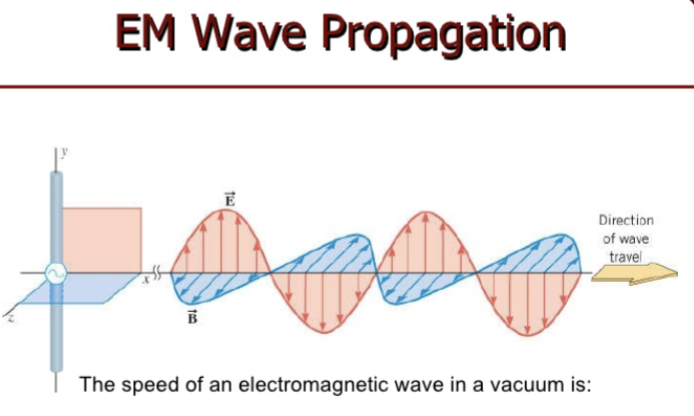
the speed of an electromagnetic wave in a vacuum is
also known as ©
3.00 × 10⁸ m/s
c (velocity of light constant in m/s) = ?
λ (wavelength in m) x ν (frequency in 1/s)
E (energy) =
h (planck’s constant) x ν (frequency 1/s)
subsitution for E= hν
E=hc/ν
how would energy and frequency differ with a longer wavelength
lower frequency and less energy (radio and heat)
how would energy and frequency differ with a shorter wavelength
higher frequency and higher energy (gamma rays and x-rays)
how does radiation behave
wave- particle duality
how should we think of electromagnetic radiation
Photons which are chargelss bundlesof energy that travel at the speed of light or ( c)
which is matter
anything that occupies space and has a mass
which is atom
the smallest quantity of an element that retains all of the chemical properties of that element
can atoms be broke down into smaller particles without losing chemical properties
no
father of modern atomic thought
“Infinitesimally small pieces are indivisible (atomos - indivisible)”
had their idea rejected by Aristotle (overlooked form 2,000 years)
Democritus
rejected Democritus's idea
“ you can cut a form of matter in half”
believed all substances consist of four elements (air, earth, water, and fire)
Aristotle
First atomic theory
atoms are tiny invisible particles
atoms of one element are all the same
atoms of different elements are different
compounds form by combining atoms
chemical reaction occur when atoms are sperated, joined, or rearranged
viewed atoms as tiny solid spheres (organized by atomic wt)
John Dalton
discovered atoms have electrical nature to structure and atom (electron)
plum pudding model/ raisin bun model (atoms are mostly pos charged w/ electrons throughout)
J.J. Thomson
gold fil experiment discovered protons and nucleus
atoms are positive in the center (nucleus)and mostly composed of empty space
Ernest Rutherford
Gold foil experiment
proved that atoms are mostly empty space with a tiny, dense, positively charged nucleus at their center by having radioactive material emits beam of pos. alpha particles → hits gold foil → most particles went right through → some particles are deflected

proposed that electrons move around the nucleus in specific layers or shells
expanded on rutherfords model to include planck quantum theory
electrons furthest away from nucleus had highest energy
electrons can jump by absorbing energy
Niels Bohr
described the likelihood of finding electron in certain position using math equations
electrons dont move in orbits they move in waves
Erwin Schrodinger
discovered particles with no charge
neutrons found in the nucleus
James chadwick
what theory proposed that electrons moving around the nucelus in a cloud (impossible to know where an electron is at a given time)
Modern theory

what are the three fundamental particles
protons
neutrons
electrons
quarks held together by gluons
(+) charge
massive and centrally located in the nucleus
protons
quarks held together by gluons
neutral charge
massive and centrally located in the nucleus
neutrons
(-) charge
revolve around the nucleus
held in orbit by binding energy
electrons
which fundamental particle has this charge and mass..
charge: -1.6 × 10⁻¹⁹ coulombs
mass: 9.1 × 10⁻²⁸g
electrons
which fundamental particle has this charge and mass..
charge: +1.6 × 10⁻¹⁹ coulombs
mass: 1.67 × 10⁻²⁴g
protons
which fundamental particle has this charge and mass..
charge:
mass: 1.00898 amu (slightly heavier than a proton
neutrons

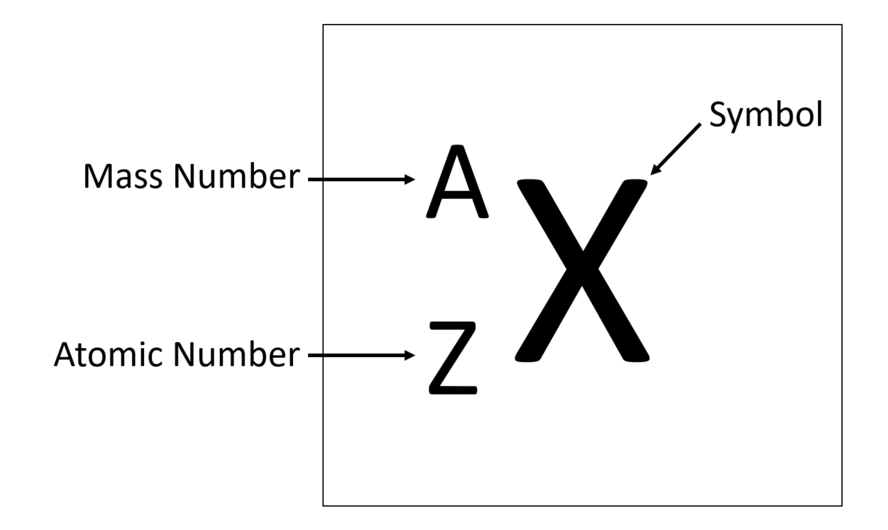
How many protons are there
Total number of protons in the atom is the atomic number
8 (z)


how many neutrons are there
atomic mass- atomic number
16-8= 8

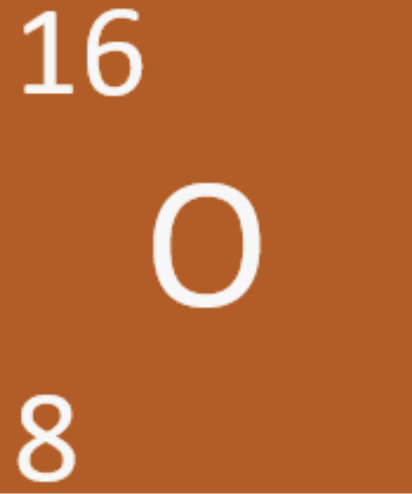
how many electrons are there
electrically neutral atom has an equal number of protons and electrons
8(z)


how many nucleons are there
= to mass number
16
what is this describing
dense, massive, very small compared to atom size
nucleus
Neutrons are unstable particles and break down into simpler, more stable particles of a proton, and electron and a neutrino – this instability of the neutron is the source
of one type of radioactive decay
what is this describing
empty space, arrangment determines how atoms react chemically
max number of electrons in any shell
electron orbits
max # of electrons in any shell (2n2)
k=
innermost and has greatest binding energy with n=1
1
max # of electrons in any shell (2n2)
L=
2
max # of electrons in any shell (2n2)
M=
3
how are electrons arranged
the number of electrons in the outermost shell of an atom is equal to its group in the periodic table while the number of the outermost electron shell of an atom is equal to its period in the periodic table
nuclear stability in the first 20 elements
Neutron (1): Proton (1)
nuclear stability for elements greater than 20
1:6:1
what determines the stability of nucleus
by the binding energy of the nucleons in addition to the number and configuration of the proton to neutron ratio

some nuclei hold additional energy in a nearly stable or metastable state causing the nucleus to emit the extra energy in the form of EM radiation
Isomeric transition
what is the eqaution for mass - energy relationship
matter → energy → creates matter ( rest rest mass of a particle of matter)
rest mass of a fundamental particle (g) → to energy using this equation
E=mc2
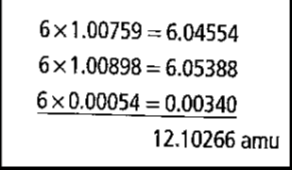
mass defect
atomic mass unit(amu) is equivalent to 1/12 the mass of a carbon 12 atom
in a mass defect how can particles be removed from the atom
by expanding a force greater than binding energy $

what nuclear family is this
Atoms that have the same atomic number but
different atomic mass numbers
isotopes

what nuclear family is this
Atomic nuclei that have the same atomic mass
number but different atomic numbers
isobars

what nuclear family is this
Atoms that have the same number of neutrons but
different numbers of protons
isotone
what nuclear family is this
Having the same elements and different atomic
mass number
isomer
what are molecules
atoms of various elements combined (ex. water H2O and table salt NaCl)
what is a compound
a quantity of one type of molecule
nuclide
any configuration of protons and neutron forming an atom
nuclear instability is the basis for the process called
radioactive decay
when individual atoms undergo spontaneuos transformation to release energy they form
daughter nuclei
T or F: there is a way of predicting when the transformation will occur for a specific atom
false
how do radionuclide (unstable nuclides) reach stability
through the process of radioactive decay where nucleons will rearrange themselves to establish a mores stable configuration
a type of decay o radionuclide undergoes depends on what
mass
neutron: proton ratio
energy
very large unstable atom with high atomic mass may split into nuclear fragments
smallest stable nuclear fragment that is emitted is an alpha paticle
Alpha decay
alpha particle = helium particle=
2 protons +2 neutrons
nucleus of an unstable atom may break into larger fragments
along with the larger fragments 2 or 3 neutrons and heat are emitted
fission
nuclei w/ excess nuetrons can achieve stability by a process that amounts to the conversion of a neutron into a proton, electron, antineutrino and energy
protons remain in the nucleus
beta decay
beta decay
electron emitted
free electron unitl it find a vacancy in an electron shell either in the atom of its origin or in another atom
beta decay
antineutrino
conversation of energy and momentum. no electrical charge and a mass of almost zero
transmutation
the formation of a different element by a radioactive decay process
when an atomic number is increased by 1 it makes
a new element

T or F: electrons can recieve more of the energy and the antineutrino receives less, or vice
versa
True as a result the energy of the neta particle varies in a continuous energy spectrum with some max energy
average energy of a beta particle is ??? the max energy
1/3
Nuclei with excess protons can achieve stability by a process that amounts to the conversion of a proton into a neutron and a positron, a neutrino, and energy
Neutron remains in nucleus
Positron Decay (PET used)
positron decay
positron
undergoes collisions with surrounding matter losing energy and eventually will almost always annihilate with an electron in matter
positron decay
neutrino
conversion of energy – massless with no electrical
how does positron loose kinetic energy
through collisions with surrounding matter and then eventually moves slow slow enough to be attracted to an electron
T or F: The positron and electron spiral toward each other forming a temporary
positronium before undergoing annihilation. The mass of the positron and electron is
converted into pure electron magnetic energy. 2 annihilation photons
true
Atomic number is decreased by 1 makes
a new element
Electron capture
occurs when an orbital electron travels in the proximity of the nucleus and is captured and combined with a proton to form a neutron.
Proton rich nuclei can also decay by
Electron Capture
these are characteristics of …
Occurs in atoms that have electron vacancies in their inner shells
Electrons drop down to fill inner shells from outer obits and release electromagnetic energy.
The emission of energy is characteristic of the energy difference between shells.
Electrons filling the K shell are more energetic than those that fill an L shell because of the proximity to the nucleus and the higher binding energy
X-rays
creation of this is an alternative to characteristics of x-rays
auger electrons
auger electrons
surplus energy is given to another orbital electron which is ejected
what is the result of auger electrons
the atom is left with two vacancies in the electron structure which can lead to emission of charactersitics x-rays or secondary auger electrons
what emission can be apart of another decay process and usually occurs when there is more than 100keV of excess energy in the excited nucleus
gamma emission
The ideal radionuclides for nuclear medicine are those that emit
only gamma rays without emitting particulate radiation
An alternative process to gamma-ray emission in metastable nuclei where Transfer of energy from the nucleus to an orbital electron, which is then ejected from the atom
internal conversion
in a diagram representing a decay scheme where is the atomic number (z)
Horizontal (bottom) axis
in a diagram representing a decay scheme where is the energy of the nucleus
Vertical (up) axis
Arrows to the left show…
decrease in atomic number(z)
Arrows to the right mean….
increase in atomic number(z)
arrows that point straight down mean
no change in atomic number

this shows the placement of a daughter relative to parent nuclide
which type of radiation is this
Alpha

this shows the placement of a daughter relative to parent nuclide
which type of radiation is this
beta (-)
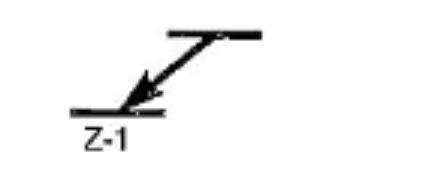
this shows the placement of a daughter relative to parent nuclide
which type of radiation is this
Beta (+)

this shows the placement of a daughter relative to parent nuclide
which type of radiation is this
electron capture
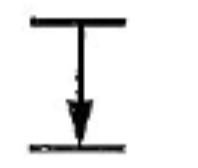
this shows the placement of a daughter relative to parent nuclide
which type of radiation is this
gamma emission
label excitation or ionization
Process of absorbing small
amounts of energy temporarily in
the electron structure of an atom
excitation
label excitation or ionization
Energy must be larger than the
binding energy of the particular
orbital electron
ionization
label excitation or ionization
Removal of outer electron
ionization