Cardiology: L10 Syncope
 Call Kai
 Learn
Learn Practice Test
 Spaced Repetition
 Match
Match Flashcards
 Knowt Play
1/62

There's no tags or description
Looks like no tags are added yet.
Name | Mastery | Learn | Test | Matching | Spaced | Call with Kai | Chat |
|---|
No analytics yet
Send a link to your students to track their progress
63 Terms
Syncope
Transient loss of consciousness that is abrupt and short followed by complete spontaneous recovery
Presyncope/Near-Syncope
- sensation of impending loss of consciousness or lightheadedness usually w/ blurred vision
- includes the prodromal sx of syncope without loss of consciousnes
Syncope Etiologies (3)
- Neural mediated (60%)
- Cardiovascular (15%)
- Orthostatic hypotension (15%)
Syncope Patho
- transient global cerebral hypoperfusion
- inadequate blood volume reduced HR/CO --> vasodilation
- decreased sympathetic tone and increased vagal stimulation
Neurally Mediated Syncope 3 types
- Vasovagal "common faint"
- Situational
- Carotid Sinus Hypersensitivity
Vasovagal Reflex Syncope (4)
- certain triggers
- pain, sight of blood, blood drawn by needles, extreme emotional distress
- bradycardia, vasodilation
- decrease in cerebral perfusion
Vasovagal Reflex Syncope: Abnormal autonomic reflex
increased parasympathetic activity and decreased sympathetic activity
Vasovagal Reflex Syncope: CV response (4)
- decreased HR
- peripheral vasodilation
- decreased BP
- decreased CO
Situational Syncope
- specific localized stimuli
- violent coughing, prolonged standing, hot places, micturition, defecation, laughing, lack of sleep, hunger
Carotid Sinus Hypersensitivity Syncope
- mc in elderly
- pressure on the carotid sinus triggers an exaggerated baroreceptor reflex
- increase vagal activity and/or decreased sympathetic activity
Carotid Sinus Hypersensitivity Syncope triggers
- neck movements
- wearing neckties
- shaving
Carotid Sinus Hypersensitivity Syncope dx
Carotid sinus massage with continuous ECG and BP monitoring
When should you avoid a carotid sinus massage
If pt has carotid bruit or known significant carotid stenosis/recent stroke or TIA
Carotid Sinus Hypersensitivity Syncope tx (2)
- avoid known triggers
- review medications that lower HR or BP
Carotid Sinus Hypersensitivity Syncope: Cardioinhibitory form with recurrent syncope tx
Pacemaker
Neurally Mediated Syncope Typical sx (5)
- lightheadedness/dizziness
- nausea
- diaphoresis and pallor
- visual or auditory changes
- may have palpitations
Neurally Mediated Syncope Episode sx (3)
- brief loss of consciousness
- usually < 1min
- spontaneous, rapid recovery
- brief abnormal movements or urinary incontinence
Neurally Mediated Syncope dx (3)
- clinical: trigger + prodrome + brief LOC + rapid recovery
- Tilt table testing (if dx unclear)
- rhythm monitoring (if arrhythmia suspected)
Does a classic vasovagal history usually require extensive testing?
No
Neurally Mediated Syncope tx 1st line (3)
- education and trigger avoidance
- increase fluids and salts (increase intravascular volume and preload)
- counterpressure maneuvers (increase venous return and BP)
Counterpressure Maneuvers ex (2)
- leg crossing/muscle tending
- squatting
Neurally Mediated Syncope: Recurrent sx tx (2)
- Midodrine (a-agonist)
-Fludrocortisone (Na/H2O retention)
Neurally Mediated Syncope: Recurrent syncope + documented cardioinhibitory/asystolic episodes tx
Pacemaker
Neurally Mediated Syncope: How does tx work?
Increasing volume/preload, vascular tone, and preventing excessive bradycardia
Orthostatic Hypotension - why does it happen
- sustained BP decreases within 3min of standing
- baroreflex is inadequate resulting in decreased BP and cerebral perfusion
Orthostatic Hypotension DBP and DBP drop
- decrease SBP ≥ 20 mmHg
- decrease DBP ≥ 10 mmHg
Orthostatic Hypotension sx (6)
- sx after assuming an upright position and generally improve with sitting or lying down
- lightheadedness/dizziness after standing
- blurred or dimmed vision
- weakness/fatigue
- presyncope or syncope
- "coat-hanger" neck/shoulder pain from hypoperfusion
Orthostatic Hypotension Causes (5)
Not enough volume OR not enough vasoconstriction
- volume depletion
- medications
- autonomic dysfunction
- adrenal insufficiency
- acute illness/infection
Orthostatic Hypotension tx
- correct dehydration/volume loss
- reduce or discontinue contributing meds
Orthostatic Hypotension nonpharm tx (4)
- rise slowly
- fluids + increased salt
- compression garments
- counterpressure maneuvers
Orthostatic Hypotension: persistent sx tx (2)
- Fludrocorticone
- Midodrine
Postural Orthostatic Tachycardia Syndrome (POTS)
- chronic orthostatic intolerance with excessive tachycardia when upright
- HR increases ≥30 bpm within 10min of standing
- no significant orthostatic hypotension
Postural Orthostatic Tachycardia Syndrome (POTS) sx (6)
- lightheadedness
- palpitations
- fatigue
- exercise intolerance
- brain fog
- presyncope (mc)/syncope
Postural Orthostatic Tachycardia Syndrome (POTS) conservative tx (3)
- increase fluids and salt
- exercise/reconditioning
- compression garments
Postural Orthostatic Tachycardia Syndrome (POTS) pharm tx (5)
- Beta blocker
- ivabrandine
- midodrine
- fludrocortisone
- pyridostigmine
Cardiogenic Syncope
- highest risk category of syncope
- abrupt decrease in cardiac output and cerebral perfusion
Cardiogenic Syncope Causes (2)
- Arrhythmia
- Structural/obstructive heart disease (HOCM)
Think cardiac when syncope is: (5)
- during exertion
- while supine
- sudden with little/no prodrome
- preceded by palpitations or chest pain
- associated with known heart dz, abnormal EKG, or FHx of sudden cardiac death
Cardiogenic Syncope mc Cause
Arrhythmias (bradyarrhythmias, tachyarrhythmias, inherited arrhythmia syndromes)
Cardiogenic Syncope Inherited Arrhythmia Syndromes (2)
- Long QT Syndrome
- Brugada Syndrome
Long QT Syndrome
- prolonged ventricular repolarization
- congenital or acquired
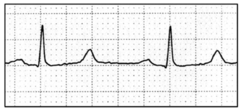
Long QT Syndrome increased risk of what?
Torsades; increased risk with QTc ≥ 500ms
Long QT Syndrome causes (2)
- QT prolonging medications
- electrolyte abnormalities (decreased K, Mg, and Ca)
Long QT Syndrome Clinical Clue
Syncope + Prolonged QT --> think ventricular arrhythmias
Brugata
- inherited cardiac ion-channel disorder
- predisposed to ventricular tachyarrhythmias and sudden cardiac death
Brugata EKG (2)
- coved ST elevation in V1-V2
- followed by inverted T wave

Brugata Clinical Clue
Unexplained syncope + characteristic right-precordial ECG pattern +/- FHx of sudden death
Cardiogenic Syncope Structural Heart Disease: Obstruction to CO (3)
- severe aortic stenosis
- HOCM
- intracardiac mass (myxomia)
Cardiogenic Syncope Structural Heart Disease: Impaired CO (3)
- severe ventricular dysfunction/cardiomyopathy
- MI
- cardiac tamponade
Structural disease predisposes what?
Arrhythmias
Cardiogenic Syncope Structural Heart Disease Clinical Clue
Exertional syncope + murmur/known structural heart disease
Cardiogenic Syncope tx
tx underlying cause
Cardiogenic Syncope: Bradycardia tx
Pacemakes prn
Cardiogenic Syncope: Tachyarrhythmia tx
antiarrhythmic therapy and/or ablation when appropriate
Cardiogenic Syncope: Ventricular arryhtmia/high SCD risk tx
ICD when indicated
Cardiogenic Syncope: Structural dz tx
tx underlying obstruction or cardiac dz
Syncope Initial Evaluation (5)
- detailed HPI
- PE
- Orthostatic BP and HR
- 12lead ECG
- labs if indicated
Syncope Red Flags (7)
- exertional or supine syncope
- sudden LOC with little/no prodrome
- palpitations before syncope
- known SHD/HF
- prior ventricular arrhythmia
- FHx of premature sudden cardiac death
- abnormal cardiac exam
Suspected arrhythmia further testing
ambulatory monitor
Structural dz further testing
Echo
Exertional syncope further testing
Exercise testing
Suspected reflex/autonomic cause further testing
Tilt table
Selected suspected carotid sinus syndrome further testing
Carotid sinus massage