Bio Unit 3 Exam
 Call Kai
 Learn
Learn Practice Test
 Spaced Repetition
 Match
Match Flashcards
 Knowt Play
1/141

There's no tags or description
Looks like no tags are added yet.
Name | Mastery | Learn | Test | Matching | Spaced | Call with Kai | Chat |
|---|
No analytics yet
Send a link to your students to track their progress
142 Terms
A chemical reaction catalyzed by an enzyme is at optimal temperature and pH. Select all the conditions that will decrease the rate of reaction:
(1) changing the pH (2) changing the temperature (3) decreasing enzyme concentration (4) denaturing the enzyme (5) decreasing reactant concentration
Cross-bridges form when the myosin heads attach to
The exposed binding sites of the actin filaments
Which of the following binds to the active site of an enzyme?
Substrate
Which of the following correctly represents the mechanism of enzyme function? S = substrate, P = product, E = enzyme
E + S → E-S → E-P → E + P
The "energy currency" for cells is called ___; it is used to carry out nearly all of a cell's activities.
adenosine triphosphate (ATP)
The ___ molecule is composed of the nucleotide ___, the sugar ___, and ___ phosphate groups
Adenosine Triphosphate (ATP); Adenine; Ribose; Three
It is the bonds between the ___ that give ___ its energy
Phosphate groups; Adenosine Triphosphate (ATP)
Kinetic Energy
(1) Rock rolling down a hill (2) Energy of motion (3) Water flowing over a waterfall
Potential Energy
(1) Stored energy (2) Runners crouched at the starting line (3) The food we eat
Catabolic Reactions
(1) Typically Exergonic Reactions (2) The break down of molecules (3) The creation of ADP from ATP
Anabolic Reactions
(1) Typically Endergonic Reactions (2) The synthesis of molecules (3) Protein synthesis
As living things synthesize nutrients, all the captured solar energy eventually dissipates as ___ ___. Two laws of thermodynamics help explain why energy flows in ecosystems and in cells.
Heat Waste
According to the ___ law of thermodynamics, energy is neither created nor destroyed, only changed from one form to another.
First
For example, when plant cells photosynthesize, they use ___ ___ to form energy-rich carbohydrate molecules from energy-poor carbon dioxide. Some energy is lost as ___ ___
Solar Energy; Heat Waste.
According to the ___ law of thermodynamics, energy cannot be changed from one form to another with a loss of some usable energy. For example, some of the ___ energy taken in by a plant becomes heat after the chemical conversion
Second; Solar
When heat dissipates into the environment, it is no longer usable or available to do work. After many energy transformations, eventually all usable forms of energy become ___ ___, which is lost to the environment.
Heat Waste
During ___, carbon dioxide and water react to form glucose and oxygen.
Photosynthesis
This takes place within ___
Chloroplasts
During this reaction, carbon dioxide is ___ to form glucose and water is ___ to form oxygen.
Reduced; Oxidized
During ___ ___ , glucose and oxygen react to form carbon dioxide and water.
Cellular Respiration
This takes place within ___.
Mitochondria
During this reaction, glucose is ___ to form carbon dioxide and oxygen is ___ to form water.
Oxidized; Reduced
Which of the following statements about biochemical pathways is TRUE and COMPLETE?
1) They are very well organized and structured. (2) They convert an initial substrate via a series of steps into an end product. (3) They can only function for a few runs. (4) They are very well organized and structured and they convert an initial substrate via a series of steps into an end product. (5) They are very well organized and structured, they convert an initial substrate via a series of steps into an end product, and they can only function for a few runs.
Consider the biochemical pathway: A – E1 → B – E2 → C that is irreversible. If Enzyme 2 is inactive, which of the following compounds will accumulate?
(1) A only (2) B only (3) C Only (4) A & B (5) B & C
Exergonic Reactions:
(1) Spontaneous (2) Release Energy (3) Products have less free energy than reactants (4) Breakdown of lipids in food during digestion
Endergonic Reactions:
(1) Require an energy input (2) Products with more free energy than reactants (3) Dehydration reaction between amino acids (4) Production of starch from glucose molecules
Enzymes act as ___, speeding up the rate of reactions
Catalysts
Every reaction has a certain amount of energy needed to begin, called the ___ ___ ___.
Energy of Activation
Enzymes are used to ___ this energy needed to begin a reaction
Decrease
Lowering the activation energy will ___ the efficiency of the reaction.
Increase
Heat
is an unusable form of energy
In a coupled reaction
some of the energy released in one reaction is used to drive another reaction forward
Which of the following is an accurate statement about metabolic pathways?
(1) Products are the input molecules. (2) Metabolic pathways tend to be unorganized and unregulated. (3) The same enzyme catalyzes all the reactions in a pathway. (4) Metabolic pathways often intersect one another. (5) A constant supply of new enzymes must be produced to keep the metabolic pathway active.
What is a metabolic reaction called that involves one reaction releasing energy to provide energy for a second reaction that requires energy
A Coupled Reaction
Which of the following molecules is an enzyme?
(1) Lipase (2) Maltose (3) Uric Acid (4) Lactose (5) DNA
Which is true about energy of activation?
Adding the correct enzyme can lower the energy of activation
Occasionally someone claims to have built a machine that can run forever, producing as much energy as it consumes. This has always been disproved because it violates
The Second Law of Thermodynamics
While science cannot describe "thinking" in physical terms, we are certain that the process involves metabolism inside brain cells. With positron emission tomography (PET scan), it is possible to inject short-lived isotopes and image the regions of the brain that have the most active metabolism during various mental activities. However
the cellular energy expended in thinking must be less than the chemical bond energy supplied in food to these brain cells.
The high energy bond in ATP is found in or between the
Phosphate Groups
While eating a container of yogurt, you have to leave, so you store the yogurt in the refrigerator. A day later you return and find the surface of the yogurt is no longer smooth but has broken into several liquified products. You correctly guess that enzymes from your saliva, via the spoon, have continued digesting the yogurt in your absence. What will happen over time?
As long as the enzyme is not denatured by environmental conditions, the reaction will continue until all of the substrate is used up.
Chloroplasts and mitochondria are both involved in redox reactions because
carbon dioxide is reduced during photosynthesis and carbohydrates are oxidized during cellular respiration.
The addition of electrons and/or hydrogen atoms from a substrate is called what?
Reduction
Which energy association is correct?
Kinetic energy is energy of motion
Which of the following statements most accurately describes the first law of thermodynamics?
(1) One usable form of energy cannot be completely converted into another usable form. (2)One usable form of energy can be completely converted into another usable form. (3)Energy can be created or destroyed but not changed from one form to another. (4) Energy cannot be created or destroyed but it can be changed from one form to another. (5) Energy cannot be transformed.
Which statement most accurately describes the second law of thermodynamics?
(1) Energy cannot be changed from one form to another without a loss of usable energy. (2) One usable form of energy can be completely converted into another usable form. (3) Energy cannot be created nor destroyed but it can be changed from one form to another. (4) Energy cannot be created or destroyed. (5) Energy can be created or destroyed but it cannot be transformed.
When oxygen accepts electrons, water is produced as a byproduct. T/F
TRVKE
The transfer of hydrogen ions across the membrane generates a potential energy gradient. T/F
Trvke
Arrange the following electron acceptors in the proper order in which they participate in electron transport. 1 = Cytochrome c, 2 = Oxygen, 3 = Cytochrome c oxidase
1,3,2
The electrons that are transferred through the electron transport system initially belonged to
NADH and FADH2.
When oxygen accepts electrons, water is produced as a byproduct. T/F
TRVKE
The transfer of hydrogen ions across the membrane generates a potential energy gradient. T/F
TRVKE
While ___ occurs outside the mitochondria, all other steps required to turn glucose into energy occur within the mitochondria.
Glycolysis
The folds of the inner membrane of the mitochondria are called ___, while the innermost compartment is called the ___.
Cristae; Matrix
The ___ contains numerous invaginations and folds in order to increase the surface area for reactions to occur.
Cristae
Both the preparatory reaction and the citric acid cycle occur within the ___.
Matrix
The electron transport chain occurs within the ___.
Cristae
The NET result of a single glycolysis run is the formation of
2 NADH & 2 ATP
Under anaerobic conditions, the end-product of glycolysis is converted to
Lactic Acid
Under aerobic conditions, the end-product of glycolysis is further reduced to yield more ATP. T/F
FALSE
A single "turn" of the citric acid cycle will yield
1 ATP, 3 NADH, and 1 FADH2.
The initial reaction of the citric acid cycle involves the addition of a
2-carbon molecule to a 4-carbon molecule.
Cellular respiration is the process by which cells obtain ___ by breaking down nutrients.
Energy
This breakdown is accomplished by intake of ___ and release of carbon dioxide.
Oxygen
Cellular respiration involves the complete breakdown of ___ to carbon dioxide and water.
Glucose
Glucose breakdown is completed in the ___ of the cell.
Mitochondria
This breakdown is done through a series of ___-___ reactions.
Oxidation-Reduction
The breakdown results in production of the high energy molecule ___.
ATP
Cytoplasm
Glycolysis
Mitochondrial Matrix
Preparatory (prep) Reaction, Krebs Cycle
Cristae of Mitochondria
Electron Transport Chain (ETC)
During ___ reactions, electrons are released.
Oxidation
During a(n) ___ reaction, electrons are bound to NAD+, or ___ ___ ___, producing the reduced form of NAD+, NADH.
Reduction; Nicotinamide Adenine Dinucleotide
Because NADH is ___, it can then release electrons during further reactions to do work.
High Energy
Therefore, the reaction above describes how NAD+ captures ___ electrons to create NADH.
High Energy
This means that the reactant's side of the reaction has a ___, while the product's side of the reaction has a ___.
Low Energy; High Energy
Cellular respiration involves the
Release of Energy
How efficient is the breakdown of one glucose molecule via cellular respiration?
39%
Why is ATP used as the energy molecule of the cell?
ATP contains just about the amount of energy required for most cellular reactions.
Which of the following pathways of cellular respiration produces the majority of ATP?
(1) glycolysis (2) citric acid cycle (3) Calvin cycle (4) electron transport chain and chemiosmosis (5) preparatory reaction (prep)
Which of the following statements about glycolysis is true?
(1) Glycolysis results in the release of carbon dioxide. (2) Glycolysis is a cyclical reaction. (3) Glycolysis is a reduction reaction where only glucose is reduced. (4) Glycolysis occurs twice per glucose molecule. (5) Glycolysis breaks glucose down to two pyruvate molecules.
Why are two ATP needed to begin glycolysis?
To Activate the Glucose
Which of the following best defines substrate-level ATP synthesis?
(1) An enzyme passes a high-energy phosphate to ADP, resulting in ATP. (2) ATP is used to activate glucose for glycolysis. (3) An exergonic reaction is used to drive the synthesis of ATP from ADP plus phosphate. (4) Oxidation of a substrate results in a high-energy bond. (5) ATP is synthesized from adenosine plus three phosphates.
Which is a correct statement about the preparatory reaction?
(1) It connects glycolysis directly to the electron transport chain. (2) O2 is given off. (3) Pyruvate is converted to lactate. (4) NAD+ goes to NADH + H+ as acetyl-CoA forms. (5) The reaction occurs once per glucose molecule.
Which pathway in cellular respiration will produce ATP, NADH, and carbon dioxide?
Citric Acid Cycle
How many NADH + H+ are produced by the citric acid cycle per turn?
Three
What phase(s) of cellular respiration produce(s) NADH + H+?
Glycolysis, Preparatory Reaction, & Citric Acid Cycle
Which of the following would increase the electron transport system's production of ATP?
(1) limiting the amount of oxygen available (2) decreasing use of ATP and thus reducing available ADP (3) reducing synthesis of NAD+ and FAD (4) adding an NADH reductase inhibitor (5) adding additional hydrogen ions into the intermembrane space of the mitochondria
In cellular respiration, what is the relationship between the energy content of the reactants (glucose and O2) and products (CO2 and H2O)?
The energy content of the reactants (glucose and O2) must be greater than the energy content of the products (CO2 and H2O).
Muscles undergo fermentation when no
Oxygen is Available
The final acceptor for electrons in aerobic cellular respiration is
Oxygen
C3 Photosynthesis:
(1) Process occurs in mesophyll cells (2) Results in one molecule of 3PG (3) Uses RuBP carboxylate to fix carbon dioxide into RuBP (4) Advantageous in moderate weather
C4 Photosynthesis
(1) Process occurs in mesophyll and bundle sheath cells (2) CO2 is initially fixed by forming a 4-carbon molecule (3) Advantageous in hot and dry weather (4) Prevents photorespiration while stomata are closed to conserve water
Photosynthesis converts ___ energy into the chemical energy of a carbohydrate. Photosynthetic organisms, including plants, algae, and ___, are called autotrophs because they produce their own food.
Solar; Cyanobacteria
Each year, these photosynthesizing organisms produce between _____ metric tons of carbohydrates. With few exceptions, it is possible to trace any ___ ___back to plants and algae.
100 & 200 billion; food chain
In other words, plants, algae and other ___, which have the ability to synthesize carbohydrates, feed not only themselves but also ___, which must take in preformed organic molecules.
Producers; Consumers
As a group, consumers are called heterotrophs. Both autotrophs and heterotrophs use organic molecules produced by photosynthesis as a source of building blocks for ___ and repair and as a source of ___ energy for cellular work.
Growth; Chemical
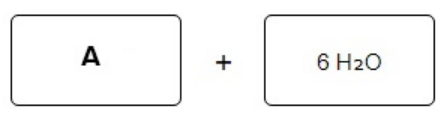
6 CO2
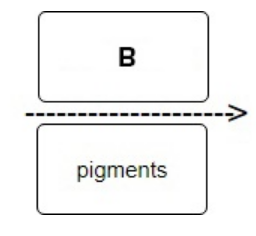
Solar Energy
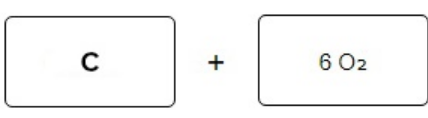
C₆H₁₂O₆
A photosystem can best be described as
a collection of pigments that trap solar energy and focus it on reaction centers, releasing high-energy electrons.