quiz 1: histology and cranial skeleton
 Call Kai
 Learn
Learn Practice Test
 Spaced Repetition
 Match
Match Flashcards
 Knowt Play
1/34

There's no tags or description
Looks like no tags are added yet.
Name | Mastery | Learn | Test | Matching | Spaced | Call with Kai | Chat |
|---|
No analytics yet
Send a link to your students to track their progress
35 Terms
superior or cranial
ABOVE: toward the head or upper part of the body
inferior or caudal
BELOW: toward the feet end or away from head
anterior or ventral
towards the front of the body (b00b)
posterior or dorsal
towards the back of the body (butt)
medial
towards the midline of the body (moving horizontally towards spinal column)
lateral
away from the midline of the body (towards the arms horizontally)
intermediate
in the spaces between medial and lateral; like where most muscle knots happen
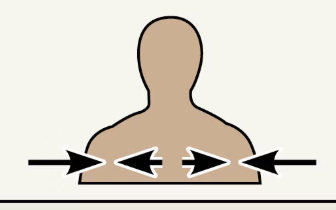
proximal
referential to limbs; closer to the origin of the limb attached to the body trunk
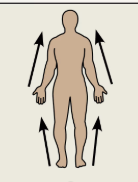
distal
referential to limbs; further from the origin of the limb attached to the body trunk

superficial (exterior)
in relation to the skin; towards the bodys surface
deep (internal)
away from the body surface
condyle (articulating surface)
a large rounded articulating knob
sagittal plane
vertical plane that divides the body into left and right.

midsagittal plane
directly down the middle of the body, plane of left and right (parasagittal is when its offcenter)
coronal plane (frontal
vertical plane that divides the body into anterior and posterior parts (front side and backside)
transverse plane
divides the body into superior and inferior parts (top half and bottom half)
facet (articulating surface)
a flattened or shallow articulating surface
head (articulating surface)
a prominent, rounded, articulating end of a bone
articulating surface
the part of a bone that meets another bone to form a joint; These areas are smooth, shaped to fit together (such as concave and convex parts)
Nonarticulating prominences
raised bumps, ridges, or projections on bones that serve as attachment points for muscles, tendons, and ligaments rather than forming joints with other bones
crest
a narrow, ridgelike projection
epicondyle
a projection above a condyle
process
any marked bony prominence
spine
a sharp slender process
trochanter
a massive process found only on the femur
tubercle
a small, rounded process
tuberosity
a large roughened process (OPPOSITE OF TUBERCLE). hear -osity and think HUGE
alveolus
a deep pit or socket
fissure
a narrow slit like opening
foramen or foramina
a rounded opening through a bone
fossa
a flattened or shallow surface
fovea
a small pit or depression
meatus
a tube like passageway through a bone
sinus
a cavity or hollow space in a boned
sulcus
a groove that accomodates a vessel, nerve, or tendon