ntr 108: week 1 principles of nutrition
 Call Kai
 Learn
Learn Practice Test
 Spaced Repetition
 Match
Match Flashcards
 Knowt Play
1/49

There's no tags or description
Looks like no tags are added yet.
Name | Mastery | Learn | Test | Matching | Spaced | Call with Kai | Chat |
|---|
No analytics yet
Send a link to your students to track their progress
50 Terms
food
–Any substance the body takes in and assimilates that will enable it to stay alive and grow
nutrients
–Components of food that are indispensable to the body’s functioning
essential nutrients
–Nutrients the body cannot make
–Must be obtained through food or in some cases supplements
nonessential nutrients
—nutrients the body can make
nutrition
•the study of food, including
–How food nourishes our bodies
–How food influences our health
research focuses on supporting health and preventing and/or treating chronic diseases
•involves study of the following:
–Food consumption
–Food digestion
–Food absorption
–Food storage
–Factors that influence eating patterns
–Recommended amounts of types of food
–Food safety
The global food supply
health
•Physical, mental, and social well-being
•Two critical aspects of physical _____
–Nutrition
–Physical activity
carbohydrates, fats and oils, proteins, vitamins, minerals, water
six groups of essential nutrients found in foods
macronutrients
•nutrients required in relatively large amounts
–Provide energy
–Carbohydrates, fats and oils, proteins
micronutrients
•nutrients required in smaller amounts
–Vitamins and minerals
kilocalorie
•the amount of energy required to raise the temperature of 1 kg of water by 1 degree Celsius
On food labels, “Calorie” actually refers to this
carbohydrates
•the primary source of fuel for the body, especially for the brain
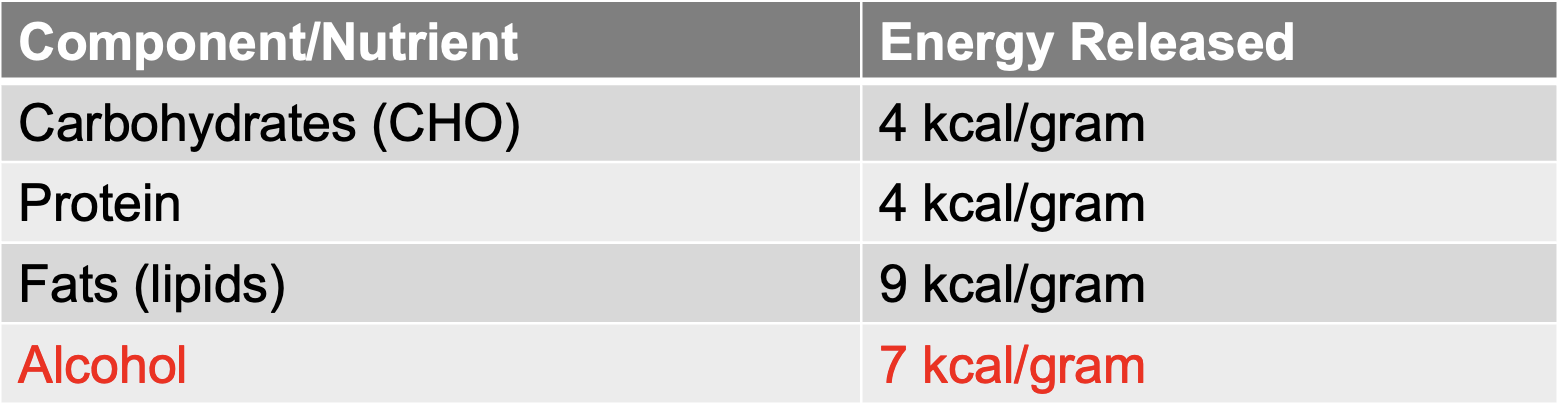
–Provide 4 kcal per gram
–Contain carbon, hydrogen, and oxygen
–Found in grains, vegetables, fruits, legumes, dairy, nuts, and seeds
fats and oils
•composed of lipids, molecules that are insoluble in water
–Provide 9 kcal per gram
–Contain carbon, hydrogen and oxygen
–Found in butter, margarine, vegetable oils (such as canola oil, olive oil, sunflower oil, and more)
proteins
•chains of amino acids
–Can supply 4 kcal of energy per gram, but are not usually a primary energy source
–Contain carbon, hydrogen, oxygen, and nitrogen
–Found in meats, dairy products, seeds, nuts, and legumes
bioavailability
–refers to the body's ability to absorb and use the nutrients.
▪Ex. High-fiber foods, such as fruits & vegetables and foods high in phytic acid such as whole grains
▪Foods high in oxalic acid, such as spinach, and rhubarb, can decrease absorption
vitamins
•Organic molecules (carbon containing molecule)
•Essential nutrients
–Humans can synthesize only small amounts of ________ D, K, and Niacin
•Function in the body in a regulatory or metabolic capacity
–Many function in chemical reactions involved in the release of energy from carbohydrates, fat and protein
▪B ________ act as coenzymes in energy metabolism
▪Do not function as a structure
•There are 13 ________, each with a unique structure.
fat soluble vitamins
A, D, E, K
•Soluble in fat
•Absorbed with fat
•Stored in the human body
•Toxicity can occur from consuming excess amounts, which accumulate in the body
water soluble vitamins
Vitamin C, B-vitamins (thiamin, riboflavin, niacin, vitamin B 6, vitamin B 12, pantothenic acid, biotin, folate)
•Soluble in water
•Not stored to any extent in the human body
•Excess excreted in urine Toxicity generally only occurs as a result of vitamin supplementation
•Sensitive to heat and light
•Fresh foods usually the best sources
minerals
•Inorganic substances (do not contain carbon)
•DO NOT supply energy
•Requirements range from mg/d to g/d
–Calcium 1000-1200 mg/day
–Iron 8 – 28 mg/day
–Variety of food sources
minerals function
•Function in the body in structural, regulatory, and metabolic capacities
–Structural
–Component of bone and teeth – calcium
–Regulation and metabolic processes
–Part of body compounds such as hormones, hemoglobin
–Cofactor for enzymes
–Transmission of nerve impulse – sodium
–Maintenance of fluid balance – sodium
major minerals
Calcium, phosphorus, sodium, potassium, chloride, magnesium, sulfur
Needed in amounts greater than 100 mg/day in our diet
Amount present in the human body is greater than 5 g (5,000 m g)
trace minerals
Iron, zinc, copper, manganese, fluoride, chromium, molybdenum, selenium, iodine
Needed in amounts less than 100 m g/day in our diet
Amount present in the human body is less than 5 g (5,000 m g)
water
•inorganic macronutrient that is vital for health and survival
•is involved in many bodily processes:
–fluid balance
–nutrient transport
–nerve impulses
–removal of wastes
–muscle contractions
body temperature
energy release
vitamins, minerals, water
3 nutrients that do not release energy
probiotics
contain beneficial bacteria that improve the intestinal microbial balance
prebiotics
nondigestible food ingredients that stimulate the growth and/or activity of probiotic bacteria
phytochemicals
naturally occurring plant compounds beneficial to human health
scientific method
–Observation and description of a phenomenon
–Creation of a hypothesis
–Design of a repeatable experiment
–Collection, analysis, and interpretation of data
▪Formation of a conclusion, or proposal of an alternative hypothesis
–Development of a theory based on repeated experiments
scientific method
–Observation and description of a phenomenon
–Creation of a hypothesis
–Design of a repeatable experiment
–Collection, analysis, and interpretation of data
▪Formation of a conclusion, or proposal of an alternative hypothesis
–Development of a theory based on repeated experiments
epidemiologic studies
•Studies the prevalence and incidence of disease in whole populations or groups
•Ex) comparing heart disease prevalence and diet in the Mediterranean region compared to the U.S.
•Include observational and case control studies
animal studies
•Learn about nutrition from animal models
•Shorter lifespan
•Can study interventions not acceptable in humans
•Results may not apply to humans but provide basis for human studies
–Ex) induce nutrient deficiency or toxicity and study effects
observational studies
part of epidemiologic studies
•These studies allow us to see correlations or associations between disease and diet
–Association only – not causation
–No intervention/manipulation
–Ex. people who smoking have a low vegetable intake, but this does not mean that smoking cigarettes causes people to eat fewer vegetables or that eating fewer vegetables causes people to smoke.
case control studies
part of epidemiological studies
•These studies compare groups with and without a condition allow to gain a better understanding of factors that may influence disease.
–Ex. people in their normal blood pressure group are physically active but that only 20% of the people in their high blood pressure group are physically active.
experimental trials
•Test the effect of an intervention’s effect on certain disease or health condition using two groups: the experimental group and the control group
–Compare outcomes
–Control other variables
–Can suggest cause and effect
•Ideal characteristics are randomization and blinding
single blind experiment
•participants unaware if they are in control or experimental group
conflict of interest
–when an individual is in a position to derive personal benefit or unfair advantage
–Might lead to researcher bias - some factor influences the researcher to favor certain results
–Bias is an inclination toward or against a particular individual, situation, or outcome
–Who conducted the research and who paid for it?
▪Ex) study on beef consumption funded by beef council; researcher studying milk consumption is member of dairy council
–Must disclose when publishing or presenting
misinformation, disinformation
–____________ refers to the communication of inaccurate or incomplete information that can mislead
–_____________ is the intentional spreading of false information
nutritionist
•Experts with Credentials
–Registered Dietitians (RDN)
▪4-year bachelor degree in nutrition, 1200 hrs. supervised practice, must pass registration exam
–Licensed Dietitians (LD)
▪Some states have licensed dietitians – based on education and work experience in nutrition
–Professional with advanced degree(s) in nutrition (MS, MA, or
PhD in nutrition)
–Physician with appropriate expertise in nutrition
–Note: ANYONE can use the title “____________” – it does NOT mean the individual is qualified to provide nutrition information. All RDs are _____________ but not all nutritionist are RDs
desirable status
•The desirable amount of a particular nutrient is the amount which
–Supports routine chemical processes
–Provides a surplus store for use during times of increased need
•Deviation from "optimal" nutritional status can occur due to either under-nutrition, over-nutrition or imbalance
undernutrition
•Individual does not consume sufficient amount of a nutrient to meet the needs for cellular activities
•Development of signs of under-nutrition or nutrient deficiency
•Due to: example- iron deficiency
–Inadequate dietary intake – poor intake of meat (rich in iron)
–Excessive loss – excessive blood loss can cause iron losses
–Increased requirements – pregnancy increases iron requirements
•Results in: example- iron deficiency
–Depletion of tissue stores – depletion of iron stores
–Biochemical changes – red blood cells decrease in number
–Clinical signs or symptoms – fatigue and paleness
overnutrition
–Occurs as a consequence of excess nutrient intake – Ex) too much sodium may increase risk for hypertension
•Imbalance of nutrients – Ex) too much copper can limit zinc absorption
anthopometrics
–Height, weight, length, waist circumference
–Body composition (lean mass, body fat)
biochemical indices
—blood and urine
clinical examination
—medical history
—physical exam
dietary assessment
–24-hour recall – ask client to list foods eaten over past 24 hours
–Food record – client writes down what they eat over the next week or month
environmental assessment
–Information on individuals' education level and economic background
dietary guidelines
•A set of principles developed by USDA
•Revised every 5 years.
–Currently DGA 2025-2030
▪Eat the right amount for you
▪Prioritize protein foods at every meal
–Recommend 1.2-1.6 g per kg body weight
▪Consume dairy (3 servings per day)
▪Eat vegetables (3 servings per day) and fruits (2 servings per day) throughout the day
▪Incorporate healthy fats
▪Focus on whole grains (2-4 servings per day)
▪Limit highly processed foods, added sugars and refined carbohydrates
▪Limit alcoholic beverages
–Encourages nutrient dense foods (fruits, vegetables and whole grains)
–Recommends limiting highly processed foods and added sugar
–Maintains a limit of no more that 10% of calories from saturated fat, while encouraging healthy fats
–Increased attention to fiber and microbiome health
dietary guidelines elements
•that raise concern from the new guidelines
–Saturated fat
▪Emphasis on butter, beef tallow, red meat and full fat diary is not consistent with recommendation to limit saturated fat to 10% of total calories
–Dairy
▪Does not consider individuals that cannot or choose not to consume dairy products
–Low-calorie non-nutritive sweeteners
▪Evidence considers them to be generally safe within acceptable intake levels
–Synthetic food dyes
▪A small subset of children may be sensitive to food dyes. (some findings are inconsistent, need more research)
serving size
•Dairy: 1 cup =
–1 cup of milk or yogurt, 1.5 ounces of natural cheese
•Protein: 1 ounce =
–1 ounce of meat, poultry or fish, 1 egg, ¼ cup cooked beans, ½ ounce nuts, 1 tablespoon nut butter
•Vegetable: 1 cup =
–1 cup of raw or cooked vegetables or vegetable juice or 2 cups raw leafy greens
•Fruit: 1 cup =
–1 cup of fruit or 100% fruit juice or ½ cup dried fruit
•Grain: 1 ounce =
–1 slice of bread, 1 cup dry cereal, ½ cup cooked rice, pasta or cereal
adequate, moderate, balanced, varied, nutrient dense
A healthful diet is
•_________- provides enough energy, nutrients, and fiber to support a person’s health
•________- contains the appropriate amounts of foods for maintaining healthy weight and nutrition; with limited amounts of sugar, salt, and saturated fat.
•________ - contains the combinations of foods to provide the proper proportions of nutrients; Balance intake of high-energy, high-fat foods with low-fat, high-dietary fiber foods.
•______ - eating many different foods from the different food groups on a regular basis to meet your body’s nutrient needs
•_______ _____- made up of foods and beverages that supply the highest level of nutrients for the lowest number of calories
–Ex. fruits, vegetable, lean proteins, low-fat dairy, and whole grains