Fluid, Electrolyte, and Acid-Base Regulation
 Call Kai
 Learn
Learn Practice Test
 Spaced Repetition
 Match
Match Flashcards
 Knowt Play
1/65

There's no tags or description
Looks like no tags are added yet.
Name | Mastery | Learn | Test | Matching | Spaced | Call with Kai | Chat |
|---|
No analytics yet
Send a link to your students to track their progress
66 Terms
calcium
9-10.5 mg/dL
Circulating calcium within the blood that is not attached to proteins.
potassium
3.5-5 mEq/L
electrolyte for nerve and muscle function, especially for the heart
magnesium
1.3-2.1 mEq/L
Electrolyte that helps with regulation of nerve and muscle function, blood pressure, and blood sugar levels, and making DNA, protein, and bone.
- has long half-life
sodium
136-145 mEq/L
Electrolyte that supports the function of nerves and muscles, maintains normal blood pressure, and regulates fluid balance in the body.
Basic Metabolic Panel (BMP)
- BUN Blood Urea Nitrogen
- CO2 Carbon Dioxide
- CR Creatinine
- glucose
- Cl-- Chloride
- K+ Potassium
- Na+ Sodium
- Ca+ Calcium
Comprehensive Metabolic Panel (CMP)
BMP + Liver enzymes, ALT, ALP, AST, Bilirubin, Protein, Albumin
- BUN Blood Urea Nitrogen
- CO2 Carbon Dioxide
- CR Creatinine
- glucose
- Cl-- Chloride
- K+ Potassium
- Na+ Sodium
- Ca+ Calcium
- Liver enzymes
- ALP Alkaline phosphate
- ALT Alanine transminase
- AST Aspartate aminotransferare
- Bilirubin (total)
- Protein (total)
- Albumin
BUN Indication
kidney function
CO2 indications
Blood bicarbonate level
CR Indication
Kidney function
Glucose Indication
Blood sugar level
Cl-- indication
Blood chloride level
K+ indication
blood potassium level
Na+ Indication
Blood Sodium Level
Ca+ Indication
Liver function
Liver enzymes (ALP, ALT, AST) Indication
Liver function
Bilirubin total Indication
Liver function
Protein total Indication
Total Blood Protein
Albumin Indication
Liver function
Tachycardia
heart rate above expected reference range (greater than 100 bpm)
tachypnea
respiratory rate greater than expected range (greater than 20 breaths per minute)
kidneys
organs that filter the blood and excrete waste as urine
dehydration
excess water loss without a loss of sodium
hypovolemia
decrease in blood volume due to body fluid or blood loss
Antidiuretic hormone (ADH)/vasopressin
A hormone excreted by the hypothalamus in the brain that maintains blood pressure and fluid volume.
hypokalemia
potassium level below expected reference range of 3.5 to 5 mEq/L
caused by:
- meds
- certain cardiac conditions
- GI losses
- metabolic alkalosis
- decreased oral intake of K+
- excessive alcohol use
- chronic kidney disease
- DKA
- excessive sweating
- folic acid deficiency
diuretics
a category of meds that cause increased urination
common manifestations of hypokalemia less than 3 mEq/L
- muscle weakness
- cardiac arrhythmias
- constipation
- fatigue
- paralytic ileus (obstruction in intestine)
- hypotension
- tetany
- rhabdomyolysis (muscle tissue breakdown)
- life threatening cardiac arrhythmias
common manifestations of hypokalemia less than 2.5 mEq/L
- muscle weakness
- cardiac arrhythmias
- constipation
- fatigue
- respiratory paralysis/failure
hyperkalemia
K+ level above expected reference range of 5 mEq/L
causes:
- renal failure
- dehydration
- diabetes mellitus
- medications
- trauma
- excess intake of K+
- burns
- transfusions of packed RBCs
- acidosis
- sepsis
hyponatremia
sodium level below expected ref range of 136 mEq/L
risk factors:
- meds
- chronic or severe vomiting/diarrhea
- drinking excess amounts of water
- excess alcohol intake
- heart, kidney and liver problems
- severe burns
hypernatremia
sodium level above expected ref range of 145 mEq/L
causes:
- loss of body water
- meds
- gastroenteritis
- vomiting
- prolonged suction
- burns
- excessive sweating
- chronic kidney disease
- diabetes
- impaired thirst response
Hypocalcemia causes
calcium level below expected ref range of 9
causes:
- meds that decrease the body's absorption of calcium
- inadequate amount of vitamin D
- hormonal changes (menopause)
- hypoparathyroidism
- renal disease
- multiple blood transfusions
- electrolyte imbalances of magnesium or phosphate
- sepsis
- low albumin levels
hypoparathyroidism
body produces low levels of PTH (Hormone secreted by the parathyroid gland that regulates serum calcium concentration)
ostopenia
low bone mass
hyperparathyroidism
overactive parathyroid gland
chvostek sign
Test which may indicate low calcium or magnesium levels. A positive result results in a twitching response of the side of the face when facial nerves are tapped.

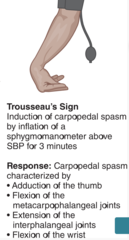
trousseau sign
Test that can indicate low calcium or magnesium levels and spasms in the wrist and hand (carpopedal spasms) when a blood pressure cuff is inflated above the systolic blood pressure.
hypercalcemia
Calcium level above expected reference range of 9 to 10.5 mg/dL (total calcium).
causes:
- cancer
- hyperparathyroidism
- vitamin D toxicity
- meds
- renal failure
Manifestations of hyper calcemia mnemonic: Abdominal groans, painful bones, kidney stones, psychiatric moans, and fatigue overtones
Abdominal groans refer to gastrointestinal manifestations such as constipation, nausea, and vomiting.
Painful bones refer to the aching pain that occurs in cases of hypercalcemia caused by hyperparathyroidism.
Kidney stones refer to the development of calcium renal stones that can cause intense flank pain.
Psychiatric moans refer to confusion and behavioral changes such as delirium and psychosis that can occur.
Fatigue overtones refer to the lethargy and general feelings of malaise that occur with hypercalcemia.
hypomagnesemia
level below expected reference range of 1.3 to 2.1 mEq/L.
Causes:
- Medications
- Decreased intake
- Decreased absorption by the intestines (Crohn's disease, celiac disease)
- Increased excretion by the gastrointestinal tract (diarrhea, pancreatitis)
- Increased excretion by the kidneys
- Excessive alcohol use
- Diabetes mellitus type 2
- Undernutrition
- Severe burns
- Electrolyte imbalances (hypokalemia, hypocalcemia)
hypermagnesemia
Magnesium level above expected reference range of 1.3 to 2.1 mEq/L.
Causes:
- Kidney disease (acute and chronic)
- Excessive intake
- Medications
- Trauma
- Acidotic states
- Hypothyroidism
checking patellar reflexes
High magnesium levels (10 mEq/L or greater) cause muscle weakness and the loss of deep tendon reflexes, which together result in an absent patellar reflex.
hypervolemia
Fluid overload, the body has too much water.
Causes:
- Heart failure
- Kidney failure
- Nephrotic syndrome
- Cirrhosis or end-stage liver disease
urine specific gravity
A test that measures the solutes in a sample of urine and provides information regarding the body's fluid balance. The expected reference range of urine specific gravity is 1.005 to 1.030.
fluid volume deficit
A condition caused by the loss of water; also referred to as hypovolemia.
Causes:
- Blood loss
- Gastrointestinal losses
- Severe burns
- Third spacing
- Excessive sweating
- Fever
- Medications
- Trauma
hypovolemic shock
when the body loses 20 percent or one-fifth of its blood or fluid supply
creatinine (CR)
Reflection of renal function; a byproduct of skeletal muscle contractions (creatine), which is then excreted through the urine.
hemoglobin
A component of the red blood cell that carries oxygen and carbon dioxide to and from the cells.
WBC
5,000 - 10,000
PLATELET COUNT
150,000 TO 400,000
BUN
10 - 20 mg/dL
kidney problems, dehydration
Cr
Creatinine
over 1.3 mg/dL
kidney problems, muscle disorders
RBC
male: 4.7 to 6.1 million cells/microLiter
female: 4.2 to 5.4 million cells/microLiter
glucose
fasting glucose: 70-110 mg/dL
Hgb
male: 14-18 grams/dL
female: 12-16 grams/dL
Hct
male: 42%-52%
female: 37-47%
PT
11 to 12.5 sec
INR
0.9 to 1.2 clients not on warfarin
2-3 clients for warfarin
aPTT
30 to 40 sec for clients not on heparin
46 to 70 sec for clients on heparin
PaCO2 carbon dioxide
35 - 45 mm Hg
below or above reference range = respiratory
HCO3- bicarbonate
21-28 mEq/L
below or above reference range = metabolic
pH
7.35-7.45
below 7.35 acidosis
above 7.45 alkalosis
normal = ok purr
metabolic acidosis
pH low, HCO3 low, PaCO2 normal
respiratory acidosis
pH low, PaCO2 high, HCO3 normal
metabolic alkalosis
pH high, HCO3 high, PaCO2 normal
respiratory alkalosis
pH high, PaCO2 low, HCO3 normal