Upper Extremity OMM
 Call Kai
 Learn
Learn Practice Test
 Spaced Repetition
 Match
Match Flashcards
 Knowt Play
1/52

There's no tags or description
Looks like no tags are added yet.
Name | Mastery | Learn | Test | Matching | Spaced | Call with Kai | Chat |
|---|
No analytics yet
Send a link to your students to track their progress
53 Terms
SC MET: Adduction SD (superior glide)

SC MET: Extension SD (anterior glide)
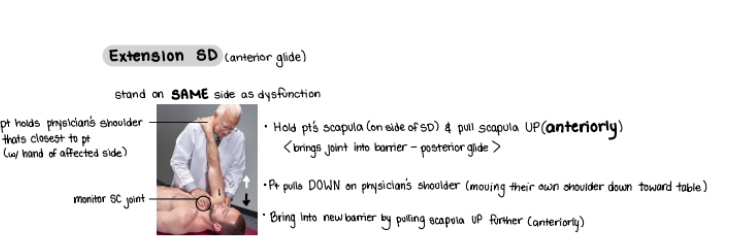
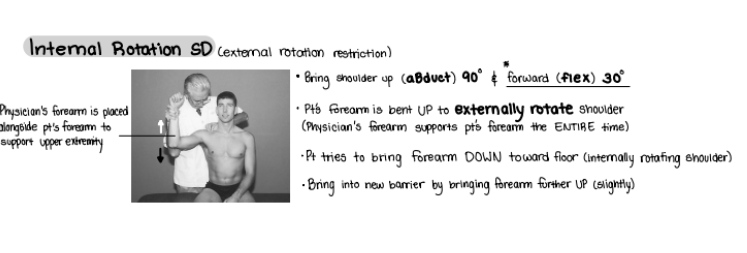
AC MET: External Rotation SD (internal rotation restriction)

AC MET: Internal Rotation SD (external rotation restriction)
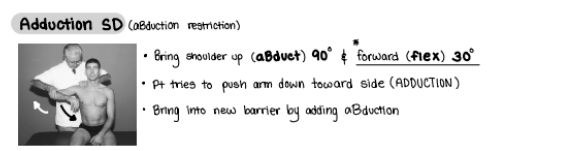
AC MET: Adduction SD (abduction restriction)
GH MET: Spencer’s Techniques Mnemonic

GH MET: Spencer’s Technique #1

GH MET: Spencer’s Technique #2

GH MET: Spencer’s Technique #3
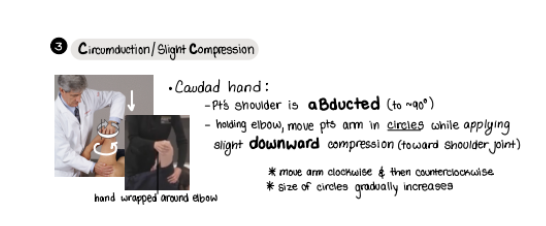
GH MET: Spencer’s Technique #4
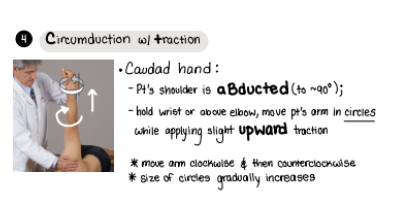
GH MET: Spencer’s Technique #5

GH MET: Spencer’s Technique #6

GH MET: Spencer’s Technique #7
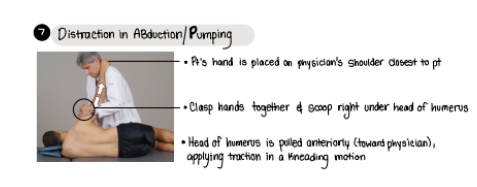
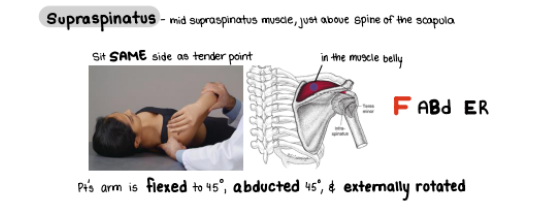
Supraspinatus Counterstrain
“Statue of Liberty”
Pectoralis Minor Counterstrain
pt looks like they’re punching you

Subscapularis Counterstrain
under the armpit

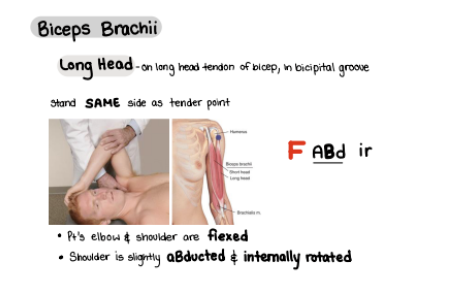
Long Head of Biceps Brachii Counterstrain
pt’s hand on head. have them do that position to find that bicipital groove
Short Head/Coracobrachialis Counterstrain
arms across chest

Levator Scapulae Counterstrain

Rhomboids Counterstrain
pts arm will be behind their back

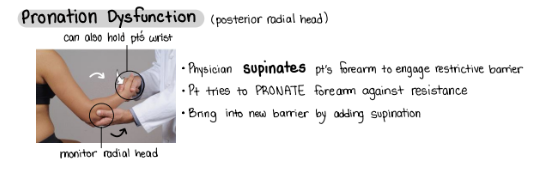
MET of Elbow: Pronation SD (posterior radial head)
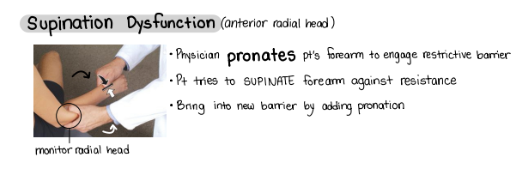
MET of Elbow: Supination SD (anterior radial head)
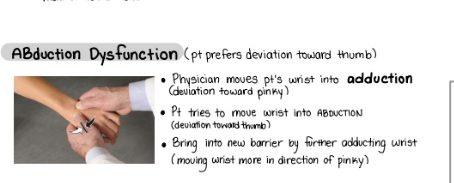
MET of Wrist: Abduction SD (pt prefers deviation towards thumb)
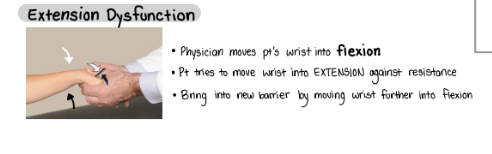
MET of Wrist: Extension SD
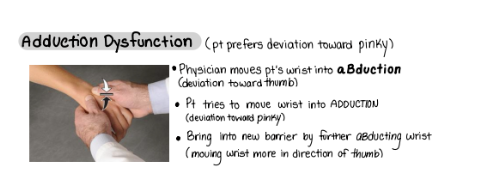
MET of Wrist: Adduction SD (pt prefers deviation towards pinky)
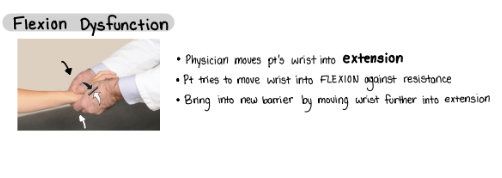
MET of Wrist: Flexion SD
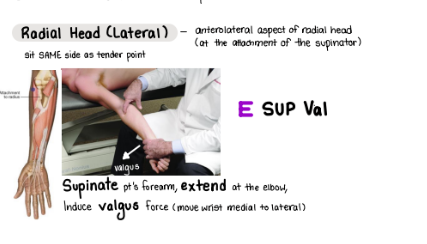
Radial Head (Lateral) CS
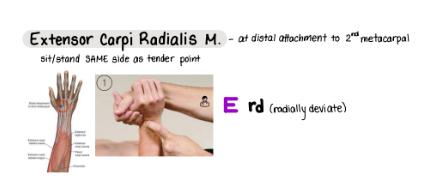
Extensor Carpi Radialis CS
Flexor Carpi Radialis CS
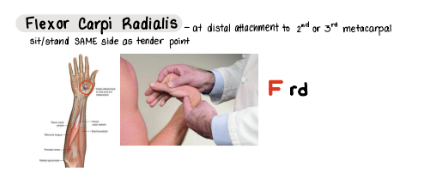
Lateral Epicondyle CS

Extensor Carpi Ulnaris CS
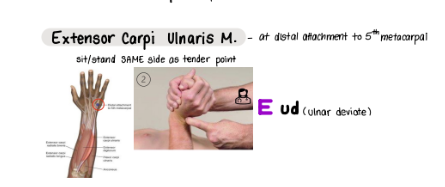
Flexor Carpi Ulnaris CS
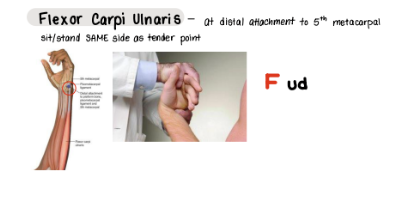
Medial Epicondyle CS
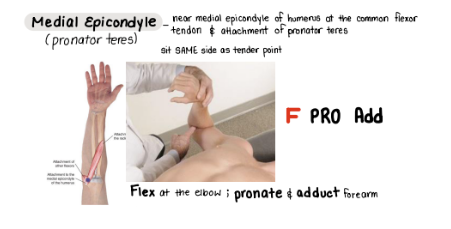
Abductor Pollicis Brevis CS

Anterior Radial Head (supination SD) HVLA
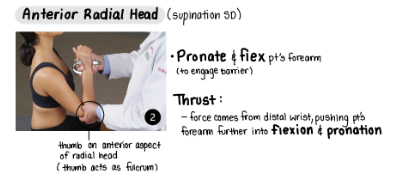
Posterior Radial Head (pronation SD) HLVA

HLVA of Glenohumeral: Abduction w/ medial glide
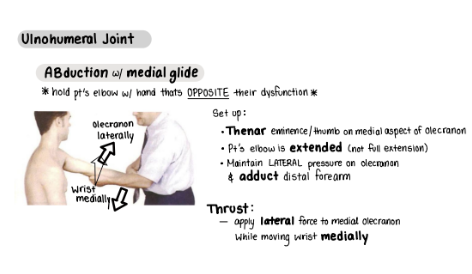
HLVA of Glenohumeral: Adduction w/ lateral glide
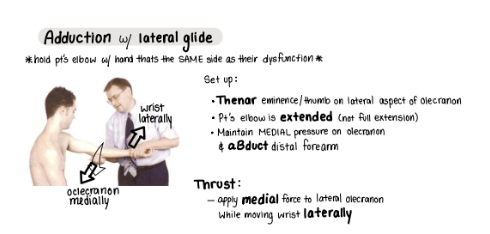
Dorsally Displaced Carpals (prefers flexion, dorsal glide) HVLA
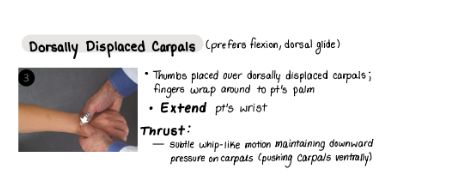
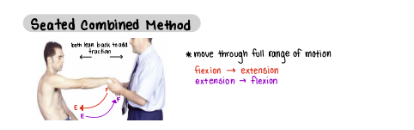
Wrist HVLA: Seated combined method
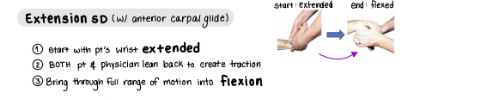
Wrist HVLA: Flexion SD (w/ posterior carpal glide)

Wrist HVLA: Extension SD (w/ posterior carpal glide)
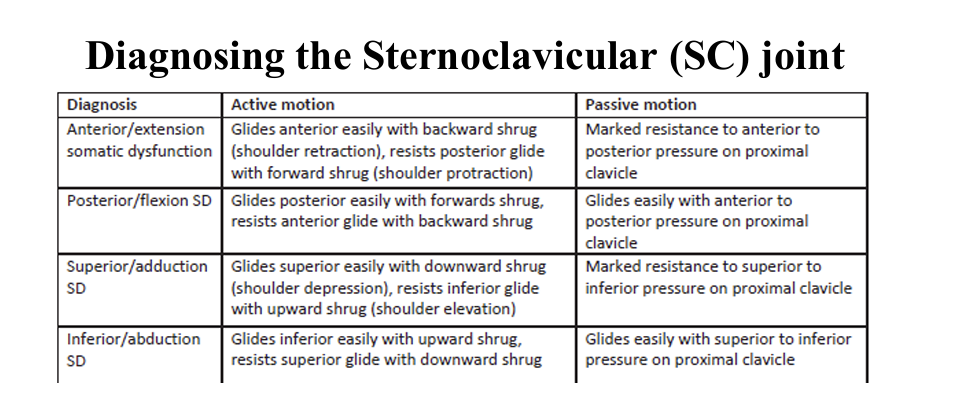
What motions do you assess when diagnosing the SC joint?
The SC joint is palpated by going to the proximal clavicle and seeing where it attaches to the sternum.
The patient will be moving their shoulders themselves (active range of motion)
What motions do you assess when diagnosing the AC joint?
Abduction, Adduction, Internal Rotation, and External Rotation
To diagnose the AC joint, you palpate to area where the distal clavicle meets the acromion. You then spring the AC bilaterally and determine which side is more prominent (that side will be more restricted).
You then move the patient’s arm into abduction + external rotation and adduction + internal rotation
AC Adduction/Internal Rotation
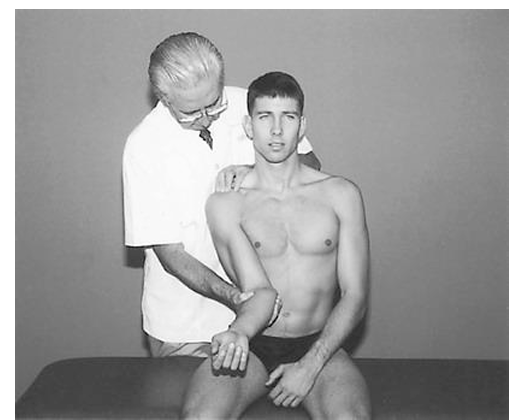
AC Abduction
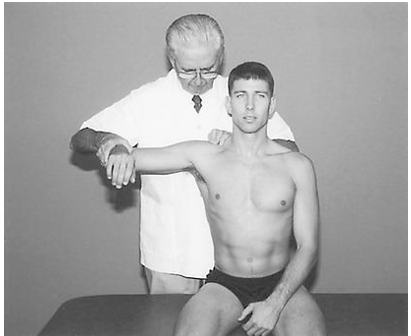
AC External Rotation
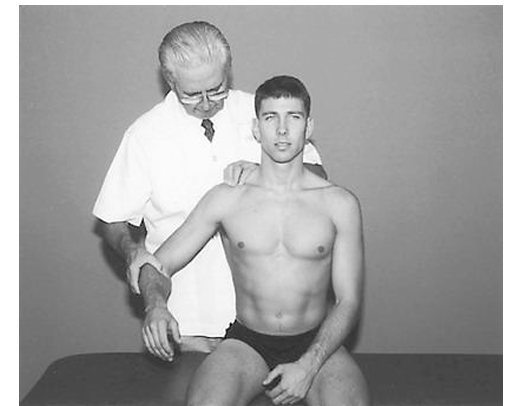
What motions do you assess when diagnosing the GH joint?
Abduction, adduction, flexion, and extension
GH diagnosis is weird because you ask the patient which side is bothering them more. You then establish a broad contact on the patient’s shoulder with one hand while the other is doing very minor motions.
Abduction is barely pushing the forearm down. Adduction is barely pushing the forearm up. Flexion is barely bringing the forearm forward. Extension is barely bringing the forearm backwards.

What motions do you assess when diagnosing the ulnohumeral joint?
Flexion, extension, abduction, adduction.
To determine the side of restriction, you have the patient flex their arms and then extend them (active range of motion).
You then grab their hand like you’re giving them a handshake, and the other hand establishes broad contact with the elbow. You then flex the elbow, extend it, and then barely abduct and adduct it.
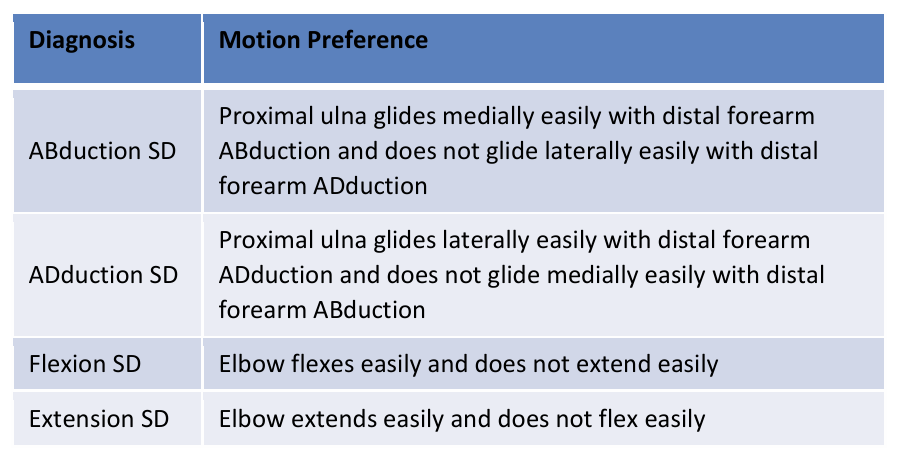
What motions do you assess when diagnosing the radioulnar joint?
Pronation (posterior radial head) and supination (anterior radial head)
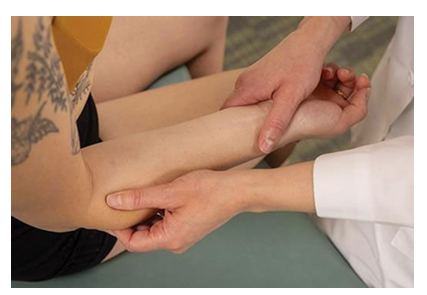
What motions do you assess when diagnosing the radiocarpal joint (wrist)?
Extension, flexion, abduction, and adduction
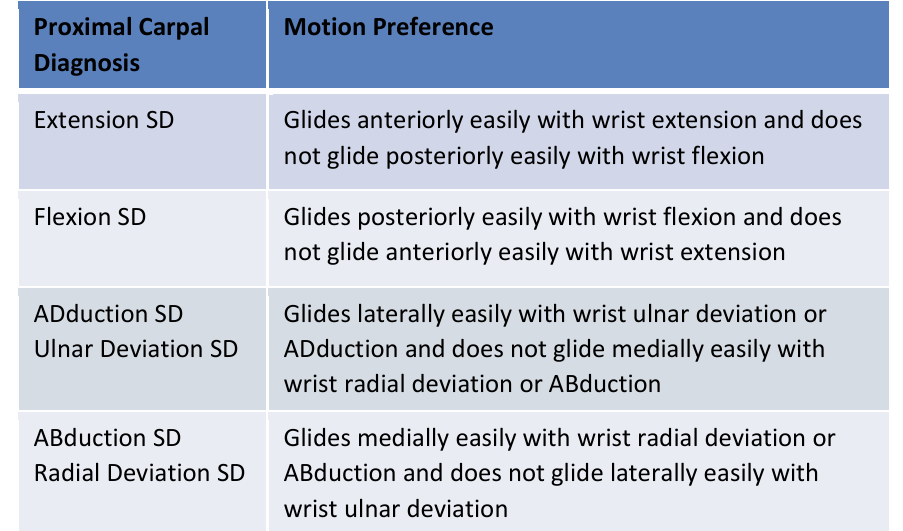
Abduction of radiocarpal joint (wrist) = _____________ deviation
Radial deviation (towards the thumb)
Adduction of radiocarpal joint (wrist) = _____________ deviation
Ulnar deviation (towards the pinky)