Characteristics of Life, Biomolecules, and Cell Energy
 Call Kai
 Learn
Learn Practice Test
 Spaced Repetition
 Match
Match Flashcards
 Knowt Play
1/115

Earn XP
Description and Tags
By Brayana Rogers
Name | Mastery | Learn | Test | Matching | Spaced | Call with Kai | Chat |
|---|
No analytics yet
Send a link to your students to track their progress
116 Terms
What are the 4 biomolecules of life?
Carbohydrates, lipids, proteins, and nucleic acids,
What can happen during a chemical reaction?
Broken bonds, released/absorbed energy, and changes in molecular structures.
Synthesis means to…
Create or in this case build large(r) molecules
“-Lysis” means..
To break/cut or in this case larger molecules being broken into smaller ones.
What are the essential elements of life?
Carbon, Hydrogen, Oxygen, Nitrogen, Phosphorus, and Sulfur
What elements are needed to make a substance a hydrocarbon?
Carbon and hydrogen
What is a hydrocarbon, and what kind of backbone do they form?
A hydrocarbon is the primary component of things like fossil fuels, and they form a structural backbone.
What elements are needed for a substance to be organic?
Carbon, hydrogen, and oxygen.
What is a covalent bond?
A chemical link between atoms that shares the same electron pair.
What makes up carbohydrates?
Sugar units
What are examples of carbohydrates?
Glucose, fructose, starch, and cellulose
What is a cellulose?
A complex carbohydrate that forms the main part in cell walls.
Is cellulose a monomer, polymer, or disaccharide?
Polymer
What does cellulose give plants?
Shape and strength
What is a non-polar molecule?
A chemical structure with an even distribution of electric charge
What are examples of non-polar molecules?
Fats, oils, and waxes
What are examples of Lipids?
Triglycerides, Phospholipids, and Sterols
What are Triglycerides?
The most common type of fat found in your blood.
What happens to unused calories/extra sugars and carbohydrates in your body from the food you eat?
Your body converts it to triglycerides and it’s stores them in fat cells for energy.
What are phospholipids?
Fat molecules that form the main building blocks of cell membrances.
What are sterols?
A subgroup of steroid Lipids in eukaryotic cells.
What defines sterols?
Four ring carbon structure and hydroxyl group.
What can sterols do?
Maintain cell membrane fluidity and act as building blocks for essential hormones and vitamins.
What is cell membrane fluidity?
The cell membrances ability to adapt its shape and movement based on conditions.
What is a nucleic acid?
Chains of nucleic acids that create, hold, and carry genetic material
What are nucleotide units?
Monomers of nucleic acids.
What are the 3 parts of a nucleotide unit?
A five-carbon sugar, a phosphate group, and a nitrogen base.
What are the different nitrogenous bases?
Adenine, guanine, cytosine, thymine, and uracil.
What are two examples of a nucleic acids?
DNA and RNA
What is DNA?
The part in cells that contains genetic information.
What are the partner rules with the base pairs?
Adenine goes with Thymine and Cytosine goes with Guanine
What is RNA?
An essential molecule that copies genetic instructions from DNA and carriers them to other vital proteins running your body.
What are proteins made up of?
Amino acid units
What are amino acid units?
The monomers of proteins that link through peptide bonds to build proteins.
What is in a standard amino acid units?
A central carbon atom bonded to an amino group, a carboxyl group, a hydrogen atom, and a R-group.
What does an R-group do in an amino acid units?
Dictate chemical behavior
What is an amino group?
The connector of the central carbon atom and amino acid in an amino acid unit. It acts as a base by taking in protons.
What is a carboxyl group?
An acid molecule that gives off a hydrogen molecule in water and joins with the next amino group to build proteins.
What is a proton?
A tiny, positive particle inside the center of an atom
What is a polysaccharide?
A carbohydrate made of repeating glucose units that is used for energy storage.
What is a polypeptide?
A protein made of linked amino acids
What linked amino acids make up polypeptides?
Proline, Valine, Glycine, and Serine
What other name(s) are carbohydrates known by?
Carbs, saccharides, or sugars
What are saccharides?
The basic unit that makes up sweet, energy giving material.
What is the meaning of the prefix “mono-“?
One
What is the meaning of the prefix “di-“?
Two
What is the meaning of the prefix “-poly“?
Many
What are enzymes?
Natural catalyst that speed up chemica reactions by lowering activation energy.
What is a catalyst?
A substance that can speed up chemical reactions without being used up/changed
What is activation energy?
Energy needed for a process to happen
What is a substrate?
The target molecule that an enzyme attached to and changes.
What is an active site?
Where the substrate and enzyme meet
What environmental conditions affect an enzyme the most?
Temperature, pH, or substrate
What happens to a substrate if it’s not in an optimal environment?
It gets denatured
What are hormones?
Chemical messengers that are transported throughout the body to instruct cells and organs on what to do
What are proteins?
Major molecules in your body that build, fix, send signals, etc
What are anti-bodies?
Protective proteins created by your immune system to fight off viruses and bacteria
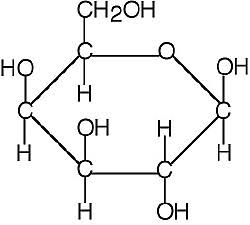
What biomolecule has such structuring?
Carbohydrate
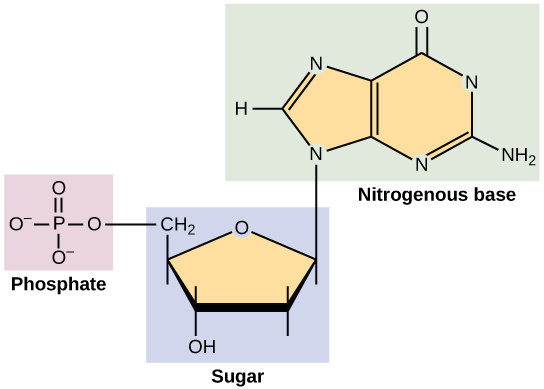
What biomolecule has such structuring?
Nucleic acid
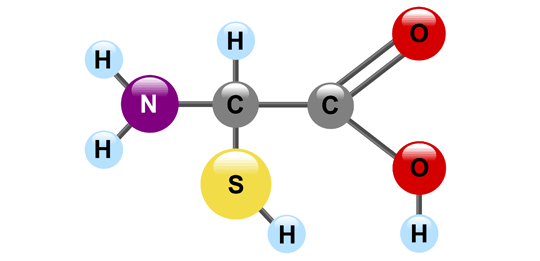
What biomolecule has such structuring?
Protein
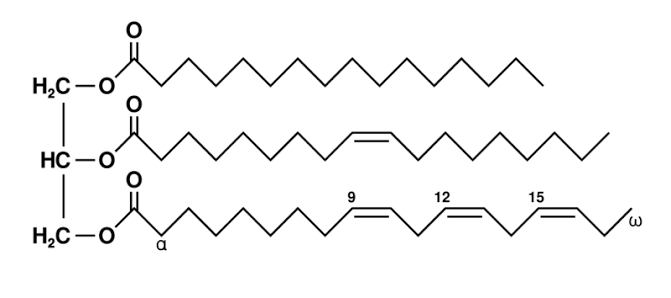
What biomolecule has such structuring?
Lipid
What do carbohydrate names end with?
“-ose”
What is the monomer of carbohydrates?
Monosaccharides
What is the polymer of carbohydrates?
Polysaccharide
What is a monomer?
The building blocks of a molecule
What is a polymer?
Many monomers linked together
What is the function of a carbohydrate?
Primary energy source, makes up the cell wall, communication, and identification
How do carbohydrates contribute to structural support?
Cellulose, a carbohydrate, makes up the cell wall.
With carbohydrates what’s a bond typically formed?
Glycosydic
What is the structure of a lipid?
1 hydrolic head (polar) connected to hydrophobic tai(s) (non-polar)
What is a hydraulic head?
The water loving part of a lipid molecule.
What does it mean if a head is polar?
It has an electric charge that attracts water
What is the phospholipid bilayer?
A double-layer of fat based molecules that make up the core of every cell membrane.
What is the structure of the bilayer?
The double layer, phosphate heads, fatty acid tails, and amphiphatic nature.
What are fatty acid tails?
The hydrophobic pieces of the bilayer that hide inner parts from water, maintaining a dry core
What is amphiphatic nature?
Each molecule has both a water loving side and a water fearing side
What is cholesterol?
A waxy, fat like substance that your body needs to build cells, make vitamins, and produce hormones
What are the monomers of Lipids?
Fatty acid tail(s) and Glycerol head
What is a glycerol head?
A 3-carbon backbone that acts as an anchor holding the parts of the cell membrane together.
What are functions of Lipids?
Act as an alternate energy source, makes up the cell membrane, and insulation/shock absoption
How do Lipids contribute to structural support?
Phospholipid bilayer makes up the cell membrane
What bond is usually formed from Lipids?
Ester, which is a double bond
What elements do proteins contain?
Carbon, hydrogen, oxygen, and nitrogen
What is the structure of a protein?
1 central carbon connected to an amino group, carboxyl acid group, hydrogen, and on R-group
What are examples of proteins?
Meat, muscles, carriage, beans, liver, enzymes, hormones, and antibodies
What are the polymers of proteins?
Polypeptides
Protein names end in…
“-in”
Enzyme names end in…
“-ase”
How do proteins contribute to structural support?
Cartilage, tubes, shells, (chitin, exoskeleton), cytoskeleton.
What functions can proteins carry out?
Create tissues and build organisms
What breaks down starch?
Amylase, which is found in saliva
Where is pepsin found?
In your stomach
What does optimal temperature ensure in an enzyme?
It ensure chem rxns receive proper activation energy
What do optimal pH levels ensure?
It ensures the shape of the enzyme active site.
What do optimal amounts of substrate ensure?
They ensure consistent rxn acceleration and more enzyme contact
What is DNA sugar?
Deoxyribose
What is RNA sugar?
Ribose
What are the polymers of nucleic acids?
Genes and chromosomes
Where does RNA send genetic information?
To the ribosomes to make protein
What is Tri-phosphate?
A chemical group or molecule that contains 3 phosphate groups linked in a chain