Rad 103 Lab Intro
 Call Kai
 Learn
Learn Practice Test
 Spaced Repetition
 Match
Match Flashcards
 Knowt Play
1/37

There's no tags or description
Looks like no tags are added yet.
Name | Mastery | Learn | Test | Matching | Spaced | Call with Kai | Chat |
|---|
No analytics yet
Send a link to your students to track their progress
38 Terms
How bones does the adult body have
206 bones
osteology
the study of bones
arthrology
the study of joints
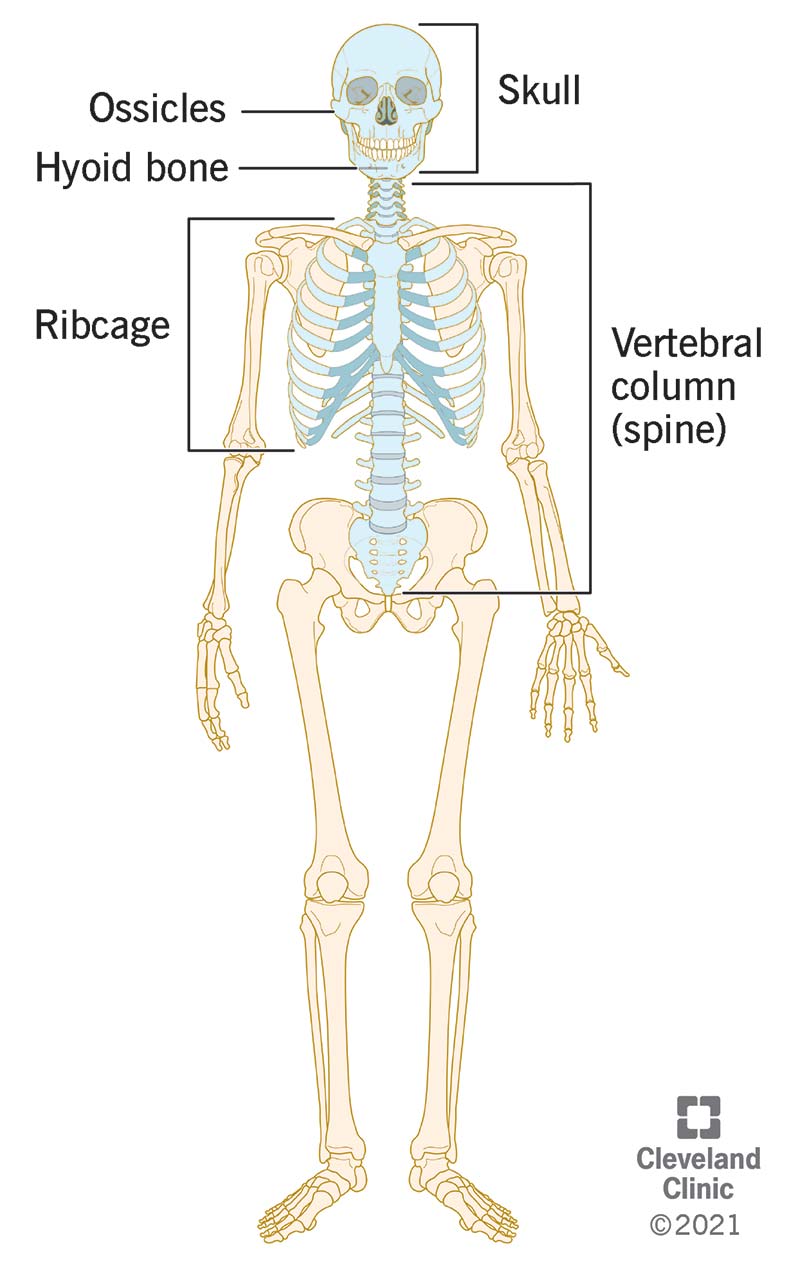
axial skeleton
(80 bones) central axis of body; skull, vertebral column, ribs, and sternum
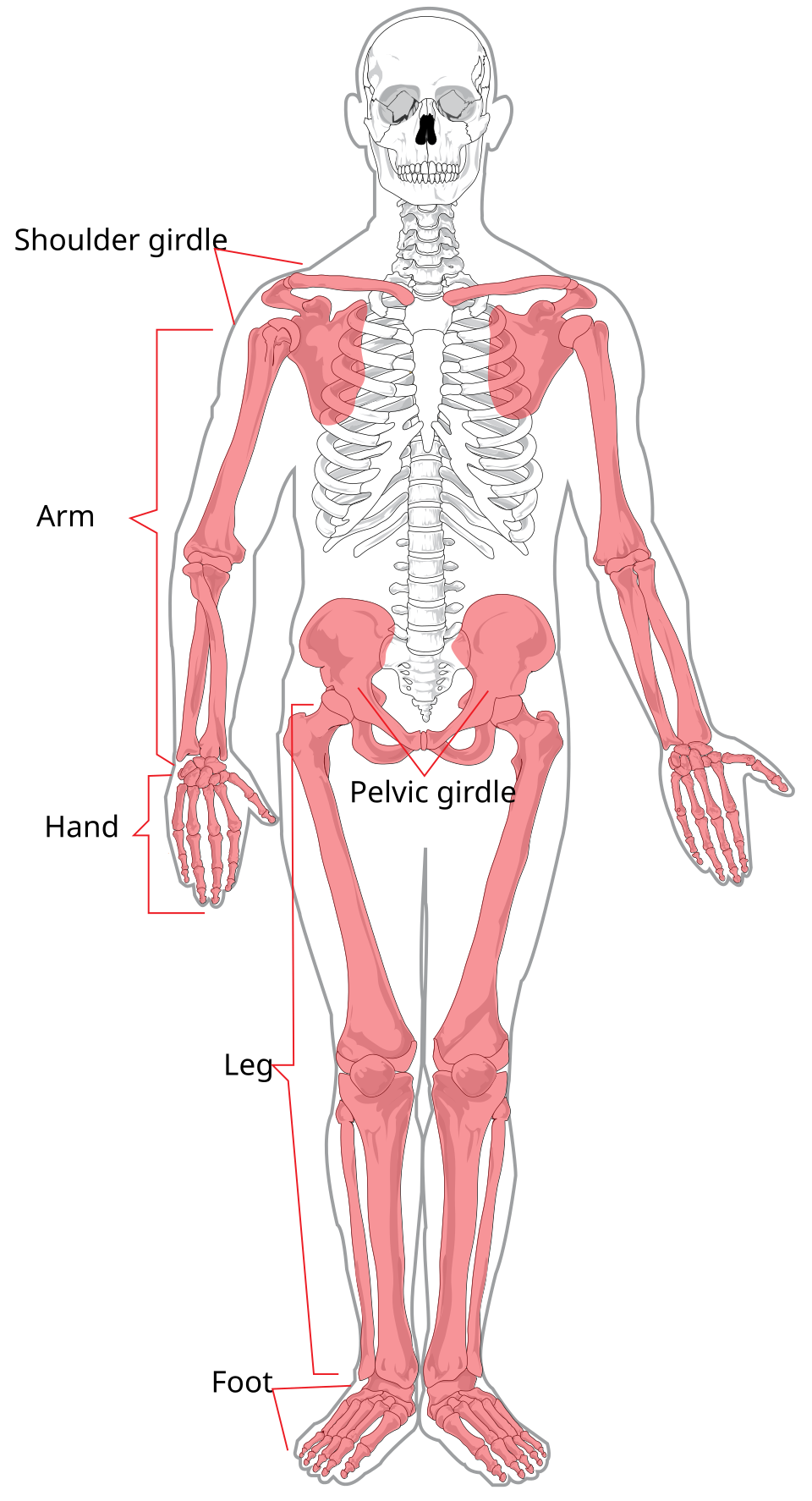
Appendicular Skeleton
(126 bones) limbs, shoulder, and pelvis
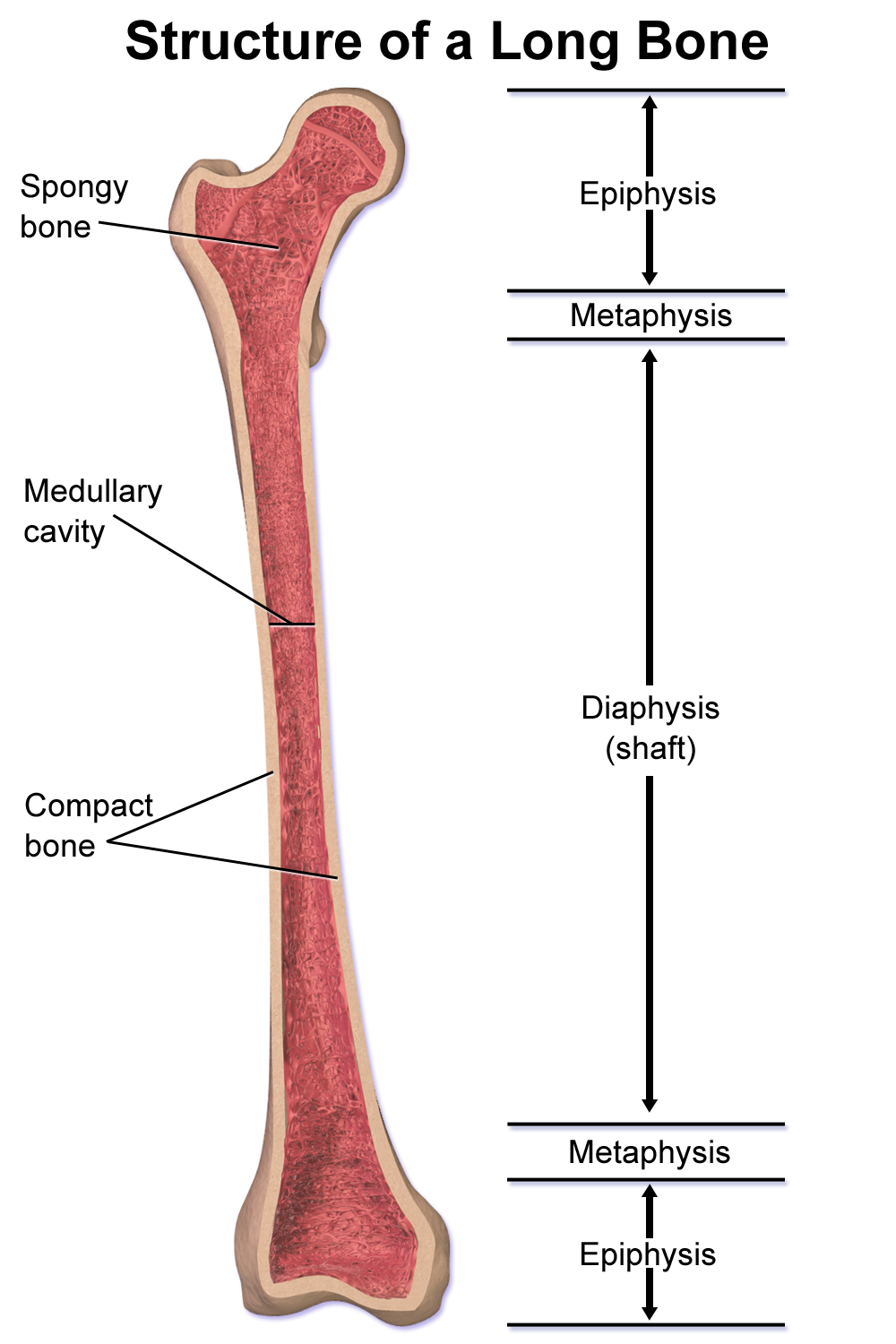
long bones
two ends with shaft (humerus, femur, digits)
Irregular bones
funny shapes (facial bones, vertebrae, pelvic bones)

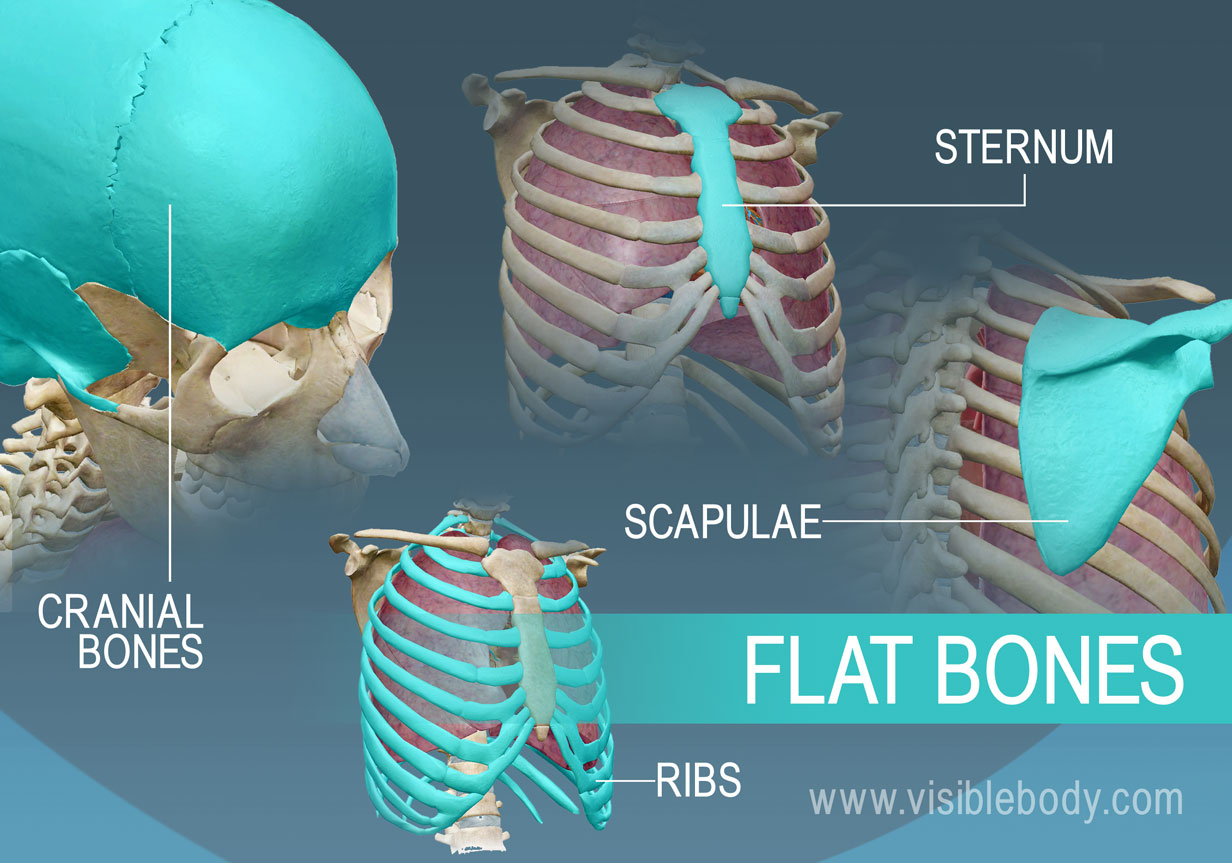
Short and Flat bones
little and flat bones (carpal and tarsals) (ribs, skull, sternum)
Long Bones- Cortex
outer shell
Cancellous
spongey bone; red bone marrow; produces red blood cells
medullary cavity
hallow center containing fatty yellow marrow
Periosteum
dense fibrosis membrane covering bone except at articulating surfaces; allows blood vessels to pass through bone via nutrient foramen
Articular Cartilage (hyaline cartilage)
covers the end of bones
Primary Bone Development
the middle will develop first
secondary bone development
the ends will develop last
anatomic position
arms slightly abducted, palms facing forward, head and feet facing forward
Projection
describes the direction or the path of the central ray (CR)
position
describes the general and specific position of the patients body
PA
Beam goes posterior to anterior
AP
beam goes anterior to posterior
supine position
facing upward
Prone Position
Facing Downward
Erect
In a upright position
Recumbent
laying down in any position
Bucky
hold and support Image receptor (IR) device
Portrait (IR)
position with longer dimension parallel to long axis of body part
Landscape (IR)
Positioned with shorter dimension parallel to the long axis of the body part
Central Ray
the centermost portion of the x-ray beam that has the least divergence (straight)
Anatomic Side Markers
made of lead, placed on IR to indicate right or left that’s being imaged; lateral side (have to be included with initials on)
Evaluation Criteria
definable standard by which every radiograph is determined to be optimal (anatomy demonstrated, position, exposure, image markers)
Positioning Accuracy
all pertinent anatomy, collimation, avoid improper rotation/tilt, central rays
Limbs
anatomic position
hands and feet
digits up, limbs hanging down
AP Chest
left will appear right-side-up
PA Chest
Left appears reversed
Palpation
process of applying light pressure on patients body using the fingertips; looking for landmarks to make sure you have the correct anatomy
Radiation Protection
wear lead aprons to protect the trunk and thyroid