Protein Translation and Endosymbiotic Organelles - Exam 1
 Call Kai
 Learn
Learn Practice Test
 Spaced Repetition
 Match
Match Flashcards
 Knowt Play
1/17

There's no tags or description
Looks like no tags are added yet.
Name | Mastery | Learn | Test | Matching | Spaced | Call with Kai | Chat |
|---|
No analytics yet
Send a link to your students to track their progress
18 Terms
translation
process of decoding the nucleic acid message into the protein language
information is stored in triplet codons responding to individual AAs, 64 codons
start codon - AUG - methionine
reading frames
determines proper translation
triplet codons allow for 3
ribosomes
translation machines
small and large subunit - composed of RNA and proteins

tRNAs
transfer the message from teh nucleic acid codon to an AA
non-coding RNA - single stranded allowing for many different shapes/functions
structure - AA at one end, RNA anti-codon at the other end

synonymous (point) mutation
point mutation that results in no change in AA
silent mutation
non-synonymous mutation
effect depends on location on protein and which AA swap happens
single base pair deletion
leads to a frame shift which typically results in a premature stop codon
can be detrimental
ADAMTS17
secreted protease (molecular scissors)
proteases play important roles in development and maintenance of the ECM including fibers
dysfunctional ADAMTS17 protease results in a failure to maintain the fibers that hold the ocular lens in place
autosomal recessive
homozygous - loss of function
heterozygous - attenuation of function (can have some intermediate phenotypes
doesn’t appear until 3y+
benefit of introns
increase protein repertoire by alternative splicing
regulate gene expression (when and how much)
U1 snRNA - binds to splice sites nad recruits TFs close to promoter to increase transcription, increased exon length leads to less expression bc RNA polymerase and TFs too far to re-initiate
antibiotics and protein synthesis
many (clindamycin) inhibit protein synthesis in prokaryotic ribosomes
Eukaryotic ribosomes are insensitive
exception some protozoan parasites (toxoplasma, coccidia) have plastids with their own ribosomes which are prokaryotic in nature
ribosomes assembly
ribosomal proteins made in cytoplasm → nucleus via nuclear pores → nucleolus, assembled with RNA → cytoplasm
disruption of assembly → nucleolar stress → apoptosis
ribosomal haploinsufficiency
mutation in one allele of a ribosomal protein leading to half as much of that subunit, causes excess of other subunits
assembly disrupted → excess subunits activate p53 signaling → nucleolar stress → cell cycle arrest and/or apoptotic cell death
diamond blackfan anemia
human disease (has been described in dogs)
ribosomal haploinsufficiency → mutation in genes encoding ribosomal subunits → apoptosis in erythroid progenitors → production of RBCs impared → severe anemia

endpsymbiotic organelles
organelle genome, double membrane
mitochondria, plastids
mitochondrial genome
small - 17 thousand bp
rRNAa and tRNAs for translation
proteins for oxidative phosphorylation (~100)
~1,500 proteins in mitochondria, 13 proteins encoded on mtDNA, all others are nuclear encoded and imported
mitochondria functions
energetic roles - production of ATP by cellular respiration
metabolic synthesis roles - nucleotides, lipids, heme
signaling roles - apoptosis
PROCESSORS of the cell
mitochondrial disease
can be from nuclear or mitochondrial DNA
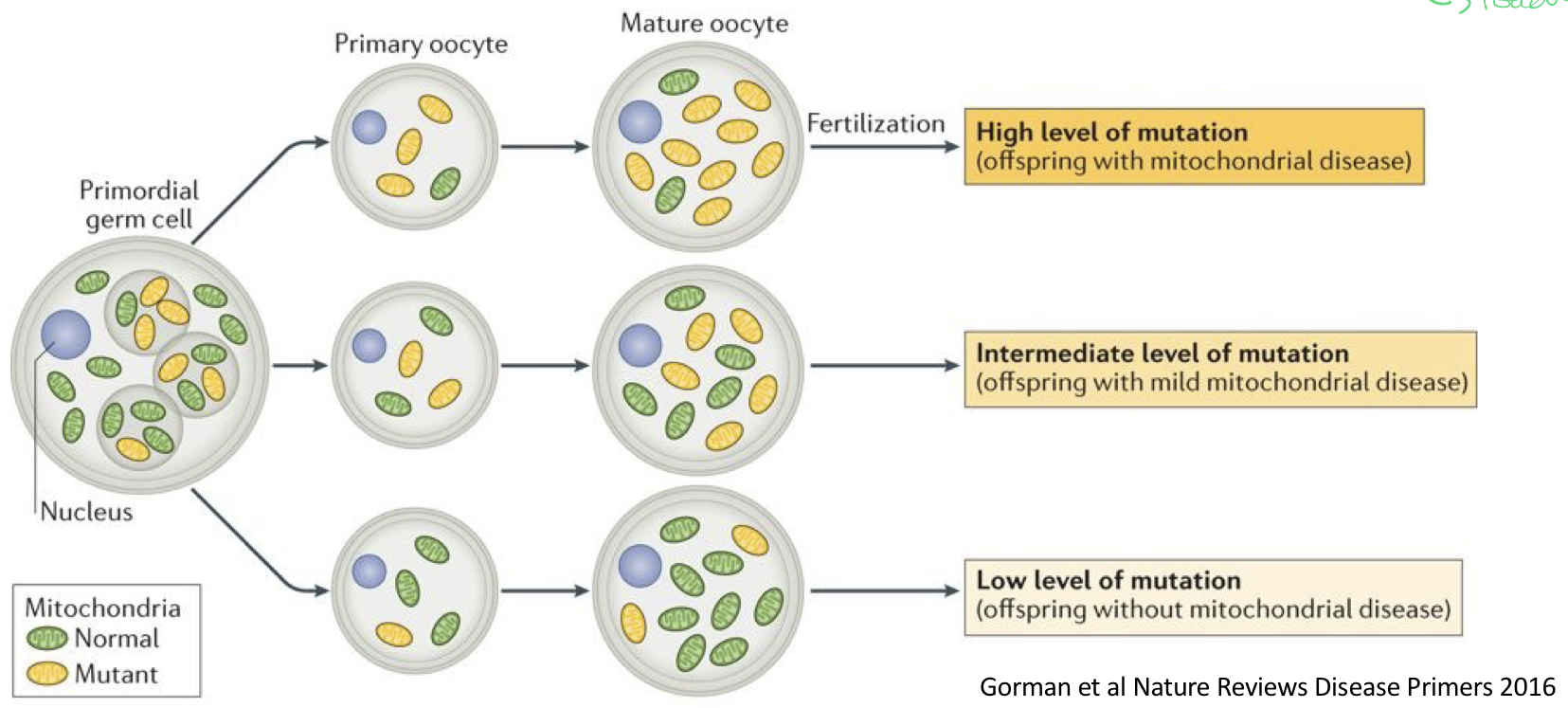
mtDNA genetic disorders are maternally inherited (mitochondria are inherited exclusively from the oocyte)
cells contain many mitochondria
heteroplasmy: variation in oocyte mutant mitochondrial load (loading is random)
sensory ataxic neuropathy in golden retrievers
only maternal inheritance
mild to moderate pathology (heteroplasmy) - wobbly gait, postural deficits, diminished spinal reflexes
caused by a mutation in mtDNA - single bp deletion in a tyrosine tRNA → defective tRNA impairs translation of mitochondrial genes