Organic synthesis map

0.0(0)
Studied by 0 people
call kaiCall Kai
Locked
learnLearn
examPractice Test
spaced repetitionSpaced Repetition
heart puzzleMatch
flashcardsFlashcards
GameKnowt Play
Card Sorting

1/35

encourage image

There's no tags or description

Looks like no tags are added yet.

Last updated 4:27 PM on 8/24/26
Name
Mastery
Learn
Test
Matching
Spaced
Call with Kai
Chat

No analytics yet

Send a link to your students to track their progress

36 Terms

1
New cards

Alkane to alkene

  • Cracking

  • Conditions:

    • thermal (very high temperature & pressure)

    • catalytic (zeolite catalyst, moderate temperature & pressure)


<ul><li><p><strong>Cracking</strong></p></li></ul><ul><li><p><strong>Conditions:</strong></p><ul><li><p>thermal (very high temperature &amp; pressure)</p></li><li><p>catalytic (zeolite catalyst, moderate temperature &amp; pressure)</p></li></ul></li></ul><p></p>
2
New cards

Alkene to alkane

  • Electrophilic addition (hydrogenation)

  • Reagent: H2

  • Conditions: nickel catalyst


<ul><li><p><strong>Electrophilic addition (hydrogenation)</strong></p></li><li><p><strong>Reagent:</strong> H<sub>2</sub></p></li><li><p><strong>Conditions: </strong>nickel catalyst</p></li></ul><p></p>
3
New cards

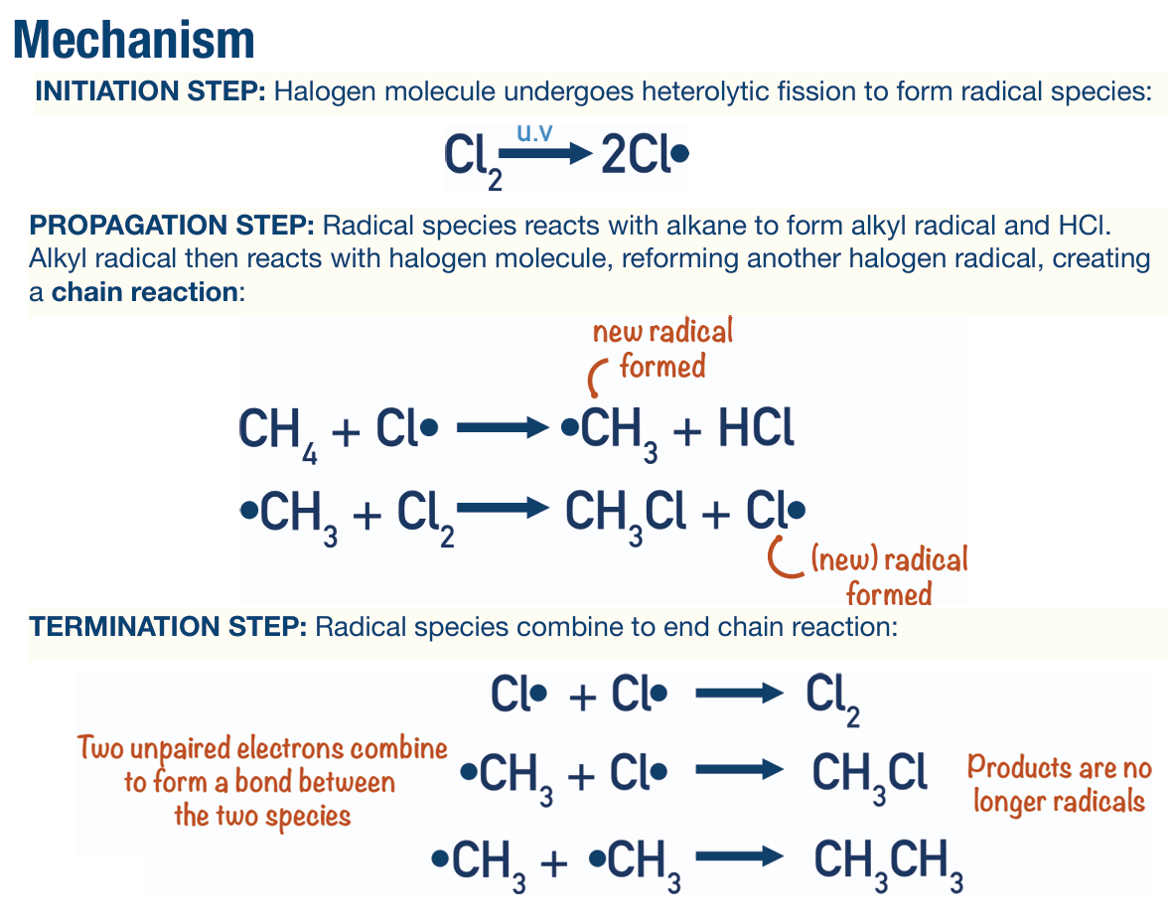
Alkane to halogenoalkane

  • Free radical substitution

  • Reagent: X2(g)

  • Conditions: UV light


<ul><li><p><strong>Free radical substitution</strong></p></li><li><p><strong>Reagent:</strong> X<sub>2</sub>(g)</p></li><li><p><strong>Conditions: </strong>UV light</p></li></ul><p></p>
4
New cards

Halogenoalkane to alkene

  • Elimination

  • Reagent: NaOH or KOH

  • Conditions: high temperature, ethanol solvent, no H2O present
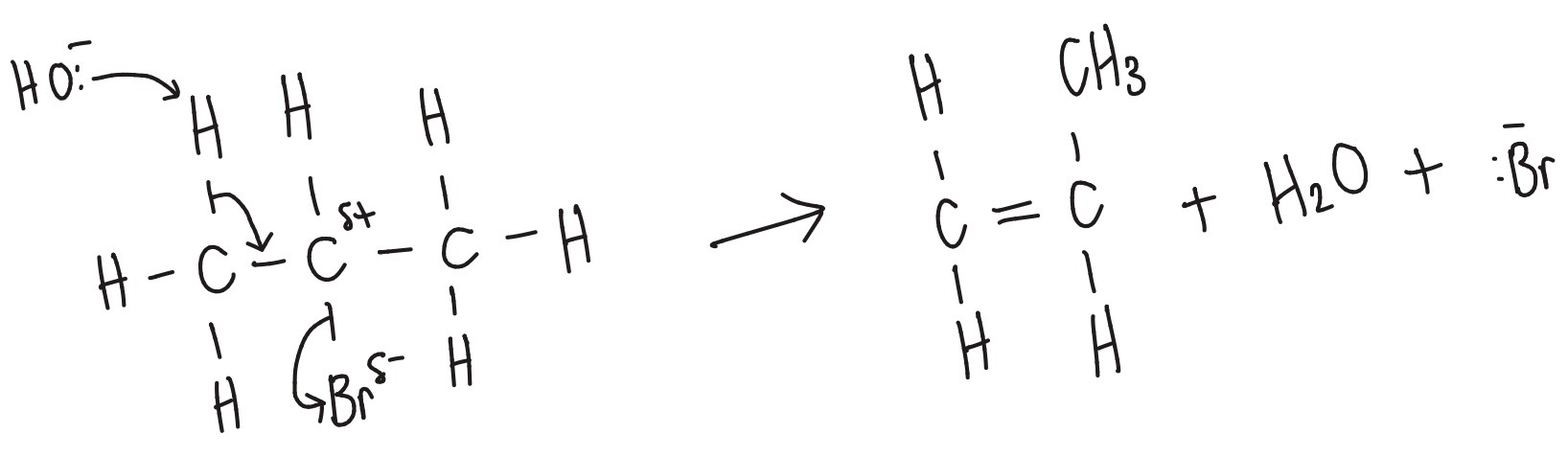

<ul><li><p><strong>Elimination</strong></p></li><li><p><strong>Reagent:</strong> NaOH or KOH</p></li><li><p><strong>Conditions: </strong>high temperature, ethanol solvent, no H<sub>2</sub>O present</p></li></ul><p></p>
5
New cards

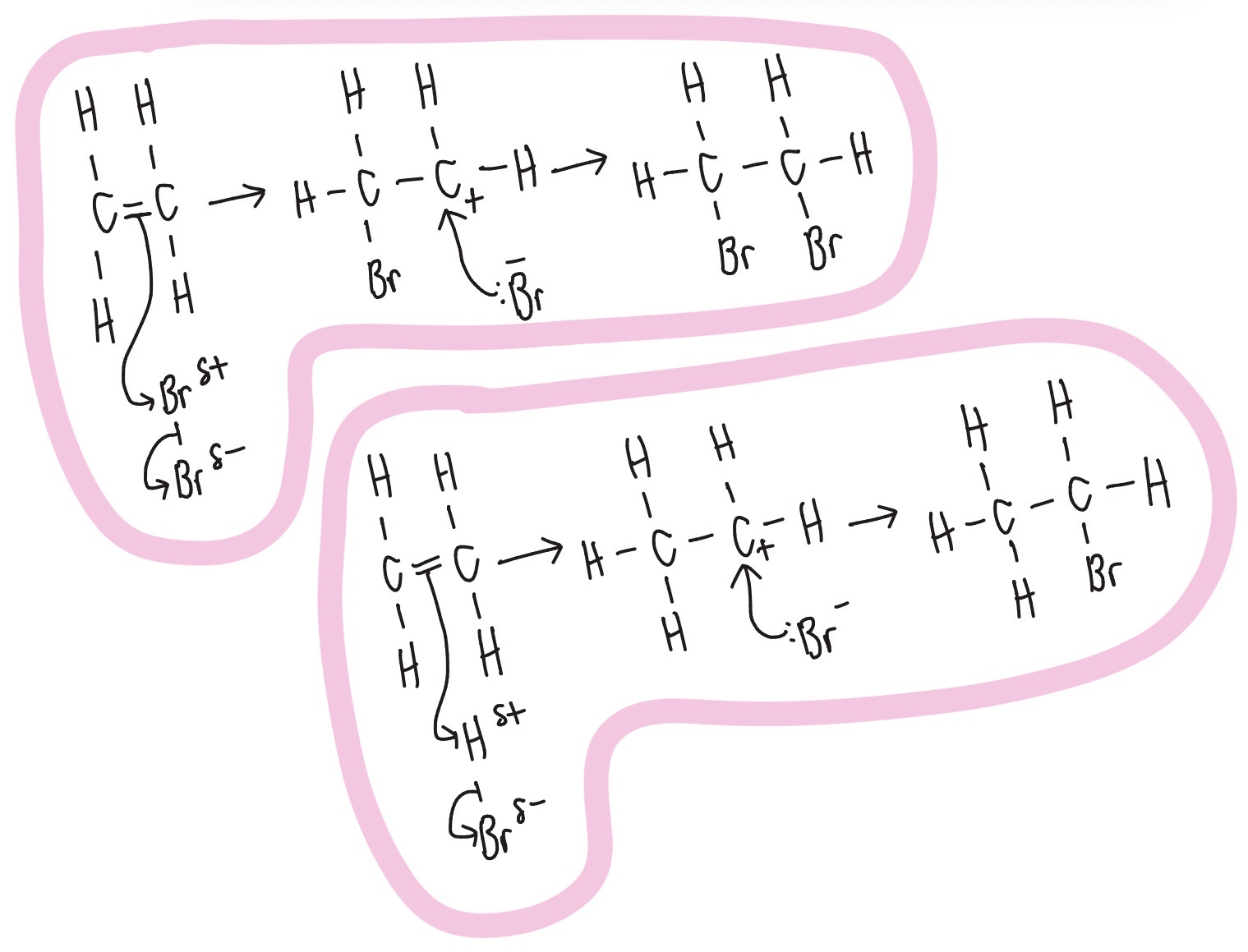
Alkene to halogenoalkane

  • Electrophilic addition

  • Reagent: HX or X2 (dihalogenoalkane)


<ul><li><p><strong>Electrophilic addition</strong></p></li><li><p><strong>Reagent:</strong> HX or X<sub>2 </sub>(dihalogenoalkane)</p></li></ul><p></p>
6
New cards

Alkene to alcohol

  • Electrophilic addition (hydration)

  • Reagent: H2O

  • Conditions: concentrated H2SO4 catalyst & room temperature
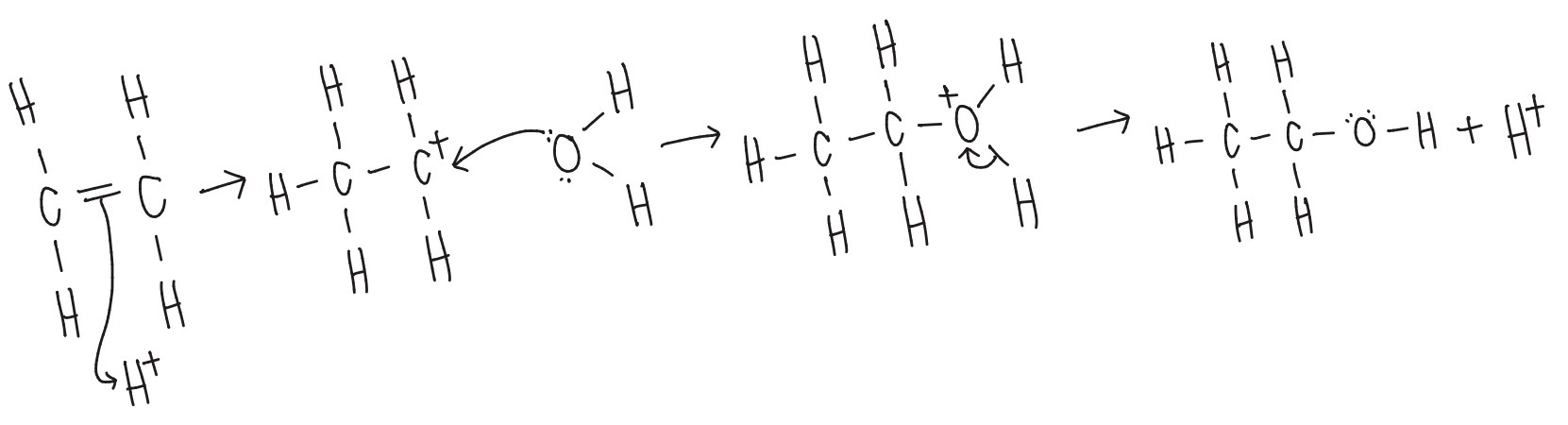

<ul><li><p><strong>Electrophilic addition (hydration)</strong></p></li><li><p><strong>Reagent:</strong> H<sub>2</sub>O </p></li><li><p><strong>Conditions:</strong> concentrated H<sub>2</sub>SO<sub>4</sub> catalyst &amp; room temperature</p></li></ul><p></p>
7
New cards

Alcohol to alkene

  • Elimination

  • Conditions: hot, concentrated H2SO4 catalyst


<ul><li><p><strong>Elimination</strong></p></li><li><p><strong>Conditions: </strong>hot, concentrated H<sub>2</sub>SO<sub>4</sub> catalyst</p></li></ul><p></p>
8
New cards

Alkene to poly(alkene)

Addition polymerisation

<p>Addition polymerisation</p>
9
New cards

Halogenoalkane to alcohol

  • Nucleophilic substitution

  • Reagent: NaOH or KOH

  • Conditions: heat under reflux, mixture of water & ethanol solvent
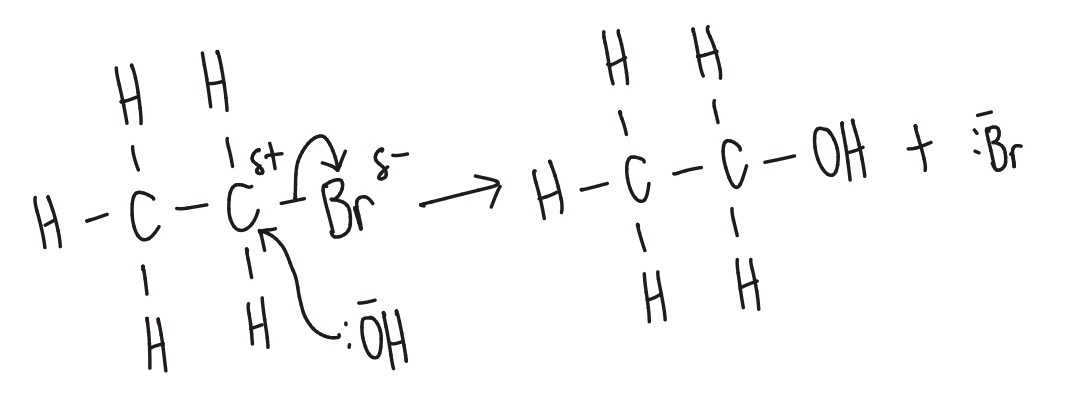

<ul><li><p><strong>Nucleophilic substitution</strong></p></li><li><p><strong>Reagent: </strong>NaOH or KOH</p></li><li><p><strong>Conditions: </strong>heat under reflux, mixture of water &amp; ethanol solvent</p></li></ul><p></p>
10
New cards

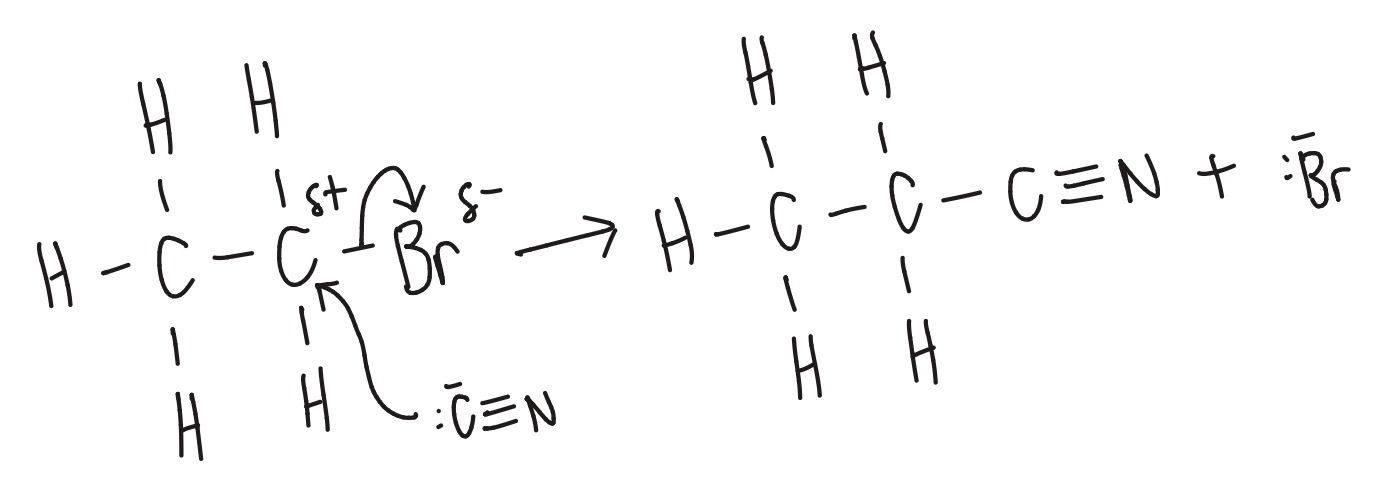
Halogenoalkane to nitrile

  • Nucleophilic substitution

  • Reagent: KCN

  • Conditions: warmed, ethanol solvent


<ul><li><p><strong>Nucleophilic substitution</strong></p></li><li><p><strong>Reagent:</strong> KCN</p></li><li><p><strong>Conditions: </strong>warmed, ethanol solvent</p></li></ul><p></p>
11
New cards

Halogenoalkane to amine

  • Nucleophilic substitution

  • Reagent: concentrated NH3

  • Conditions: excess NH3, high pressure, warmed, ethanol solvent
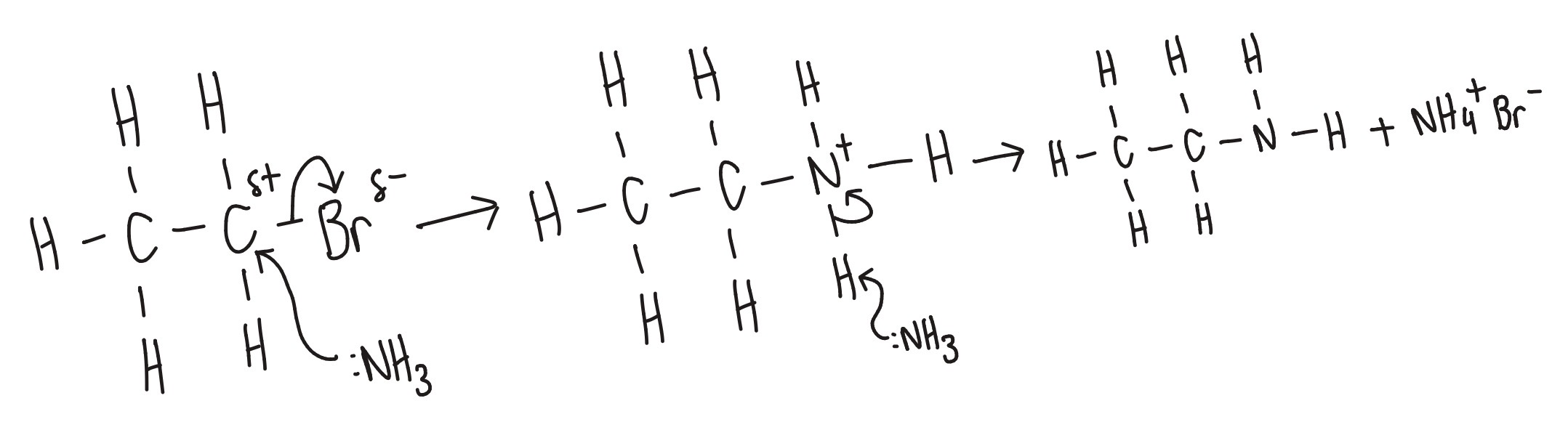

<ul><li><p><strong>Nucleophilic substitution</strong></p></li><li><p><strong>Reagent: </strong>concentrated NH<sub>3</sub></p></li><li><p><strong>Conditions:</strong> excess NH<sub>3</sub>, high pressure, warmed, ethanol solvent </p></li></ul><p></p>

12
New cards
<p>Nitrile to amine</p>

Nitrile to amine

Reduction

  • Reagent: H2

  • Conditions: nickel catalyst at high temperature & pressure → (via hydrogenation)

OR

  • Reagent: LiAlH4

  • Conditions: dry ether, followed by dilute acid → (via nucleophilic addition)


<p><strong>Reduction</strong></p><ul><li><p><strong>Reagent: </strong>H<sub>2</sub></p></li><li><p><strong>Conditions:</strong> nickel catalyst at high temperature &amp; pressure → (via hydrogenation)</p></li></ul><p>OR</p><ul><li><p><strong>Reagent:</strong> LiAlH<sub>4</sub></p></li><li><p><strong>Conditions: </strong>dry ether, followed by dilute acid → (via nucleophilic addition)</p></li></ul><p></p>
13
New cards

Primary alcohol to aldehyde

  • Oxidation

  • Reagent: acidified potassium dichromate (K2Cr2O7)

  • Conditions: heat & distil off product immediately
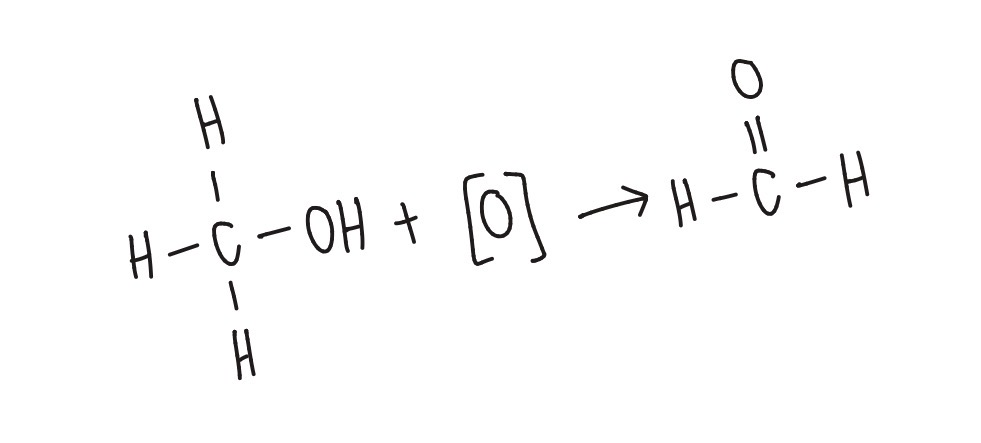

<ul><li><p><strong>Oxidation</strong></p></li><li><p><strong>Reagent: </strong>acidified potassium dichromate (K<sub>2</sub>Cr<sub>2</sub>O<sub>7</sub>)</p></li><li><p><strong>Conditions: </strong>heat &amp; distil off product immediately</p></li></ul><p></p>
14
New cards

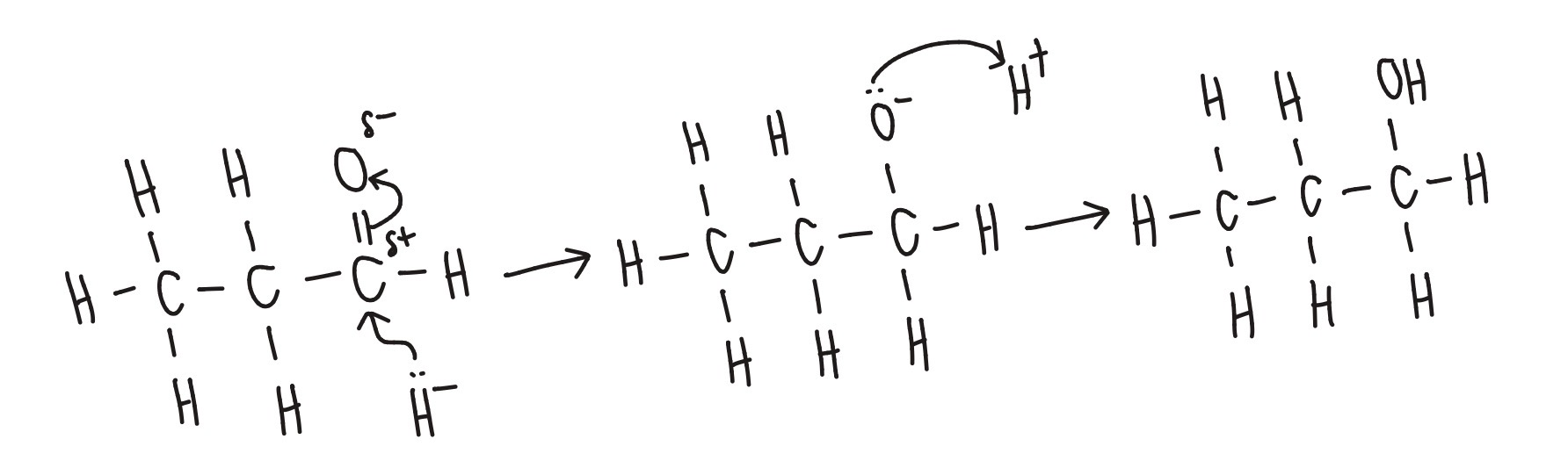
Aldehyde to primary alcohol

  • Reduction

  • Reagent: NaBH4

  • Conditions: aqueous


<ul><li><p><strong>Reduction</strong></p></li><li><p><strong>Reagent: </strong>NaBH<sub>4</sub></p></li><li><p><strong>Conditions:</strong> aqueous </p></li></ul><p></p>
15
New cards

Secondary alcohol to ketone

  • Oxidation

  • Reagent: acidified potassium dichromate (K2Cr2O7)

  • Conditions: heat


<ul><li><p><strong>Oxidation</strong></p></li><li><p><strong>Reagent: </strong>acidified potassium dichromate (K<sub>2</sub>Cr<sub>2</sub>O<sub>7</sub>)</p></li><li><p><strong>Conditions:</strong> heat</p></li></ul><p></p>
16
New cards

Ketone to secondary alcohol

  • Reduction

  • Reagent: NaBH4

  • Conditions: aqueous


<ul><li><p><strong>Reduction</strong></p></li><li><p><strong>Reagent:</strong> NaBH<sub>4</sub></p></li><li><p><strong>Conditions: </strong>aqueous</p></li></ul><p></p>
17
New cards

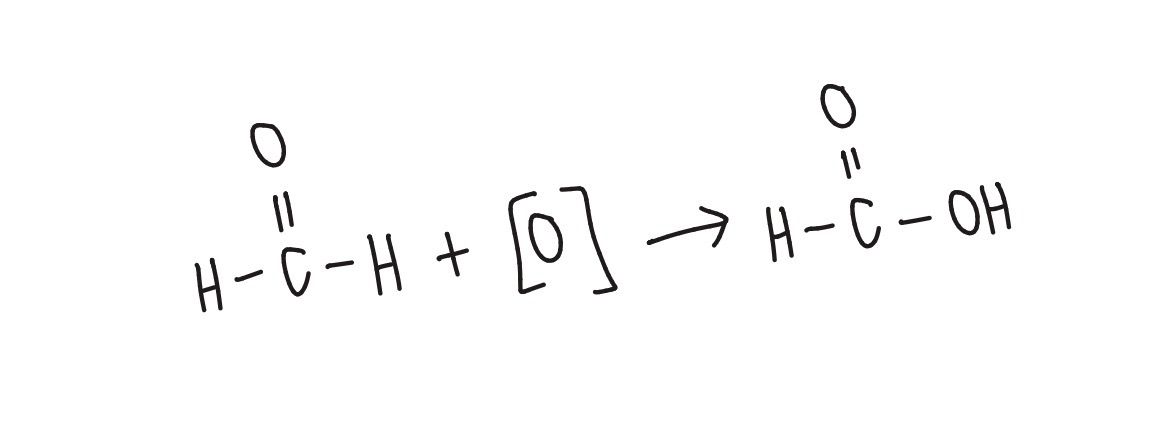
Aldehyde to carboxylic acid

  • Oxidation

  • Reagent: acidified potassium dichromate (K2Cr2O7)

  • Conditions: heat under reflux


<ul><li><p><strong>Oxidation</strong></p></li><li><p><strong>Reagent:</strong> acidified potassium dichromate (K<sub>2</sub>Cr<sub>2</sub>O<sub>7</sub>)</p></li><li><p><strong>Conditions:</strong> heat under reflux</p></li></ul><p></p>
18
New cards

Aldehyde/ketone to hydroxynitrile

  • Nucleophilic addition

  • Reagent: KCN

  • Conditions: HCl catalyst


<ul><li><p><strong>Nucleophilic addition</strong></p></li><li><p><strong>Reagent:</strong> KCN</p></li><li><p><strong>Conditions: </strong>HCl catalyst</p></li></ul><p></p>
19
New cards

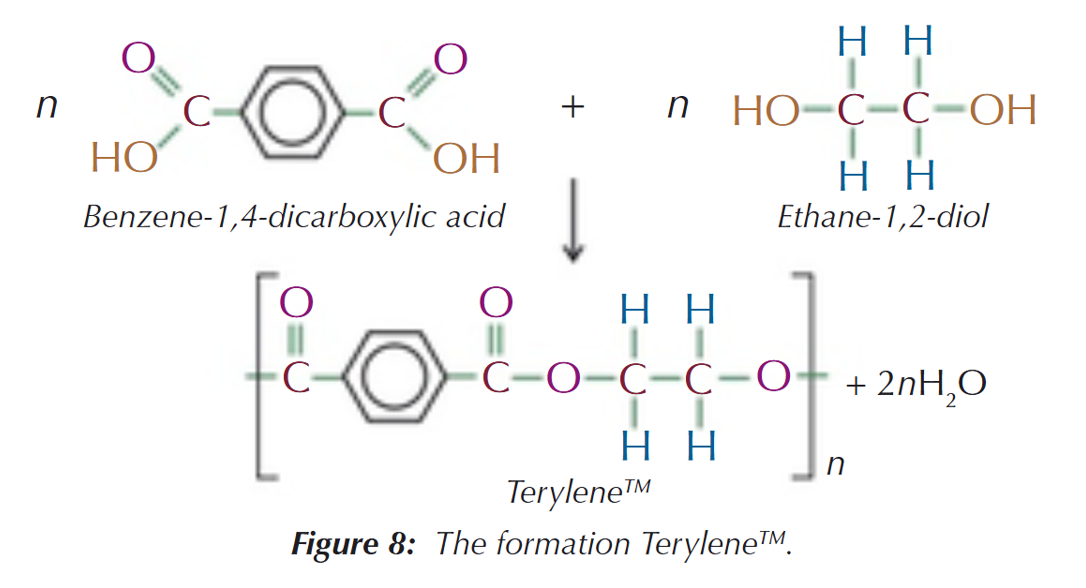
Alcohol to poly(ester)

  • Condensation

  • Reagents: diol & dicarboxylic acid


<ul><li><p><strong>Condensation</strong></p></li><li><p><strong>Reagents: </strong>diol &amp; dicarboxylic acid</p></li></ul><p></p>
20
New cards

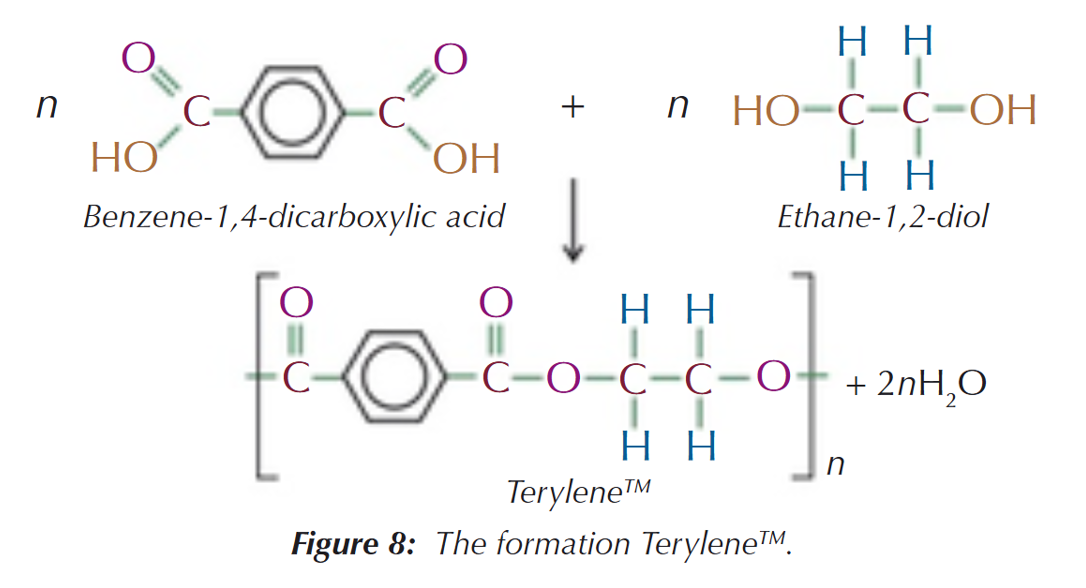
Carboxylic acid to poly(ester)

  • Condensation

  • Reagents: diol & dicarboxylic acid


<ul><li><p><strong>Condensation</strong></p></li><li><p><strong>Reagents: </strong>diol &amp; dicarboxylic acid</p></li></ul><p></p>
21
New cards

Alcohol to ester

  • Esterification

  • Reagent: carboxylic acid

  • Conditions: heat under reflux with strong acid catalyst
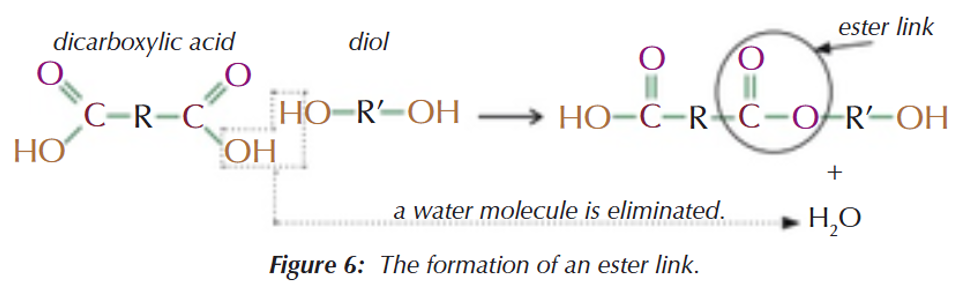

<ul><li><p><strong>Esterification</strong></p></li><li><p><strong>Reagent: </strong>carboxylic acid</p></li><li><p><strong>Conditions: </strong>heat under reflux with strong acid catalyst</p></li></ul><p></p>
22
New cards

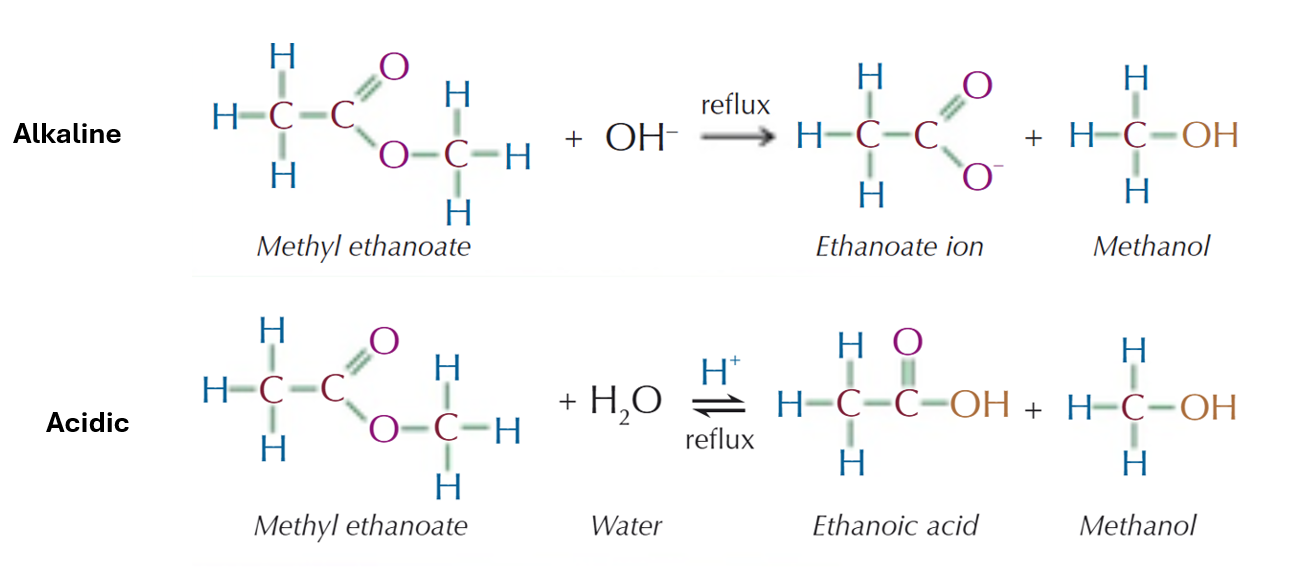
Ester to alcohol

  • Hydrolysis

  • Reagent: H2O

  • Conditions: acidic or alkaline


<ul><li><p><strong>Hydrolysis</strong></p></li><li><p><strong>Reagent: </strong>H<sub>2</sub>O</p></li><li><p><strong>Conditions: </strong>acidic or alkaline</p></li></ul><p></p>
23
New cards

Carboxylic acid to ester

  • Esterification

  • Reagent: alcohol

  • Conditions: heat under reflux with strong acid catalyst
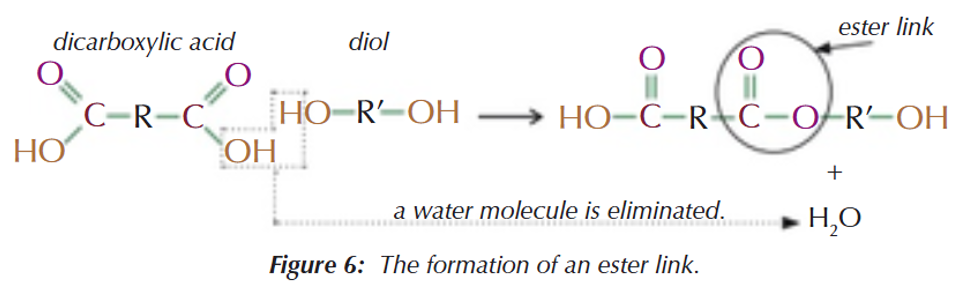

<ul><li><p><strong>Esterification</strong></p></li><li><p><strong>Reagent: </strong>alcohol</p></li><li><p><strong>Conditions: </strong>heat under reflux with strong acid catalyst</p></li></ul><p></p>
24
New cards

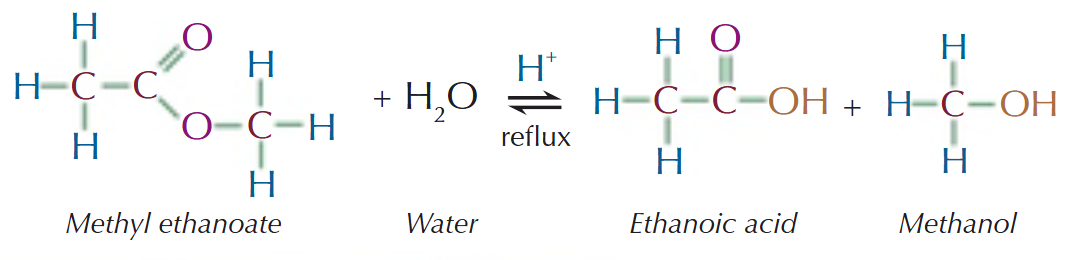
Ester to carboxylic acid

  • Acid hydrolysis

  • Reagent: H2O

  • Conditions: acid catalyst


<ul><li><p><strong>Acid hydrolysis</strong></p></li><li><p><strong>Reagent:</strong> H<sub>2</sub>O</p></li><li><p><strong>Conditions: </strong>acid catalyst</p></li></ul><p></p>
25
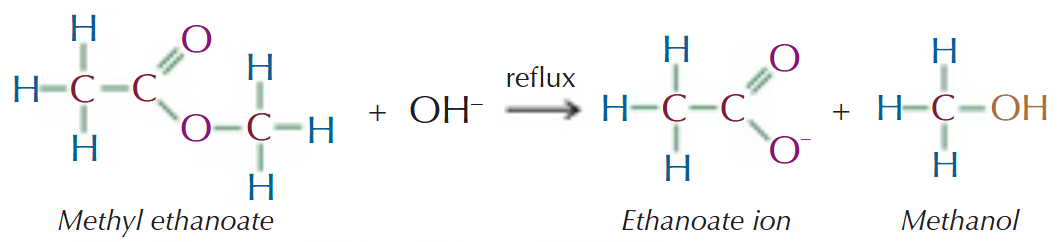
New cards

Ester to carboxylic salt

  • Base hydrolysis

  • Reagent: NaOH

  • Conditions: aqueous & warm


<ul><li><p><strong>Base hydrolysis</strong></p></li><li><p><strong>Reagent: </strong>NaOH</p></li><li><p><strong>Conditions:</strong> aqueous &amp; warm</p></li></ul><p></p>
26
New cards

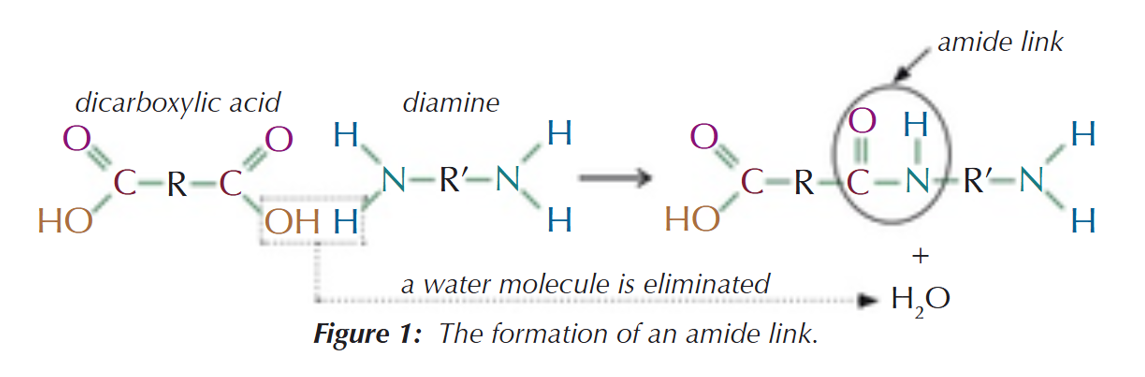
Carboxylic acid to poly(amide)

  • Condensation polymerisation

  • Reagents: diamine & dicarboxylic acid


<ul><li><p><strong>Condensation polymerisation</strong></p></li><li><p><strong>Reagents:</strong> diamine &amp; dicarboxylic acid</p></li></ul><p></p>
27
New cards

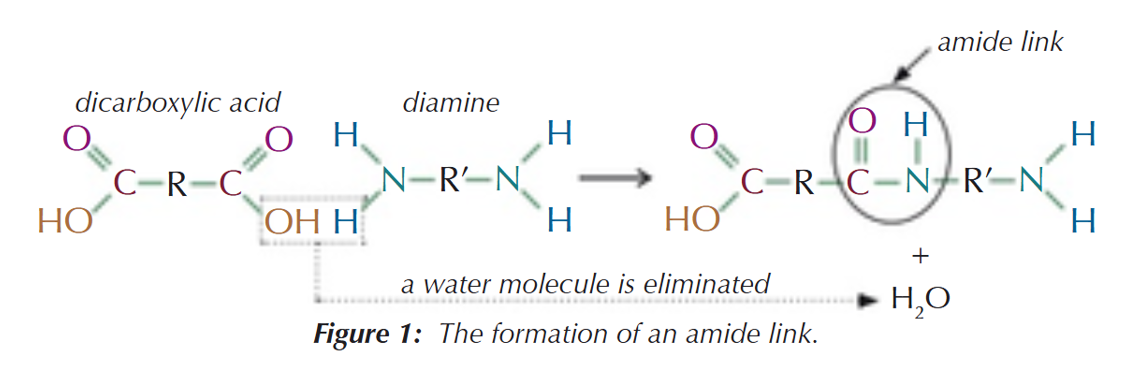
Amine to poly(amide)

  • Condensation polymerisation

  • Reagents: diamine & dicarboxylic acid


<ul><li><p><strong>Condensation polymerisation</strong></p></li><li><p><strong>Reagents: </strong>diamine &amp; dicarboxylic acid</p></li></ul><p></p>
28
New cards

Acid anhydride/acyl chloride to ester

  • Nucleophilic addition-elimination

  • Reagent: alcohol

  • Conditions: reflux & anhydrous


<ul><li><p><strong>Nucleophilic addition-elimination</strong></p></li><li><p><strong>Reagent:</strong> alcohol</p></li><li><p><strong>Conditions: </strong>reflux &amp; anhydrous </p></li></ul><p></p>
29
New cards

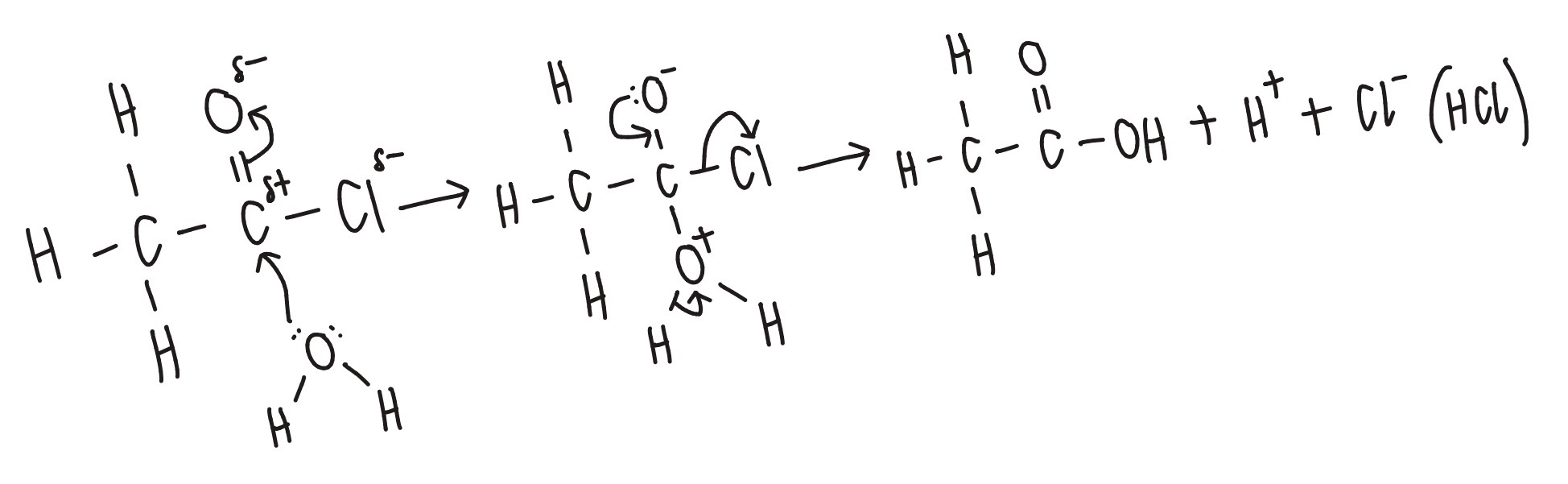
Acyl chloride/acid anhydride to carboxylic acid

  • Nucleophilic addition-elimination

  • Reagent: H2O

  • Conditions: room temperature


<ul><li><p><strong>Nucleophilic addition-elimination</strong></p></li><li><p><strong>Reagent: </strong>H<sub>2</sub>O</p></li><li><p><strong>Conditions: </strong>room temperature</p></li></ul><p></p>
30
New cards

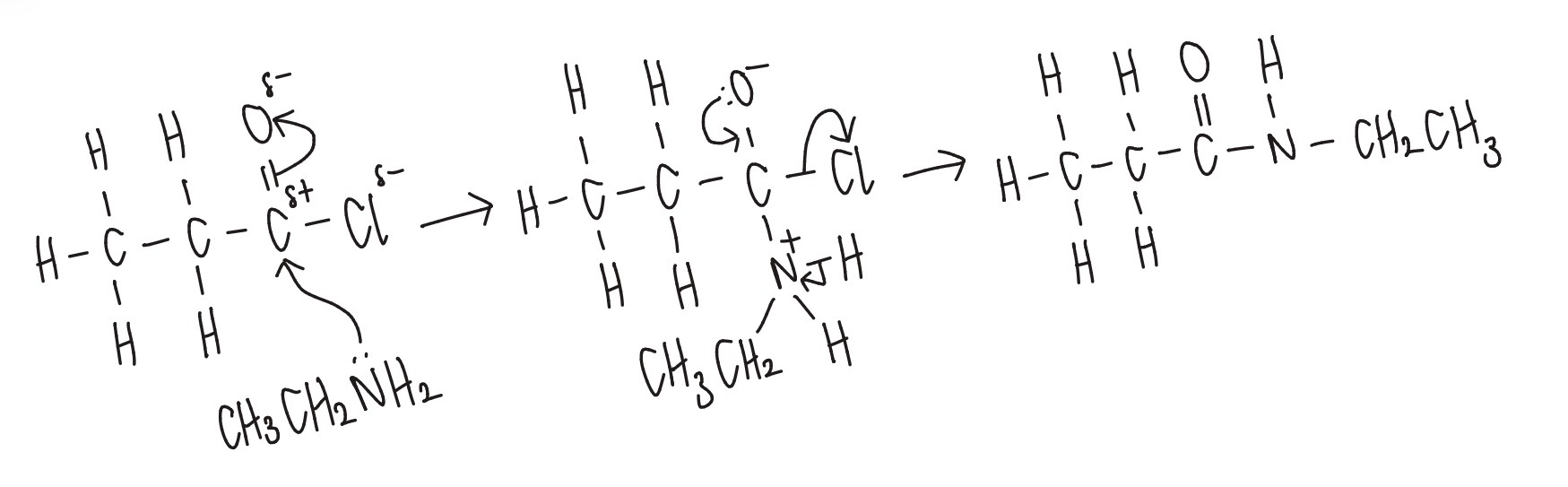
Amine to N-substituted amide

  • Nucleophilic addition-elimination

  • Reagent: acid anhydride/acyl chloride

  • Conditions: anhydrous


<ul><li><p><strong>Nucleophilic addition-elimination</strong></p></li><li><p><strong>Reagent: </strong>acid anhydride/acyl chloride</p></li><li><p><strong>Conditions: </strong>anhydrous </p></li></ul><p></p>
31
New cards

Acyl chloride/acid anhydride to N-substituted amide

  • Nucleophilic addition-elimination

  • Reagent: amine

  • Conditions: anhydrous


<ul><li><p><strong>Nucleophilic addition-elimination</strong></p></li><li><p><strong>Reagent: </strong>amine</p></li><li><p><strong>Conditions: </strong>anhydrous </p></li></ul><p></p>
32
New cards

Acid anhydride/acyl chloride to primary amide

  • Nucleophilic addition-elimination

  • Reagent: NH3

  • Conditions: low temperature & excess NH3
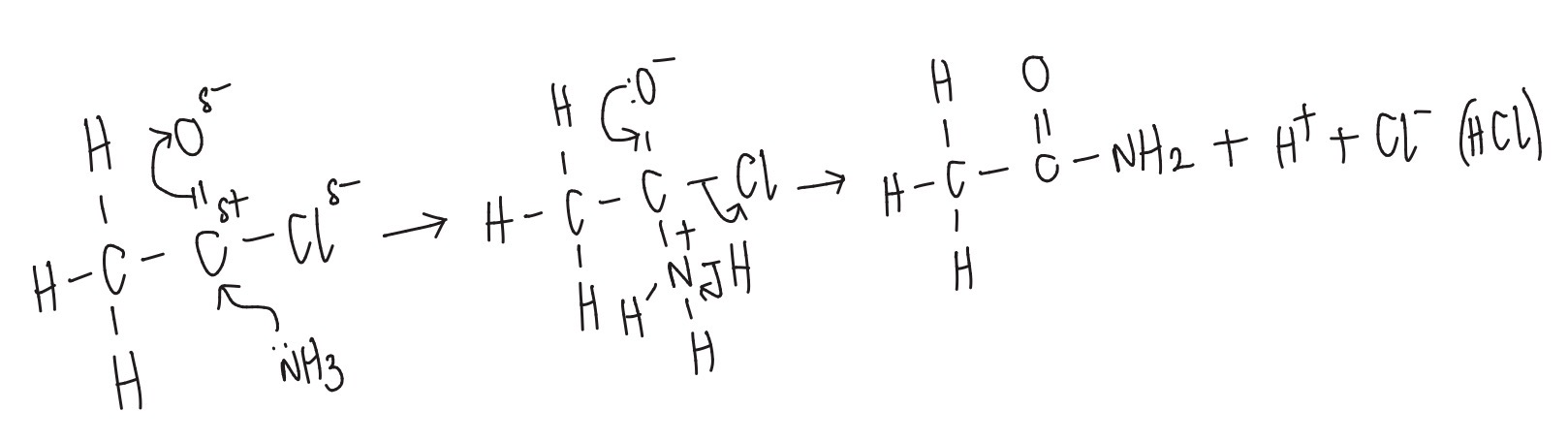

<ul><li><p><strong>Nucleophilic addition-elimination</strong></p></li><li><p><strong>Reagent: </strong>NH<sub>3</sub></p></li><li><p><strong>Conditions: </strong>low temperature &amp; excess NH<sub>3</sub></p></li></ul><p></p>
33
New cards

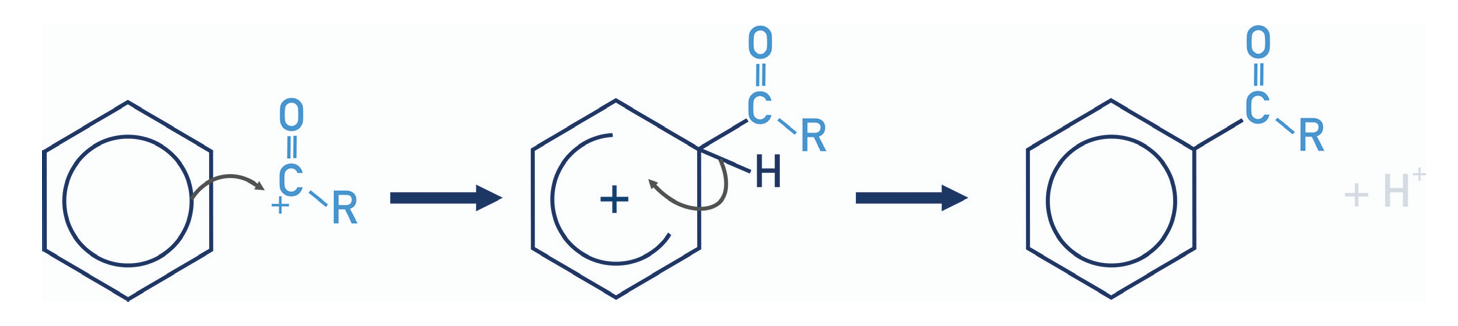
Acyl chloride to phenylketone

  • Electrophilic substitution (Friedel-Crafts acylation)

  • Reagent: benzene

  • Conditions: AlCl3 catalyst


<ul><li><p><strong>Electrophilic substitution (Friedel-Crafts acylation)</strong></p></li><li><p><strong>Reagent: </strong>benzene</p></li><li><p><strong>Conditions:</strong> AlCl<sub>3</sub> catalyst</p></li></ul><p></p>
34
New cards

Benzene to phenylketone

  • Electrophilic substitution (Friedel-Crafts acylation)

  • Reagent: acyl chloride

  • Conditions: AlCl3 catalyst


<ul><li><p><strong>Electrophilic substitution (Friedel-Crafts acylation)</strong></p></li><li><p><strong>Reagent: </strong>acyl chloride</p></li><li><p><strong>Conditions:</strong> AlCl<sub>3</sub> catalyst</p></li></ul><p></p>
35
New cards

Benzene to nitrobenzene

  • Electrophilic substitution (nitration)

  • Reagent: concentrated HNO3

  • Conditions: concentrated H2SO4 catalyst & 55°C
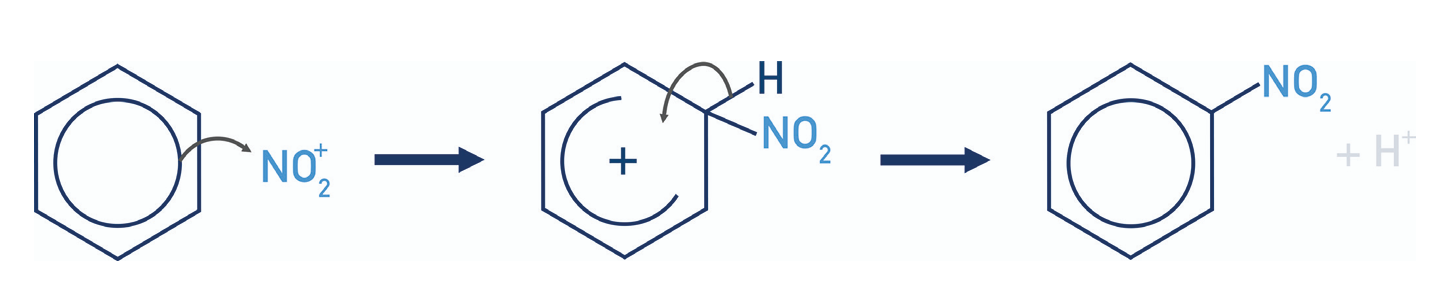

<ul><li><p><strong>Electrophilic substitution (nitration)</strong></p></li><li><p><strong>Reagent:</strong> concentrated HNO<sub>3</sub></p></li><li><p><strong>Conditions: </strong>concentrated H<sub>2</sub>SO<sub>4 </sub>catalyst &amp; 55°C</p></li></ul><p></p>
36
New cards

Nitrobenzene to phenylamine

  • Reduction

  • Reagent: concentrated HCl & tin


<ul><li><p><strong>Reduction</strong></p></li><li><p><strong>Reagent: </strong>concentrated HCl &amp; tin</p></li></ul><p></p>