Honors Chem Unit 4 Review
 Call Kai
 Learn
Learn Practice Test
 Spaced Repetition
 Match
Match Flashcards
 Knowt Play
1/14

Name | Mastery | Learn | Test | Matching | Spaced | Call with Kai | Chat |
|---|
No analytics yet
Send a link to your students to track their progress
15 Terms
Gas
Particles are independent, widely separated, with no attractive forces between them. They fill the volume of the container
Liquid
Particles constantly make and break temporary attractions between each other. Particles can slop past one another easily. They take the shape of the container
Solid
Strong attraction between particles lock them into a fixed arrangement
Pure Substance
These have fixed compositions, one set of intrinsic physical properties (density, mp,bp). and can be separated only be chemical means
Mixture
These have variable composition. Their physical properties vary depending on the composition. They can be separated by physical means.
Elements
These cannot be broken down into simpler substance by physical or chemical means. The smallest particle of this is called an atom.
All elements are Pure Substances
Compound
These are made of elements in fixed mass ratios. They can be broken down into simpler substances by chemical means.
All compounds are Pure Substance
Molecule
Any 2 or more atoms bonded together
Homogeneous
Exists in one phase only and has uniform properties throughout the sample
Appears uniform(same) throughout; Components are evenly distributed
Heterogeneous
May exists in more then one phase and have variable properties in different parts of the sample
Componenets are not evenly distributed;can see seperate components
Dissolve: Water has a much lower boiling point than salt
Filter: After dissolving the salt, the salt water will pass through the filter but the sand particles are too large so they won’t pass through
Which technique would be useful to separate a mixture of sand and salt? Of salt and water? Why?
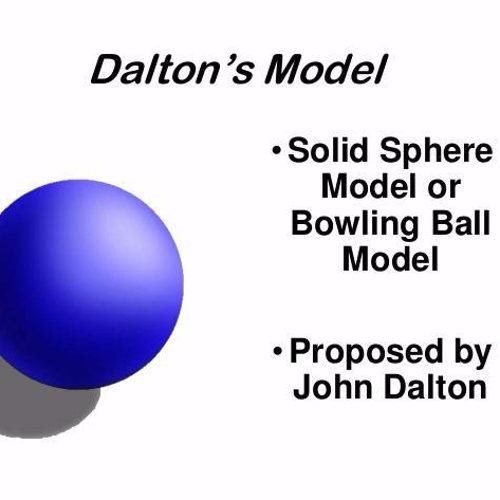
Dalton
Diagram: Billiard Ball Model, Solid, Individual spheres that can bond
Evidence: Priestley Lavoisier + Diamond experiments
Justification: Compounds can be broken apart into simpler substances. Simpler Substances can combine in fixed ratios. In both cases, new properties emerge
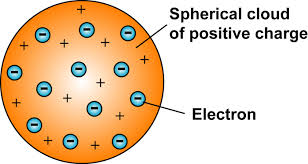
Thomson
Diagram: Chocolate Chip Cookie Model, small negatively charged electrons and positive charged spread spread throughout
Evidence: Cathode Ray Experiments
Justification: The Cathode Ray itself is a beam of electrons. It moves away from the negative end of the magnet. Light dosen’t do that, Matter does.
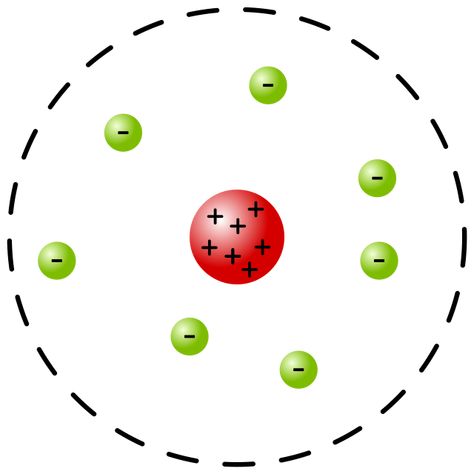
Rutherford
Diagram: Most of the atom is empty space, Positive charge is condensed in the nucleus
Evidence: Gold Foil Experiment
Justification: Most positively charged alpha particles passed right through the gold. The small % that were deflected off that straight path did so because they approached the dense positive nucleus.
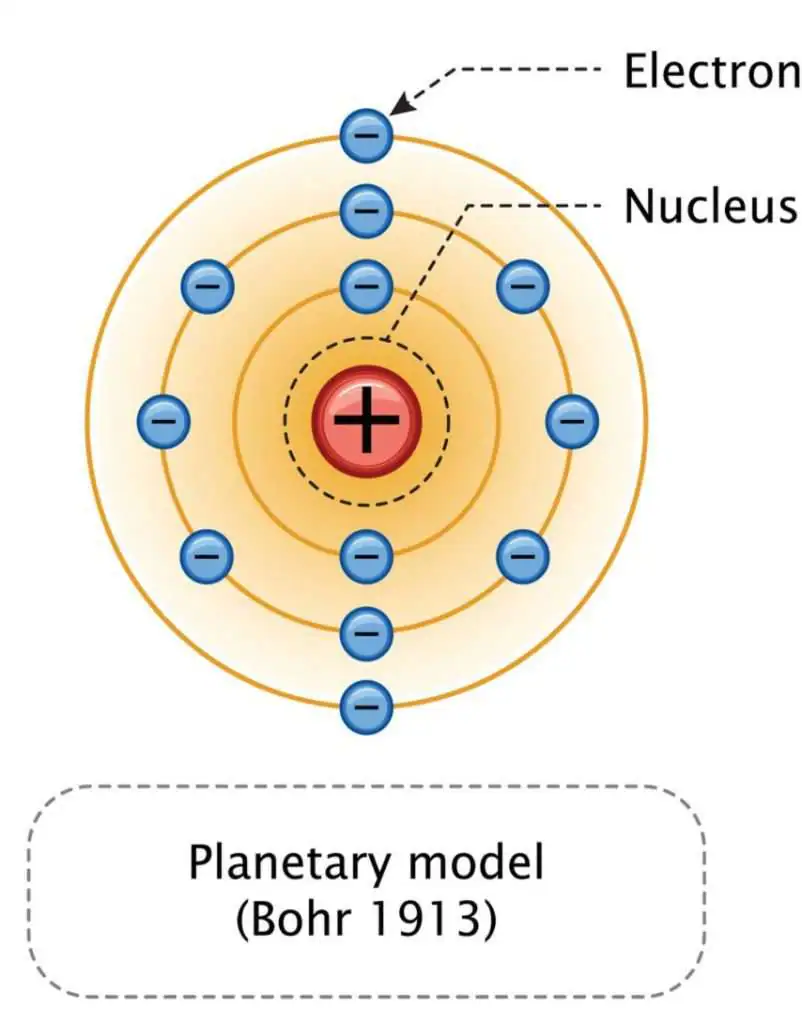
Bohr
Diagram: Electrons orbit the nucleus at specific distances (energy levels)
Evidence: Line Emission Spectra
Justification: Electrons jump up to higher energy levels when they absorb energy. When they fall back down, they release energy we can see as light. Each line on the spectrum is a specific fall an electron made. They only have specific colors (not all wave-lengths)